Game review
The Darkened Northern Lights
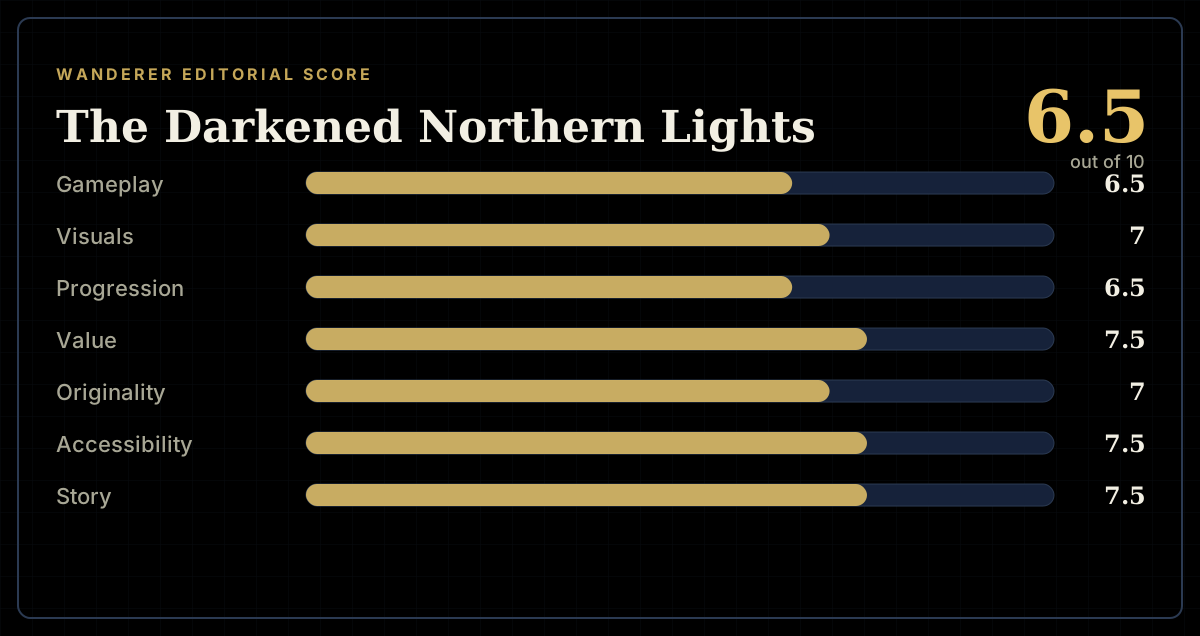
6.5 / 10
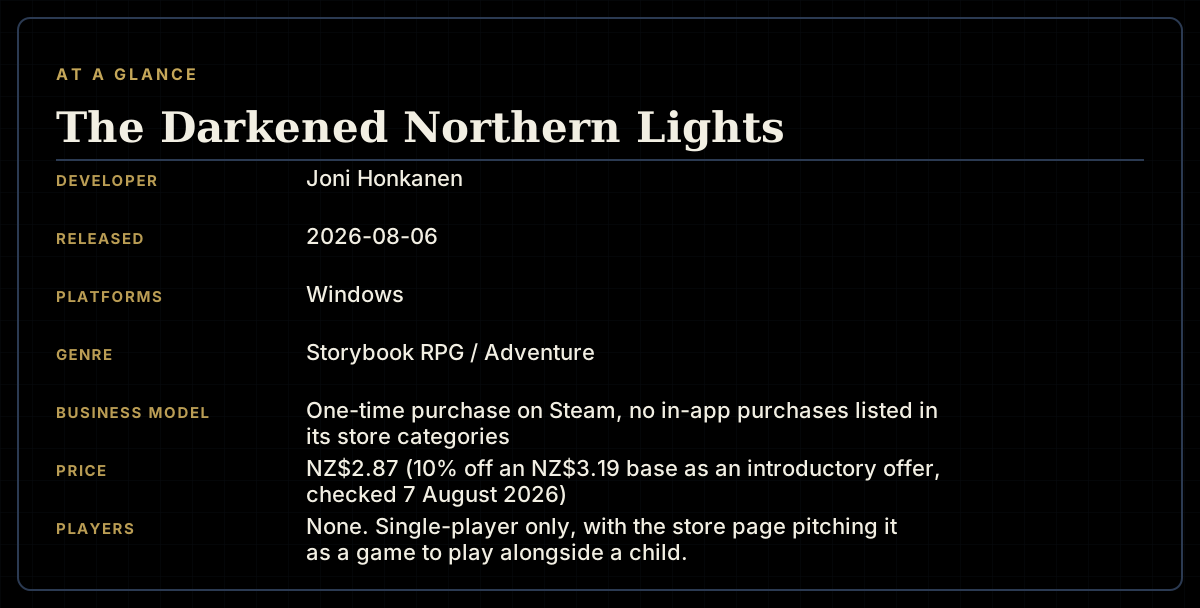
- Developer
- Joni Honkanen
- Publisher
- Joni Honkanen
- Released
- 6 August 2026
- Platforms
- Windows
- Genre
- Storybook RPG / Adventure
- Monetisation
- One-time purchase on Steam, no in-app purchases listed in its store categories
- Players
- None. Single-player only, with the store page pitching it as a game to play alongside a child.
The short version
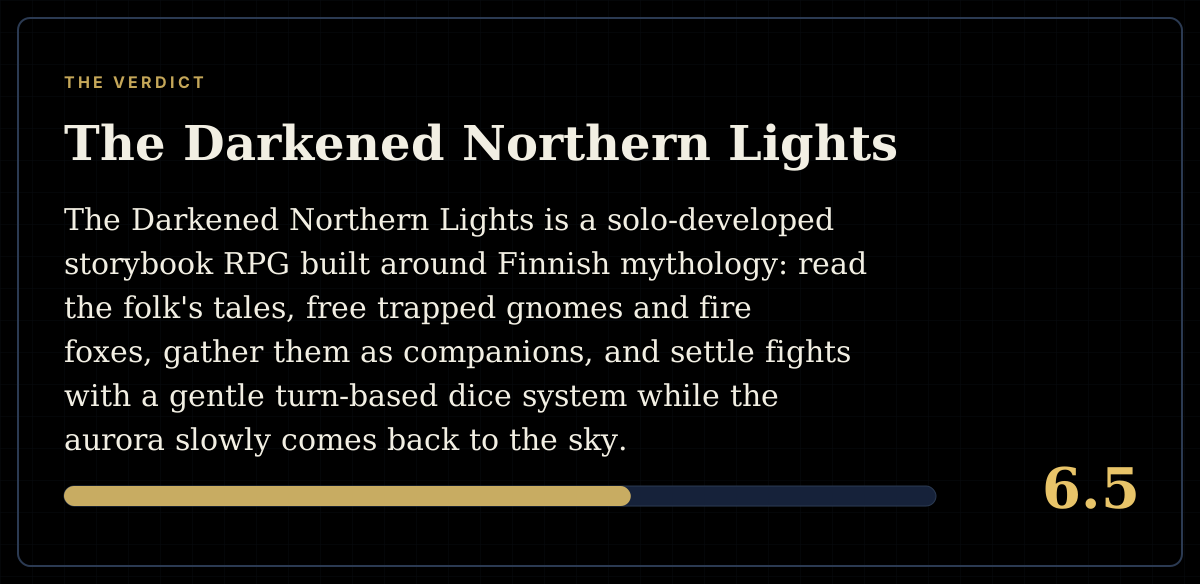
The Darkened Northern Lights is a solo-developed storybook RPG built around Finnish mythology: read the folk's tales, free trapped gnomes and fire foxes, gather them as companions, and settle fights with a gentle turn-based dice system while the aurora slowly comes back to the sky. It is unusually complete and unusually cheap for a one-person launch, with a real leveling and companion-collection structure underneath its bedtime-story framing, but it publishes with zero Steam reviews, no press coverage this search could find, and a documented use of generative AI in its art, sound and text that a story-first game will need to answer for eventually.
Biggest strengths
- A clear, coherent pitch — a bedtime-story RPG rooted in specific Finnish folklore — rather than a generic fantasy skin over familiar systems
- The achievement list confirms real progression underneath the storybook framing: character levels, staged aurora restoration, and discrete counts of gnomes and fire foxes to free rather than a single collectible pile
- A turn-based dice system that visibly tracks more than raw damage — Speed, Morale and Luck sit alongside HP in the combat screen, and a named non-punitive revival mechanic backs up the store page's "no punishments" promise
Biggest weaknesses
- Launches with zero Steam user reviews in any language and no press coverage this search turned up, so every claim about pacing, difficulty or how the dice combat actually feels rests on the developer's own description
- Achievement percentages resolve to clean thirds and zeroes, consistent with perhaps three reporting accounts total — nowhere near enough data to say how the game plays once past its opening hour
- The developer's own AI Generated Content disclosure states that some of the game's pixel art, audio and text — including its English and Finnish translations — were produced with the help of AI tools, a detail worth weighing carefully on a game whose whole pitch is storytelling
Who it's for: Parents and children reading together, and adult players who want a short, low-stakes RPG built for unwinding rather than optimising. A poor fit for anyone chasing deep itemisation, challenging combat, or a large, proven player community to compare notes with.
Our recommendation: At under three New Zealand dollars, the price makes this an easy, low-risk pickup for the audience it's actually built for. Go in aware that almost nothing about how it plays has been independently confirmed yet, and that the developer's own AI-content disclosure is worth reading before you decide whether it matters to you.
6.5 / 10
The Darkened Northern Lights went up on Steam on 6 August 2026, built by a single credited developer, Joni Honkanen, working under his own name rather than a studio brand. This review was written the following day, which means it starts from the same honest position most launch-day coverage on this site does: the developer's own description of the game, its store-page assets and its achievement list are the only things to check against, because nobody has reviewed it yet. Steam's review system shows zero submissions in any language, the news feed has never posted, and the global achievement data resolves to clean thirds and zeroes — the signature of a reporting population you could count on one hand.
What's verifiable is the design itself, and it's a more specific pitch than "another cozy fantasy RPG." The Northern Lights have gone dark, and the job is to bring them back by walking through snowy forests and quiet shores, meeting the folk who live there, and listening to what they have to say. Steam's own description leans hard on the reading angle — "the game is like a living storybook, its heart beating for story and reading" — and pitches itself explicitly as something to play with a child or alone, "just like reading a good storybook." That's a specific, coherent identity, built around a real regional folklore rather than a generic fantasy skin, and it's not a framing this site sees often.
A dice system that tracks more than damage
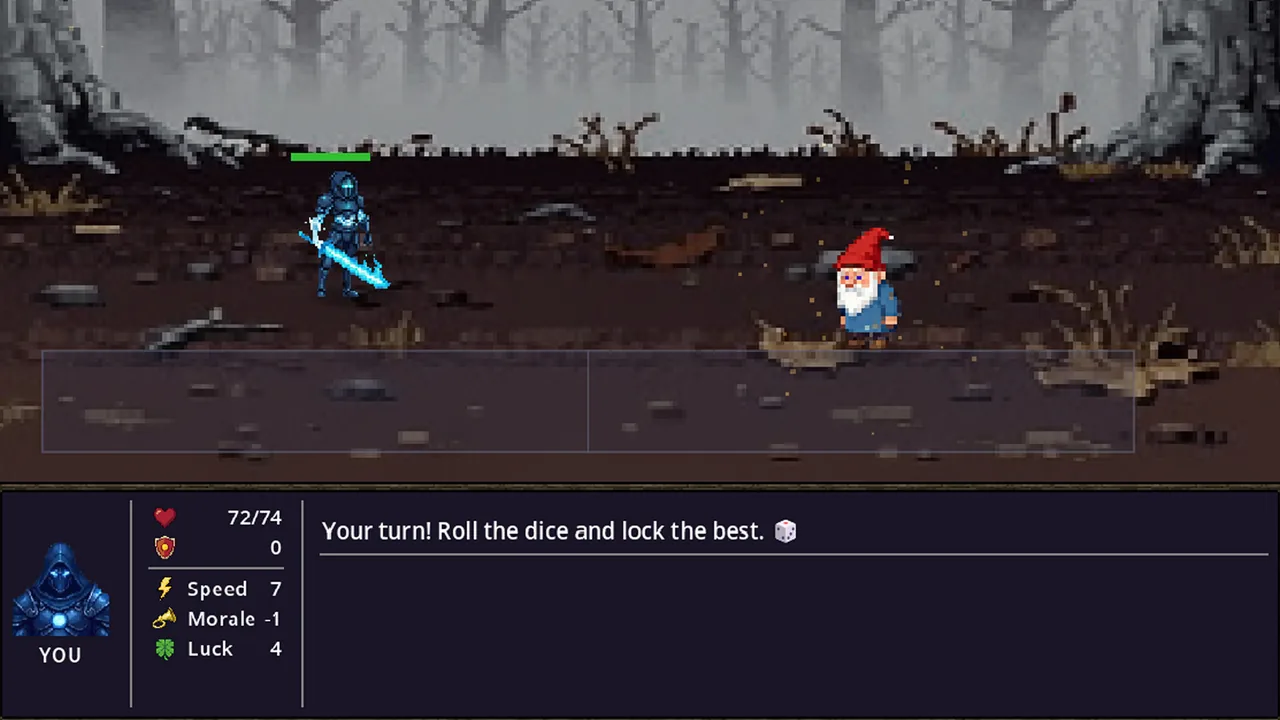
The combat, going by the game's own screenshots, is turn-based and built around rolling and locking dice rather than selecting from a spell list. One combat screen shows a player character facing a gnome opponent with four tracked stats sitting beside the HP bar: Speed, a Shield value, Morale and Luck, with the prompt "Your turn! Roll the dice and lock the best." That's a heavier stat sheet than "storybook combat" usually implies — Morale and Luck in particular suggest the dice aren't purely about damage numbers, and a character sitting at 72 of 74 HP with 0 Shield after presumably several turns points to a fight with actual attrition rather than a formality between story beats. The developer's own site (treated here as marketing copy rather than a confirmed spec, for reasons below) describes the system as combining a roster of unique dice across dozens of spells and abilities per character, framed as "dice are your spells, combine symbols, push your luck" — a description that lines up with what the screenshot shows, even if the exact numbers can't be confirmed independently yet.
Choices sit outside combat too. A separate screenshot shows a story event — a first encounter with a spreading, tentacled entity called Usva — presented with a named "Doom" counter next to the option to continue. A tracked doom or dread meter running alongside branching story choices is a real mechanical commitment, not just flavour text between fights; it implies decisions accumulate consequence rather than resetting at the next screen. The store page's promise that choices are "meaningful... all the way to the end of the adventure" is exactly the kind of claim that can't be verified without a community to report back on how much the choices actually change, but the visible UI at least shows the game tracking something rather than just performing the appearance of choice.
Progression the achievement list actually confirms
The most useful evidence here isn't the marketing copy, it's the achievement list, because Steam achievements are a fact about the shipped build in a way store-page prose isn't. Alongside general milestones — "Back to Life," "First Gnome," "First Fire Fox" — the list includes staged goals: "Friend of Gnomes," "Helper of Gnomes," "Protector of Gnomes" and "All Gnomes Free," mirrored by "Friend of Foxes" and "All Foxes Free," plus a raw API list showing discrete counts for both — GNOMES_5, GNOMES_10, GNOMES_15, GNOMES_20, FOXES_5 and FOXES_10. That confirms a real companion-collection structure with at least twenty gnomes and ten fire foxes to individually find and free, not a single undifferentiated pile of collectibles. A LEVEL_5 achievement confirms a character leveling system exists; AURORA_5 suggests the aurora itself is restored in graduated stages rather than one ending flip; and a named "Finding Hilda" achievement points to at least one specific companion NPC with her own quest thread. Three achievements referencing forest druids by biome — bear forest, deer forest, and a general forest one — suggest the "9 biomes" the developer's own site claims may be real, structured content rather than a single reused forest tileset, though that specific count can't be confirmed from Steam data alone.
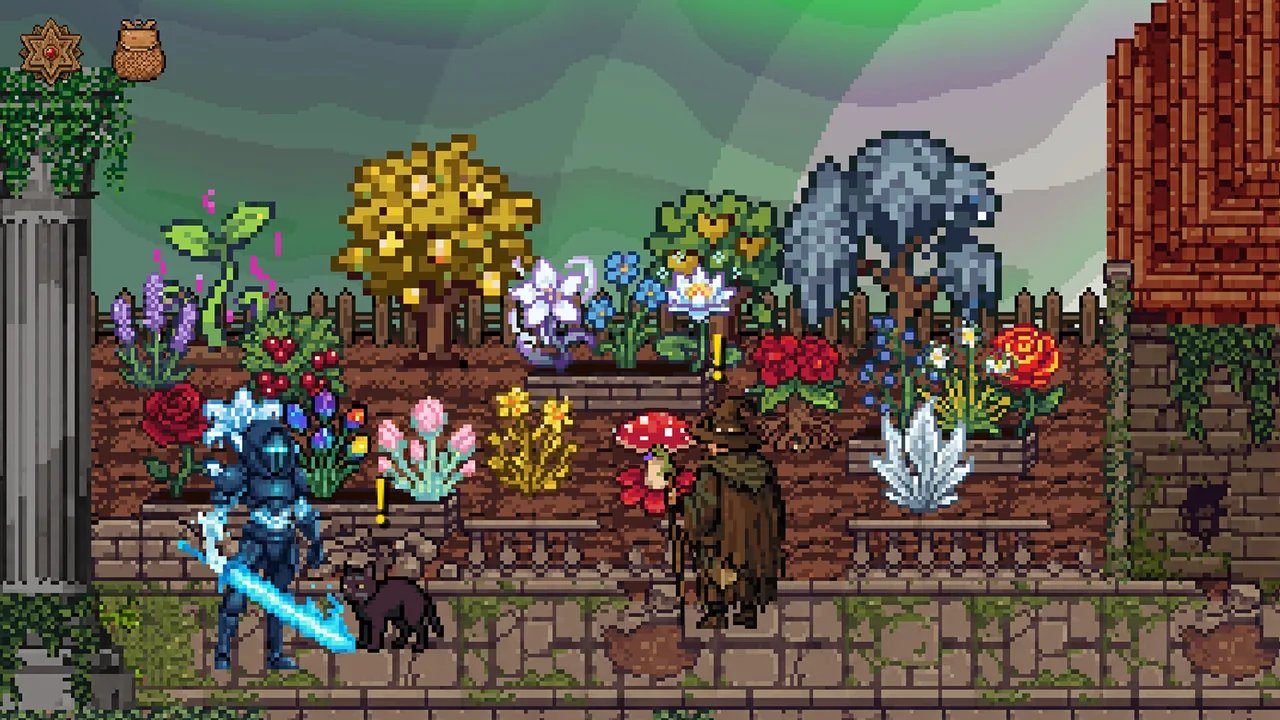
One garden screenshot backs up the "tend your own garden" promise directly: a fenced plot showing roses, tulips, daffodils, a fruit tree and several fantastical, non-real plants — including what reads as a small crystal cluster growing like a flower — tended next to an armoured player character and a robed NPC, under an aurora-lit sky. It's a small detail, but it's the kind of thing that's easy to promise on a store page and comparatively rare to actually build, and the screenshot shows a garden with enough distinct plant types to suggest it's more than a single decorative asset recoloured a few times.
The AI question a storybook game can't dodge
Steam's store page carries an AI Generated Content Disclosure, and it's worth quoting the developer's own wording rather than characterising it secondhand: "The Darkened Northern Lights uses generative AI to help create some of the content that ships with the game," specifically naming "many of the game's pixel-art characters and graphics," "some of the game's audio," and "parts of the game's text and its Finnish and English translations." The same disclosure states plainly that none of this content changes during play — "all of this content was reviewed by the developer and is fixed" — and flags that a future update might add an optional feature to generate extra storybook tales live, in which case the notice would be updated. That's a more transparent and specific disclosure than several bigger releases this site has covered manage, and it's genuinely double-edged: fixed, developer-reviewed AI assistance in a one-person project's art and localisation pipeline is a defensible way for a solo developer to cover more ground than they could alone, but it sits uncomfortably close to the core of a game whose entire pitch is "story and reading." There's no review corpus yet to say whether players who buy in for the storytelling notice or mind the AI involvement in the writing specifically — that's a real open question this review can flag but can't answer.
A pitch that doesn't quite match its own website
One inconsistency is worth reporting rather than smoothing over. The developer's own promotional site describes The Darkened Northern Lights as free-to-play with optional in-app purchases, coming to both Steam and Google Play. The Steam build this review is based on doesn't match that: it's a single flat purchase at NZ$2.87, its store categories list no in-app purchases, and there's no Android version visible from the Steam listing. One of those two descriptions is out of date — most likely the website is earlier marketing copy that predates a pricing decision, or describes a future Android release rather than the Steam build — but there's no way to confirm which from the outside, and it means the specific feature counts quoted on that site (eight playable characters, a twenty-eight-die roster, forty-plus spells, nine biomes, four hundred and fifty story variations) should be read as the developer's stated ambition for the project rather than a confirmed inventory of what shipped in the Steam build on day one.
The money and the fit
Set the ambiguity aside and the Steam page itself is unambiguous: NZ$2.87 at an introductory 10% off an NZ$3.19 base, one purchase, nothing further to buy. System requirements are modest — a dual-core 2.0GHz processor, 2GB of RAM and 150MB of storage cover the minimum spec, well within reach of the low-power or older machines this kind of family game is likely to actually run on. There's no controller support flagged in Steam's own metadata and no demo listed on the store page, which is a genuine gap for a game explicitly pitched at children and newcomers who benefit most from trying before buying — though at under three dollars, the financial risk of skipping that step is about as low as Steam pricing gets.
Final verdict
The Darkened Northern Lights is a more specific and more structurally complete pitch than "cozy RPG for kids" usually delivers: a named Finnish-mythology setting, a dice-and-stat combat system that visibly tracks more than damage, a companion-collection structure the achievement list backs up in detail, a tracked story-consequence meter, and a garden that isn't just set dressing. For a one-person project asking under three dollars, that's real, checkable ambition.
Set against that: nothing external confirms any of it plays well past the systems a screenshot can show, the reporting population is small enough to count on one hand, the developer's own website contradicts the shipped Steam build on price and platform, and the AI disclosure — however honestly worded — sits at the center of a game selling itself on storytelling. Six and a half out of ten reflects a genuinely distinctive, cheaply-priced idea with real systems underneath the bedtime-story framing, weighed against having no player feedback whatsoever to confirm any of it lands the way the store page says it does. Worth a look for the audience it's actually built for — families, and anyone wanting a short, gentle RPG built around a specific folklore rather than a generic one — with the understanding that this is a day-one snapshot of a game nobody outside its developer has yet reviewed.
Pros and cons
Pros
- A clear, coherent pitch — a bedtime-story RPG rooted in specific Finnish folklore — rather than a generic fantasy skin over familiar systems
- The achievement list confirms real progression underneath the storybook framing: character levels, staged aurora restoration, and discrete counts of gnomes and fire foxes to free rather than a single collectible pile
- A turn-based dice system that visibly tracks more than raw damage — Speed, Morale and Luck sit alongside HP in the combat screen, and a named non-punitive revival mechanic backs up the store page's "no punishments" promise
- Deliberately non-punitive, unhurried design intended to be read and played alongside a child, a genuinely underserved angle for an RPG on Steam
- A flat, one-time price under three dollars with nothing resembling an in-app purchase in its Steam store categories
Cons
- Launches with zero Steam user reviews in any language and no press coverage this search turned up, so every claim about pacing, difficulty or how the dice combat actually feels rests on the developer's own description
- Achievement percentages resolve to clean thirds and zeroes, consistent with perhaps three reporting accounts total — nowhere near enough data to say how the game plays once past its opening hour
- The developer's own AI Generated Content disclosure states that some of the game's pixel art, audio and text — including its English and Finnish translations — were produced with the help of AI tools, a detail worth weighing carefully on a game whose whole pitch is storytelling
- The developer's own website describes a free-to-play model with in-app purchases and an Android release, which does not match the flat-price, no-IAP Steam build this review is based on — one of those descriptions is stale, and it isn't clear which
- Windows only on Steam, with no controller support flagged in the store's own metadata and no demo listed to try before buying
Screenshots
-
The Darkened Northern LightsImage: Joni Honkanen via Steam -
The Darkened Northern LightsImage: Joni Honkanen via Steam -
The Darkened Northern LightsImage: Joni Honkanen via Steam -
How the review scores each part of the gameWanderer Editorial -
The game at a glanceWanderer Editorial -
The short versionWanderer Editorial