Game review
Cow Life Sim RPG
7.8 / 10
- Developer
- Pajama Bee Entertainment
- Publisher
- Pajama Bee Entertainment
- Released
- 14 February 2024
- Platforms
- Windows, Linux
- Genre
- Simulation, RPG, Casual, Indie, Adventure
- Monetisation
- One-time purchase. No ads, DLC or premium currency on its Steam listing
- Players
- None — single-player only
The short version
Cow Life Sim RPG is exactly as strange as its title and screenshots suggest, and considerably more mechanically dense than "goofy cow game" implies. You are a cow who arrives in the town of Snoutsville, and from there the game hands you roughly a dozen trainable skills, a combinatorial item system that lets almost anything in the world be juiced, woven into a basket, sugar-coated or set on fire, quests from a cast of animal NPCs, and 89 Steam achievements that reward genuinely deep exploration of all of it. The 41 English-language Steam reviews on record run 39 positive to 2 negative, and they are unusually consistent about what they like: the item permutation system, the writing, and a world that treats its cast's queerness as a plain fact of life rather than a punchline or a marketing hook.
It is also a NZ$4.99 one-time purchase with no ads, no premium currency and nothing held back for later monetisation — rare discipline at any price point, let alone this one. Set against that: both negative reviews, and one positive one, flag movement that snags on scenery and NPCs, and one report of a duplicate-item-stack bug messing with inventory and selling. Judged as a scrappy, sincere, single-developer sandbox with real mechanical ambition and a few rough edges it hasn't sanded down, that's a strong showing for five dollars.
Biggest strengths
- A genuinely inventive core mechanic — nearly any of the game's "hundreds of unique items" can be juiced, woven into a basket, sugar-coated or burned, producing an absurd combinatorial item list that reviewers repeatedly single out as the game's best feature
- 89 Steam achievements with a real difficulty curve (the most common sits at 67.5% of players, the rarest at 2.3%), giving skill-grinding completionists a lot of genuine depth to chase
- A flat NZ$4.99 one-time purchase — no ads, DLC or premium currency anywhere on its listing
Biggest weaknesses
- Movement and pathfinding snag on scenery and NPCs, a specific, repeated complaint across both negative reviews and at least one positive one
- One reported bug produced a duplicate item stack that broke juice-making and selling until manually worked around
- Only 41 English-language Steam reviews on record at time of writing — enough for Steam to score it "Positive" but not enough volume to reach "Very Positive," regardless of the 95% ratio, so the evidence base is thinner than a bigger release's
Who it's for: Players after a low-stakes, unhurried sandbox to grind skills and hunt item permutations in, and anyone drawn to a cozy game whose queer representation is sincere rather than performative — not players wanting a large, actively-marketed release with a big review base to check against.
Our recommendation: At NZ$4.99 with zero microtransactions, this is close to a no-risk buy for the cozy-sandbox crowd; go in expecting occasional movement snags rather than a technically polished experience.
7.8 / 10
A cow, a town, and a dozen skills
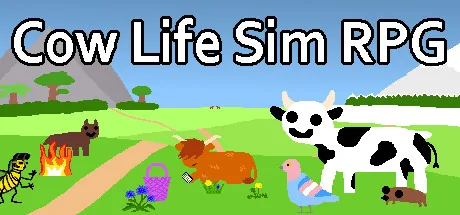
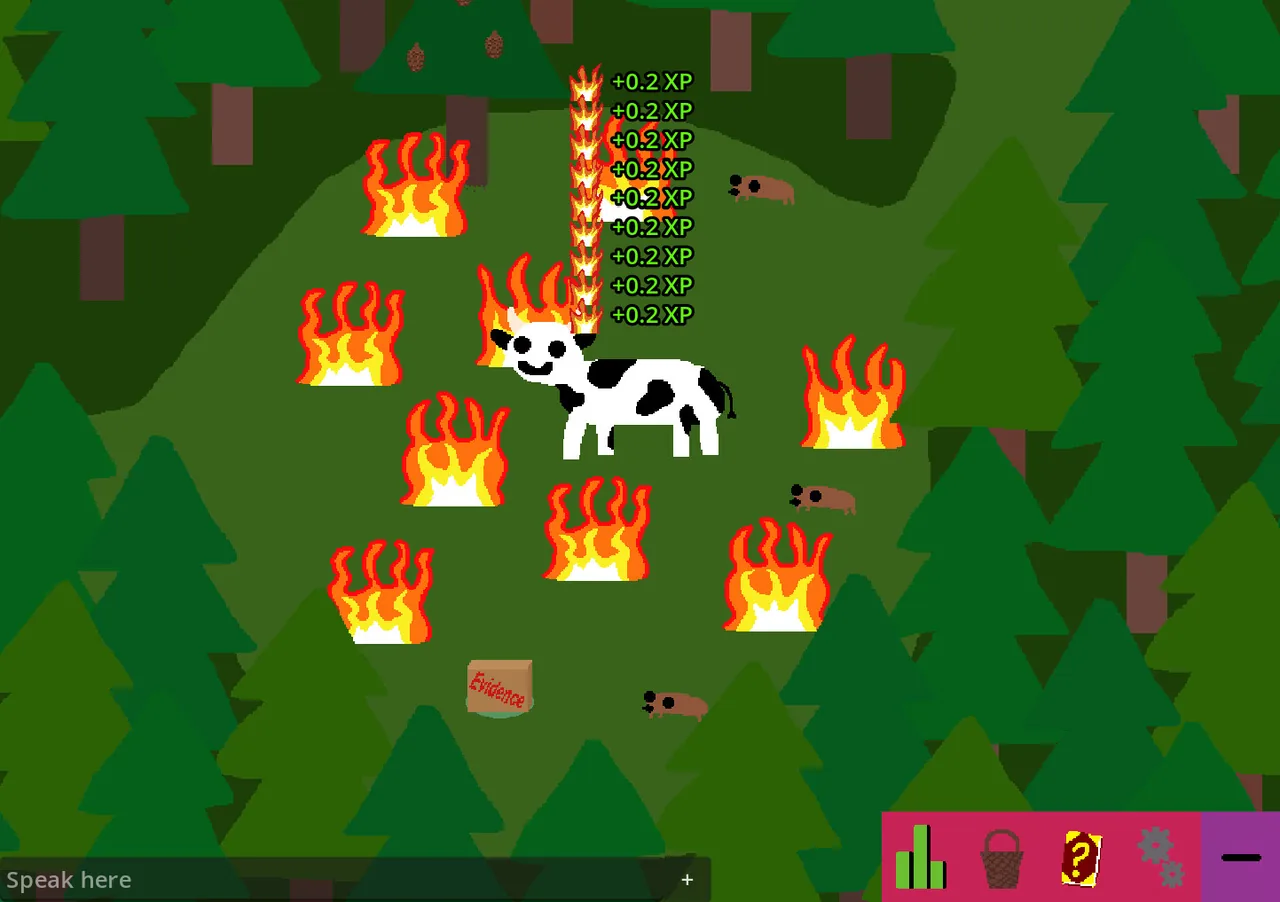
Cow Life Sim RPG puts you in the hooves of a cow who arrives by boat in the town of Snoutsville and is, from that point on, free to do more or less anything. The store page's own pitch — "you can do anything when you are a cow" — undersells it slightly: this is a proper skill-based RPG wearing a joke premise. Walking levels up. Scavenging levels up. Juice Drinking, Basket Weaving and, yes, Arson all level up, each with its own training methods that the game deliberately doesn't spell out, leaving players to work out the efficient path themselves — one reviewer who logged over 5,000 minutes noted that "the best ways to level skills are definitely not straight forward to figure out," which the game clearly intends as a feature rather than an oversight. Quests from the town's cast of animal NPCs give the skill grind direction and a story to follow, gardening plots let you grow crops to feed back into the wider item economy, and the game leans on its own commitment to the bit hard enough to advertise itself, only half-jokingly, as "possibly the first video game ever to not feature fishing."
The item system is the actual game
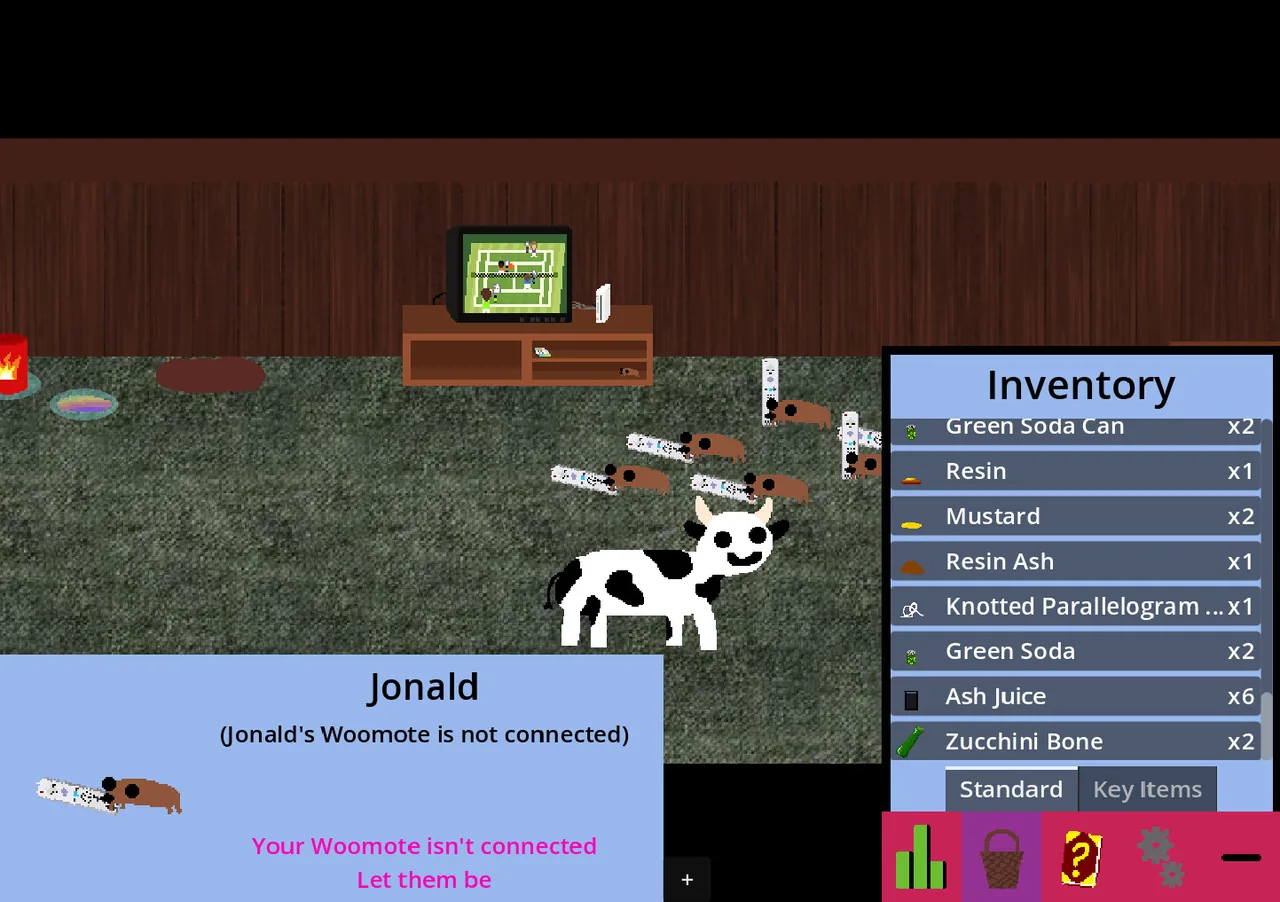
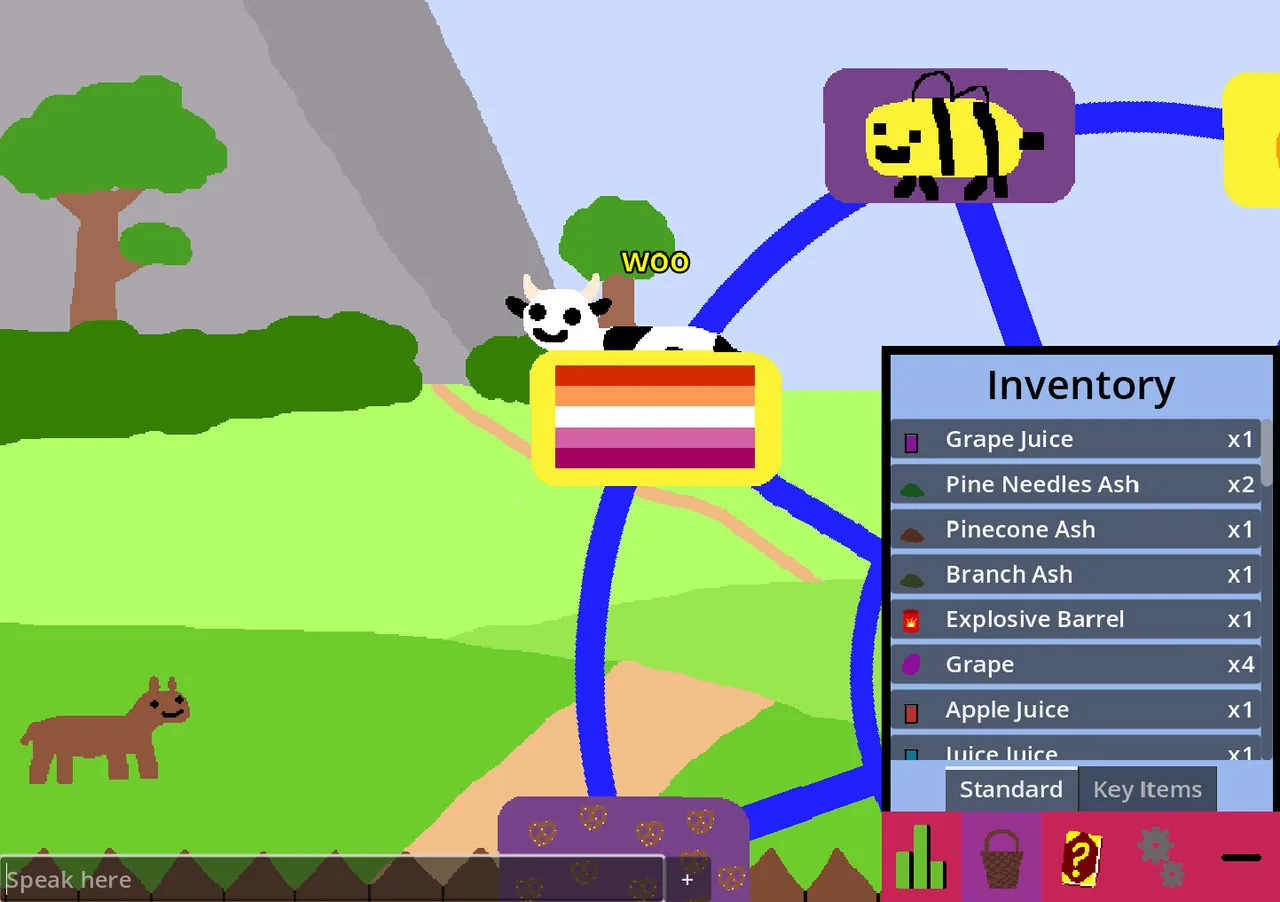
What separates Cow Life Sim RPG from a generic collect-and-quest sandbox is a single combinatorial idea, applied everywhere: almost any item in the game can be juiced, woven into a basket, planted, coated in sugar, or burned, and the results themselves are often further-transformable items. One Steam review — the game's most-praised, at 847 minutes logged — put it plainly: "I'm honestly blown away with the amount of freedom you have with item permutations," pointing to results like "caramelized gasoline ash," which, burned again, becomes "caramelized ash ash." Another reviewer described making "a basket out of an orange, then plant[ing] it in the ground," which "grew an orange basket tree." These aren't cherry-picked oddities; the pattern shows up across a large share of the 39 positive reviews on record, and it's the single most-repeated praise in the entire review sample. The 89 Steam achievements lean into this directly, rewarding players for hunting down specific, often absurd item combinations rather than just clocking playtime — the achievement-percentage data backs up how much of a long tail that creates: the single most-earned achievement, "Sunflower Stash," sits at 67.5% of the player base, while "Arson Scientist" sits at just 2.3%, a spread that suggests most players see the obvious content and a much smaller group goes deep enough to chase the combinatorial edge cases.
Representation that reads as sincere, not marketing
The store page states plainly that "every character is trans," and the review sample treats that fact the same way the game itself does — as a settled, unremarkable part of the world rather than a talking point. Comments like "so much queer representation," "well designed world and systems," and "being a gay cow is enjoyable, and this game embodies that truth" appear across reviews with wildly different playtimes, from twenty minutes to over ten thousand, which is a more convincing signal of sincerity than any single glowing quote would be on its own: this isn't one enthusiastic early reviewer setting the tone, it's a pattern that holds across the whole sample. One reviewer summed up the game's general tone well: it "breaks rules, it subverts unchallenged beliefs and stares them down with an unrelenting smile." That tonal confidence — genuinely funny writing, played completely straight — is doing as much work for the game's reception as the mechanics are.
Where it comes apart at the edges
Set against all of that, the game's flaws are consistent rather than varied. Both of the only two negative reviews on Steam, and at least one of the positive ones, single out the same problem: movement and pathfinding that catch on scenery, NPCs, or birds. The more detailed negative review put it in concrete terms — "you get stuck on literally everything all the time, it needs MoveAndSlide like in Godot" — which reads as a specific, plausible engine-level complaint rather than a vague frustration. The same review also reports a duplicate-item-stack bug that "caused extremely weird things when making juice and trying to sell stuff." Neither complaint describes a broken game; both describe an indie sandbox built by a small team that hasn't fully sanded down its edges, which lines up with a developer (itch.io handle "pajamabeevegan") still pushing point patches — version 2.04, fixing two specific bugs, shipped five months after the Steam launch — rather than one that walked away after release.
The other honest caveat is scale. Forty-one English-language reviews is enough for Steam's own system to award a score, but not enough to clear the roughly 50-review threshold Steam requires for "Very Positive" — so the listing reads "Positive" even though the underlying ratio, 39 to 2, is a 95% approval rate that would read as "Very Positive" or better on a review count with more volume behind it. This review read every negative review this game has, because there are only two of them; a reader should weigh that thin sample honestly rather than treat 95% as if it were backed by thousands of data points.
Monetisation and value
There is very little to say here, and that's the point: NZ$4.99 buys the entire game, with no ads, no premium currency, no season pass and nothing held back for a later purchase. Against 89 achievements and a skill list wide enough that players are still finding new item combinations after thousands of minutes, that is an unusually generous ratio of content to price, and it puts Cow Life Sim RPG in the same small, disciplined bracket this outlet has praised in other cheap indie titles that resist the urge to nickel-and-dime a five-dollar game.
Final verdict
Cow Life Sim RPG earns its cult-favourite shape honestly: a strange premise executed with real mechanical depth, a combinatorial item system that keeps rewarding curiosity long after the obvious content is exhausted, warm and consistently well-received writing, and a monetisation model that asks for five dollars once and never again. The pathfinding complaints and the reported duplicate-item bug are real and worth going in aware of, and the review sample is small enough that a reader should treat 95% positive as promising rather than proven. None of that erases what the game gets right. 7.8 reflects a cheap, inventive, sincerely-made sandbox that rewards the kind of player willing to poke at its systems, held back from a higher score only by its rough technical edges and its still-thin evidence base.
Pros and cons
Pros
- A genuinely inventive core mechanic — nearly any of the game's "hundreds of unique items" can be juiced, woven into a basket, sugar-coated or burned, producing an absurd combinatorial item list that reviewers repeatedly single out as the game's best feature
- 89 Steam achievements with a real difficulty curve (the most common sits at 67.5% of players, the rarest at 2.3%), giving skill-grinding completionists a lot of genuine depth to chase
- A flat NZ$4.99 one-time purchase — no ads, DLC or premium currency anywhere on its listing
- Warm, sincere writing and world-building, including a cast whose queerness reviewers describe as part of the game's charm rather than a bolted-on feature
- Post-launch patch support on the developer's own itch.io page (version 2.04 shipped bug fixes within six months of the Steam launch), rather than a title abandoned at release
Cons
- Movement and pathfinding snag on scenery and NPCs, a specific, repeated complaint across both negative reviews and at least one positive one
- One reported bug produced a duplicate item stack that broke juice-making and selling until manually worked around
- Only 41 English-language Steam reviews on record at time of writing — enough for Steam to score it "Positive" but not enough volume to reach "Very Positive," regardless of the 95% ratio, so the evidence base is thinner than a bigger release's
- No Mac support, and no controller support listed on the Steam page
Screenshots
-
Cow Life Sim RPGImage: Pajama Bee Entertainment via Steam -
Cow Life Sim RPGImage: Pajama Bee Entertainment via Steam -
Cow Life Sim RPGImage: Pajama Bee Entertainment via Steam -
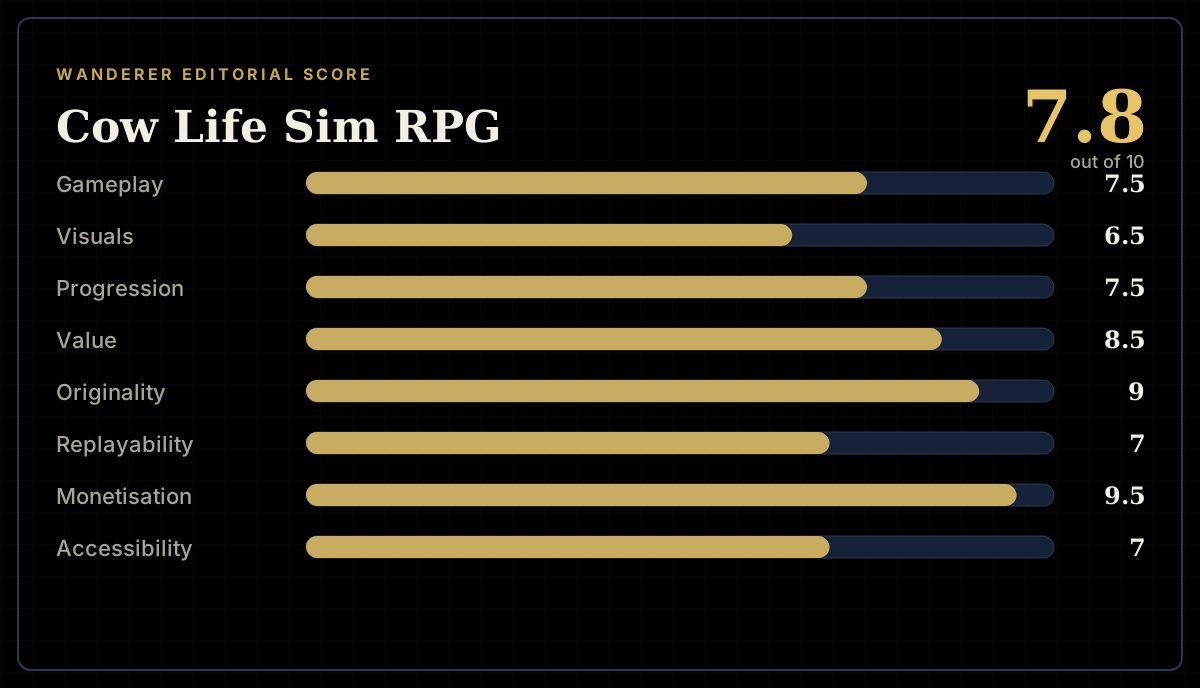
How the review scores each part of the gameWanderer Editorial -
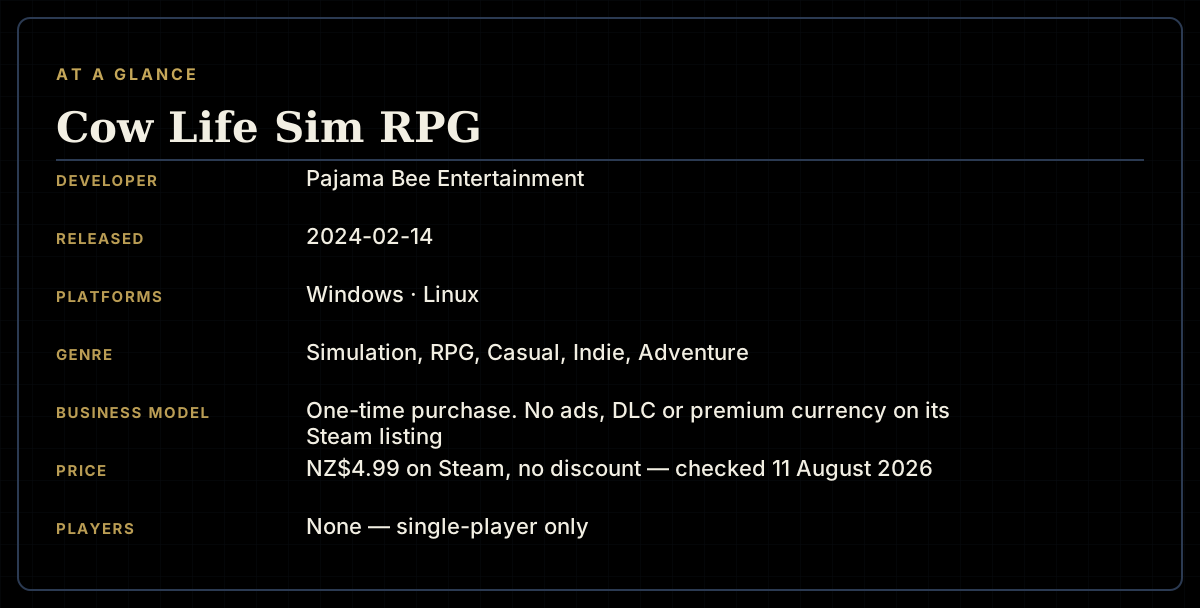
Cow Life Sim RPG at a glanceWanderer Editorial -
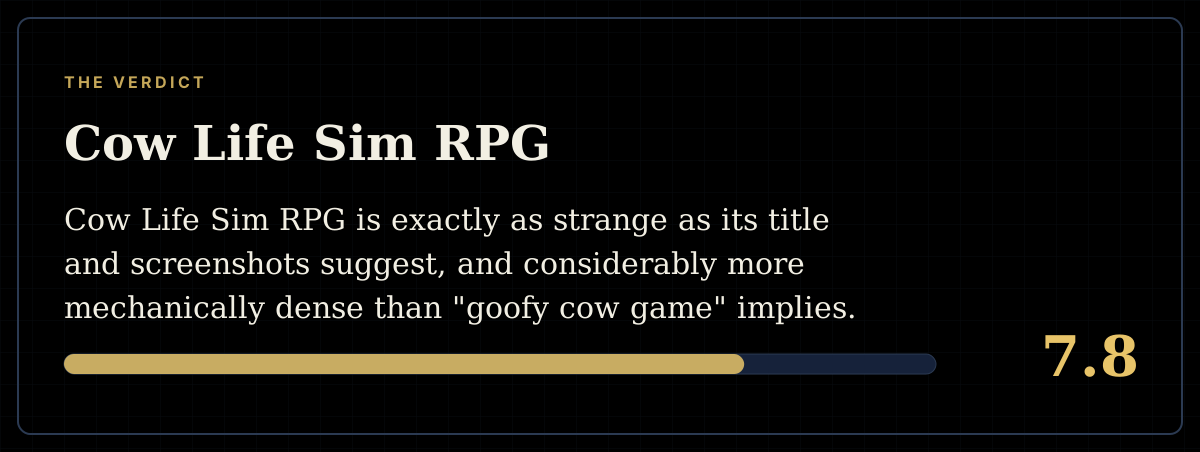
The short versionWanderer Editorial