
Game review
WEBFISHING
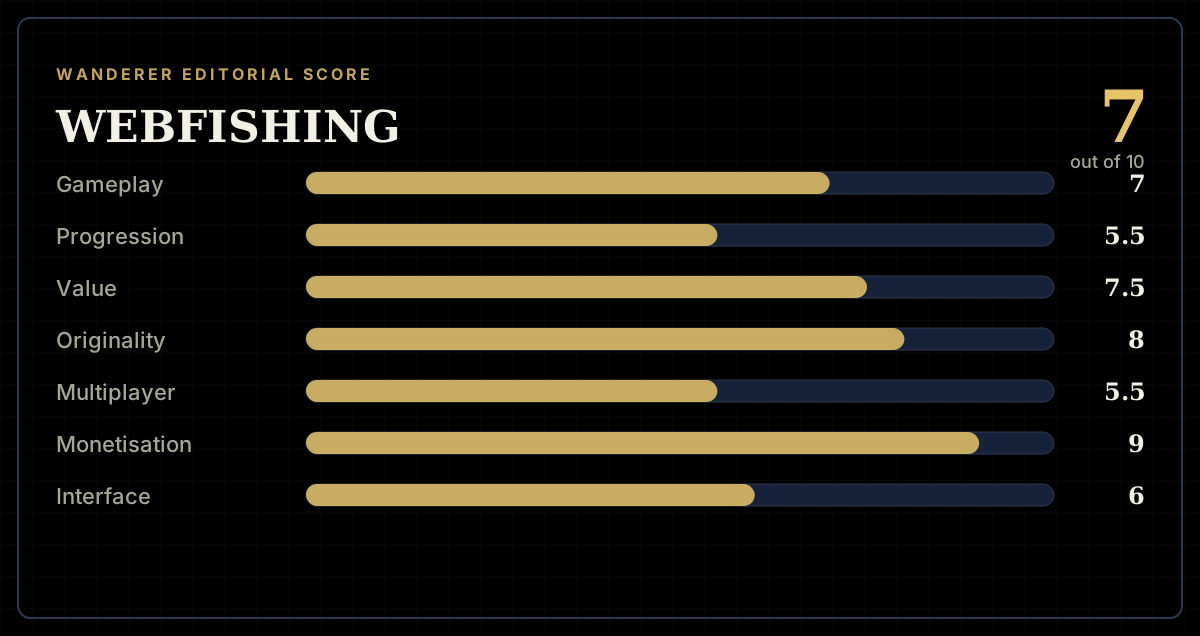
7 / 10
- Developer
- lamedeveloper
- Publisher
- lamedeveloper
- Released
- 11 October 2024
- Platforms
- Windows
- Genre
- Cozy Multiplayer Simulation, Social Sandbox
- Monetisation
- One-time purchase only — no DLC, in-game currency purchases, ads, or battle pass
- Players
- Online co-op through player-hosted lobbies, with in-game voice/text chat and toy props for socializing; there are no official dedicated servers
The short version
Content note: WEBFISHING's Steam page discloses "some swearing, and very light crude humor" — nothing extreme, but its open lobbies expose players to whatever other players choose to say or do. Made by solo developer lamedeveloper and released on Steam on 11 October 2024 after originating as an itch.io game jam project in 2022, WEBFISHING is a low-poly multiplayer fishing hangout that briefly became one of the biggest stories on Steam, drawing comparisons to Animal Crossing and old-school chatroom games like Club Penguin. It still sits at Overwhelmingly Positive — 97.4% of over 70,000 reviews — and a full read of its most-helpful negative reviews, its most recent reviews, and Steam's own community-announcement history all point to the same specific story: a genuinely charming, dirt-cheap social game that has not had an official patch since 1 January 2025, whose lobbies have been repeatedly exploited by bad actors, and whose developer has been effectively silent for a year and a half.
Biggest strengths
- A rare, well-executed take on the old internet chatroom game — cast a line, catch nearly 100 fish, and just talk to whoever wanders into camp
- A flat NZ$7.39 with zero DLC, premium currency, ads, or battle pass — one of the cleanest business models this library has reviewed
- Surprisingly deep character customization and a sandbox of toys (a playable guitar, chalk, physics props) that reward messing around
Biggest weaknesses
- Steam's own community-announcement feed shows no patch since "WEBFISHING Patch 1.12" on 1 January 2025 — over a year and a half of silence as of this review
- 30 of the 100 most-helpful English negative reviews describe being hacked, IP-scraped, or otherwise exploited in open lobbies, and the same pattern still appears in reviews posted this month
- Community discussion widely and consistently attributes the standstill to the solo developer facing a serious harassment campaign and stepping away — Wanderer cannot verify the private specifics, but the practical result (no updates, unresolved security reports) is confirmed by Steam's own feed
Who it's for: Players who want a low-stakes, low-pressure place to hang out with friends or strangers for a cheap one-time price, and who are comfortable with the reduced privacy and moderation of an open, player-hosted lobby; a poor fit for anyone expecting ongoing support, deep systems, or guaranteed player safety in public rooms.
Our recommendation: A genuinely lovely idea, executed with real charm, that buyers should go into with their eyes open about two things Steam's own numbers confirm — the content is thin past the first few hours, and the game has been functionally unsupported for a year and a half.
7 / 10
Introduction
WEBFISHING sells itself on a single idea: hand a stranger a fishing rod and see what happens. Made in eight days for a 2022 game jam by a developer working under the handle lamedeveloper, it spent two years as a modest itch.io curiosity before a polished Steam release on 11 October 2024 turned it into one of that autumn's biggest indie stories — a low-poly island where players fish, chat, and mess around with friends and total strangers alike. Nearly two years on, it still sits at Overwhelmingly Positive across more than 70,000 reviews. Reading past that headline number, though, tells a more complicated story than a 97% score usually implies: this is a game whose own Steam announcement feed shows no update since New Year's Day 2025, and whose review history documents a real, recurring lobby-security problem that has never been patched out.
A chatroom that grew fins
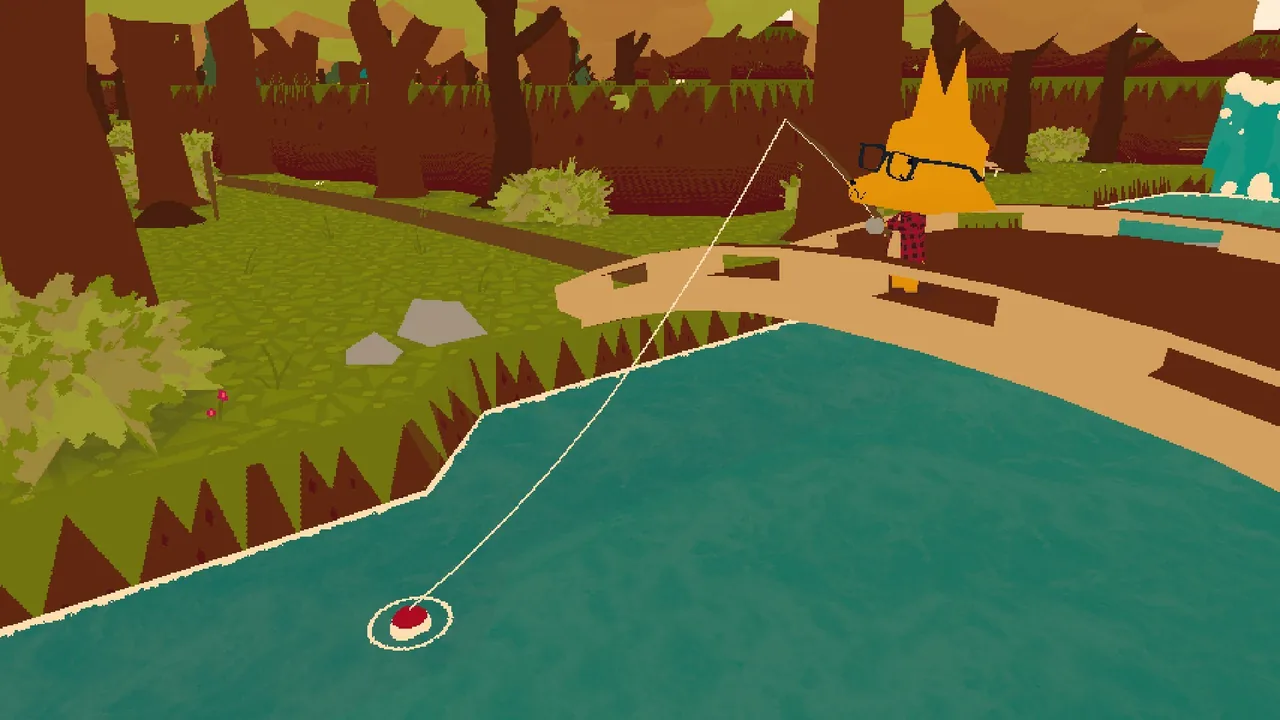
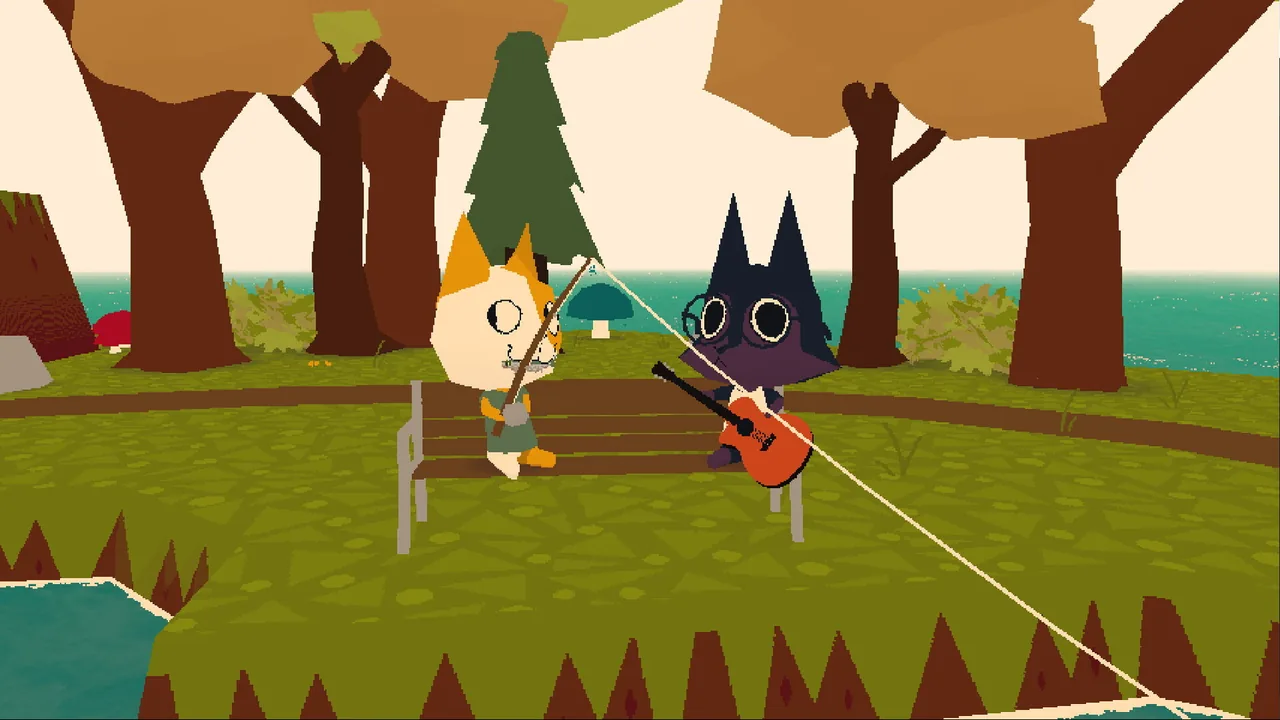
The comparisons WEBFISHING draws most often — Animal Crossing, Club Penguin, an old internet chatroom with a fishing minigame bolted on — are accurate, and they explain why it caught fire the way it did. There is no combat, no failure state, and barely any pressure: players pick an anthropomorphic animal avatar, wander a small camp and its surrounding waters, and cast a line for whatever bites. Nearly 100 different fish and creatures are collectible, from ordinary trout up to rare, screen-filling monsters, and landing one is genuinely satisfying — a simple, well-tuned timing minigame that rewards patience without demanding precision. The point of the game, though, is what happens around the fishing: camps double as social spaces where strangers play a real, playable guitar, draw with chalk, hurl each other into the water, and generally behave the way people do in a space with low stakes and no scoreboard. Steam's community tag votes back up how players actually describe it — Fishing and Multiplayer sit at the top, followed closely by Cute, Character Customization, Cozy, and Sandbox — a genre fingerprint that matches the game far better than its official Steam categories of Casual, Indie, and Massively Multiplayer.
The loop, and where it runs out
The honest version of WEBFISHING's structure is that it front-loads its content. The first few hours are a steady stream of new rods, baits, and camp upgrades, plus a fish journal that fills in satisfyingly fast. Steam's global achievement statistics confirm the shape of that curve in numbers: 97.5% of players have caught at least one fish and 84.1% have hit the game's fifth rank, but completion drops off a cliff after that — only 32.2% have banked 10,000 in-game cash, and the achievements tied to fully completing the fish journal's rarer tiers all sit between 0.8% and 1.7% of the player base. That is not necessarily a criticism on its own; WEBFISHING was never pitched as a deep collection grind, and plenty of reviewers say outright that they never intended to finish the journal and don't mind. But it does mean the game's real retention comes from the social space, not the systems underneath it, and once the novelty of a new camp full of strangers wears off, there is comparatively little pulling a player back to the water on their own.
An honest price tag
At NZ$7.39 with no discount applied, WEBFISHING is one of the cleanest business models this library has reviewed. There is no premium currency, no cosmetic shop, no battle pass, no advertising, and no DLC — every cosmetic, rod, and camp upgrade shown in the promotional screenshots is earned through ordinary play. For a game whose entire pitch is "come hang out," that matters more than it might for a combat-focused title: nobody is being nudged to pay their way into a better social experience. Whatever else this review has to say about the game's current state, its monetisation was never part of the problem.
The story Steam's own numbers tell
Here is where the review has to depart from the marketing pitch. Read the 100 most-helpful English-language negative reviews WEBFISHING has ever received, and a specific, dateable pattern emerges: 30 of them describe being hacked, IP-scraped, or otherwise targeted through the game's open lobbies; 23 raise security concerns generally; 19 describe the game as abandoned; and 14 mention doxxing specifically, either their own or the developer's. These are not launch-week complaints that faded — they split almost evenly across 2024 (41), 2025 (39), and the first seven-plus months of 2026 (20), and the same complaints still show up in reviews posted this month. Several reviewers independently name the same repeat-offender account as a source of lobby-joining harassment, and multiple describe concrete incidents: chat filled with graphic content in front of children playing with a parent, a Twitch account auto-banned after a hacker posted inappropriate material into a streamer's public lobby, and reports of IP addresses being exposed to other players in a session.
What makes this more than an aggrieved minority is that the same story shows up in the positive column too. Among WEBFISHING's ten most-helpful positive reviews — several carrying over a thousand votes — multiple reviewers give the game a thumbs-up while explicitly warning that "the hacking situation... is unacceptable," that "both the game and the dev deserved to be treated better," and that buyers should expect "there likely won't be any further updates as developer was apparently doxxed and abandoned the game." That last claim — that lamedeveloper faced a serious harassment campaign and stepped away because of it — is not something Wanderer can verify from a private individual's circumstances, and community discussion of exactly what happened is not fully consistent on the details. What can be verified directly is Steam's own community announcement feed: fourteen posts in total, a steady run of numbered patches through late 2024 into "WEBFISHING Patch 1.12" on 1 January 2025, and nothing since — a gap of well over eighteen months as of this review, on a game whose most cited unresolved complaint is a security exploit its own player base keeps independently rediscovering.
Final Verdict
WEBFISHING earns its warm reception honestly: it is a cheap, charming, well-made piece of software that captures something genuinely rare, a place to just hang out with people that isn't trying to sell you anything else while you do it. That is a real achievement, and the character customization, the sandbox of toys, and the simple pleasure of catching a ridiculous fish next to a stranger who becomes a friend are all worth the asking price on their own. But a fair review has to weigh that against what the game's own review history and its own patch feed confirm: content thins out fast past the early hours, open lobbies carry a real and still-current risk of harassment or worse, and there has been no official response to any of it in over a year and a half. Buy it for a cheap, cozy afternoon with friends you trust, go in with reasonable caution about public lobbies, and don't expect the game you buy today to be actively maintained tomorrow.
Pros and cons
Pros
- A rare, well-executed take on the old internet chatroom game — cast a line, catch nearly 100 fish, and just talk to whoever wanders into camp
- A flat NZ$7.39 with zero DLC, premium currency, ads, or battle pass — one of the cleanest business models this library has reviewed
- Surprisingly deep character customization and a sandbox of toys (a playable guitar, chalk, physics props) that reward messing around
- Recent-review sentiment (90% positive across the last 100 English reviews) still tracks close to the lifetime score, so the core experience holds up
Cons
- Steam's own community-announcement feed shows no patch since "WEBFISHING Patch 1.12" on 1 January 2025 — over a year and a half of silence as of this review
- 30 of the 100 most-helpful English negative reviews describe being hacked, IP-scraped, or otherwise exploited in open lobbies, and the same pattern still appears in reviews posted this month
- Community discussion widely and consistently attributes the standstill to the solo developer facing a serious harassment campaign and stepping away — Wanderer cannot verify the private specifics, but the practical result (no updates, unresolved security reports) is confirmed by Steam's own feed
- Hosts have limited tools to remove disruptive players from a lobby once they are in it, and the fishing loop itself thins out fast — full fish-journal completion sits under 2% of players on Steam's achievement stats
Screenshots
-

WEBFISHINGImage: lamedeveloper via Steam -
WEBFISHINGImage: lamedeveloper via Steam -
WEBFISHINGImage: lamedeveloper via Steam -
How the review scores each part of the gameWanderer Editorial -

The essentials at a glanceWanderer Editorial -
The short versionWanderer Editorial