Game review
Joyquarium
6.5 / 10
- Developer
- Easyfun Studio
- Publisher
- Gamersky Games
- Released
- 27 March 2025
- Platforms
- Windows
- Genre
- Casual, Indie, Simulation
- Monetisation
- Premium, one-time purchase; no microtransactions or ads; an optional NZ$0.74 soundtrack DLC is the only add-on
- Players
- Single-player
The short version
Joyquarium buys fry, grows them in real time, sells the adults and ploughs the coins back into bigger tanks, rarer fish and a genuinely deep decoration catalogue — and it commits harder to the "idler" half of that loop than most aquarium games in this library, with balances that climb into the quadrillions and a proper Auto-AFK background mode. The tank-wide bonuses for completing a themed set of rare fish give it a sliver of system depth that pure cosmetic decoration doesn't.
The trouble is that its own players keep naming the game it's standing next to. Steam's vote-weighted tags put Creature Collector and Idler within eight votes of each other at the top, and its handful of English critics independently call it a "worse looking knockoff" of Chillquarium — a same-priced, more consistently supported rival this library has already reviewed. Add a saltwater half that reviewers with 36 and 86 hours logged both call unfinished, and a developer that stopped posting anything but a Steam Awards nomination after June 2025, and the honest read is a competent, cheap idler standing in a more polished original's shadow.
Biggest strengths
- A working incremental economy sits under the fish-tank skin: fry-pack gacha, tank income that scales into the quadrillions, and Auto-AFK for genuinely passive play
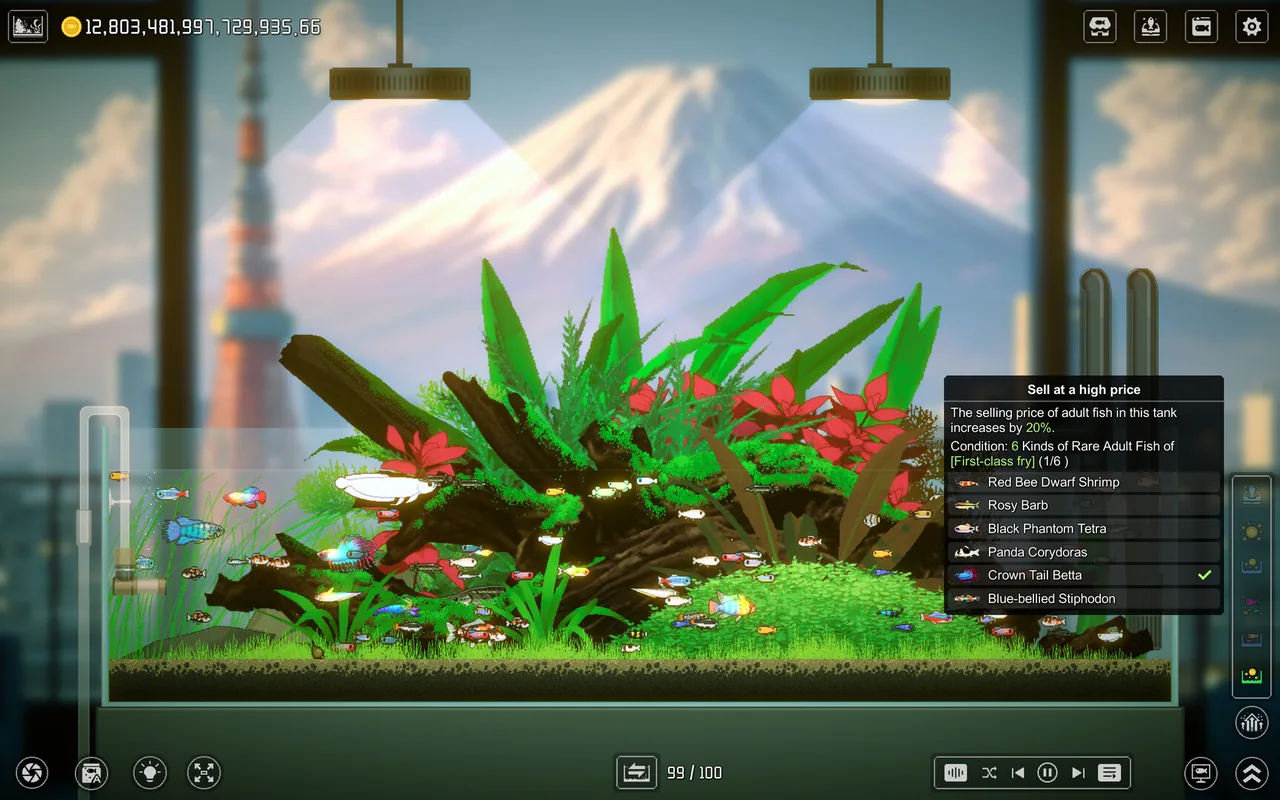
- Tank-wide sell-price bonuses for collecting a themed set of rare adult fish give decorating and collecting an actual payoff, not just a cosmetic one
- A dedicated desktop wallpaper mode lets the tank run behind your icons, which is a real differentiator for the screensaver-idler crowd
Biggest weaknesses
- Two of the seven English negative reviews call it a soulless clone of Chillquarium by name, and the vote-weighted community tags put the two games in the same lane almost exactly tied
- The saltwater half of the game is criticised as half-finished by the two highest-playtime critics in the English sample (36 and 86 hours), and nothing in the news feed contradicts them
- Support effectively stopped three months after launch — a content patch and a bugfix in June 2025, then silence except for a November 2025 Steam Awards nomination post
Who it's for: Idle-game and creature-collector players who want a genuine number-go-up aquarium loop they can run as a desktop background, and who don't mind that a chunk of the tank options feel unfinished.
Our recommendation: At NZ$2.24 it's an easy impulse buy and a real idler, not a reskin with no engine behind it. If you can only own one aquarium idler, though, play Chillquarium first — Joyquarium is the one to add once you want a second tank running, not instead of it.
6.5 / 10
Joyquarium buys fry, grows them in real time and sells the adults on, same as every game in this corner of Steam. What sets it apart on the store page is how far it leans into the second half of that sentence: the coin counter in its own screenshots runs past ten quadrillion, tanks have Auto-AFK income ticking whether you're looking or not, and there's a dedicated wallpaper mode for running the whole thing behind your desktop icons. This is a game that wants to be judged as an idler first and an aquarium second — and the honest question is whether the systems underneath hold up to that framing, or whether "idler" is just the loudest sticker on a thinner box.
Establishing the genre, properly
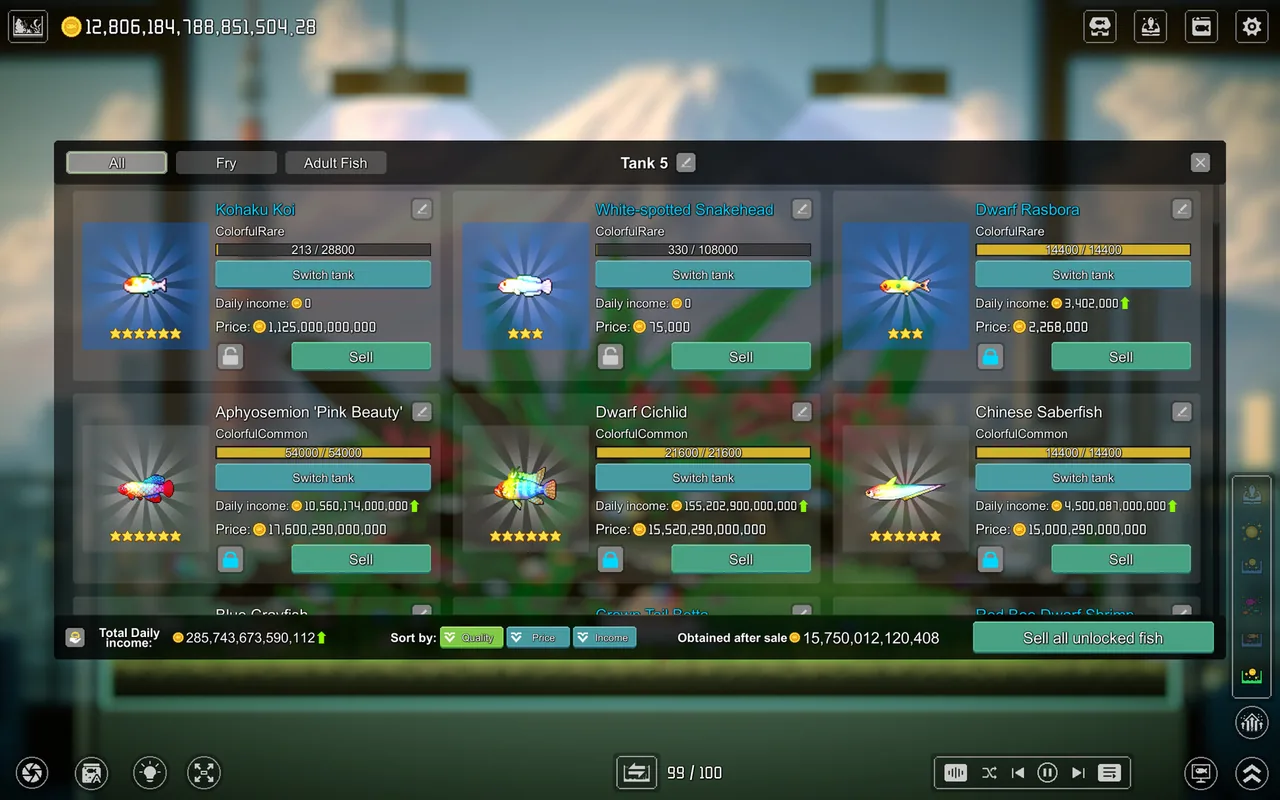
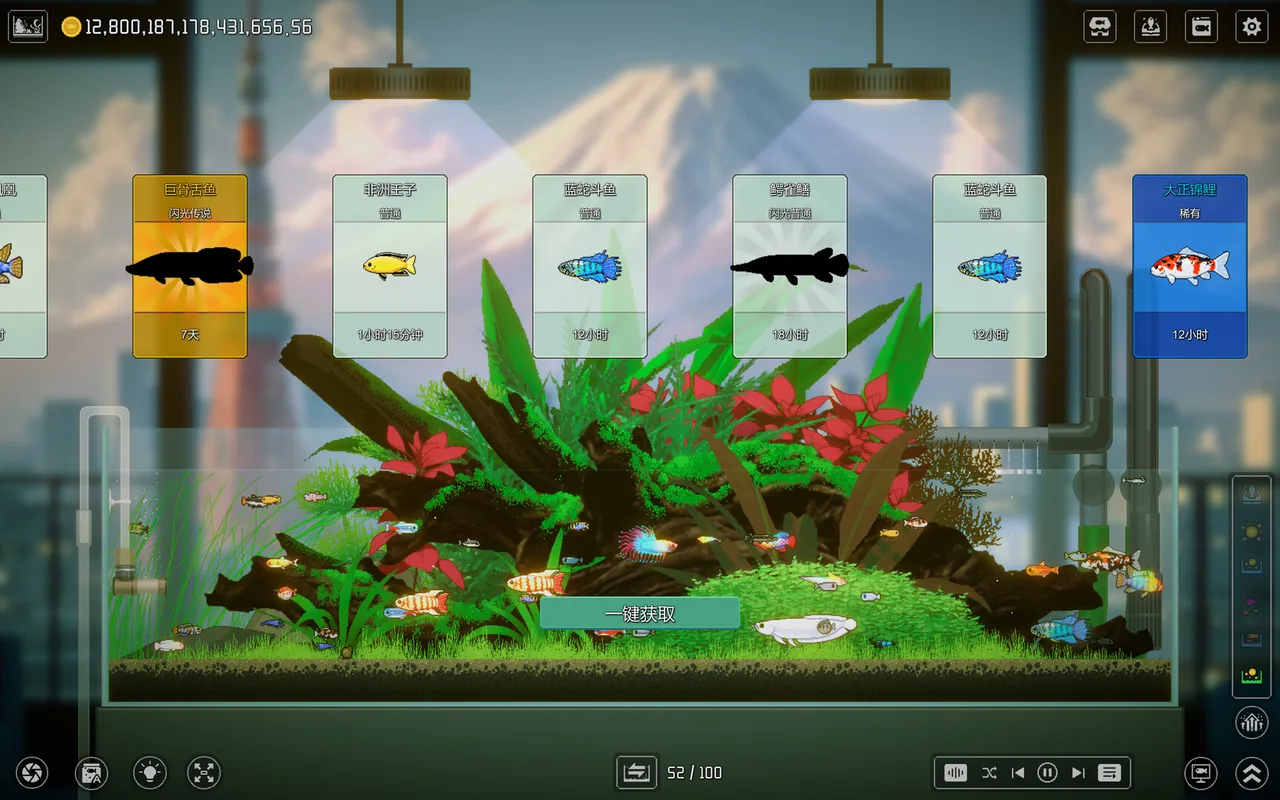
The task the aggregator tag sets is easy to check and worth checking properly, because a vote-based tag needs no purchase to apply. Steam's vote-weighted community tags (not the developer-ordered pills shown by default) put Creature Collector on top with 273 votes, Idler second at 265, Simulation third at 260, then Fishing, Relaxing, Economy, Casual and Incremental eighth at 237 — all within one voting community of a few hundred people. That's a legitimate idler by its own audience's judgement, not an aggregator mislabel: Idler and Incremental together outvoted every tag except the collection hook itself, and by a margin of eight votes at most. The mechanics back it up. Fry hatch on real-world timers from ten minutes to seven days, can be sped up but not skipped, and adult fish sitting in a tank keep generating coin income whether or not you're at the keyboard. A "Sell all unlocked fish" button and a quality/price/income sort exist specifically so an idle player can check in, harvest and leave. This is not a game wearing the label for search traffic.
What the loop actually rewards
Where Joyquarium earns real credit is a system Chillquarium — its closest comparison in this library and the game its own critics keep naming — doesn't have. Certain tank bonuses require holding a themed set of rare adult fish from a specific tier, and completing that set adds a percentage to every adult sale from that tank going forward. That turns collecting into more than a number filling up a checklist: it feeds back into the economy that's driving everything else, which is exactly the kind of secondary system Wanderer's Chillquarium review flagged as missing from that game's purely cosmetic decorations. The decoration catalogue itself is large and genuinely tied to spending — plants, driftwood, landscaping stones, substrate, filters, misters, lighting, wallpaper, background scenery and full scene presets, priced from the low thousands up to 300 million coins in the screenshots, so late-game money has somewhere real to go beyond just buying the next fry pack.
Rarity works in three visible bands — Normal, Shiny and Colorful — stacked with a one-to-five star system, and the fry-pack gacha odds get predictably brutal at the top end, the same shape as every game in this genre. Global achievement data shows the curve clearly: several early milestones sit in the 55–85% range, a cluster of mid-tier ones holds around 32–45%, and then the bottom three drop to 11.4%, 12.7% and 14.6% — a real cliff below the mid-tier cluster, not a gentle taper. That's consistent with what the named achievements suggest is happening: currency milestones (a "Ten-Thousand" award sits at 85%, "Trillion-Club" at 76.6%) and per-tier "Full Collection" awards for each class of fry, which run from 71.8% down to 58.1% across the first six tiers the store page names. Wherever the unlabelled bottom three sit in that same progression, most buyers never reach them.
The clone accusation, and whether it holds
Only seven English-language negative reviews exist for Joyquarium, out of 64 total — a small enough sample that every one of them was read in full. Two raise the same specific complaint independently: one calls it "a clone" that "doesn't have any soul... compared to chillquarium," the other a "worse looking knockoff of Chillq[ua]r[iu]m." That's a serious charge to level at a game this library has already reviewed favourably, and it deserves a straight answer rather than a dismissal. Mechanically the games really do share a skeleton — buy fry, grow in real time, sell, reinvest — and Joyquarium adds nothing that reframes that skeleton the way, say, a breeding system or a tank ecology would. What it does add is scale: a bigger number ceiling, the tank-wide sell bonuses described above, and the wallpaper mode, which one of the same seven critics singled out as "the (barely working) best feature" even in an otherwise negative review. Whether that's enough daylight between the two games is a judgement call, and this review's answer is originality scored low rather than dismissed outright — Joyquarium is not shovelware wearing a fish skin, but it is standing close enough to a specific, better-supported predecessor that a shopper choosing between them should know it.
Playtime on the critics cuts the other way from the genre's usual pattern, worth noting plainly: the median negative review sits at 11.2 hours, while the median positive review sits noticeably higher at 25.7 hours. Normally a high-playtime negative corpus is the strongest evidence a complaint is real; here it's positive players who stuck around longest, which argues the core loop holds up fine for the people it's built for, and that the critics are describing a ceiling rather than a trap door.
The unfinished half, and the silence since
The most substantive complaint in the small sample comes from the two highest-playtime critics — 36 and 86 hours logged — and it's specific rather than a genre grumble: the saltwater side of the game feels "half cooked," decoration options there are "kind of bleak," and one reviewer suspects the developer "threw some saltwater fish into the game to make people shut up" rather than building it out properly. That reads uncharitably, but it's corroborated by the only evidence this review can check independently: Easyfun Studio's Steam news feed shows a "Sea tank content update" on 19 June 2025 — the saltwater rollout, roughly three months after the 27 March launch — followed by one more bugfix five days later, and then nothing except a Steam Awards nomination announcement in November
- As of this review there has been no further content or fix in over a year. Whatever state
saltwater tanks shipped in three months after launch is, by the evidence available, the state they're still in.
Recent sentiment hasn't moved because of any of this — the most recent 100 English reviews split exactly the same as the lifetime figure, 57 of 64 positive, so there's no active revolt here, just a game that stopped growing.
Reach and reception
Language matters more than usual here: of a 100-review sample pulled across all languages, 64 were Simplified Chinese against 18 English, and the full corpus confirms it — 427 of 570 total reviews (75%) are Simplified Chinese, against 64 English. Unlike cases where a single-language spike signals a creator's fanbase voting on loyalty rather than the game, Joyquarium's Chinese-language score sits at 90.9% positive, statistically identical to the 89.1% English figure and the 90.9% all-languages total. This looks like broad, genuine cross-market appeal for a cheap idler rather than a skewed sample propping up the headline number.
One negative review, out of the seven read, flags what it describes as undisclosed generative-AI backgrounds. The current Steam store page carries no AI-content disclosure section at all, so there is no developer statement either way to weigh against the claim — worth naming plainly rather than either repeating it as settled fact or ignoring it.
Final verdict
Joyquarium is a real idler, and the aggregator tag holds up under its own community's votes as well as under the mechanics: a scaling number-go-up economy, genuine Auto-AFK income, and a desktop wallpaper mode most rivals in this library don't offer. The tank-wide bonus system for completed rare-fish sets is a small but real piece of design depth, and at NZ$2.24 with no microtransactions anywhere in sight, the value case is easy to make on price alone.
It doesn't score higher because its own audience is right to notice how closely it tracks a same-priced, more consistently supported predecessor, because a whole ocean-water half of the game has sat visibly unfinished since mid-2025 with no acknowledgement since, and because the loop that's here runs its course quickly for anyone playing with any intent. Buy it for a second tank to run in the background, not as the first aquarium idler you own.
Players who want the aquarium-idler pitch handled with tighter focus and steadier support should read Wanderer's Chillquarium review first. Those who want their fish tank paired with an actual persistent world and other people to show it to might also want to look at Wanderer.
Pros and cons
Pros
- A working incremental economy sits under the fish-tank skin: fry-pack gacha, tank income that scales into the quadrillions, and Auto-AFK for genuinely passive play
- Tank-wide sell-price bonuses for collecting a themed set of rare adult fish give decorating and collecting an actual payoff, not just a cosmetic one
- A dedicated desktop wallpaper mode lets the tank run behind your icons, which is a real differentiator for the screensaver-idler crowd
- Clean monetisation — a single NZ$8.99 purchase (currently NZ$2.24 at 75% off) with no microtransactions or ads, and only a NZ$0.74 soundtrack as an optional extra
- 144 fish species at launch across freshwater and saltwater tanks, with a genuinely large decoration catalogue spanning plants, driftwood, stone, lighting and full scene presets
Cons
- Two of the seven English negative reviews call it a soulless clone of Chillquarium by name, and the vote-weighted community tags put the two games in the same lane almost exactly tied
- The saltwater half of the game is criticised as half-finished by the two highest-playtime critics in the English sample (36 and 86 hours), and nothing in the news feed contradicts them
- Support effectively stopped three months after launch — a content patch and a bugfix in June 2025, then silence except for a November 2025 Steam Awards nomination post
- The core loop runs dry fast for active players: one reviewer had every achievement in about 11 hours and reported no new interaction appearing after the first ten minutes
Screenshots
-
JoyquariumImage: Gamersky Games via Steam -
JoyquariumImage: Gamersky Games via Steam -
JoyquariumImage: Gamersky Games via Steam -
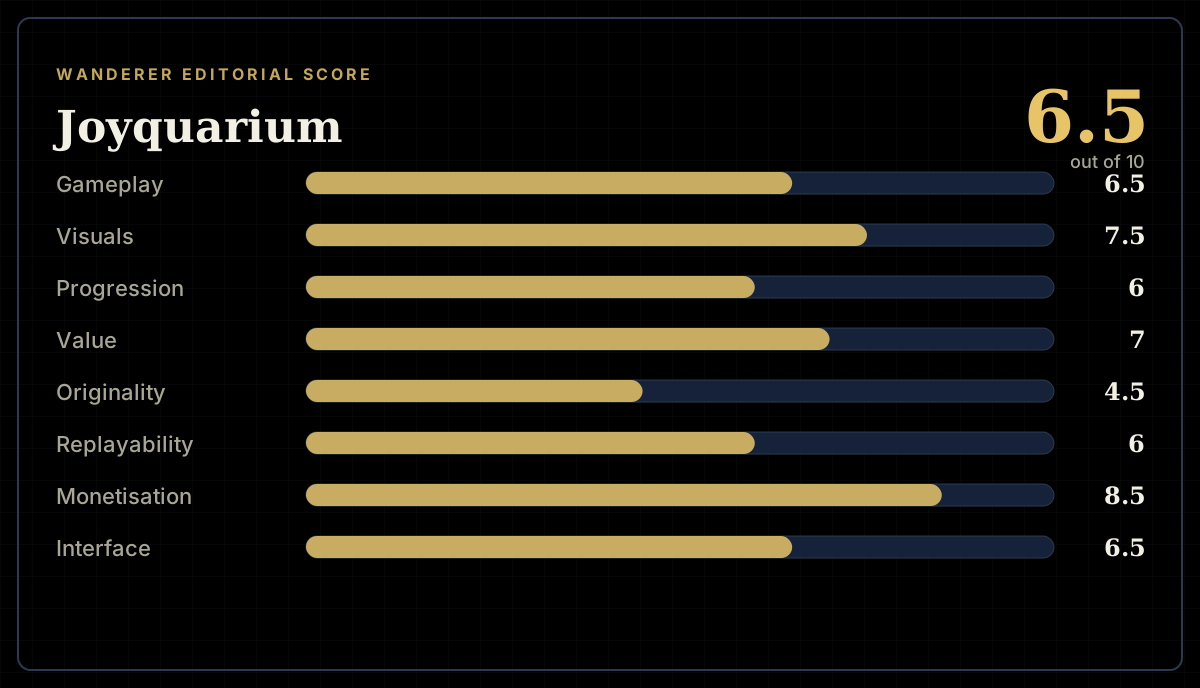
How the review scores each part of the gameWanderer Editorial -
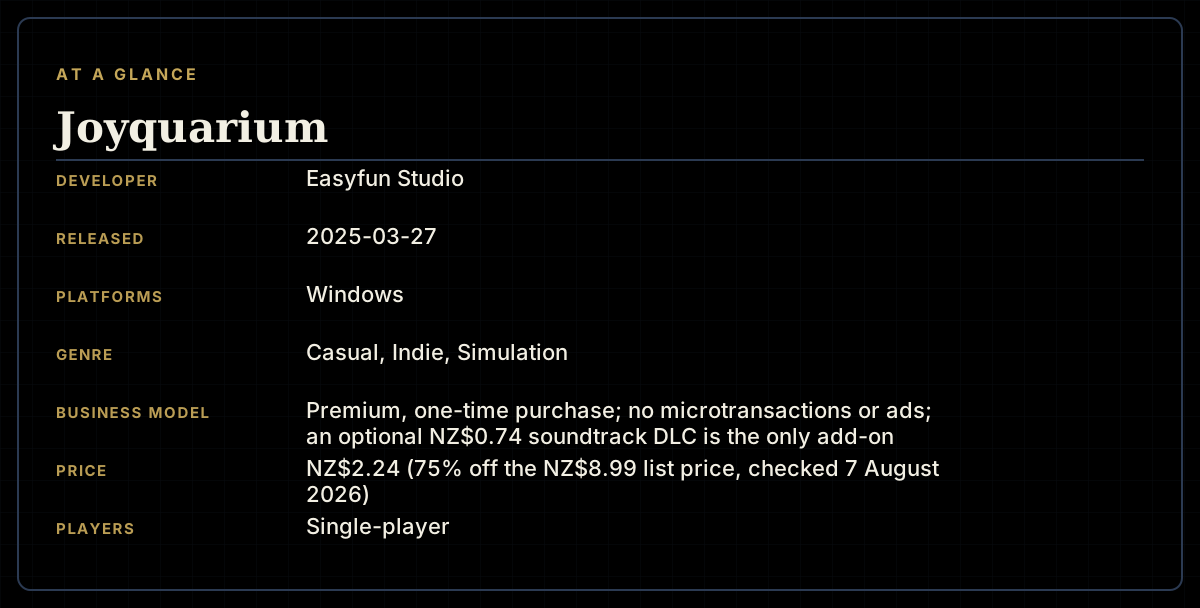
The facts at a glanceWanderer Editorial -
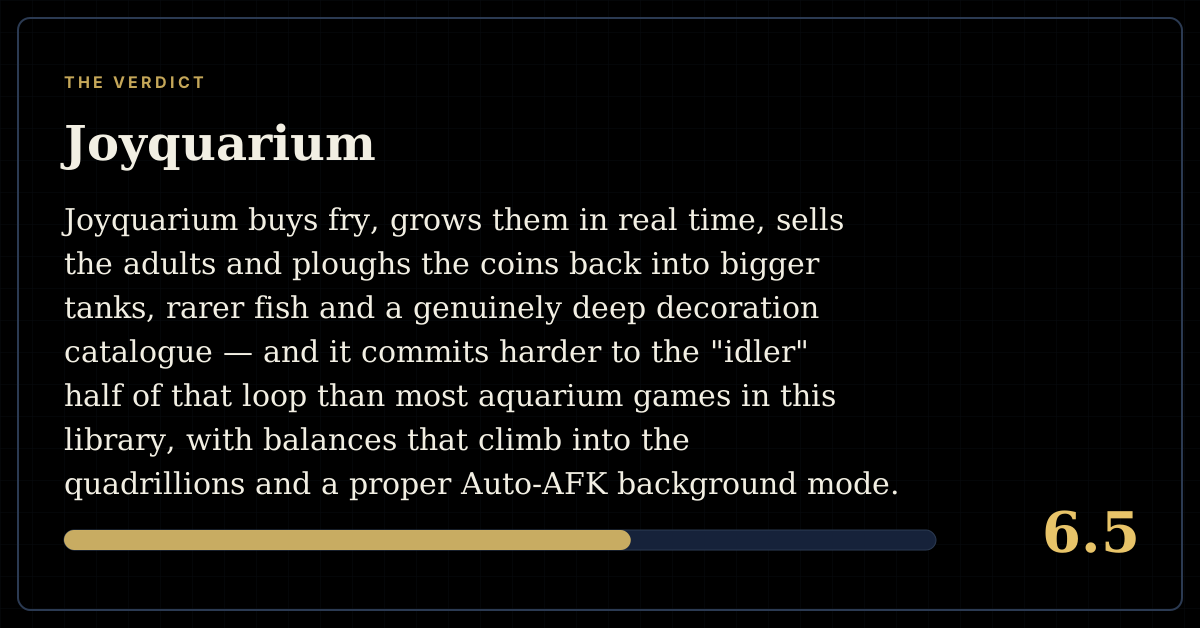
The short versionWanderer Editorial