
Game review
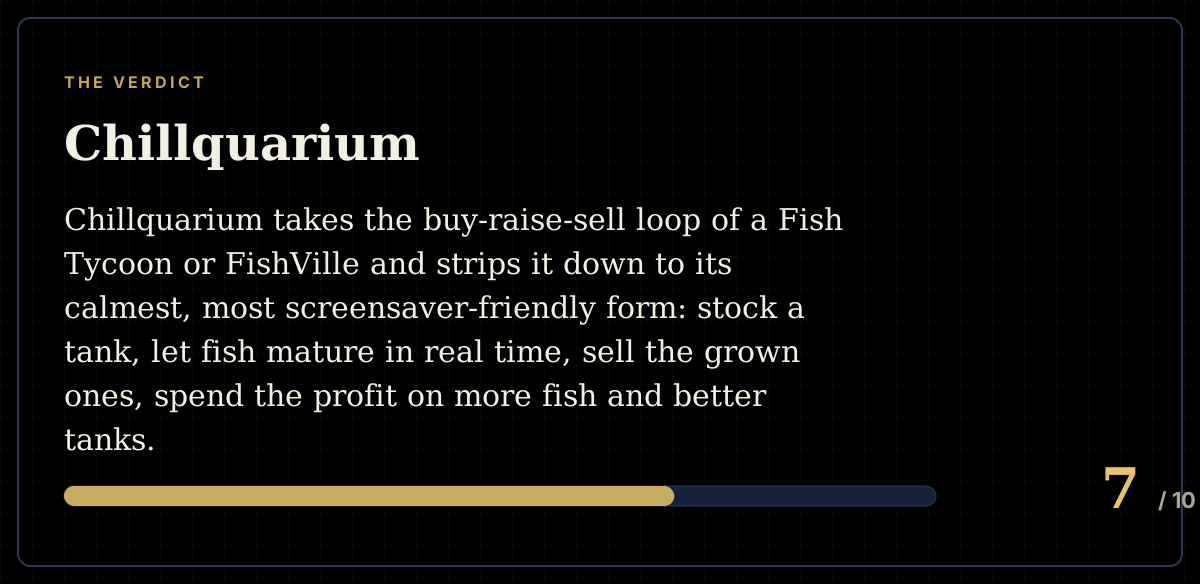
Chillquarium
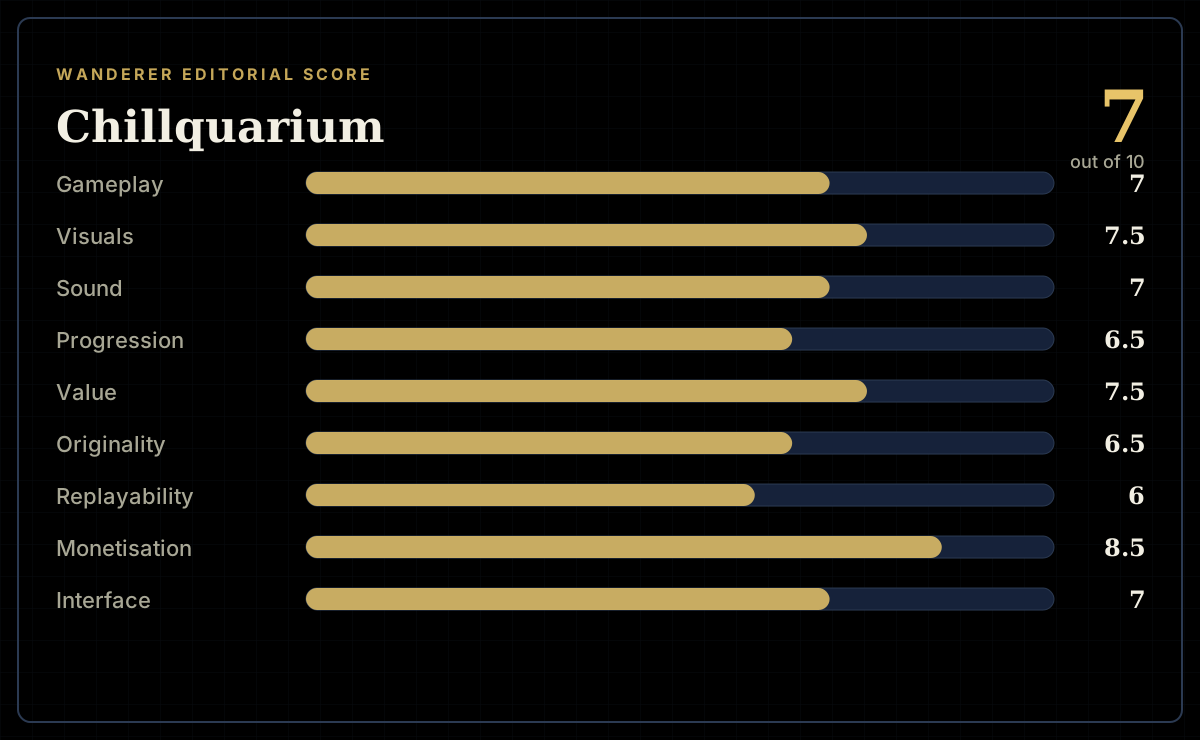
7 / 10
- Developer
- Ben Reber
- Publisher
- Ben Reber
- Released
- 6 September 2023
- Platforms
- Windows, macOS
- Genre
- Idle Simulation
- Monetisation
- Premium, one-time purchase; no microtransactions, energy systems or ads on the PC version; a free demo is available before buying
- Players
- Single-player
The short version
Chillquarium takes the buy-raise-sell loop of a Fish Tycoon or FishVille and strips it down to its calmest, most screensaver-friendly form: stock a tank, let fish mature in real time, sell the grown ones, spend the profit on more fish and better tanks. It's genuinely relaxing, the pixel-art fish are charming enough to justify the collecting instinct, and the price is fair for what it is — a one-time purchase with no microtransactions bolted on.
The trouble is that once the common fish are collected, which doesn't take long, the only thing left to chase is a rarity ladder so steep that a golden variant might take 150-200 pack purchases and a rainbow one months of patience. Decorations exist to look nice but touch none of the underlying systems. There's a real, well-made idle game here — it's just a shallow one once the honeymoon period ends.
Biggest strengths
- The four-tier rarity system (normal, painted, golden, rainbow) gives collectors a long tail of goals well past the point where the base roster is filled out
- An auto-feed option removes the tedium of manually clicking every fish to speed up maturation, which matters in a game meant to run in the background
- A single NZ$8.99 purchase with no microtransactions, ads or energy systems on PC, backed by a free demo, is an honest deal for the genre
Biggest weaknesses
- Once the normal-tier collection is complete, the loop narrows to grinding for golden and rainbow variants, and that grind is measured in months rather than sessions
- Aquarium decorations are purely cosmetic and don't affect fish growth, sale value or unlock anything, which makes their coin cost feel like a tax on players who want a nice-looking tank
- There's no breeding, no tank ecology, no combat and no social layer sitting underneath the buy-sell loop, so the entire game rests on one mechanic staying interesting indefinitely
Who it's for: Players who want a low-stress, low-commitment idle game to run in the background while doing something else, and who find satisfaction in a collection meter filling up rather than in deep systems underneath it.
Our recommendation: Worth the asking price for anyone who wants a genuinely relaxing idle game and doesn't mind that the endgame is mostly waiting on RNG. Try the free demo first if the gacha-style rarity chase sounds like it might frustrate rather than soothe you.
7 / 10
Chillquarium doesn't dress up what it is. You buy fish, you watch them grow in real time, you sell the grown ones, and you spend the proceeds on more fish and better tanks. Solo developer Ben Reber built the whole thing — code, art and music — over roughly four years as a deliberate throwback to Fish Tycoon and FishVille, and it shows in how confidently the game commits to being small, quiet and undemanding rather than reaching for systems it doesn't need.
A loop built for the background
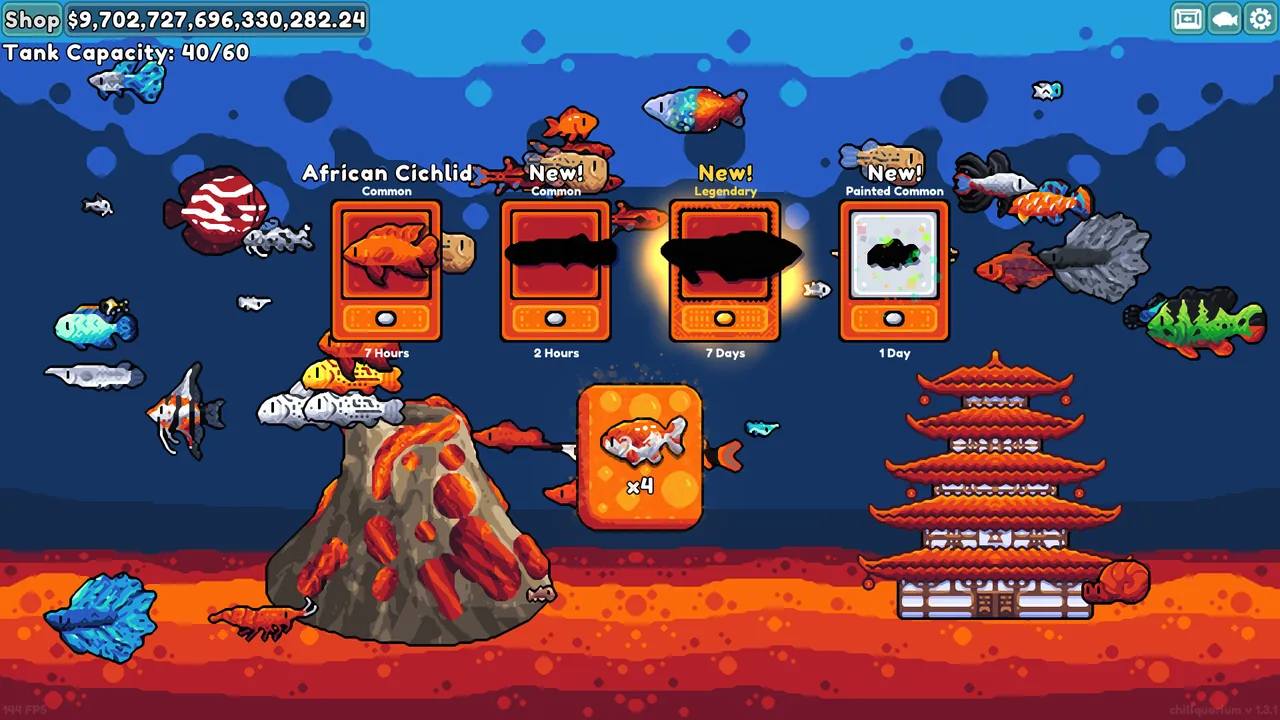
The core mechanic is a card-pack gacha wrapped around a fish tank. Packs of fish eggs cost coins, and each egg takes anywhere from ten minutes to seven days to mature depending on species and rarity, either passively or faster if you actively feed it. That range is the whole design philosophy in miniature: check in for thirty seconds between other tasks, or sit and actively tend the tank if that's more your speed. An auto-feed option quietly removes the worst of the tedium that would otherwise come from clicking every fish in a crowded tank, which matters a lot for a game whose entire pitch is "run this while you do something else."
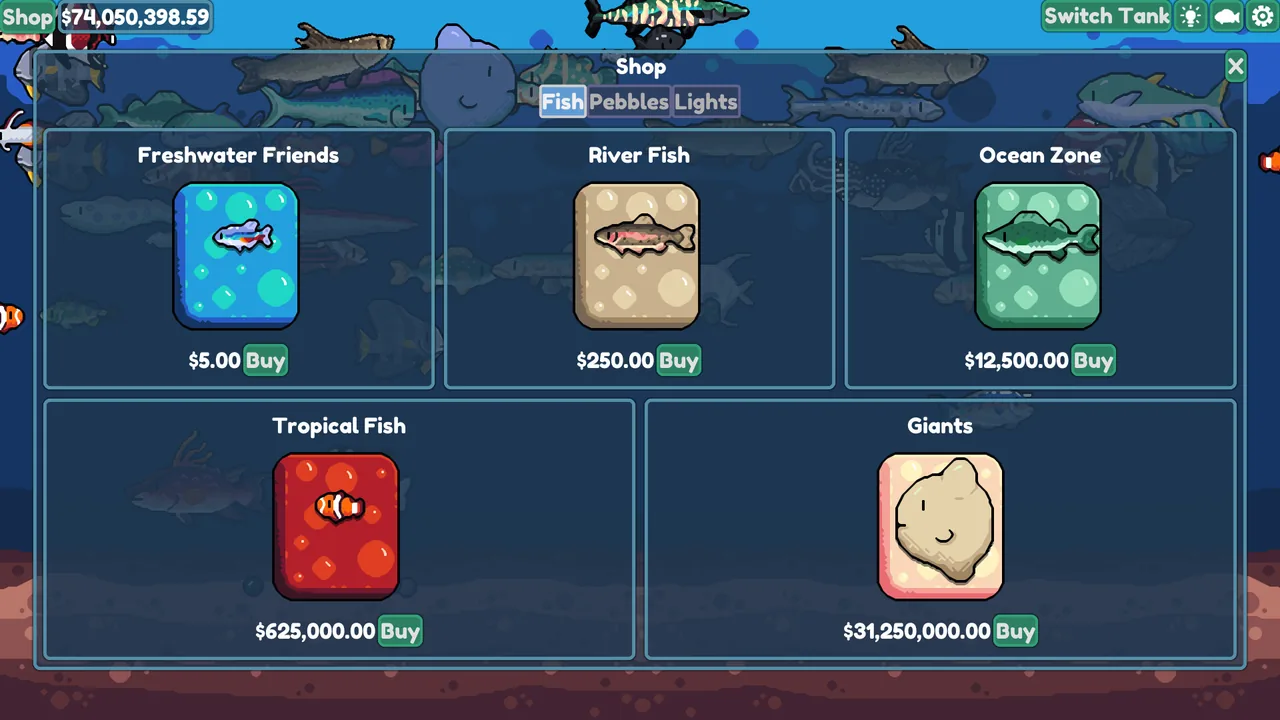
Selling mature fish funds the next round of packs, new tanks and expansions, and that's essentially the entire economic engine. It's simple to the point of being almost meditative, and for the audience this is built for — people who want a fish tank simulator, not a spreadsheet — that simplicity is the feature, not a shortcoming.
The rarity chase, and where it breaks down
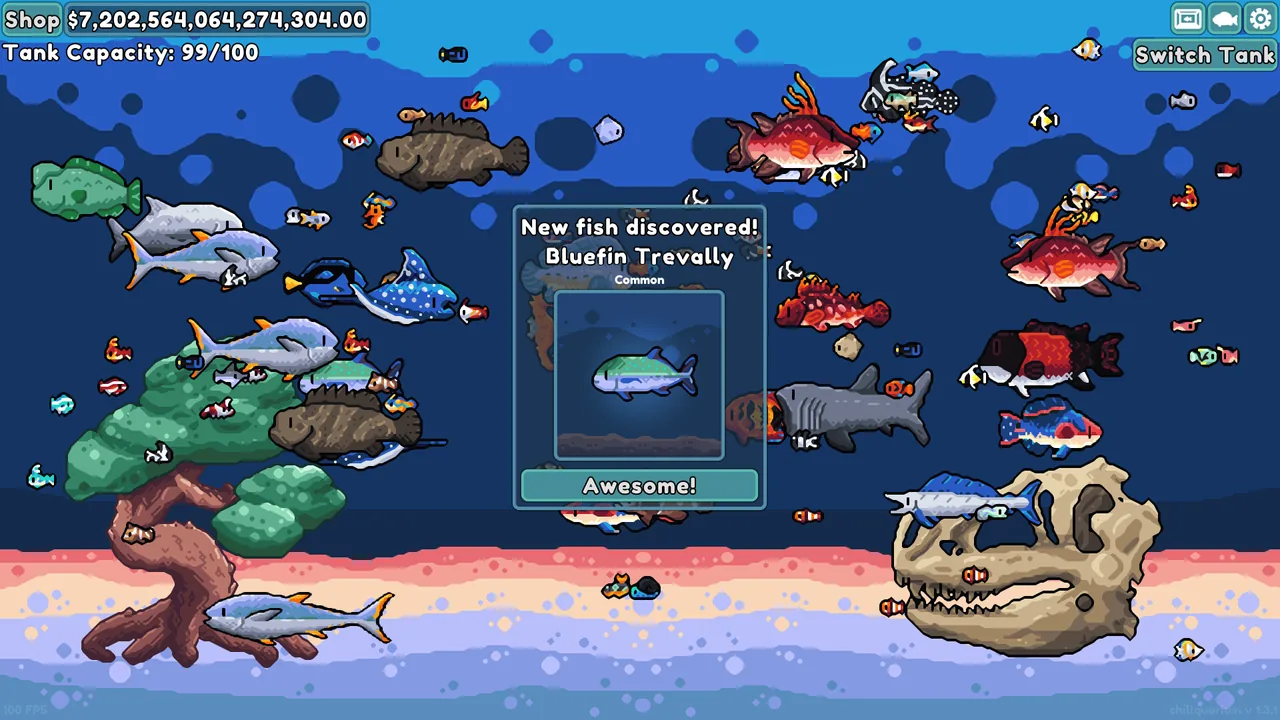
Every fish comes in four tiers: normal, painted, golden and rainbow, with the odds getting brutal fast. A common fish's normal variant might show up every few pack purchases; the golden version of that same fish can take 150 to 200 purchases to surface, and the rainbow "mythical" tier is realistically a months-long pursuit even for players buying packs regularly. That's a real, sustained long-term goal for the collector mindset the game is aimed at, and it's the single biggest reason Chillquarium has any legs beyond an opening week.
It's also where the game's honesty about its own limits starts to show. Filling out the normal- tier roster happens quickly and satisfyingly, and then the only remaining lever is waiting on RNG that doesn't meaningfully change no matter what you do. There's no secondary system — no breeding mechanic that lets you influence odds, no tank ecology that rewards experimentation, nothing that turns the rarity chase into a puzzle rather than a slot machine. Decorations exist to make a tank look better, but they don't feed into growth speed, sale value or any unlock, so spending on them is purely aesthetic — which is fine as an idea, but it means the economy has nowhere left to grow once the fish-buying itself stalls out waiting on drop rates.
Presentation and developer support
The pixel-art fish are simple but expressive enough that the collecting instinct actually works — species are distinct at a glance, and the painted, golden and rainbow variants of each one are different enough to be worth showing off rather than just a stat multiplier with a new palette swap. The ambient, unhurried sound design matches the pitch of the whole game: nothing here is trying to spike your attention, which is exactly right for a game meant to sit quietly in a corner of your desktop.
Credit is also due for ongoing support. Reports at launch in 2023 put the roster at roughly 100 fish; by the time the game moved onto Android in 2026, coverage of that release cited a collection that had grown past 150 species. For a solo developer, four-plus years of adding content to a premium, one-time-purchase game is a meaningfully different commitment than shipping and moving on, and it's the kind of long-term support that justifies revisiting a 2023 release rather than treating it as a closed book.
Monetisation and value
This is where Chillquarium is close to a model citizen. The PC version is a single purchase — NZ$8.99 as of this writing — with no microtransactions, no energy system gating how often you can play, and no ads. A free demo exists so you can confirm the loop suits you before paying anything. For a genre that's frequently built around drip-feeding premium currency, that's a genuinely refreshing structure, and it's a big part of why the value score here sits higher than the progression score around it.
The one asterisk is the Android release, which launched in Early Access through Snapbreak Games rather than Ben Reber directly, with a full mobile launch slated for August 2026. Mobile publishing partnerships for idle games have a well-worn habit of introducing monetisation the original PC release never had, and there's no way to know from the PC side whether that pattern holds here. It doesn't affect the game being reviewed, but it's worth knowing about if you're choosing a platform.
Final verdict
Chillquarium does exactly what it sets out to do: it's a calm, well-made idle aquarium that respects the "cozy" label rather than just wearing it as marketing. The four-tier rarity system, the auto-feed convenience and a genuinely fair, IAP-free price all add up to a game that's easy to recommend for a specific mood and a specific kind of player.
It doesn't score higher because there's only one mechanic doing all the work, and once the easy collection goals are cleared, what's left is a rarity grind measured in months with cosmetic decorations standing in for a real secondary system. That's enough to make the back half of the experience feel transactional rather than engaging, even for players who enjoyed the opening hours. Buy it for the loop it actually offers, not for the depth it never promised.
Players who want their fish-tank fantasy paired with a persistent world and other people to show their collection off to might also want to look at Wanderer.
Pros and cons
Pros
- The four-tier rarity system (normal, painted, golden, rainbow) gives collectors a long tail of goals well past the point where the base roster is filled out
- An auto-feed option removes the tedium of manually clicking every fish to speed up maturation, which matters in a game meant to run in the background
- A single NZ$8.99 purchase with no microtransactions, ads or energy systems on PC, backed by a free demo, is an honest deal for the genre
- Ben Reber has kept adding fish since the 2023 launch, taking the roster from roughly 100 species at release toward 150-plus by mid-2026
Cons
- Once the normal-tier collection is complete, the loop narrows to grinding for golden and rainbow variants, and that grind is measured in months rather than sessions
- Aquarium decorations are purely cosmetic and don't affect fish growth, sale value or unlock anything, which makes their coin cost feel like a tax on players who want a nice-looking tank
- There's no breeding, no tank ecology, no combat and no social layer sitting underneath the buy-sell loop, so the entire game rests on one mechanic staying interesting indefinitely
- The Android version launching under a different publisher raises the obvious question of whether its monetisation will match the clean, no-IAP PC release
Screenshots
-
ChillquariumImage: Ben Reber via Steam -
ChillquariumImage: Ben Reber via Steam -
ChillquariumImage: Ben Reber via Steam -
How the review scores each part of the gameWanderer Editorial -
The short versionWanderer Editorial