Game review
The Crossroads
6.3 / 10
- Developer
- HalfAssStudios
- Publisher
- HalfAssStudios
- Released
- 10 August 2026
- Platforms
- PC
- Genre
- Idle Tavern RPG
A tavern that lives in the corner of your screen
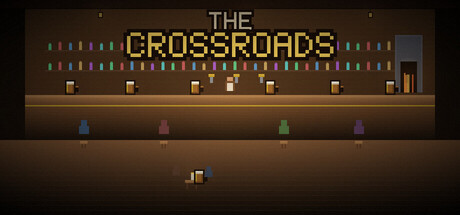
The Crossroads sells itself on a specific premise: a pixel-art tavern-management game designed to sit as a small overlay in the corner of the desktop, checked in on rather than sat down with. Holding Alt is documented to peek the tavern into view while another application has focus, echoing the same "runs alongside your real work" idea that idle games have been leaning into more this year. The tavern itself starts small — a "cute unknown" drink-serving shack, per the store's own description — and expands outward as gold accumulates: more tables, upgraded lodging, a guild hall, a workshop housing a forge, brew lab, and kitchen, plus a bard stage and dice table. The build-out is documented as fully idle on the economic side — patrons drink, tip, gamble, and sleep whether or not the player is watching — with the accumulated gold spent through a menu-driven "Build & Upgrade" panel.
Screenshots of that panel show exactly the structure the store page describes: tabbed categories for Tavern, Guild, Workshop, and Ledger upgrades, each listing a named building or feature with its current level, cost, and a one-line effect description — "More Tables Lv 4: room for 11 patrons," "Cellar Brewery Lv 2: drink prices +20%," and so on. It's a clean, legible presentation of what is otherwise a fairly dense economic system, and having it corroborated directly in a captured screenshot rather than taken purely on the developer's word is a reasonable baseline of confidence for a game with no review history yet to lean on.
The RPG layer is more than set dressing
What separates The Crossroads from a pure tavern-tycoon idler is the adventuring half sitting on top of the economy. Heroes — warriors, rangers, mages, rogues, and bards — wander into the tavern to be recruited, equipped, and trained, and are then sent out on turn-based quests: a six-chapter story campaign (billed as "The Waygate Saga") plus procedural contracts, with per-combatant initiative order, class-specific skill trees, and line-of-sight aggro mechanics documented as part of the combat system. A separate "Endless Depths" mode offers a procedural infinite dungeon with rising difficulty and permanent unlockable "Waygate Sigils," which reads as the game's answer to the genre's usual endgame-treadmill content once the main campaign is cleared.
On top of both halves sits a prestige system — Guild Renown — that resets progress for permanent bonuses, repeatable as many times as a player wants, alongside a separate long-term sink called the Ledger that's described as keeping gold meaningful indefinitely rather than letting numbers become irrelevant once the tavern is fully built. Between the economic building, the turn-based quest system, and two separate long-horizon progression tracks (Renown resets and Ledger investment), there's a genuinely layered structure documented here rather than a single idle loop with an RPG skin painted over it — assuming the systems function as described, which is the caveat that follows a game with zero player reviews to check that claim against.
What can't be verified yet
The honest limitation with The Crossroads right now is that it launched into a near-total review vacuum — zero user reviews on Steam as of this writing, roughly six weeks after release. That means there's no player feedback to draw on for how the turn-based combat actually plays out in practice, whether the class skill trees are meaningfully differentiated or lopsided the way several other early access idle RPGs reviewed this cycle have turned out to be, whether the procedural Endless Depths dungeon holds up as genuine endgame content or thins out quickly, or whether the desktop-overlay feature works as smoothly in practice as the "hold Alt to peek" pitch suggests. None of that is a mark against the game specifically — a quiet launch doesn't mean a bad one — but it does mean every mechanical claim in this review is sourced from the store page and its screenshots rather than corroborated by anyone who has actually played it for an extended stretch, and that distinction matters more here than it would for a game with even a handful of reviews to cross-check against.
Performance is scored conservatively for the same reason: there's no independent data at all on stability, load times, or how the overlay behaves when running for long stretches alongside other applications, which is exactly the kind of extended, unattended runtime this design depends on. That's a genuine unknown rather than a confirmed problem, but a genre built around "leave it running for hours" deserves more scrutiny than a store page alone can provide.
Where this sits among 2026's tavern-idlers
Tavern and guild-management idle games aren't a new idea — the genre has several established entries — but The Crossroads distinguishes itself through the combination rather than any single novel mechanic: full turn-based quest resolution with initiative and skill trees, a procedural endless dungeon mode, dual long-term progression sinks, and the desktop-overlay presentation aimed squarely at players who want a companion running quietly in a corner rather than a game demanding a dedicated session. Each piece individually has precedent elsewhere in the genre; stacked together and packaged into a single NZ$9.59 release, it reads as a reasonably ambitious scope for a small studio's full launch rather than an early access testbed.
Whether that ambition holds up under actual play — balance, pacing, and how quickly the Endless Depths content runs dry in particular — is exactly what the review sample would normally answer, and for now it can't. For anyone drawn to the tavern-builder-meets-turn-based-RPG pitch and comfortable being an early adopter on a release with no community track record yet, the documented feature set is genuinely more substantial than a typical single-hook idle game. For anyone who wants to see how a fanbase actually responds before committing, this is one worth watching rather than buying immediately — the review count, not the store page, will be the more reliable signal once it exists.
Screenshots
-
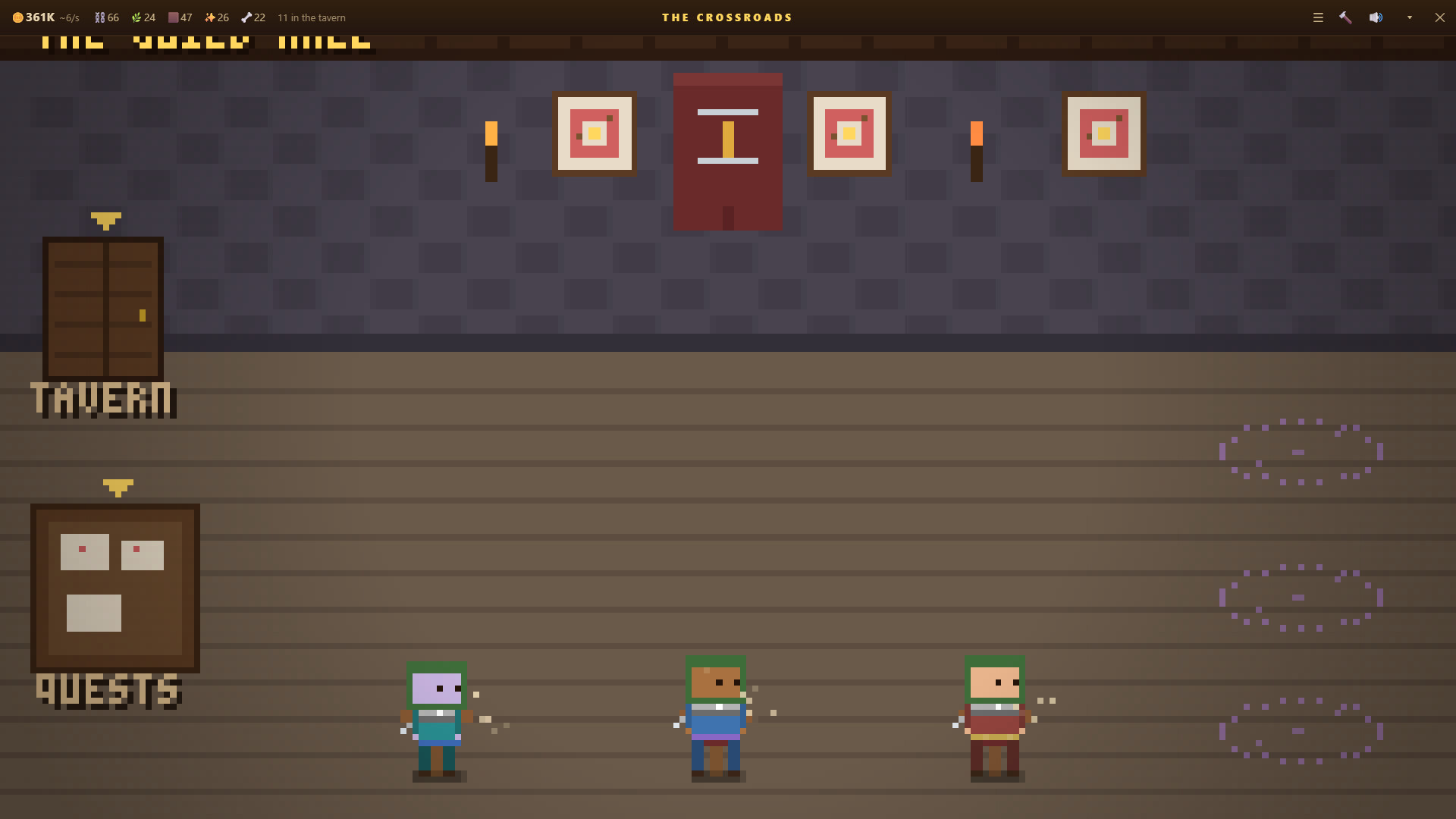
Recruits gather near the Guild Hall, where the quest board hands out contracts for the tavern's adventurers.Image: HalfAssStudios via Steam -
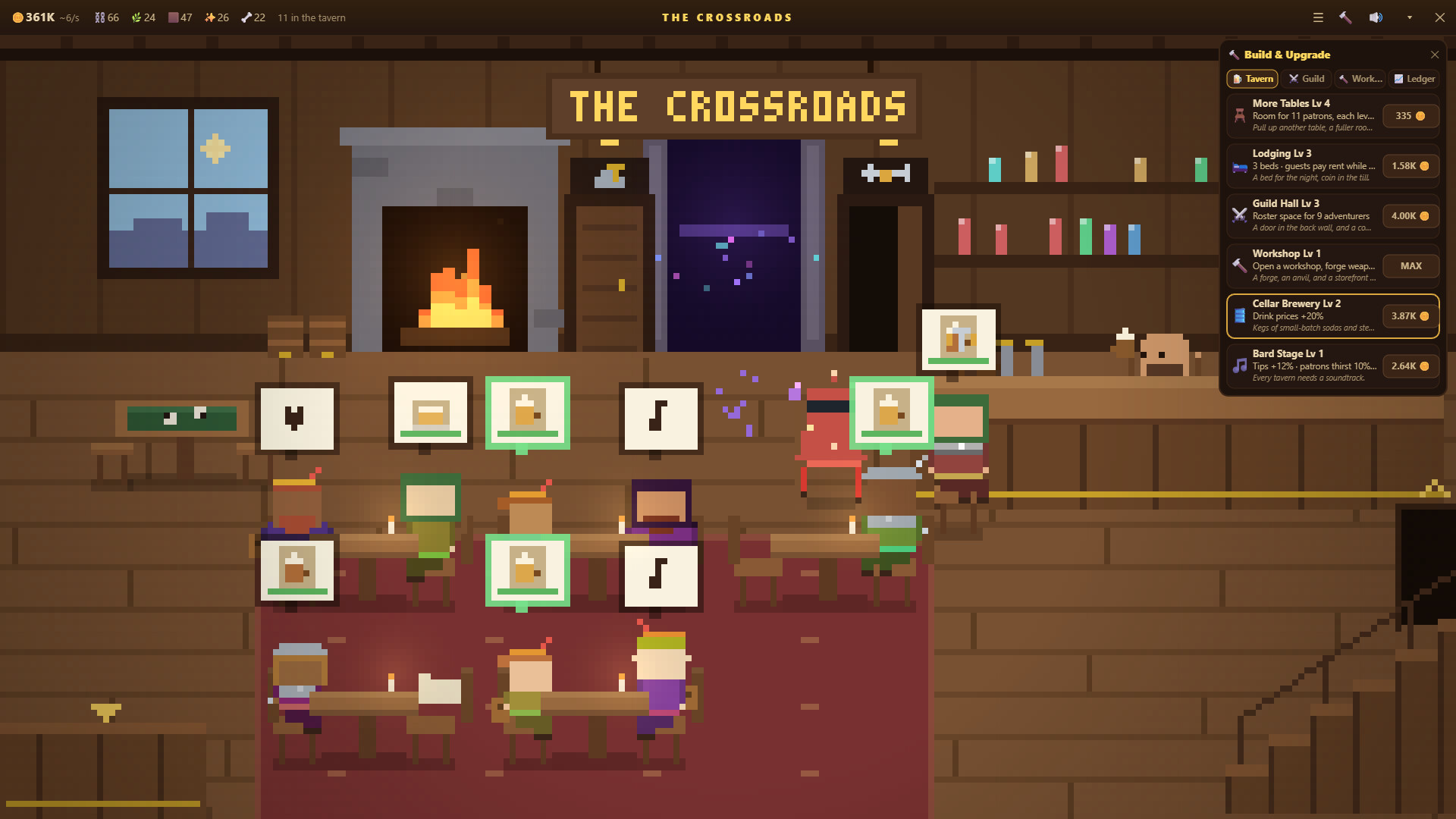
The Build and Upgrade panel lists tavern improvements by tab, each with a cost and a one-line effect description.Image: HalfAssStudios via Steam -
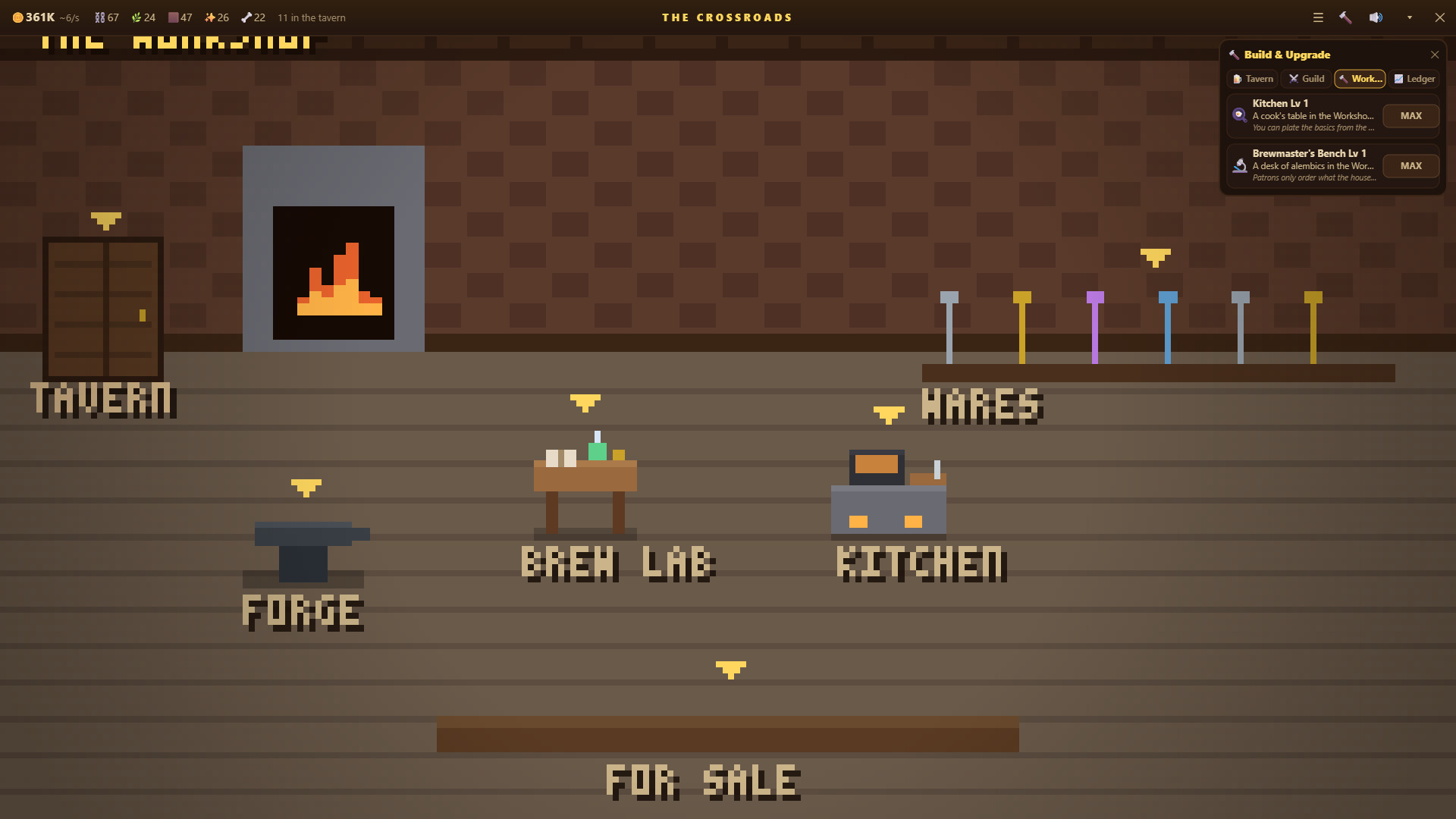
The Workshop houses the Forge, Brew Lab, and Kitchen stations that support the tavern's crafting and cooking systems.Image: HalfAssStudios via Steam