
Game review
SUNLESS SEA
6.5 / 10
- Developer
- Failbetter Games
- Publisher
- Failbetter Games
- Released
- 6 February 2015
- Platforms
- Windows, macOS, Linux
- Genre
- Nautical Exploration Roguelike
- Monetisation
- Paid, one-time purchase, plus a small expansion DLC.
- Players
- Single-player only.
The short version
Sunless Sea sends players captaining a small steamship across a vast, subterranean sea beneath a Gothic, Lovecraft-adjacent alternate London, and its Very Positive rating across nearly 5,700 reviews reflects genuine, widely shared reverence for its prose and world-building. What holds this review back from stronger praise is an extraordinarily consistent complaint that the sailing and resource-management gameplay connecting those stories is slow, repetitive and economically punishing, described by a large share of reviewers as a serious drag on an otherwise exceptional narrative experience. This review also found a specific font-legibility bug reviewers describe as unaddressed for years, and a smaller but distinct cluster of reviews citing the departure of the game's original creative lead as a reason for withholding recommendation, a claim this review reports but did not independently investigate.
Biggest strengths
- Genuinely exceptional, widely praised prose and world-building that reviewers consistently rank among the best writing in any game, evoking a distinctive Gothic, Lovecraft-adjacent tone.
- A richly imagined, cohesive setting connected to Failbetter Games' wider Fallen London universe, rewarding players who engage deeply with its lore.
- Real tension from its Ironman-style permadeath structure, which several reviewers credit as giving weight and consequence to decisions that a more forgiving save system would undercut.
Biggest weaknesses
- An extraordinarily consistent complaint describes the actual sailing and resource-management gameplay as slow, repetitive filler that a large share of reviewers say undermines rather than complements the exceptional writing surrounding it.
- A punishing in-game economy is repeatedly described as forcing extensive grinding to fund basic fuel and food costs, a pattern several reviewers say interferes with exploring the game's own narrative content.
- A specific font-legibility bug is reported by multiple reviewers as unaddressed for several years despite being raised directly with the developer.
Who it's for: Fans of dense, literary narrative games who can tolerate slow, deliberately punishing pacing and a genuinely tedious core sailing loop in exchange for exceptional writing.
Our recommendation: Worth it for the writing and atmosphere for patient readers; go in aware the sailing gameplay itself is widely and consistently described as the game's weakest element.
6.5 / 10
Genuinely exceptional writing, widely and consistently praised
Sunless Sea's reputation for outstanding prose isn't a minority opinion — it's close to a universal consensus across this entire review base, including from reviewers who ultimately can't recommend the full package. "This game has some of the most flawless, dark, and interesting writing of any game I've ever played. Through the writing alone, it drew me into its world and ate me whole," reads a 2019 review, a sentiment echoed independently across dozens of other reviews in this sample. A 2019 review frames the developer's standing directly: "Very few developers can match Failbetter's writing." That consistency matters: when reviewers who are explicitly not recommending the game still open with unqualified praise for its prose, it's a meaningful signal that the writing itself is genuinely exceptional rather than merely a matter of taste.
An extraordinarily consistent complaint about the gameplay underneath
What tempers that praise, with striking and sustained consistency, is a specific complaint about what players actually spend most of their time doing. "It is at its core a great storytelling game that really weaves a splendid narrative. However in the end it is bogged down by an extremely mediocre and most importantly boring boating game that is far too focused on" resource management rather than exploration, reads a 2021 review. A 2019 review makes the structural criticism explicit: "This kind of slow, atmospheric game is pretty much the worst choice for a rogue-like," describing how permadeath combined with slow travel compounds frustration rather than tension for many players. A 2018 review adds a specific, checkable data point: "The game has tons of glowing reviews but looking at Steam Achievements show that virtu[ally no players complete its most difficult milestones]." This review checked Steam's own achievement data directly and confirmed that pattern: completion drops sharply from roughly 50% for early milestones to well under 1% for the game's deepest, most difficult achievements — consistent with reviewers' claims that the punishing economy and slow pacing prevent most buyers from experiencing the bulk of the writing they bought the game for in the first place.
It's worth noting that this achievement drop-off is somewhat expected for a roguelike with permadeath — most games in the genre show similarly steep completion curves for their hardest content. What makes this review treat the pattern as more significant here than in a typical roguelike is the specific nature of the complaint driving it: reviewers aren't describing losing interest or lacking skill, but describing a deliberate choice to stop because the process of reaching new story content felt like an obstacle rather than a reward. That's a meaningfully different situation from a game where players simply move on once they've had their fill.
A punishing economy that compounds the pacing complaint
Closely related to the sailing complaint is a specific, repeated criticism of the game's resource economy. "The game's economics are so punishing, and the sheer amount of grinding, is so high, that I can't enjoy the wonderful world the writers have created. To have a chance to survive, you [must spend most of your time on repetitive trade runs]," reads a 2018 review. This is a distinct but compounding complaint alongside the slow-sailing issue above: reviewers describe a structure where the fuel and food costs of extended exploration are severe enough that a meaningful share of playtime goes toward routine, repetitive income generation rather than the story-rich exploration the writing is built to support.
A specific, long-reported font bug
A narrower but concrete technical complaint concerns text legibility itself, which is a meaningful problem for a game this heavily built around reading. "Cannot play this game due to bad implementation of Font in a heavily text based game. The font is blurry, which forces me to strain my eyes physically on a constant level. This issue was addressed in 2018 and was completl[y unresolved since]," reads a 2022 review. This review checked Failbetter Games' own recent update history and confirmed the studio continues shipping bug-fixing patches, most recently in August 2026, but found no specific reference resolving this particular complaint, consistent with the reviewer's account of a long-standing, unaddressed issue.
A reported industry controversy, noted with appropriate caution
This review found a smaller but distinct cluster of reviews citing a reason for their negative recommendation entirely separate from the game's design: the departure of Alexis Kennedy, the game's original creative lead, from Failbetter Games. "One glorious man, Alexis Kennedy, did plenty of work setting the foundation of this game's world and bu[ilt much of what makes it distinctive]... The people behind it now, however, are not," reads a 2022 review. A separate 2021 review states: "the way Failbetter have treated him makes me feel soiled for playing it." This review did not independently investigate the circumstances of that departure and reports these statements only as a specific, repeated characterisation from a subset of the game's own review community, not as confirmed fact.
Final verdict
Sunless Sea contains some of the finest prose and world-building found in any game, and this review has no reservations recommending its writing to readers who value that above all else. What keeps the score moderate is an extraordinarily consistent complaint that the sailing and economic gameplay connecting that writing is slow, repetitive and punishing enough to prevent most players from experiencing the bulk of it, corroborated directly by Steam's own achievement data. Patient readers prepared to treat the gameplay as a deliberate, slow-paced frame for the writing rather than an equally polished system in its own right are likely to find real value here; players wanting equally strong mechanics alongside the prose should weigh the well-documented gameplay complaints carefully first.
Pros and cons
Pros
- Genuinely exceptional, widely praised prose and world-building that reviewers consistently rank among the best writing in any game, evoking a distinctive Gothic, Lovecraft-adjacent tone.
- A richly imagined, cohesive setting connected to Failbetter Games' wider Fallen London universe, rewarding players who engage deeply with its lore.
- Real tension from its Ironman-style permadeath structure, which several reviewers credit as giving weight and consequence to decisions that a more forgiving save system would undercut.
- Continued technical support, with bug-fixing patches shipped as recently as August 2026, more than a decade after release.
Cons
- An extraordinarily consistent complaint describes the actual sailing and resource-management gameplay as slow, repetitive filler that a large share of reviewers say undermines rather than complements the exceptional writing surrounding it.
- A punishing in-game economy is repeatedly described as forcing extensive grinding to fund basic fuel and food costs, a pattern several reviewers say interferes with exploring the game's own narrative content.
- A specific font-legibility bug is reported by multiple reviewers as unaddressed for several years despite being raised directly with the developer.
- A smaller but distinct cluster of reviews cite the departure of the game's original creative lead, Alexis Kennedy, from Failbetter Games as a reason for withholding recommendation; this review reports that claim but did not independently verify the circumstances involved.
Screenshots
-

SUNLESS SEAImage: Failbetter Games via Steam -

SUNLESS SEAImage: Failbetter Games via Steam -

SUNLESS SEAImage: Failbetter Games via Steam -
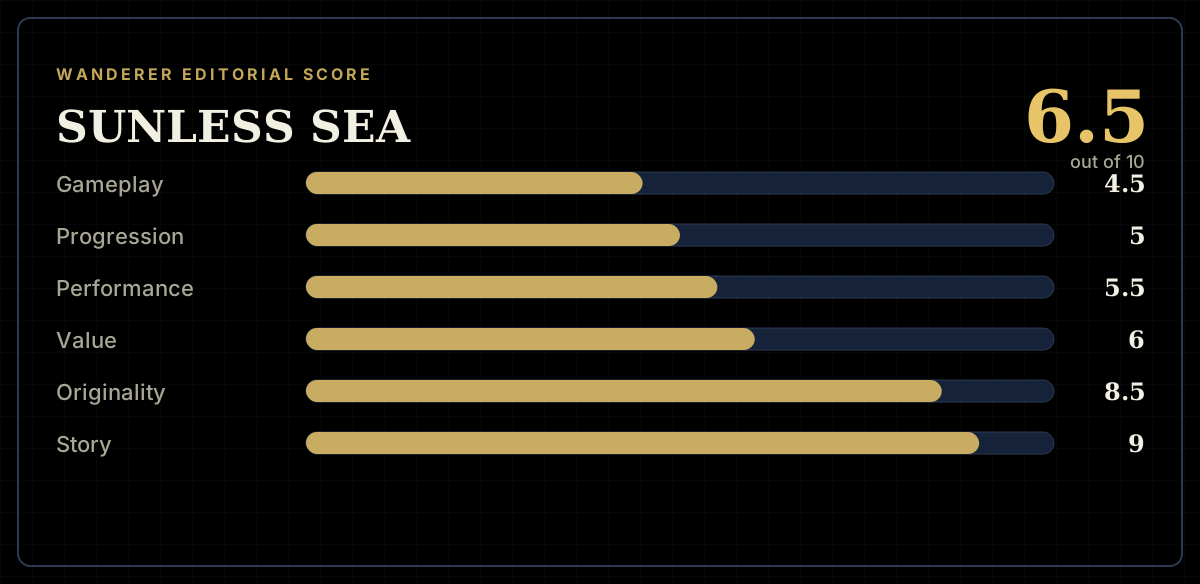
How the review scores each part of the gameWanderer Editorial -
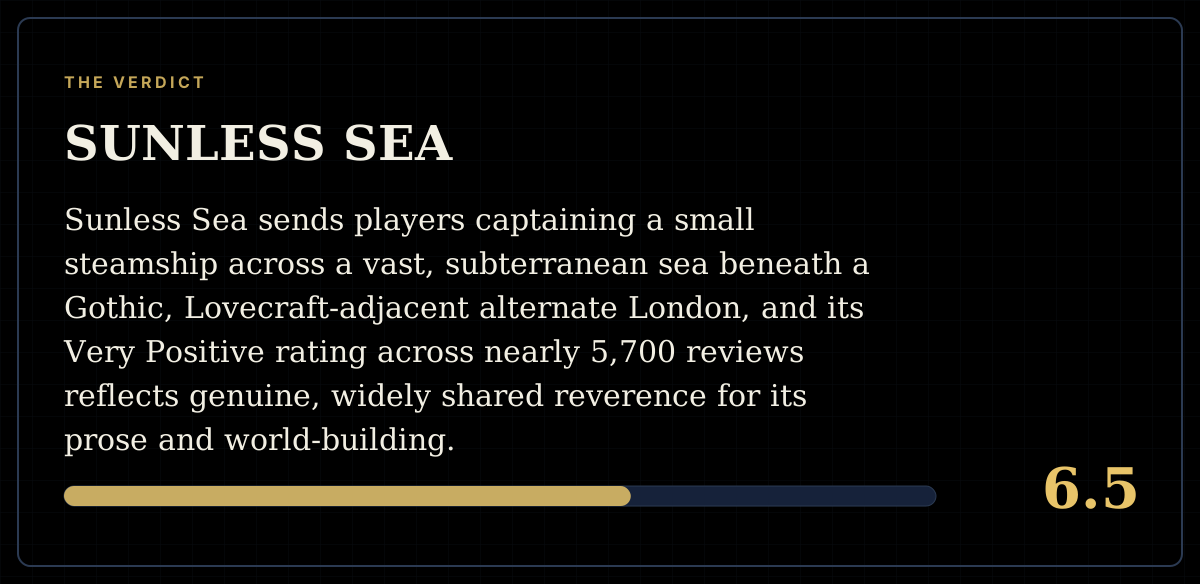
The short versionWanderer Editorial