Game review
Summum Aeterna
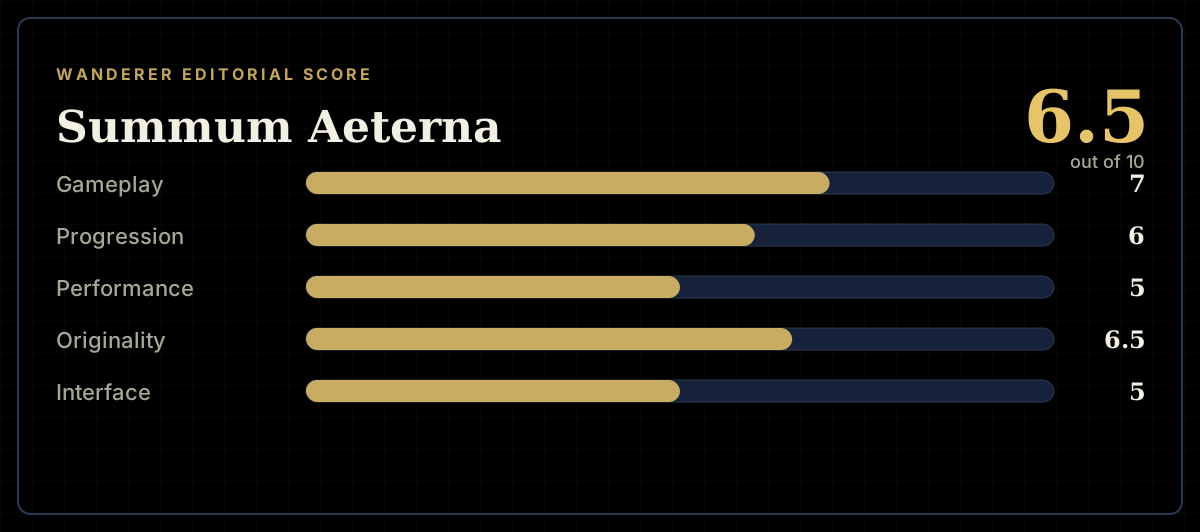
6.5 / 10
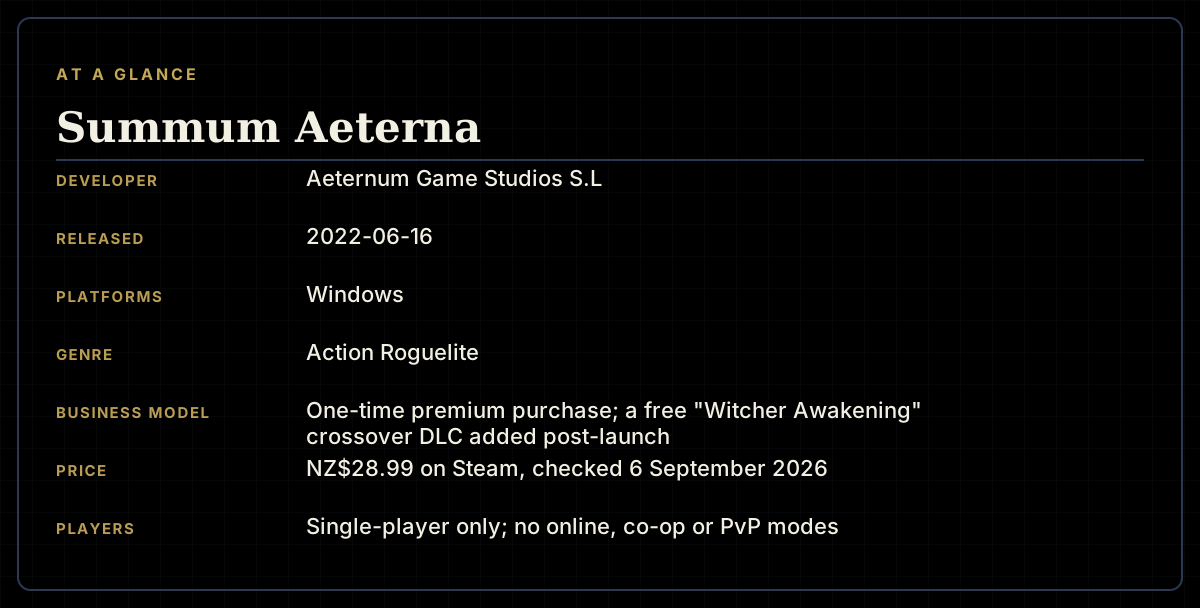
- Developer
- Aeternum Game Studios S.L
- Publisher
- Aeternum Game Studios S.L
- Released
- 16 June 2022
- Platforms
- Windows
- Genre
- Action Roguelite
- Monetisation
- One-time premium purchase; a free "Witcher Awakening" crossover DLC added post-launch
- Players
- Single-player only; no online, co-op or PvP modes
The short version
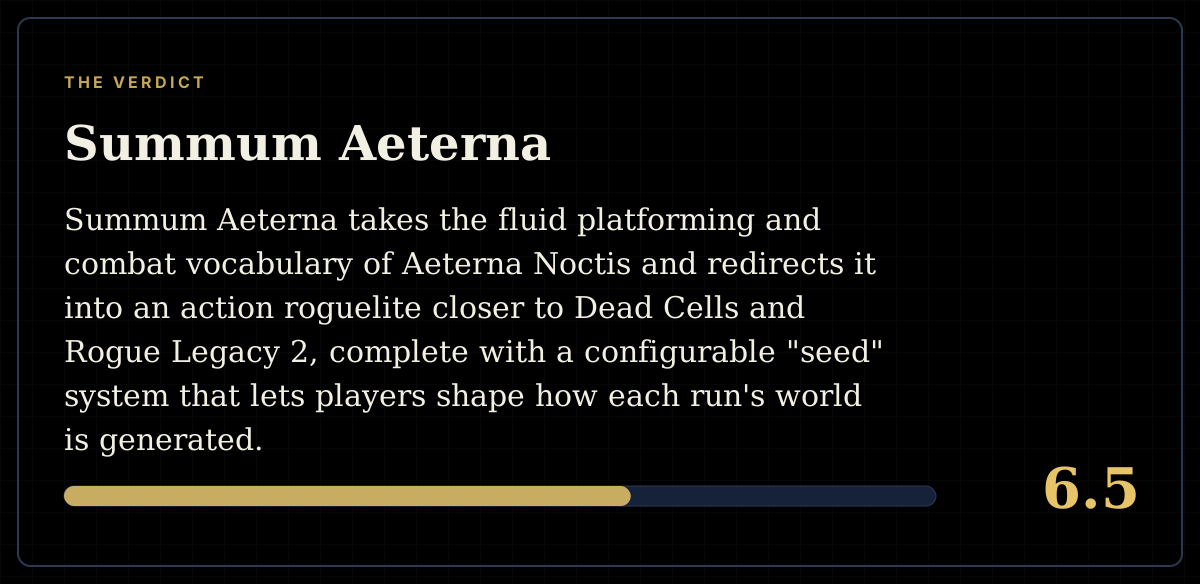
Summum Aeterna takes the fluid platforming and combat vocabulary of Aeterna Noctis and redirects it into an action roguelite closer to Dead Cells and Rogue Legacy 2, complete with a configurable "seed" system that lets players shape how each run's world is generated. Reviewers who click with it consistently call the moment-to-moment combat and meta-progression genuinely excellent, several going as far as calling the game criminally underrated.
A substantial share of critical reviews describe something close to the opposite experience: meta-progression spread thin across roughly six separate currencies that several reviewers say dilutes any single upgrade's impact, no way to fully remap controls to a preferred keyboard and mouse layout, and measurably weaker performance than genre peers on identical hardware. A more serious, specific accusation from at least one detailed reviewer concerns the developer's own conduct toward players requesting changes — a claim this review can't verify independently but reports as stated.
Biggest strengths
- Combat and platforming reviewers repeatedly compare favourably to Dead Cells and Rogue Legacy 2, inheriting fluid movement fundamentals from Aeterna Noctis and building genuinely satisfying action on top
- An unusually deep, configurable "world seed" system letting players shape run parameters directly, alongside extensive meta-progression with 160 tracked achievements confirming a large amount of trackable content
- A genuinely dense, sustained Early Access development cycle with numerous named major updates across its first year, plus a free "Witcher Awakening" crossover DLC added after full release
Biggest weaknesses
- Meta-progression is spread across roughly six separate currencies, which a substantial share of reviewers describe as diluting any single upgrade's meaningful impact and inflating the grind needed to reach the content that matters
- Reviewers report no way to fully remap controls to a preferred keyboard-and-mouse layout, specifically citing an inability to bind movement to WASD alongside mouse-based attacks, a complete blocker for at least some players
- Multiple reviewers measured framerate directly against genre peers (Dead Cells, Rogue Legacy 2, Spelunky 2) on identical hardware and found Summum Aeterna alone failed to hold a stable frame rate, describing resulting stutter as affecting precision movement
Who it's for: Fans of Dead Cells- and Rogue Legacy-style action roguelites who want deep, if currency-heavy, meta-progression and don't need full control remapping. Less suited to anyone sensitive to inconsistent frame pacing or wanting a leaner, less grind-forward upgrade structure.
Our recommendation: Worth trying, ideally on a deep sale, for fans of its genre influences — just verify the default control scheme works for you and temper expectations around further updates, since the developer's public attention has clearly moved to newer projects.
6.5 / 10
Spinning off an acclaimed metroidvania into a different genre is a real risk, and Summum Aeterna takes that risk directly: it keeps Aeterna Noctis's fluid movement and visual identity, but rebuilds its structure around Dead Cells- and Rogue Legacy 2-style run-based combat and meta-progression. Reviewers who click with the result describe it in genuinely glowing terms — "criminally underrated" comes up more than once — while a substantial minority describe something closer to a grind-first structure that never quite earns the depth its systems promise.
Familiar movement, a new genre built around it
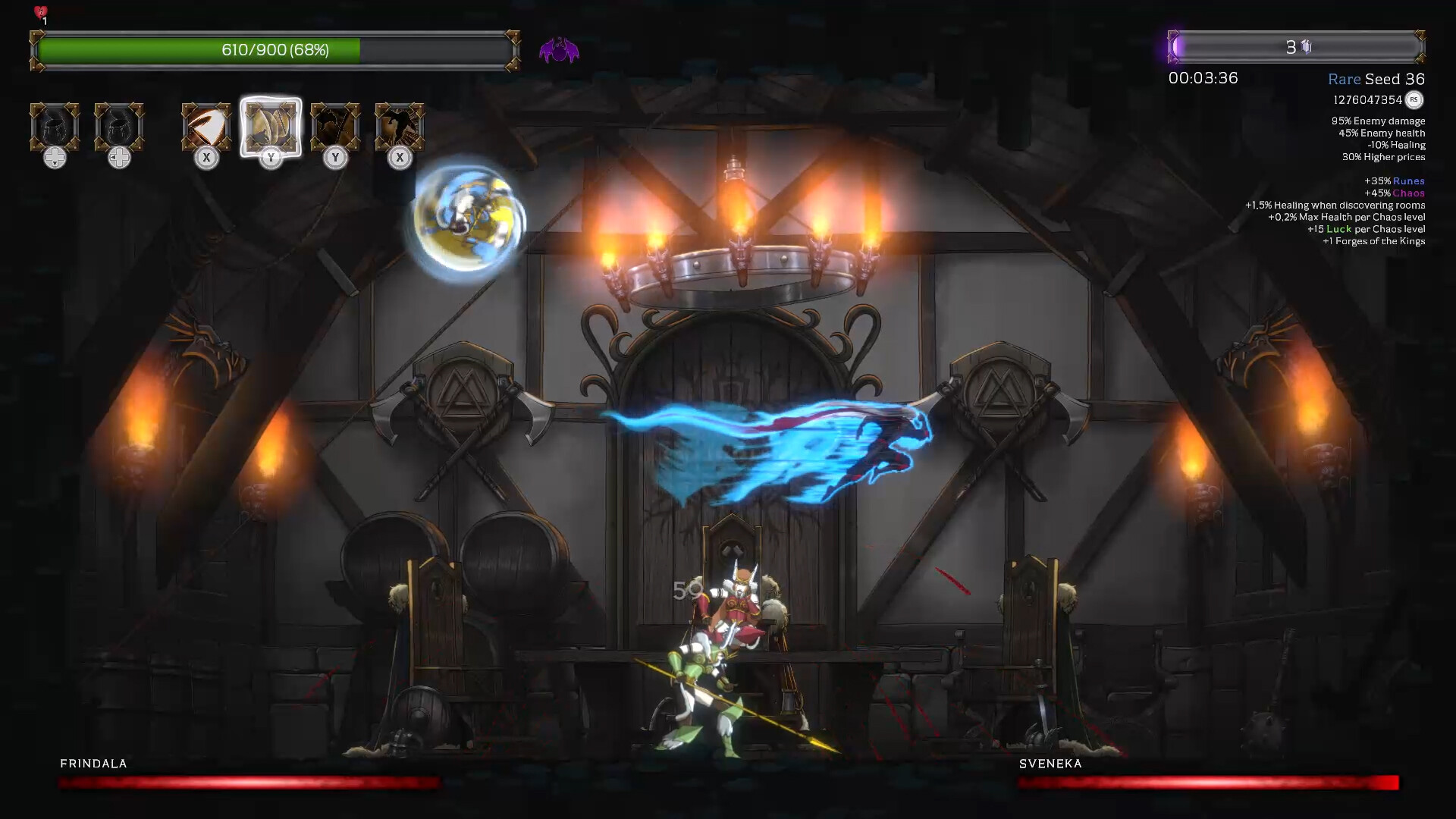
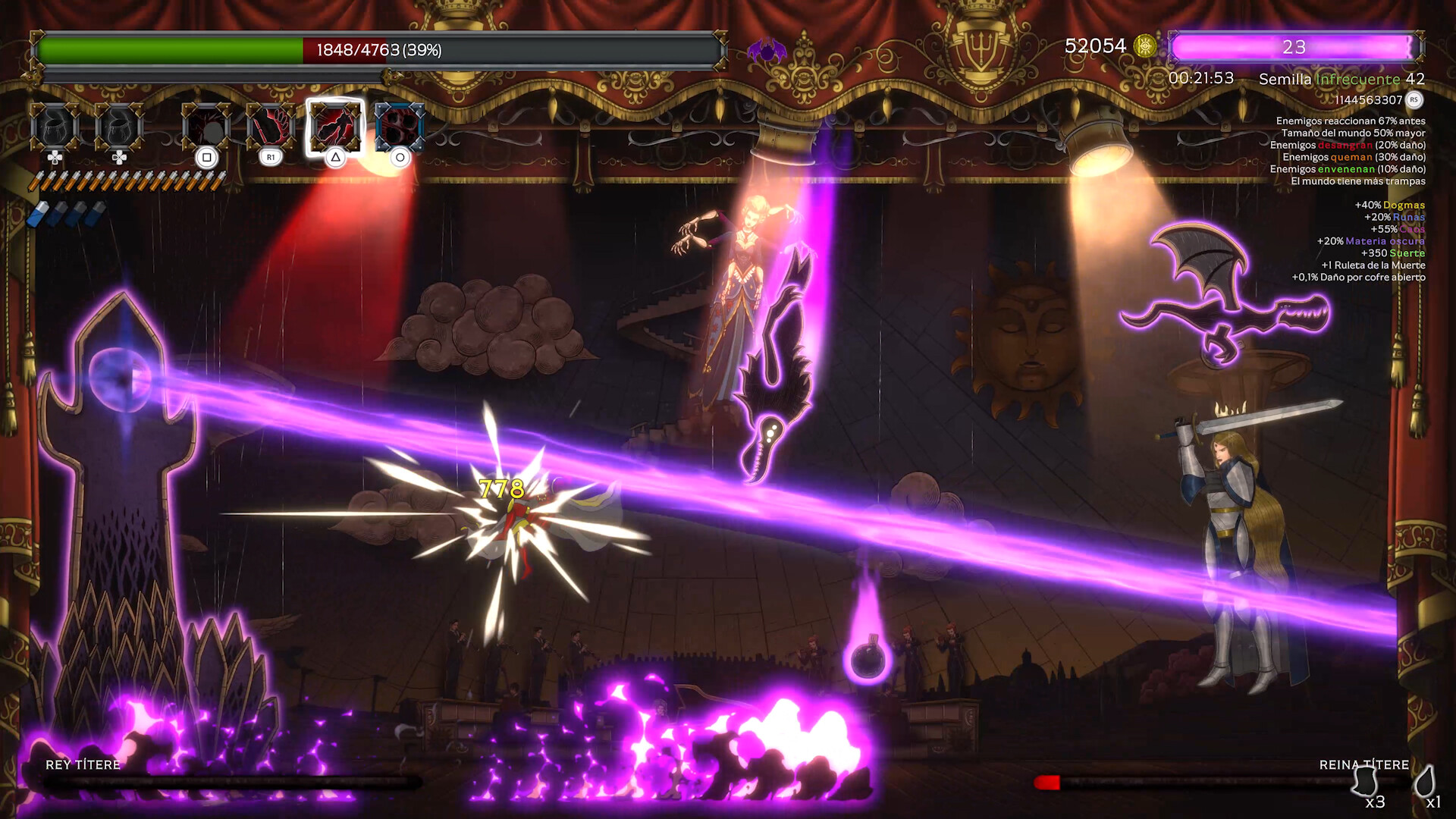
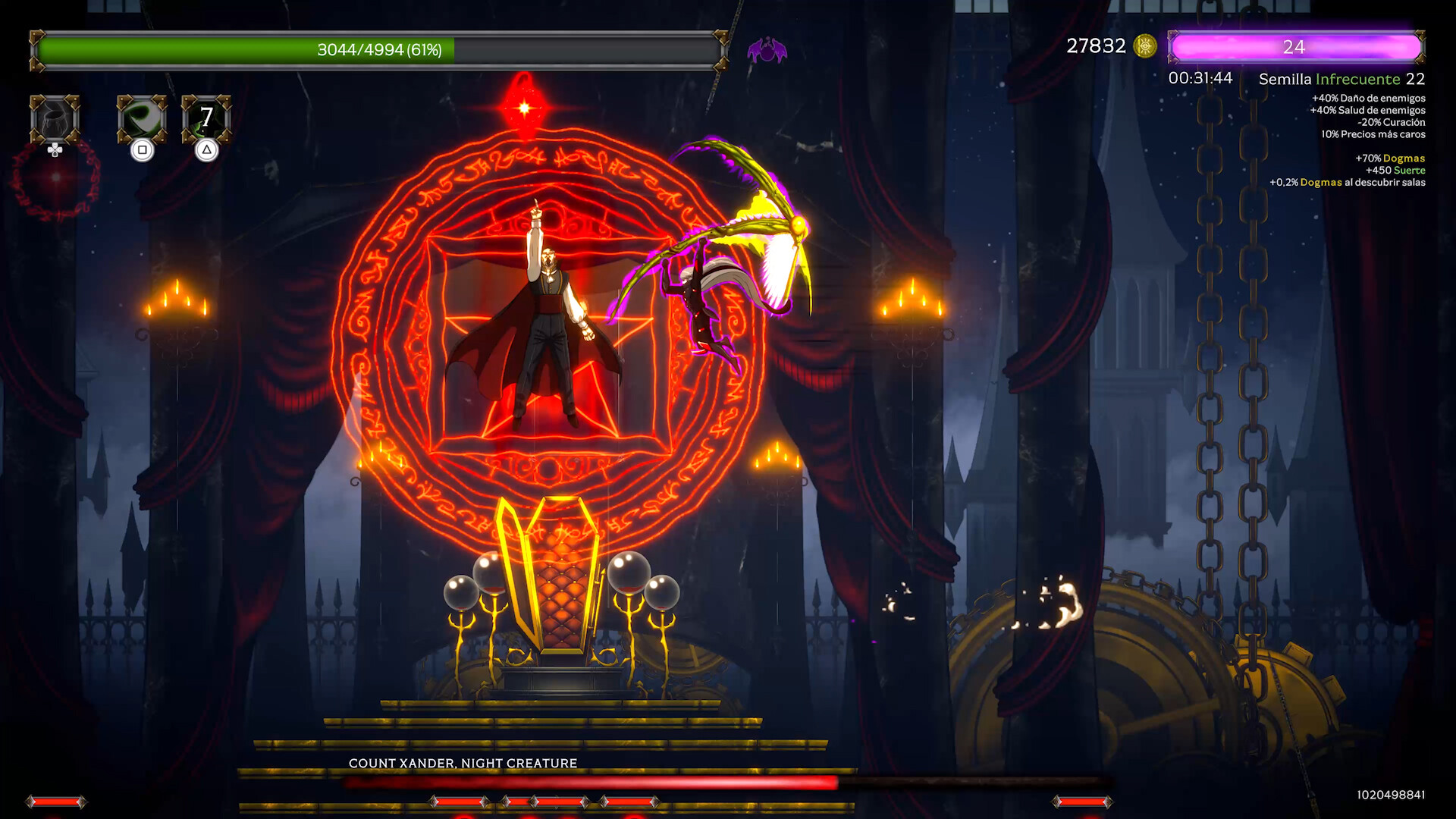
The combat and platforming foundation reviewers consistently praise traces directly back to Aeterna Noctis: fluid, responsive movement paired with combat that rewards spacing and timing over button-mashing. Layered on top is a genuinely unusual "world seed" system that lets players shape specific parameters of how each run's world generates, giving experienced players real control over run difficulty and composition rather than accepting pure randomness. Reviewers describe colorful, varied world themes and enemy design, and a fast-travel system available from the very start keeps runs efficient rather than repetitive backtracking exercises. With 160 tracked achievements, the scale of content on offer is real and substantial for players willing to dig into it.
Currency bloat, and a grind that outpaces the reward
The most consistently repeated criticism concerns how that content is gated. Reviewers describe roughly six distinct meta-progression currencies spread across the game's systems, and a substantial share say this dilutes the impact of any single upgrade rather than making progression feel purposeful. One reviewer's framing captures the sentiment memorably: "This game is that box" — referring to a childhood box of coins from many countries, plenty of currency, none of it worth much individually. A related complaint concerns upgrade granularity itself: several reviewers describe individual stat increases as small enough (1-2% at a time) that meaningful power growth requires far more repetition than the genre's better examples demand, turning what should be satisfying incremental progress into something closer to a chore for players expecting Dead Cells' tighter upgrade pacing.
Real, measurable technical friction
Two specific technical complaints recur independently across this review's research. First, control remapping: multiple reviewers report being unable to fully customize bindings, specifically citing an inability to set WASD movement alongside mouse-driven attacks and mouse-button-based inputs, a complete blocker for players whose preferred control scheme isn't the default. Second, performance: at least one detailed reviewer directly measured frame rate against comparable genre titles (Dead Cells, Rogue Legacy 2, Spelunky 2) on the same hardware, finding those titles held a stable 120 FPS while Summum Aeterna alone stuttered and fluctuated in ways that affected precision platforming. A separately reported bug tied to a specific companion/summon type can render allied units non-functional and softlock the game outright, a serious issue for anyone who encounters it.
A serious accusation this review can't verify
At least one detailed, highly-upvoted negative review makes a specific and serious accusation concerning the developer's conduct toward the community — describing repeated refusal to address requests around mandatory anti-cheat software in single-player games, and characterizing the studio's public responses to dissatisfied players as accusatory and manipulative. This is a claim about the developer's behaviour rather than the game's design, and this review has no way to independently verify it from official sources. It's reported here plainly, as a specific, detailed accusation on the public record, rather than as an established fact or something to take at face value in either direction.
A dense development cycle, now clearly moved on
Whatever the disputes above, Summum Aeterna's own patch history through Early Access is genuinely substantial: named major updates arrived roughly monthly from its June 2022 launch through its September 2023 full release, and a free "Witcher Awakening" crossover DLC followed that December. Public patch activity for this specific game appears to have stopped after October 2023, though the studio itself has remained highly active since — announcing and releasing a new title, Aeterna Lucis, in 2025, and a further project, Future Knight, teased into 2026. That confirms the shape of the "development abandoned" complaint some reviewers raise: accurate for this specific game going forward, but reflecting a studio that moved on to new work rather than one that disappeared entirely.
Repetition wears on the world design too
A related complaint concerns variety over the length of a full playthrough rather than any single system in isolation. Several reviewers who otherwise praise the early hours describe the same room layouts and enemy compositions recurring often enough across a long run that the initially colorful, varied world design starts to feel repetitive well before the content genuinely runs out. One reviewer frames the arc directly: engaging and difficult for the first several hours, then increasingly a matter of grinding through familiar rooms for small stat increments rather than discovering meaningfully new challenges. This isn't a universal read — plenty of reviewers describe the later hours just as favourably as the early ones — but it's specific and detailed enough, recurring across multiple independent accounts, to flag as a real pattern for anyone planning a long session with the game rather than a shorter, more casual one.
Where it lands
Summum Aeterna delivers genuinely satisfying combat and platforming built on a strong foundation, paired with an unusually deep run-customization system that rewards players willing to dig in. Its currency-bloated progression, incomplete control remapping, measurably weaker performance than its genre peers, and a serious unverified conduct accusation are all real, specific reasons a substantial share of its own audience walks away disappointed. For fans of its genre influences willing to accept those tradeoffs — ideally at a discount — there's a genuinely good roguelite underneath; for anyone expecting Dead Cells-level polish throughout, the gap will likely show.
Pros and cons
Pros
- Combat and platforming reviewers repeatedly compare favourably to Dead Cells and Rogue Legacy 2, inheriting fluid movement fundamentals from Aeterna Noctis and building genuinely satisfying action on top
- An unusually deep, configurable "world seed" system letting players shape run parameters directly, alongside extensive meta-progression with 160 tracked achievements confirming a large amount of trackable content
- A genuinely dense, sustained Early Access development cycle with numerous named major updates across its first year, plus a free "Witcher Awakening" crossover DLC added after full release
- Enemy and world variety reviewers describe as colorful and distinct, backed by a fast-travel system available from the start that keeps runs efficient
- A high, rewarding difficulty ceiling that several reviewers specifically credit for making incremental upgrades feel earned rather than automatic
Cons
- Meta-progression is spread across roughly six separate currencies, which a substantial share of reviewers describe as diluting any single upgrade's meaningful impact and inflating the grind needed to reach the content that matters
- Reviewers report no way to fully remap controls to a preferred keyboard-and-mouse layout, specifically citing an inability to bind movement to WASD alongside mouse-based attacks, a complete blocker for at least some players
- Multiple reviewers measured framerate directly against genre peers (Dead Cells, Rogue Legacy 2, Spelunky 2) on identical hardware and found Summum Aeterna alone failed to hold a stable frame rate, describing resulting stutter as affecting precision movement
- A specific reported bug tied to a particular companion/summon type can render allied units non-functional and softlock the game entirely
- At least one detailed reviewer makes a serious, specific accusation about the developer's conduct toward the community requesting changes (particularly around anti-cheat software); this review cannot independently verify that claim and reports it only as stated
Screenshots
-
Summum AeternaImage: Aeternum Game Studios S.L via Steam -
Summum AeternaImage: Aeternum Game Studios S.L via Steam -
Summum AeternaImage: Aeternum Game Studios S.L via Steam -
How the review scores each part of the gameWanderer Editorial -
The specsWanderer Editorial -
The short versionWanderer Editorial