
Game review
Speakeasy Simulator
6 / 10
- Developer
- Arcana Games
- Publisher
- Bluelily Games
- Released
- 15 January 2026
- Platforms
- Windows
- Genre
- Action, Indie, Simulation, Strategy
- Monetisation
- One-time purchase
- Players
- Single-player only
The short version
Speakeasy Simulator drops players into 1920s Prohibition America as the owner of an underground bar, distilling illegal spirits, mixing cocktails, decorating a hidden venue, and deciding whether to sell over the counter or offload product wholesale to the mob. Reviewers consistently praise the setting as a genuinely fresh spin on a crowded management-sim genre and describe the core loop of experimenting with ingredient ratios to nail a recipe as satisfying in the moment. Just as consistently, though, the sample describes a game that runs out of things to do within a handful of hours, an expansion economy that turns punishing almost as soon as it starts, and optimisation problems, particularly once a bar is decorated out, that several reviewers say make later sessions genuinely difficult to play.
Biggest strengths
- A genuinely distinct setting among management sims, praised repeatedly for combining alcohol distilling, cocktail mixing, bar decoration, and a mob-versus-legitimate-customer sales dilemma into one cohesive loop
- Trial-and-error recipe experimentation, working out which combinations of fruits, grains, and other ingredients produce which quality of spirit, is singled out by multiple reviewers as the most satisfying part of the game
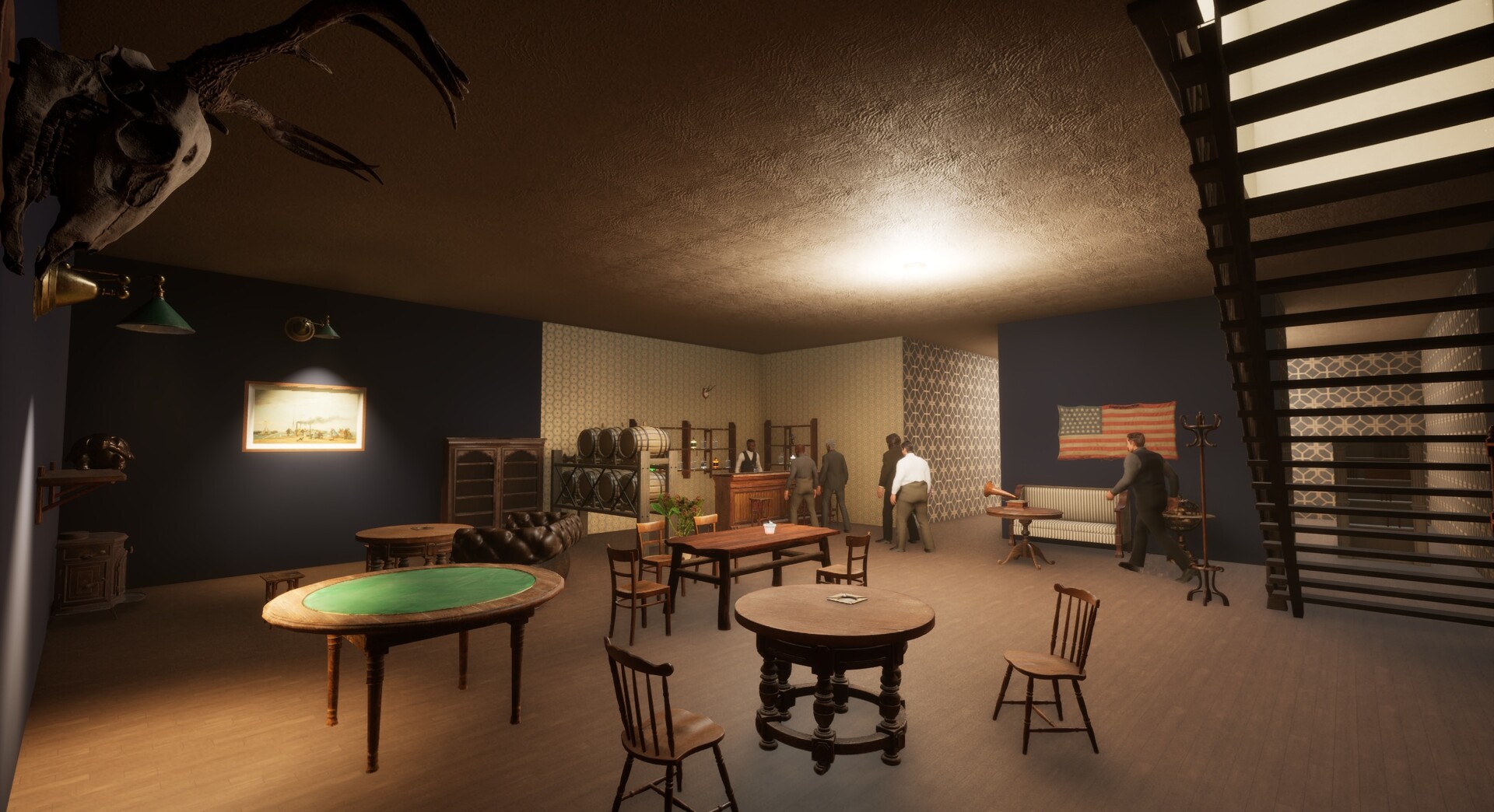
- Period-appropriate jazz soundtrack and 1920s art direction reviewers repeatedly call relaxing and well suited to the low-stakes, cozy tone the game is going for
Biggest weaknesses
- The content ceiling is low: several reviewers report unlocking most of the roughly five spirits and similar number of cocktails, and effectively "finishing" what the game has to offer, within two to three sessions, with one reviewer explicitly noting the loop stops rewarding continued play once a bar is maxed out cosmetically
- Bar expansion costs scale sharply, with multiple reviewers independently citing wall-section prices climbing from roughly 500 to over 1,000 in-game currency with little corresponding benefit, turning what should be a satisfying upgrade path into what one reviewer called a "money sink" for its own sake
- A detailed long-session review describes real optimisation problems once a bar is filled with higher-tier furniture, including severe stuttering that can make the game close to unplayable, and a separate reviewer reports the game consuming 90% or more of a modern GPU regardless of an in-game frame cap
Who it's for: Fans of cozy, low-stakes management sims looking for a novel setting and a short, relaxing few sessions of trial-and-error crafting, rather than players seeking a management sim with deep, long-term systems to master.
Our recommendation: A charming premise executed at a basic level; worth a look on sale for players who enjoy the genre and want something different for an afternoon, but the sample is consistent that its current depth and performance don't yet support the kind of long-term play the setting promises.
6 / 10
Speakeasy Simulator casts the player as a cigar-shop owner turned underground bootlegger in 1920s Prohibition America, distilling illegal spirits, mixing cocktails, decorating a hidden venue, and choosing between serving walk-in customers or moving product wholesale to the mob. It's a setting management sims rarely touch, and its review sample gives the developer real credit for that novelty. What the same sample makes just as clear, though, is that the game currently has enough content for a handful of enjoyable sessions and not obviously more, and that several of its systems, from bar expansion pricing to raw performance, need real work before the setting's full promise is realised.
A genuinely fresh premise, and reviewers say so
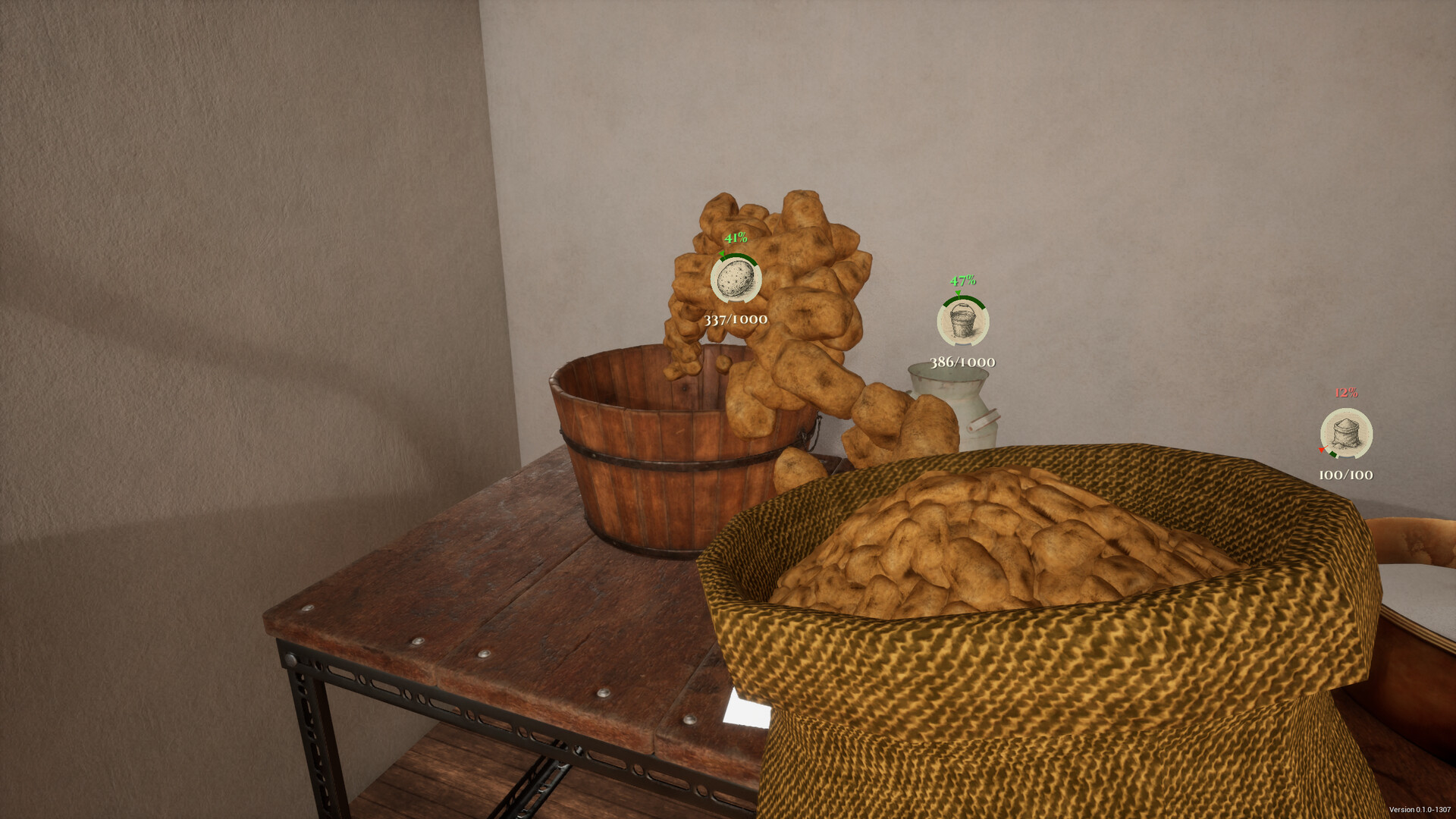
The single most repeated compliment across the positive portion of the sample is that the Prohibition-era premise itself feels new. Reviewers describe the mix of illicit distilling, front-of-house bar management, and a running choice between legitimate sales and mafia wholesale deals as combining familiar simulation-genre mechanics into something that doesn't feel like another reskin of the same tycoon formula. One reviewer explicitly frames it as scratching the same itch as Gas Station Simulator or Sunset Motel but in a setting nobody else has used. The recipe-crafting system draws particular praise: working out which combination and quantity of fruits, grains, and other ingredients yields which quality of spirit is described repeatedly as the most satisfying part of actually playing, with more than one reviewer calling the trial-and-error process itself the game's real hook rather than a means to an end.
A content ceiling reached within hours, not days
Set against that praise is a remarkably consistent complaint about how little there is to actually do once the basics click. One detailed negative review counts no more than around five distillable spirits and a similar number of cocktails, all unlockable within a couple of hours, after which "no more game, no more point to keep playing." A separate, more positive reviewer who still recommended the game admits being "almost done everything there is" by their second day of play. This isn't a one-off complaint from a single dissatisfied player; it recurs across reviews that are otherwise positive about the moment-to-moment crafting, suggesting the core loop is well liked but the amount of content built around it hasn't caught up to the strength of that loop yet.
An expansion economy several reviewers call a money sink
A specific, repeatedly cited progression complaint is the cost of expanding the bar itself. Multiple independent reviewers cite wall-section prices starting around 500 in-game currency and climbing sharply from there, with one long-session reviewer reporting costs near 1,000 per section by the time they'd built out a sizeable venue. Several reviewers note that the decoration and reputation systems this expansion feeds into don't meaningfully reward the investment: furniture is largely pre-selected for its rating value rather than chosen for aesthetics, and one detailed review points out that customers will sit on any furniture placed anywhere in the bar rather than being drawn specifically to the premium pieces the player paid a premium to install. The net effect several reviewers describe is an upgrade path that exists mostly to give players something to spend accumulated money on, rather than one that meaningfully changes how the bar plays or feels to run.
Optimisation problems that get worse the more you build
The sample's most detailed critical review, written after 45 hours of play, describes the game becoming close to unplayable once a bar is filled out with higher-tier furniture, with severe stuttering that closing the venue temporarily relieves but which obviously comes at the cost of any income while closed. A separate reviewer, running a high-end RTX 4070, reports the game consuming 90% or more of their GPU even with an in-game frame cap set to 60, with the GeForce overlay showing it actually rendering at 144 frames regardless of that cap. This isn't reported as a universal experience; several reviewers, including a couple posting updated reviews after a mid-January patch, say performance has improved and specifically credit the developer with active post-launch support. But the pattern of at least some players hitting serious, session-ending performance problems as their venue grows is consistent enough across the sample to flag clearly, particularly for anyone planning to invest the kind of long-term play the genre usually rewards.
Staffing and delegation systems that don't go far enough
A more granular complaint concerns the game's staffing systems. Reviewers who hire distillers to automate brewing report the staff will consume whatever ingredients are on hand, seemingly prioritising the highest available quality regardless of what the player actually needs produced, with no way to direct or limit what gets brewed. The single delivery runner available to fetch ingredients has only half the player's own inventory capacity, meaning even fully staffed venues still require significant manual running around the city for restocking. One detailed review frames this as symptomatic of a broader pattern: management-adjacent systems exist in name but don't yet offer the kind of real delegation and automation choices that would let a player meaningfully specialise in running the business side rather than personally executing every task.
Final Verdict
Speakeasy Simulator has a setting and a core crafting loop its review sample genuinely likes, and a developer the sample credits with staying engaged and shipping updates since launch. What it doesn't yet have, by that same sample's own account, is enough content, a fair expansion economy, or consistently solid performance to support more than a handful of sessions before the appeal wears thin. At its current, reasonably modest price, it's a fair pickup for genre fans drawn to the novelty of the theme and willing to treat it as a short, relaxing diversion rather than a deep management sim, with the understanding that the systems asking for a long-term investment, decoration, staffing, and expansion, are the parts of the game reviewers trust the least right now.
Pros and cons
Pros
- A genuinely distinct setting among management sims, praised repeatedly for combining alcohol distilling, cocktail mixing, bar decoration, and a mob-versus-legitimate-customer sales dilemma into one cohesive loop
- Trial-and-error recipe experimentation, working out which combinations of fruits, grains, and other ingredients produce which quality of spirit, is singled out by multiple reviewers as the most satisfying part of the game
- Period-appropriate jazz soundtrack and 1920s art direction reviewers repeatedly call relaxing and well suited to the low-stakes, cozy tone the game is going for
- A developer reviewers describe as active and responsive, shipping patches and a named mid-January update that several reviewers specifically credit with improving the experience
- Reasonably priced for what it offers, with several reviewers explicitly saying it delivered fair value even after acknowledging its shortcomings
Cons
- The content ceiling is low: several reviewers report unlocking most of the roughly five spirits and similar number of cocktails, and effectively "finishing" what the game has to offer, within two to three sessions, with one reviewer explicitly noting the loop stops rewarding continued play once a bar is maxed out cosmetically
- Bar expansion costs scale sharply, with multiple reviewers independently citing wall-section prices climbing from roughly 500 to over 1,000 in-game currency with little corresponding benefit, turning what should be a satisfying upgrade path into what one reviewer called a "money sink" for its own sake
- A detailed long-session review describes real optimisation problems once a bar is filled with higher-tier furniture, including severe stuttering that can make the game close to unplayable, and a separate reviewer reports the game consuming 90% or more of a modern GPU regardless of an in-game frame cap
- Delegation and staff systems are shallow: hired distillers can't be told what or how much to brew and will consume premium ingredients indiscriminately, while a single delivery runner has half the player's own inventory space, leaving most of the legwork to the player regardless of how much staff is hired
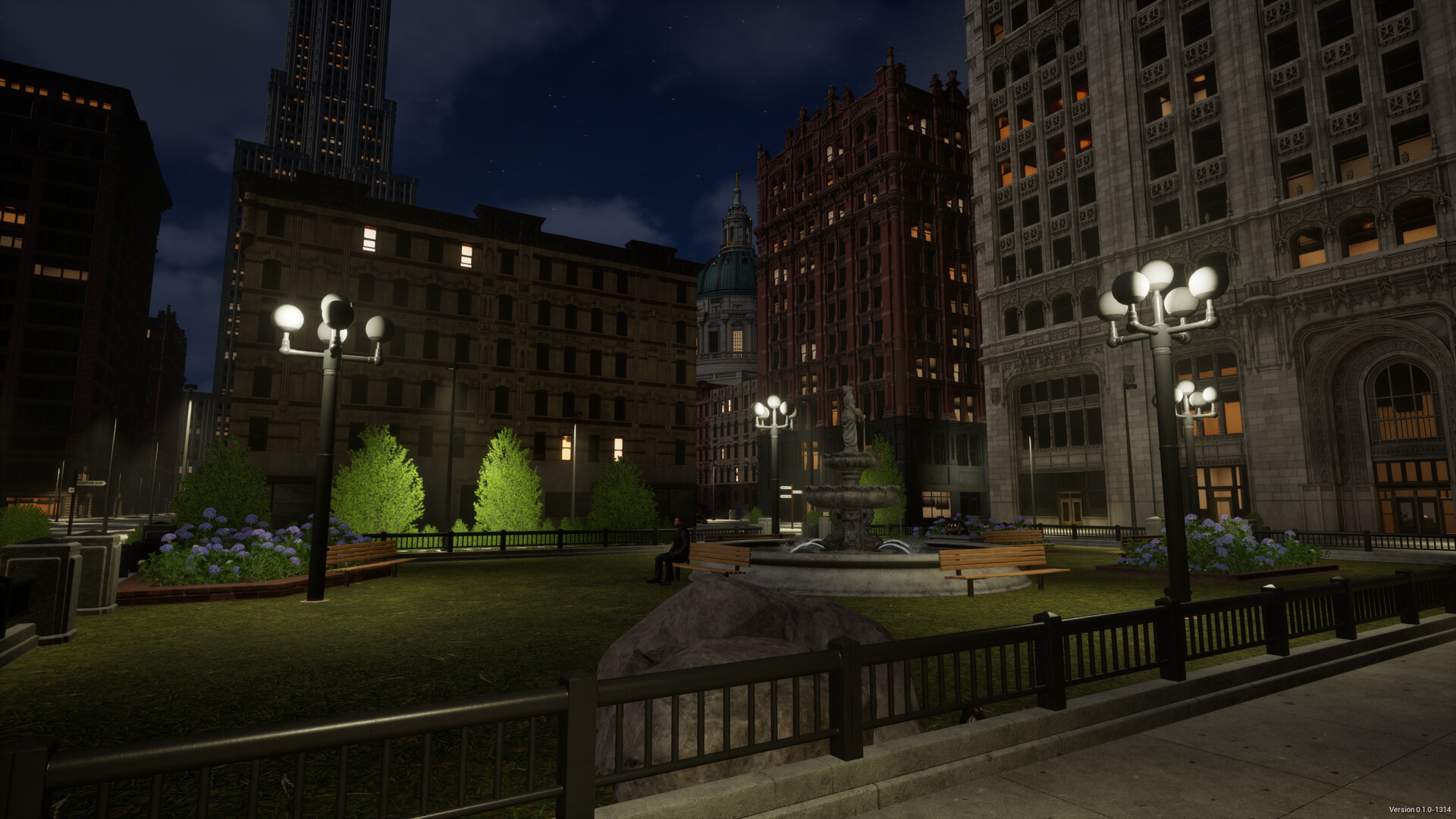
- Several reviewers flag missing texture and population variety as breaking the period atmosphere, most notably a complete absence of women NPCs and only a single vehicle model circulating the streets, undercutting the 1920s setting the rest of the presentation leans on
Screenshots
-
Speakeasy SimulatorImage: Arcana Games via Steam -
Speakeasy SimulatorImage: Arcana Games via Steam -
Speakeasy SimulatorImage: Arcana Games via Steam