Game review
Sokogram Review
8 / 10
- Developer
- PressGtoGeorge
- Publisher
- PressGtoGeorge
- Released
- 25 August 2026
- Platforms
- ["Windows"]
- Genre
- Strategy
Two Puzzle Genres That Have No Business Working This Well Together
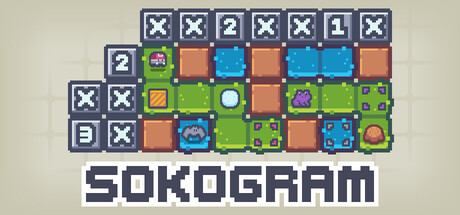
Sokogram is a $9.99 puzzle game from solo developer PressGtoGeorge that fuses two genres, nonogram logic grids and Sokoban box-pushing, into a single unified puzzle rather than stapling them together as separate phases. It released on Steam on August 25, 2026 following an earlier itch.io version, with a clean post-launch patch history and no early access period. Less than a month later it already carries 48 English reviews, 47 of them positive, and the response is about as close to unanimous praise as this kind of review pool ever gets: reviewer after reviewer expresses the same mix of skepticism-turned-delight at how naturally two genres that shouldn't overlap end up reinforcing each other.
You're Not Solving Two Puzzles, You're Solving One
The pitch sounds like it could be a gimmick: solve a nonogram, then solve the Sokoban level it reveals. Nearly every reviewer independently corrects that assumption. "What could easily have been a gimmick is actually an extremely deep combination of two puzzle genres," wrote one reviewer, while another explained the actual trick: "the nonogram doesn't have a unique solution by itself, the additional constraint that you have to design a solvable sokoban level provides the missing piece of the puzzle." Because many of the grid's numeric clues are deliberately replaced with an unknown "X," a player can't just solve the nonogram in isolation and move on, they have to simultaneously reason about which tile layout will also produce a valid, unique box-pushing solution. One especially detailed reviewer summarized the loop precisely: "it gives the illusion that you, the player, are actually designing the sokoban levels where, in reality, you are solving for the uniqueness constraints of greater nonogram context."
A Rule System Built On "Nothing Is Ever Wasted"
The design principle reviewers keep circling back to is that every element on the board is guaranteed to matter. "Every land square is useful," noted one reviewer, unpacking just how load-bearing that constraint is: "any bit of ground needs to be mandatory for the unique sokoban solution you have to find, whether it's for your character to walk on or for some object to be placed on it," a rule that reviewer says "extends to other things too: stumps, rocks, boxes, snowballs, the game never gives you anything redundant." That's a meaningful design promise for a logic puzzle: once a player internalizes that nothing on the board is decorative, every stray tile or object becomes a genuine clue rather than noise, and reviewers consistently describe using that principle to shortcut brute-force guessing in favor of real deduction.
A Difficulty Curve That Earns Its Reputation, With One Notable Exception
Multiple reviewers flag the same specific trouble spot: a late-game level, referred to by more than one reviewer by its in-game label "P01," that spikes sharply above the rest of the difficulty curve. "My pet peeve of final-levelitis rears its ugly head. The last level to reach the credits is rather slippery and frustrating... I spent several hours on this level and eventually grew frustrated enough to resort to the hint system which I had avoided the entire game," wrote one reviewer, while another independently corroborated the exact same complaint: "There is still one level that I had to go heavy on the guesswork to solve (P01), but it's thankfully the sole exception." That kind of independent agreement on one specific level, out of what one completionist reviewer logged as 175 total puzzles, is a genuinely useful signal: the rest of the game's ramp is trusted and well-tuned, and this one late spike is a known, isolated rough edge rather than a symptom of a broken curve.
Real Accessibility Options, With A Few Rough Corners
Sokogram lets players dial down the challenge by revealing a percentage of the normally-hidden nonogram numbers, anywhere from the default obscured state up to fully revealed, alongside a hint system that reveals one tile at a time without solving anything for the player. "There are plenty of accessibility options though," one reviewer noted approvingly, and another specifically praised seeing "adjustable difficulty in a puzzle game like this." The rough edges reviewers do flag are all interface-level rather than puzzle-design complaints: a tile-locking feature bound to a non-rebindable middle mouse button, a lack of a way to lock or unlock every placed tile at once, and at least one Steam Deck player wanting the confirm action moved off a far-away Enter key. None of these are described as dealbreakers, but they're consistent enough across the review pool to be a fair, specific critique of an otherwise well-received interface.
Optional Side Paths, No Filler
Beyond a core "main path" of approachable puzzles, Sokogram branches into optional side-path puzzles that unlock further progress through an all-or-nothing points system, solve every puzzle on a given side path or get nothing from it. One reviewer compared the structure to another genre touchstone: "This feels similar to Toroban, another Sokoban-inspired game." Outside of that map and progression layer, reviewers describe the rest of the package as intentionally minimal, no metapuzzle, no elaborate narrative wrapper, just a level select, basic settings, and the puzzles themselves. For a genre-fusion puzzle game built around one very specific mechanical hook, that restraint reads as a deliberate choice rather than a missing feature, letting the puzzles themselves carry the entire experience.
Verdict
Sokogram takes two puzzle genres that have no obvious reason to combine well, nonogram logic grids and Sokoban box-pushing, and fuses them into something that nearly every reviewer in its small, overwhelmingly positive pool describes as more than the sum of its parts. The central "nothing is ever wasted" design rule gives every tile genuine deductive weight, the difficulty curve is trusted by reviewers almost universally except for one specific, well-documented late spike, and the accessibility options for dialing down the nonogram's opacity are a real, appreciated touch. A handful of minor interface gripes, an unbindable lock key chief among them, are the only consistent knock against it. At $9.99 for what multiple completionist reviewers logged as somewhere between six and twenty-plus hours of genuinely novel puzzle-solving, Sokogram is an easy recommendation for fans of either genre it borrows from, and arguably a compelling pitch even for players who, like more than one reviewer here, didn't think they liked nonograms at all.
Screenshots
-
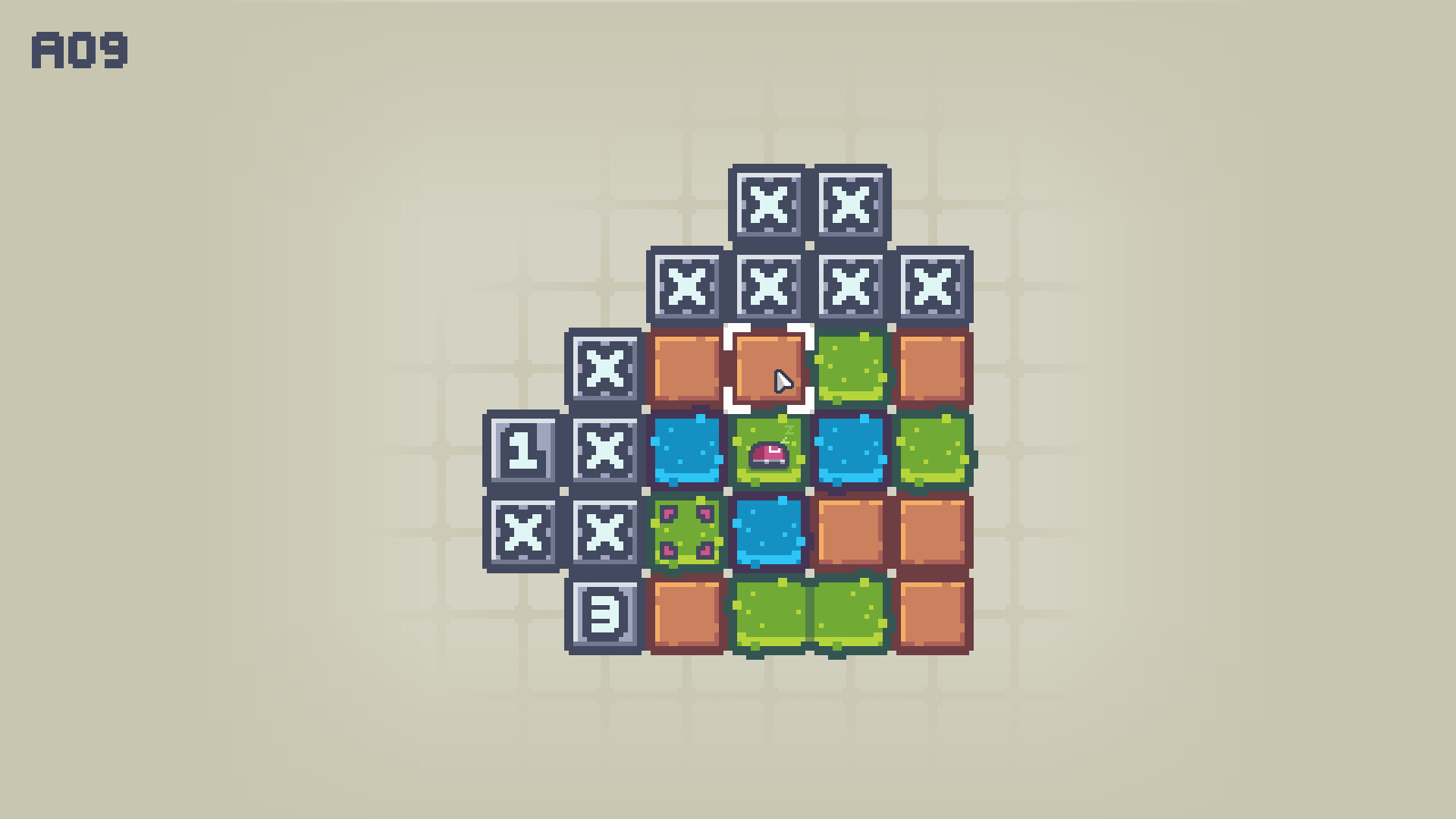
A puzzle in progress: some clues are plain numbers, others are deliberately hidden behind an X the player has to reason around.Image: PressGtoGeorge via Steam -
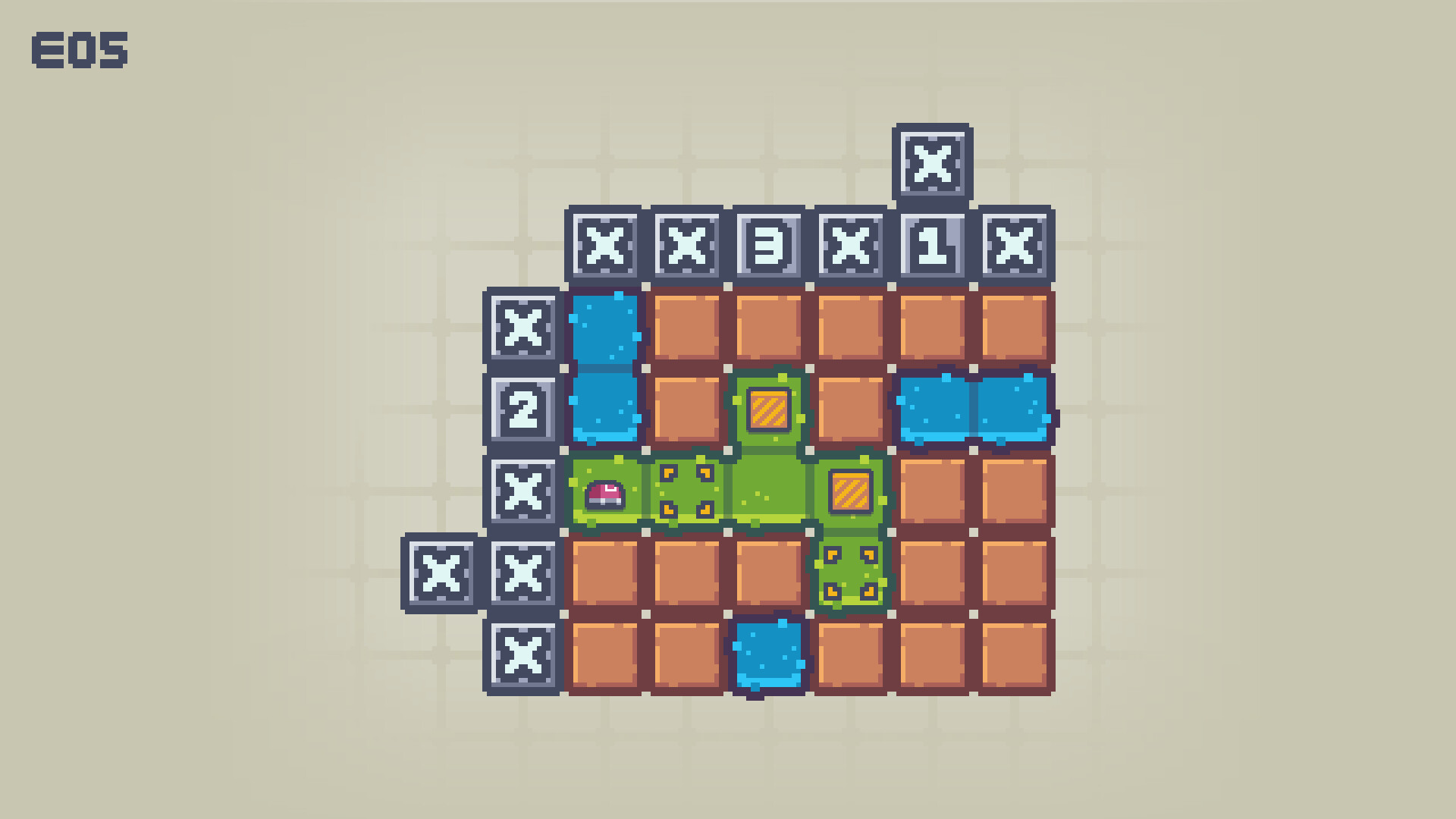
As the land takes shape, target tiles for the sokoban half of the puzzle start to reveal themselves under the grass.Image: PressGtoGeorge via Steam -
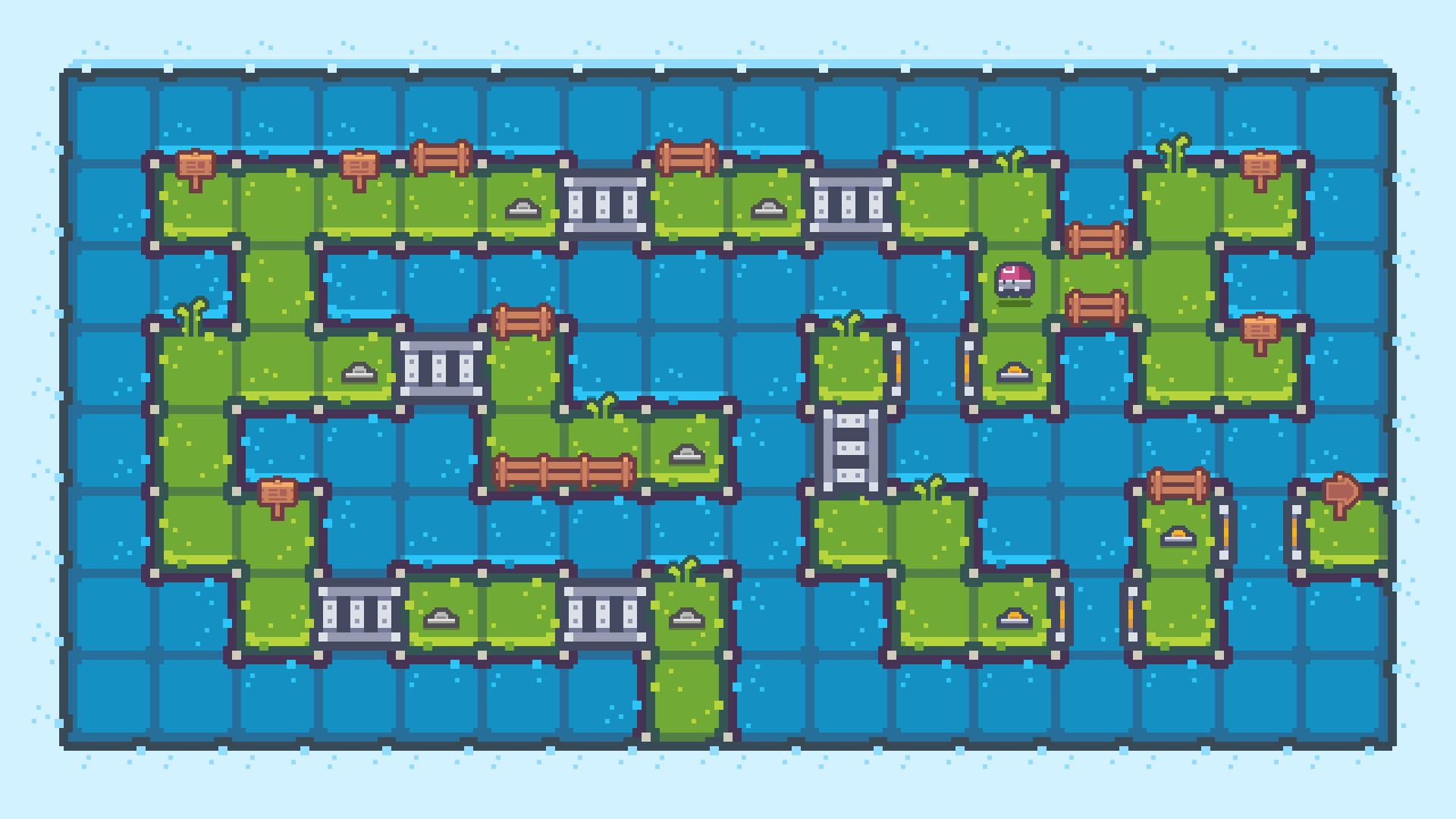
Zoomed out, solved puzzles link up into one sprawling overworld of islands, bridges, and gates rather than a simple level-select menu.Image: PressGtoGeorge via Steam