Game review
Lights Of DunHuang Review
5.5 / 10
- Developer
- JZHacker, Yueyan
- Publisher
- JZHacker
- Released
- 2 September 2026
- Platforms
- ["Windows"]
- Genre
- Casual
A Marble Shooter Wrapped in Mogao Cave Murals
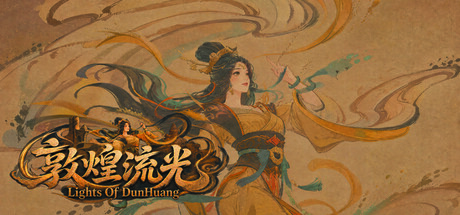
Lights Of DunHuang takes the Zuma formula, that familiar loop of firing colored marbles into a moving chain to make groups of three or more vanish before the chain reaches its end, and reskins it as the work of an apprentice painter restoring sutra murals in 11th-century Dunhuang. It's a smart pairing on paper: the genre's central image, a line snaking forward that the player must break apart in time, maps naturally onto a painting slowly dissolving or a mural about to be lost to war, and this game leans into that overlap rather than just borrowing the mechanic and painting a new coat over it.
Six Pigments, Ten Caves, One Dying Empire
The framing story is more specific than the genre usually bothers with: it's the year 1036, the Guiyi Army is collapsing, and Western Xia cavalry is closing in on Shazhou as the last Color-Sealer's brush passes to the player. Ten cave sutras across six chapters are named individually and tied to real Mogao Cave numbers, King Sivi's Offering in Cave 275, the Nine-Colored Deer in Cave 257, the Thousand-Handed Avalokiteshvara in Cave 3, and so on, which gives the restoration conceit an unusually concrete, researched backbone rather than a vague "ancient temple" wrapper. Six historical pigments, cinnabar, orpiment, malachite-green, lapis-lazuli, lac-purple, and clam-shell-white, stand in for the usual colored-marble palette, each with its own stated spectral behavior, and clearing a cave floods its gray line-drawing into full color as a painter-spirit rises, which is a genuinely evocative way to represent a match-and-clear victory condition.
The Mechanical Skeleton Underneath the Theme
Strip away the pigments and painter-spirits and the actual play loop is standard Zuma-descendant fare: a fixed shooter at the center of each cave fires pigment-balls along ribbon-shaped tracks that double as the mural's composition lines, three or more same-colored balls fuse and dissolve, and longer chains reward deeper "overlapping dye" combos. Tool balls scattered mid-chain, Slow to retard the stream, Reverse to roll it backward, Bomb to shatter a cluster, are the genre's standard utility-power toolkit, competently included rather than reinvented. None of this breaks new mechanical ground, but a well-worn puzzle skeleton dressed in a specific, well-researched historical theme is still a perfectly reasonable pitch for a $1.99 casual game, provided the execution holds up under actual play.
The One Complaint on Record, and Why It Matters
The single review currently attached to the game, written in Simplified Chinese by a player who logged 150 minutes, is blunt and translated here: "Getting stuck isn't my fault, the reload is too slow." That's a short complaint, but it's a specific and mechanically meaningful one for this genre: Zuma-style games live or die on the responsiveness of their fire-and-reload rhythm, since the whole challenge model depends on the player being able to react to an advancing chain fast enough to break it apart before it reaches the Spalling Gap. A shooter that reloads too slowly doesn't just feel sluggish, it can make failure feel unearned, the player did the right thing but the game didn't let them execute it in time, which is a different and more frustrating problem than simply losing to a harder puzzle configuration.
A Thin but Not Meaningless Signal
One negative review is a genuinely small sample to draw firm conclusions from, and it would be an overreach to treat a single complaint as proof of a systemic pacing failure across all ten caves and six chapters. At the same time, the complaint is specific enough, and targets a mechanic central enough to the genre's core feel, that it can't be waved away as noise either. It reads less like a fundamental design failure and more like a tuning problem, the kind of thing a patch adjusting fire-rate timing could plausibly fix without touching anything else about the game's identity, similar in character to execution-polish complaints seen elsewhere in small-team casual releases rather than a sign the underlying concept doesn't work.
A Run-Building Layer the Store Page Doesn't Mention
What the store description leaves out entirely is that clearing a cave doesn't just move the story forward, it triggers a "Spirit's Revelation" card pick, three randomized run-upgrade "arts" on offer, one kept, the rest lost, in the structure of a light roguelite meta-layer bolted onto the puzzle core. Tellingly, two of the observed options, Quick-Setting Brush, a flat fire-cooldown reduction, and Hasty Seal, a much larger cooldown cut that only activates once danger crosses a threshold, are aimed directly at the exact fire-rate pacing the one negative review complained about. A third, Ebbing Tide, instead speeds up the gap-closing multiplier after clears, trading reload speed for a different kind of run-scaling reward.
Reframing the Reload Complaint
That upgrade layer changes the shape of the pacing question considerably. If fire-cooldown reduction is something a run has to earn through card picks rather than a baseline speed available from the first cave, then the "reload is too slow" complaint may describe an early-game or unlucky-draw problem rather than a flat, unfixable design flaw, a run that never offers or never picks a cooldown art would plausibly feel exactly as sluggish as the reviewer described, while a run that stacks Quick-Setting Brush and Hasty Seal together would feel like a different game entirely. That's a more forgiving read than a simple tuning bug, but it also raises a fair design question of its own: relying on randomized card draws to fix a core input-responsiveness complaint is a riskier bet than just tuning the base fire rate correctly in the first place, since it makes the game's baseline feel dependent on what the roguelite layer happens to deal a given player.
Achievements and the Quiet Bet on Replay Value
Steam Achievements and cloud saves are both present, standard infrastructure for a casual puzzle release that expects at least some players to chase completion across all ten caves rather than stopping after the first chapter. There's no elaborate meta-progression system layered on top, no currency to grind or unlockable cosmetics beyond finishing murals, which keeps the scope honest for a $1.99 asking price rather than padding a short, focused concept out with busywork systems it doesn't need.
Value at Two Dollars
At $1.99, Lights Of DunHuang is priced like exactly what it is: a small, tightly-scoped puzzle game built around one clear idea rather than a sprawling live-service ambition. Ten named caves across six chapters is a reasonable amount of content for that price point, and the specificity of the historical framing, actual cave numbers, actual pigment names, actual dynastic-collapse stakes, gives it more texture than most budget marble-shooters bother to include. Whether the reload-speed complaint turns out to be an isolated frustration or a pattern affecting more players is the open question that will determine if this stays a pleasant curiosity or becomes a genuinely well-regarded budget puzzle game.
Verdict
Lights Of DunHuang takes a familiar genre and gives it an unusually well-researched historical skin, ten real Mogao Cave murals, six historical pigments, and a dynastic-collapse backdrop that actually informs the fiction rather than just decorating it. The mechanics underneath are solid, if unoriginal, Zuma-style fundamentals, and the one review on record raises a specific, plausible concern about fire-rate pacing that's worth taking seriously without treating it as a verdict on the whole game. At $1.99, with achievements and cloud saves in place and only a single complaint on the public record, it's a low-risk pickup for genre fans willing to accept that the review base is currently too thin to promise a smooth experience.
Screenshots
-
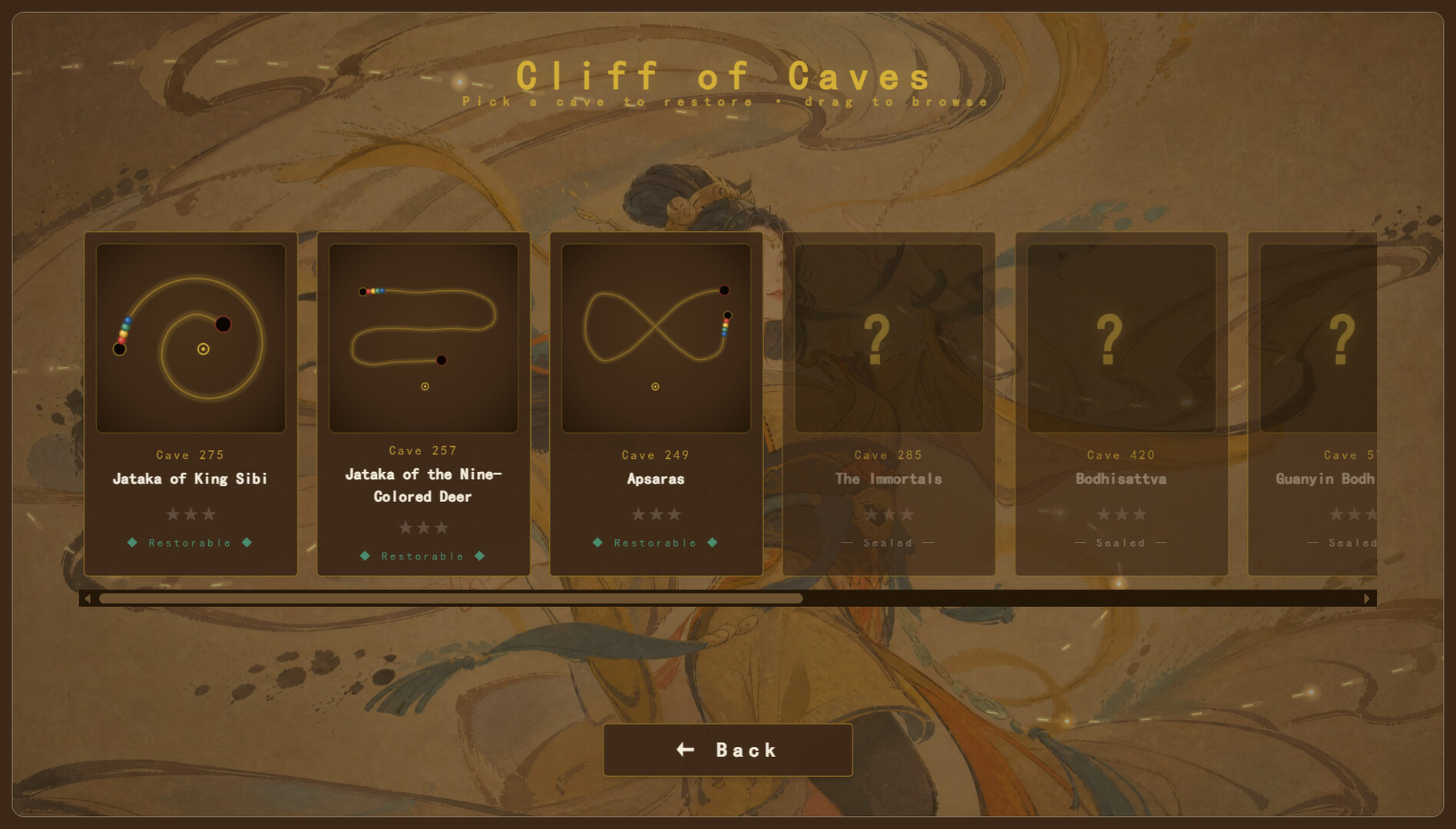
The Cliff of Caves: each restorable mural previews the shape of its pigment-ball track before you commit.Image: JZHacker via Steam -
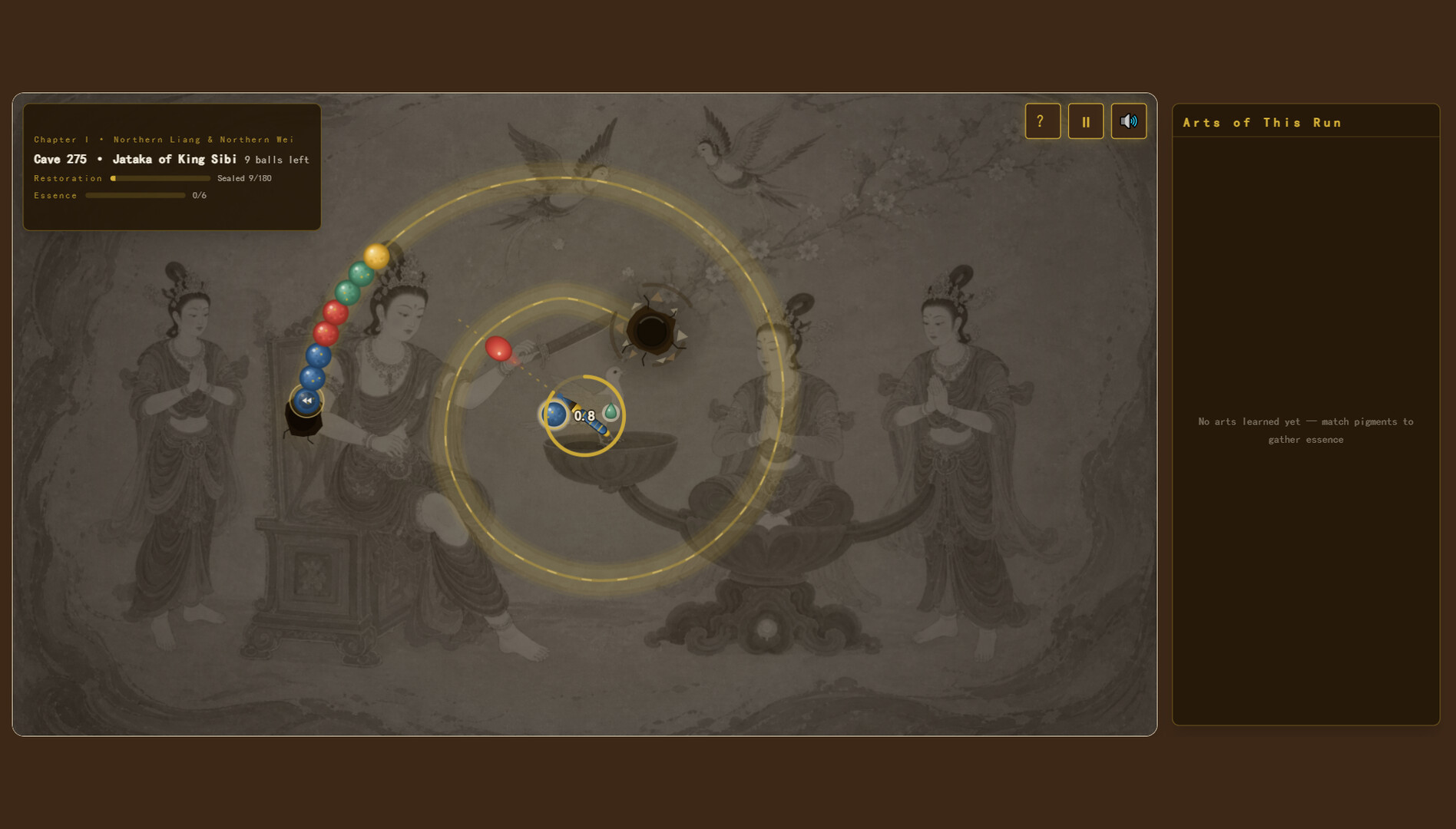
Restoring Cave 275's Jataka of King Sibi, pigment balls chase a spiral ribbon traced over the mural's own composition lines.Image: JZHacker via Steam -
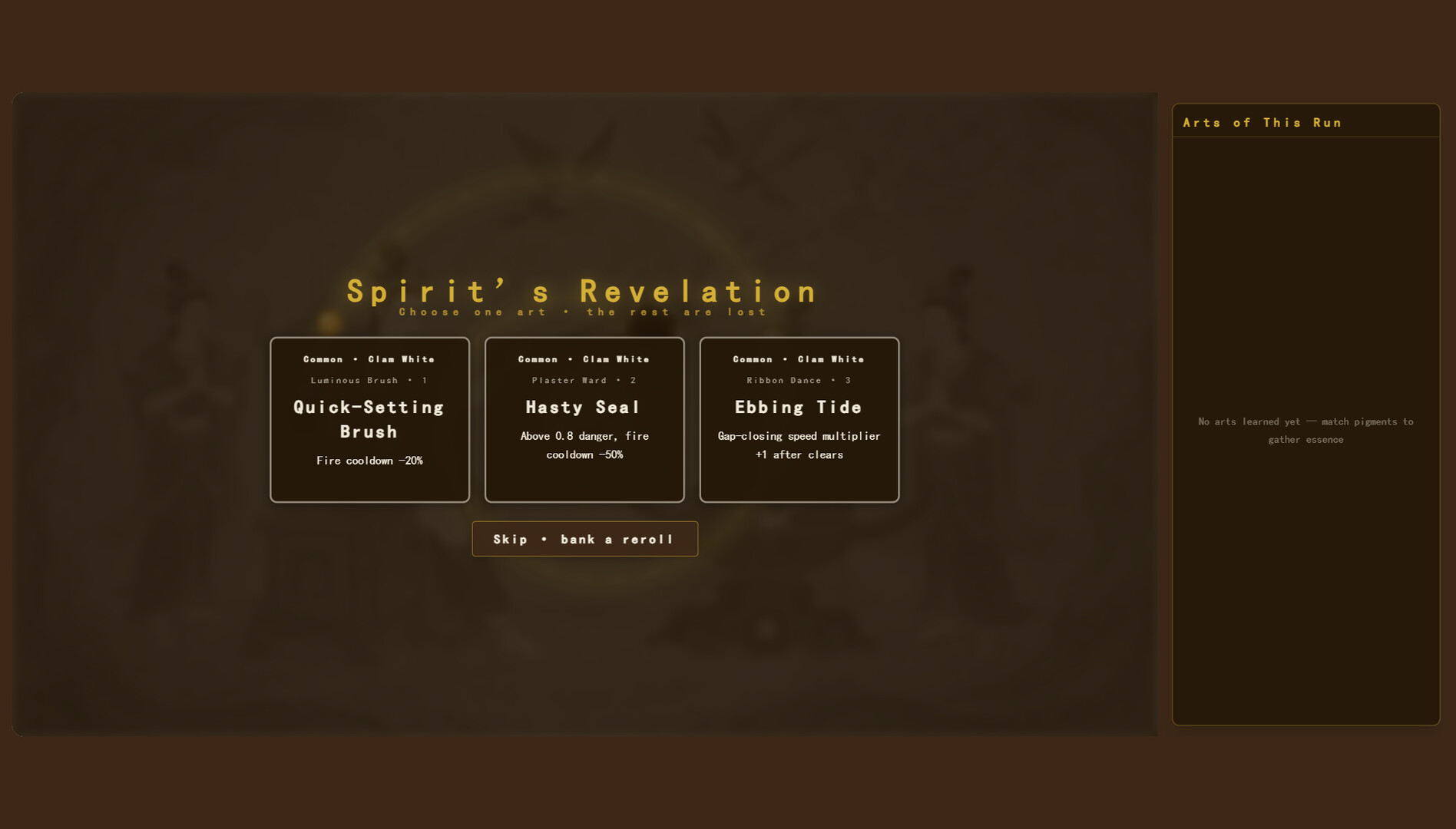
Spirit's Revelation: post-clear upgrade picks include Quick-Setting Brush and Hasty Seal, both aimed squarely at fire-rate speed.Image: JZHacker via Steam