Game review
Locktale Review
7 / 10
- Developer
- Mina Pêcheux
- Publisher
- Mina Pêcheux
- Released
- 7 September 2026
- Platforms
- ["Windows", "Mac", "Linux"]
- Genre
- Puzzle
A Cozy Puzzle Game Built Entirely Out of Codes
Locktale is a small, quietly ambitious puzzle game from solo developer Mina Pêcheux, built around a single, well-executed idea: every one of its 50-plus levels hands you a message scrambled by a different cipher, and your only job is to work out how to read it. There's no combat, no timer pressure, no fail state beyond your own patience — just a fairytale-flavored story about identity and love that reveals itself one decoded fragment at a time, as you work your way from simple substitution tricks used since antiquity up through genuinely modern cryptographic techniques, plus a handful of symbol-based ciphers the developer invented specifically for the game.
The framing is deliberately gentle. The developer's own pitch — take your time, relax, experiment — is echoed in how reviewers describe actually playing it: a "perfect antidote for brain rot," "great for a rainy day," something to sit with the way other people sit with a crossword or a sudoku. It's an unusually calm pitch for a puzzle genre that often leans on pressure and scoring, and reviewers who came in looking for exactly that kind of low-stakes, high-focus experience are overwhelmingly the ones giving it a strong recommendation.
Three Levels of Hints and a Genuinely Wide Range of Ciphers
What keeps Locktale from being either too easy for cryptography fans or too impenetrable for newcomers is its adaptive difficulty system: every level offers three tiers of hints, from minimal nudges to fully detailed walkthroughs, letting a puzzle-hunt veteran play with almost nothing and a curious newcomer lean on as much support as they need. Reviewers with existing cryptography backgrounds describe deliberately playing on the lowest hint setting for maximum satisfaction, spending half an hour at a stretch working out a single cipher by hand, while others openly admit to leaning on the detailed hints and still getting a real sense of discovery out of it.
The design has a meta layer that several reviewers single out as a highlight: some levels require you to revisit puzzles you've already solved to extract extra keys, others ask you to change the game's UI theme to surface hidden clues, and later ciphers build directly on techniques introduced earlier, so the game is quietly teaching you as it goes rather than just presenting fifty disconnected brain teasers. A built-in pen tool that saves your notes between sessions supports this without forcing you into an external notebook, which multiple reviewers specifically call out as a thoughtful touch. The tradeoff several reviewers flag is that Locktale's ceiling is directly tied to how much you already know or want to learn about cryptography — the game explicitly allows for what one reviewer calls "brute forcing" a stuck puzzle via heavy hints, and a handful of critics argue that leaning on that safety net too often turns the experience into copying ciphers from a reference page rather than actually solving anything.
Bugs and Bookkeeping Friction Take Some of the Shine Off
The recurring complaint across less enthusiastic reviews isn't the concept, which is almost universally praised, but execution friction. Several reviewers report bugs that specifically undermine a cipher game in the worst possible way: a corrupted or broken decode turning an otherwise correct answer into gibberish, a stuck level that couldn't be progressed past even via the hint system, and formatting quirks (like a puzzle indexing from zero instead of one) that cost solving time on issues that have nothing to do with the actual cryptography. One reviewer describes the game breaking outright at level 16 and not wanting to restart their progress to work around it, while another says the bug situation feels like a moving target — every patch fixes some issues and introduces new ones. Steam Deck controls also come up as slightly awkward out of the box, though workable with some remapping.
A smaller but consistent strand of criticism pushes back on the game's framing rather than its execution: a few reviewers feel Locktale reads less like a puzzle game and more like a structured series of cryptography textbook exercises, and argue that without real prior interest in the subject matter, the loop doesn't have much pull on its own. That's a fair characterization of the game's ceiling — Locktale rewards curiosity about how codes work far more than it rewards general puzzle-solving instinct, and players without any interest in the underlying subject are the ones most likely to bounce off it.
Small, Personal, and Worth It for the Right Player
At $7.99, reviewers are near-unanimous that the price is fair for what's on offer, and the minimalist audiovisual presentation — simple graphics, quiet ambient audio — fits the calm, unhurried tone the developer is clearly going for rather than reading as underbaked. The game also offers a genuinely bilingual French and English experience, which a few multilingual reviewers note actually changes some of the puzzle-solving approach depending on which language you play in, a nice bit of craft for a solo project. For a first-time player unfamiliar with the genre, the demo that preceded the full release gave a reasonably accurate preview of what to expect, and reviewers who tried the demo first report the full game living up to it.
Locktale isn't trying to be a big game, and it knows exactly who it's for: people who like the specific, patient satisfaction of teasing a hidden message out of scrambled letters, symbols, or numbers. It won't convert someone who has no interest in cryptography as a subject, and the launch-window bugs are a real drag on an experience that depends on trusting the puzzle in front of you is actually solvable as presented. But for the target audience, it's a distinctive, well-thought-out entry in a pretty thin genre.
Verdict
Locktale succeeds at a narrow, well-defined goal: turning fifty different real and invented ciphers into a coherent, story-driven puzzle experience with enough hint flexibility to serve both cryptography veterans and total newcomers. Its meta-puzzle design and persistent note-taking tool show real craft from a solo developer, and the fairytale story threading it all together gives you a reason to keep decoding beyond pure mechanical interest. Bugs around cipher accuracy and level progression are a legitimate, recurring complaint that undercuts trust in a game whose entire appeal rests on the puzzles working correctly, and the format's dependence on genuine interest in cryptography means it won't land for everyone. For puzzle fans specifically drawn to codes and ciphers, though, it's a cozy, inventive $7.99 well spent, bugs and all, with room to become a genuine standout once the rough edges are patched out.
Pros:
- Wide, well-curated range of real and invented ciphers spanning ancient to modern cryptography
- Adaptive three-tier hint system serves both experts and total newcomers
- Clever meta-puzzle design that has you revisiting earlier levels and game UI for clues
- Persistent pen tool for note-taking is a genuinely useful, well-implemented touch
- Fair price and a calm, distinctive tone rare in the puzzle genre
Cons:
- Bugs around cipher decoding and level progression undermine trust in puzzles that depend on precision
- Heavy reliance on hints can reduce solving to copying reference material rather than real deciphering
- Appeal is narrow without genuine prior interest in cryptography as a subject
- Some UX friction, including awkward Steam Deck controls out of the box
Screenshots
-
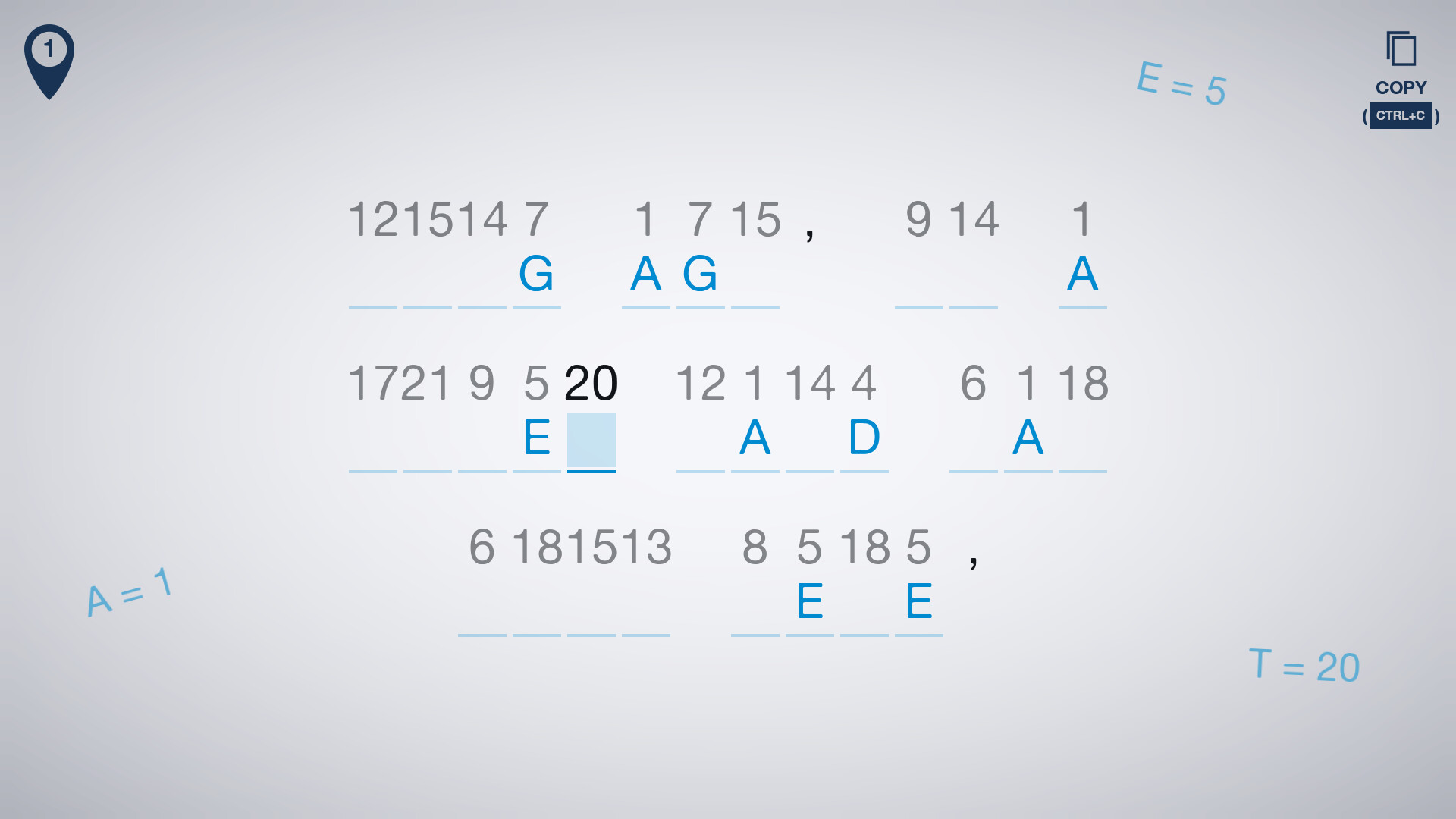
Working through a numeric substitution cipher, one letter at a timeImage: Mina Pêcheux -
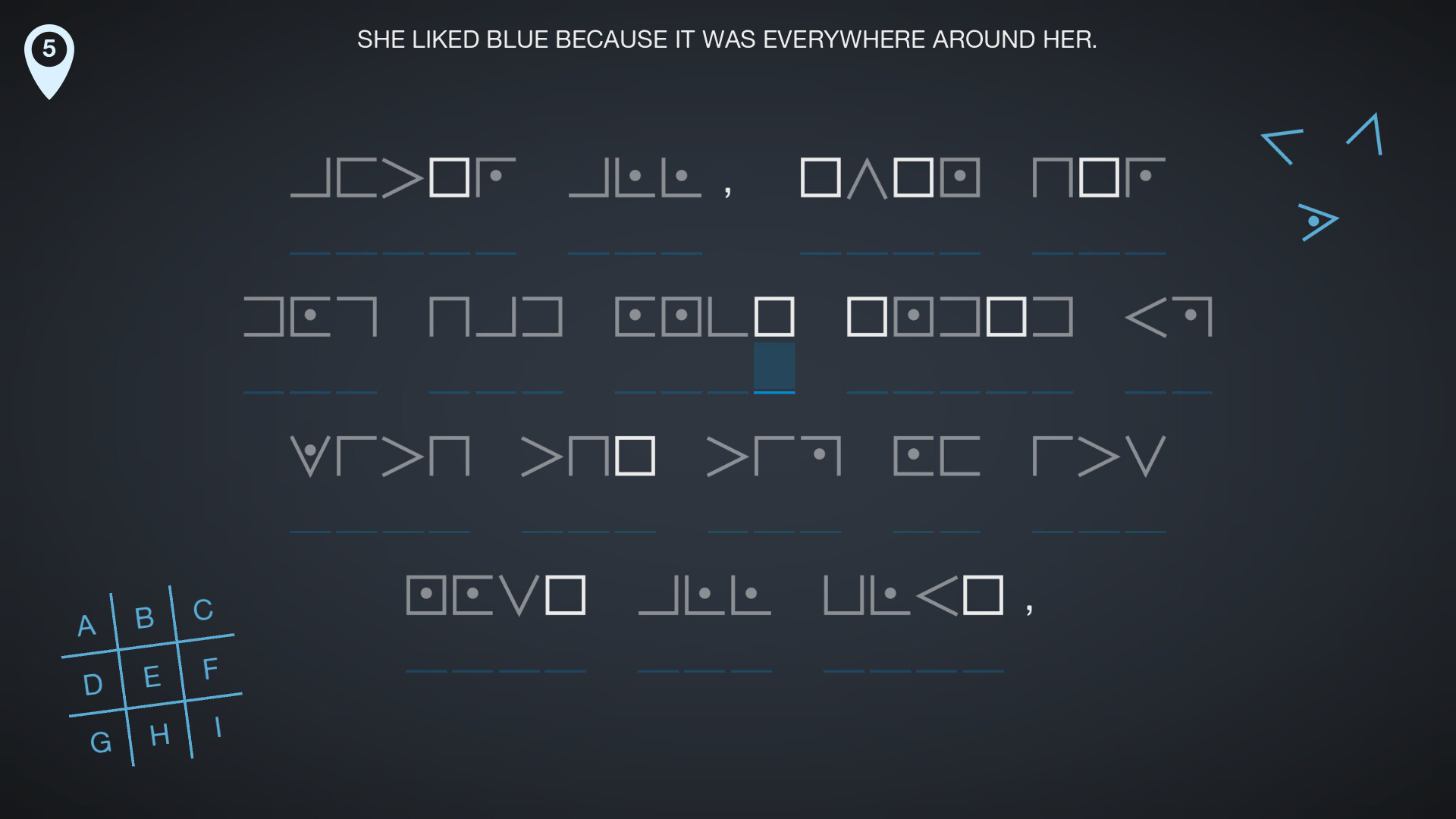
A later level using one of the game's invented symbol-based ciphersImage: Mina Pêcheux -
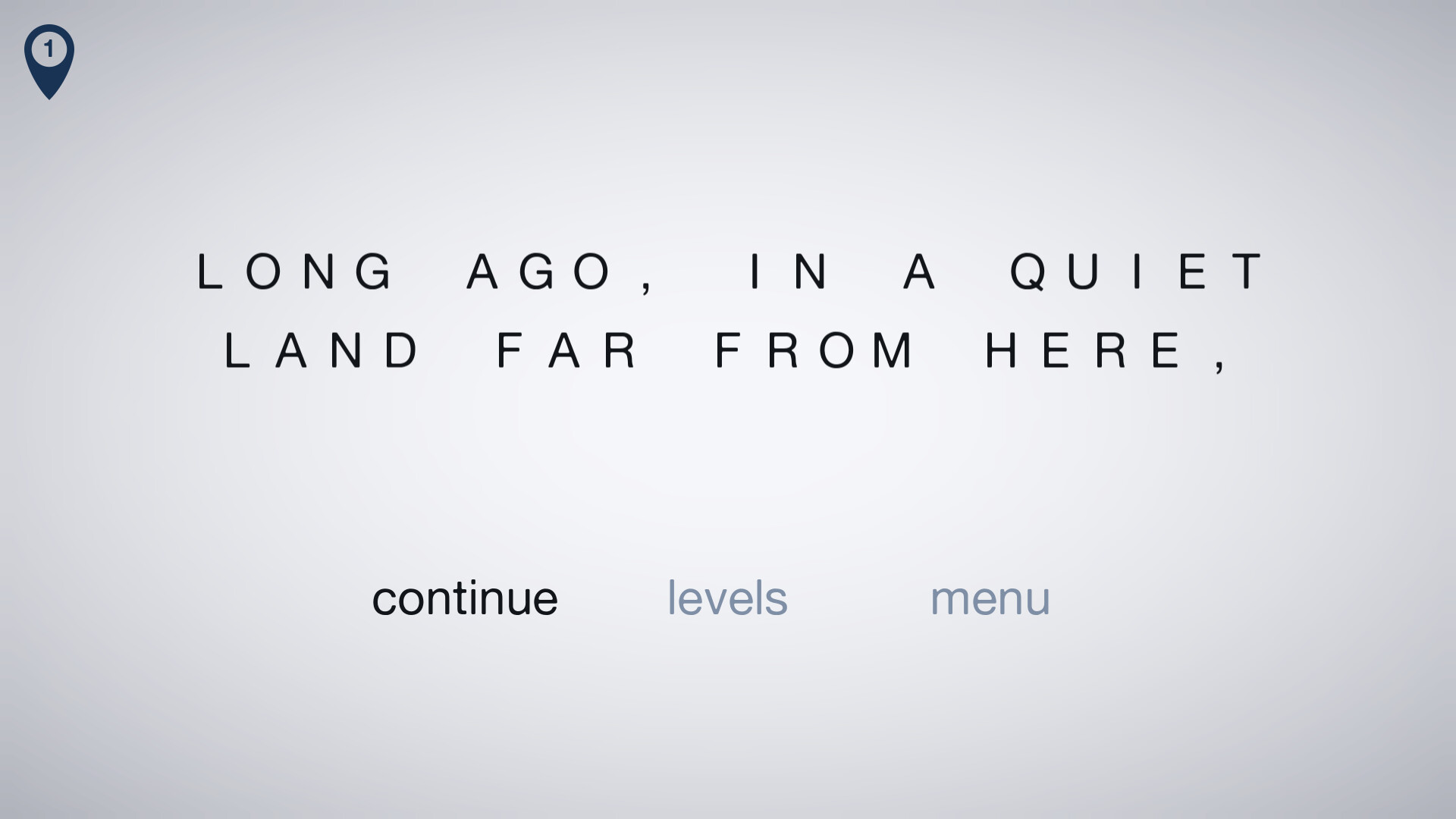
The fairytale framing story that unfolds as you decode each messageImage: Mina Pêcheux -
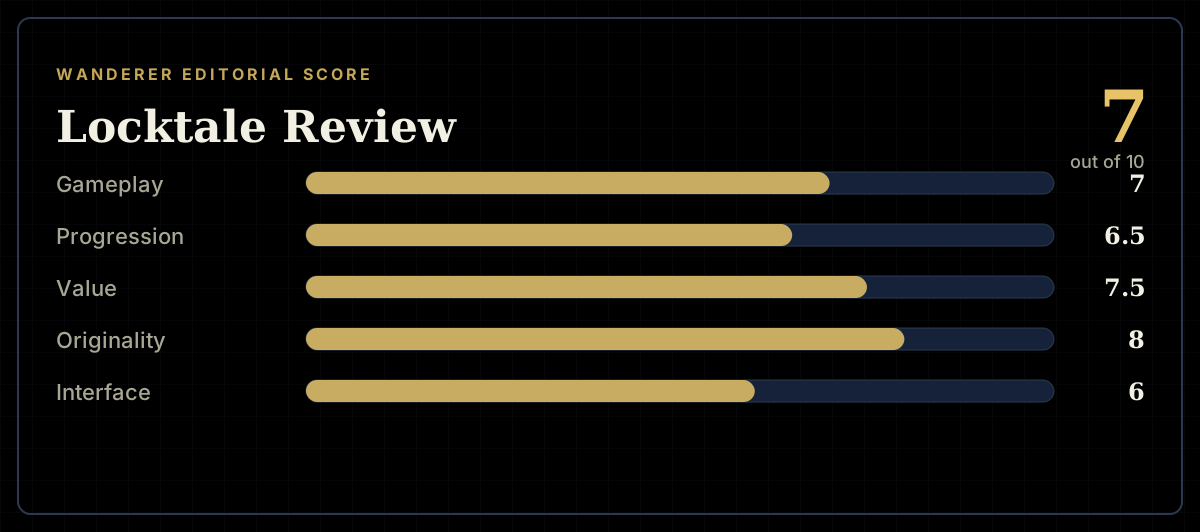
How the review scores each part of the gameWanderer Editorial -
The short versionWanderer Editorial