
Game review
Apple Faces Up Review
6.5 / 10
- Developer
- EASYHUMAN
- Publisher
- Phoenixx Inc.
- Released
- 16 August 2026
- Platforms
- ["Windows"]
- Genre
- Adventure
A Free Puzzle Game Built Entirely Around Vocabulary
Apple Faces Up is a free, roughly ninety-minute puzzle adventure from developer EASYHUMAN and publisher Phoenixx Inc., released on Steam on August 16, 2026 with a clean, single-item post-launch history and no early access period behind it. Its hook is genuinely unusual for the genre: the player wakes with amnesia in the Infinite Library, a place where books record the physical laws governing each room, and progresses by literally rewriting the words inside those books to change gravity, scale, and the layout of the space around them. With only ten English reviews a month after release, nine of them positive, it's a tiny sample, but an unusually consistent one, nearly every reviewer independently lands on the same verdict: a clever, low-stakes idea that doesn't fully cash in its own premise, wrapped in a package that costs nothing to try.
Change The Word, Change The Room
The core loop is refreshingly literal. Each of the library's 13 rooms contains a sentence with one or two blanked-out words, something like "______ has gone down, you have traded places with ______," and the player fills those blanks with words collected by reading books scattered around the shelves, instantly altering a rule of the room to open a path forward. One reviewer described the appeal plainly: "This is a really neat mechanic that can lead to some interesting reactions," while another called the underlying idea "a pretty unusual idea... the idea of changing the rules themselves gives the game a more interesting feel than a normal puzzle game." A reviewer with more genre experience made the most useful comparison in the entire pool: "It is basically just Superliminal but with less polish, but it's good enough that you should still play it. Just play Superliminal if you liked this because you'll love that," which is both a fair criticism and a genuinely useful pointer for anyone deciding whether the concept is worth their time.
Simple By Design, Maybe Too Simple
Where the reviewer consensus turns critical is on difficulty and depth. Multiple reviewers independently note that the puzzles rarely demand more than a single correct guess, and that the game's central mechanic, gathering exactly the right words for exactly the right blanks, never really escalates past its opening rooms. "None of these are particularly difficult, the only times I got stuck were when the answer was simple and I was trying too hard to come up with a complicated one," wrote one reviewer, while another put it more bluntly: "The puzzles were really simple." One especially detailed review framed this as the game's core tension: "the success of the game depends heavily on how much I enjoy its particular style of puzzle solving... it is not something I would rate alongside the deeper puzzle games I have played, but it has enough personality to stand out." For a free release built around a single clever idea, undercooked difficulty is a forgivable flaw, but it's clearly the ceiling every reviewer in this pool bumps into.
A Library Full Of Books You Don't Actually Need To Read
The most pointed recurring complaint isn't about the puzzles themselves but about the library's central conceit going underused. The game fills its shelves with genuine trivia and short essays that reviewers describe as pleasant to read, but the actual solution to nearly every puzzle only requires collecting a handful of specifically highlighted "gold" words, meaning most of that reading is entirely optional flavor rather than a functional part of the design. "It would have been nice if the information in the books was used in some way. Once I realized we only needed the words, all I did was open and immediately close the gold books to get the new words, which felt kind of lame," wrote one reviewer, a complaint echoed almost verbatim by another: "I agree with another reviewer that it would be awesome if you could use all the information you read in the books to play the game, not just the highlighted parts." Given how central "knowledge as power" is to the game's own pitch, that's a real missed opportunity rather than a minor nitpick.
Atmosphere And Narration Carry More Weight Than The Puzzles
What reviewers consistently praise is the mood: soft music, a quiet, unhurried pace, and a framing device, the angel-librarian Mimir setting the player through 13 trials for reasons that slowly come into focus, that gives the whole thing more narrative shape than most free puzzle prototypes bother with. One reviewer called it "a short walking simulator with a few quests along the way and some lovely Asian music," while another appreciated that "the game is clearly going for a relaxing and mysterious atmosphere rather than something intense, which suits the puzzle design." Translation quality gets a mild, forgiving complaint from at least one reviewer, "a little rough in places (like using long instead of tall), but easy enough to figure out," which barely dents the overall experience given the game costs nothing to play.
A Single Legitimate Technical Complaint
The pool's lone negative review is short but specific and worth taking at face value: "The motion blur was hurting my eyes. Wasn't an option to turn it off." A missing motion-blur toggle is a small thing to flag in a ninety-minute free game, but it's exactly the kind of accessibility oversight that can make an otherwise pleasant, low-stakes experience actively uncomfortable for a subset of players, and it's the only reviewer in this pool describing the game in genuinely negative terms rather than merely "simple" or "short."
Verdict
Apple Faces Up is a small, free puzzle adventure with a genuinely clever central idea, rewriting the words that define a room's physical laws, that its own tiny, largely positive review pool agrees doesn't push that idea nearly as far as it could. The puzzles are gentle rather than testing, most of the library's actual reading material turns out to be optional flavor rather than functional content, and at least one player found the lack of a motion-blur toggle a genuine dealbreaker. None of that changes the fact that it's free, takes about an hour and a half to finish, and offers a concept distinct enough that several reviewers independently reached for Superliminal as the closest comparison worth making. It's an easy, no-risk recommendation for anyone curious about the premise, but players hoping for the difficulty curve or the depth of that comparison point should adjust their expectations accordingly.
Screenshots
-
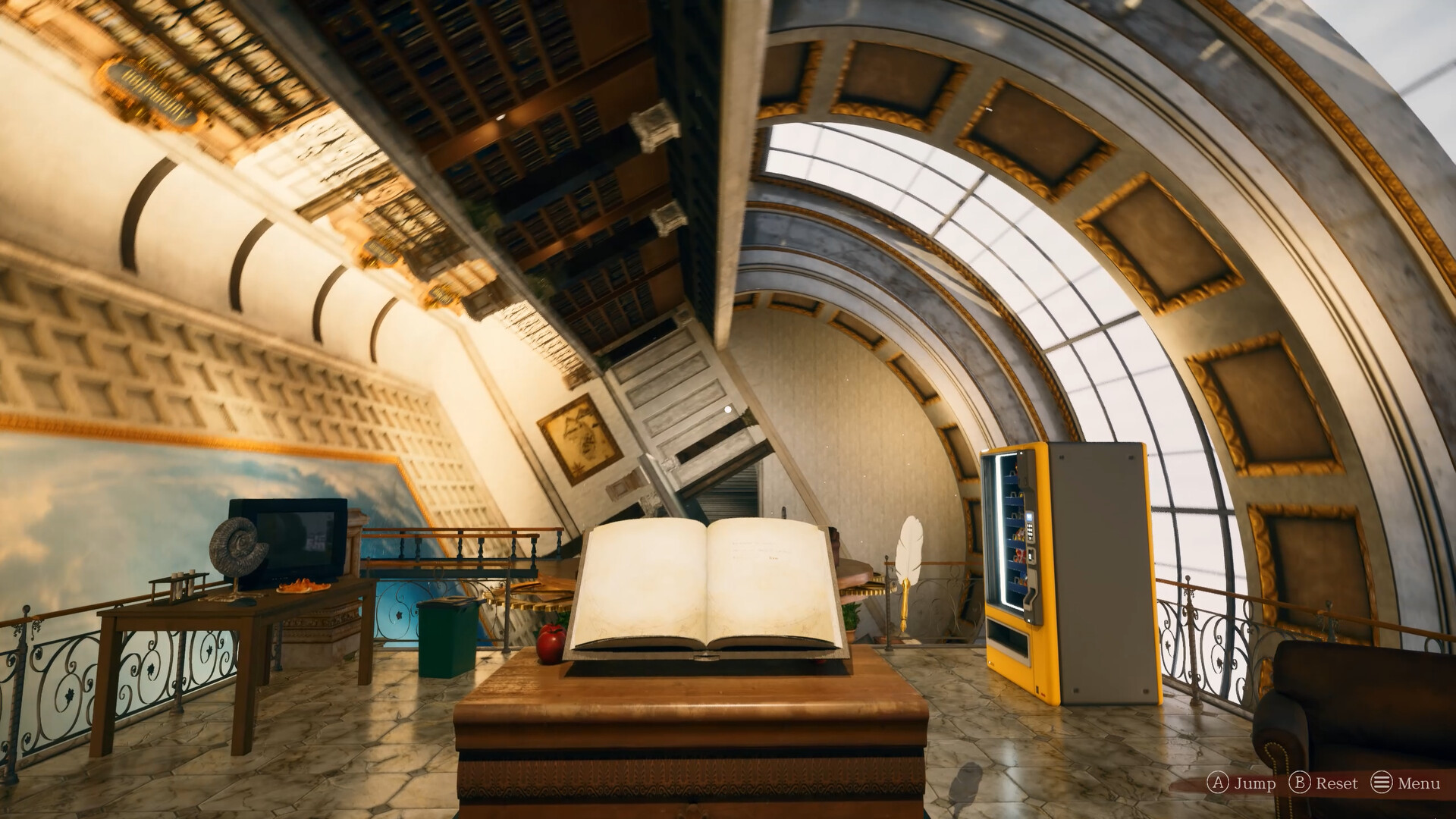
One room's rule made gravity itself unreliable, tilting the entire library, floor, vending machine, and all, around the player.Image: Phoenixx Inc. via Steam -
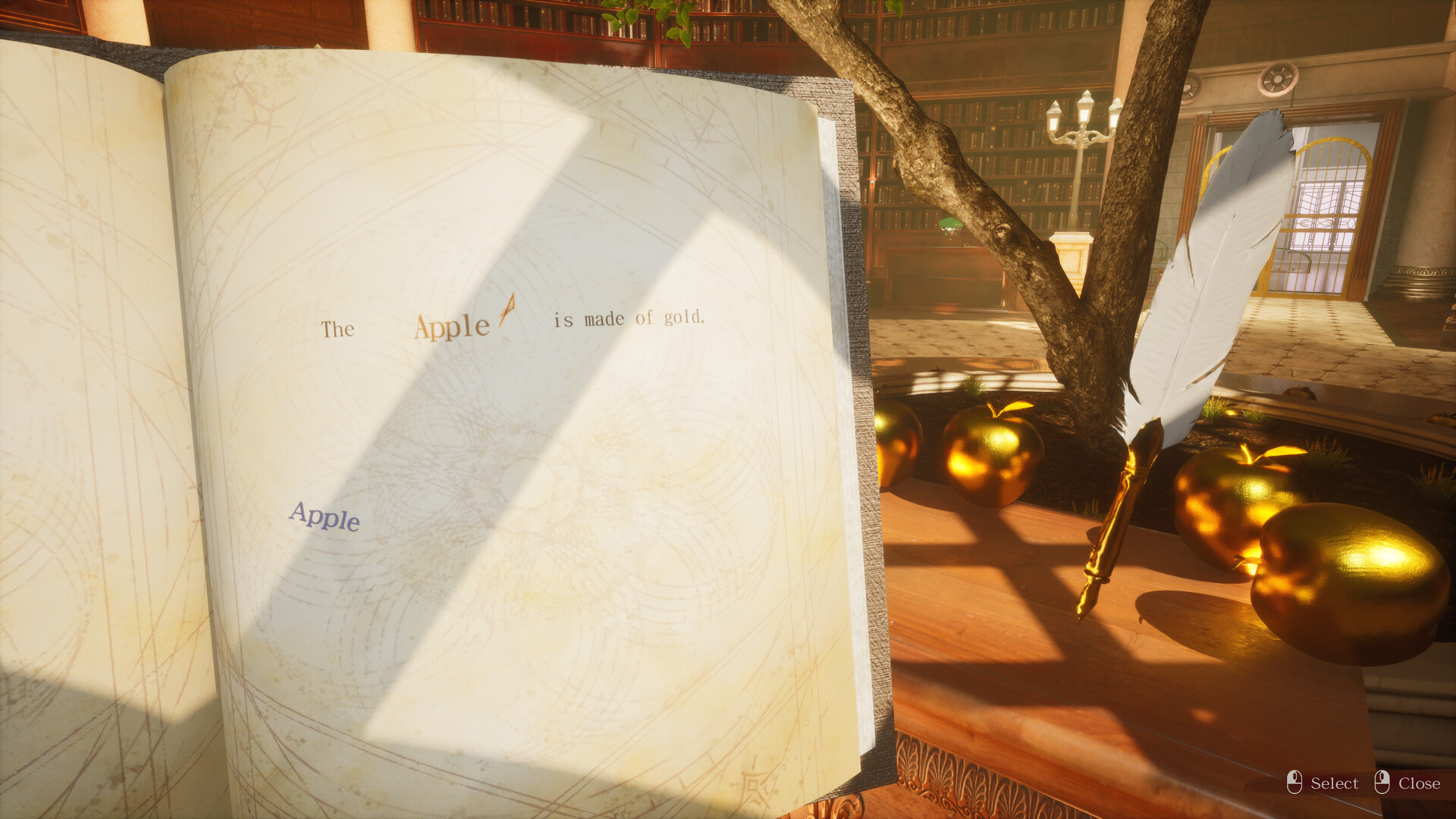
The rewrite mechanic in action: swapping a single highlighted word turns an ordinary apple into solid gold.Image: Phoenixx Inc. via Steam -
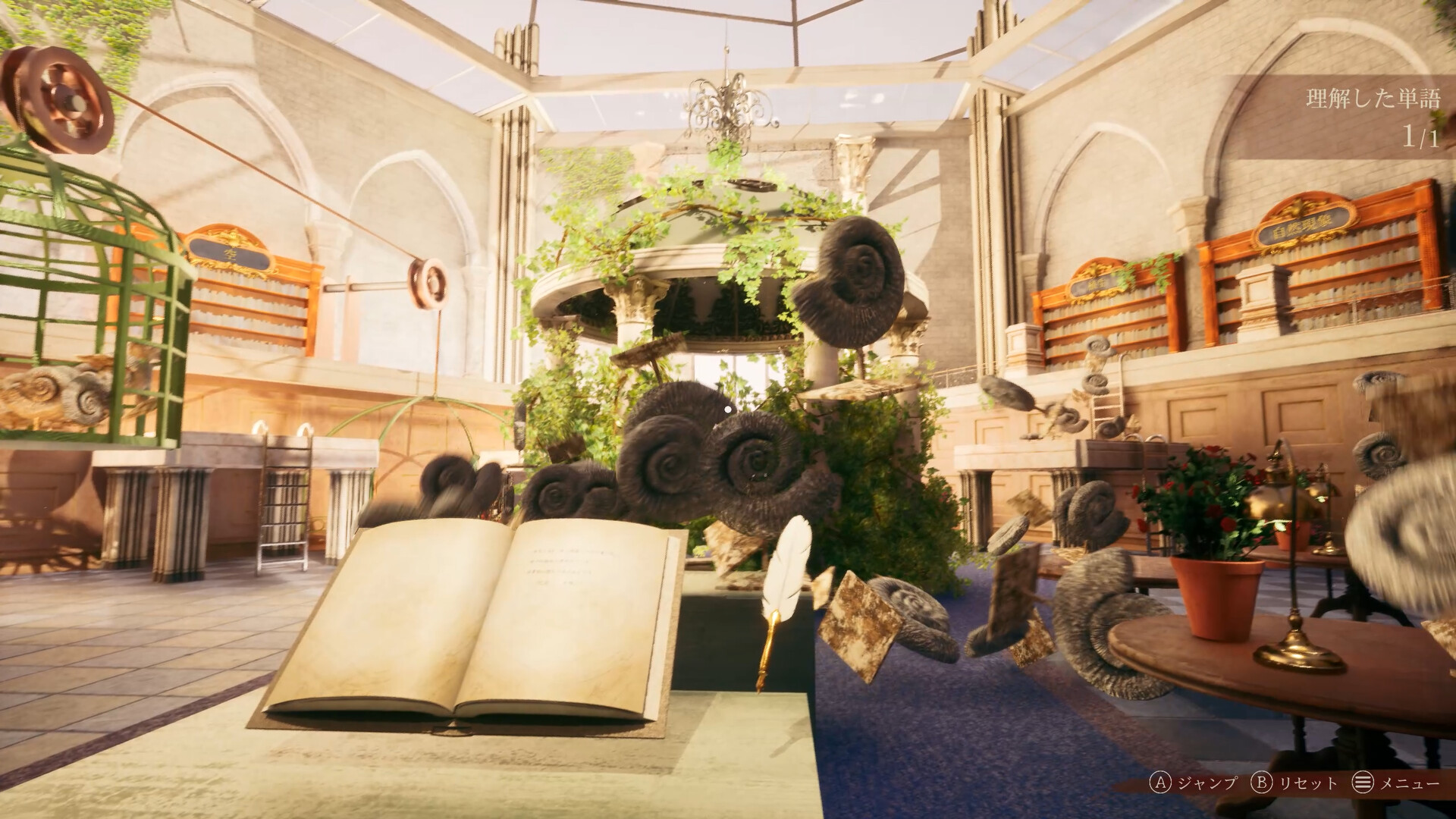
Another room's altered rule sets stone fossils and books adrift, weightless clutter hanging in the air around a reading stand.Image: Phoenixx Inc. via Steam