
Game review
SmashCore
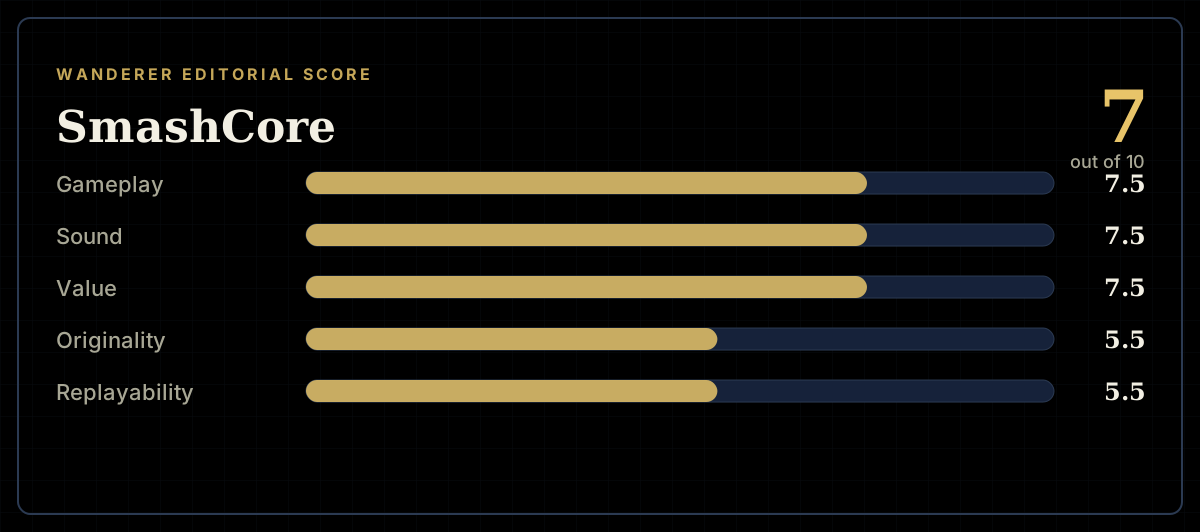
7 / 10
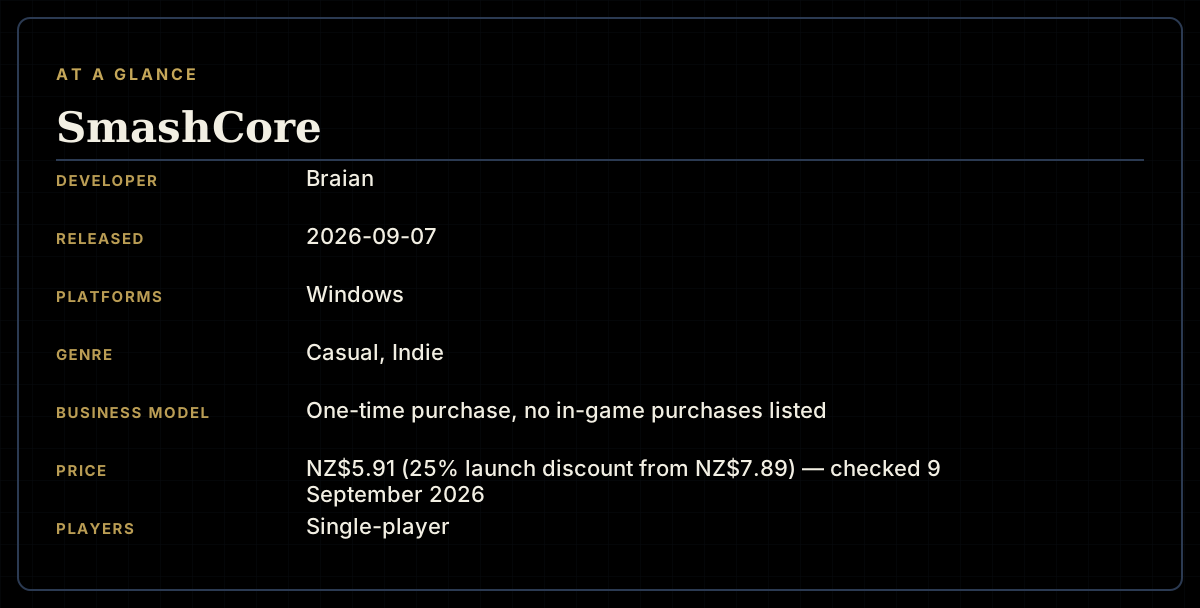
- Developer
- Braian
- Publisher
- Braian
- Released
- 7 September 2026
- Platforms
- Windows
- Genre
- Casual, Indie
- Monetisation
- One-time purchase, no in-game purchases listed
- Players
- Single-player
The short version
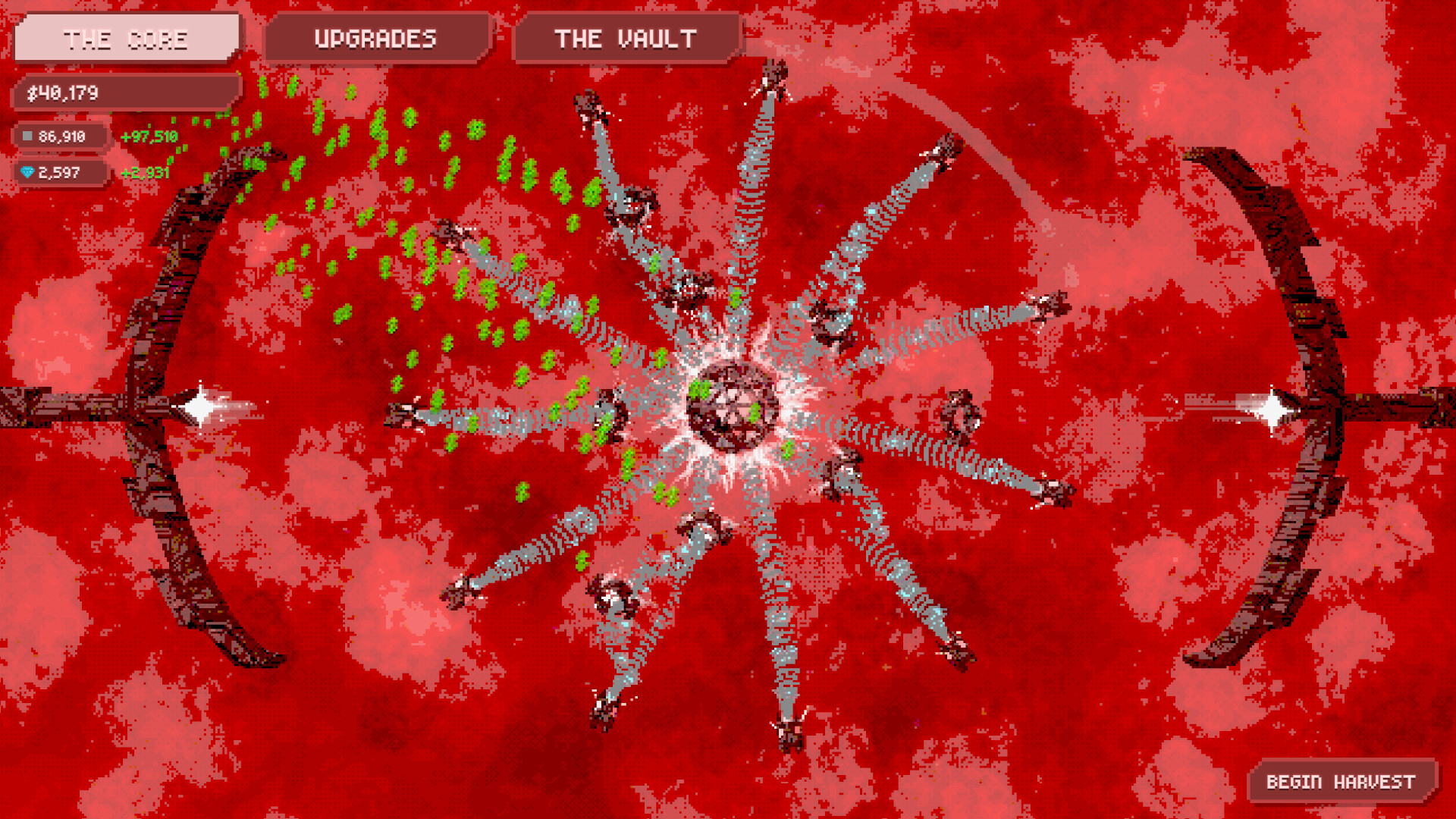
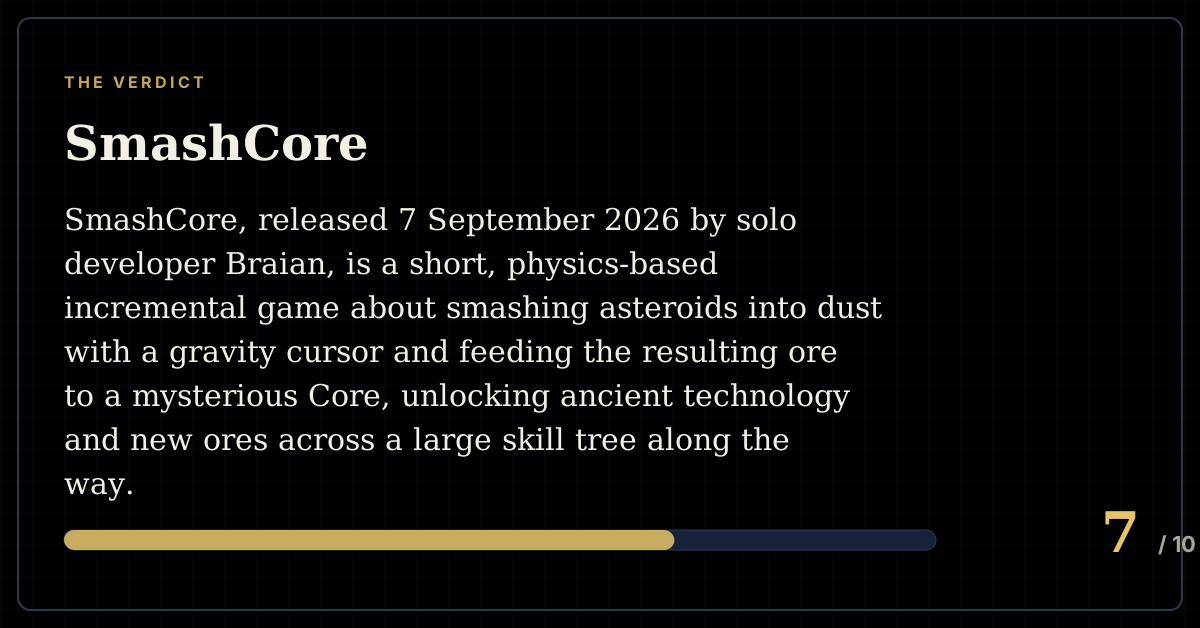
SmashCore, released 7 September 2026 by solo developer Braian, is a short, physics-based incremental game about smashing asteroids into dust with a gravity cursor and feeding the resulting ore to a mysterious Core, unlocking ancient technology and new ores across a large skill tree along the way. It sits Positive with a small, entirely favourable sample of 41 reviews, and reading through every one of them reveals genuine, specific enthusiasm for a satisfying, tactile core loop and distinctive retro presentation. Reviewers repeatedly describe the moment-to-moment act of smashing rocks together as genuinely satisfying, with particular praise for a late-game "Pulsar" upgrade several reviewers single out as a standout power spike, and multiple reviewers specifically credit the sound design and a nostalgic MS-DOS-era visual effect as elevating a simple concept well above its apparent complexity. Set against that praise, this review found a specific, recurring comparison several reviewers draw to Space Rock Breaker, a similarly structured incremental game, with at least one detailed reviewer describing the two as close enough to speculate about a direct creative connection between their developers. This review also found consistent notes about a short, highly linear runtime, typically around three to three and a half hours, and a request for a leaderboard to support the game's optional endless mode.
Biggest strengths
- The core rock-smashing loop draws overwhelming, specific praise as genuinely satisfying and tactile, with reviewers repeatedly describing real dopamine-driven appeal in the moment-to-moment act of breaking asteroids apart with the gravity cursor
- A late-game "Pulsar" upgrade draws specific, enthusiastic and repeated praise as a standout power spike, with multiple reviewers independently singling it out as a genuine highlight of the game's progression
- Presentation draws consistent, specific appreciation, with reviewers praising a distinctive, nostalgic MS-DOS-era visual effect and sound design several describe as worth the price of admission on its own
Biggest weaknesses
- Multiple reviewers draw a specific, recurring comparison to Space Rock Breaker, a similarly structured incremental game, with at least one detailed reviewer describing the two as close enough in overall structure to speculate about a direct creative connection between their respective developers, distinct from the genuinely different gameplay mechanics both reviewers acknowledge separate the two titles
- Multiple reviewers describe the runtime as short and highly linear, typically completing the main game in around three to three and a half hours, with at least one reviewer specifically noting the structure offers limited flexibility in how that progression unfolds
- At least one reviewer specifically requests a leaderboard to support the game's optional endless mode after the main story concludes, describing the current lack of one as a missed opportunity for replayability
Who it's for: Fans of simple, satisfying physics-based incremental games looking for a short, tactile session with genuine retro charm, especially anyone who enjoyed Space Rock Breaker and wants more of that specific loop.
Our recommendation: Strongly worth it at this low price for incremental fans; go in aware the core loop closely echoes an existing genre favourite, and expect a short, mostly linear experience rather than a sprawling, endlessly replayable one.
7 / 10
Introduction
SmashCore, released 7 September 2026 by solo developer Braian, is a short, physics-based incremental game about smashing asteroids into dust with a gravity cursor and feeding the resulting ore to a mysterious Core, unlocking ancient technology and new ore types across a large skill tree along the way. It sits Positive with a small, entirely favourable sample of 41 reviews, and reading through every one of them reveals genuine, specific enthusiasm for a simple core concept executed with real care, sitting alongside one recurring, specific comparison this review found worth addressing directly.
A genuinely satisfying, tactile core loop
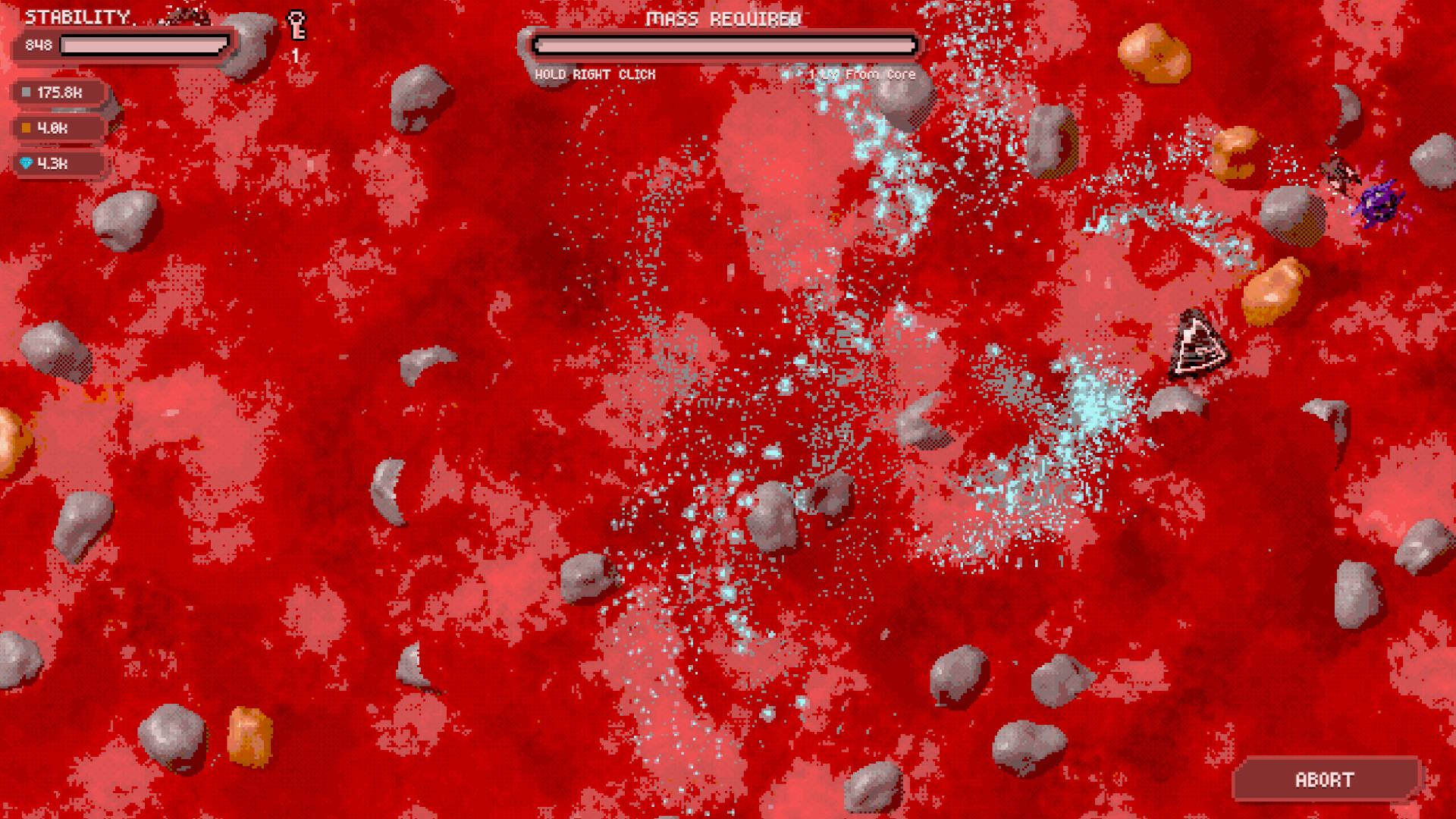
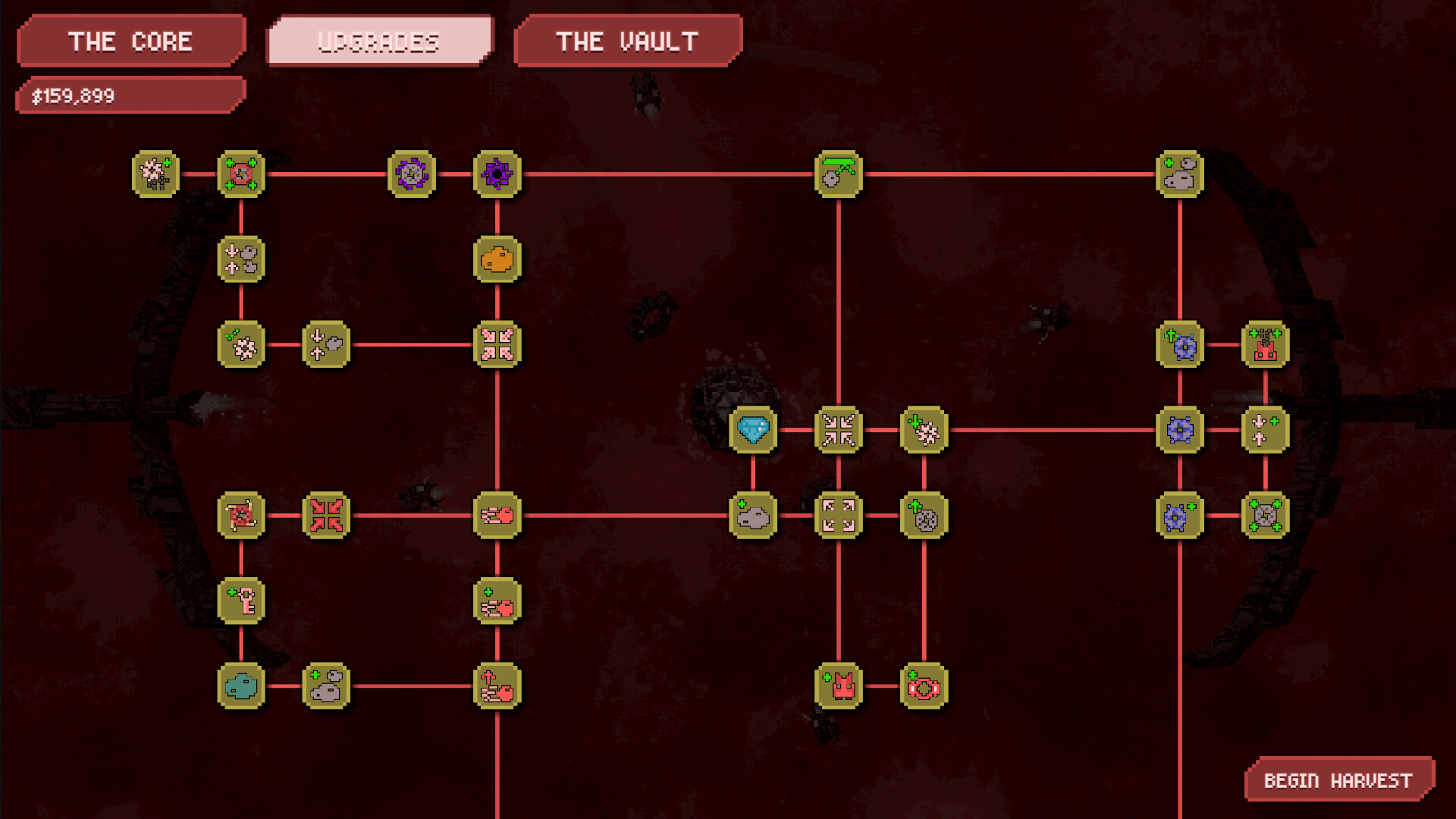
The clearest, most consistent praise across this sample concerns how the core rock-smashing mechanic actually feels to play. Reviewers repeatedly describe real, tactile satisfaction in the moment-to-moment act of breaking asteroids apart with the gravity cursor, with more than one reviewer using explicitly dopamine-driven language to describe the appeal. A late-game "Pulsar" upgrade draws particularly specific, enthusiastic and repeated praise, with multiple independent reviewers singling it out by name as a genuine highlight of the progression system, suggesting Braian's skill-tree pacing successfully builds toward memorable, individually satisfying power spikes rather than a flat, undifferentiated grind.
Distinctive retro presentation, and strong sound design
Beyond the core mechanic, this review found consistent, specific praise for presentation. Reviewers repeatedly describe a distinctive, nostalgic MS-DOS-era visual effect that several credit with giving the game real character beyond its simple underlying concept, and sound design draws its own specific, enthusiastic praise, with at least one reviewer stating directly that the audio alone was worth the price of admission. A recurring black-hole and wormhole mechanic draws further specific appreciation, with reviewers describing a genuine, hard-to-place nostalgic feeling triggered by these moments.
A specific, recurring comparison to Space Rock Breaker
Set against that praise, this review found a specific pattern worth addressing directly rather than glossing over: multiple reviewers independently and unprompted compare SmashCore to Space Rock Breaker, an existing, similarly structured incremental game several reviewers describe as a genre favourite. At least one detailed reviewer goes further, describing the two games as close enough in overall structure, excluding the actual gameplay mechanics themselves, to speculate openly about whether a direct creative connection exists between their respective developers. This review was not able to independently verify any such connection, and treats the observation here as a documented, repeated comparison within the review sample rather than an established fact or an accusation of copying — notably, every reviewer making this comparison also frames SmashCore positively on its own terms, describing genuinely different gameplay mechanics layered onto a broadly similar incremental structure, rather than treating the resemblance as disqualifying.
Short, and deliberately linear
A separate, more straightforward complaint concerns length and structure. Multiple reviewers describe completing the main game in around three to three and a half hours, and at least one reviewer specifically notes the progression is highly linear, offering limited flexibility in how that path unfolds compared to more open-ended incremental designs. This isn't framed as a serious flaw by most reviewers in this sample — several specifically praise the game for not overstaying its welcome — but it's a relevant consideration for buyers hoping for a longer-form incremental experience.
A request for endless-mode leaderboards
This review found one specific, concrete feature request worth flagging directly: at least one reviewer specifically asks for a leaderboard to support the game's optional endless mode, available after the main story concludes, describing its current absence as a missed opportunity to extend replayability for players who want to keep engaging with the core loop competitively after finishing the primary content.
A small, unanimous sample, read with appropriate caution
With only 41 total reviews, all of them positive, this review treats its own conclusions as an early, provisional snapshot rather than a fully settled verdict. No detailed reviewer in this sample raised a substantive complaint about technical stability, bugs, or balance, which means this review's picture of the game's potential weaknesses is necessarily less complete than for titles with a larger, more contested review base. The specificity reviewers bring to their praise — a named standout upgrade, precise comparisons to a specific genre rival, concrete requests for particular missing features — reads as genuine, considered engagement rather than reflexive positivity, even accounting for how few total voices are currently represented.
Weighing resemblance against genuine individual craft
It's worth engaging a little further with how this review ultimately weighs the Space Rock Breaker comparison against SmashCore's own specific strengths, since the two aren't mutually exclusive conclusions. Incremental games as a category share a great deal of underlying structural DNA by design — resource accumulation, skill trees, escalating unlock tiers — and a broad family resemblance between two titles in the same specific niche, built around a similar physics-smashing premise, isn't automatically evidence of one copying the other any more than two platformers sharing jump mechanics would be. What this review weighs more heavily is the specific, independently observed detail reviewers bring to SmashCore on its own terms: the named Pulsar upgrade, the distinctive MS-DOS visual treatment, the specific black-hole and wormhole moments described as genuinely evocative. That level of concrete, particular praise suggests real, individual design craft distinct from its genre neighbour, even while the family resemblance reviewers themselves keep pointing out remains a fair, relevant thing for prospective buyers already familiar with that other game to weigh before purchasing both.
Final Verdict
SmashCore succeeds at delivering a simple, satisfying physics-incremental loop with genuine individual character, backed by distinctive retro presentation and sound design reviewers consistently single out as elevating the experience well beyond its modest scope. What tempers this score is a specific, recurring comparison to Space Rock Breaker that prospective buyers already familiar with that game should weigh directly, alongside a short, highly linear runtime and the appropriate caution this review applies to any conclusion drawn from a still-small, unanimously positive sample. Strongly worth it at this low price for incremental fans looking for a short, tactile, well-crafted solo-developed experience.
Pros and cons
Pros
- The core rock-smashing loop draws overwhelming, specific praise as genuinely satisfying and tactile, with reviewers repeatedly describing real dopamine-driven appeal in the moment-to-moment act of breaking asteroids apart with the gravity cursor
- A late-game "Pulsar" upgrade draws specific, enthusiastic and repeated praise as a standout power spike, with multiple reviewers independently singling it out as a genuine highlight of the game's progression
- Presentation draws consistent, specific appreciation, with reviewers praising a distinctive, nostalgic MS-DOS-era visual effect and sound design several describe as worth the price of admission on its own
- Value draws consistent praise given the low asking price, with reviewers describing a well-made, satisfying incremental experience that scales its difficulty meaningfully even beyond the game's formal ending
Cons
- Multiple reviewers draw a specific, recurring comparison to Space Rock Breaker, a similarly structured incremental game, with at least one detailed reviewer describing the two as close enough in overall structure to speculate about a direct creative connection between their respective developers, distinct from the genuinely different gameplay mechanics both reviewers acknowledge separate the two titles
- Multiple reviewers describe the runtime as short and highly linear, typically completing the main game in around three to three and a half hours, with at least one reviewer specifically noting the structure offers limited flexibility in how that progression unfolds
- At least one reviewer specifically requests a leaderboard to support the game's optional endless mode after the main story concludes, describing the current lack of one as a missed opportunity for replayability
- With a sample of only 41 total reviews, all of them positive, this review is cautious about treating this early reception as fully representative, and would revisit this score as a larger, more varied sample becomes available
- No detailed reviewer in this sample raised a substantive complaint about technical stability, bugs, or balance, meaning this review's picture of the game's potential weaknesses is necessarily less complete than for titles with a larger, more contested review base
Screenshots
-
SmashCoreImage: Braian via Steam -
SmashCoreImage: Braian via Steam -
SmashCoreImage: Braian via Steam -
How the review scores each part of the gameWanderer Editorial -
The essentials at a glanceWanderer Editorial -
The short versionWanderer Editorial