Game review
Skills & Raids
5.5 / 10
- Developer
- Eddie H.Hinestroza
- Publisher
- Eddie H.Hinestroza
- Released
- 27 July 2026
- Platforms
- Windows
- Genre
- RPG
- Monetisation
- One-time purchase (NZ$12.60 with a 20% launch discount, NZ$15.75 standard); no in-game store, no IAP
- Players
- None; fully single-player
The short version
Skills & Raids pitches itself as a party-based extraction RPG: pick from three fixed characters — a tank, a DPS and a healer, styled as a turtle, wolf and owl — manage cooldowns and status effects in real-time combat, extract loot to craft gear, and combine dropped skills into custom builds. It's a solo developer's project, signed off in the store description with a personal note of thanks, and 27 of its first 40 reviewers recommend it.
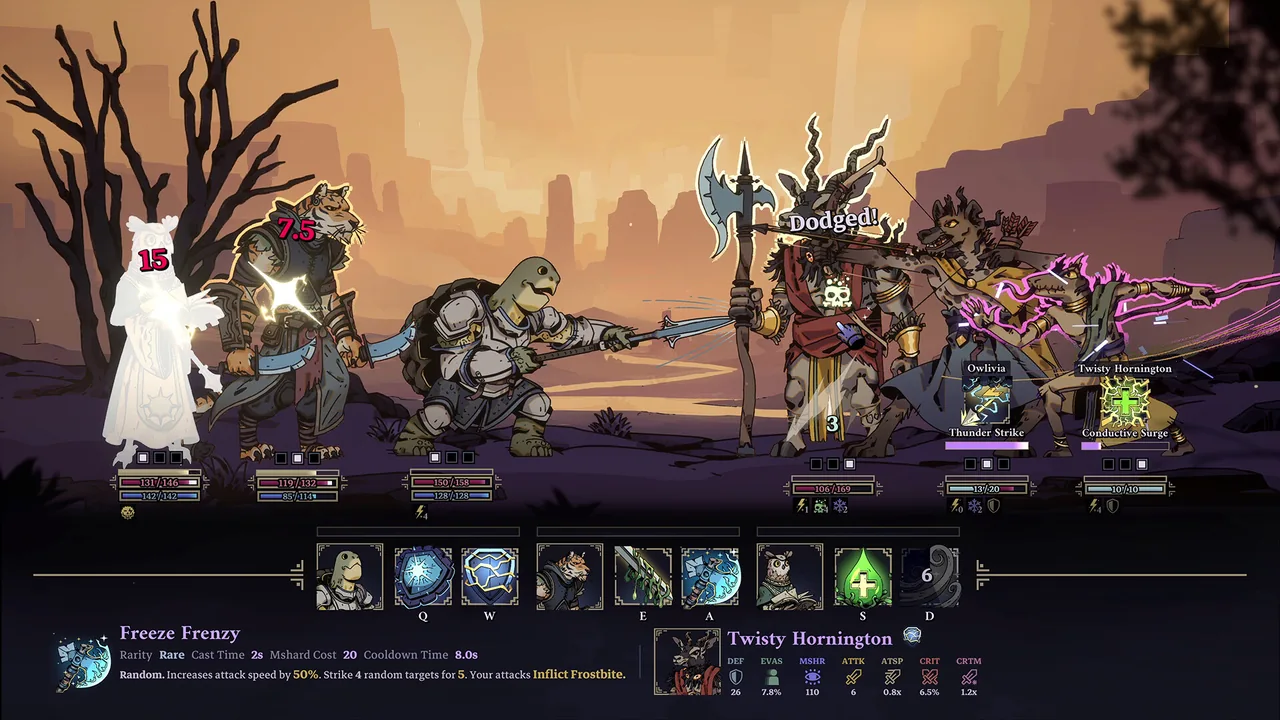
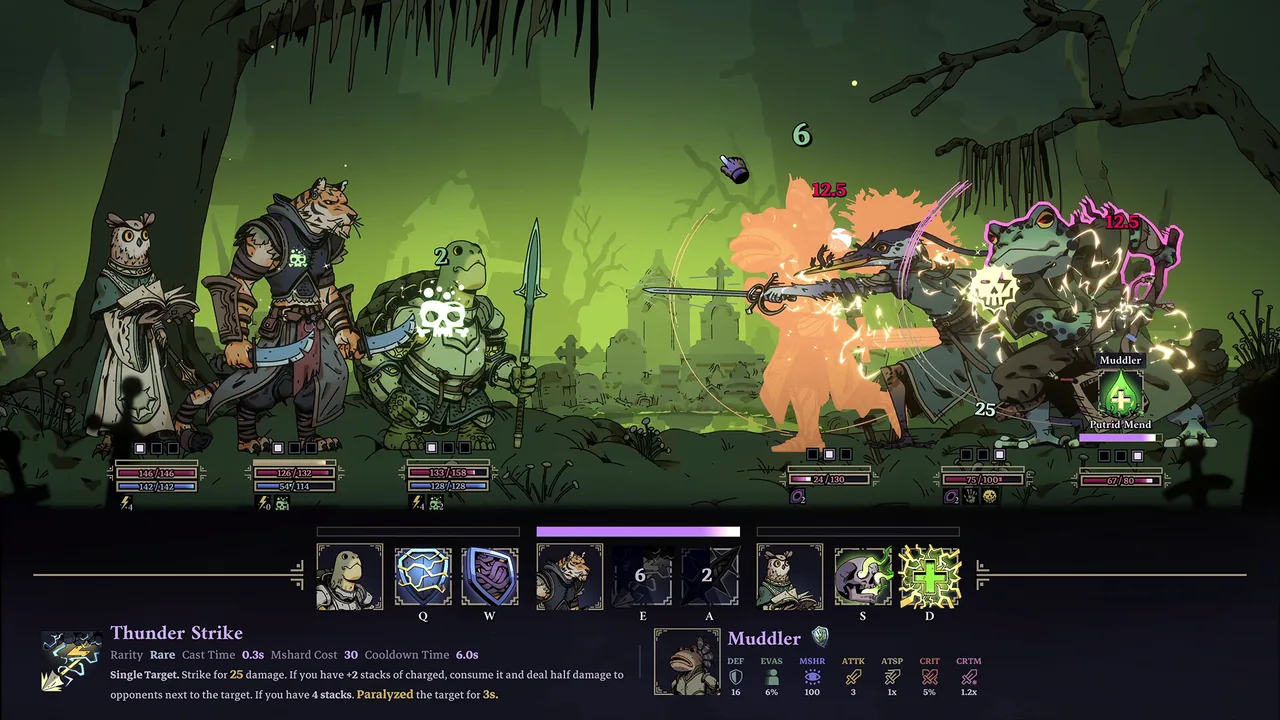
Read past the aggregate, though, and a specific, repeated complaint emerges: the combat asks you to manually mash six skill buttons on cooldown with no action queue and no way to automate routine decisions, which several reviewers across English, Russian and Chinese independently describe as exhausting rather than tactical. More unusually, at least two detailed reviews in the sample write substantively critical accounts of the game's flaws and then mark it recommended anyway, explicitly citing sympathy for the developer's circumstances as the reason. That's worth reporting plainly, because it means the 68% positive score may measure goodwill toward a solo creator as much as it measures the game itself.
Biggest strengths
- A genuinely appealing extraction-RPG structure — loot resources, extract them successfully, craft gear and combine dropped skills into custom builds — that several reviewers say has real potential
- Distinct, well-characterised fixed roles (tank, DPS, healer) with genuine personality in the game's writing and quest-giver character, according to multiple reviewers
- Charming, handcrafted presentation that reviewers consistently credit even when they dislike the gameplay underneath it
Biggest weaknesses
- The core combat loop asks players to manually activate up to six skills on individual cooldowns with no action queue or auto-cast option, which reviewers across English, Russian and Chinese independently describe as frantic, unsatisfying, and undermining rather than supporting tactical play
- The game is very short, with reported completion times ranging from roughly 2 to 7 hours depending on the reviewer, and several describe running out of content with nothing further to do well before the runtime justifies the price for them
- At least two detailed reviews in the sample explicitly mark the game recommended despite writing substantively critical content, citing sympathy for the solo developer rather than satisfaction with the game — worth knowing when reading the aggregate score
Who it's for: Fans of short, ability-driven combat RPGs who want to support a solo developer's first release and are willing to accept real, unresolved friction in the core combat loop.
Our recommendation: A cautious pick. The concept and the care behind it are real, but the central combat system has a specific, well-documented problem that hasn't been fully resolved by patches yet — wait for further updates, or go in with modest expectations about a 2-7 hour experience.
5.5 / 10
Skills & Raids ends its own store description the way few games do: "Thank you for checking out Skills & Raids. I hope you enjoy the game as much as I enjoyed creating it as a solo developer. 💜 Eddie H.H." That personal voice runs through the whole reception of the game — reviewers who dislike it still tend to soften their criticism, and at least a couple soften it into an actual recommendation. Understanding why requires reading past the 68% positive headline and into the specifics, both of what the game does well and what a repeated, cross-language chorus of players say doesn't work yet.
An extraction RPG with real structure
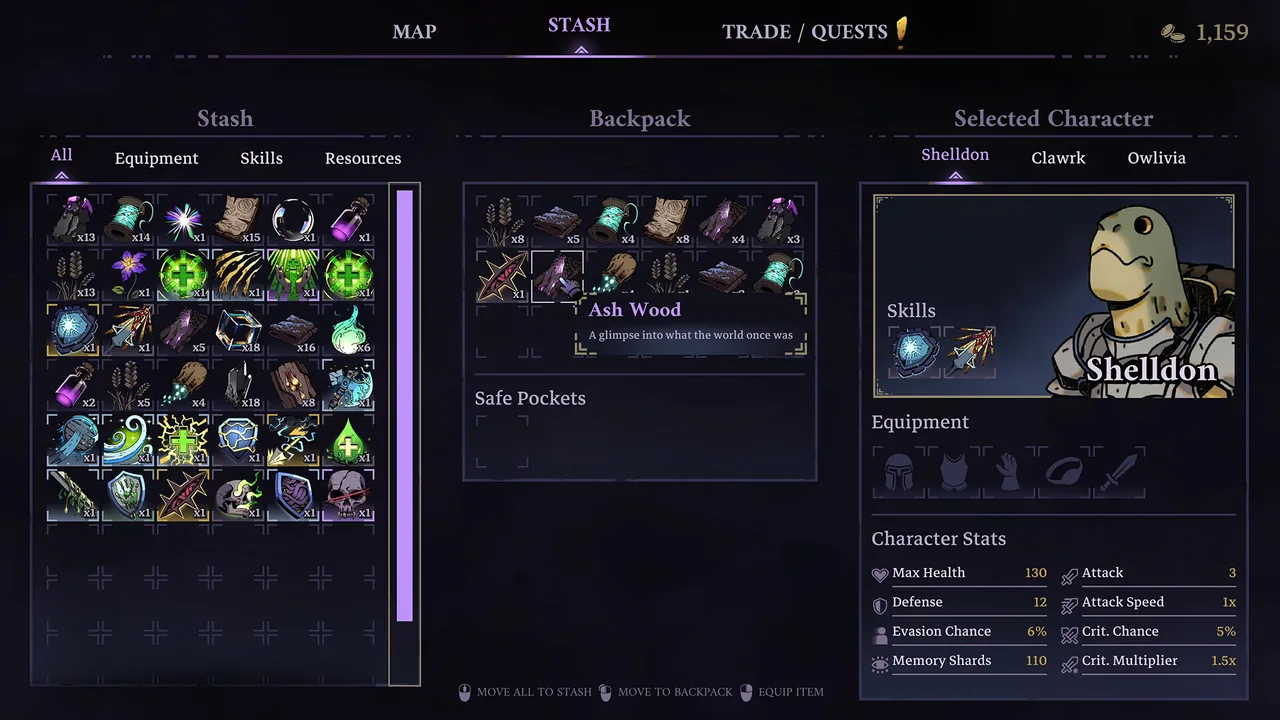
The pitch has genuine shape to it: three fixed characters, styled as a tank, a DPS and a healer represented by a turtle, wolf and owl, delve into combat areas in real time, extract dropped resources successfully, and spend them crafting gear across Common through Legendary rarity tiers. Enemies occasionally drop their own skills, which can be combined with a character's existing kit to build unusual synergies — a system multiple reviewers call the game's most interesting idea. One review, calling it "an interesting blend of a dark fantasy RPG, an extraction shooter, and auto-battler," reports completing it in about three hours and rolling credits satisfied with what they'd played. A Spanish-language review recommends it outright, specifically framing the industry's current moment as one where "short, small projects made with love" deserve support over bloated live-service releases, and crediting the visible care of a single developer's work.
The complaint that shows up in three languages independently
Set against that goodwill is a specific, mechanical criticism that recurs with striking consistency. A detailed Russian-language review lays it out precisely: "for effective play you need to hit pause on the auto-battle — there's no action queue for characters. You just spam six buttons plus left-click on cooldown, and that's basically the whole game." A Chinese-language review, independently, makes almost the identical point: combat looks like an auto-battler but has no auto-skill-release function, so players are stuck manually clicking skills and targets, meaning "damage, healing or shields can never be maximised, since human input precision can't compete with a program" — concluding the loop delivers neither strategic satisfaction nor mechanical satisfaction. A separate Chinese-language review asks the same question more bluntly: "since it's already auto-battle, why not just add an AI to handle it — the skill hotkeys are too fast to keep up with, it's a total mess." English reviews land on the same friction from a different angle, describing the combat as "pseudo-piano," "super flat," and easy enough that players don't need to track HP or Mana to win. Three languages, independently, converging on the same specific structural complaint is strong evidence this is a real design issue rather than a taste disagreement.
The pattern worth reporting directly
The most unusual thing in this review's sample isn't a complaint about the game at all — it's how some of the game's own reviewers are scoring it. One Chinese-language review opens by noting the developer appears to be Venezuelan, estimates a modest income, and states plainly: "it's hard to give a bad review... let me change it to a positive one instead — but remember to actually read the text, everyone." What follows is a detailed, critical account of the game's flaws: three characters each limited to two skill slots, restrictive movement, a combat structure the reviewer found disappointing relative to the Darkest Dungeon-style extraction game the store page's presentation suggested. A second Chinese review follows the identical pattern — "let's give it a positive review for now" — before spending several sentences explaining exactly why the manual-activation combat system undermines the game's own stated appeal.
This review has no way to independently verify either reviewer's claims about the developer's circumstances, and isn't in a position to judge whether that kind of sympathy scoring is appropriate or not — that's a call each reviewer is making for themselves, transparently, in their own words. It's reported here because it directly affects how the aggregate score should be read: if even a couple of "positive" marks in a sample this size represent goodwill rather than satisfaction, the true quality signal sits somewhat below the 68% headline number, and readers comparing this game's score to others in the library should factor that in.
What's actually being fixed
To the developer's credit, the response to launch feedback has been fast and substantial. Eight separate updates landed in Skills & Raids' first nine days, and 2 August brought a "Big Skill Rework Update" — the kind of significant, named change that suggests the core combat complaints above were heard and acted on directly rather than patched around the edges. Whether that rework resolves the action-queue and pacing issues described across the review sample isn't something this review can confirm without a rebuilt combat system to test against the original complaints, but the scale and speed of the response is a genuine point in the developer's favour, distinct from whether the fix has fully landed yet.
Length, bugs, and a couple of loose threads
Reported completion times vary widely — from roughly two hours to seven — which likely reflects how thoroughly different players engage with the crafting and quest systems rather than a contradiction in the reports themselves. One detailed account describes a genuinely serious bug: a boss disappearing mid-encounter, forcing a retreat that then wiped a full set of earned legendary gear, a frustrating way to lose hours of progress to what reads as a scripting error rather than a design choice. A separate, unverified complaint alleges quest text shows signs of being AI-generated and unproofread, citing a high volume of grammar errors; this review cannot confirm authorship or editing process, and reports the allegation only as one reviewer's characterisation.
Final verdict
Skills & Raids is a real, structurally interesting idea — extraction, ability-driven combat, skill synergy building — built with visible care by one developer who is actively patching in response to feedback. The specific, cross-language complaint about its combat design is serious enough, and corroborated widely enough, to weigh heavily against the goodwill the game has clearly earned, and the unusual pattern of sympathy-driven positive reviews in its own sample is worth knowing about before taking its aggregate score at face value.
Worth watching rather than an immediate buy: if the Big Skill Rework Update and whatever follows it genuinely resolve the manual-mashing combat problem multiple languages of reviewers independently describe, this could become a solid short RPG. As it stands, that fix is still unproven against the original complaints.
Players who want ability-driven combat with real tactical depth, sustained across a persistent world rather than a two-to-seven-hour extraction loop, may also want to look at Wanderer.
Pros and cons
Pros
- A genuinely appealing extraction-RPG structure — loot resources, extract them successfully, craft gear and combine dropped skills into custom builds — that several reviewers say has real potential
- Distinct, well-characterised fixed roles (tank, DPS, healer) with genuine personality in the game's writing and quest-giver character, according to multiple reviewers
- Charming, handcrafted presentation that reviewers consistently credit even when they dislike the gameplay underneath it
- An actively patching solo developer, having shipped eight separate updates in the game's first nine days, including a "Big Skill Rework Update" directly addressing the combat complaints below
- One-time purchase with no in-game store or IAP of any kind
Cons
- The core combat loop asks players to manually activate up to six skills on individual cooldowns with no action queue or auto-cast option, which reviewers across English, Russian and Chinese independently describe as frantic, unsatisfying, and undermining rather than supporting tactical play
- The game is very short, with reported completion times ranging from roughly 2 to 7 hours depending on the reviewer, and several describe running out of content with nothing further to do well before the runtime justifies the price for them
- At least two detailed reviews in the sample explicitly mark the game recommended despite writing substantively critical content, citing sympathy for the solo developer rather than satisfaction with the game — worth knowing when reading the aggregate score
- One detailed review reports a bug where a boss disappeared mid-fight, forcing a retreat that then wiped a full set of endgame legendary gear
- A separate review alleges quest text reads as unproofread or possibly AI-assisted, citing a high volume of grammar errors — a claim this review cannot independently verify but reports as raised
Screenshots
-
Skills & RaidsImage: Eddie H.Hinestroza via Steam -
Skills & RaidsImage: Eddie H.Hinestroza via Steam -
Skills & RaidsImage: Eddie H.Hinestroza via Steam -
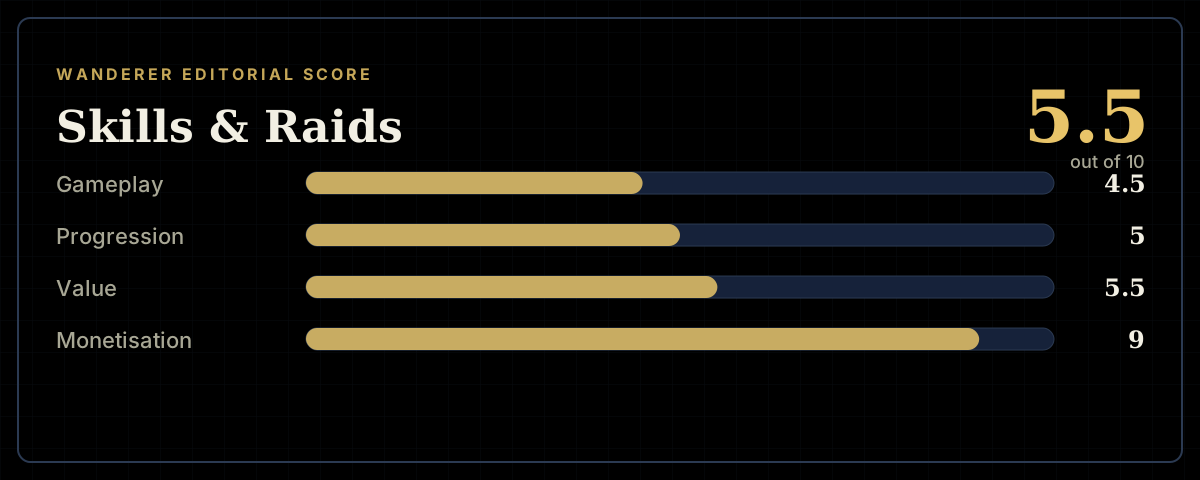
How the review scores each part of the gameWanderer Editorial -
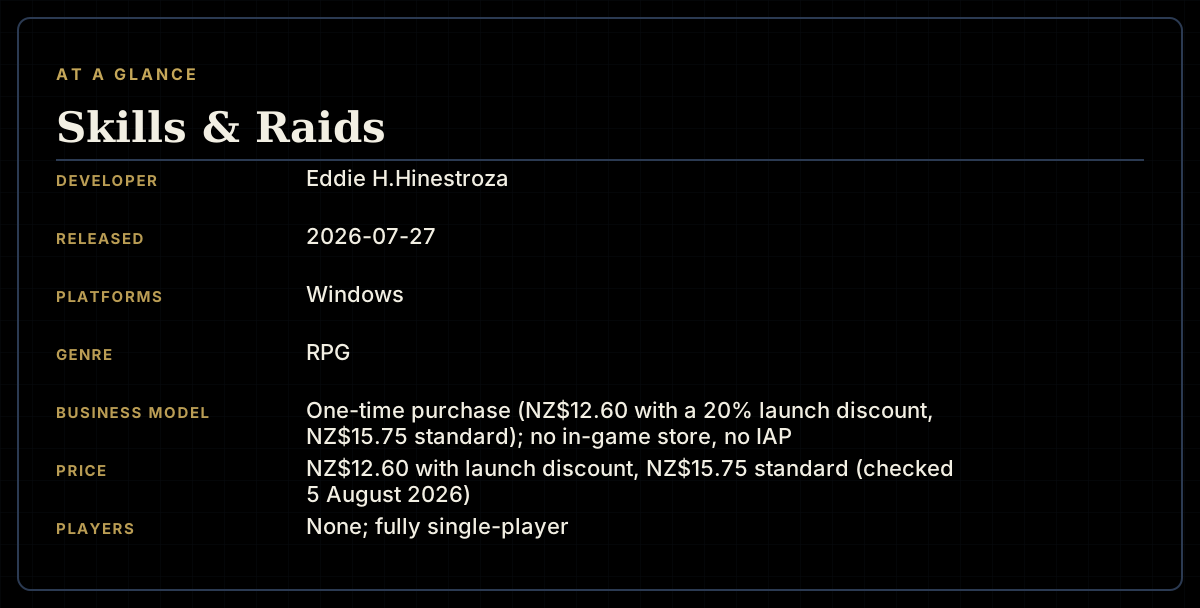
The game at a glanceWanderer Editorial -
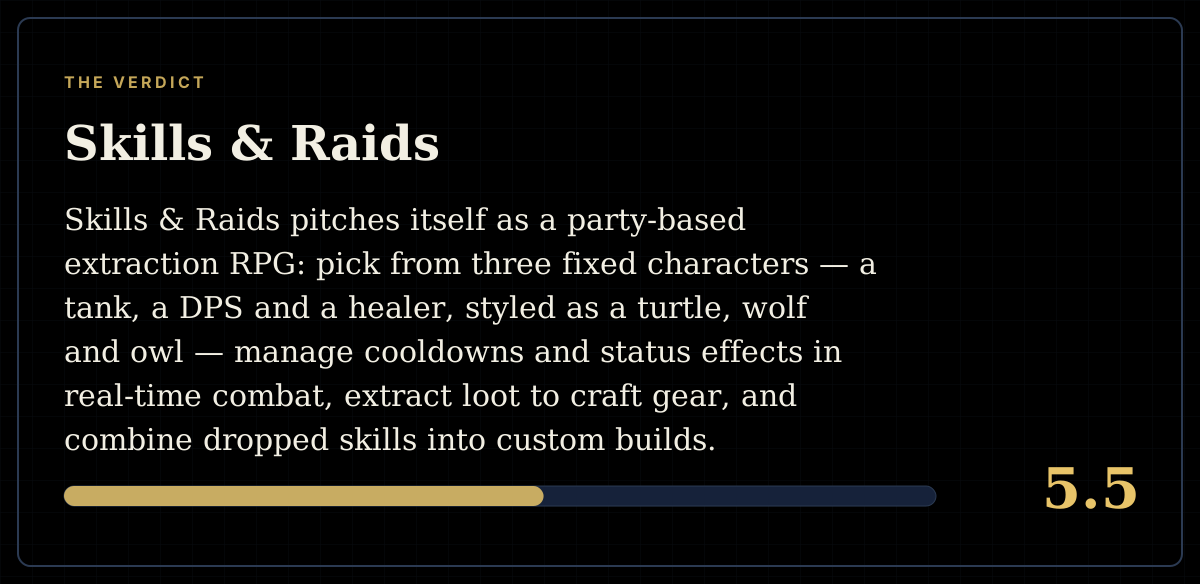
The short versionWanderer Editorial