Game review
Amaranth Source Online
5 / 10
- Developer
- Qaranzo Games
- Publisher
- Qaranzo Games
- Released
- 6 August 2026
- Platforms
- Windows
- Genre
- MMORPG
- Monetisation
- One-time purchase of NZ$30.81 (€20.41). The store page states plainly there is no cash shop, no lootboxes, no paid DLC and nothing purchasable that affects combat; the only ongoing offer is an optional subscription described as unlocking guild creation and unspecified non-combat conveniences, which is not sold as Steam DLC and whose actual delivery mechanism could not be independently confirmed.
- Players
- Massively multiplayer with PvP, PvE and co-op categories on a single shared world server hosted in Frankfurt, hard-capped at 500 concurrent players; Steam's live player-count API returned 3 concurrent players at the time of checking, one day after launch
The short version
Amaranth Source Online is a genuinely unusual thing: a permadeath, tile-positioned, real-time-combat MMORPG whose code, network architecture and simulation were built by one person over roughly nine years, with art the sole outsourced piece. Its own store page is franker than most Early Access disclaimers — guilds, housing, factions, classes and the economy are all described as "embryonic," the player cap sits at 500, and the developer tells Oceania, Asia and West Coast US players outright to wait for better ping. Steam does not tag this Early Access; it is filed as a full release. A live check of Steam's player-count API returned exactly 3 people on the server the day after launch, which matches the developer's own admission that they built the world to keep simulating itself because they never expected a large population. The monetisation is about as honest as an MMO's gets — one purchase, no cash shop, an optional subscription limited to non-combat conveniences — and the underlying design ideas (limb-specific damage, physical bodies that block each other, full settlement destructibility, 68 races and 340 subraces) are ambitious enough to respect even where they're clearly unfinished.
Biggest strengths
- No cash shop, no lootboxes and no paid DLC of any kind; the only ongoing offer is a subscription the store page says is limited to guild creation and unspecified non-combat perks
- A distinctive core design — tile-based positioning with real-time combat, physical bodies and mounts that block and shove each other, and a damage model that checks specific limbs and armor layers rather than one flat health bar
- Permadeath paired with a family and succession system, on a world the developer says keeps simulating itself even when nobody is logged in
Biggest weaknesses
- The developer's own store description reads as an Early Access disclaimer — guilds, housing, factions, classes and the economy are all called "embryonic" — on a listing Steam does not tag Early Access
- A direct check of Steam's live player-count API returned exactly 3 concurrent players one day after launch, on a single Frankfurt server hard-capped at 500, with the developer's own published ping figures showing 160-295ms for Oceania, the Americas and most of Asia
- Zero Steam user reviews exist yet, and the game implements no Steam achievements at all, so there is no independent account of the game beyond its own store page and news posts
Who it's for: Players drawn to obscure, ambitious solo-developer MMOs who want to support a nine-year passion project in its early public life and don't mind an empty server, thin systems and rough presentation while it grows — closer to backing a very long Early Access build than buying a finished game.
Our recommendation: At NZ$30.81 for a game its own developer describes as having guilds, housing, factions, classes and the economy all in an "embryonic state," and a live population that read 3 players the day after launch, this is a purchase to make as direct support for one person's nine-year project, not as a transaction for a finished MMO experience. The monetisation model deserves real credit and the design ambition is unusual enough to be worth watching — but there is currently very little game here to play with other people, because there are currently very few other people.
5 / 10
There's a specific sentence buried in Amaranth Source Online's store description that tells you more about the game than any feature list could: "since I do not expect a large online population, the world was made specifically so that it lives on its own without player participation, so even in solo you can continue playing, and players' characters will continue their existence even without direct control." That's not marketing copy. It's a solo developer explaining, on launch day, why the MMO he just released doesn't actually need other players to function — because he built it that way on purpose, having reasonably guessed that not many would show up.
He was right. Steam's live player-count API returned exactly three people on the server when this was checked, a day after release.
A nine-year project, coded by one person
Amaranth Source Online started life in 2017 and has spent most of the years since as somebody's private ambition rather than a public product. The store page says the entire technical side — code, network architecture, and the simulation that keeps the world ticking — was built by a single developer, with graphical assets the one piece handed to someone else. That's worth sitting with regardless of how the finished game plays: a real-time MMO with tile-based positioning, physics-driven mounts and a networked combat model that tracks damage per limb is not a small engineering problem, and building the whole stack solo over nine years is the kind of thing most professional studios wouldn't attempt without a dedicated netcode team. The developer's own framing — "the project was made for the sake of the idea" — reads as sincere rather than as a line to excuse rough edges.
It also explains the game's most unusual structural choice. Most MMOs are built to need a crowd; this one is built to survive without one. Player characters are said to keep existing and acting in the world even when their owners are offline, which is presumably as much a technical necessity as a design flourish — if you can't guarantee anyone else is logged in, the world has to feel populated by something.
What's actually in the box at launch
The store page is unusually blunt about what's finished and what isn't, in language that would not be out of place on an Early Access listing: "Basic systems are already available (world, leveling, PvP, crafting, resource gathering, souls, followers, and the auction house), but guilds, housing, factions, classes, and the economy are still in an embryonic state." That's a striking admission for a game Steam categorises as a full release rather than Early Access — there's no Early Access tag anywhere in its store genres, categories or page copy, despite the developer's own words describing precisely the kind of pre-launch state that tag exists for.
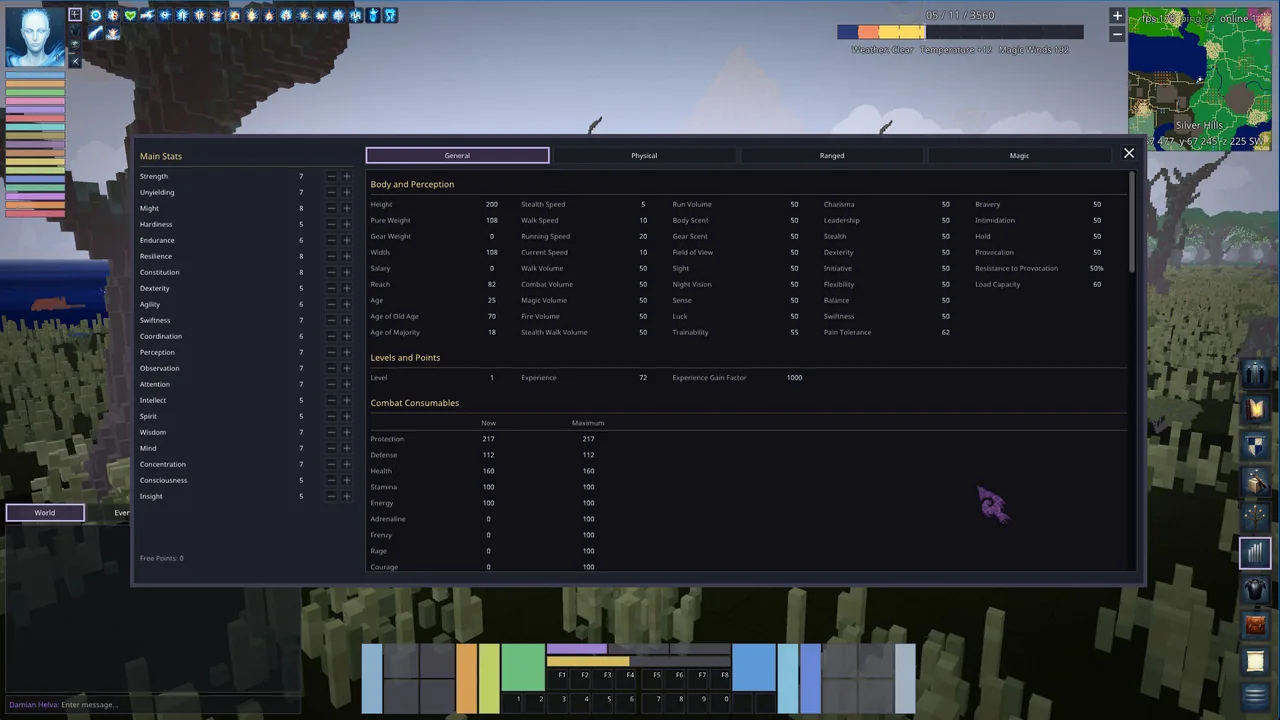
What that leaves playable right now: picking a race from a stated 68 options and 340 subraces, finding a body, learning a craft or a school of magic, and levelling a character whose attribute system reportedly spans more than 2,000 tracked values. Combat happens in real time on a tile grid, which is an unusual pairing — movement discipline closer to a turn-based tactics game, resolved without turns. Characters and mounts are solid objects that physically block one another, which the store page frames as a formation tool as much as a combat one: you can hold a doorway with bodies, not just with damage output. None of that is small in concept. All of it is described as functioning; almost none of it has been through the kind of public stress-testing that would confirm how well it holds up once more than three people are trying it at once.
The population question, answered directly
This is the part of the review that matters most for an MMO, and Amaranth Source Online is unusually easy to check honestly, because the developer publishes the relevant numbers himself. The world is capped at 500 concurrent players "due to rented server capacity," runs on a single instance with no channels or layers — everyone shares one 2000-square-kilometre space — and sits on hardware in Frankfurt. A second news post lists projected ping by region in granular detail: 20-45ms across most of Germany, Austria and the Netherlands, climbing past 100ms for the US East Coast, 160-180ms for the US West Coast, and 155-295ms across China, Southeast Asia, South Korea and Japan. The developer's own recommendation to Oceania, US West Coast, South American and Asian players is to hold off buying until regional servers exist, with no committed timeline because, in his words, it's "purely a matter of finances."
Set against that infrastructure, a direct read of Steam's GetNumberOfCurrentPlayers endpoint returned three concurrent players, checked twice about an hour apart the day after launch, with no user reviews on the store page and no achievement data to show how far anyone has progressed — the game implements no Steam achievements at all. None of this is presented here as a verdict on where the population settles once word spreads; a solo-developer MMO one day into its public life is close to the least informative moment to measure a server's long-term health. But the honest answer to "is this MMO actually populated" is: not yet, and not by very much, and the developer has been transparent enough about both the cap and the ping to make that outcome unsurprising rather than a broken promise.
Combat, permadeath and a genuinely different pitch
Where the design is most interesting is in how seriously it treats consequence. Characters have "only one life, and death here is final," which the store page nudges players toward planning around by building in a family and offspring system — start a lineage, not just a save file. Combat is described in similarly granular terms: strikes check the specific body part hit, armor is modelled by layer rather than by a single gear score, a sword can't reliably cut through plate, and pikes are described as useless at point-blank range. Whether an archer can shoot effectively depends on whether their gauntlets are heavy enough to get in the way. Full world destructibility is claimed too — trees, buildings, entire settlements — backed by siege equipment up to warships and, oddly specifically, a steam tank, with upkeep costs (shells, arrows, mount feed) folded into the wider economy rather than handed out for free.
It's an unusually mechanically minded pitch for an indie MMO, closer in spirit to a hardcore survival sim crossed with an old-school sandbox than to the class-and-quest-hub template most of the genre still uses. Whether the granularity translates into satisfying combat rather than fiddly combat is not something the store page or news posts can settle, and with essentially no independent player accounts to check it against yet, that has to stand as an open question rather than a scored one.
Presentation, performance and honesty about both
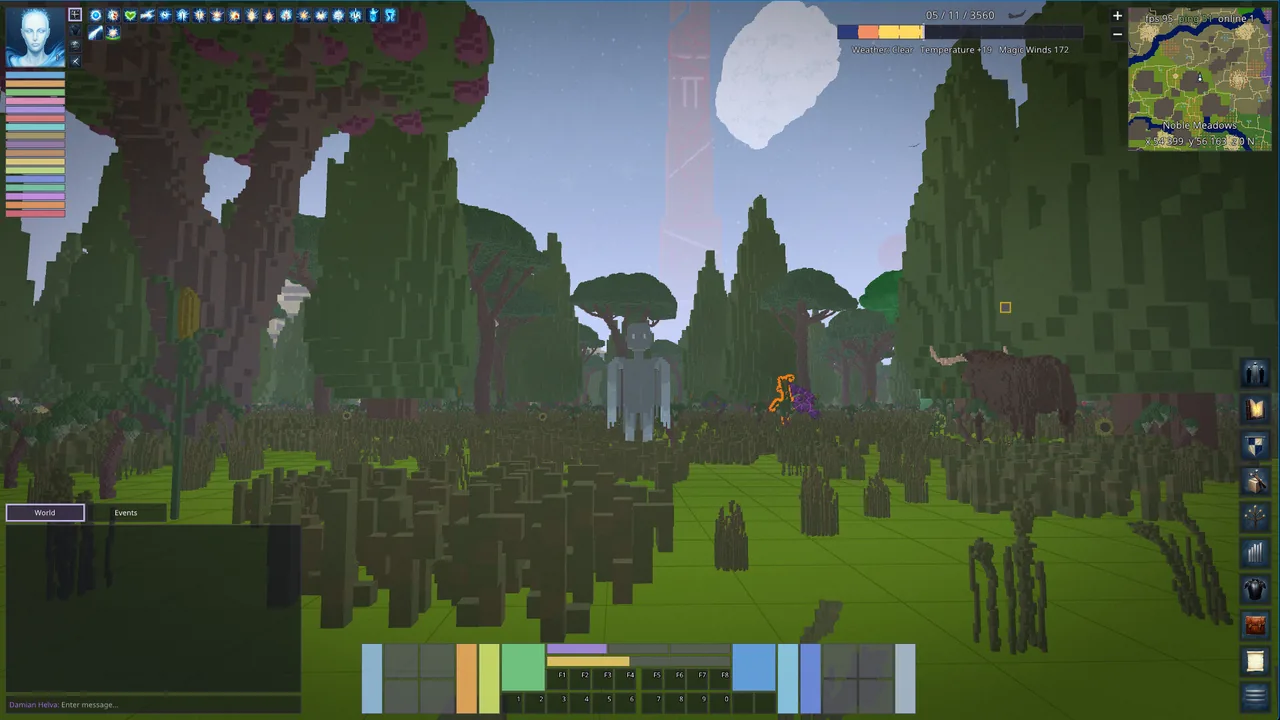
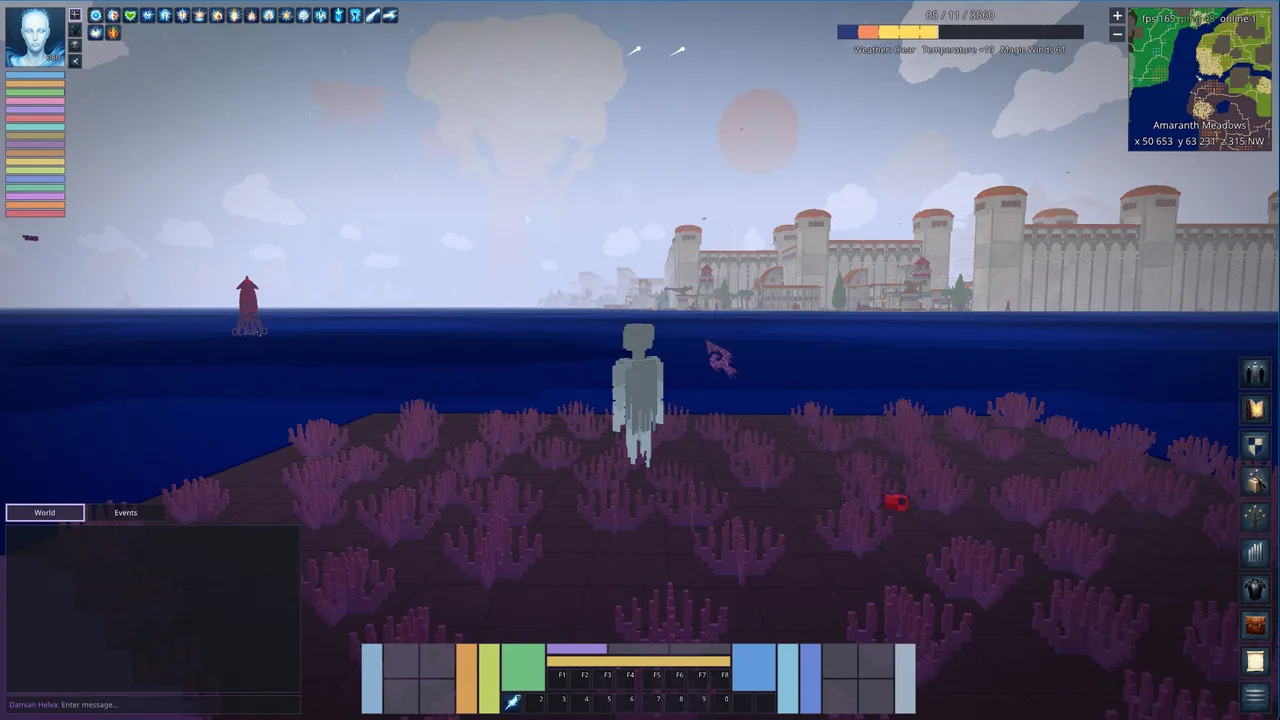
The developer is upfront about the visual trade-offs too, and the framing is worth quoting because it's unusually candid for a store page: "at this stage character animation is implemented in a simple minimalist style," adopted specifically to avoid "the smeared soap-like graphics often found in modern games," in favour of sharp, optimised imagery with a long draw distance on a budget that clearly couldn't stretch to a full animation team. That's a defensible trade for a solo project, and it lines up with what the thirteen captured screenshots show: clean, high-contrast environments with visibly simple character rigging rather than an attempt at photorealism that a one-person team was never going to pull off convincingly anyway.
Performance is the bigger unknown. Minimum specs ask for a GTX 1050 Ti and an eight-generations-old Core i3, which is reasonable, but the recommended tier jumps to a GTX 1660 Super and 16GB of RAM regardless of whether you're on minimum or recommended — a wide gap for a game built around minimalist art. More importantly, the developer says outright that "large online population has not been tested, but the architecture is designed to withstand huge battles within the visible area, with thousands of players," followed immediately by "I apologize if you run into problems at launch." That's an honest way to frame an untested claim, but it is still an untested claim, and at three concurrent players it hasn't been tested here either.
Monetisation: the strongest part of the pitch
If there's one category where Amaranth Source Online earns its score outright, it's this one. The store page states, without qualification, that there is no in-game cash shop, no lootboxes, no purchasable skins, no bought gold or items or mounts, and no paid DLC of any kind — all content is available immediately and "forever." The only ongoing revenue mechanism described is a subscription said to unlock guild creation and unspecified extras that "do not affect combat balance in any way." That subscription isn't listed as Steam DLC and its delivery mechanism — whether it's sold in-game, through a website, or some other channel — isn't detailed anywhere this review could verify, which is worth flagging rather than guessing at. But the headline claim itself, a one-time purchase MMO with a non-combat subscription and nothing else, is about as clean a monetisation model as this genre offers, and it's rare enough in an MMO specifically that it deserves to be taken at face value until something contradicts it.
Also worth noting plainly: the store page carries an AI Generated Content Disclosure covering "2D character portraits, icons, part of the music, sound effects, item descriptions text, and localization." That's a broad list for a page this size, spanning nearly every non-code asset category the game has. It isn't a mark against the pricing model, but a reader deciding whether the presentation matches the asking price should know how much of what they'll see and hear was AI-generated before buying.
Final verdict
Amaranth Source Online is a genuinely unusual entry for this library: an ambitious, mechanically dense, permadeath MMORPG that one developer has been building since 2017, sold with a monetisation model that puts most funded studios to shame and a store description that's more honest about its own gaps than most Early Access listings manage, despite carrying a full-release tag rather than one. The ideas — tile-positioned real-time combat, limb-specific damage, physical bodies that block each other, a world that keeps simulating without players logged in — are distinctive enough to be worth watching regardless of what shape the game is in today. But "today" is the shape a buyer is actually purchasing: guilds, housing, factions, classes and the economy openly unfinished, a single 500-player server in Germany, three concurrent players at the moment of checking, zero user reviews and no achievement data to lean on. This isn't a verdict on where the project goes from here — a nine-year solo effort with this much design ambition deserves the chance to grow — but right now it's a purchase best understood as backing one person's project at an early, thin stage, not as buying a populated MMO ready to play with strangers tonight.
Pros and cons
Pros
- No cash shop, no lootboxes and no paid DLC of any kind; the only ongoing offer is a subscription the store page says is limited to guild creation and unspecified non-combat perks
- A distinctive core design — tile-based positioning with real-time combat, physical bodies and mounts that block and shove each other, and a damage model that checks specific limbs and armor layers rather than one flat health bar
- Permadeath paired with a family and succession system, on a world the developer says keeps simulating itself even when nobody is logged in
- Built and maintained since 2017 by a single developer handling all code, network architecture and system simulation, which is a real technical undertaking independent of how the finished game plays
- Full settlement destructibility and siege equipment (catapults, mortars, cannons, even a steam tank) are described as working systems already in the game, not roadmap promises
Cons
- The developer's own store description reads as an Early Access disclaimer — guilds, housing, factions, classes and the economy are all called "embryonic" — on a listing Steam does not tag Early Access
- A direct check of Steam's live player-count API returned exactly 3 concurrent players one day after launch, on a single Frankfurt server hard-capped at 500, with the developer's own published ping figures showing 160-295ms for Oceania, the Americas and most of Asia
- Zero Steam user reviews exist yet, and the game implements no Steam achievements at all, so there is no independent account of the game beyond its own store page and news posts
- Recommended specs (GTX 1660 Super or RX 5500 XT, 16GB RAM) are steep for what the developer describes as a deliberately minimalist art style adopted to save a solo budget
- AI-generated content is disclosed across nearly every non-code asset category — 2D character portraits, icons, part of the music, sound effects, item description text and localisation — with no detail on which parts of any given screenshot are AI output
Screenshots
-
Amaranth Source OnlineImage: Qaranzo Games via Steam -
Amaranth Source OnlineImage: Qaranzo Games via Steam -
Amaranth Source OnlineImage: Qaranzo Games via Steam -
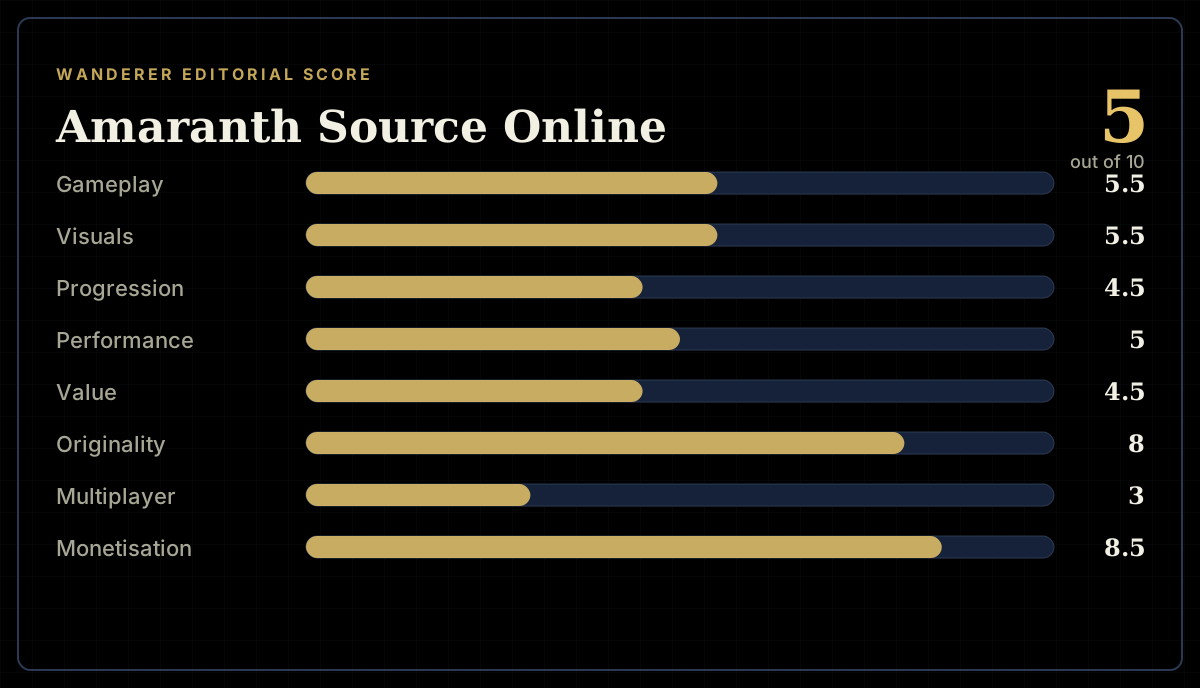
How the review scores each part of the gameWanderer Editorial -
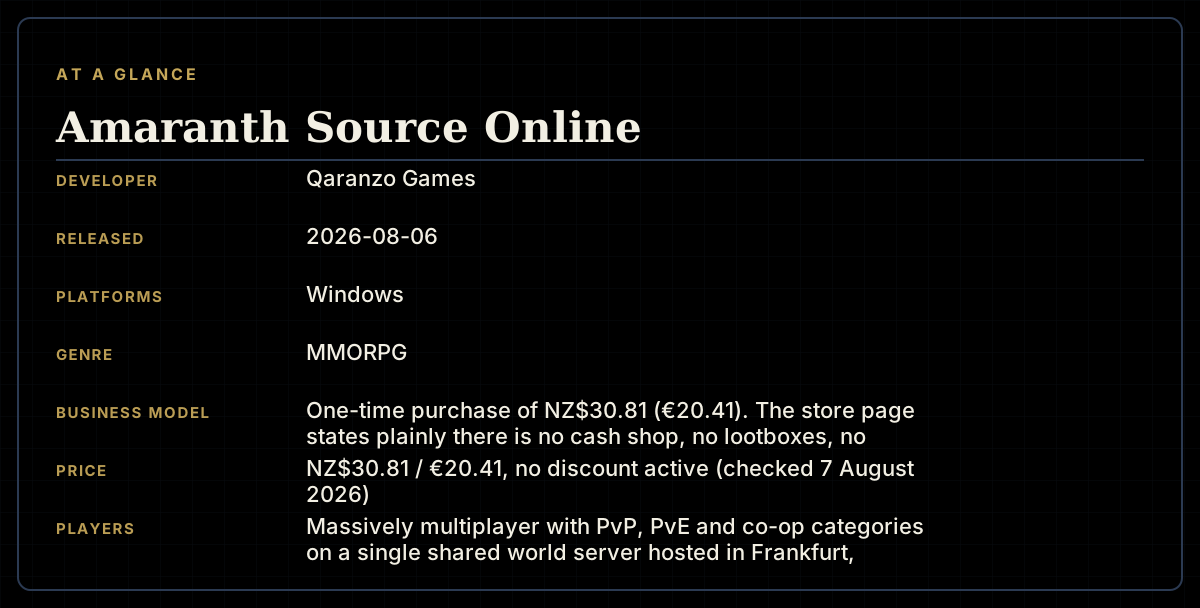
The game at a glanceWanderer Editorial -
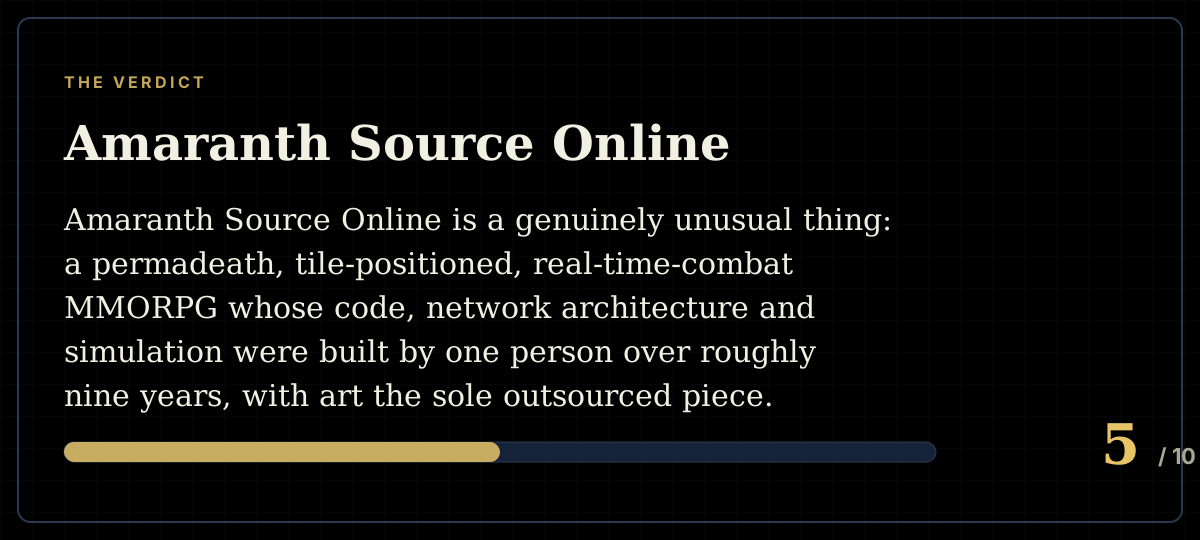
The short versionWanderer Editorial