
Game review
SILENT HILL 2
8 / 10
- Developer
- Bloober Team SA
- Publisher
- Konami
- Released
- 7 October 2024
- Platforms
- Windows, PlayStation 5
- Genre
- Survival Horror
- Monetisation
- One-time purchase, no DLC or in-game currency
- Players
- Single-player
The short version
Bloober Team's remake of Silent Hill 2 rebuilds the 2001 PS2 classic in Unreal Engine 5, and by most measures it's an outright critical success: 86-87 on Metacritic, and Very Positive on Steam at 94.6% across nearly 43,000 reviews — a striking result for a studio whose prior games (The Medium, the Layers of Fear series) had a considerably more mixed reputation. Two specific, real problems keep that headline score from telling the whole story. The first is technical: roughly two-thirds of the most-upvoted negative reviews mention stuttering or optimisation problems, and complaints about the same traversal stutter continue to appear as recently as this month, nearly two years and multiple patches after launch. The second is interpretive: several long, detailed reviews from players intimately familiar with the original argue the remake clarifies ambiguities that were deliberately left open before, changing what the story means rather than just how it looks — a genuine, still-unsettled disagreement rather than simple nostalgia.
Biggest strengths
- Combat is more fluid and responsive than the notoriously stiff 2001 tank controls, without losing the original's emphasis on scarcity and vulnerability over power fantasy
- Environmental art direction and graphical fidelity draw close to universal praise, including from reviewers otherwise critical of specific story or design changes
- Critics rated it 86-87 on Metacritic, a genuine reputational high point for a developer whose earlier horror titles had a considerably more mixed critical history
Biggest weaknesses
- Roughly two-thirds of the most-upvoted negative Steam reviews specifically cite stuttering or optimisation problems, including reports on high-end hardware like the RTX 4090, and the same complaint continues to appear as recently as this month, well past the game's first patches
- At least one post-launch patch (1.04) targeted specific stuttering causes and added DLSS frame generation support, but community reports as recently as late 2024 and into 2025 describe traversal stuttering persisting regardless of settings, with no comprehensive fix confirmed since
- Several detailed, high-playtime reviews from players who know the original well argue the remake's story additions clarify ambiguities that were deliberately left to interpretation, changing what several plot elements mean rather than simply modernising their presentation
Who it's for: Newcomers to Silent Hill 2, and horror fans who want the genre's most acclaimed psychological story told with modern combat and presentation, are extremely well served here. Longtime fans of the 2001 original who specifically valued its ambiguity and restraint should read the detailed negative reviews first — the disagreement there isn't about production quality, it's about whether the remake's clarifications serve or undermine what made the story resonate.
Our recommendation: Recommended, especially at a discount, for players coming to the story fresh. If you're on PC, check current community reports on the stuttering before buying — this is not a launch-week problem that quietly went away, it's a persistent one that outlasted several patches, and it's worth confirming your specific hardware handles it before committing.
8 / 10
A genuine turnaround for a studio that needed one
Bloober Team built its reputation on smaller, more divisive horror titles — Layers of Fear, Blair Witch, The Medium — that critics and players alike generally regarded as competent but unremarkable, never quite escaping "serviceable" as the ceiling of their reputation. Silent Hill 2 changes that story decisively. Remaking one of survival horror's most acclaimed and analysed games in Unreal Engine 5 was always going to invite exceptionally close scrutiny, and the response has been about as positive as a remake of a beloved 2001 classic could reasonably hope for: 86 to 87 on Metacritic, and a Very Positive 94.6% across nearly 43,000 Steam reviews. For a studio previously defined by mixed reception, that's as clean a reputational reset as the genre has produced in years.
What the remake gets right, by near-universal agreement
James Sunderland's original 2001 combat was notoriously stiff — tank controls and awkward aiming that some players found added to the game's atmosphere of helplessness, and others simply found clumsy. The remake's more fluid, responsive combat draws praise from nearly every corner of the review base, including reviewers who are otherwise sharply critical of other changes; crucially, it doesn't swing so far toward competence that James starts feeling powerful, preserving the scarcity and vulnerability that made the original's combat tense rather than merely functional. Environmental art direction gets the same near-universal credit — the fog, the rust, the specific texture of Silent Hill's decay all translate convincingly into modern graphical fidelity, and the puzzle design and general level layout stay close enough to the source material that longtime fans consistently describe the remake as respectful of structure rather than reinventing it wholesale.
The stutter that patches didn't fully solve
Where the remake's reception gets genuinely complicated is performance. Multiple detailed reviews report significant traversal stuttering on PC, including specifically on high-end hardware like the RTX 4090 — not an isolated low-end problem. Konami and Bloober did respond: patch 1.04, released two weeks after launch, targeted specific causes including sky-map generation stutter and added an HZB culling toggle for AMD and Intel GPUs, alongside Nvidia DLSS frame generation support. But community reports from December 2024 and into 2025 describe the same underlying traversal stutter persisting regardless of graphics settings, with no confirmed comprehensive fix since. Reviewing the negative-review sample directly makes the scale of this clear: roughly two out of every three of the most-upvoted negative reviews mention stuttering or optimisation specifically, and the complaint continues to surface in reviews posted as recently as this month — nearly two full years after release. That's a meaningfully different story from a rough launch week that got patched away, and it's worth checking current community reports for your specific hardware before buying, rather than assuming an almost two-year-old problem has quietly resolved itself.
A quieter, more interesting disagreement about what the story means
Separately from performance, a smaller but genuinely thoughtful slice of the negative reviews raises a different kind of concern: several long, detailed accounts from players intimately familiar with the 2001 original argue that specific story additions in the remake clarify things that were deliberately ambiguous before, changing what certain moments and relationships mean rather than simply presenting them with better production values. This isn't a complaint about missing content or a botched adaptation — several of these same reviews explicitly call the remake a good game in its own right. It's a more specific argument about whether resolving the original's open questions serves the story or quietly undermines the tone that made those questions resonate in the first place, and it's the kind of disagreement that tends to matter most to the audience who already loved what was left unsaid.
Combat's double edge
The more responsive combat that most reviews credit isn't a universal win, though, and the dissent is worth taking seriously rather than dismissing as a vocal minority. A smaller but specific slice of the negative review sample describes the fighting as generic third-person action that could have been lifted from a weaker recent horror title, with one review drawing an unflattering comparison to Callisto Protocol's combat specifically. That's a genuinely different read from the majority's "improved without losing tension" verdict, and it's worth noting both exist rather than treating one as the game's settled reputation. It's a reminder that "more responsive" and "more generic" can describe the same design change depending on what a given player valued about the original's clumsiness in the first place — some found James's original stiffness part of the horror, and no amount of polish on the replacement system will read as an improvement to that specific audience.
Verdict
Silent Hill 2 succeeds at the hardest task a beloved-classic remake can attempt: modernising combat and presentation without losing what made the original a landmark, and doing it well enough to meaningfully repair a developer's reputation in the process. What keeps this from an unqualified recommendation on PC specifically is a stuttering problem that's proven more stubborn than a normal launch-week rough patch, still turning up in reviews written this month, alongside a real, good-faith disagreement among longtime fans about whether the story's new clarity helps or costs the original its ambiguity. Newcomers drawn in by the reputation should have an excellent time. Longtime fans and PC players should each do a little more homework first, for entirely different reasons, before deciding this is the definitive way to experience James Sunderland's story.
Pros and cons
Pros
- Combat is more fluid and responsive than the notoriously stiff 2001 tank controls, without losing the original's emphasis on scarcity and vulnerability over power fantasy
- Environmental art direction and graphical fidelity draw close to universal praise, including from reviewers otherwise critical of specific story or design changes
- Critics rated it 86-87 on Metacritic, a genuine reputational high point for a developer whose earlier horror titles had a considerably more mixed critical history
- The puzzle design and level layout stay close to the original's structure, which longtime fans consistently credit as respectful rather than a wholesale reinvention
- Steam's own userbase strongly agrees with critics, sitting Very Positive at 94.6% across nearly 43,000 reviews, a large and consistent sample rather than a thin one
Cons
- Roughly two-thirds of the most-upvoted negative Steam reviews specifically cite stuttering or optimisation problems, including reports on high-end hardware like the RTX 4090, and the same complaint continues to appear as recently as this month, well past the game's first patches
- At least one post-launch patch (1.04) targeted specific stuttering causes and added DLSS frame generation support, but community reports as recently as late 2024 and into 2025 describe traversal stuttering persisting regardless of settings, with no comprehensive fix confirmed since
- Several detailed, high-playtime reviews from players who know the original well argue the remake's story additions clarify ambiguities that were deliberately left to interpretation, changing what several plot elements mean rather than simply modernising their presentation
- Some reviewers describe combat as generic third-person shooting reminiscent of weaker recent horror titles, a specific complaint at odds with the more common praise for the same system
- The game remains a linear, guided path through Silent Hill rather than the more open exploration some fans hoped a full remake might introduce, a structural limitation even some enthusiastic reviews note as a missed opportunity
Screenshots
-

SILENT HILL 2Image: KONAMI via Steam -

SILENT HILL 2Image: KONAMI via Steam -

SILENT HILL 2Image: KONAMI via Steam -
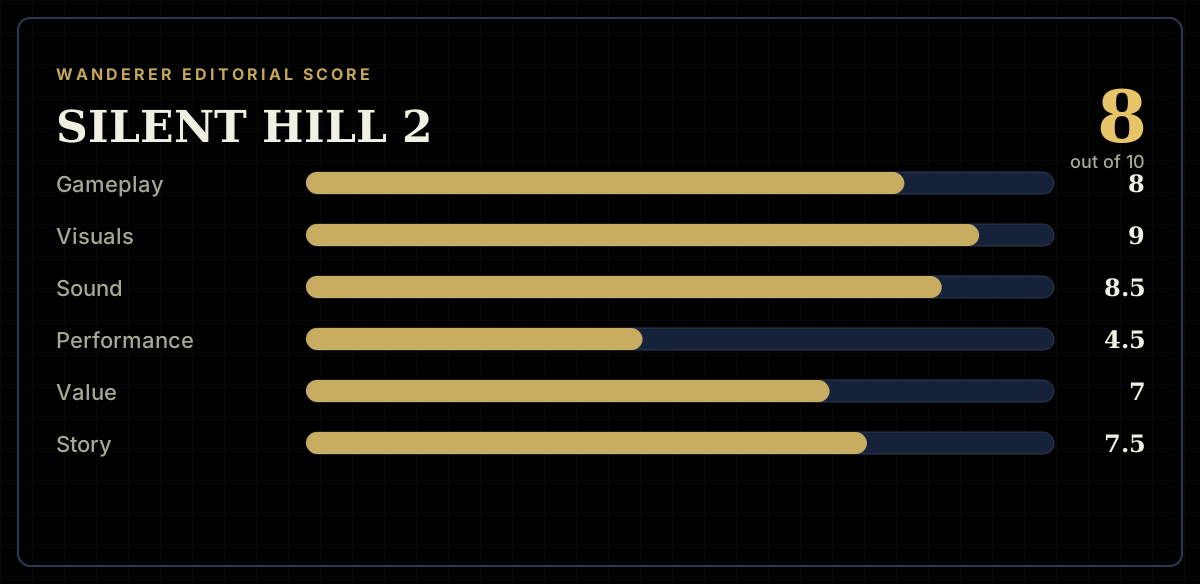
How the review scores each part of the gameWanderer Editorial -
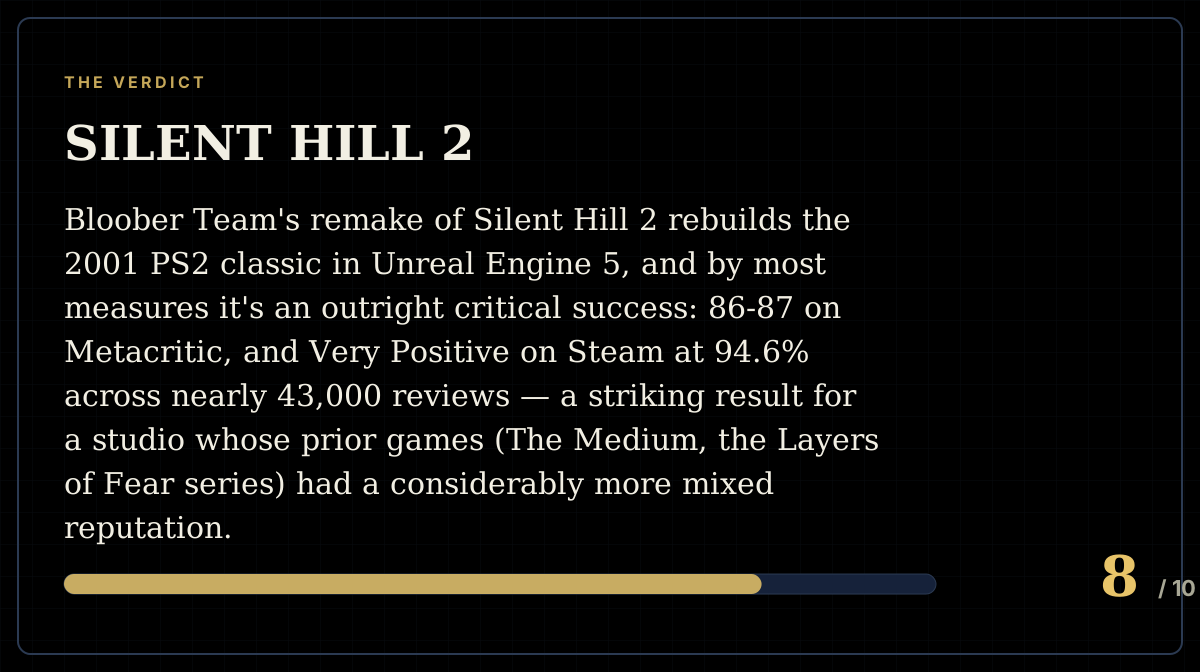
The short versionWanderer Editorial