Game review
Shady Brook - A Dark Mystery Text Adventure
6.5 / 10
- Developer
- Storycentric Worlds
- Publisher
- Unimatrix Productions
- Released
- 24 October 2016
- Platforms
- Windows
- Genre
- Adventure, Casual, Indie, RPG
- Monetisation
- Paid, one-time purchase. No DLC or in-app purchases listed on the storefront page.
- Players
- Single-player only
The short version
Shady Brook wraps a competent, occasionally genuinely creepy small-town mystery in a menu-driven interface built to look like a text adventure from three decades earlier. The writing carries it further than the interactivity does — travelling, talking and poking at inventory items is simple to the point of thin, and more than one player has come away feeling their choices barely moved the plot despite a UI built around choosing.
For eight-plus hours and under four dollars, that trade reads as fair rather than as a problem, provided the audience knows what it's buying: a novel you click through, not a puzzle box you solve.
Biggest strengths
- The mystery escalates convincingly, and several players independently single out the back third as genuinely disturbing rather than just spooky
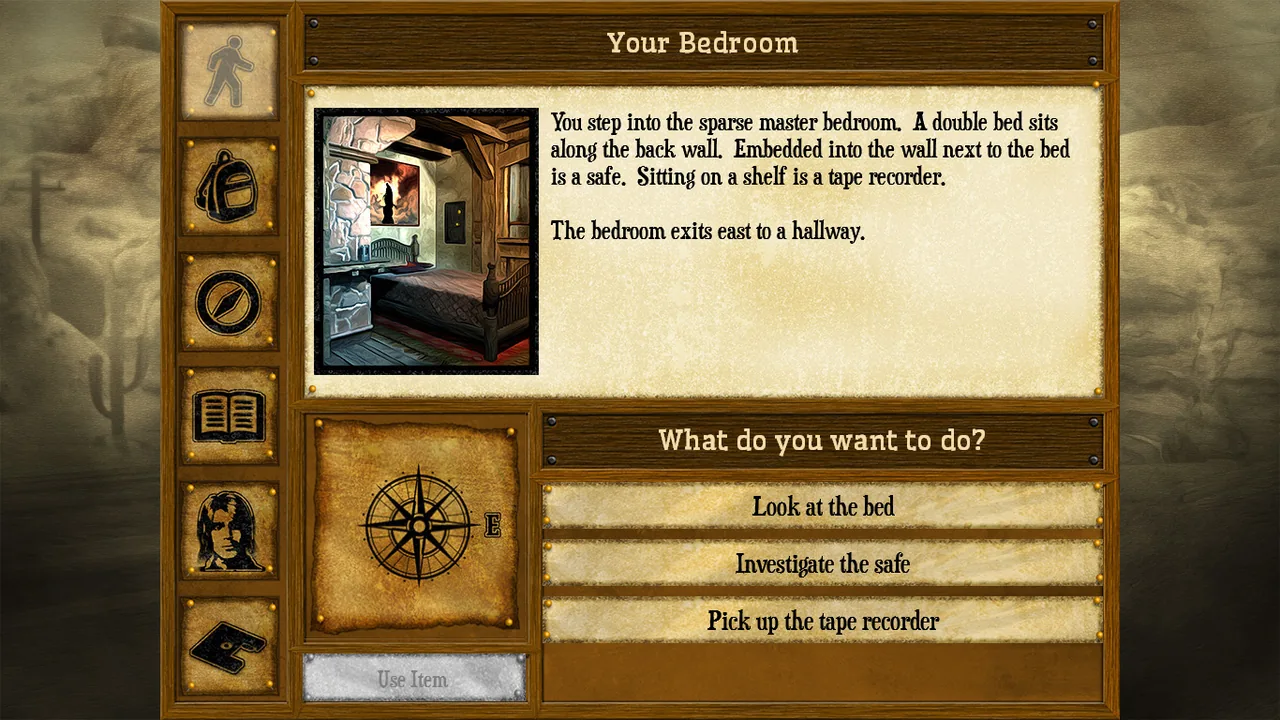
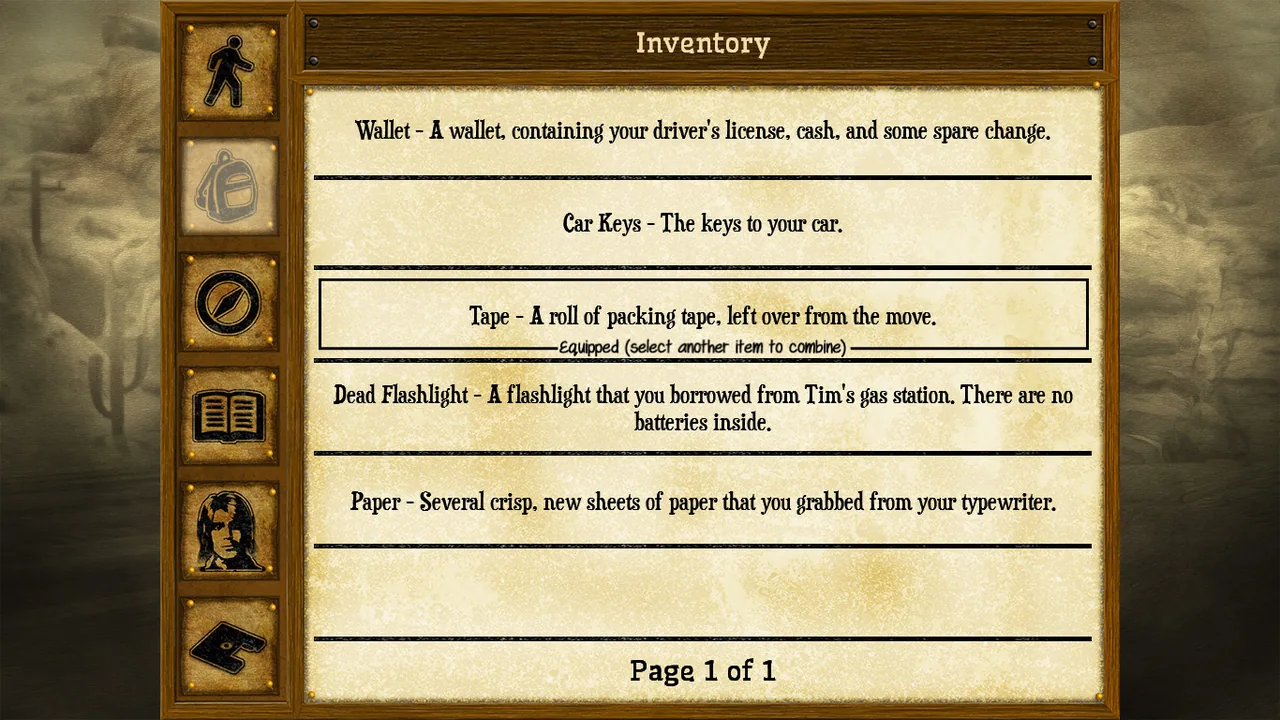
- Menu-driven navigation, inventory, map, journal and character screens all sit one button-press away, which keeps a text-heavy game from feeling like a chore to move through
- Roughly eight hours and 117,000 words of content for a few dollars is a straightforward value case regardless of how the rest of the game lands
Biggest weaknesses
- More than one player reports that dialogue choices rarely change what happens next, which sits awkwardly against a UI built entirely around choosing
- The opening stretch is slow by multiple accounts, with the plot not finding its footing for over an hour
- The static, early-1990s-style presentation is a hard sell on its own terms; one recent reviewer called the visuals rough enough to bounce newcomers before the story gets going
Who it's for: Fans of old-school interactive fiction, gamebooks and slow-burn small-town horror who don't need combat, puzzles with real friction, or branching that meaningfully forks the plot to stay engaged for a full read.
Our recommendation: Worth it at its list price for the target audience, and an easy pick up on any sale. Skip it if "adventure game" means item combinations and puzzle logic to you — Shady Brook is closer to an illustrated novel with a compass.
6.5 / 10
Shady Brook doesn't hide what it's chasing. A writer and his blind father move into a too-friendly small town, a suicide turns out not to be the only one, and every neighbour who waves hello is clearly holding something back — the developer names Twin Peaks as the direct inspiration on the store page, and the setup earns the comparison honestly rather than just borrowing the aesthetic. What makes it worth a second look nine years after release is the interface wrapped around that story: a context-menu, point-and-click system built to resemble the text adventures and gamebooks of the early 1990s, with no typing and no parser, just a compass, an inventory, a map and a journal. It's a small, cheap, English-only game from a two-person-sounding studio that has quietly kept making variations on this format for a decade, and the mystery underneath is more competent than the presentation initially suggests.
What it is
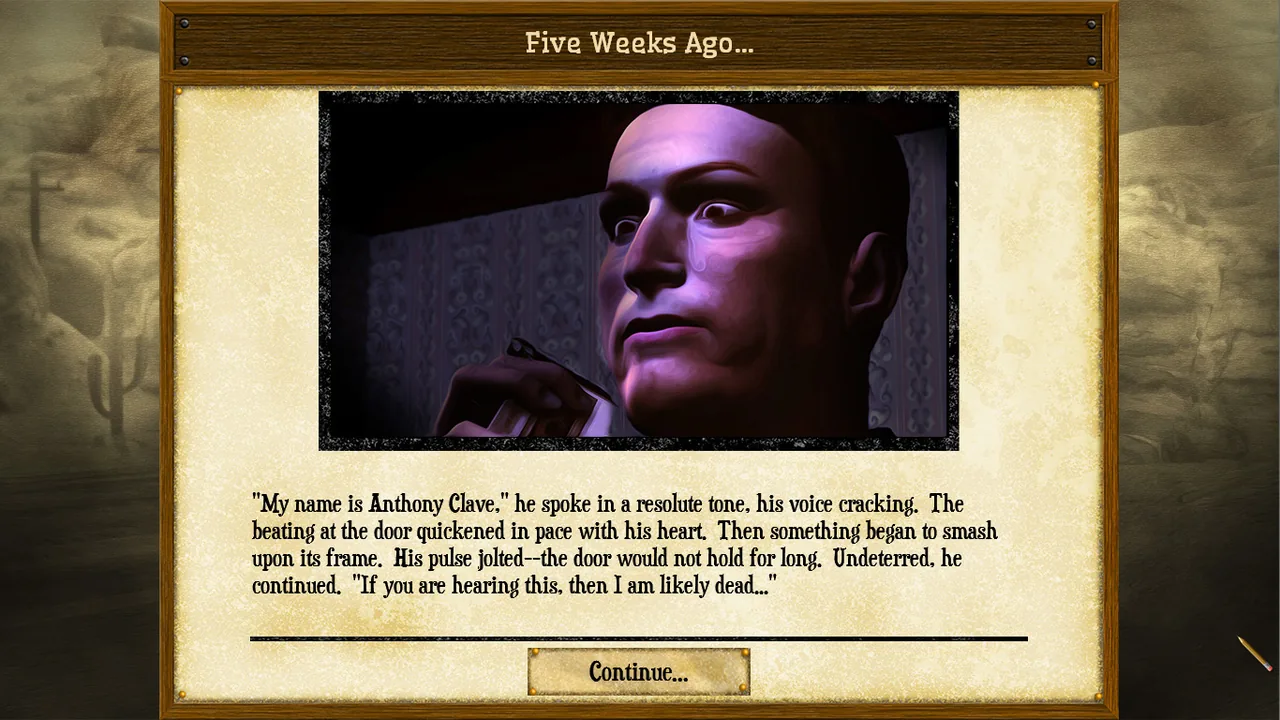
Storycentric Worlds calls Shady Brook an interactive novel rather than an adventure game in the traditional sense, and that's the accurate way to set expectations. There's no text parser to fight and nothing to type — every scene resolves into a short menu of context-specific choices, backed by separate screens for inventory, map, journal and character information that a mouse click or button press brings up instantly. The store page promises "8+ hours of content with over 117,000 words," which is a real novel's worth of prose, alongside roughly 250 pieces of original artwork and an hour of score. Structurally it plays like a gamebook that occasionally asks you to combine an item with a locked door, rather than a Sierra-style puzzle adventure that expects you to fail repeatedly before finding the right combination.
You play Jake Torrent, a writer who's moved to the country town of Shady Brook with his blind father Wayne, hoping for a quiet place to work. The neighbours are welcoming at first — a helpful next-door neighbour, a family that invites him to dinner — and the game spends its early hours letting that ordinariness sit a little too comfortably before letting it curdle. By the time a second resident's death starts looking less like coincidence, the "idyllic town hiding something terrible" structure is doing exactly what it's designed to do.
Story and mood
This is where Shady Brook earns most of its praise. Reviews spanning nearly a decade, including one written this January after a full 33-achievement completion, keep landing on the same word: creepy. The Steam page's own pull quotes (unavoidably promotional, so worth taking with a grain of salt) call it a must-play for genre fans and praise a story with "an interesting plot, characters you can empathize with, and a series of twists and turns that lead to an unexpected ending." Independent user reviews back that up more credibly — several describe the back half specifically as far more disturbing than the slow opening suggests, with one longtime player of this studio's other titles calling it the most unsettling of the three they'd played. A more recent, more critical review still credits the atmosphere while noting the mystery itself doesn't reinvent the "small-town secrets" template — a fair distinction between mood, which lands, and originality of plot, which leans on familiar beats rather than subverting them.
The content is genuinely adult: violence and a couple of explicit scenes are flagged by players, and the game offers an option at the start to tone that content down for anyone who'd rather not see it. This is not a family-friendly gamebook wearing a spooky coat of paint.
Gameplay and how much choice matters
The mechanical layer is deliberately light, and that's the part of the reception that splits opinion hardest. Multiple players describe the actual moment-to-moment play as walking between locations and talking to nearly two dozen characters, picking up and combining inventory items, and working through puzzles the store page describes as ranging from easy to hard. One recent player called out puzzle solutions that felt disconnected from anything the game had actually signalled, needing a walkthrough to get past them — a fair complaint for a game built around reading and inference rather than trial-and-error interaction.
The sharper criticism, though, is about agency. More than one review makes essentially the same point: the menu-driven choice system looks like it should matter the way choices matter in a branching visual novel, but in practice the path narrows fast, and one player who completed the game outright called the choices largely decorative and the single ending they reached unsatisfying. Set against that, other players and the store page itself describe "multiple endings" and choices that "affect the outcome" — a genuine contradiction in the public record that's worth flagging rather than resolving in either direction, since it likely comes down to how much a given playthrough diverges before converging back onto the main story beats. Either way, nobody describes Shady Brook as a game you replay to see what changes; it reads by every account as a story experienced once, thoroughly, and then set aside.
Presentation
The static art and period-appropriate interface are a genuine style choice, not a budget shortcut dressed up as one — the developer is explicitly recreating the feel of early-1990s graphical text adventures, compass and all. Longtime players describe the illustrations as attractive and well-suited to the tone, and the score as cinematic and well-matched to each location. That said, the most recent detailed review on file is blunter about how that presentation reads to a newer audience, warning that the visuals are rough enough to "scare people away before the story even starts" if retro presentation isn't already something a player enjoys. Both things can be true at once: a deliberately dated look that works for the audience it's built for and reads as a barrier to everyone else. Steam's own achievement data backs up a slow start rather than a hard wall — completion rates across the 33 achievements sit in a fairly tight band, from about 15% for the earliest unlock down to roughly 5–7% for the last few, a gradual taper consistent with a game that loses some of its audience gently over its length rather than at one specific choke point.
What players say
Shady Brook's Steam review count is small enough to read in full: 13 English-language reviews at the time of writing, 10 positive and 3 negative, which is Steam's own "Mostly Positive" tier. I read every negative review this game has. None of the three describes a broken or unfinished product — the complaints are the ones already covered here: choices that don't land, an interface that some feel isn't different enough from simply reading, and a slow opening. One negative review goes further, arguing that the lack of real interactivity is a problem for a paid Steam release specifically, rather than an inherent flaw in text-adventure games as a form — a fair position for a reader whose expectations are set by more mechanically involved adventure games, and one worth weighing against the positive reviews from players who came in already wanting exactly this kind of experience.
Value and content
At NZ$3.69 with no in-app purchases, no DLC and roughly eight hours of story per playthrough, the value case is straightforward regardless of where a reader lands on the rest of the review. Even the most critical review on file — the one arguing choices barely matter and visuals are rough — still frames the game as worth a big discount rather than worthless, and none of the negative reviews describe regretting the few dollars spent. This is the kind of title where the price point does real work: the same game at a AAA price would read very differently than it does at pocket change.
Final verdict
Shady Brook is a competent, occasionally properly unsettling small-town mystery, delivered through an interface that promises more interactivity than the writing consistently follows through on. The prose and atmosphere are the reason to play it, and by most accounts they're strong enough to carry eight hours; the choice-driven framing around that prose is the part that doesn't always deliver on its own premise, with credible reports on both sides of whether decisions genuinely branch the story. For a few dollars, aimed squarely at readers who already like gamebooks, visual novels and slow-burn horror, that's an easy recommendation. For anyone expecting an adventure game with real puzzle friction or a choice system that reshapes the plot, it's worth tempering expectations first.
Price, review counts and achievement data checked via Steam on 11 August 2026.
If a story-driven pace with no combat and no fail states isn't dark enough for you and you'd rather your choices shape a persistent world instead of one linear read-through, Wanderer keeps building on whatever you do between sessions, offline included.
Pros and cons
Pros
- The mystery escalates convincingly, and several players independently single out the back third as genuinely disturbing rather than just spooky
- Menu-driven navigation, inventory, map, journal and character screens all sit one button-press away, which keeps a text-heavy game from feeling like a chore to move through
- Roughly eight hours and 117,000 words of content for a few dollars is a straightforward value case regardless of how the rest of the game lands
- Original music and about 250 pieces of static art give each location its own mood instead of reusing a handful of backdrops
Cons
- More than one player reports that dialogue choices rarely change what happens next, which sits awkwardly against a UI built entirely around choosing
- The opening stretch is slow by multiple accounts, with the plot not finding its footing for over an hour
- The static, early-1990s-style presentation is a hard sell on its own terms; one recent reviewer called the visuals rough enough to bounce newcomers before the story gets going
- English is the only supported language, and the storefront lists no accessibility options beyond optional captioning
Screenshots
-
Shady Brook - A Dark Mystery Text AdventureImage: Unimatrix Productions via Steam -
Shady Brook - A Dark Mystery Text AdventureImage: Unimatrix Productions via Steam -
Shady Brook - A Dark Mystery Text AdventureImage: Unimatrix Productions via Steam -
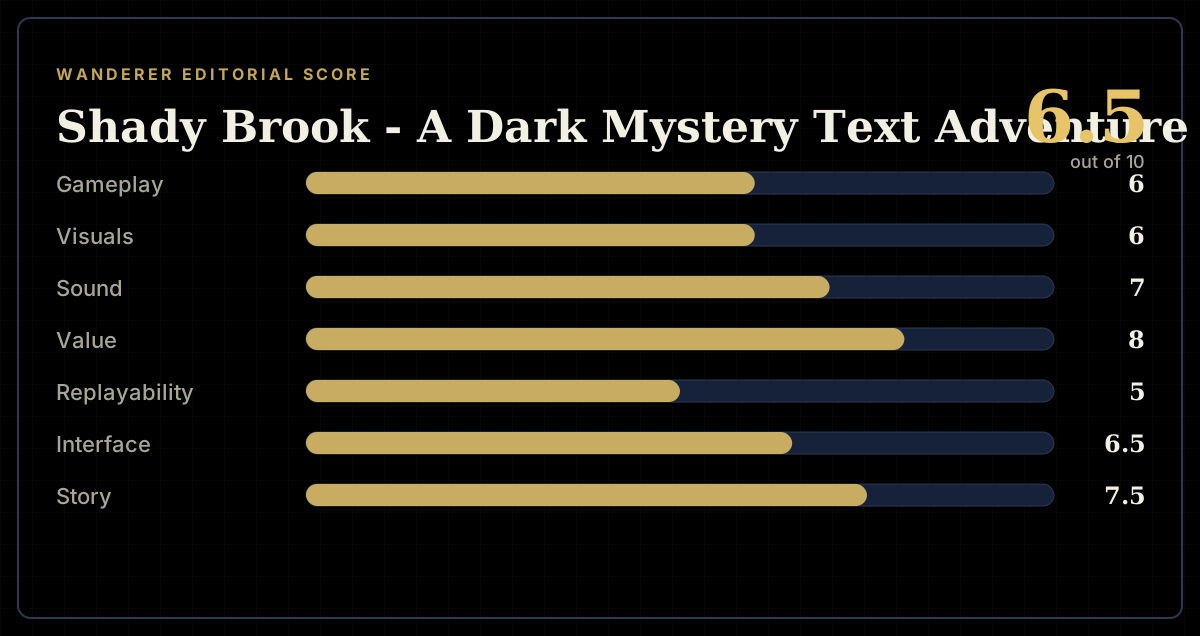
How the review scores each part of the gameWanderer Editorial -
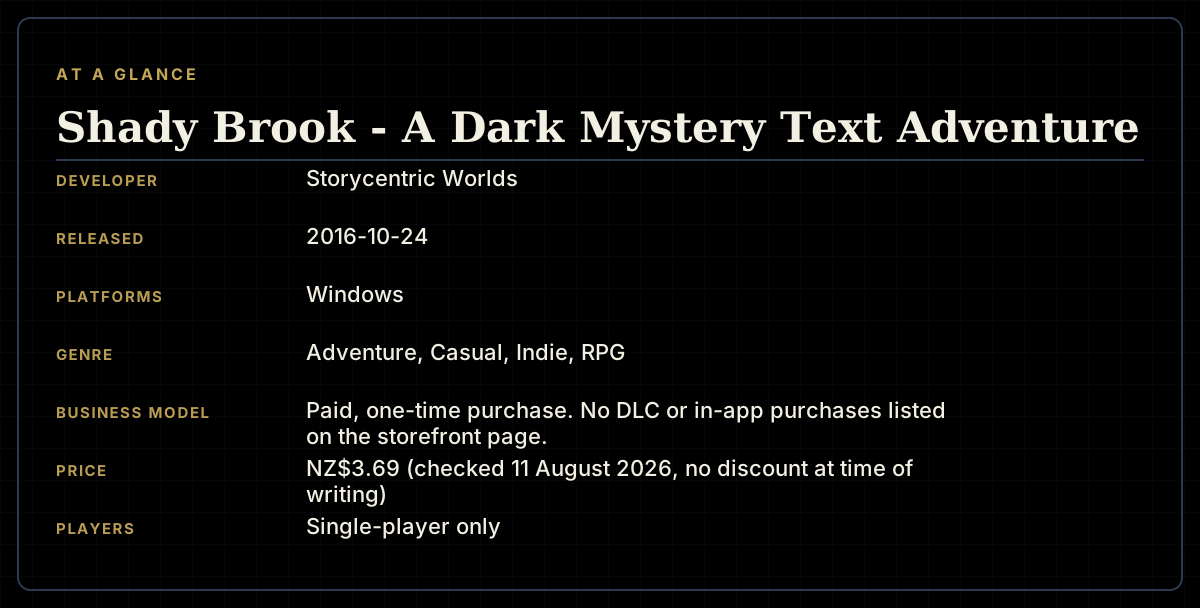
The short versionWanderer Editorial -
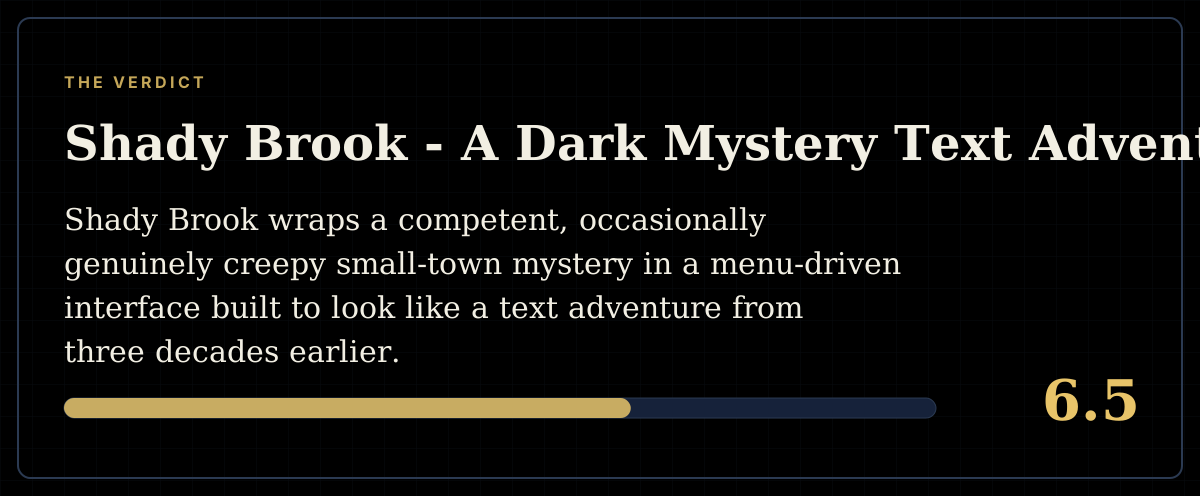
The final verdictWanderer Editorial