Game review
Little Nightmares II
7.5 / 10
- Developer
- Tarsier Studios
- Publisher
- BANDAI NAMCO Entertainment
- Released
- 10 February 2021
- Platforms
- Windows
- Genre
- Puzzle Platformer, Horror
- Monetisation
- One-time purchase. No DLC, no microtransactions.
- Players
- Single-player only
The short version
Little Nightmares II follows Mono, a boy in a raincoat, and Six, the original game's protagonist, through a rain-soaked, doll-haunted world of oversized menace and quiet dread. It launched on 10 February 2021 to Very Positive reviews, roughly 93% of 58,296 total -- an even stronger reception than the beloved original -- and has held that standing for five years on the strength of its atmosphere, sound design and monster design.
Sitting underneath that acclaim, two specific, well-documented complaints recur with unusual consistency: a mouse-and-keyboard control scheme, particularly a flashlight-aiming mechanic in Chapter 3, that reviewers across five years describe as genuinely broken rather than merely stiff; and a persistent, well-documented bug in that same chapter -- a key that fails to spawn -- reported as patched on console but still surfacing in PC reviews as recently as 2025.
Biggest strengths
- Exceptional, close-to-universally-praised art direction, monster design and sound design that carry the atmosphere the original Little Nightmares was loved for into a bigger, bolder sequel
- A haunting, minimal-dialogue story that a large share of reviewers describe as genuinely memorable, with an ending several single out specifically
- A dual-protagonist dynamic between Mono and Six that adds real emotional weight the first game's solo structure didn't have
Biggest weaknesses
- A specific, five-year-consistent complaint that mouse-and-keyboard controls are broken rather than merely awkward in places, most acutely a flashlight-aiming mechanic in Chapter 3 that multiple reviewers call nearly unplayable without a controller
- A well-documented, still-recurring bug in Chapter 3 -- an item that fails to spawn, blocking progress -- reported as patched on console but still surfacing in PC reviews as recently as 2025
- A shift in tone several reviewers regret: more "run-die-repeat" chase sequences and trial-and- error combat compared to the original's slower, more contemplative dread
Who it's for: Horror and atmospheric puzzle-platformer fans who loved the original Little Nightmares and want a bigger, bolder sequel with a controller in hand. Less suited to strict mouse-and- keyboard players, who face a specific, well-documented set of control problems in one particular chapter that the game never fully resolved on PC.
Our recommendation: A confident recommendation for the atmosphere, monster design and story alone -- just play it with a controller if you have one, and know before you start Chapter 3 that a well-documented key-spawning bug exists so you don't lose progress chasing it blind. Not a reason to skip the game, but worth knowing going in.
7.5 / 10
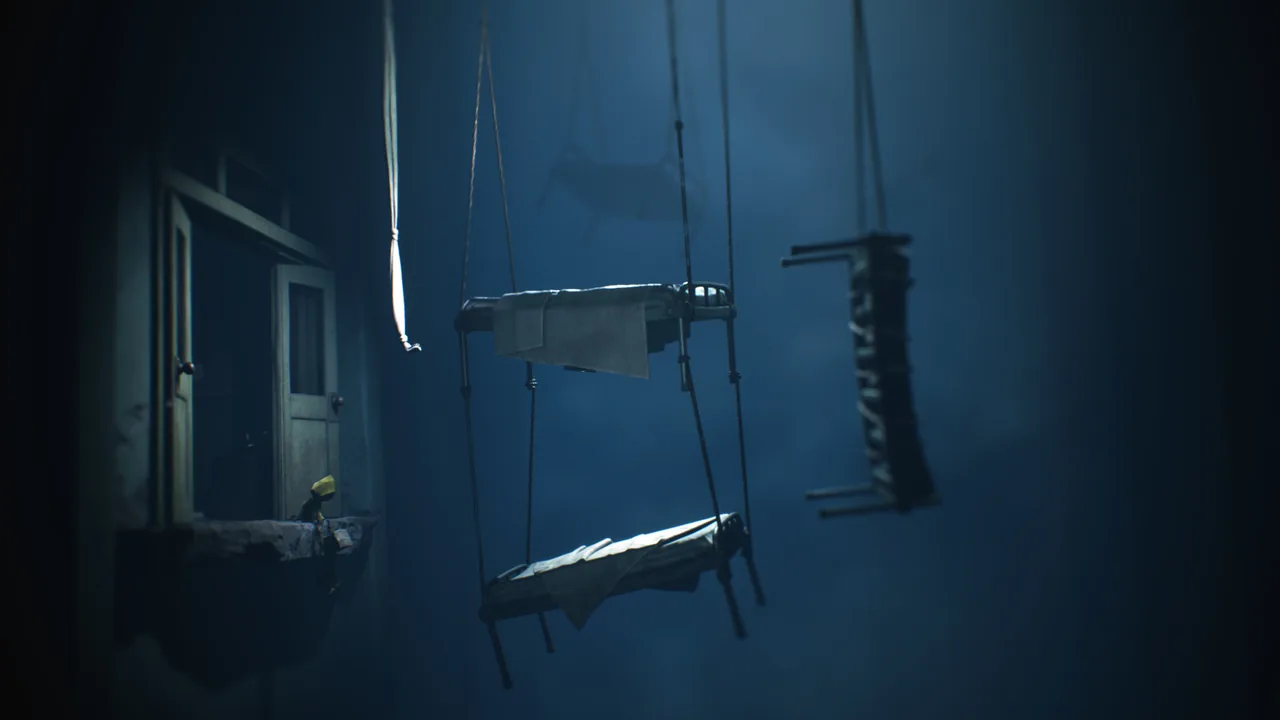
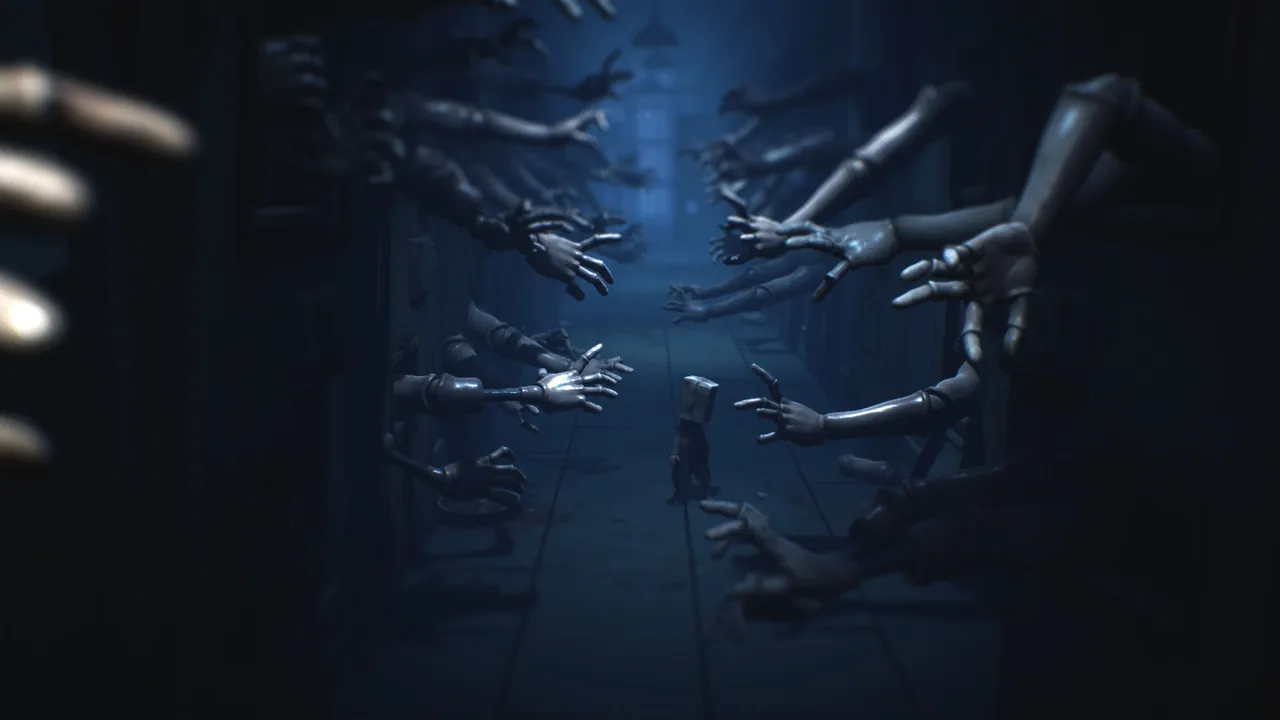
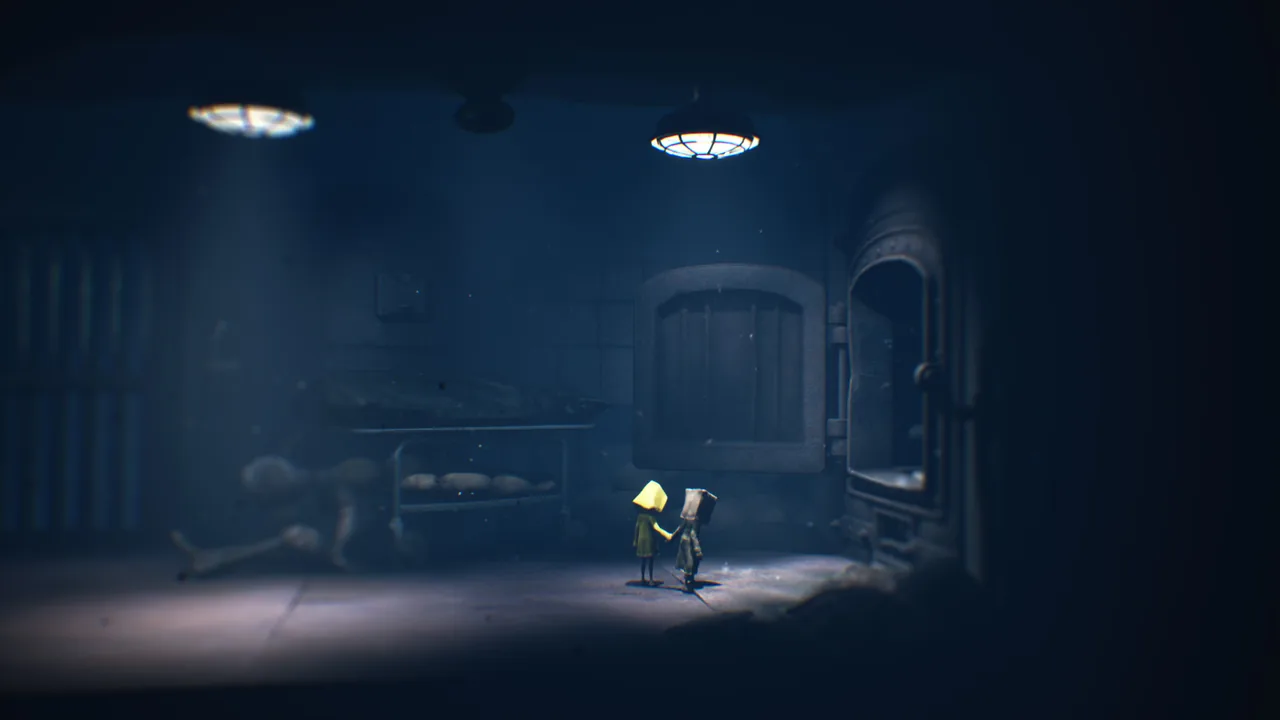
Little Nightmares II sends Mono, a boy in a paper bag mask, through a rain-soaked, doll-haunted world of oversized menace, teaming up partway through with Six — the yellow-raincoated protagonist of the original Little Nightmares — on a journey toward a mysterious transmitting tower. Developed by Tarsier Studios and published by Bandai Namco, it launched on 10 February 2021 to Very Positive reviews, roughly 93% of 58,296 total — an even stronger showing than the well-loved original — and has held that standing steadily for five years. Underneath that acclaim, the review history contains two specific, unusually well-documented complaints that recur with striking consistency across the entire five-year span.
The atmosphere lives up to the original
Almost nobody in the review sample disputes that Little Nightmares II succeeds at the thing its predecessor was loved for. Reviewers across the entire sample — including nearly every negative review — open with genuine praise for the art direction, monster design and sound work. "Firstly I want to say congratulations to the developers, this game has a clear artistic vision and they deliver exceptionally well on that," reads one of the more critical reviews in the sample, before going on to explain its other complaints. "This is an amazing game, terrifying and hard in a good way," reads a representative 2026 review. "I love horror games like these and this is one of the best games I've played in years." The dual-protagonist structure — Mono and Six's growing bond across the campaign — draws particular credit for giving the sequel emotional stakes the first game's solitary structure didn't have, and several reviewers single out the ending specifically as memorable and haunting in ways that stick with them well after finishing.
A control scheme reviewers call broken, not just stiff
Set against that praise, one complaint recurs with a consistency this section rarely sees across a full five years: keyboard-and-mouse controls, and specifically a flashlight-aiming mechanic that appears in Chapter 3, draw sustained, specific criticism rather than a general "it's a bit clunky" grumble. "The controls are an absolute joke. It's impossible to shine the torch in the right direction using the mouse on chapter 3," reads a 2022 review. A launch-week review makes an identical point: "Please, for the love of god fix the controls for PC. We should be able to aim the flashlight with the mouse, I don't have 3 the hands needed to use WASD, shift, cntrl arrow keys and left click." A 2025 review — over four years after launch — describes the exact same friction point: "keyboard/mouse are NOT compatible with some of the combat/puzzle (hospital - flashlight)." That level of specificity, repeated by reviewers years apart who plainly never read each other's posts, points to a real, structural PC control problem rather than a subjective difficulty spike — and reviewers who mention playing with a controller consistently report a smoother time with the exact same sequences.
A second, related but distinct complaint concerns design philosophy: several reviewers describe the sequel replacing the original's slower, creeping dread with more frequent chase sequences and trial-and-error combat encounters. "Instead of that slow, creeping dread, it keeps throwing in loud set-pieces and timing-based chases. By the third 'run-die-repeat' sequence, the tension turns into routine," reads a 2025 review. It's worth noting this reads as a genuine, debatable design choice rather than an error — some reviewers explicitly read the clunkier controls as intentional, designed to heighten tension by making the player feel as vulnerable and uncertain as the small, overmatched protagonists — but the review sample shows no real consensus on whether that reading holds up in practice, with roughly equal numbers landing on "brilliant tension-building" and "just frustrating."
A specific bug that outlived several patch cycles
The second major thread, distinct from control complaints, is a well-documented, specific bug in Chapter 3: a key item, required to progress, fails to spawn inside the teddy bears meant to contain it. Community discussion and troubleshooting threads describe workarounds — restarting the chapter, sometimes multiple times, or navigating away and back through the chapter-select menu — that players have relied on for years rather than a definitive fix. The bug was reportedly patched on console versions, but reviewers describe it surfacing on PC as recently as 2025: "There is a game-breaking bug in chapter 3, which the company has known about for some time," reads a review from December 2023, nearly three years after launch, and a mid-2025 review describes the identical problem independently. This is the kind of specific, dated, cross-referenced complaint that's worth taking at face value rather than dismissing as an edge case — it recurs too consistently, in too much identical detail, across too many years for that.
The achievement data offers some indirect support for how much friction concentrates around this point in the game: completion rates drop noticeably between the earlier story milestones and the Hospital chapter specifically — 54.6% for completing the School section down to 41.8% for the Hospital, a steeper single-chapter drop than most of the rest of the curve, consistent with a meaningful share of players hitting real friction, whether from the bug or the controls, right around where the review sample says to expect it.
How it has aged
Little Nightmares II's overall standing hasn't moved much in five years — it remains Very Positive, and reviews keep arriving steadily, several from 2026 describing "0 crashes thru the entire gameplay" or simply loving the atmosphere without hitting the Chapter 3 issues at all. That split outcome — a large majority having a great, technically smooth experience, and a smaller but consistent, well-documented minority hitting the same specific control and bug complaints for five straight years — is the most accurate picture this review sample supports. It isn't a game that aged poorly; it's a genuinely excellent one with one specific, geographically PC-bound rough edge that the studio's patch history never fully closed out.
7.5 out of 10. Little Nightmares II remains a beautifully crafted, genuinely unsettling puzzle-platformer that expands meaningfully on a beloved original, and the overwhelming majority of its Very Positive standing is earned honestly through atmosphere, monster design and story. The specific, well-documented Chapter 3 control and bug complaints are real enough, and consistent enough across five years, to be worth knowing before you start — play with a controller if you can, and don't panic if a key won't spawn; it's a known issue with known workarounds, not a sign you're doing something wrong.
Pros and cons
Pros
- Exceptional, close-to-universally-praised art direction, monster design and sound design that carry the atmosphere the original Little Nightmares was loved for into a bigger, bolder sequel
- A haunting, minimal-dialogue story that a large share of reviewers describe as genuinely memorable, with an ending several single out specifically
- A dual-protagonist dynamic between Mono and Six that adds real emotional weight the first game's solo structure didn't have
- Reviewers who play with a controller report a meaningfully smoother experience than the keyboard-and-mouse complaints below would suggest, with several noting zero technical issues
Cons
- A specific, five-year-consistent complaint that mouse-and-keyboard controls are broken rather than merely awkward in places, most acutely a flashlight-aiming mechanic in Chapter 3 that multiple reviewers call nearly unplayable without a controller
- A well-documented, still-recurring bug in Chapter 3 -- an item that fails to spawn, blocking progress -- reported as patched on console but still surfacing in PC reviews as recently as 2025
- A shift in tone several reviewers regret: more "run-die-repeat" chase sequences and trial-and- error combat compared to the original's slower, more contemplative dread
- A design choice -- deliberately awkward controls used to heighten tension -- that some reviewers accept as intentional and others experience as simply frustrating, with no clear consensus on which reading is correct
Screenshots
-
Little Nightmares IIImage: BANDAI NAMCO Entertainment via Steam -
Little Nightmares IIImage: BANDAI NAMCO Entertainment via Steam -
Little Nightmares IIImage: BANDAI NAMCO Entertainment via Steam -
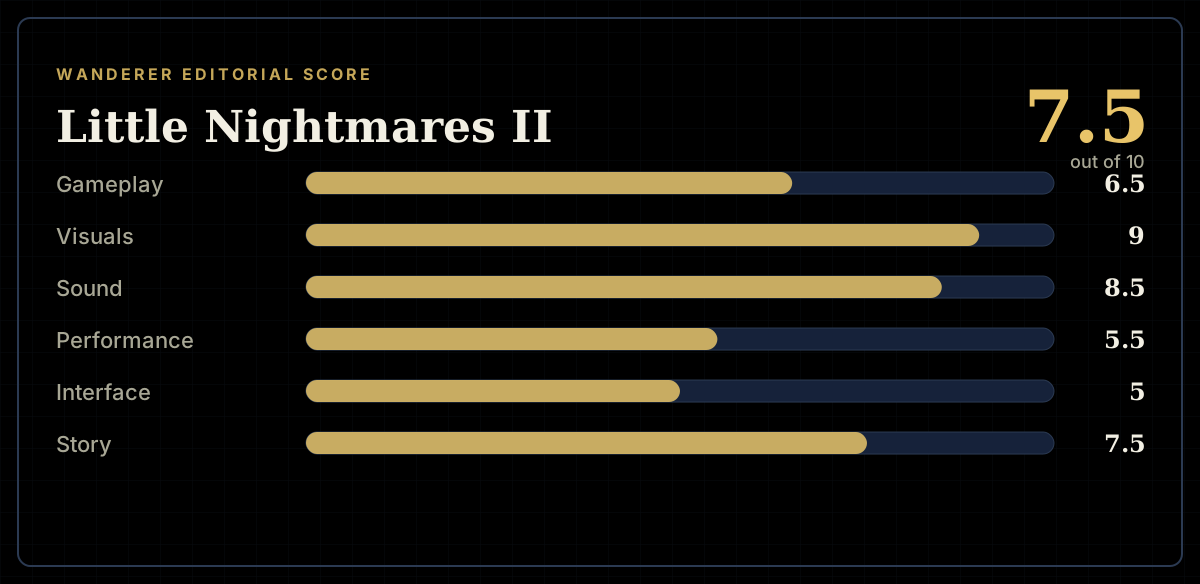
How the review scores each part of the gameWanderer Editorial -
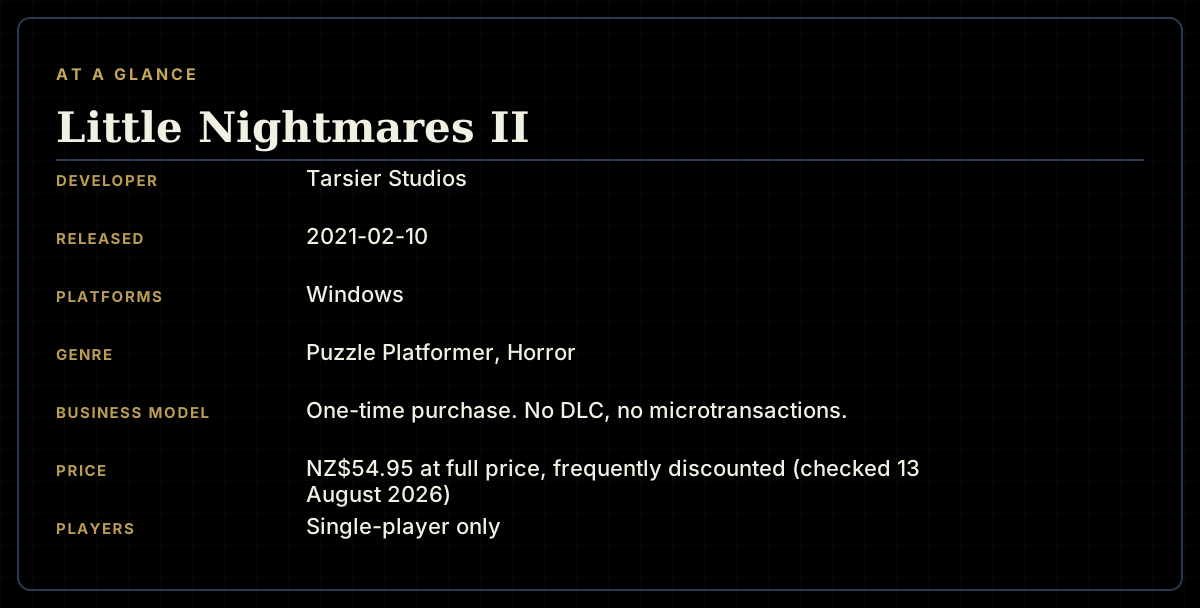
The essentialsWanderer Editorial -
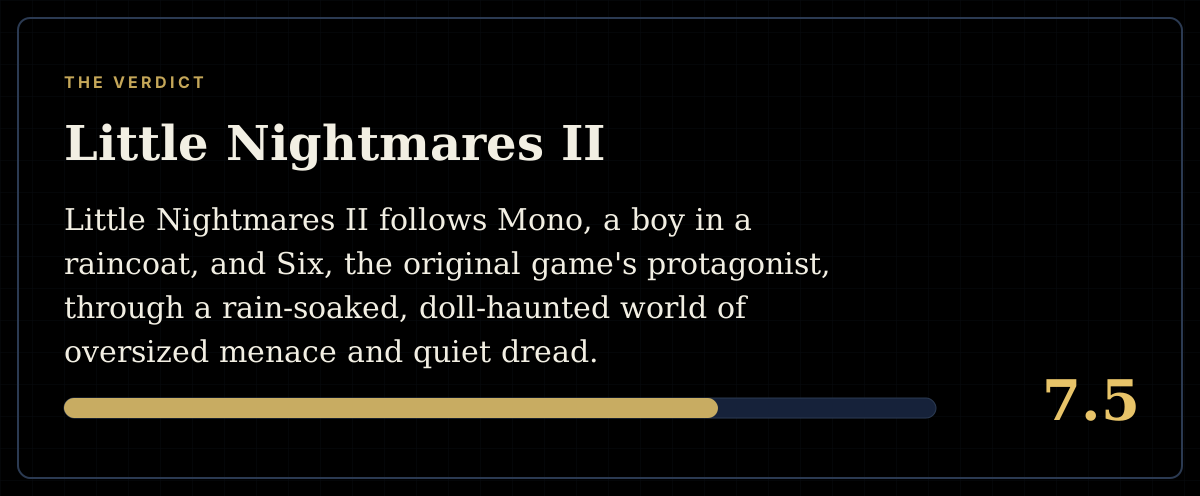
The short versionWanderer Editorial