Game review
Scriptorium: Master of Manuscripts
7 / 10
- Developer
- Yaza Games
- Publisher
- Mythwright
- Released
- 16 April 2026
- Platforms
- Windows
- Genre
- Simulation
- Monetisation
- One-time purchase
- Players
- Single-player
The short version
Scriptorium: Master of Manuscripts, released 16 April 2026, casts the player as a medieval scribe fulfilling commissions by dragging and combining thousands of hand-illustrated marginalia sketches into their own illuminated manuscript pages. Its review sample describes a genuinely original, deeply addictive creative sandbox that's drawn comparisons to everything from Potioncraft to childhood print-studio software, with tabletop gamers in particular praising its freeform mode for building handouts. That enthusiasm sits alongside a specific, widely repeated interface complaint: over two thousand unlabelled sketch assets with no search function, plus no way to group multiple pieces together, turning simple ideas into tedious scavenger hunts.
Biggest strengths
- The core concept, assembling illuminated-manuscript art from a huge library of hand-drawn medieval sketches, is described repeatedly as something genuinely unlike anything else available, requiring no artistic skill to produce charming, often very funny results
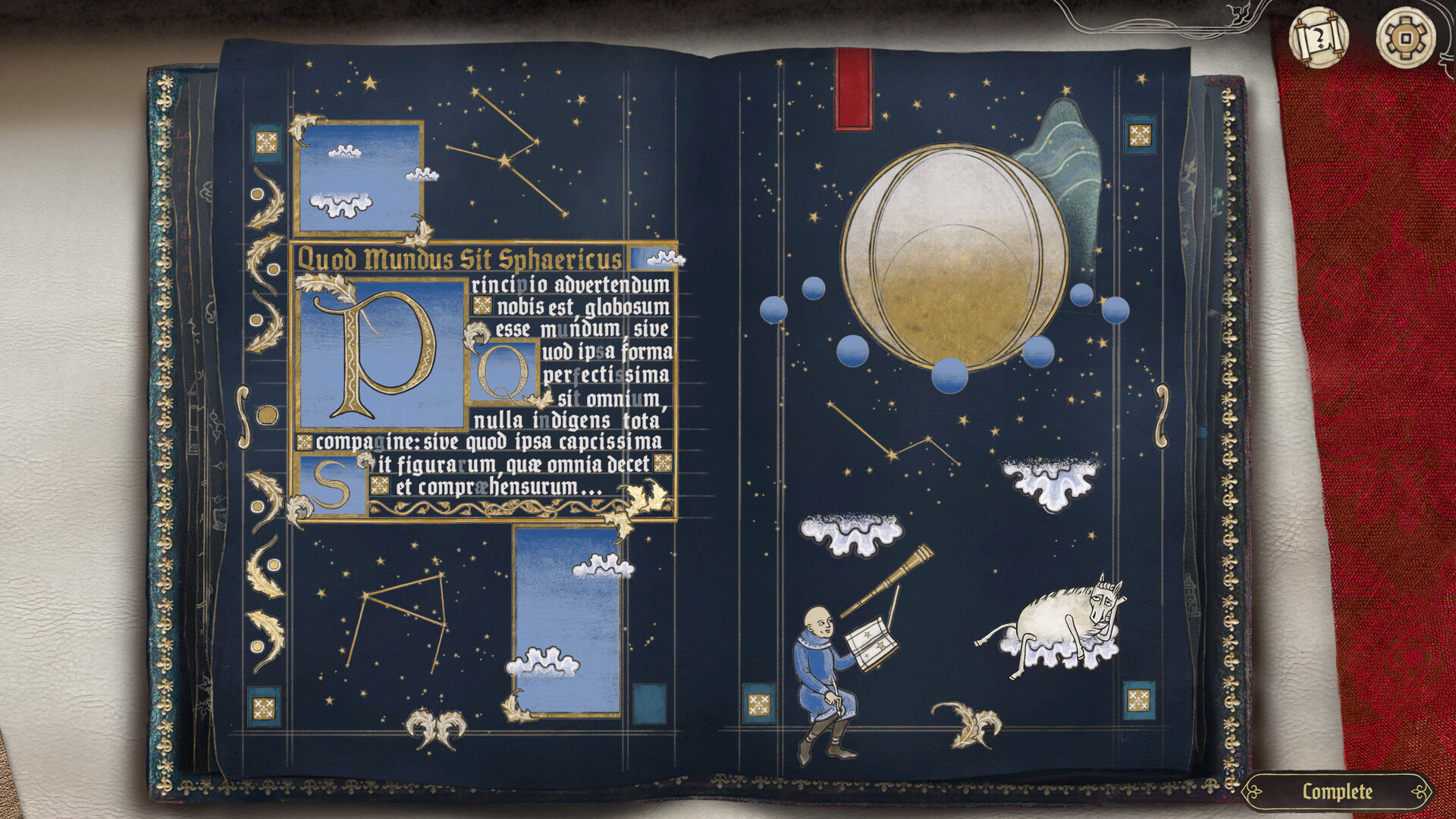
- A dedicated sandbox mode has become a genuine tool for tabletop RPG groups, with multiple reviewers describing using it to build character sheets, campaign handouts, and props for long-running Dungeons & Dragons games
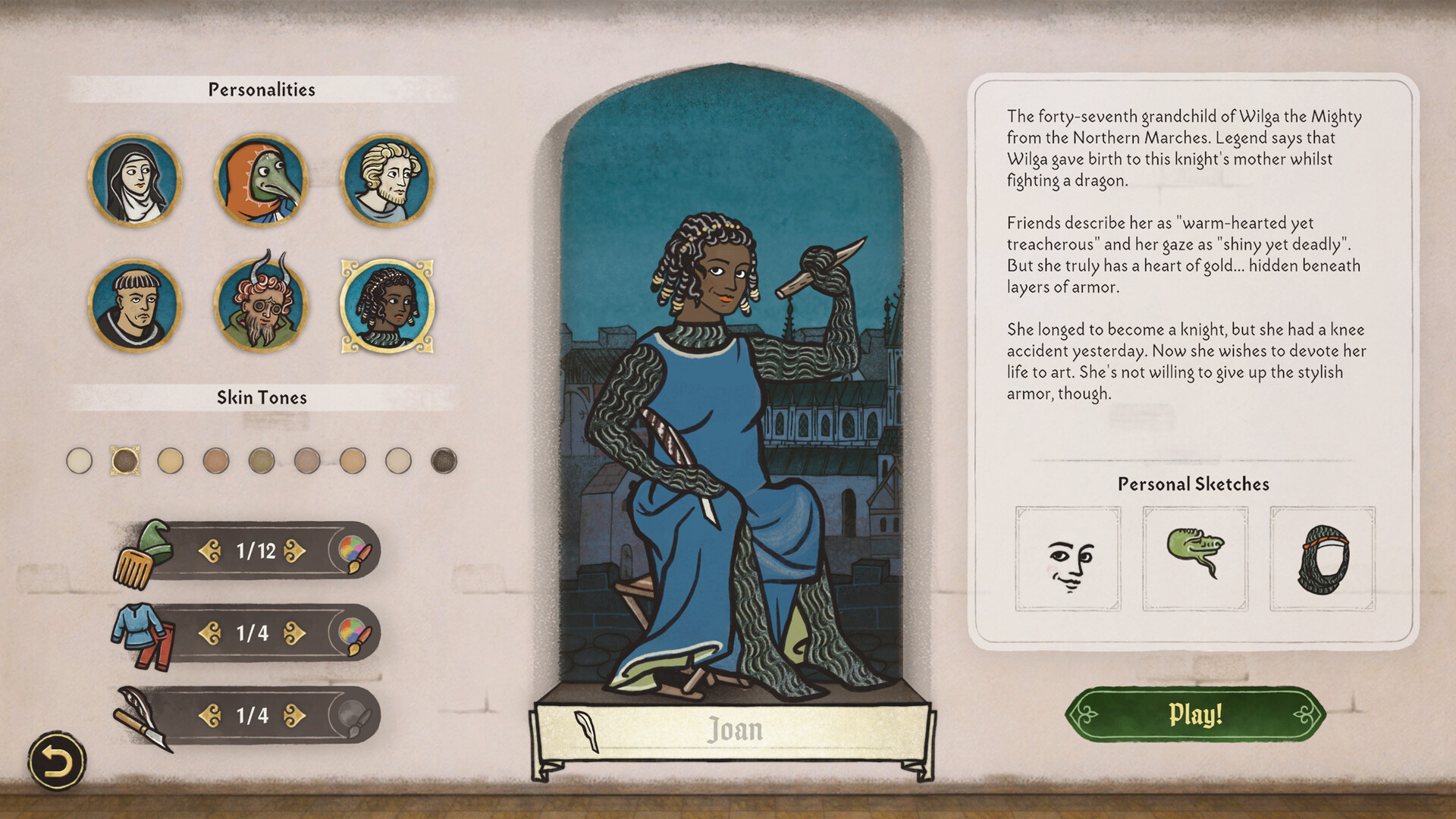
- The campaign's commission-based structure, delivered through quirky medieval NPCs and a lightly unfolding storyline, earns consistent praise for making the creative process feel purposeful rather than like an empty sandbox
Biggest weaknesses
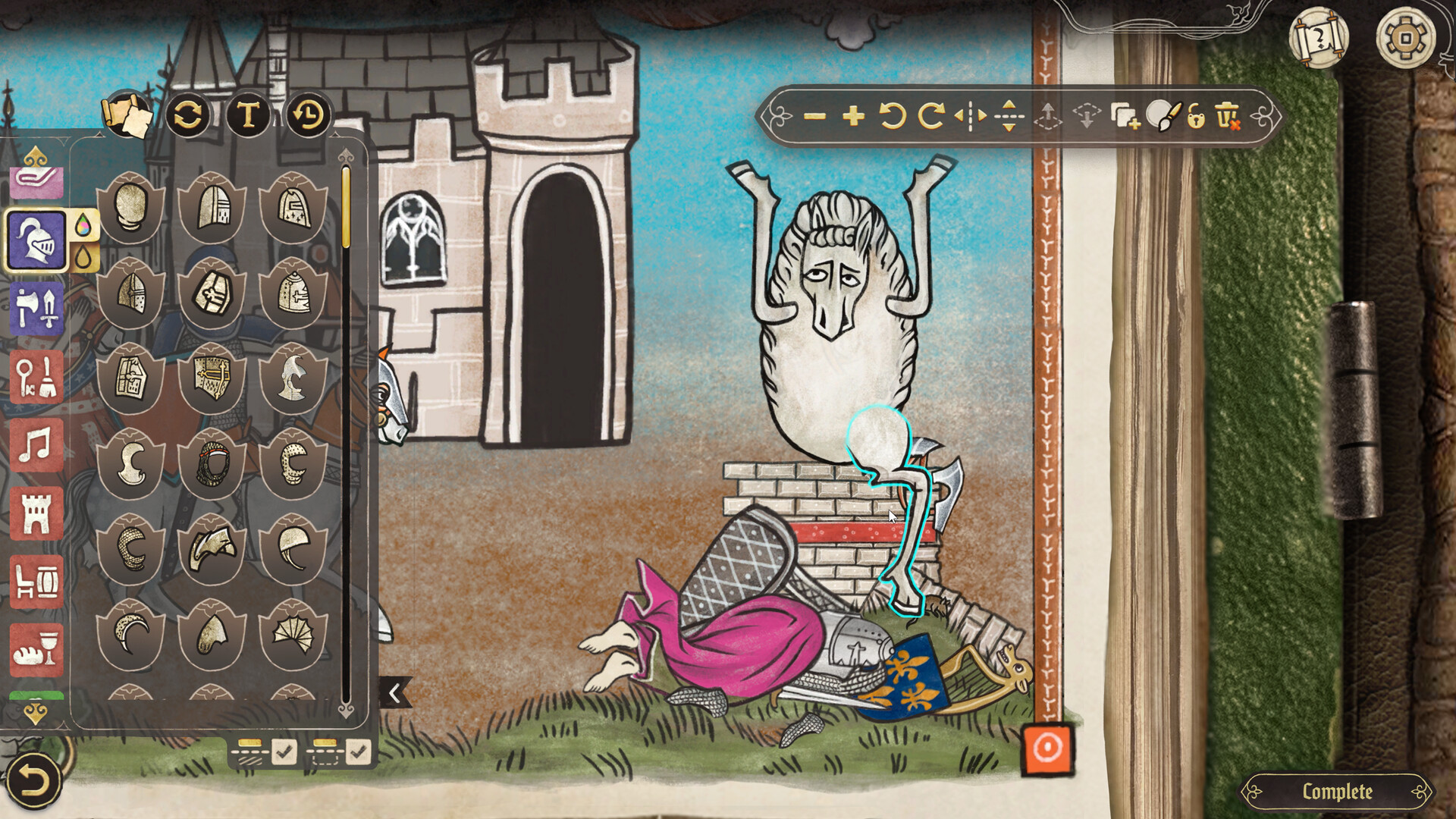
- The sketch library, well over two thousand individual assets, has no search function and no item labels, so finding a specific object like "a crown" or "a hand" means manually scrolling through broad, unsorted categories, a complaint raised independently across dozens of reviews
- There is no way to group multiple placed elements together to move, resize, or reposition them as a single unit, forcing painstaking piece-by-piece adjustment on any composite creation with more than a few parts
- At launch, sandbox creations could only be exported as flat, uneditable image files with no way to return and revise them later, a specific and significant limitation for players hoping to build an evolving set of tabletop handouts
Who it's for: Creative players who enjoy freeform art-assembly tools, tabletop RPG dungeon masters looking for a fast way to build period-appropriate handouts and character art, and anyone drawn to illuminated manuscripts and medieval marginalia.
Our recommendation: A genuinely inventive and charming creative toy that's easy to recommend even to players with no artistic skill, though buyers hoping to use it seriously for tabletop prep should know its sandbox mode has real, specific workflow limitations at launch.
7 / 10
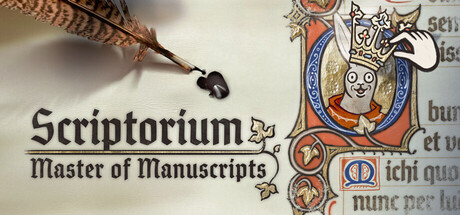
Scriptorium: Master of Manuscripts puts the player behind the desk of a medieval scriptorium, fulfilling commissions from patrons, saints, scammers, and the occasional devil, by dragging thousands of hand-illustrated sketches onto blank parchment to build illuminated-manuscript-style artwork. Released 16 April 2026 by Yaza Games under the Mythwright label, it's a strange, specific premise, and its review sample makes clear that specificity is exactly the point: this is a creative tool built with real love for medieval marginalia, and reviewers who click with it describe losing entire days to it. That enthusiasm, though, comes packaged with a genuinely significant and widely repeated usability complaint about the very asset library that makes the game special.
A genuinely original creative sandbox
What sets Scriptorium apart in its review sample is how consistently reviewers, including several who describe themselves as having no artistic talent, report being able to produce charming, often hilarious results almost immediately. The campaign structure hands out commissions with specific requirements, a crown to identify a king, a set number of nature motifs, an animal with a particular disposition, and reviewers describe genuine delight in figuring out how to satisfy those requests using the game's library of pre-drawn medieval sketches, discovering along the way that two shields mirrored together can become a surfboard or a resized ladder can double as train tracks. The dedicated sandbox mode, meanwhile, has clearly found an enthusiastic audience among tabletop gamers: multiple detailed reviews describe using it specifically to build Dungeons & Dragons character sheets, campaign handouts, and props, with one reviewer stating plainly that the sandbox mode alone is worth the price of admission for that audience. The commission-based campaign's light, unfolding story and quirky NPC cast, delivered through short animated interludes between working days, are also singled out repeatedly as giving the whole experience a sense of purpose beyond an empty canvas.
An enormous, unsearchable library
The single most consistently repeated complaint in this review sample, raised independently across dozens of otherwise glowing reviews, concerns how difficult it is to actually find things within that celebrated asset library. With well over two thousand individual sketches sorted only into broad categories and no item labels or search function, several reviewers describe specific, frustrating scavenger hunts, one detailed negative review describes scrolling through hundreds of unlabelled items just to find something resembling a crown for a commission that explicitly required one. A closely related complaint concerns the inability to group multiple placed elements together: building any composite object, a human figure alone can require adjusting fifteen or more individual body parts, means moving, resizing, and repositioning every single piece independently, with reviewers across both positive and negative reviews specifically asking for a grouping feature the developer had, at the time of these reviews, not yet added.
A sandbox with real launch-week limitations
For the tabletop-focused audience that has embraced Scriptorium's freeform mode most enthusiastically, a specific and significant limitation shows up repeatedly: at launch, finished sandbox creations could only be exported as flat, uneditable image files, with no way to return to a piece and revise it later. Several detailed reviews describe this as a serious blocker for exactly the use case the developer had showcased and even provided printable examples for, building an evolving set of character sheets or campaign handouts that need to change as a story develops. A smaller cluster of reviews also reports technical rough edges: one reviewer describes a specific mission crashing their game entirely and blocking further progress, another reports asset loading taking as long as seven minutes and freezing their file browser in the process, and one detailed review describes roughly a quarter of finished artworks saving as a blank grey image instead of the actual composition, a serious bug for a game whose entire appeal is the artwork it produces.
Small but real quality-of-life gaps
Beyond the two headline complaints, several reviewers raise a consistent set of smaller requests that point to a game still finding its final shape at launch: the ability to stretch elements independently rather than scaling them uniformly, keyboard shortcuts for faster rotation instead of dozens of individual clicks, a way to save and reuse custom multi-element creations across projects, and fixed, single-orientation furniture placement in the player's own scriptorium that some found needlessly restrictive. None of these individually derail the experience, but together they paint a picture of a genuinely inventive concept whose supporting tools haven't quite caught up to the ambition of its art library.
No pressure to be good at art
A theme that recurs across a wide range of otherwise very different reviews is how welcoming the game feels to players who don't think of themselves as artists at all. Because every commission is fulfilled by assembling pre-made sketches rather than drawing freehand, and because the game places no aesthetic judgement on the results, reviewers repeatedly describe feeling free to experiment without fear of "getting it wrong," several specifically contrasting this with more traditional art or design games that implicitly reward technical skill. One reviewer describes it as unexpectedly well suited to their own difficulties with other games, finding its structure calming and approachable in a way few other titles have managed. That low-pressure, exploratory design also shows up in how the game is priced and paced: reviewers describe steady, satisfying resource and unlock progression that never forces a purchase to keep having fun, and a general sense that the developers built the game to be played at whatever pace and ambition level the player brings to it, from a five-minute commission dashed off with default suggestions to an hour-long labour of love.
Final Verdict
Scriptorium: Master of Manuscripts is one of the more genuinely original creative games in recent memory, turning a bizarrely specific historical niche into something charming, funny, and, for the tabletop crowd especially, actually useful. Its reception is overwhelmingly positive for good reason: the core idea works, the commission structure gives it purpose, and there's a real sense of craft and historical care behind the whole thing. But the missing search function across a two-thousand-plus item library, the lack of any way to group elements, and a sandbox mode that couldn't be edited after export at launch are specific, well-documented gaps between the tool's ambition and its execution. Worth buying for the concept alone, but go in expecting some real friction while hunting for that one specific crown.
Pros and cons
Pros
- The core concept, assembling illuminated-manuscript art from a huge library of hand-drawn medieval sketches, is described repeatedly as something genuinely unlike anything else available, requiring no artistic skill to produce charming, often very funny results
- A dedicated sandbox mode has become a genuine tool for tabletop RPG groups, with multiple reviewers describing using it to build character sheets, campaign handouts, and props for long-running Dungeons & Dragons games
- The campaign's commission-based structure, delivered through quirky medieval NPCs and a lightly unfolding storyline, earns consistent praise for making the creative process feel purposeful rather than like an empty sandbox
Cons
- The sketch library, well over two thousand individual assets, has no search function and no item labels, so finding a specific object like "a crown" or "a hand" means manually scrolling through broad, unsorted categories, a complaint raised independently across dozens of reviews
- There is no way to group multiple placed elements together to move, resize, or reposition them as a single unit, forcing painstaking piece-by-piece adjustment on any composite creation with more than a few parts
- At launch, sandbox creations could only be exported as flat, uneditable image files with no way to return and revise them later, a specific and significant limitation for players hoping to build an evolving set of tabletop handouts
- A handful of reviewers report technical issues including a mission-blocking crash, unusually long initial asset load times, and at least one detailed report of finished artwork occasionally saving as a blank grey image instead of the actual composition
Screenshots
-
Scriptorium: Master of ManuscriptsImage: Mythwright via Steam -
Scriptorium: Master of ManuscriptsImage: Mythwright via Steam -
Scriptorium: Master of ManuscriptsImage: Mythwright via Steam