
Game review
My Dream Setup
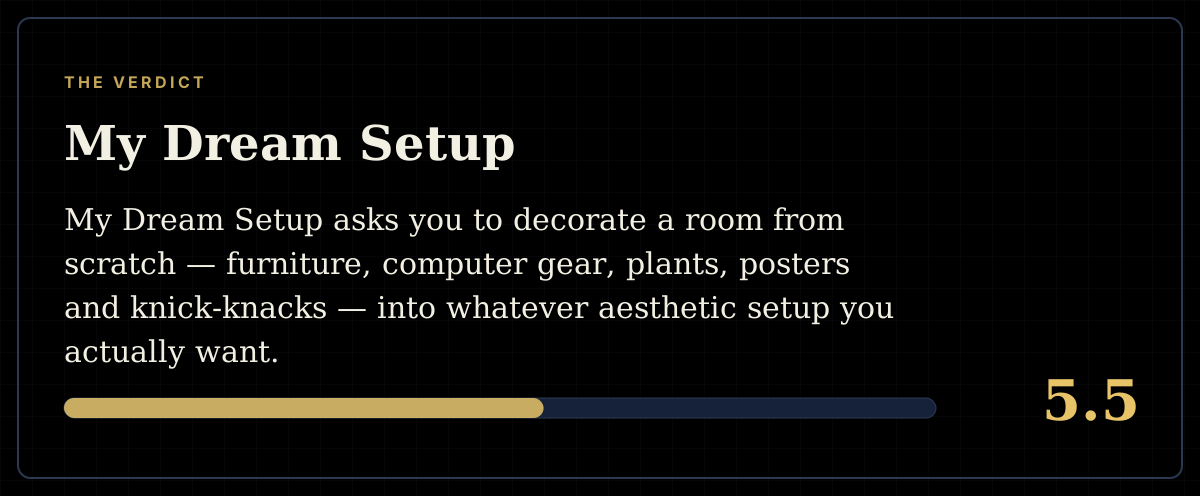
5.5 / 10
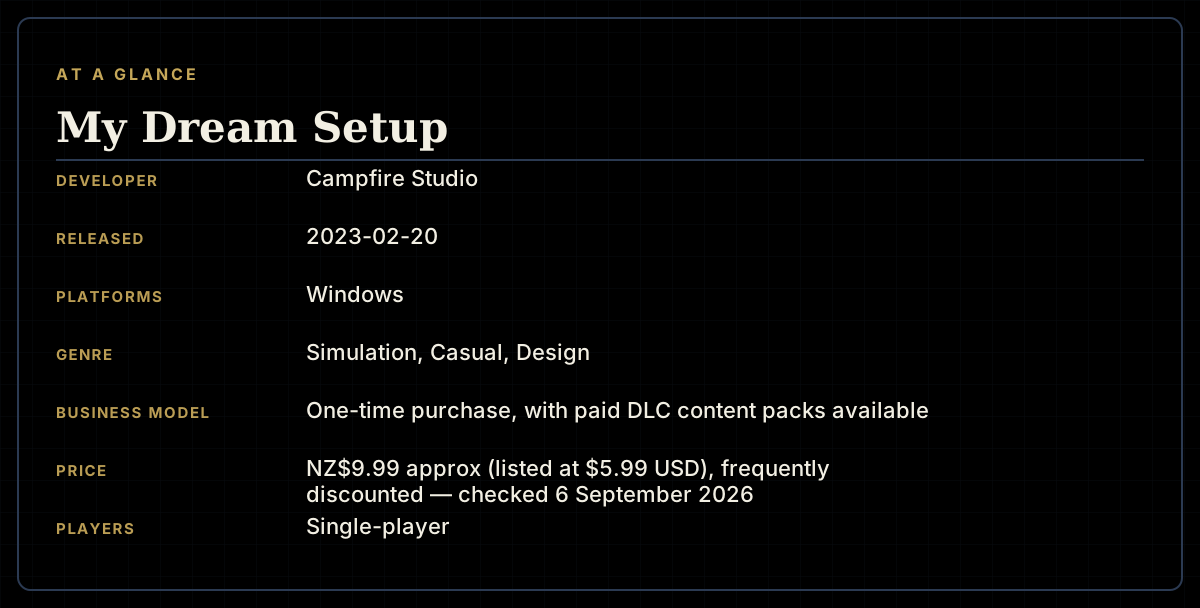
- Developer
- Campfire Studio
- Publisher
- Campfire Studio
- Released
- 20 February 2023
- Platforms
- Windows
- Genre
- Simulation, Casual, Design
- Monetisation
- One-time purchase, with paid DLC content packs available
- Players
- Single-player
The short version
My Dream Setup asks you to decorate a room from scratch — furniture, computer gear, plants, posters and knick-knacks — into whatever aesthetic setup you actually want. Released 20 February 2023 by Campfire Studio, it sits Very Positive with English-speaking players, 89.7% across 3,163 reviews, built on real, widespread affection for a cheap, relaxing creative outlet. Working hard against a higher score are several specific, well-documented problems: rooms can only be rectangular with no way to add dividing walls or connect spaces, reviewers report the same category of bug repeatedly — placed furniture, doors and windows vanishing or resetting after loading a save — and one of the game's achievements requires linking a Twitter/X account and posting a screenshot, drawing sustained, specific objection from completionists. Most seriously, a detailed 2025 review reports that the game's Steam Workshop, meant for community-made furniture, is instead dominated by unrelated and inappropriate user uploads across every page that reviewer checked — a real moderation problem this review reports factually rather than having independently verified by browsing the Workshop itself.
Biggest strengths
- The core creative loop — placing and customising furniture, computer gear, plants and decorations to build a genuinely personal space — is repeatedly described as relaxing and satisfying, with reviewers specifically praising the range of colour and style options available for many individual item categories
- Visual presentation and a lo-fi ambient soundtrack draw consistent praise for creating a genuinely cozy atmosphere, even from reviewers otherwise critical of the game's limitations
- The price is low enough that a striking number of critical reviewers still say they got their money's worth despite listing multiple serious complaints
Biggest weaknesses
- Rooms can only be built as simple rectangles, with no dividing walls, no diagonal walls, and no way to connect multiple rooms into a larger space — a limitation repeated across dozens of reviews spanning the game's entire release history
- Multiple reviewers, across different years, independently report the same category of bug: placed furniture, doors and windows disappearing or resetting to different positions after loading a saved room, with one detailed report describing an entire room's contents vanishing after roughly an hour of building
- One of the game's achievements requires linking a Twitter/X account and posting a screenshot from the game, which multiple reviewers call an unreasonable requirement for a Steam achievement and cite as a specific reason they can't reach 100% completion
Who it's for: Fans of low-stakes decorating and cozy sandbox games who want a cheap, creative outlet and can tolerate real technical rough edges.
Our recommendation: Worth its low price for the core creative concept; save frequently and to multiple slots given the reported bugs, don't expect 100% completion without a Twitter account, and steer younger players away from the Workshop browser specifically.
5.5 / 10
Introduction
There's a genuine, specific appeal to being handed a blank room and a large catalogue of furniture, computer gear and decorations, and simply being told to make it yours. My Dream Setup, released 20 February 2023 by Campfire Studio, leans fully into that appeal, and its reception reflects real affection for the idea: Very Positive with English-speaking players, 89.7% across 3,163 reviews. Reading through that large sample turns up a consistent, useful pattern — the praise is genuine and the price is low enough that even harsh critics often still recommend it, but a specific set of technical and structural problems shows up again and again, spanning the game's entire history from launch through this year.
A genuinely appealing creative sandbox
The core loop draws real, specific praise across the sample. Reviewers describe planning actual future apartments, replicating rooms they wish they had, and simply losing an hour or two to low-stakes creative tinkering with a relaxing lo-fi soundtrack running underneath. One reviewer, who played the demo for hours before release, specifically credits the game with letting them "plan" a new living room, bedroom and studio ahead of an actual move. Even reviewers who ultimately land on a negative recommendation often preface their complaints by acknowledging the concept is good and the low price already feels fair for what's there — a pattern that shows up often enough to be a real signal about the strength of the underlying idea rather than isolated generosity.
Rigid tools and a bug that keeps recurring
Set against that goodwill, the single most consistent structural complaint concerns room shape: you can only build simple rectangles, with no dividing walls, no diagonal edges, and no way to connect separate rooms into a larger layout — a limitation reviewers raise constantly from launch week through the most recent reviews in this sample, several specifically noting their own real bedroom has an irregular shape they simply can't recreate. Compounding that, multiple independent reviewers, across different years, report the same specific category of bug: placed items, doors and windows disappearing or shifting position after loading a saved room. One detailed report describes losing an entire room's contents — bed, gaming setup, plants, everything — after roughly an hour of building, with only a few accessories left behind, clumped together. That's not a minor visual glitch; it's data loss in a game whose entire premise is the room you built.
An achievement that asks for more than gameplay
A smaller but specifically, repeatedly criticised design choice concerns one particular achievement: earning it requires linking a Twitter/X account and posting a screenshot from the game. Multiple reviewers object to this on the same grounds — one calls it "incredibly spammy," arguing that no completionist should need to create an account on an unrelated social platform just to finish a Steam achievement list, and specifically states they'd rather sit at 99% than comply. It's a small mechanical detail in isolation, but it's raised often and specifically enough across this sample to be a real, recurring point of friction for a meaningful share of the audience this game is built for.
A Workshop problem worth taking seriously
The most serious issue in this review's research doesn't concern the core game at all — it concerns the Steam Workshop feature meant to let the community share custom furniture and room assets. One detailed, recent review reports checking every one of roughly 180 pages of Workshop submissions and finding them dominated by unrelated and inappropriate content rather than the furniture pieces the feature exists for, explicitly calling on the developer to introduce moderation. This review has no way to independently verify the Workshop's current contents and reports the claim exactly as that reviewer described it, rather than as something this review confirmed firsthand — but it's specific and serious enough that parents or younger players considering this game should treat the Workshop browser as an unmoderated space to approach with real caution, separate from the core, self-contained decorating experience the base game offers on its own.
A community that keeps asking for the same things
Reading across years of reviews turns up something else worth noting: an unusually long, specific, and consistent wishlist repeated independently by dozens of separate players rather than one-off suggestions. Snap-to-grid placement, finer rotation than fixed 90-degree turns, the ability to clip or nest items together, non-rectangular rooms, and basic quality-of-life additions like duplicating a recently placed item all show up across reviews spanning 2023 through 2026, largely unchanged in substance. That consistency cuts two ways: it confirms these are the genuinely correct priorities for the developer to address, since the community has been remarkably aligned on exactly what's missing for years — but it also means a meaningful share of this game's most requested improvements were still being requested in reviews posted this year, long after launch, suggesting the core toolset hasn't moved as far as its most invested fans would like.
Final Verdict
My Dream Setup succeeds at its core promise clearly enough to earn genuine, widespread affection: a cheap, relaxing creative sandbox that lets players build something that feels personally theirs. What keeps this review from an easy recommendation is a specific, well-documented list of problems that span the game's entire release history rather than fading with patches — rigid, rectangle-only room tools, a recurring save-corruption bug, an achievement that demands more than gameplay, and a reported, unmoderated Workshop feature serious enough to flag directly rather than gloss over. Worth its low price for the core idea; save often, expect some frustration with the building tools, and treat the Workshop with real caution.
Pros and cons
Pros
- The core creative loop — placing and customising furniture, computer gear, plants and decorations to build a genuinely personal space — is repeatedly described as relaxing and satisfying, with reviewers specifically praising the range of colour and style options available for many individual item categories
- Visual presentation and a lo-fi ambient soundtrack draw consistent praise for creating a genuinely cozy atmosphere, even from reviewers otherwise critical of the game's limitations
- The price is low enough that a striking number of critical reviewers still say they got their money's worth despite listing multiple serious complaints
- Reviewers describe genuinely practical real-world use, including planning an actual room layout ahead of moving house
Cons
- Rooms can only be built as simple rectangles, with no dividing walls, no diagonal walls, and no way to connect multiple rooms into a larger space — a limitation repeated across dozens of reviews spanning the game's entire release history
- Multiple reviewers, across different years, independently report the same category of bug: placed furniture, doors and windows disappearing or resetting to different positions after loading a saved room, with one detailed report describing an entire room's contents vanishing after roughly an hour of building
- One of the game's achievements requires linking a Twitter/X account and posting a screenshot from the game, which multiple reviewers call an unreasonable requirement for a Steam achievement and cite as a specific reason they can't reach 100% completion
- Basic building tools reviewers expect from the genre are missing, including snap-to-grid placement, fine rotation beyond 90-degree increments, and reliable object-stacking on shelves and surfaces
- A detailed 2025 review reports checking all pages of the game's Steam Workshop and finding it dominated by unrelated and inappropriate user-submitted content rather than the furniture and room assets the feature is intended for, explicitly calling for the developer to introduce moderation; this review could not independently verify the Workshop's current state and reports the claim as described rather than as directly confirmed
Screenshots
-
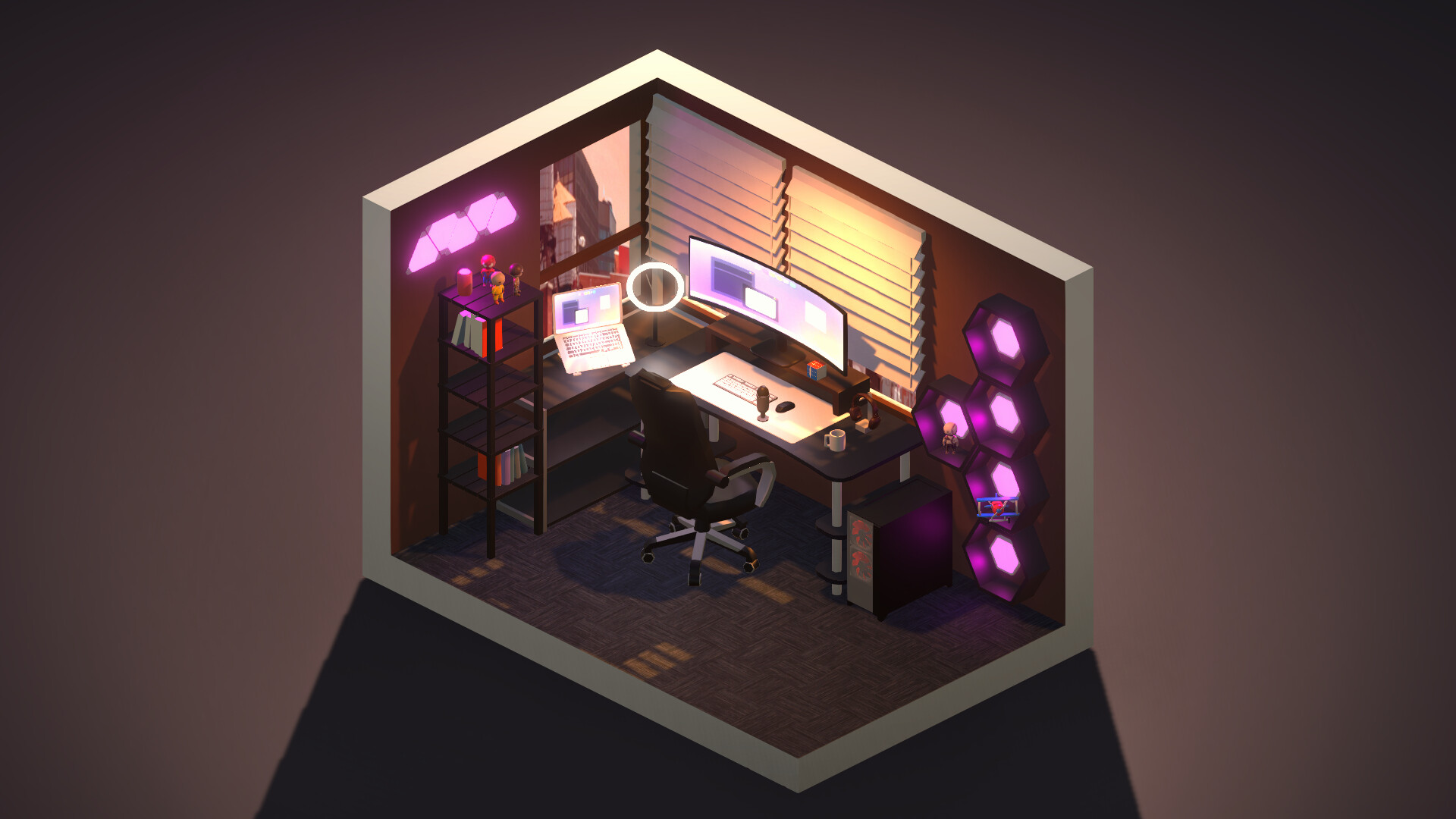
My Dream SetupImage: Campfire Studio via Steam -
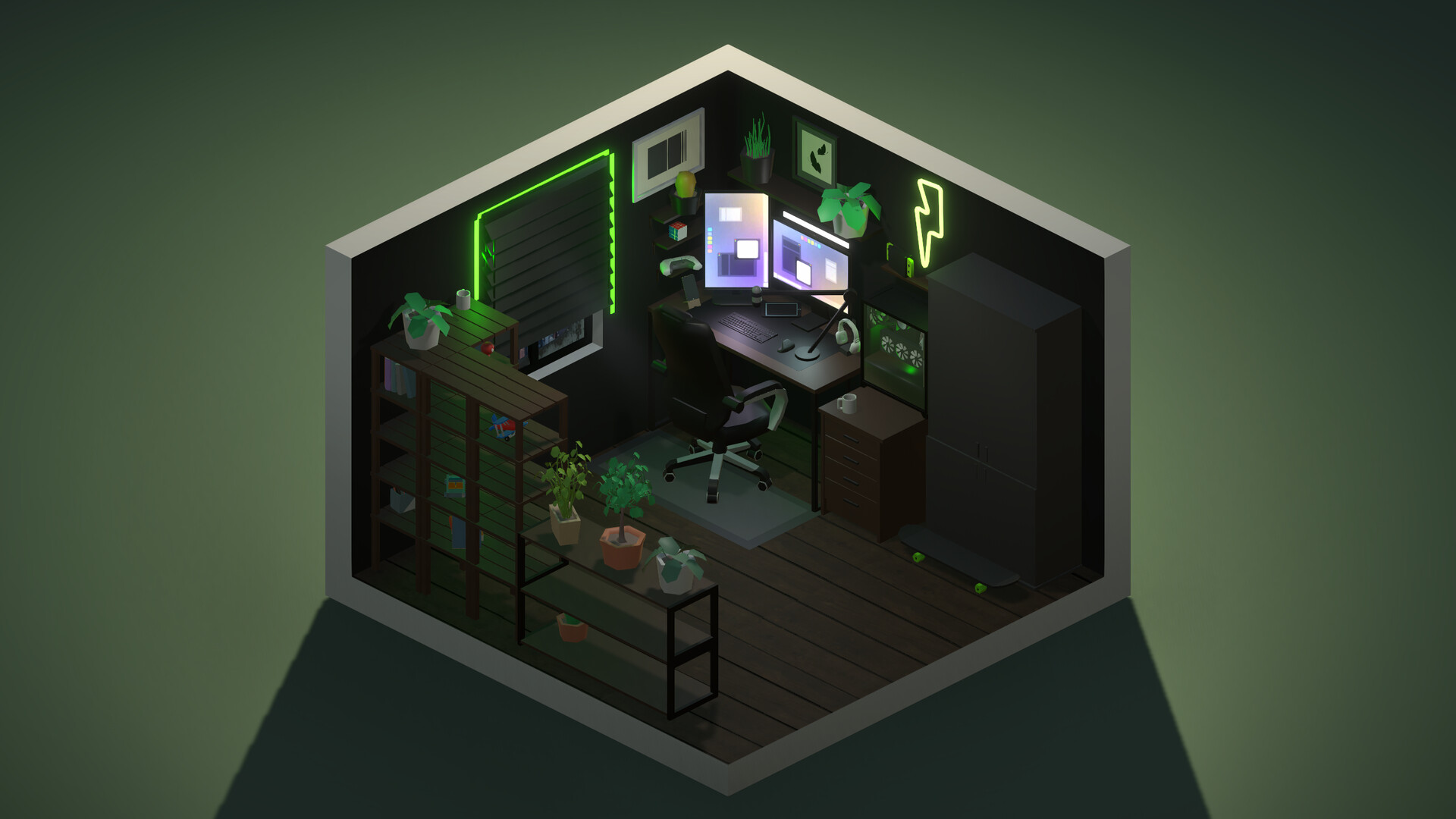
My Dream SetupImage: Campfire Studio via Steam -
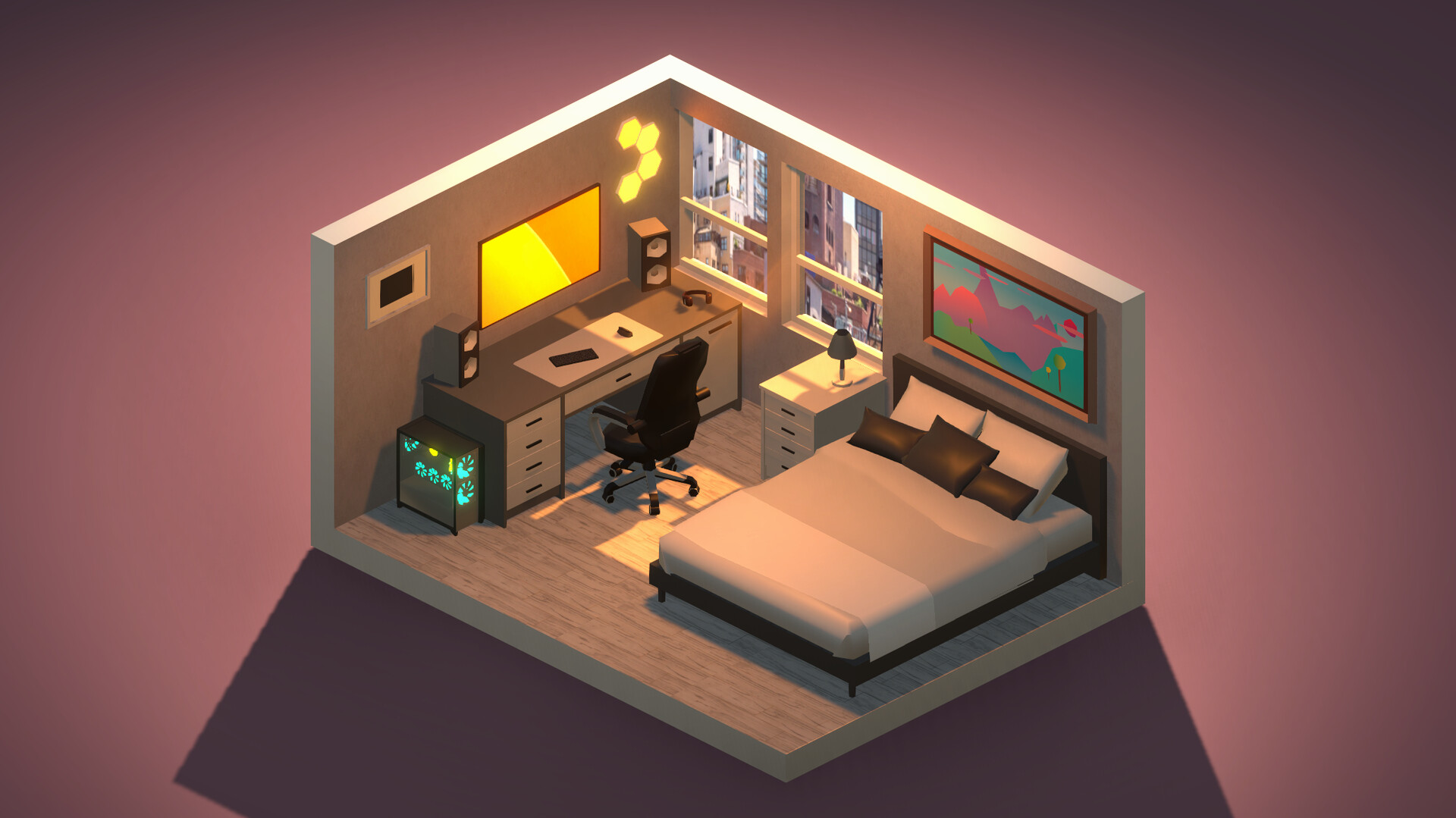
My Dream SetupImage: Campfire Studio via Steam -
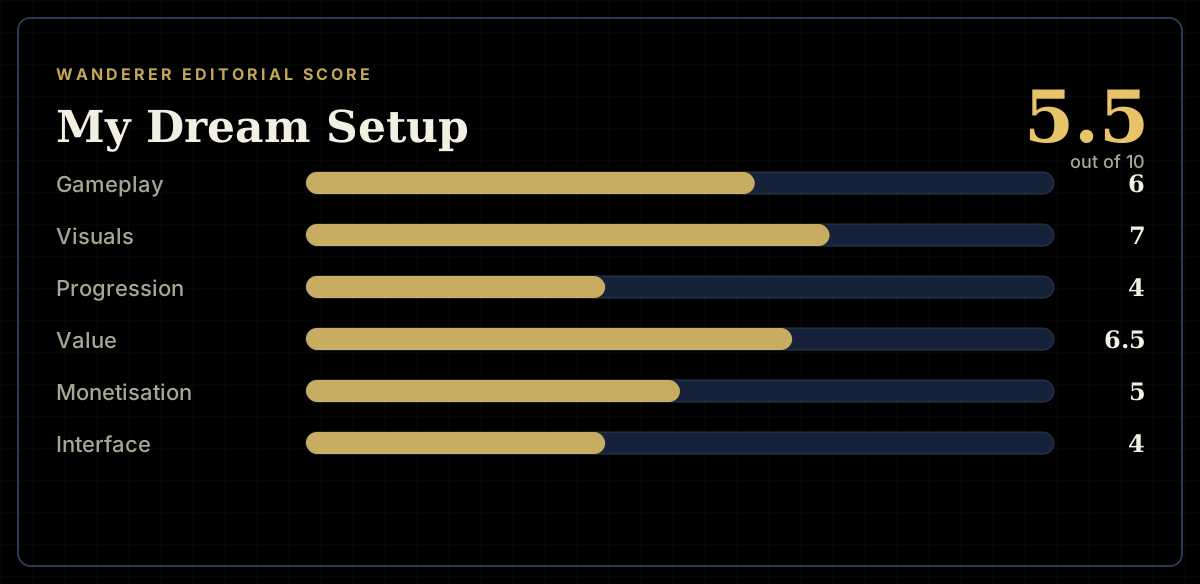
How the review scores each part of the gameWanderer Editorial -
The essentials at a glanceWanderer Editorial -
The short versionWanderer Editorial