
Game review
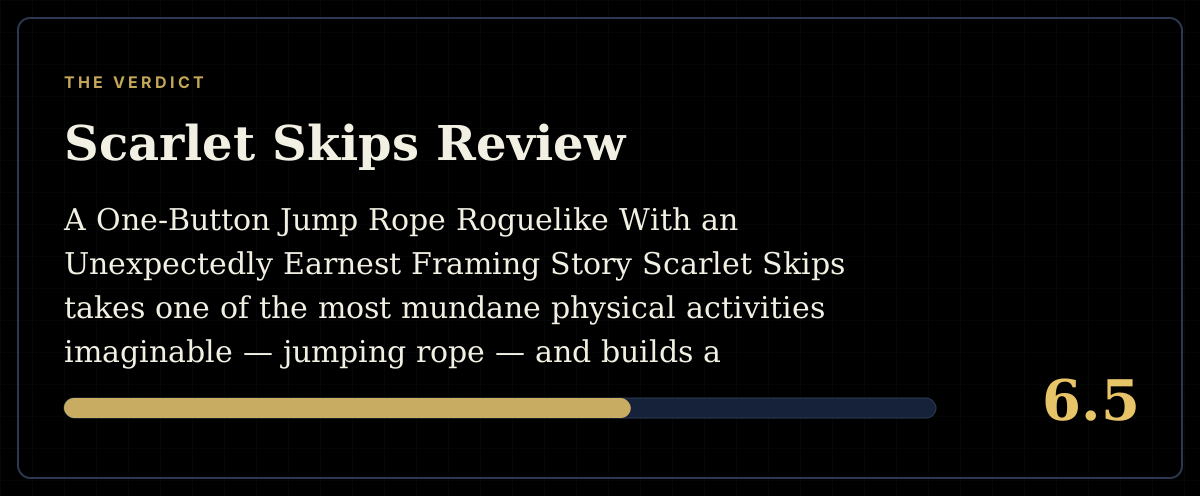
Scarlet Skips Review
6.5 / 10
- Developer
- Yerk Games
- Publisher
- Yerk Games
- Released
- 3 September 2026
- Platforms
- ["Windows"]
- Genre
- Action
A One-Button Jump Rope Roguelike With an Unexpectedly Earnest Framing Story
Scarlet Skips takes one of the most mundane physical activities imaginable — jumping rope — and builds an entire arcade roguelike around it. The premise is disarmingly small: Scarlet, stuck in a depressive slump in a cluttered apartment, gets her old jump rope tangled in a robot vacuum, remembers she used to be good at this, and heads out to the park to try again. It's a lightweight excuse for the action rather than a real narrative, but reviewers consistently note that the framing works better than it has any right to — several describe the opening cutscene as genuinely charming, and more than one draws a straight line from Scarlet's small, repetitive act of self-improvement to something almost meditative about the game's entire structure. It's a strange thing to say about a one-button skipping-rope game, but the idea of "dealing with challenges one jump at a time" gives an otherwise disposable framing device more weight than it needed to have.
Developed and published solo by Yerk Games, the game is built entirely around press, hold, and release inputs on a single button. There's no combat, no movement beyond timing, and no systems to learn beyond reading the rope's rhythm and reacting. That minimalism is the whole pitch, and for a specific kind of player it lands exactly as intended: pick it up, understand it instantly, and start chasing a higher score. The game is also explicit about carrying mature and suggestive content, with exaggerated jiggle-physics animation and a deliberately risqué presentation built around its main character, which reviewers agree is a significant part of why the game found an audience at all — for better and for worse, depending who's writing the review.
Ten Upgrade Cards, Stacking Effects, and a Score Chase That Runs Out of Room Fast
The roguelike structure sits on top of the core skipping loop. Survive long enough and you're offered a choice of three random power-ups drawn from a pool of ten upgrade cards — faster ropes, additional ropes running simultaneously, greater jump height, ropes that catch fire, luck-based bonus multipliers, and a handful of stranger combinations layered on top of those. Positive reviewers emphasize that these effects stack and interact, so a session that starts as a simple single-rope skip can spiral into a genuinely chaotic mess of fire, multiple ropes, and escalating speed within a few minutes. Several players describe deliberately experimenting with build combinations as the game's actual source of replay value, well past what the core skipping mechanic alone would sustain, and Steam achievement support gives an additional reason to keep chasing higher numbers.
The problem, and it's the single most common complaint in the negative reviews, is that ten cards simply isn't much to build a roguelike around. Multiple reviewers who otherwise found the core loop charming describe reaching what feels like "everything the game has to offer" within ten to thirty minutes, with no unlockable cosmetics, alternate stages, or meta-progression system to extend that beyond repeated score attempts. A handful of players also report a "rocket boots" upgrade that can effectively be exploited into infinite use through pausing and unpausing, letting a run be "beaten" with a fraction of the intended build — a known bug rather than an intended shortcut, and one that undercuts the score-chase premise for anyone who stumbles into it. For a five-dollar arcade curio built to be replayed in short bursts, the surface-level content is enough to hold attention for a sitting or two; it's simply not built for the kind of long-term build theorycrafting the store page's "crazy synergies" language implies.
Bugs, Clipping, and a Trailer That Doesn't Quite Match the Shipped Game
Beyond the thinness of the upgrade pool, reviewers repeatedly flag rough edges that go beyond expected launch jank for a five-dollar indie release. The most visually obvious is the jump rope itself clipping through the ground and Scarlet's model at multiple points during a run — a notable issue in a game where the rope is one of only two things on screen at any given time. Several reviews also describe dead-input moments where a correctly timed jump simply doesn't register, ending a run through no fault of the player, alongside occasional lag spikes and, for at least one Linux player, a lengthy fight just to get audio working correctly. Steam Deck compatibility is officially verified and several reviewers confirm the game runs and reads well on the handheld's smaller screen, though a few note it runs hot enough to require manually capped frame rates to manage temperature and battery life during longer sessions.
A more pointed complaint from multiple reviewers is that the shipped game doesn't fully match its own marketing. The store page and trailer describe Scarlet's animation system as dynamically responding to gameplay conditions — growing more confident with a long streak, more nervous as ropes catch fire — but several reviewers report that the actual in-game reactions are limited to a handful of states, like an embarrassed look after breaking a reinforced rope, rather than the broader emotional range shown in promotional footage. One reviewer went further, claiming the gameplay video on the store page appears to show faster early-game pacing and additional animations not present in their copy of the game, and wondered aloud whether an outdated build had been used for marketing. None of this rises to the level of a functionally broken product, but it's a consistent enough thread across the review base that Yerk Games shipped something narrower than what it promised, at least at launch.
Adult-Oriented Presentation Draws Outsized Attention to a Otherwise Simple Package
It's difficult to write about Scarlet Skips without acknowledging that its central character design and suggestive animation are doing a lot of the marketing work, and reviewers are split on how that colors the rest of the experience. A meaningful share of the positive reviews are candid that Scarlet's design is what got them to buy the game in the first place, and several praise the technical craft behind her animation — procedural movement layered over hand-authored poses — as genuinely impressive for a solo-developer debut, independent of the game's content rating. At the same time, a comparable share of critical reviews argue the reverse: that the adult framing oversold a product with very little game attached to it, and that judged purely as a roguelike or score-attack title, Scarlet Skips would draw far less attention without it.
Both readings have merit. The animation work is a clear standout relative to the rest of the package, and reviewers on both sides of the recommendation line tend to agree on that point even when they disagree about everything else. Where opinion splits is whether that presentation is enough to carry a five-dollar purchase with as little mechanical depth as this one currently has. Players coming in specifically for the character and the score-attack loop generally report getting what they expected; players hoping the "crazy synergies" language in the store description implied a deeper roguelike are more likely to come away disappointed.
Verdict
Scarlet Skips is a small, cheap, deliberately narrow arcade roguelike that gets real mileage out of an absurd premise — but not quite enough to outlast its own ten-upgrade ceiling. The stacking power-up system produces some genuinely chaotic, memorable runs in the moment, the presentation and animation work are clearly the product of real craft, and at five dollars most reviewers feel they got a fair trade even when they ran out of things to do within the hour. What holds it back from a stronger recommendation is a familiar combination for an early solo release: real, visible bugs like rope-clipping and dead inputs, a content pool too shallow to reward the kind of build experimentation the store page promises, and marketing that oversells what the shipped animation system actually does in practice. If Yerk Games keeps building on this foundation with more upgrade cards, cosmetics, or modes, there's a genuinely fun score-attack game here waiting to be filled out. As it stands at launch, it's an easy, low-stakes purchase for players drawn to its premise and character, and a much easier pass for anyone hoping for real roguelike depth.
Pros:
- Extremely accessible one-button design that's instantly understandable
- Stacking upgrade combinations can produce genuinely chaotic, memorable runs
- Officially Steam Deck Verified with solid handheld performance
- Cheap enough that most reviewers feel it's a fair trade even with limited content
- Clearly skilled character animation and presentation for a solo debut
Cons:
- Only ten upgrade cards, with most content seen within ten to thirty minutes
- Rope-clipping, dead inputs, and other rough-edge bugs persist at launch
- A known "rocket boots" exploit undercuts the intended score-chase progression
- Marketing oversells the shipped animation system's dynamic reactions
Screenshots
-
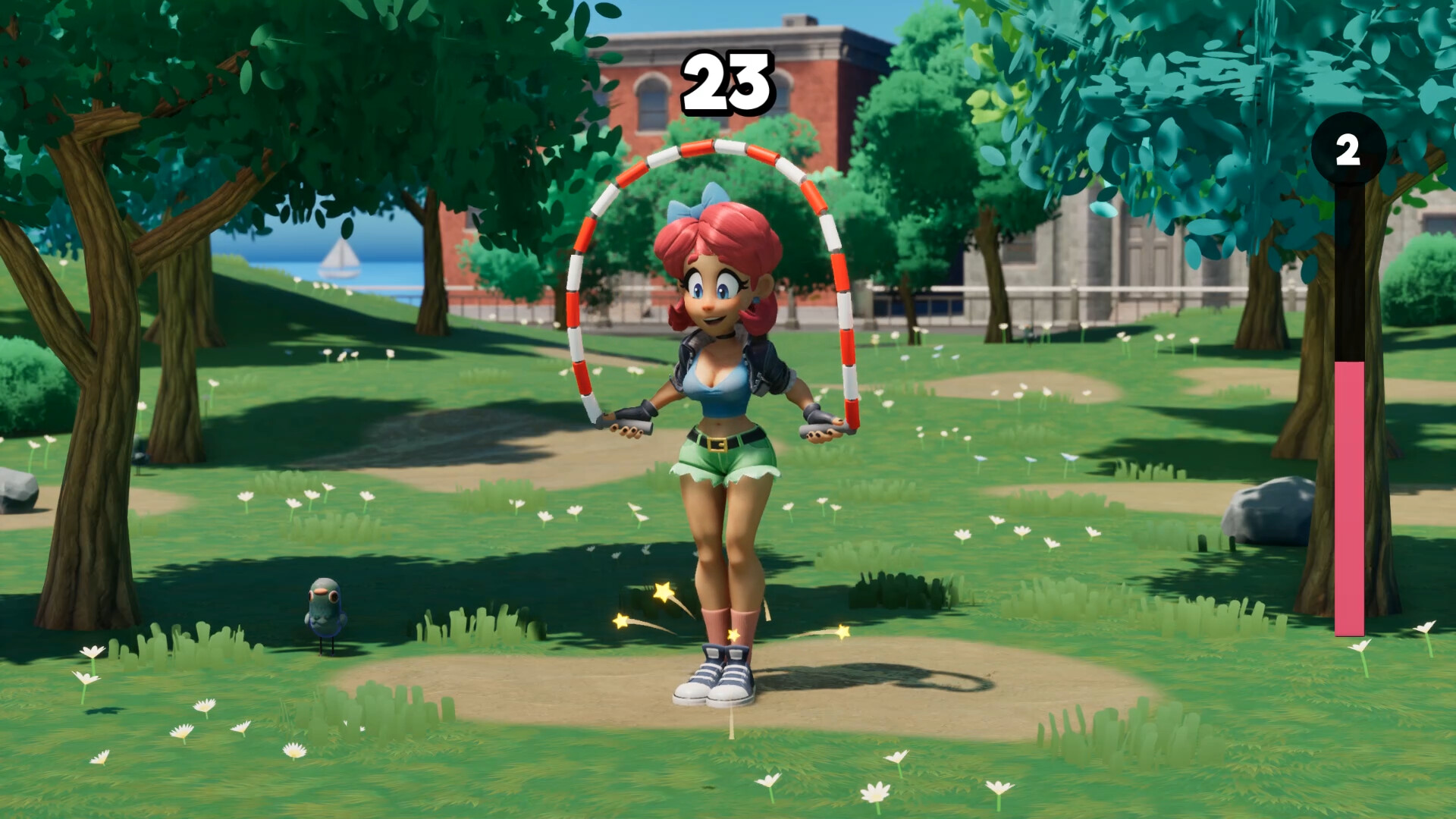
An early run in the park, before any upgrades have kicked in.Image: Yerk Games -
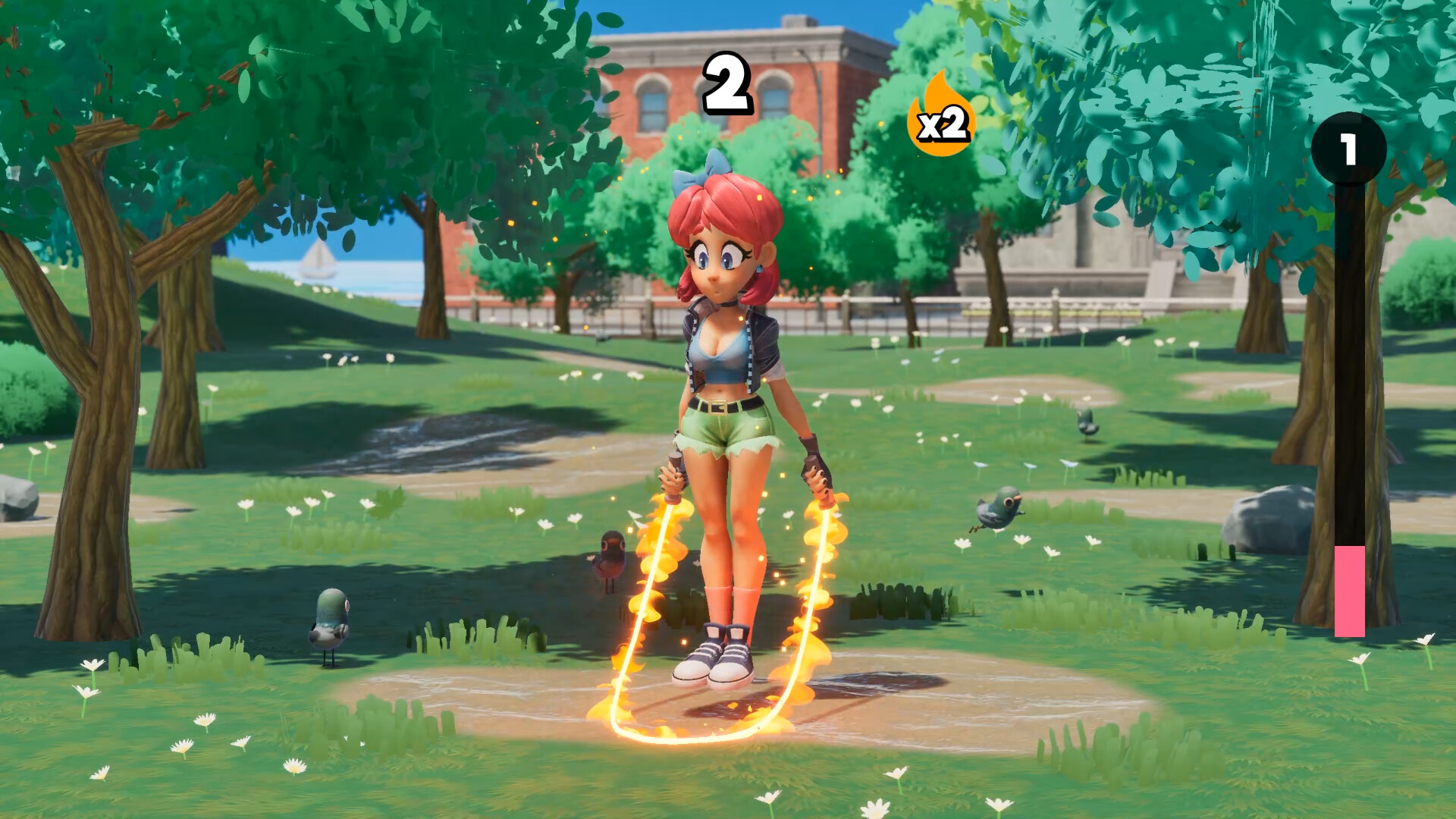
A run escalating after picking up the fire-rope and multiplier upgrades.Image: Yerk Games -
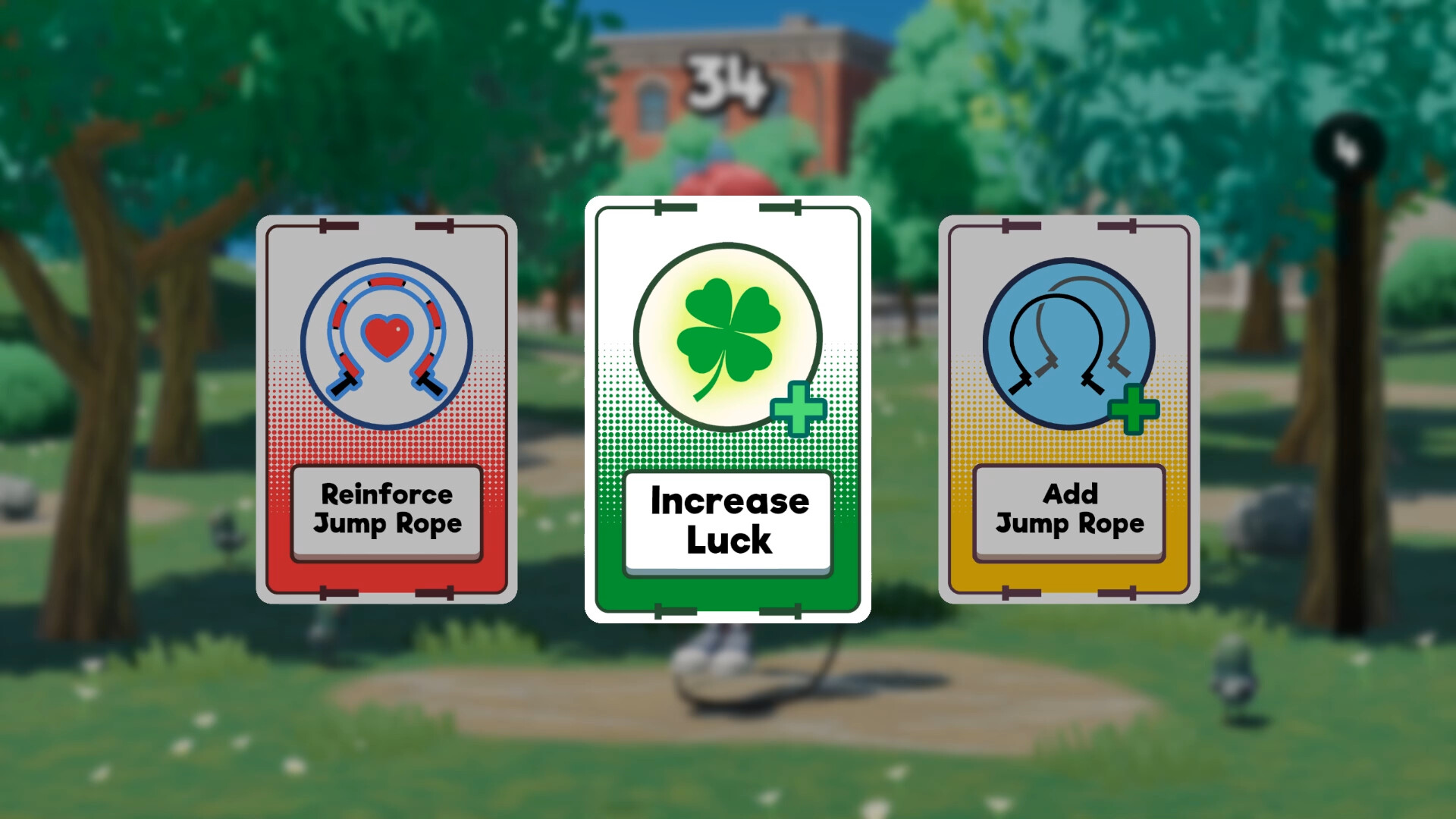
Choosing between three randomly offered upgrade cards on leveling up.Image: Yerk Games -
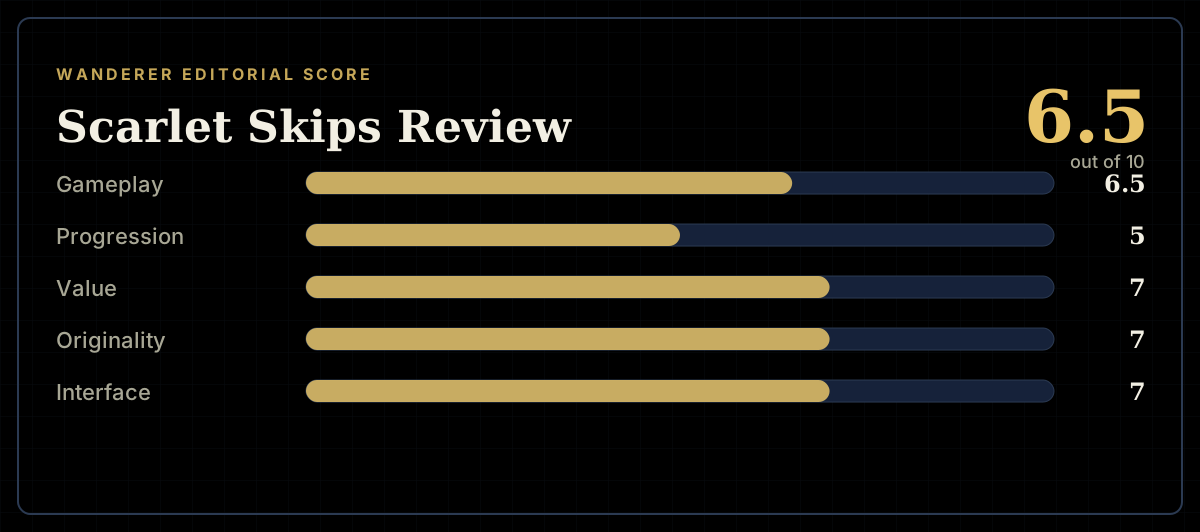
How the review scores each part of the gameWanderer Editorial -
The short versionWanderer Editorial