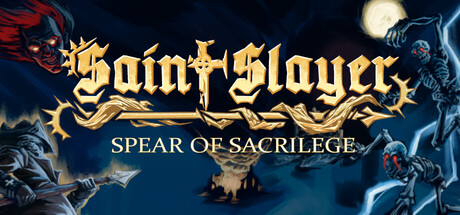
Game review
Saint Slayer: Spear of Sacrilege
7 / 10
- Developer
- Lillymo Games
- Publisher
- Lillymo Games
- Released
- 19 April 2026
- Platforms
- Windows
- Genre
- Action, Indie
- Monetisation
- One-time purchase, no in-game purchases listed
- Players
- Single-player
The short version
Saint Slayer: Spear of Sacrilege, released 19 April 2026 by solo studio Lillymo Games, is a deliberate NES-style 2D action game set in a gothic late-17th-century Europe, casting players as an ex-soldier wielding a cursed spear across stages clearly modelled on early Castlevania and Ghosts 'n Goblins. It sits Very Positive with a strong sample of 102 reviews, and reading widely through it reveals a game that succeeds overwhelmingly at what it sets out to do, according to the large majority of its own reviewers. Pixel art, music, boss design and level variety draw extensive, detailed, enthusiastic praise, with multiple reviewers specifically comparing the overall feel favourably to the classic Castlevania and DuckTales titles it's clearly paying tribute to, and a password-based level-select system draws specific appreciation for softening the genre's traditionally punishing difficulty. Set against that near-consensus is a smaller but detailed minority of reviewers who argue the game's deliberately stiff, slow movement and combat crosses from authentic homage into genuinely poor game feel, with one detailed reviewer stating the controls leave players ill-equipped to handle what the game throws at them even on the easiest difficulty setting.
Biggest strengths
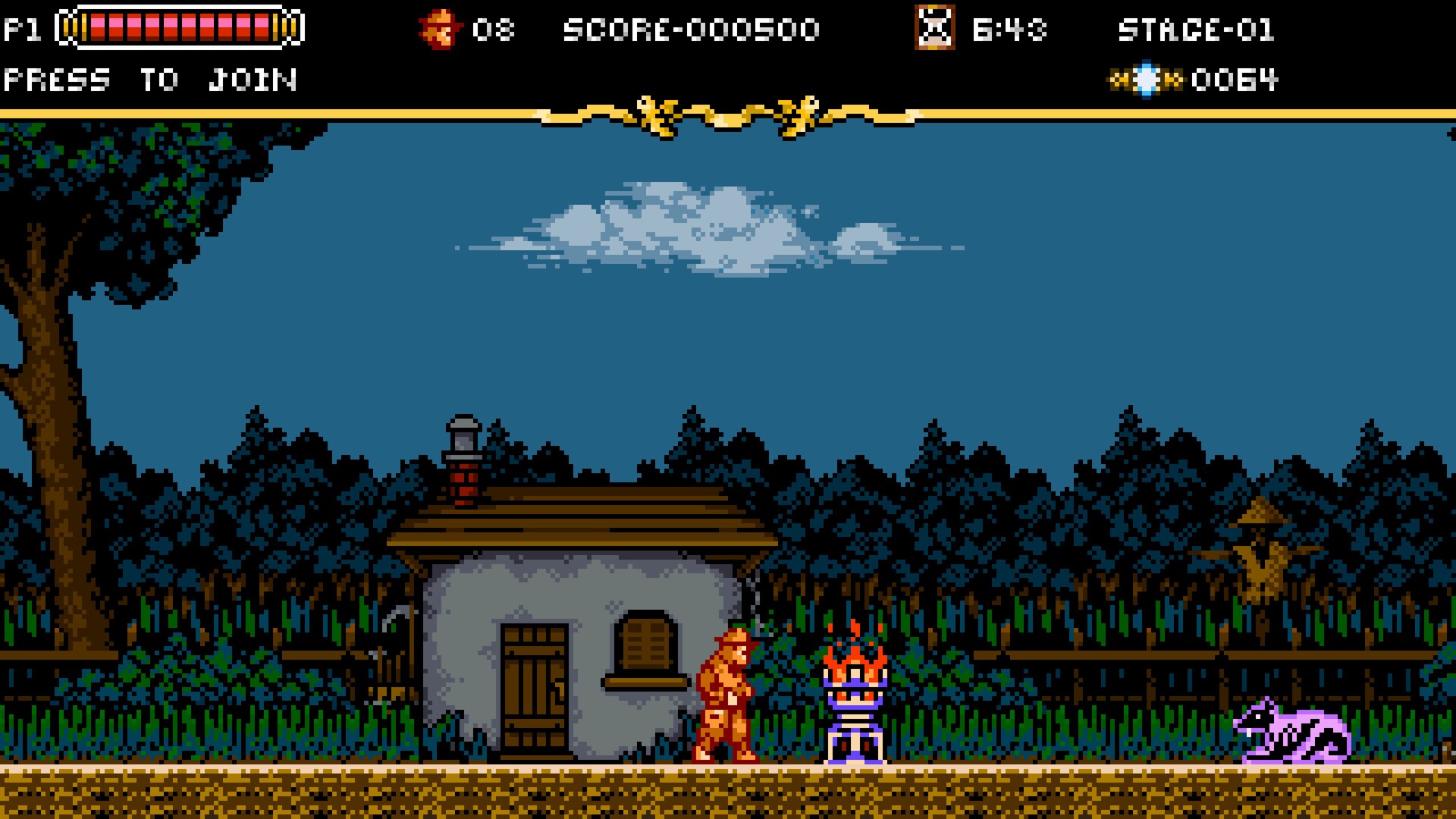
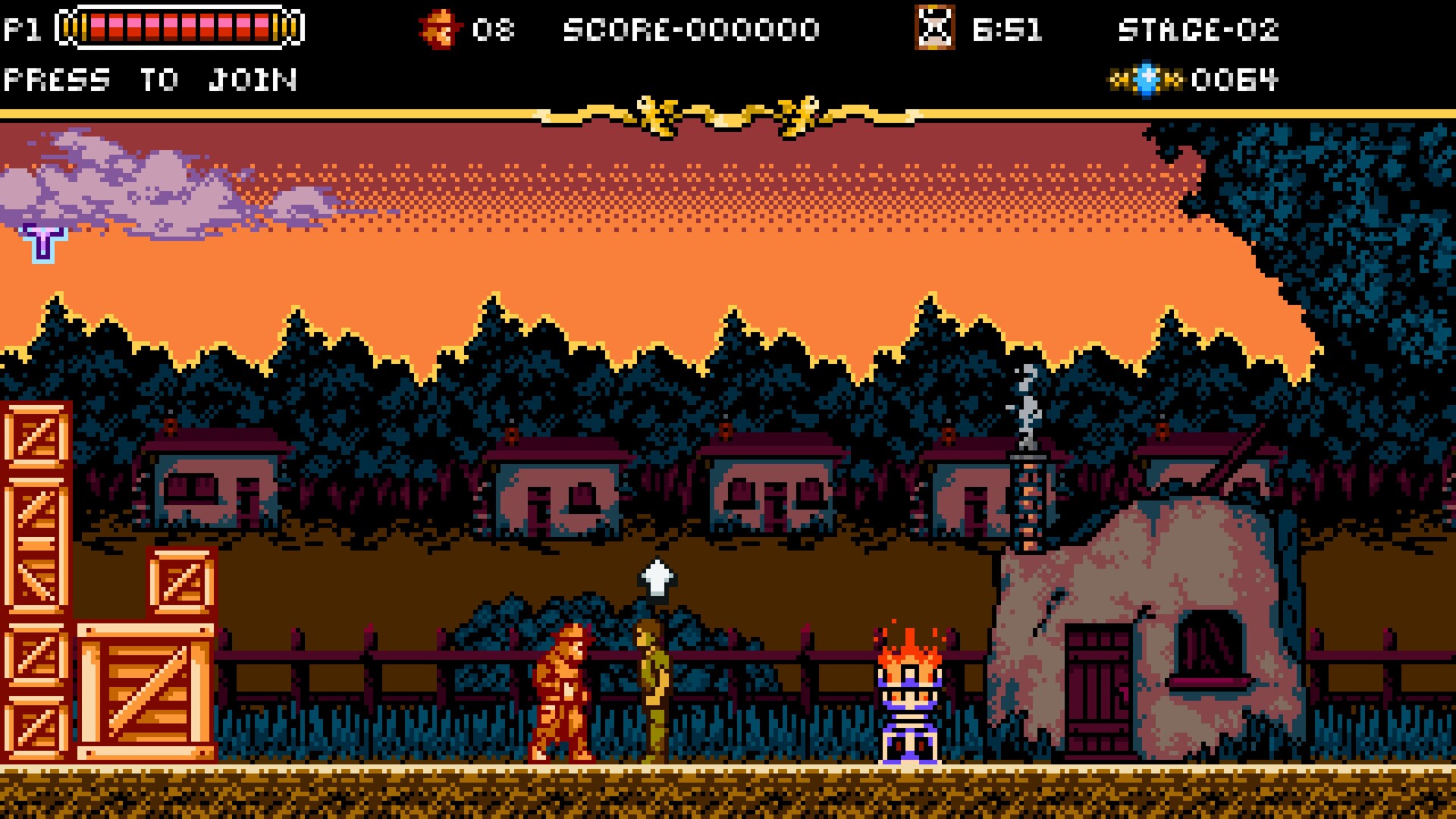
- Pixel art, music and overall atmosphere draw extensive, detailed, enthusiastic praise across nearly every review in this sample, with multiple reviewers specifically calling the presentation a masterclass and comparing it favourably to classic NES-era Castlevania titles
- Boss design draws specific, repeated praise for creativity and mechanical variety, with multiple reviewers highlighting individual encounters as genuine highlights rather than simple reskinned difficulty spikes
- A password-based level-select system draws specific appreciation for easing the genre's traditionally punishing difficulty, letting players jump back into specific stages for achievement hunting without replaying the entire game from the start
Biggest weaknesses
- A smaller but detailed minority of reviewers argue the game's deliberately stiff, slow movement and combat crosses from authentic homage into genuinely poor game feel, with one detailed reviewer stating the controls leave players ill-equipped to handle enemy attacks even on the easiest available difficulty
- At least one reviewer specifically distinguishes between appreciating the game's intent and still finding it simply not fun to play, arguing that faithfully recreating a genre's limitations isn't automatically the same as making those limitations enjoyable for a modern audience
- The developer has publicly stated the game will not go on sale for at least a year following launch, a specific pricing policy noted by at least one reviewer as worth knowing before buying if you were hoping to wait for a discount
Who it's for: Fans of classic NES-era Castlevania and Ghosts 'n Goblins looking for a faithful, lovingly crafted throwback, including newcomers willing to embrace deliberately old-school, demanding controls as part of the experience rather than a flaw to be smoothed over.
Our recommendation: Strongly worth it for retro-action and Castlevania fans specifically drawn to authentic old-school difficulty and movement; players who want modern, responsive platforming polish layered onto a retro aesthetic should look elsewhere, since this game intentionally doesn't offer that.
7 / 10
Introduction
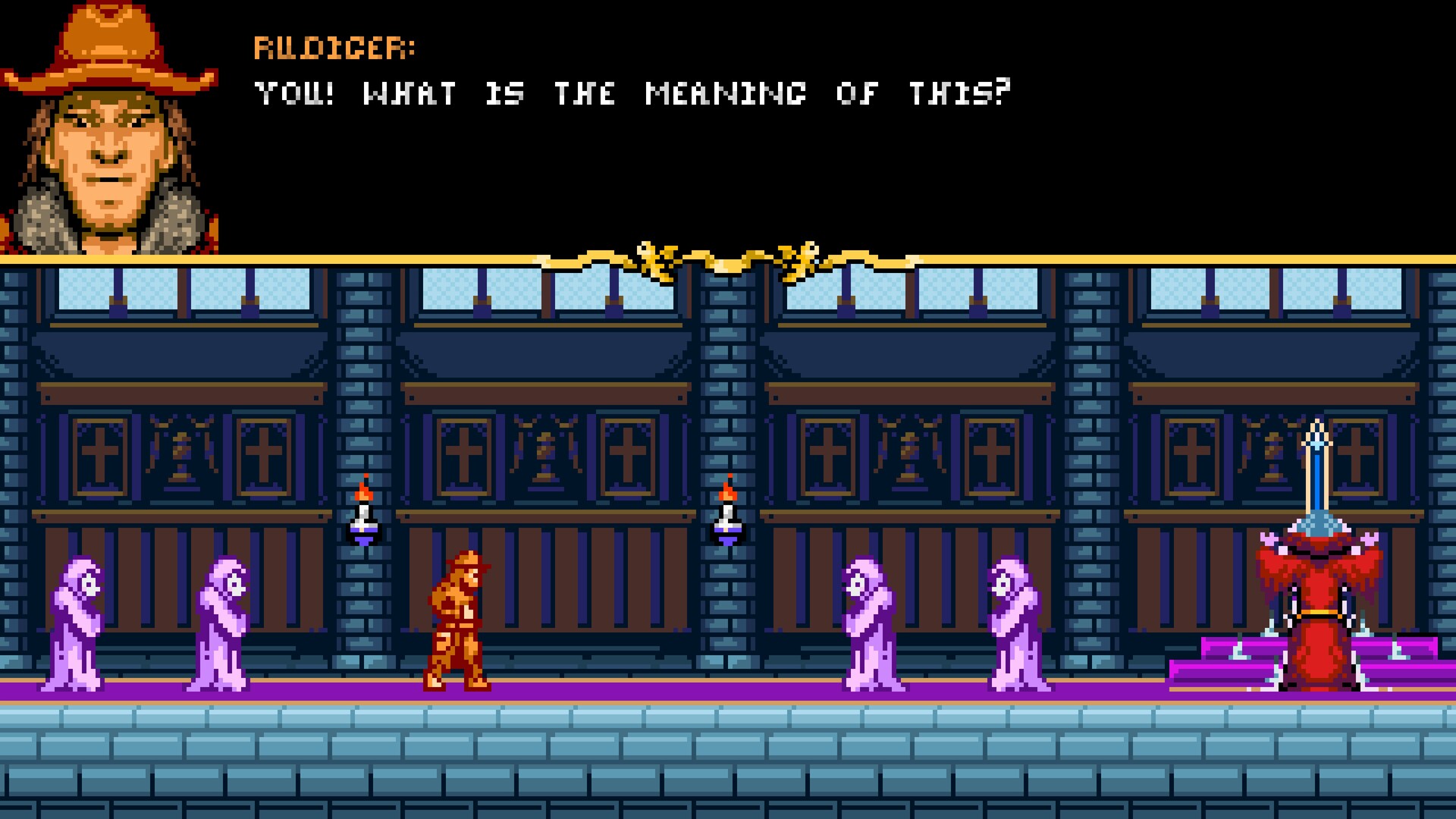
Saint Slayer: Spear of Sacrilege, released 19 April 2026 by solo studio Lillymo Games, is a deliberate throwback to NES-era 2D action games, dropping ex-soldier Rudiger into a gothic, late-17th-century Europe armed with the cursed Spear of Sacrilege to confront a corrupt Catholic priest. It sits Very Positive with a strong sample of 102 reviews, and reading widely through it reveals a game that lands almost exactly where it was clearly aiming: a loving, detailed homage to early Castlevania and Ghosts 'n Goblins that the large majority of its reviewers say succeeds on its own terms.
Genuinely excellent presentation, widely and specifically praised
The praise in this sample is detailed and consistent. Pixel art, animation and music draw enthusiastic, specific commentary across nearly every review, with multiple reviewers independently calling the audiovisual presentation a masterclass and comparing the overall feel favourably to classic Castlevania titles, DuckTales' NES entry, and Wizards & Warriors. Boss design draws its own repeated, specific praise for creativity and mechanical variety rather than simply escalating difficulty through bigger health bars, with several reviewers naming individual encounters as genuine highlights. A password-based level-select system draws particular appreciation for softening the genre's traditionally punishing difficulty, letting players jump back into specific stages to hunt achievements without replaying the entire game, and multiple difficulty settings, including a specifically praised easy mode that reviewers say remains meaningfully challenging rather than trivial, give the game real accessibility options for players drawn to the aesthetic without wanting NES-era brutality.
A genuine dispute: authentic homage, or just stiff?
Set against that near-consensus is a smaller, more detailed minority raising a specific, pointed concern about the game's core feel. One detailed reviewer, a self-described regular listener of a retro-gaming podcast and longtime platformer fan, states they understand and respect the intent behind hard, NES-style design but concludes plainly that the resulting controls are "so stiff" they leave players genuinely ill-equipped to handle incoming threats, even on the easiest available difficulty. A separate reviewer makes a more pointed philosophical distinction, arguing that faithfully recreating an older genre's mechanical limitations isn't automatically the same thing as making those limitations enjoyable for a modern audience — appreciating what a game is trying to do and actually having fun playing it, in this reviewer's account, turned out to be two different things. This review found this dispute genuinely well-argued on both sides rather than one clearly correct position: multiple reviewers who love the finished game explicitly acknowledge the movement feels intentionally slow and demanding, framing it as a feature rather than a bug, while the dissenting reviewers aren't disputing that characterisation so much as its conclusion.
A specific, unusual pricing policy
One smaller but concrete detail worth reporting: at least one reviewer notes the developer has publicly stated the game will not go on sale for at least a year following its launch. This is an unusual, explicit commitment for a small indie release, and worth knowing directly for any prospective buyer weighing whether to purchase now or wait for a discount that, by the developer's own stated intent, isn't coming anytime soon.
A specific structural achievement: low floor, high ceiling
One detailed reviewer's framing of the game's overall structure struck this review as a particularly useful summary worth expanding on directly. That reviewer describes Saint Slayer as having "a low floor and a very high ceiling," meaning newcomers to the genre can engage with it on easier settings while veterans willing to master its patterns on harder difficulties find genuine, sustained challenge waiting for them. This matters specifically because it addresses one of the oldest tensions in retro-throwback game design: a developer can either fully commit to period-accurate brutal difficulty and risk alienating anyone but genre veterans, or soften everything for modern accessibility and risk losing the specific texture that made the source material distinctive in the first place. Multiple reviewers across this sample describe genuinely different experiences depending on which difficulty they chose, with hard-mode players reporting the kind of punishing, pattern-memorisation gameplay classic Castlevania fans specifically want, while easy-mode players still report real, if gentler, challenge rather than a trivialised experience. That range, more than any single mechanic, may be the clearest evidence that Lillymo Games understood exactly what different parts of its audience were looking for.
Short, replayable stages built for mastery
A further specific strength worth naming concerns pacing at the individual-stage level. Multiple reviewers highlight that levels are kept relatively short, with quick restarts after a death, which several reviewers explicitly connect to the genre's classic "learn through repetition" design philosophy working as intended here rather than becoming a source of frustration. One reviewer frames this directly: because failure costs so little time, the difficulty curve feels earned through pattern recognition rather than punishing through simple attrition, an important distinction for a genre whose harshest critics often conflate the two.
Final Verdict
Saint Slayer: Spear of Sacrilege succeeds, by the overwhelming account of its own reviewers, at a genuinely difficult task: recreating the specific feel of NES-era Castlevania and Ghosts 'n Goblins with real love and craft rather than a shallow aesthetic reskin, backed by genuinely excellent pixel art, music and boss design. A smaller, detailed minority makes a real, credible case that the deliberately stiff movement crosses from homage into genuine frustration, and that dissent is worth taking seriously rather than dismissing as simply not liking the genre. For fans of the classic titles this pays tribute to, though, this review found the evidence strongly in favour of a lovingly made, well-executed throwback well worth its low asking price.
Pros and cons
Pros
- Pixel art, music and overall atmosphere draw extensive, detailed, enthusiastic praise across nearly every review in this sample, with multiple reviewers specifically calling the presentation a masterclass and comparing it favourably to classic NES-era Castlevania titles
- Boss design draws specific, repeated praise for creativity and mechanical variety, with multiple reviewers highlighting individual encounters as genuine highlights rather than simple reskinned difficulty spikes
- A password-based level-select system draws specific appreciation for easing the genre's traditionally punishing difficulty, letting players jump back into specific stages for achievement hunting without replaying the entire game from the start
- Multiple difficulty settings, including a specifically praised easy mode that reviewers describe as still meaningfully challenging rather than trivial, give the game real accessibility for players who love the aesthetic but don't want NES-era brutal difficulty
Cons
- A smaller but detailed minority of reviewers argue the game's deliberately stiff, slow movement and combat crosses from authentic homage into genuinely poor game feel, with one detailed reviewer stating the controls leave players ill-equipped to handle enemy attacks even on the easiest available difficulty
- At least one reviewer specifically distinguishes between appreciating the game's intent and still finding it simply not fun to play, arguing that faithfully recreating a genre's limitations isn't automatically the same as making those limitations enjoyable for a modern audience
- The developer has publicly stated the game will not go on sale for at least a year following launch, a specific pricing policy noted by at least one reviewer as worth knowing before buying if you were hoping to wait for a discount
- A handful of reviewers who don't typically play 2D side-scrollers report the genre's inherent demands, rather than any specific execution flaw, as the main barrier to their enjoyment, distinguishing this from the more pointed controls criticism above
Screenshots
-
Saint Slayer Spear of SacrilegeImage: Lillymo Games via Steam -
Saint Slayer Spear of SacrilegeImage: Lillymo Games via Steam -
Saint Slayer Spear of SacrilegeImage: Lillymo Games via Steam -
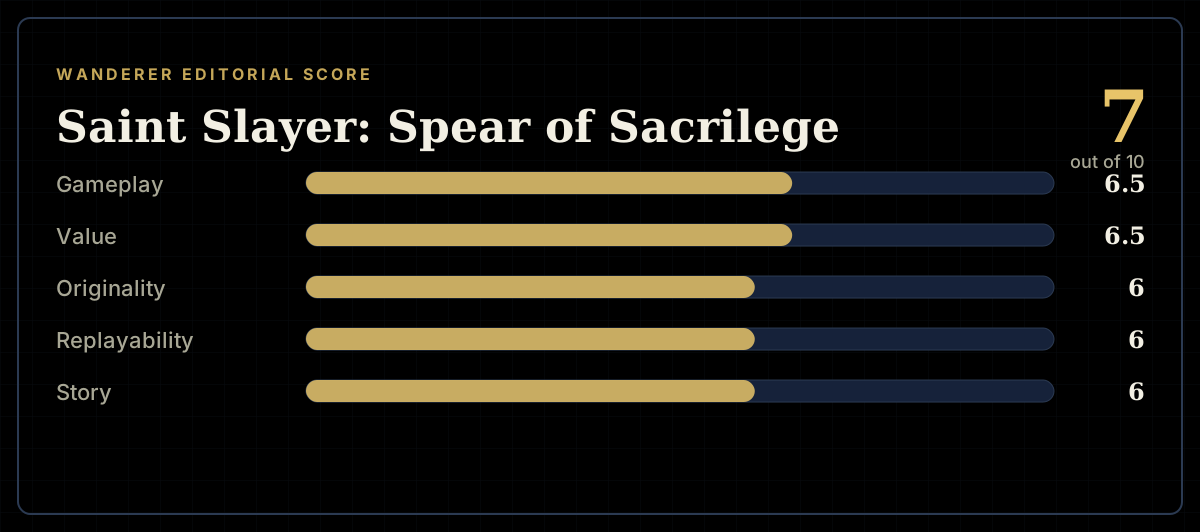
How the review scores each part of the gameWanderer Editorial -
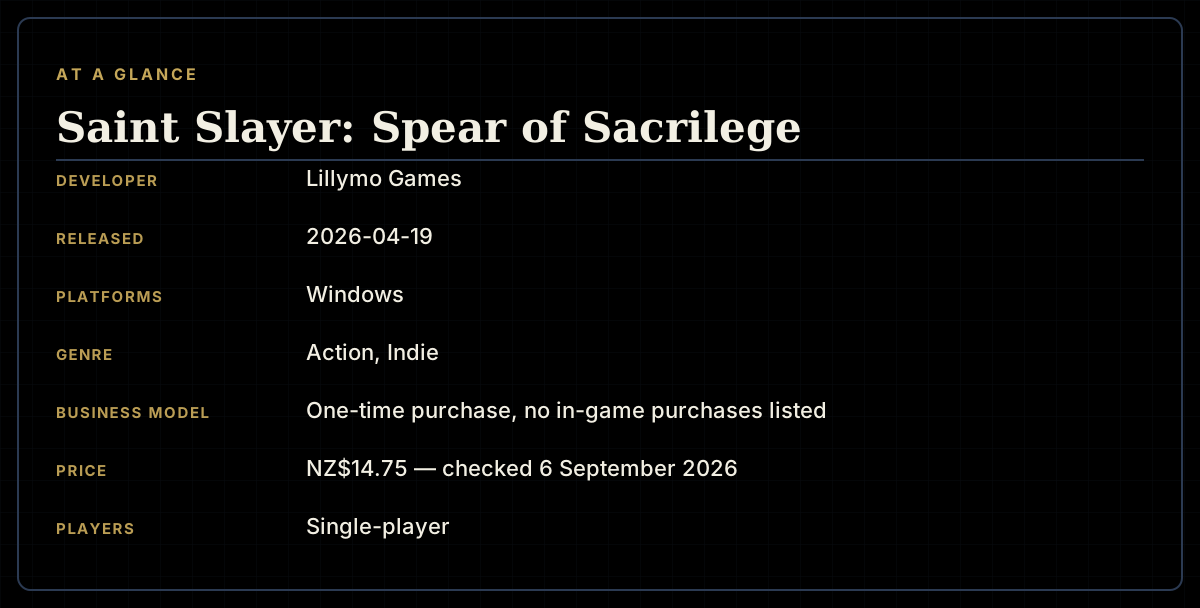
The essentials at a glanceWanderer Editorial -
The short versionWanderer Editorial