Game review
RPG Time: The Legend of Wright
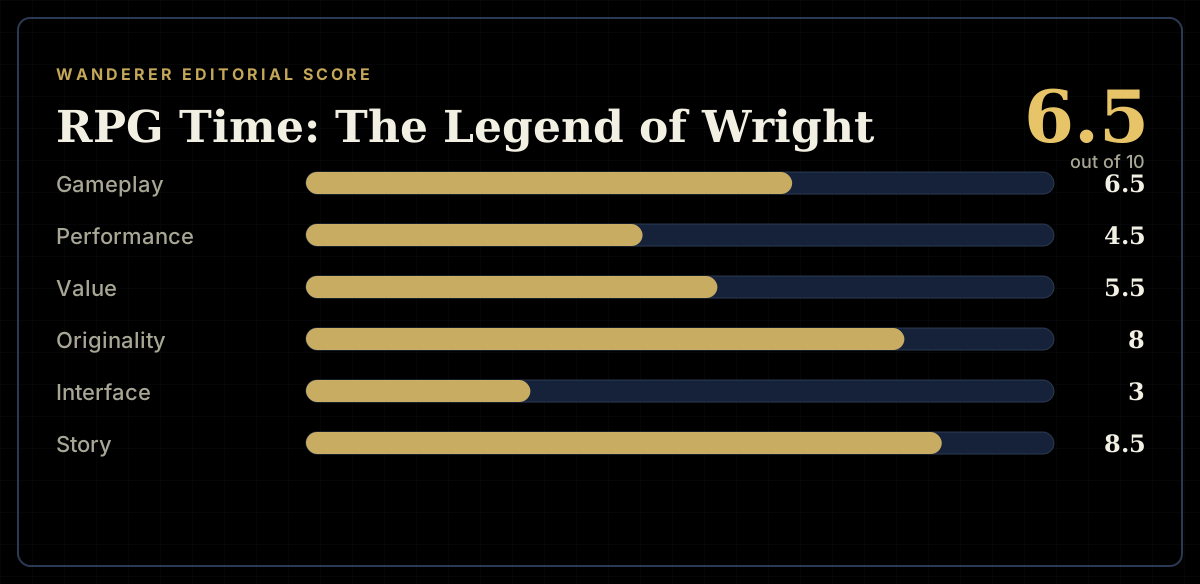
6.5 / 10
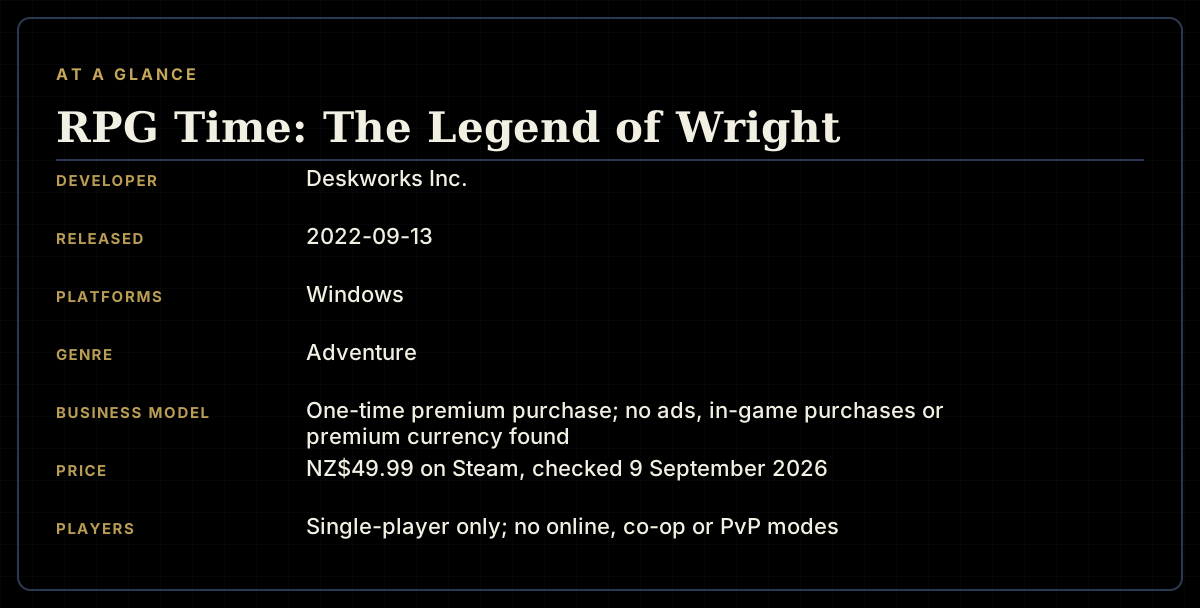
- Developer
- Deskworks Inc.
- Publisher
- Aniplex Inc.
- Released
- 13 September 2022
- Platforms
- Windows
- Genre
- Adventure
- Monetisation
- One-time premium purchase; no ads, in-game purchases or premium currency found
- Players
- Single-player only; no online, co-op or PvP modes
The short version
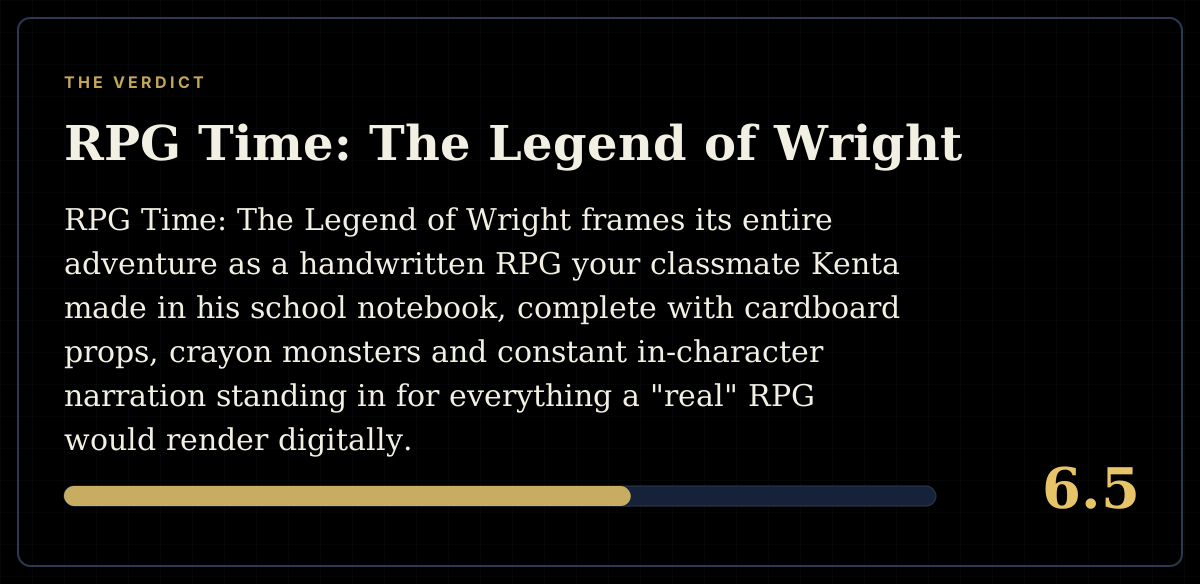
RPG Time: The Legend of Wright frames its entire adventure as a handwritten RPG your classmate Kenta made in his school notebook, complete with cardboard props, crayon monsters and constant in-character narration standing in for everything a "real" RPG would render digitally. It's a genuinely inventive conceit, executed with enough craft and heart to win the IGF's Excellence in Visual Art award and Japan's own Game Designer's Grand Prize the following year — recognition a small, cozy point-and-click adventure earns rarely and deserves here.
Set against that acclaim is one of the strangest, most basic technical failures this fleet has documented: the game has no way to quit. No menu option, no keyboard shortcut, nothing — players are left to force-close it through their operating system every single session. The options menu itself stays locked for roughly the first two and a half hours. Multiple reviewers confirm these problems were still unresolved months, and in some cases years, after launch, with no patch notes ever published addressing them. It's a jarring contrast: a genuinely award-worthy creative achievement wrapped in one of the more neglected PC ports in recent memory.
Biggest strengths
- A genuinely inventive, well-executed framing device — a whole RPG rendered as a classmate's handwritten, cardboard-prop notebook creation — that critics and players consistently single out as something they haven't seen done this well before
- Real industry recognition backs up the praise: the IGF's 2023 Excellence in Visual Art award and the Japan Game Awards' 2023 Game Designer's Grand Prize
- A cozy, wholesome tone that multiple reviewers say is underrated for family or kid-friendly play, built around genuine charm rather than saccharine writing
Biggest weaknesses
- There is no way to quit the game through any in-game menu, button or keyboard shortcut; players must force-close it via their operating system every session, a problem multiple reviewers confirm was still unresolved months after launch
- The options menu — including basic text speed and volume controls — stays locked until roughly two and a half hours into the game, with no way to adjust dialogue pacing before that point
- Multiple reviewers report screen tearing and an unstable frame rate on capable PCs, with no in-game display settings available to address it
Who it's for: Fans of cozy, narrative-driven adventures and inventive framing devices, especially anyone drawn to a heartfelt "kid game-master" premise. A great choice to play alongside a child given its tone, though parents should know about the quit-button issue going in.
Our recommendation: The writing and presentation genuinely earn their acclaim, but go in prepared to Alt-F4 out of every session and to play through roughly two and a half hours before you can adjust basic settings like text speed or volume.
6.5 / 10
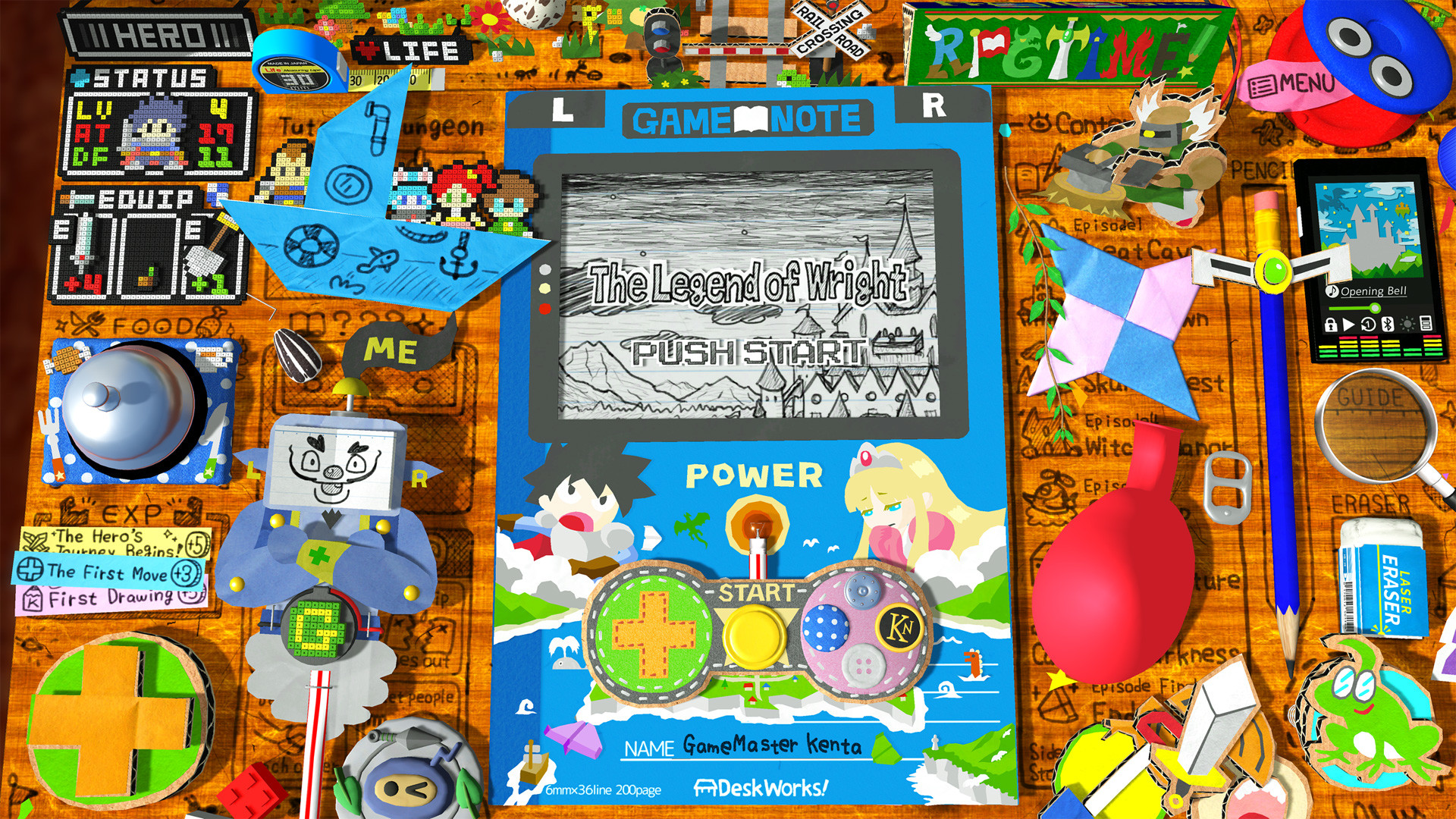
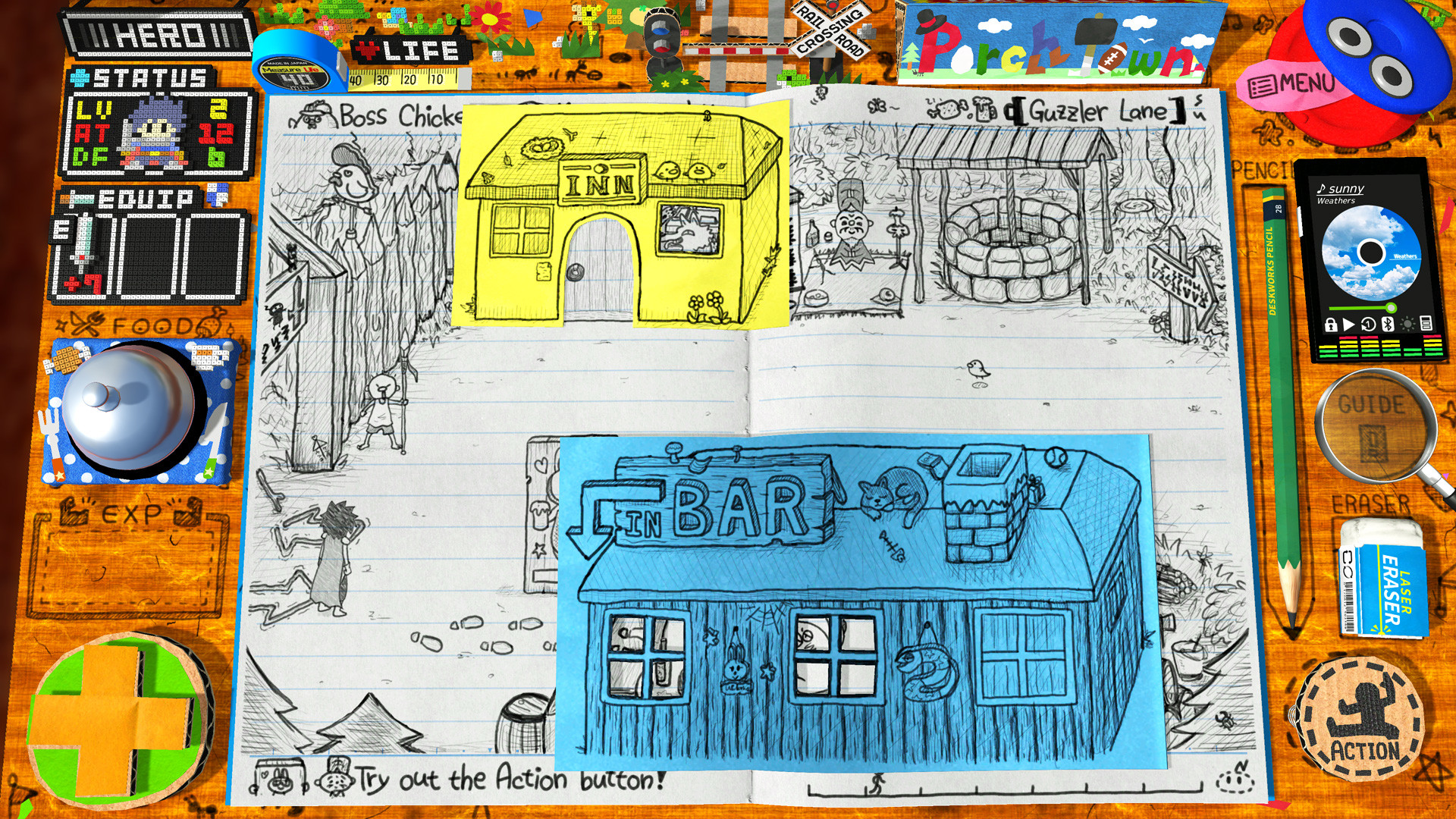
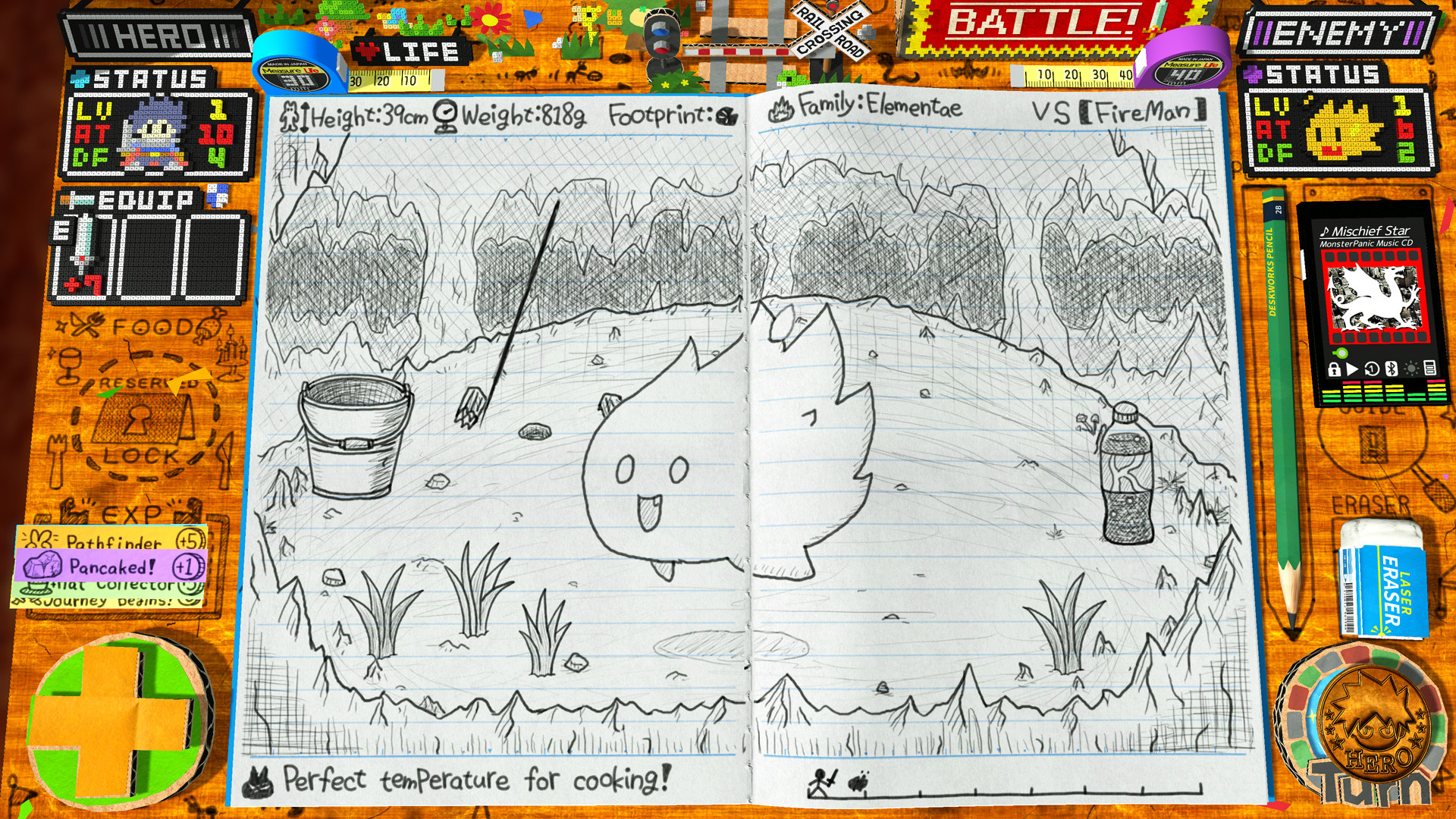
The premise of RPG Time: The Legend of Wright is simple and genuinely charming: after class, your classmate Kenta pulls out a notebook and insists you play the RPG he's spent his childhood building by hand — monsters drawn in crayon, dungeons made of cardboard, battles narrated entirely by Kenta himself standing in for graphics, sound effects and rules the notebook can't actually render. Every mechanic the game asks you to engage with is filtered through that conceit, and it holds up remarkably well across seven chapters of point-and-click puzzles and minigame-style diversions. The game's Very Positive standing across 467 reviews, and real industry recognition — the IGF's 2023 Excellence in Visual Art award, the Japan Game Awards' 2023 Game Designer's Grand Prize — back up that the writing and presentation genuinely earn the praise reviewers give them. What makes this review harder to write than that praise alone would suggest is a PC port with problems basic enough to be genuinely startling in an otherwise acclaimed release.
A framing device that actually works
Reviewers describe the game less as a traditional RPG and more as a visual novel built around a constant, loving in-character narration — Kenta talks through nearly everything, which more than one reviewer notes as a specific, deliberate character choice rather than clumsy writing, since the whole point is that you're playing a real child's imagination rather than a finished commercial game. That framing gives the simple point-and-click mechanics underneath real emotional weight: a side-quest section, hand-crafted props standing in for equipment, and a story that more than one reviewer says left them wanting a sequel or DLC specifically because the world and characters earned genuine attachment. It's cozy without being shallow, and reviewers who went in skeptical of a "kid's homemade game" pitch consistently describe being won over.
No way out
Against all of that sits a problem so basic it reads almost like satire: RPG Time has no quit function. Not a hidden menu option, not an unusual keybind — reviewers describe trying every plausible input, including Alt+F4 being the only working method, with the in-game world offering no exit at all. One detailed review, revisited and edited months after its original posting, specifically confirms via the game's own Steam discussion board that other players were still reporting the exact same problem long after launch, with no acknowledgment or fix from the developer in that time. Checked against the game's own public event history, there are no patch notes of any kind posted for RPG Time — only a launch announcement, a general bug-report contact email, and later award and sale announcements. That absence is itself telling: a game with real, reviewer-documented technical problems appears to have received no public-facing fixes for them at all in over four years.
Locked out of your own settings
The missing quit button isn't an isolated oddity. The options menu — including basic dialogue text speed and audio volume — stays locked for roughly the first two and a half hours, meaning new players sit through the game's slowest, most unskippable stretch of dialogue with no way to adjust the pacing that's actively driving away some of them. Multiple reviewers separately report screen tearing and unstable frame rates with no display settings available to address it, and at least one reviewer specifically couldn't find any way to delete existing save data to start fresh for a replay. None of these are exotic, hard-to-anticipate problems — they're the kind of basic quality-of-life features most PC releases ship with by default, and their absence here, in a game otherwise polished enough to win two major industry awards, is a genuine and strange inconsistency worth taking seriously rather than waving off as minor jank.
A steep price for a single story
At NZ$49.99, RPG Time sits well above what most reviewers seem to expect from a linear, roughly ten-to-twelve-hour point-and-click adventure with no branching paths, meaningful replay systems or post-game content. It's worth noting the price reflects a well-resourced release — Aniplex, the publisher behind major anime franchises, backs the game, and that resourcing shows in the amount of hand-crafted art and animation across seven distinct chapters. Several reviewers who loved the experience still flag the price as a genuine hesitation point precisely because it's a single, un-replayable story rather than a system built to be revisited, and Steam's own achievement data — a steep drop from 57.6% on an early milestone to just 3.1% on the rarest achievement — is consistent with a meaningful share of buyers not finishing a story this linear once the initial charm wears thin against its slower stretches. That's a different, more ordinary value complaint than the interface problems above, but a legitimate one at this specific price point.
Where it lands
RPG Time: The Legend of Wright deserves the creative praise and the awards — its central idea is genuinely inventive, warmly written, and executed with real craft across a story reviewers describe finishing wishing there was more of. But a PC release that ships without a way to quit, locks its own settings menu for the first quarter of the game, and shows no public record of ever addressing either problem is a real, serious technical failing, not an aesthetic quirk to shrug off. A 6.5 reflects a genuinely acclaimed creative achievement that its own port undermines more than a game this well-regarded should have to tolerate.
Pros and cons
Pros
- A genuinely inventive, well-executed framing device — a whole RPG rendered as a classmate's handwritten, cardboard-prop notebook creation — that critics and players consistently single out as something they haven't seen done this well before
- Real industry recognition backs up the praise: the IGF's 2023 Excellence in Visual Art award and the Japan Game Awards' 2023 Game Designer's Grand Prize
- A cozy, wholesome tone that multiple reviewers say is underrated for family or kid-friendly play, built around genuine charm rather than saccharine writing
- Real content variety across its seven chapters, mixing point-and-click puzzle-solving with minigame-style diversions rather than repeating one mechanic throughout
Cons
- There is no way to quit the game through any in-game menu, button or keyboard shortcut; players must force-close it via their operating system every session, a problem multiple reviewers confirm was still unresolved months after launch
- The options menu — including basic text speed and volume controls — stays locked until roughly two and a half hours into the game, with no way to adjust dialogue pacing before that point
- Multiple reviewers report screen tearing and an unstable frame rate on capable PCs, with no in-game display settings available to address it
- No way to delete or reset save data has ever been found or documented by reviewers, meaning a replay requires either continuing from an existing save or an unclear, undocumented workaround
- At NZ$49.99, several reviewers who otherwise love the game note the price is steep for what plays out as a single, roughly ten-to-twelve-hour linear story with no replay-driving systems
Screenshots
-
RPG Time: The Legend of WrightImage: Aniplex Inc. via Steam -
RPG Time: The Legend of WrightImage: Aniplex Inc. via Steam -
RPG Time: The Legend of WrightImage: Aniplex Inc. via Steam -
How the review scores each part of the gameWanderer Editorial -
The specsWanderer Editorial -
The short versionWanderer Editorial