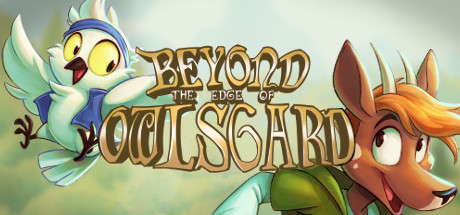
Game review
Beyond the Edge of Owlsgard
7 / 10
- Developer
- WatchDaToast
- Publisher
- Assemble Entertainment
- Released
- 23 December 2022
- Platforms
- Windows, Linux
- Genre
- Adventure
- Monetisation
- One-time premium purchase; no ads, in-game purchases or premium currency found
- Players
- Single-player only; no online, co-op or PvP modes
The short version
Beyond the Edge of Owlsgard commits fully to its influences: a nine-verb interaction interface, fully voiced anthropomorphic characters, hand-painted pixel art and the deliberately obtuse, "moon logic" puzzle design that defined LucasArts and Sierra's golden age. Reviewers who grew up on Monkey Island and Sam & Max consistently say it earns the comparison, praising unusually detailed, unique dialogue for nearly every object a player examines — a level of writing effort the genre's own classics didn't always bother with.
The seams show later than most homages of this scale. Reviewers who love the first two chapters describe real frustration setting in around Chapter 3, where several puzzles demand interacting with one specific piece of background scenery that behaves differently from every visually identical object around it — a fair complaint even from players who otherwise embrace old-school obtuseness. Chapter 4 draws a separate, more divisive reaction: a tonal shift multiple reviewers call jarring relative to everything before it. Both are real, specific flaws in an otherwise carefully crafted solo project, not enough to undo the goodwill the writing and presentation earn, but enough to keep this from being the unqualified genre classic its best moments suggest it could have been.
Biggest strengths
- Unusually thorough, characterful writing for nearly every object and interaction, a level of detail reviewers say goes well beyond the "I don't want that" default many genre entries settle for
- Full voice acting across the cast, paired with hand-crafted pixel art and animation that reviewers repeatedly single out as punching well above what a solo developer typically delivers
- A genuine nine-verb classic interface rather than a simplified modern "look/use" system, giving puzzle-solving real texture for players who specifically want that older style
Who it's for: Point-and-click adventure fans who grew up on, or want to experience, the genre's LucasArts/Sierra golden age, and anyone who enjoys richly written, fully voiced pixel-art worlds. Less suited to players who bounce hard off unfair puzzle logic or want a shorter, tighter story.
Our recommendation: A genuine recommendation for adventure-game fans, with the caveat that Chapter 3's puzzle design and Chapter 4's tonal shift are real enough complaints to know about going in rather than discover blind.
7 / 10
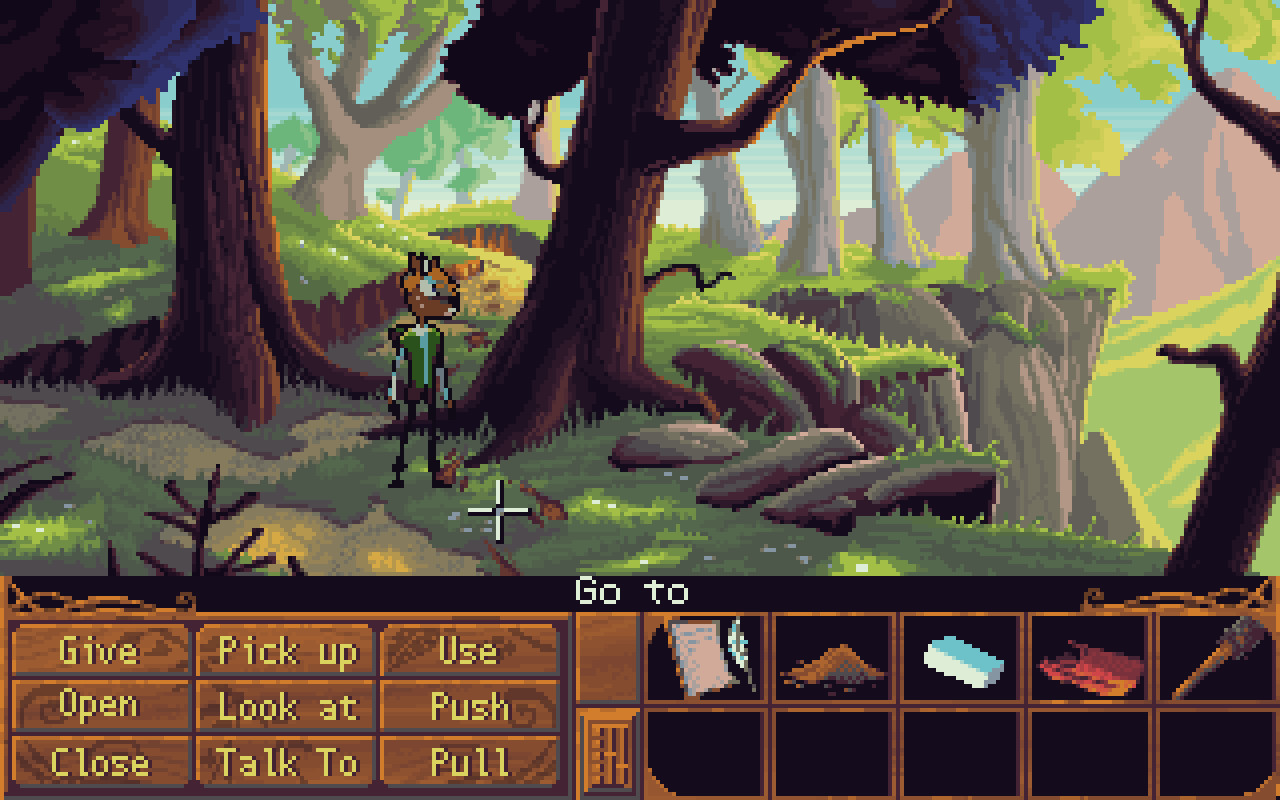
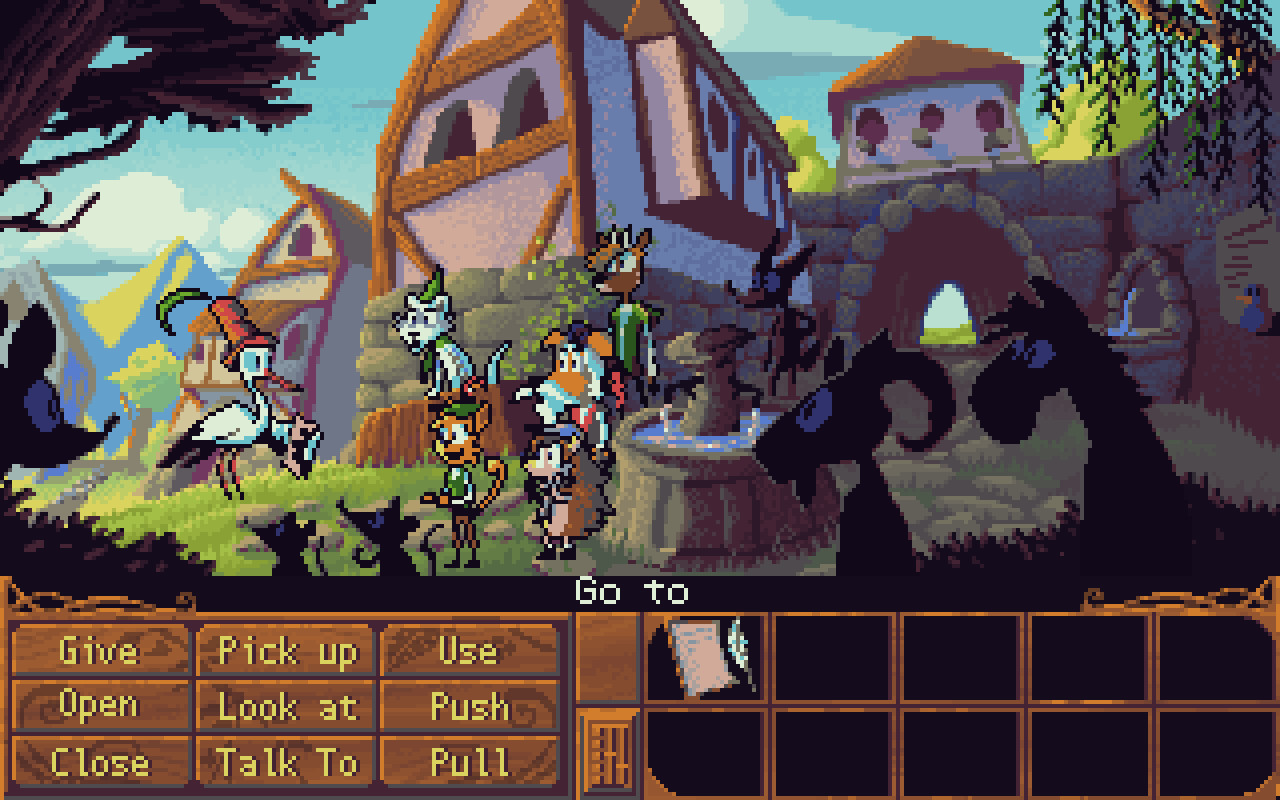
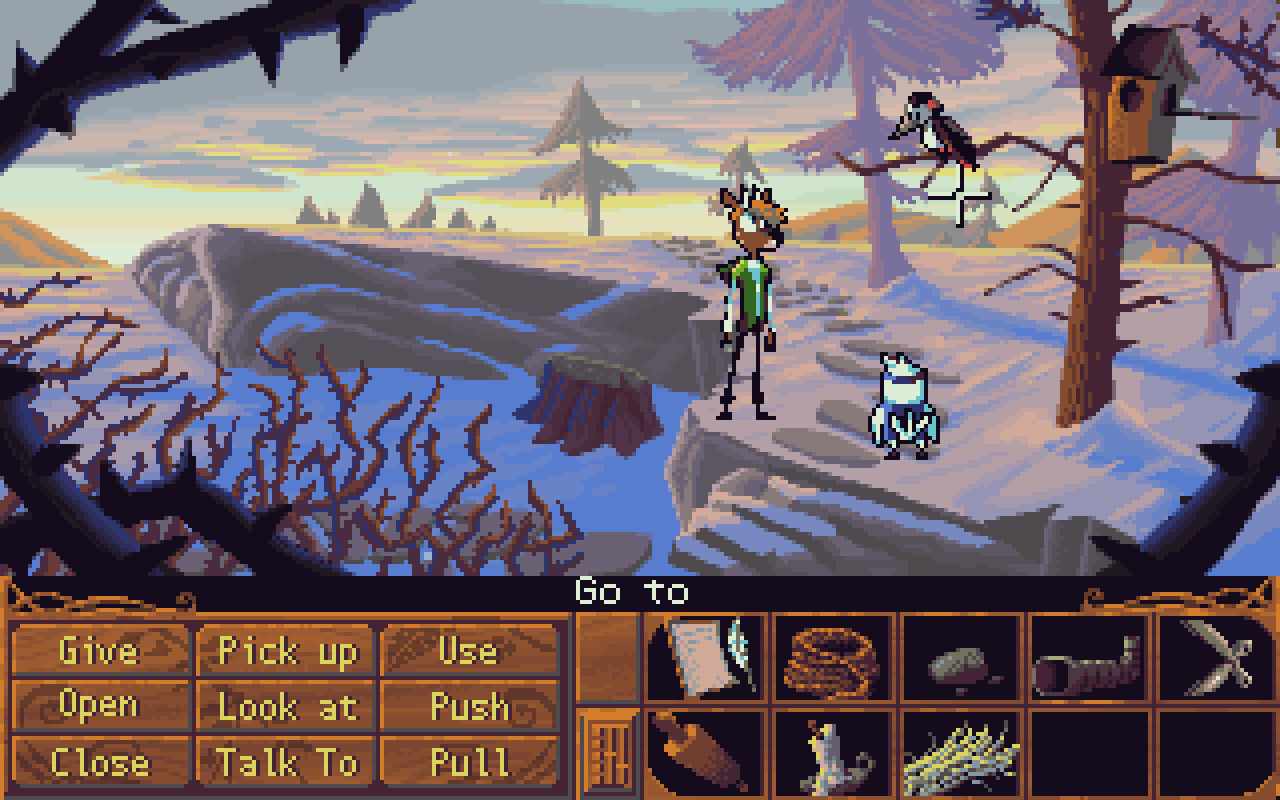
Beyond the Edge of Owlsgard doesn't try to modernise the point-and-click adventure — it tries to be one, as faithfully as a solo developer with real craft and a Kickstarter's worth of backing can manage. You play Finn, a roebuck searching for his missing parents after wolves ransack his village, working through a nine-verb interface (push, pull, look, talk and more, rather than a streamlined modern "interact" button) across hand-painted, fully voiced pixel-art scenes. Reviewers who grew up on Monkey Island, Sam & Max and the Sierra classics consistently say it belongs in that conversation, and the specific praise they give backs that up: nearly every object in the world has its own written reaction, rather than falling back on a generic dismissal the way even some genre classics did.
A homage that does the actual work
What separates Owlsgard from a lot of surface-level "retro adventure" pastiches is how much writing effort went into the parts most games in the genre skip. Reviewers describe examining background objects purely out of curiosity and consistently finding a unique, characterful response rather than a repeated line — exactly the kind of density that made the genre's best entries worth poking at slowly. The full voice cast and hand-animated character work reinforce that same care, and more than one reviewer explicitly frames the whole package as remarkable for what's credited as largely a one-person effort, hoping the developer gets more support and marketing reach for whatever comes next.
Where old-school puzzle logic tips into unfair
The most specific, recurring complaint is puzzle design in Chapter 3. Reviewers who say upfront that they love "moon logic" — genre slang for puzzle solutions that require an intuitive leap rather than strict logical deduction — still single out a stretch here where progress depends on interacting with one particular piece of background scenery that isn't visually distinguished from other, non-interactive scenery around it. That's a different, more specific complaint than ordinary genre difficulty: it's not that the solution is obscure, it's that the game doesn't give a fair signal which of several visually identical objects actually matters. Steam's own achievement data is consistent with a real drop-off here — completion rates fall from the high-50s percent range on early milestones to under 15% by the game's final achievements, more than a generic "some players don't finish adventure games" pattern would predict on its own.
A fourth chapter that splits its own fans
Chapter 4 draws a different kind of criticism: multiple reviewers describe a genuine tonal swerve, visually and narratively departing from the confident, cohesive world-building of the first three chapters. Reactions split rather than converge — some reviewers find the shift a bold, memorable choice that sticks with them after finishing, others describe it as undermining a story and cast they'd otherwise connected with. This review doesn't think either reaction is unreasonable: a late structural swerve is inherently the kind of choice that reads as either brave or unearned depending on how much goodwill the earlier chapters built for an individual player, and Owlsgard's earlier chapters clearly built plenty for most of its audience, even if not quite enough to carry everyone through the change.
A modest but real support record
Owlsgard's post-launch history is smaller than some releases this fleet has documented, but genuine where it exists. A substantial update landed roughly sixteen months after launch, in April 2024, adding French and Spanish localisation alongside concrete fixes: a crash affecting one specific late scene, several instances of players clipping through walkable areas, and menu navigation fixes for Linux and Steam Deck. That the developer maintained save compatibility carefully enough to spin up a separate legacy beta branch for players mid-playthrough, rather than forcing everyone onto a save-breaking update, is a small but telling sign of care for the existing audience rather than just chasing new sales through added language support.
A Kickstarter-backed passion project, and it shows
Several reviewers mention backing Owlsgard on Kickstarter specifically because its early demo and pitch signalled genuine understanding of what makes the genre's classics work, rather than a generic pitch deck promising nostalgia. That origin is worth naming directly: the game's original release slipped from an initial target to a December 2022 launch, a delay the developer announced publicly months in advance rather than letting a deadline quietly pass, and reviewers who followed the project from its crowdfunding stage describe the final release living up to what was promised rather than falling short of it. For a solo-developed project this scale of ambition — full voice acting, dozens of hand-animated scenes, a genuinely written response to nearly every interactable object — carries real execution risk, and Owlsgard's reviewers overwhelmingly say that risk paid off, even the ones who go on to list real complaints about specific chapters.
Where it lands
Beyond the Edge of Owlsgard is a genuinely accomplished homage to a genre that doesn't get many entries built with this much specific craft, particularly from a single developer. Its writing density, voice work and commitment to old-school interaction design earn the classic-genre comparisons reviewers keep reaching for. A stretch of genuinely unfair puzzle design in its third chapter and a divisive tonal swerve in its fourth are real, specific flaws rather than nitpicks, and they're the reason this doesn't land as an outright genre classic. A seven reflects a lovingly made, mostly-successful throwback that stumbles exactly where the genre it's honouring always ran the biggest risk of stumbling.
Pros and cons
Pros
- Unusually thorough, characterful writing for nearly every object and interaction, a level of detail reviewers say goes well beyond the "I don't want that" default many genre entries settle for
- Full voice acting across the cast, paired with hand-crafted pixel art and animation that reviewers repeatedly single out as punching well above what a solo developer typically delivers
- A genuine nine-verb classic interface rather than a simplified modern "look/use" system, giving puzzle-solving real texture for players who specifically want that older style
- A real, if modest, post-launch support record: a substantial update roughly sixteen months after launch added French and Spanish localisation alongside concrete bug fixes, including a crash fix and clipping corrections
Screenshots
-
Beyond the Edge of OwlsgardImage: Assemble Entertainment via Steam -
Beyond the Edge of OwlsgardImage: Assemble Entertainment via Steam -
Beyond the Edge of OwlsgardImage: Assemble Entertainment via Steam -
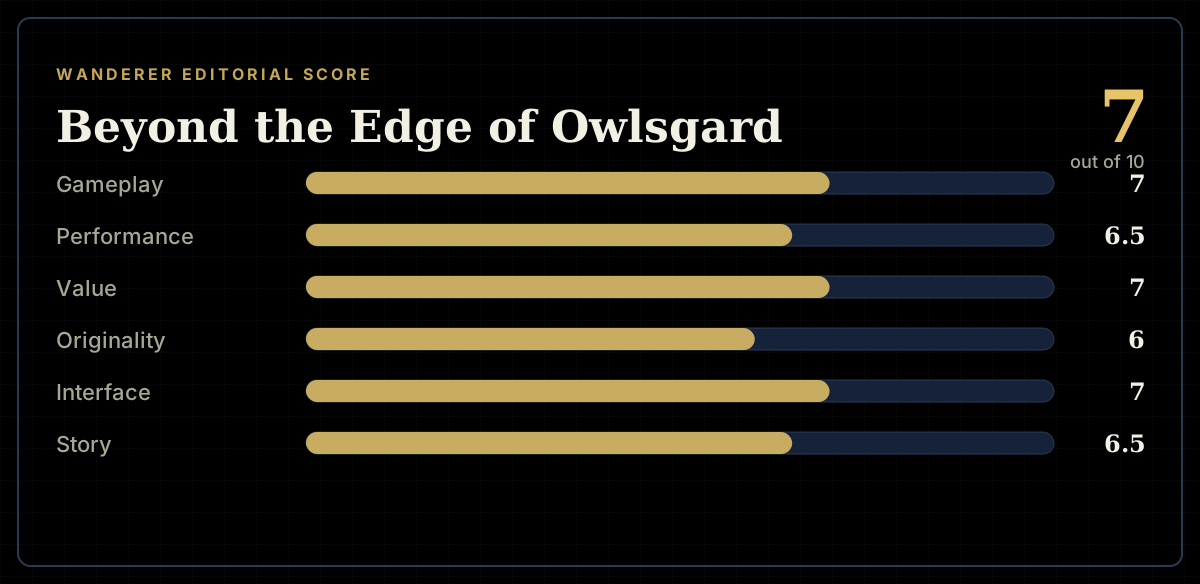
How the review scores each part of the gameWanderer Editorial -
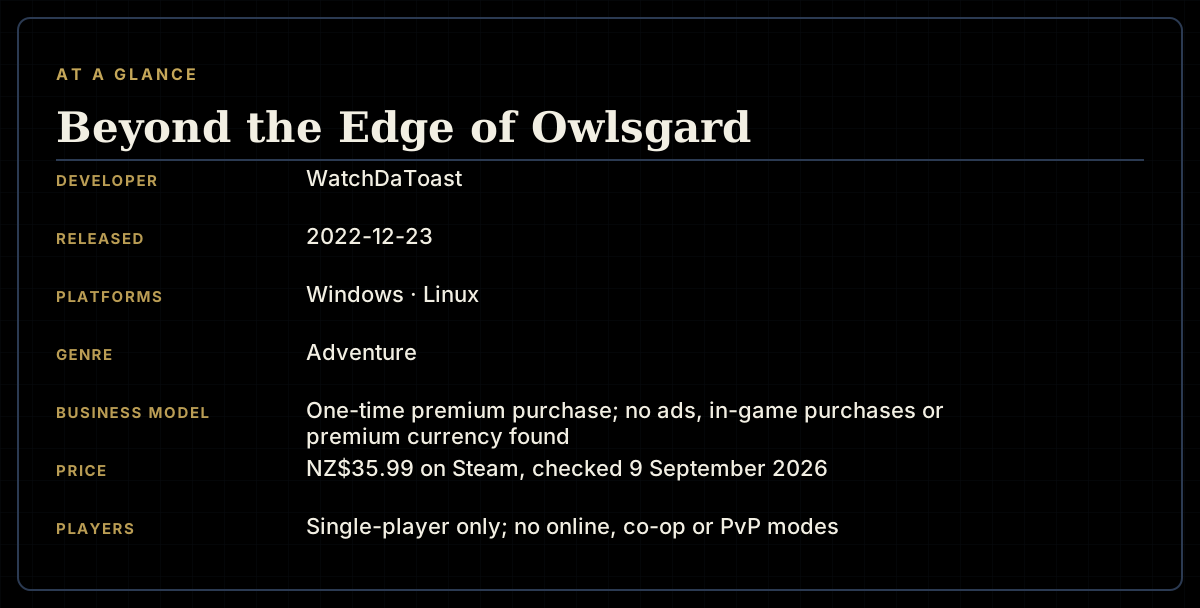
The specsWanderer Editorial -
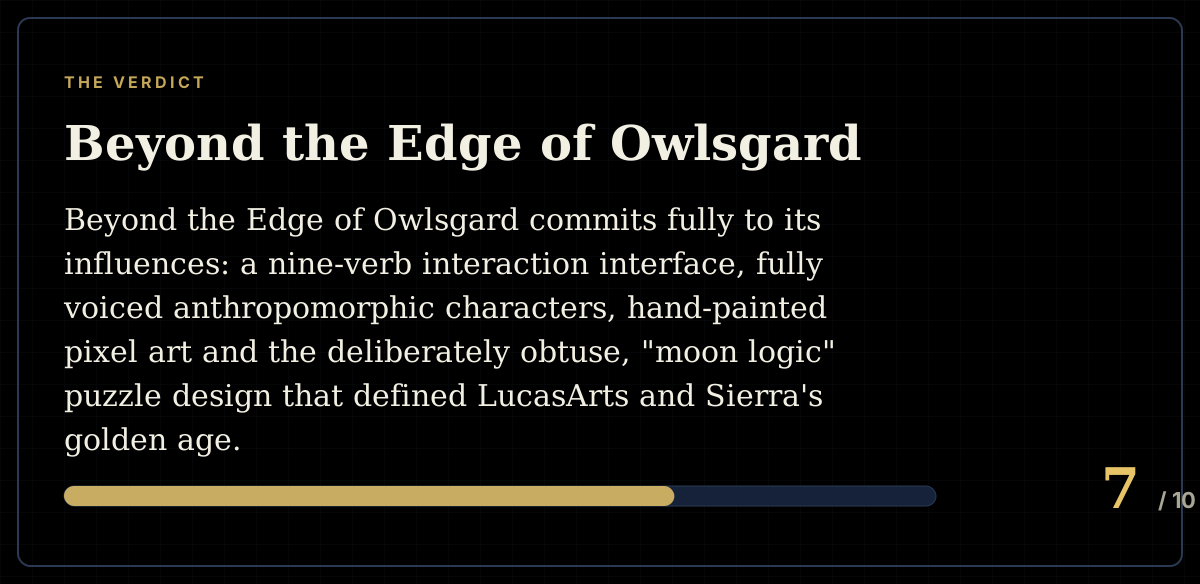
The short versionWanderer Editorial