
Game review
ROGUE LIGHT DECK BUILDER
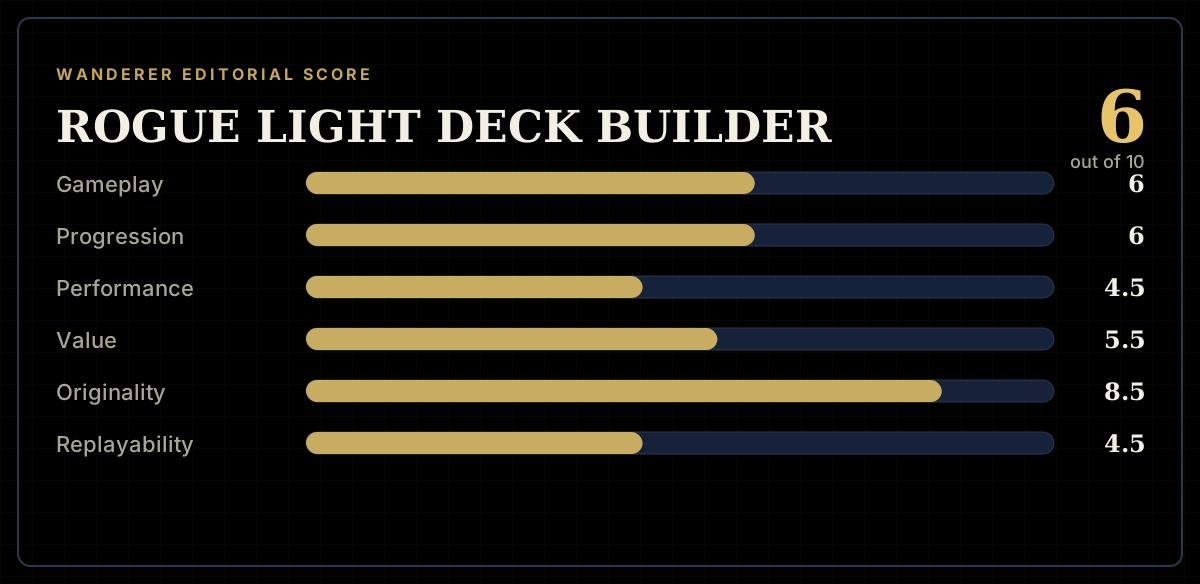
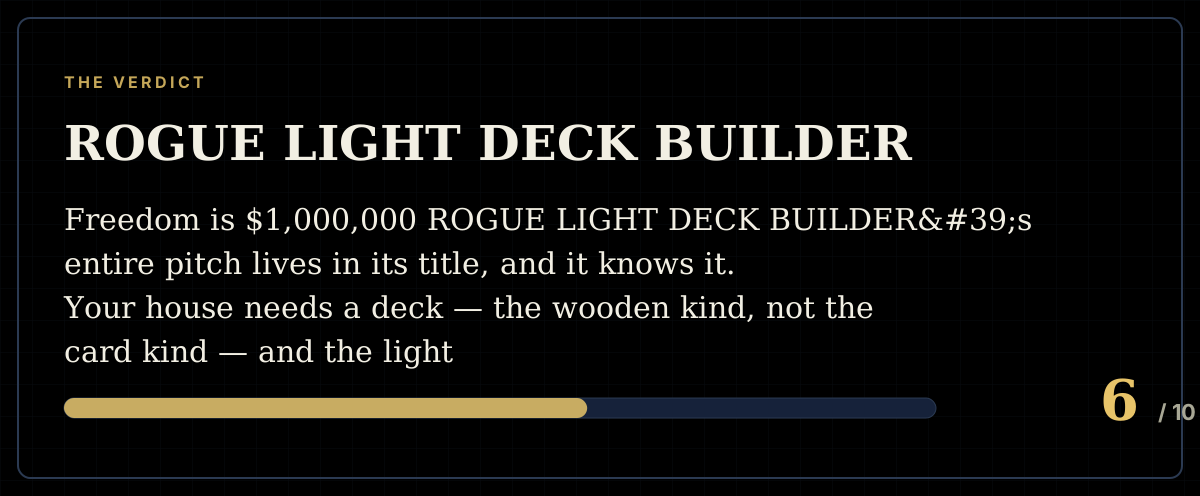
6 / 10
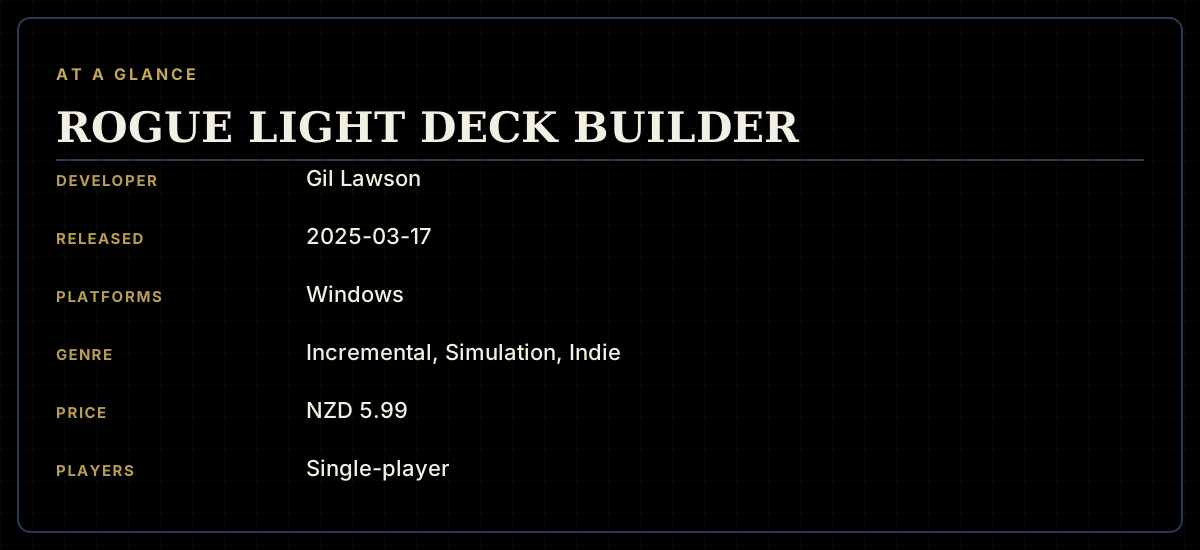
- Developer
- Gil Lawson
- Publisher
- Gil Lawson
- Released
- 17 March 2025
- Platforms
- Windows
- Genre
- Incremental, Simulation, Indie
- Players
- Single-player
The short version
Biggest strengths
- The central pun — a literal rogue, flickering light, and a wooden deck you're building for your house — is committed to with genuine comic timing
- A clean, legible core loop of hammering, upgrading tools, and cashing out that's instantly readable
- Achievement curve shows a smooth, honest difficulty tail rather than a wall — there's a real, gradual mastery ladder for players who stick around
Biggest weaknesses
- The entire game is visible within the first run; there is one upgrade path with no branching builds or strategic depth to discover later
- Multiple independent reports of hammer physics tied to framerate, causing input frustration and, in at least one case, a GPU running hot on modest hardware
- Most reviewers, positive and negative alike, clock completion in well under two hours
6 / 10
Freedom is $1,000,000
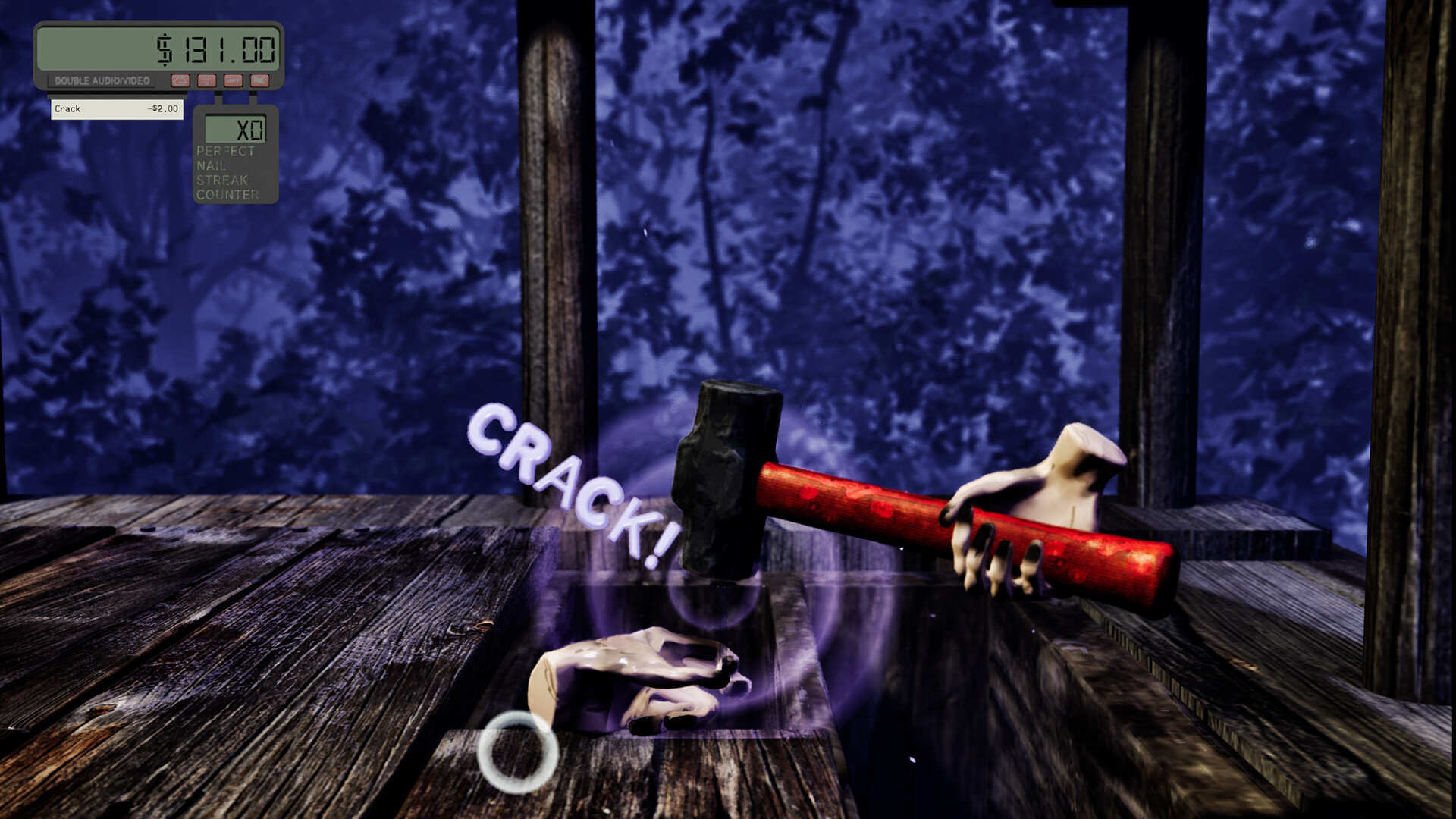
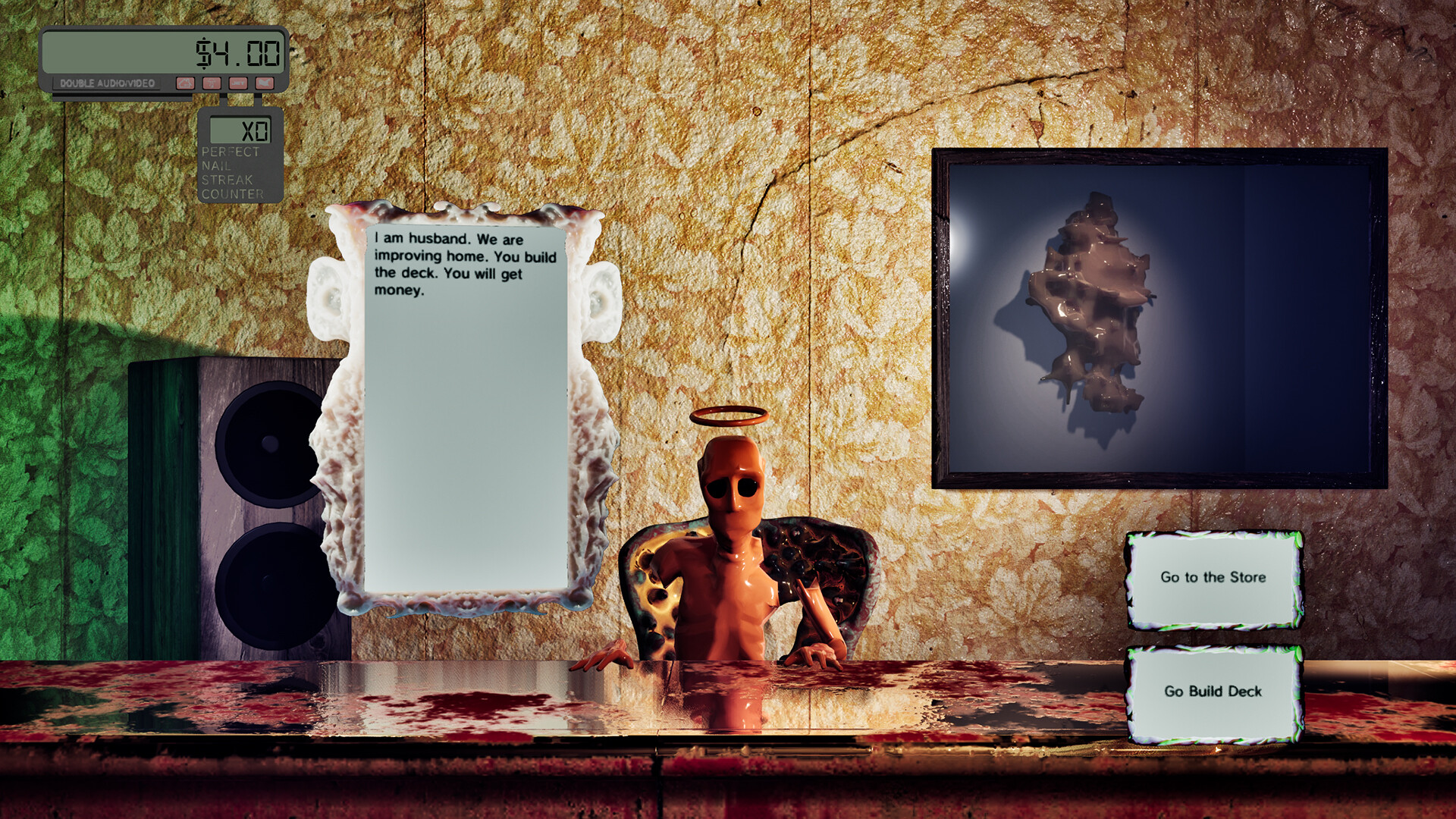
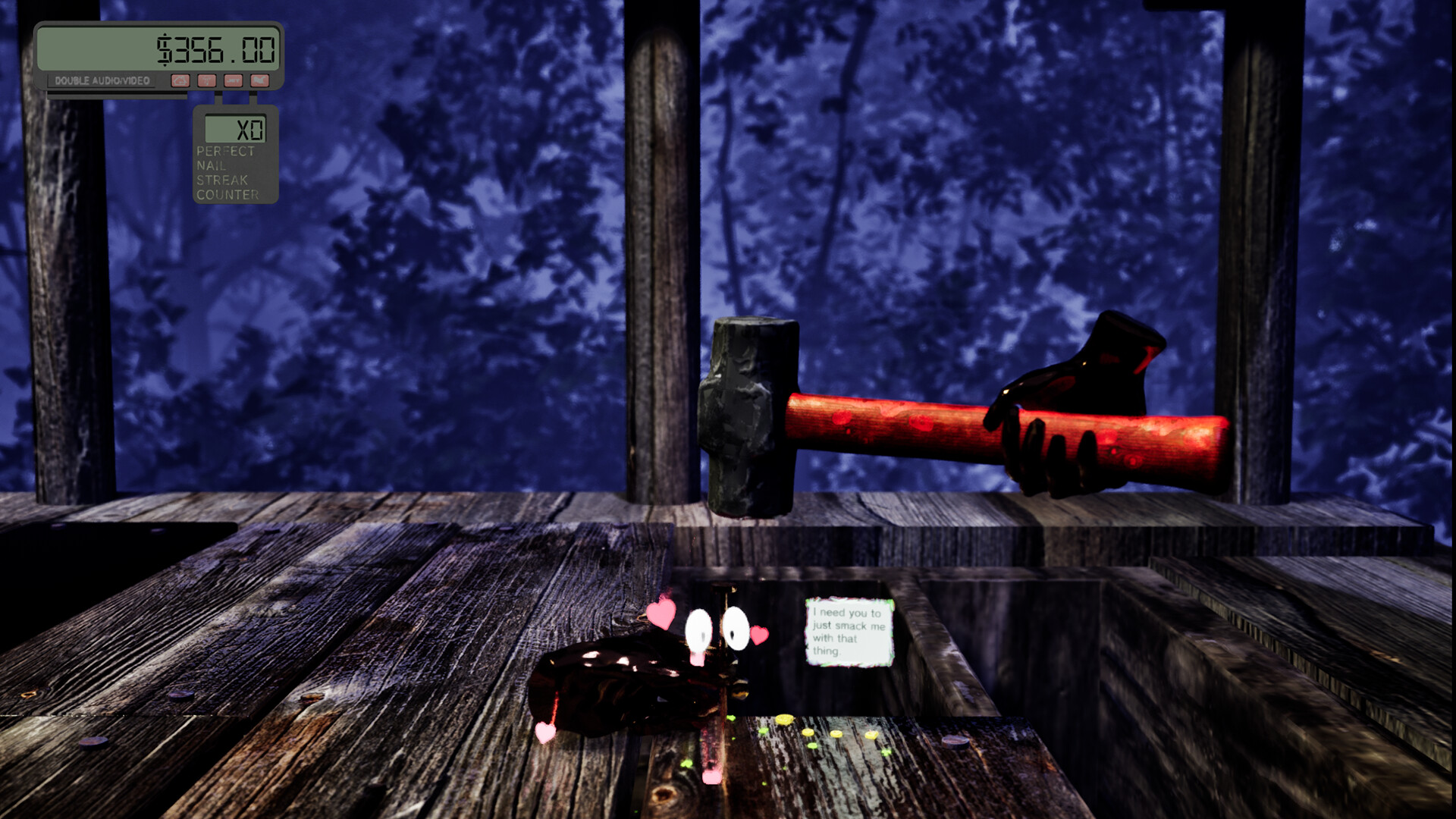
ROGUE LIGHT DECK BUILDER's entire pitch lives in its title, and it knows it. Your house needs a deck — the wooden kind, not the card kind — and the light on your porch is malfunctioning, hence "rogue light." You have a hammer, some planks, and a dream of a million dollars, at which point, the game promises, you'll be free. It's a one-developer, one-joke idle game built by Gil Lawson, and for its opening stretch the joke is genuinely funny: nails you hammer transform into odd variants, upgrade names lean into the absurdity of manual labour as a metaphor for capitalism, and the flavour text ("Freedom is just around the corner") repeats with the hollow cheerfulness of a motivational poster in a break room. It's a game that understands what it's making fun of.
The trouble is that a bit this thin needs either a short runtime to match or a second act to justify a longer one, and ROGUE LIGHT DECK BUILDER splits the difference badly. The core loop — swing the hammer, drive nails, buy upgrades to your hammer, your hand, and the nails themselves, repeat until the counter hits seven figures — is the whole game from the first minute to the last. There's an "endless mode" for players who want to keep going after the credits, but nothing new unlocks in it beyond bigger numbers on the same mechanic.
A joke measured in minutes, not hours
Steam's own review corpus is unusually blunt about runtime, and unusually consistent across positive and negative reviews alike: most players report finishing the main mode somewhere between forty minutes and two hours. One of the most-upvoted reviews on the store page is literally a screenshot-style brag about beating it in 24 minutes and 55 seconds and considering it money well spent anyway — which is a fair way to read the whole reception. Reviewers who came in expecting a five-dollar joke and got exactly a five-dollar joke tend to be charmed. Reviewers who came in hoping the "deck builder" half of the title meant actual deckbuilding depth, or that the rogue-light structure meant meaningfully different runs, are consistently disappointed — several say directly that the title oversold mechanics the game doesn't have, since there's no real deck of cards to build, no branching strategy between runs, and no randomised structure beyond cosmetic nail variety.
The most useful objective evidence here isn't the review split at all — it's overwhelmingly positive at roughly 95% across 832 reviews, "Overwhelmingly Positive" territory that reflects how well the joke lands for the price rather than how much game is behind it. What's more telling is the global achievement curve. It's a smooth, well-designed tail rather than a cliff: the earliest achievements sit in the 80–96% range and the curve steps down gradually through streak- and speedrun-tier achievements into single digits for full mastery. That's the shape of a short game with a genuine, gradually-harder completionist ladder built on top of it, not a broken or padded one — credit where it's due, the difficulty curve for the players who do stick around is honestly tuned.
Hammer physics that fight back, sometimes literally
A recurring, independently corroborated complaint concerns the hammer-swing mechanic itself, which is tied to frame timing in a way several reviewers describe as janky: the hammer catching, flipping the wrong direction, or getting stuck between the hand and the nail. One review specifically reports the game pushing a GTX 1650 to 85°C within an hour at medium settings for what is, visually, an extremely simple game — a legitimate performance red flag for what should be an undemanding indie title, and worth flagging to anyone on older or thermally-constrained hardware. It's not universal; plenty of reviewers report no issues at all. But it shows up often enough, and specifically enough (frame-tied physics rather than vague "it's buggy" complaints), to treat as a real, if inconsistent, technical rough edge rather than isolated user error.
A crowded shelf of five-dollar jokes
ROGUE LIGHT DECK BUILDER is competing less against other deckbuilders or idle games proper than against the whole genre of single-joke browser-flash-game throwbacks that Steam has absorbed over the last few years — the kind of thing built to be finished in one sitting and forgotten fondly. Within that specific, low bar, it clears it: the writing is sharper than most of its peers, and one of its most-upvoted reviews is a list of entirely unrelated games the reviewer says it somehow reminded them of, which is its own kind of endorsement for a game with no obvious genre lineage. What it can't do is what the better examples of that microgenre manage, which is layering in just enough of a real system underneath the joke that a second or third session feels different from the first. Here, the second run looks exactly like the first run, only faster, because you already know which upgrades matter.
That's a defensible design choice for a one-person, five-dollar project, and it isn't dishonest about it — there's no marketing copy promising dozens of hours, and the store page's own framing ("digital wooden board game") undersells itself if anything. But it does mean the ceiling on this review is set by scope rather than execution: everything that exists here is competently, sometimes cleverly built, and there just isn't much of it.
Where this leaves it
ROGUE LIGHT DECK BUILDER is honest about being a joke you buy for the price of a coffee, and on that basis it mostly delivers — the premise is genuinely clever, the writing has more personality than most games ten times its budget, and it doesn't pretend to be more than it is in the moment you're playing it. What it doesn't do is reward sticking around: the mechanical depth that would turn a great ten-minute bit into a satisfying hour-long idle game simply isn't there, and the "deck builder" and "rogue-light" framing in the title promises structural variety the actual runs don't deliver. Buy it for the joke, not for the game underneath it, and go in expecting well under two hours regardless of which side of the review split you land on.
Pros and cons
Pros
- The central pun — a literal rogue, flickering light, and a wooden deck you're building for your house — is committed to with genuine comic timing
- A clean, legible core loop of hammering, upgrading tools, and cashing out that's instantly readable
- Achievement curve shows a smooth, honest difficulty tail rather than a wall — there's a real, gradual mastery ladder for players who stick around
- At NZD 5.99, priced honestly for what it is rather than padded to justify a higher tag
Cons
- The entire game is visible within the first run; there is one upgrade path with no branching builds or strategic depth to discover later
- Multiple independent reports of hammer physics tied to framerate, causing input frustration and, in at least one case, a GPU running hot on modest hardware
- Most reviewers, positive and negative alike, clock completion in well under two hours
- The joke that carries the opening ten minutes has nothing built on top of it for the remaining runtime
Screenshots
-
ROGUE LIGHT DECK BUILDERImage: Gil Lawson via Steam -
ROGUE LIGHT DECK BUILDERImage: Gil Lawson via Steam -
ROGUE LIGHT DECK BUILDERImage: Gil Lawson via Steam -
How the review scores each part of the gameWanderer Editorial -
At a glanceWanderer Editorial -
The short versionWanderer Editorial