
Game review
Relief
6.5 / 10
- Developer
- Billiontail
- Publisher
- 2P Games
- Released
- 22 June 2026
- Platforms
- Windows
- Genre
- Indie, Strategy
- Monetisation
- paid
- Players
- false
The short version
Biggest strengths
- Genuinely distinct character kits that reward deep experimentation, with reviewers who've logged hundreds of Slay the Spire hours still finding fresh combo discovery here
- A day-based act structure that changes the genre's usual linear-path pacing, letting players freely choose between shopping, resting, or upgrading each day within an act
- A responsive developer who reviewers say quickly patched significant issues raised shortly after launch, prompting at least one reviewer to substantially revise their review upward
Biggest weaknesses
- Noticeably uneven character balance, with at least one detailed reviewer identifying a specific archetype whose starting kit can leave players with no viable way to build around its intended theme
- Frequently and directly compared to Slay the Spire in ways that aren't always flattering, with some reviewers describing it as a "budget" take on mechanics the genre's namesake already does better
- Technical rough edges including unplayable ultrawide UI scaling for at least one reviewer and no in-game fullscreen resolution or aspect-ratio settings
Who it's for: Roguelike deckbuilder enthusiasts who've already sunk hundreds of hours into Slay the Spire and want a genre-adjacent game with distinct character kits and combo discovery, and who aren't put off by its stylized adult art direction and disclosed mature content
Our recommendation: recommended with caveats
6.5 / 10
A deckbuilder that knows its lineage, and leans into it anyway
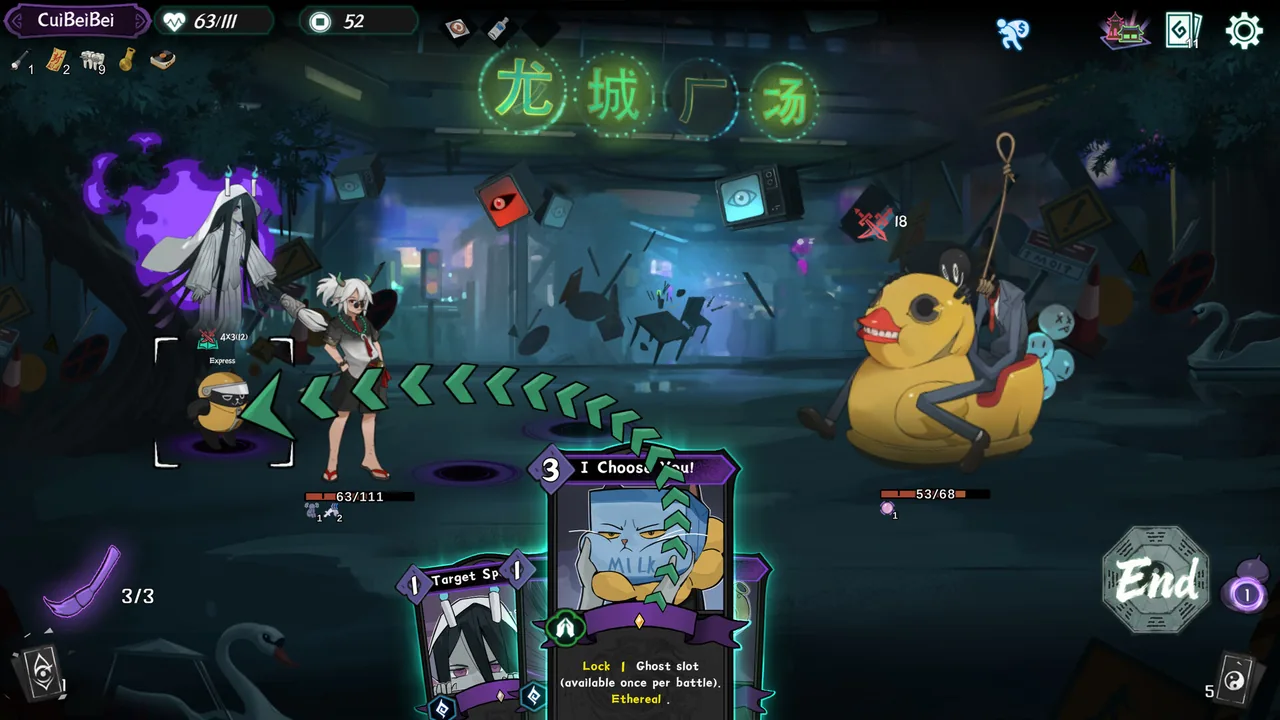
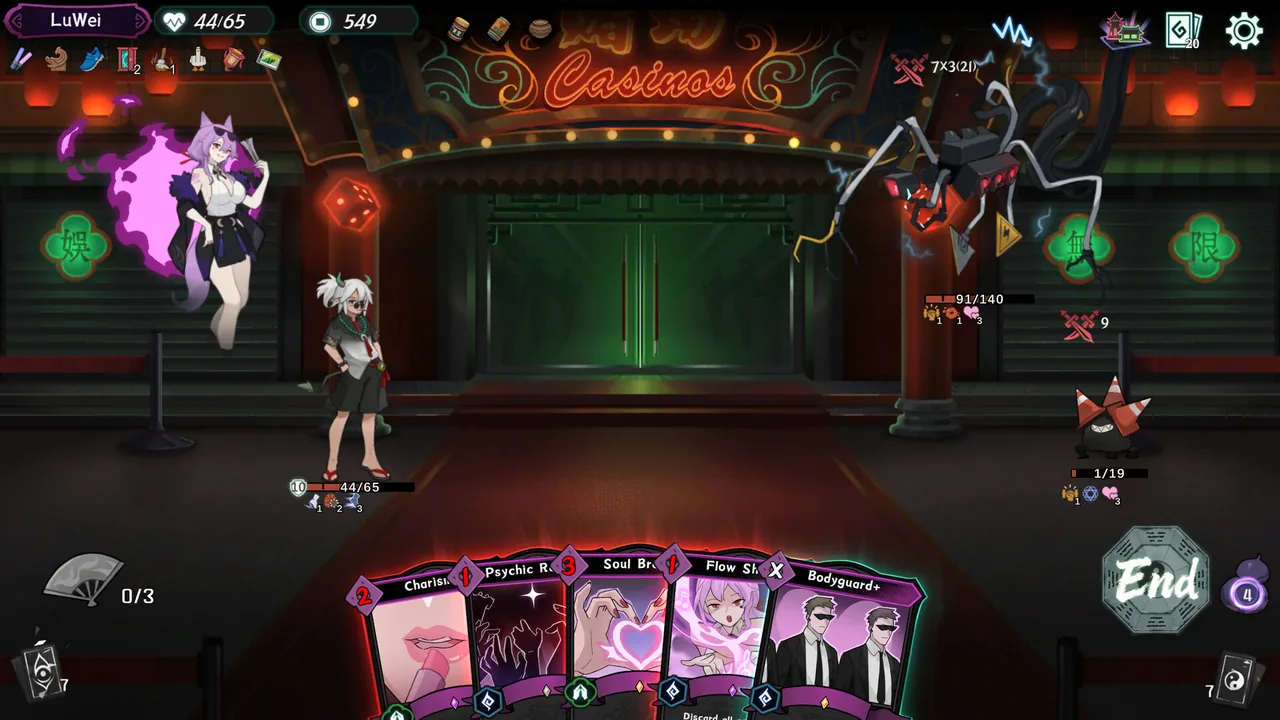
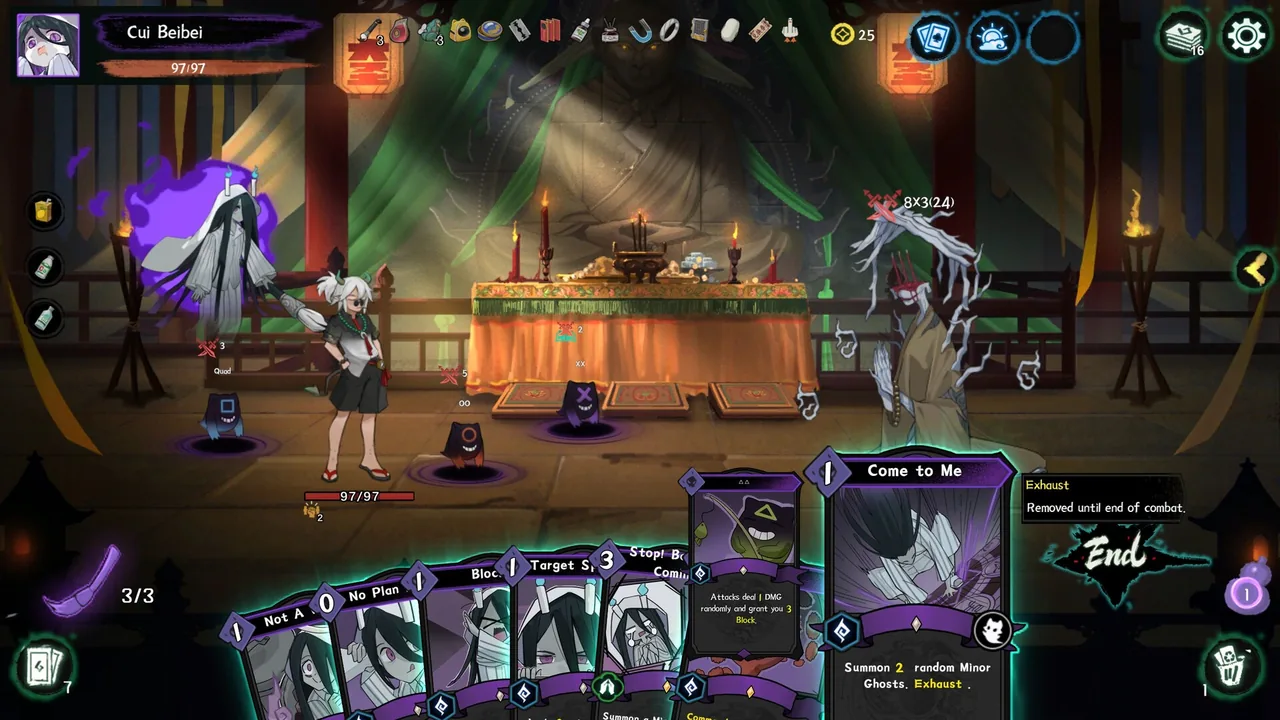
Relief wears its influences openly: a roguelike deckbuilder set in a corrupted, post-Journey to the West mythological world, offering over a thousand cards and hundreds of artifacts to build overpowered combo decks. The comparison to Slay the Spire is unavoidable, and most reviewers make it directly, but the more interesting question is whether the game earns a place alongside that comparison rather than simply borrowing from it. One reviewer with hundreds of hours in both Slay the Spire and its sequel answered that question in detail: "I found this fun even though I've already spent hundreds of hours across STS and its sequel," crediting a genuinely different act-progression structure and character kits that "feel distinct from STS characters, even if there are similarities."
Characters built for genuine combo discovery
The strongest, most consistently praised element across the review pool is character design depth. One reviewer who extensively documented their experience with multiple characters described one kit's core loop in detail, involving transforming statuses and synergy cards, then noted, "you might be thinking that sounds horrifically unbalanced, and you might be right," while still praising the discovery process that led there. That same reviewer also called out a genuinely different mechanical identity in another character, whose kit "reminds me a little bit of some mechanics from Magic the Gathering, but not any other characters from this game or STS," evidence that the developer isn't simply reskinning familiar archetypes across its cast.
But balance isn't uniform across that cast
The same detailed reviewer who praised several characters' depth flagged a specific, concrete balance problem with another: "the deck starts with one self-exhausting summon card and no other way to summon. If you get offered abilities or skills that rely on summons, but don't get any summon cards early or in the shop, you're completely out of luck." That's a precise, mechanically-grounded criticism rather than a vague balance complaint, and it points at a real design gap where a character's intended playstyle can be effectively locked out by bad early-run luck rather than player skill or strategy.
The Slay the Spire comparison cuts both ways
Not every reviewer came away as convinced by Relief's distinctiveness. One negative reviewer was blunt: "The game is budget Slay the Spire, plain and simple... to the point where the ghost girls' 'summoned ghosts' are quite literally functionally identical [to] defect Orbs," directly disputing the idea that the character kits feel meaningfully separate from their inspiration. Another, more measured reviewer landed somewhere in between: "does it feel like a Slay the Spire, Monster Train, etc? Yes. Did it change the formula up and do something really different? Not really. Is it super addictive and fun to play? Yes." That's a fair summary of where the review pool ultimately settles: derivative in its bones, but executed well enough that most reviewers still recommend it on its own merits.
A responsive developer during a rocky opening stretch
Beyond design, at least one reviewer's account highlights active post-launch support. The pool's longest, most detailed review opens by noting it was substantially rewritten: "I rewrote this review, which originally listed some obvious issues, after the developer responded and quickly pushed out a patch addressing them." That kind of direct, documented responsiveness is worth noting given how many other titles reviewed this cycle struggled with unaddressed launch bugs, and it's a meaningfully positive signal for a game whose most complex systems, deep character kits and an enchantment layer, are the kind that tend to surface balance issues only after wide player exposure.
Real technical rough edges and a narrowing audience
A handful of reviewers flagged concrete technical issues: one reported "UI scaling in fullscreen on ultrawide being way off and unplayable, which caused me to play windowed on 1/3 my screen," adding there were "no fullscreen settings for resolution or aspect ratio" to work around it. Beyond technical concerns, the game's mature, stylized adult art direction and its explicit content warning for sexual innuendo and BDSM-adjacent themes is something several reviewers flagged as narrowing its audience regardless of mechanical quality. The reviewer who wrote the pool's most detailed, ultimately positive review was candid about that tension: they recommend the game "to anyone who enjoys card games... so long as they're not put off by the art and content warning, so I won't be recommending this to anyone I personally know," a genuinely useful piece of context for prospective buyers weighing the game's content against its gameplay.
Pricing and where the value settles
At $19.99, Relief sits well below the genre's premium entries while still asking for a real commitment given how content-dense a good deckbuilder run can be to fully explore. The reviewer who wrote the pool's most exhaustive account of the game's characters made their price framing explicit: "I believe there's enough there to enjoy enough for long enough to justify the price (at least on sale - I got it for $12)," a fair, hedged recommendation rather than unqualified enthusiasm. A separate reviewer's complaint wasn't about the base price at all, but about a post-launch discount and bonus soundtrack offer that retroactively soured their purchase, a minor but real reminder that even reviewers who otherwise liked the game can walk away frustrated over pricing timing rather than the game itself.
Verdict
Relief is a well-crafted, if openly derivative, roguelike deckbuilder whose best characters offer the kind of deep combo discovery that keeps genre veterans engaged even after hundreds of hours elsewhere, backed by a developer who's shown real responsiveness to post-launch feedback. Its weaknesses are specific rather than vague: at least one character archetype with a real early-run balance gap, some rough technical edges around ultrawide and resolution support, and a mature presentation that reviewers themselves say limits who they'd recommend it to. Worth a look for deckbuilder enthusiasts who've exhausted Slay the Spire and want more of the same genre with a distinct cast and setting, provided its content and presentation are a good fit for the player in question.
Pros and cons
Pros
- Genuinely distinct character kits that reward deep experimentation, with reviewers who've logged hundreds of Slay the Spire hours still finding fresh combo discovery here
- A day-based act structure that changes the genre's usual linear-path pacing, letting players freely choose between shopping, resting, or upgrading each day within an act
- A responsive developer who reviewers say quickly patched significant issues raised shortly after launch, prompting at least one reviewer to substantially revise their review upward
- An enchantment/synergy system that adds an extra layer of build customization on top of the core deckbuilding loop
Cons
- Noticeably uneven character balance, with at least one detailed reviewer identifying a specific archetype whose starting kit can leave players with no viable way to build around its intended theme
- Frequently and directly compared to Slay the Spire in ways that aren't always flattering, with some reviewers describing it as a "budget" take on mechanics the genre's namesake already does better
- Technical rough edges including unplayable ultrawide UI scaling for at least one reviewer and no in-game fullscreen resolution or aspect-ratio settings
- A mature, stylized adult art style and explicit content warning that reviewers say meaningfully narrows who they'd recommend the game to, regardless of its mechanical strengths
Screenshots
-
ReliefImage: 2P Games via Steam -
ReliefImage: 2P Games via Steam -
ReliefImage: 2P Games via Steam