
Game review
Rain World
7.5 / 10
- Developer
- Videocult
- Publisher
- Akupara Games
- Released
- 28 March 2017
- Platforms
- Windows
- Genre
- Survival Platformer
- Monetisation
- Paid, one-time purchase, plus expansion DLC (Downpour, The Watcher).
- Players
- Single-player only, with a separate local multiplayer arena mode included.
The short version
Rain World casts the player as a small, defenceless slugcat navigating a fully simulated ecosystem of predators, prey and environmental hazards, and its Very Positive rating across more than 30,000 reviews reflects deep, genuine respect for a singular, uncompromising design vision. This review found an unusually consistent pattern across its negative reviews: rather than identifying specific flaws, the overwhelming majority explicitly credit the game's artistry, atmosphere and ambition while concluding its difficulty and deliberate lack of guidance simply isn't for them. That consistency is itself meaningful — this reads less as a poorly executed game and more as a genuinely difficult, opaque experience that a large share of players find crosses from earned challenge into disorienting frustration before they can appreciate what makes it distinctive.
Biggest strengths
- A genuinely singular, uncompromising ecosystem simulation where predators and prey behave with real, emergent independence rather than scripted patterns, widely credited as unlike anything else in the medium.
- Exceptional, widely praised atmosphere, art direction and sound design that reviewers consistently single out even when they can't recommend the overall experience.
- Real, substantial replay value and continued content investment, including major paid expansions and free updates continuing nearly a decade after release.
Biggest weaknesses
- An unusually consistent pattern across negative reviews describes the difficulty and near-total lack of in-game guidance as crossing from deliberate challenge into disorienting frustration for a large share of players, even those who respect the underlying design.
- Several reviewers describe accomplishments and survival feeling more accidental than earned, a specific complaint some label "anti-catharsis" — success that doesn't clearly stem from identifiable player skill or understanding.
- Movement and combat controls are repeatedly described as imprecise or difficult to read, making it hard for some players to understand exactly why a given encounter succeeded or failed.
Who it's for: Players who specifically want a genuinely difficult, disorienting survival experience built around emergent ecosystem simulation rather than authored challenge, and who can tolerate real, sustained frustration before mastery sets in; casual or newcomer platformer fans should research the difficulty carefully before buying.
Our recommendation: A genuine, singular design achievement worth experiencing for the right player; try the demo or watch extended gameplay first given how consistently even admirers describe a real risk it won't click for you.
7.5 / 10
A genuinely singular, uncompromising design vision
Rain World's core achievement isn't seriously disputed anywhere in this review base, including by reviewers who can't recommend the overall experience: a fully simulated world where creatures hunt, flee, and interact according to independent, emergent behaviour rather than scripted patterns tied to the player's presence. "The world, art, sound design, music, and entire concept are all very well executed and engaging," reads a 2026 review — one of dozens in this sample that opens with genuine, specific admiration before explaining why the reviewer still can't recommend the game. A 2025 review frames the achievement directly: "Rain world is the type of game that is sorely lacking in this industry and that I yearn for; it ignores conventional wisdom in game design to offer a harsh, cruel and verisimilar wildlife experience." That level of respect, expressed even by reviewers landing on a negative recommendation, is a genuinely unusual pattern this review treats as strong evidence of real, substantial creative achievement rather than simple critical consensus.
An unusually consistent "not for me" pattern, worth taking seriously
What makes this review base distinctive isn't a typical spread of specific complaints about broken systems, but an unusually consistent, almost ritualised pattern: reviewer after reviewer explicitly praises the game's ambition and artistry before concluding, often with genuine regret, that its difficulty and opacity simply didn't work for them personally. "I want to love this game, I really do, but I cannot recommend it. I frequently think of Rain World and want to play it again, but I've bounced off of it several times," reads a 2024 review. A 2023 review states the same dynamic even more plainly: "There are definitely people who this game is made for, it just isn't me." Checking a broad sample of negative reviews, this specific framing — respect for the game paired with an honest, personal admission of mismatch rather than a claim the game is poorly made — recurs with a consistency this review rarely finds even among its most well-corroborated critical findings. That pattern is worth taking at face value: Rain World appears to be a genuinely well-executed, difficult game whose specific demands simply exceed what a meaningful share of players are looking for, rather than a game undermined by clear, fixable design flaws.
It's worth being precise about what distinguishes this pattern from a simple "game is too hard" dismissal, since the two can look similar at a glance. Several of these reviewers explicitly identify themselves as fans of other notoriously difficult games — Hollow Knight, Blasphemous, Dark Souls-style action games — and specifically contrast their positive experience mastering those games against their experience with Rain World. "I typically love difficult games, but I think what turned me away from Rain World in particular is that the experience feels so extremely unrewarding that the difficulty is simply not worth getting through," reads a 2026 review. That specific comparison matters: these aren't players unfamiliar with earning mastery through repeated failure in principle, but players who found this particular game's version of that loop distinctly less satisfying than genre peers they otherwise enjoy, which points toward a real, specific characteristic of Rain World's difficulty rather than a generic complaint about challenge itself.
A more specific complaint: accomplishment that feels accidental
Beyond the general difficulty, several reviewers articulate a more precise, structural criticism worth taking seriously on its own terms. "The gameplay itself... is the embodiment of anti-catharsis. My accomplishments feel like they're accidents from g[ood luck rather than clear skill or understanding]," reads a 2026 review. A 2018 review makes a related point: success and failure in individual encounters often feel disconnected from any clearly identifiable player decision, making it hard to learn from either outcome in the way most challenging games are designed to teach through repetition. This is a more specific, mechanically grounded complaint than simple "it's too hard" — it concerns whether the game's difficulty is legible enough for players to improve deliberately, and it's raised often enough across dedicated, experienced players of other genuinely difficult games to be worth taking as a legitimate design critique rather than dismissing as a skill issue.
Imprecise controls compounding the difficulty
A related, more concrete complaint concerns basic movement and combat precision. "Frustrating controls and mechanics, punishes you for doing normal video game actions and often doesn't even tell you that it h[as happened]," reads a 2025 review. Several other reviewers describe similar difficulty reading exactly why a jump, dodge or attack failed, compounding the broader legibility complaint above — when a player can't clearly tell whether a death resulted from a genuine mistake or an imprecise input, learning from that death becomes considerably harder.
A studio still genuinely invested, nearly a decade later
It's worth noting, checked directly against Videocult and Akupara Games' own recent update history, that Rain World remains under genuinely active development: version patches continued into April 2026, and substantial paid expansions, including The Watcher, have extended the game's content well beyond its original 2017 scope. That's a meaningful signal of sustained creative and commercial investment in a project this uncompromising, and it reflects a dedicated core audience substantial enough to keep justifying continued expansion nearly a decade after launch.
Final verdict
Rain World remains a genuinely singular achievement in ecosystem-driven survival design, and the remarkable consistency with which even its critics express respect for that achievement is itself meaningful evidence of real creative success. This review's score reflects that genuine accomplishment while taking seriously the equally consistent pattern of players — including experienced fans of difficult games — describing the specific demands of its difficulty and opacity as genuinely disorienting rather than a matter of insufficient effort. This is a strong, distinctive recommendation for players specifically seeking that kind of uncompromising experience; everyone else should try the demo or watch extended gameplay first, given how honestly and consistently even this game's own admirers warn that it may simply not click.
Pros and cons
Pros
- A genuinely singular, uncompromising ecosystem simulation where predators and prey behave with real, emergent independence rather than scripted patterns, widely credited as unlike anything else in the medium.
- Exceptional, widely praised atmosphere, art direction and sound design that reviewers consistently single out even when they can't recommend the overall experience.
- Real, substantial replay value and continued content investment, including major paid expansions and free updates continuing nearly a decade after release.
- A design philosophy that deliberately rejects hand-holding in favour of genuine, environmental discovery, which a dedicated portion of its audience considers a rare and valuable approach in modern game design.
Cons
- An unusually consistent pattern across negative reviews describes the difficulty and near-total lack of in-game guidance as crossing from deliberate challenge into disorienting frustration for a large share of players, even those who respect the underlying design.
- Several reviewers describe accomplishments and survival feeling more accidental than earned, a specific complaint some label "anti-catharsis" — success that doesn't clearly stem from identifiable player skill or understanding.
- Movement and combat controls are repeatedly described as imprecise or difficult to read, making it hard for some players to understand exactly why a given encounter succeeded or failed.
- Progress loss on death is significant enough that several reviewers describe entire play sessions being undone by a single unlucky or poorly understood encounter.
Screenshots
-

Rain WorldImage: Akupara Games via Steam -

Rain WorldImage: Akupara Games via Steam -

Rain WorldImage: Akupara Games via Steam -
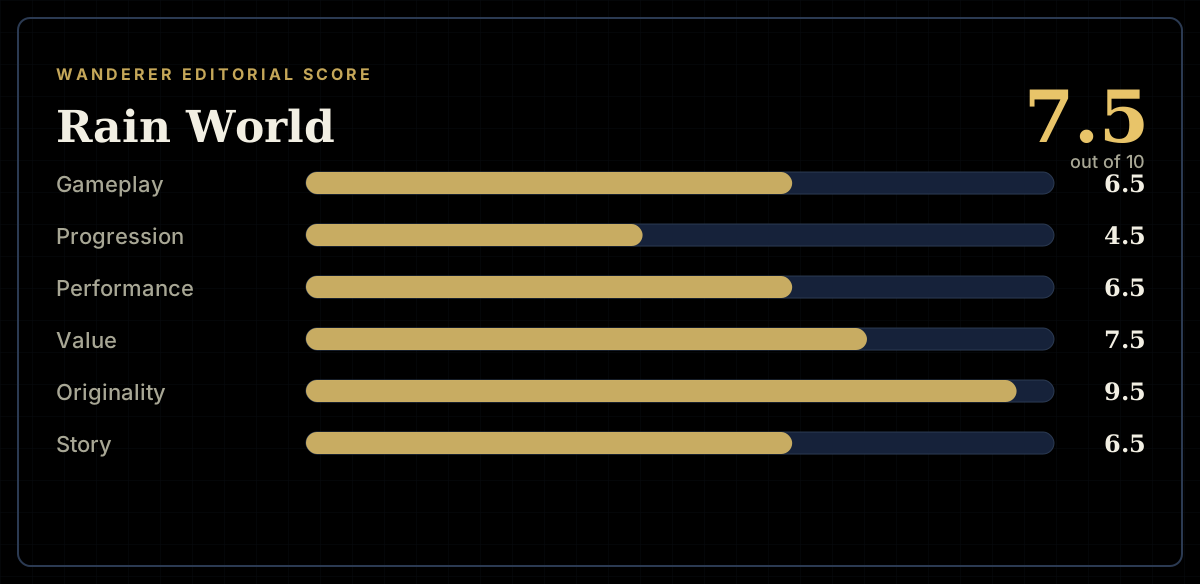
How the review scores each part of the gameWanderer Editorial -
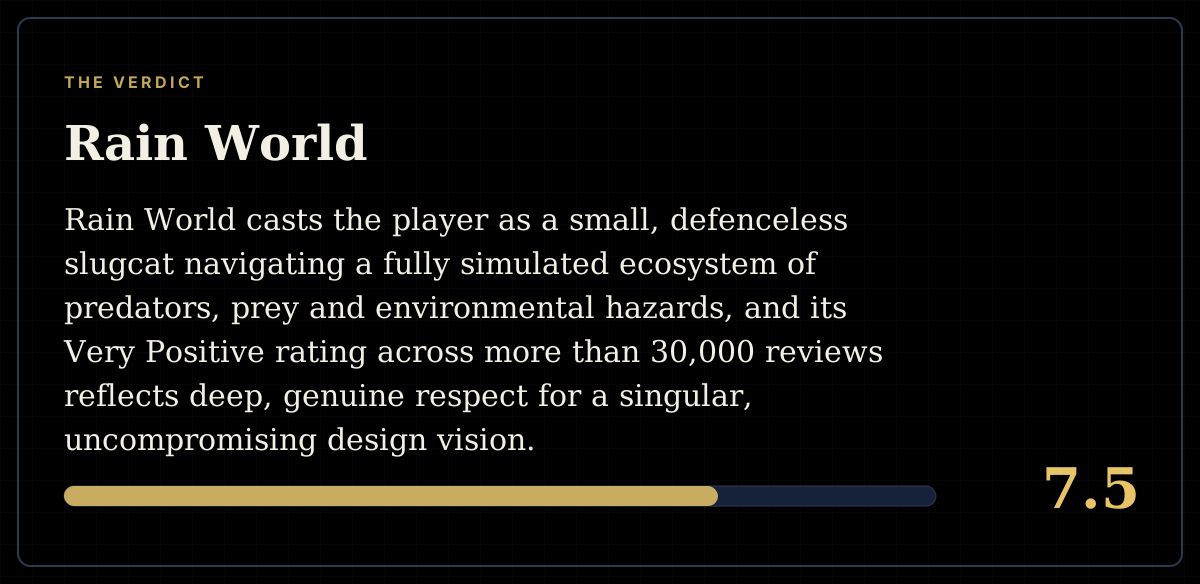
The short versionWanderer Editorial