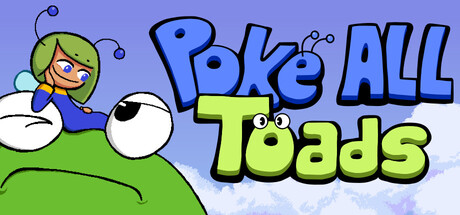
Game review
Poke ALL Toads
8.1 / 10
- Developer
- SpaceMatra
- Publisher
- SpaceMatra
- Released
- 20 March 2026
- Platforms
- Windows
- Genre
- Puzzle, Indie
- Monetisation
- Paid
- Players
- Single-player only, no online or local co-op modes.
The short version
A genuinely novel puzzle idea executed with more polish and charm than its modest scale would suggest, Poke ALL Toads earns its "toad-poking genre, and last" reputation among the players who've found it. The central hook of prodding wildlife into becoming both hazard and tool is simple to explain and endlessly inventive in practice, and the hundred-plus levels keep introducing new fairy abilities right up until the bonus content turns genuinely fiendish. It stumbles a little at the finish line and offers nothing beyond the core puzzle loop by way of extras, but as a two-day-appetite puzzle box with real teeth in its late levels, it delivers far above its price point.
Biggest strengths
- A genuinely fresh real-time puzzle mechanic that keeps introducing new twists across its runtime
- Charming pixel art, animation work, and loading-screen vignettes that reviewers repeatedly single out
- A fair difficulty curve in the main campaign with real challenge held in reserve for optional bonus levels
Biggest weaknesses
- Toad attack-order rules can feel convoluted to learn in the moment, with a few puzzles hinging on memorising them
- The ending arrives abruptly with little sense of a considered final act
- No gallery, soundtrack release, or bonus content beyond the levels themselves, despite clear demand for it
Who it's for: Puzzle fans who enjoyed Baba Is You or The Lemmings and want something with more bite in its rule interactions; players after a tidy, self-contained singleplayer experience rather than a long-tail live-service game.
Our recommendation: Recommended
8.1 / 10
Fairies, Toads, and the Physics of Being Annoying
Poke ALL Toads opens with a premise so simple it barely needs explaining: you control a small band of fairies, and your job is to guide them through puzzle rooms by irritating the local toad population into reflexive, predictable violence. Toads don't appreciate being poked. They lash out, hop, and generally cause chaos in a radius around themselves, and that chaos is the entire game. Where a lot of puzzle titles ask you to move blocks or flip switches, this one asks you to understand animal behaviour well enough to exploit it, then chain that behaviour through a room full of platforms, hazards, and other fairies who each bring their own rules to the table.
It sounds slight on paper. In practice, reviewers keep landing on the same comparison points — Baba Is You for its tight, learnable rule systems, and The Lemmings or The Lost Vikings for the sensation of directing several small, fragile creatures through an unforgiving space in real time. One player summed up the tone bluntly: warm up your poking finger, because "the amphibian reckoning" waits for no one. That mix of genuine puzzle rigor and self-aware silliness is doing a lot of the game's heavy lifting, and it mostly works.
A Real-Time Puzzle That Actually Earns the "Real-Time" Part
The critical design decision here is that toads react instantly and physically rather than on a turn or a grid. That single choice changes the character of every puzzle. You're not solving a static logic problem so much as choreographing a small, chaotic dance where a toad's leap has to land exactly where you need it, at exactly the moment you need it, while a second fairy is doing something else entirely on the far side of the screen. Several reviewers noted that despite this, the game rarely feels like it's testing twitch reflexes or precise timing — it wants you to think in terms of cause and effect, not frame-perfect inputs, and that distinction keeps the puzzling feeling fair even when a solution takes several attempts to land.
The campaign is built around a slow drip of new fairy abilities, each introduced in its own cluster of levels before being folded into later puzzles alongside everything that came before. This is a well-worn puzzle-game structure, but it's handled with a light touch here: new mechanics get a soft, observational introduction rather than a tutorial pop-up, and the game trusts players to work out the rules by watching what happens when they experiment. Reviewers who came in expecting an easy, cute time were consistently surprised at how sharp the later main-campaign levels get, and even more so by the optional bonus levels, which several called out as legitimately difficult in a way the core game doesn't fully prepare you for. The one recurring friction point is the rule set governing exactly which toad attacks which fairy and in what order — more than one review described having to essentially memorise this behaviour through trial and error rather than reason it out, which is the closest the game comes to feeling arbitrary rather than clever.
At over a hundred levels spread across multiple distinct worlds, there's a real sense of escalation rather than padding. Most players who finished the game report somewhere in the ten-to-fifteen-hour range for a full clear, with the caveat that anyone chasing full completion and the toughest bonus puzzles should expect that number to stretch further. For a modestly priced indie puzzle game, that's a healthy amount of content, and it's spread thoughtfully enough that fatigue doesn't seem to be a common complaint in the review sample — quite the opposite, several reviewers explicitly wanted more once the credits rolled.
Presentation That Punches Above Its Budget
If there's one thing that comes up in nearly every positive review without prompting, it's the art and animation work. The fairies and toads are rendered with a soft, expressive pixel style, and the small idiosyncratic touches — fairies napping in odd corners of a level, reacting to being flung across a room, or fidgeting while idle — get mentioned again and again as a source of genuine delight rather than incidental polish. The loading screens in particular seem to have become a minor point of fondness among players, several of whom specifically flagged wanting them to linger longer, or wanting a proper gallery to revisit the artwork they only glimpse in passing. That's a good problem for a developer to have, but it also points to a real gap: there is currently no art book, soundtrack release, or extras mode to satisfy that demand, despite it being one of the most consistent requests in the review sample.
The soundtrack itself draws consistent, if less effusive, praise as a good fit for the tone — described repeatedly as "chill" and well suited to a game that wants you relaxed even while it's quietly ramping up the difficulty underneath you. Between the music, the animation, and a script that leans into its own absurd premise rather than playing it straight, Poke ALL Toads has a clearer sense of identity than most puzzle games at this price point, and that identity is a large part of why the reception has been as warm as it has.
Where It Comes Up Short
The most consistent critical note, even among glowing reviews, is the ending. More than one reviewer described the game as concluding abruptly, without much of a sense of a deliberate final act or a climactic puzzle that pulls together everything the campaign has taught you. For a game that's otherwise carefully paced in how it introduces and layers mechanics, that's a noticeably weaker landing than the rest of the experience deserves, and it's the one area where the design confidence evident everywhere else seems to falter.
The other shortfall is scope rather than quality. This is currently a Windows-only release with no announced plans for Mac or Linux support, which will rule it out for a slice of the puzzle-game audience outright. And while the core hundred-plus levels represent solid value, the complete absence of any bonus content beyond them — no gallery, no OST release, no behind-the-scenes material — leaves a visible gap for a game whose presentation is clearly one of its biggest selling points. None of this is severe enough to undercut the puzzle design itself, but for a title that's otherwise so thoughtfully put together, both feel like missed opportunities rather than acceptable trade-offs.
Verdict
Poke ALL Toads takes a genuinely odd premise and builds a tight, inventive real-time puzzle game around it, backed by presentation that consistently exceeds what you'd expect at its price. The difficulty curve is well judged, the late-game and bonus content have real bite, and the sheer density of small charming details in the animation work gives it a personality that's rare in the puzzle genre. It's let down by an abrupt ending and a total lack of supplementary content for players who clearly want more of its world, and the Windows-only limitation will be a hard stop for some. For anyone who enjoys puzzle design with a sense of mischief, though, this is an easy one to recommend — just don't expect the credits to stick the landing the way the rest of the game does.
Pros and cons
Pros
- A genuinely fresh real-time puzzle mechanic that keeps introducing new twists across its runtime
- Charming pixel art, animation work, and loading-screen vignettes that reviewers repeatedly single out
- A fair difficulty curve in the main campaign with real challenge held in reserve for optional bonus levels
- Strong value at its price point, with most players reporting 10+ hours to finish
Cons
- Toad attack-order rules can feel convoluted to learn in the moment, with a few puzzles hinging on memorising them
- The ending arrives abruptly with little sense of a considered final act
- No gallery, soundtrack release, or bonus content beyond the levels themselves, despite clear demand for it
- Windows-only, with no word yet on Mac or Linux support
Screenshots
-
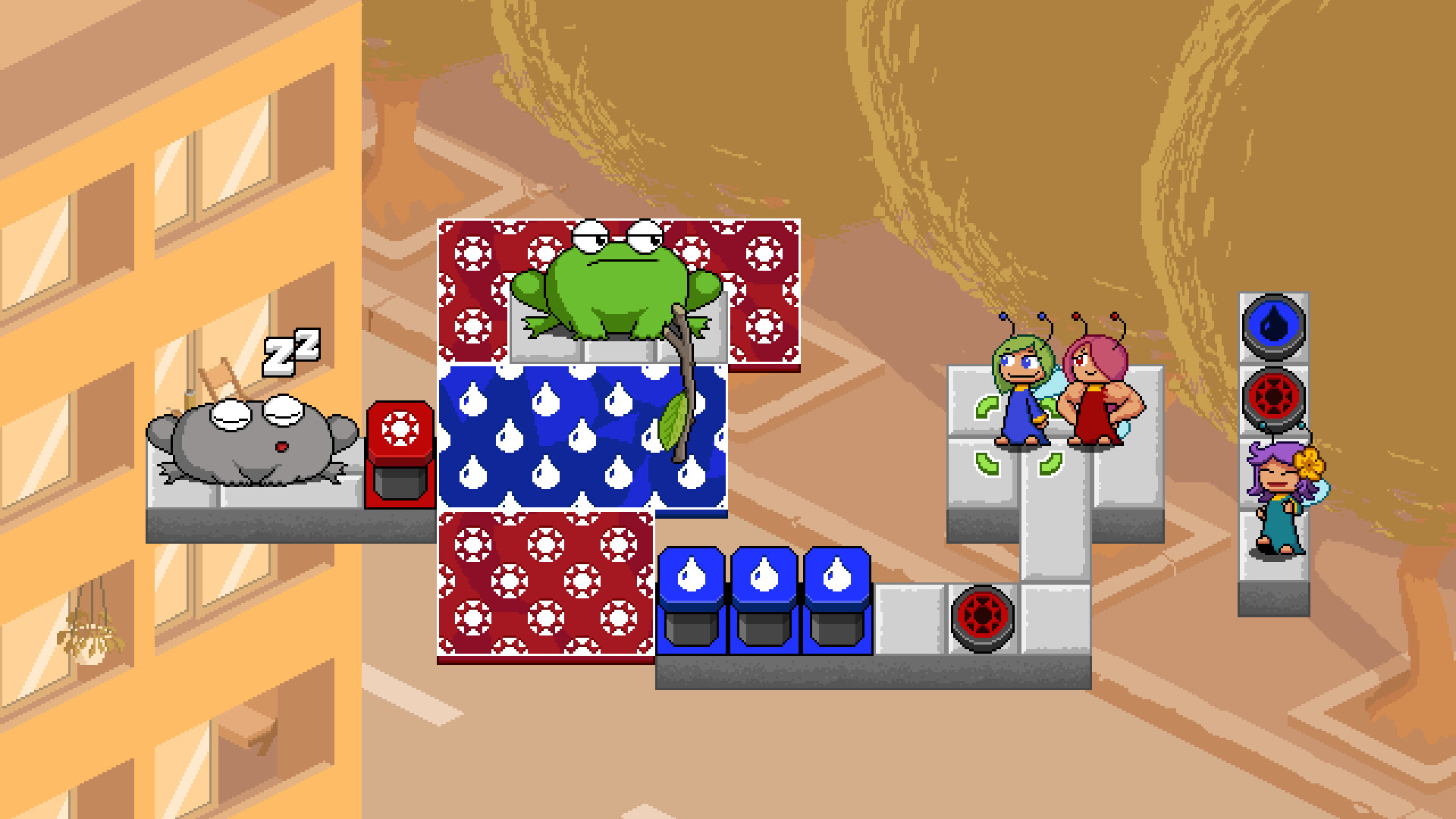
A mid-campaign puzzle room, with switches and hazards colour-matched to guide the solutionSpaceMatra -
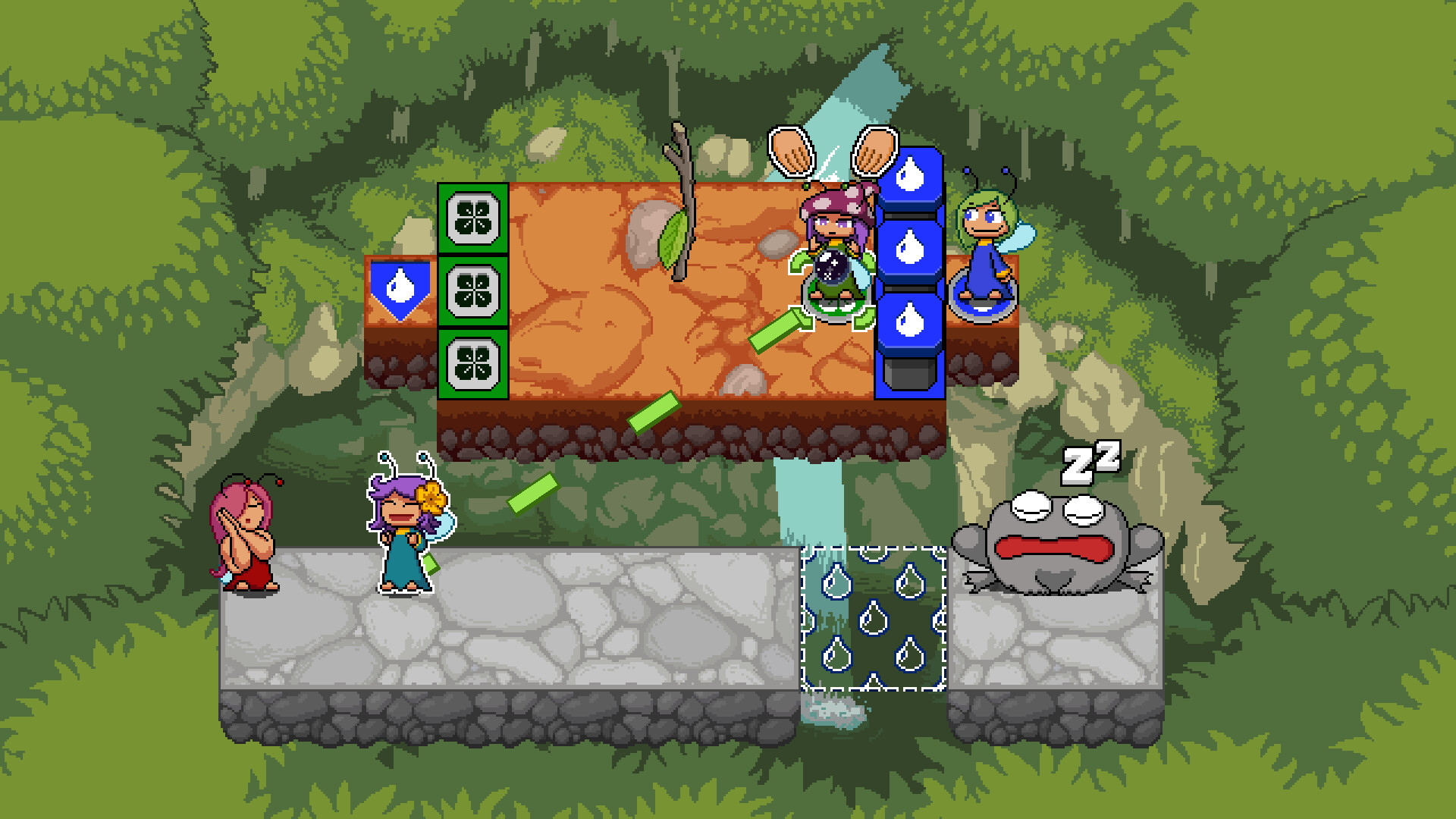
The forest world introduces new platforming and ability combinations on top of earlier mechanicsSpaceMatra -
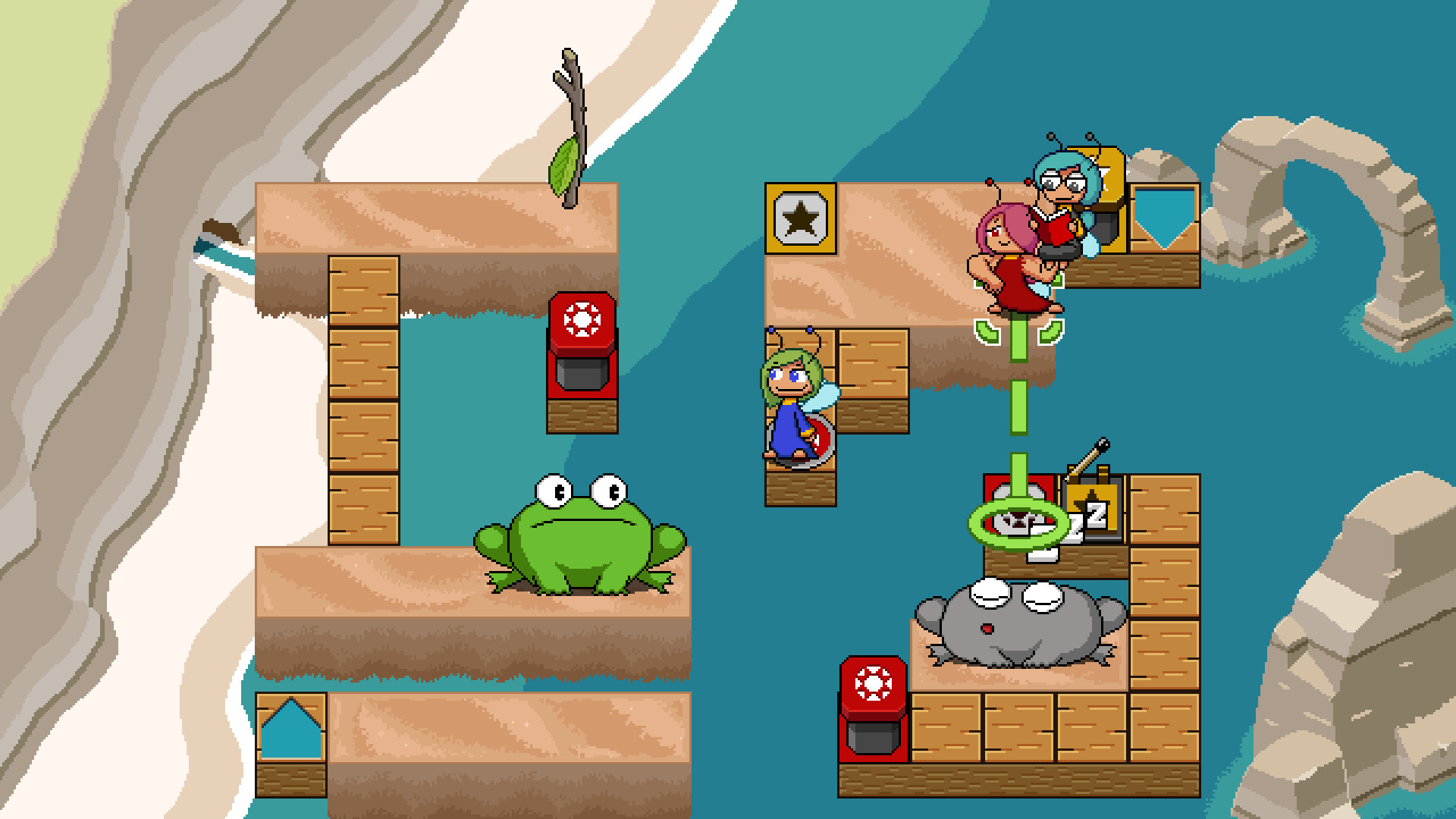
A bonus level, marked with a star icon, offering the tougher optional puzzles reviewers singled outSpaceMatra -
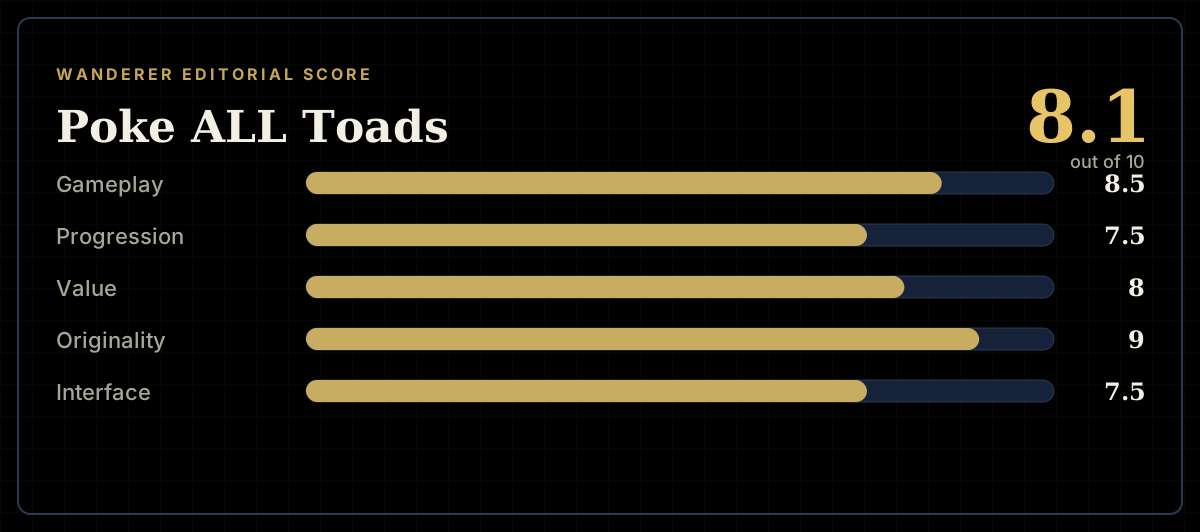
How the review scores each part of the gameWanderer Editorial -
The short versionWanderer Editorial