
Game review
Plum Road Tea Dream Review
7.5 / 10
- Developer
- Samuel Baidoo, Reveal Game Studio
- Publisher
- Reveal Game Studio
- Released
- 27 July 2026
- Platforms
- ["Windows", "Mac"]
- Genre
- Adventure
An Autobiography Built Out of Seven Sanctuaries
Plum Road Tea Dream is a semi-autobiographical walking sim from Samuel Baidoo, following S., a young queer game designer of color, as they build seven distinct virtual sanctuaries to process grief, joy, and identity. One reviewer, who received an early key ahead of the July 27 launch, described the premise plainly: "an autobiographical-style adventure about pain, identity, grief, healing, and the rituals we create to cope. You explore sanctuaries built by the character 'S.'... and the game invites you to slow down, wander, reflect, and sit with heavy emotions." That reviewer added a detail worth taking seriously as a content note rather than a criticism: "it tackles sensitive subjects in a way that genuinely moved me; at points I found myself wondering how the dev was doing in real life because the emotion feels so personal and lived-in." This is not a game reaching for universal fantasy escapism, it's a specific, personal document, and it asks to be met on those terms.
Minimal Gameplay, Maximal Intent
Multiple reviewers were upfront that Plum Road Tea Dream barely functions as a "game" in the mechanical sense, and framed that as the point rather than a shortfall. "The interactions in this game are meaningful but the mechanics are light to non existent, making this more of an art experience or a walking simulator than a traditional game," one wrote. Another reviewer drew a comparison that will mean something to a specific slice of the audience: "Do you know ENA: Dream BBQ? Well, this game is the same but weird differently. It is a surreal walking simulator, a journey into a very twisted psyche." A third invoked a different pair of touchstones: "a personal art project... as a walking simulator that takes cues from beginner's guide and undertale with a lot of reading." Movement is slow and deliberate, there's no jumping, crouching, or sprinting, and one reviewer specifically recommended raising the default mouse and turn speed, calling the out-of-the-box pace "painfully slow."
Diaries, Collectible Ice, and a God You Build Yourself
Underneath the walking-sim surface, there's more structural game than the "not really a game" framing suggests. Scattered ice-block collectibles, along with diary fragments, feed into a create-a-god mechanic in the game's central hub area, "Homeworld," where donated pieces assemble into a projected new deity. One detailed reviewer described the hub's evolving role: "Homeworld总是在不停地产生新的变化。它能通往各处,就像是连接各处的桥梁" (Homeworld keeps constantly changing. It connects to everywhere, like a bridge linking every area), and noted a personal manual save point at its center holding a diary that "will long exist beneath the manual save point, and every time you save you can take it out and flip through it, recording your own thoughts." Another reviewer singled out the game's visual evolution across its seven sanctuaries as deliberate rather than a technical limitation: "The locations show a clear sense of evolution, starting with what look like photographs plastered onto flat textures... Later come abstract clay objects, followed by interactive elements," each area built to visually track S.'s own growth as an artist.
Representation That's the Point, Not a Footnote
Several reviewers specifically framed the game's queer, Black authorship as central to its value rather than incidental context. A reviewer who curates a Steam group focused on BL/Bara/MxM visual novels rated the game five stars for both "Writing & Story" and "Representation" specifically, while another wrote plainly: "if a personal art project of a black queer individual as a walking simulator... sounds unappealing to you then you will not have a good time here." One reviewer framed the emotional payoff in blunt, personal terms: "this game is so generous. i'm helping s. process grief, AND there is a ton of space for my own [stuff]. sneaky." That specificity of audience and intent is presented honestly rather than marketed as something for everyone, which several reviewers credited as part of why the parts that do land, land hard.
One Dissent: A Fair Complaint About Scan Quality
Of 22 reviews, only one is negative, and it's worth engaging with directly rather than dismissing. "Scanning empty spaces (BADLY) and then filling them with equally low-quality objects.. hmm.. I honestly don't know who may possibly like it," the reviewer wrote, initially suspecting AI-generated content before concluding, in their own words, that the flat, patchy look was simply the product of "a cheap 3D scanning device producing that kind of image" rather than anything AI-related. That's a fair, specific technical complaint, the early photogrammetry-style rooms genuinely do look rough by conventional 3D-game standards, and it's a legitimate reason some players will bounce off the opening minutes before the clay-sculpted and hand-built later areas take over. It's also the single blemish on an otherwise near-unanimous response, worth weighing as a real access barrier rather than an outlier gripe.
A Short, Deliberately Unhurried Runtime
Recorded playtimes cluster mostly in the two-to-six-hour range, and reviewers consistently frame that length as appropriately sized rather than thin. "The experience took me around 3.5 hours to complete and though it was definitely possible to get through it faster, I feel like the time I spent was valuable and meaningful," one wrote. A more structured review pegged it similarly: "Playtime: Approximately 2 to 3 hours," while flagging the game as "Recommended with Caveats" for players specifically "looking for traditional gameplay... or an escapist experience." At $9.99, that's a reasonable per-hour price for a personal art piece rather than a padded product, and several reviewers explicitly recommended watching developer interviews alongside playing it, treating the game as one part of a larger authorial statement rather than a standalone commercial product.
Verdict
Plum Road Tea Dream is not trying to be a conventional game, and reviewers who approach it as an interactive memoir rather than a walking sim with a scoring system come away consistently moved, 21 of 22 recommend it, several in deeply personal terms about grief and identity they didn't expect a piece of software to touch. The slow pace, minimal traditional mechanics, and rough early-game photogrammetry visuals are real access barriers rather than invisible quirks, and the one dissenting review is a fair warning that this format asks patience of players who came in expecting a game first and an art piece second. For anyone drawn to autobiographical narrative work, queer authorship, or the specific lineage of introspective walking sims it invokes, it delivers something genuinely rare; anyone hoping for mechanical depth or an escapist fantasy should look elsewhere.
Screenshots
-
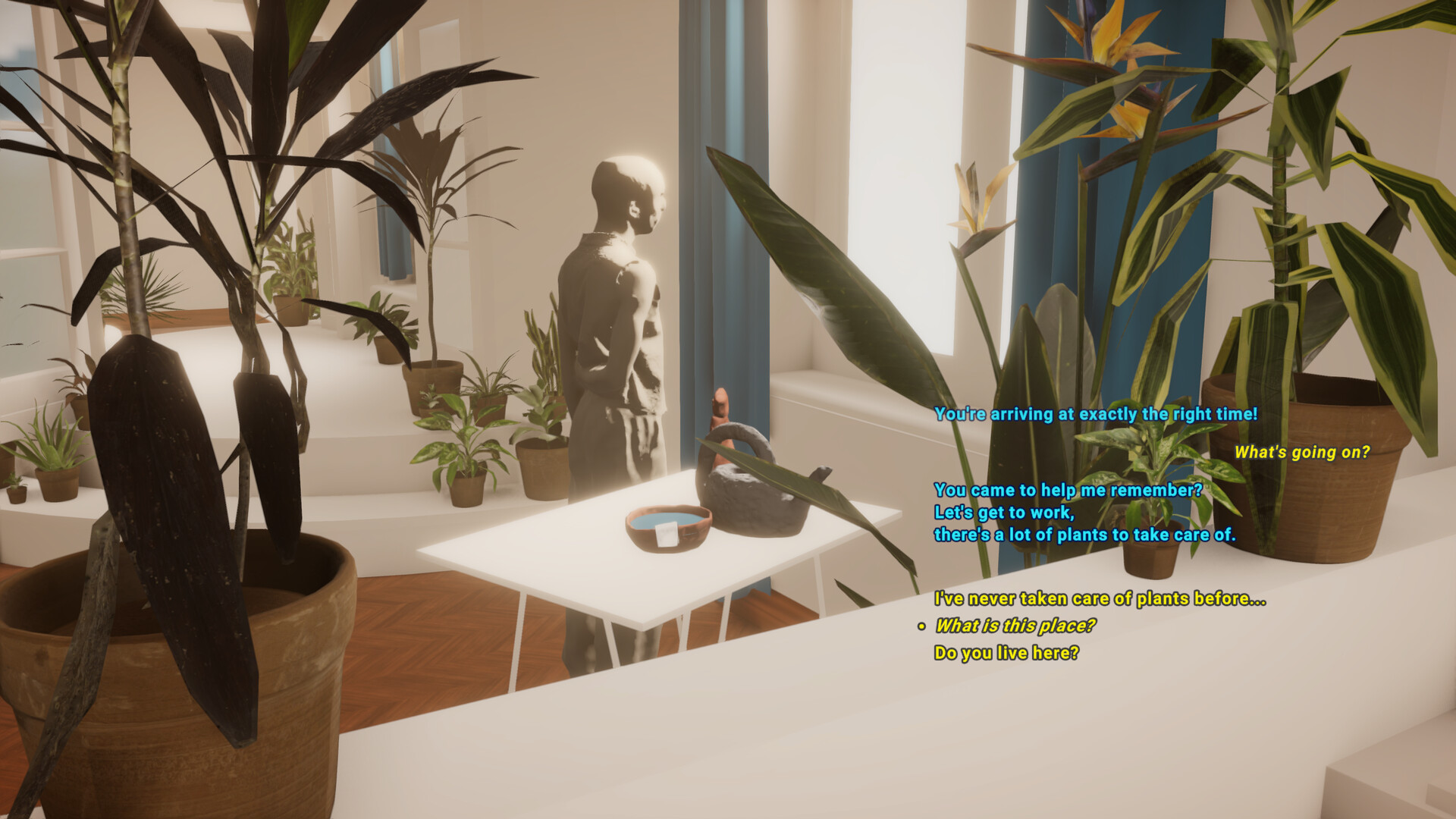
A conversation in one of the game's plant-filled sanctuaries, its early rooms built from photo-scanned objects and figures.Image: Reveal Game Studio via Steam -
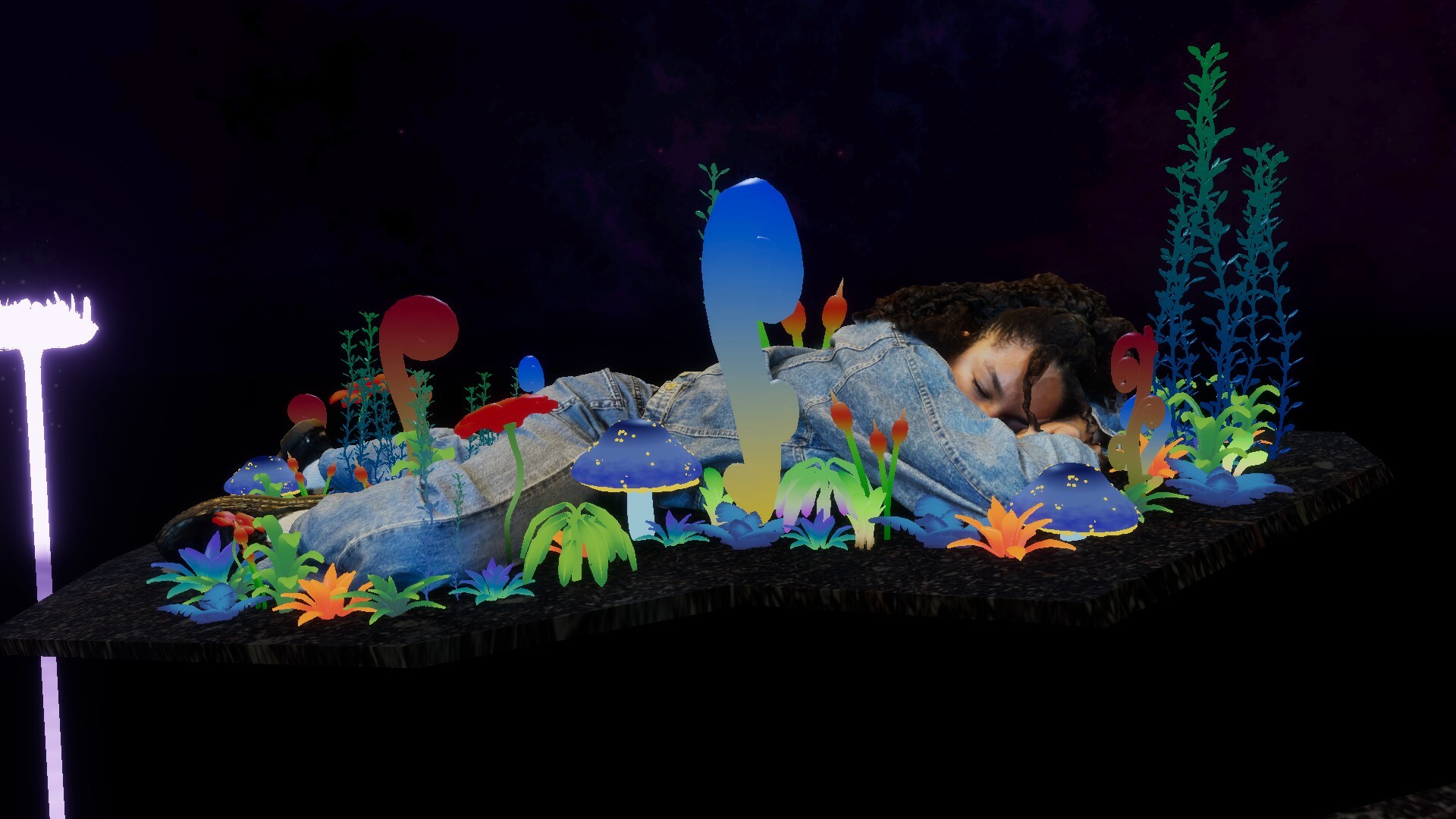
One of the game's dreamlike garden vignettes, mixing photo-scanned imagery with hand-sculpted, brightly colored clay flora.Image: Reveal Game Studio via Steam -
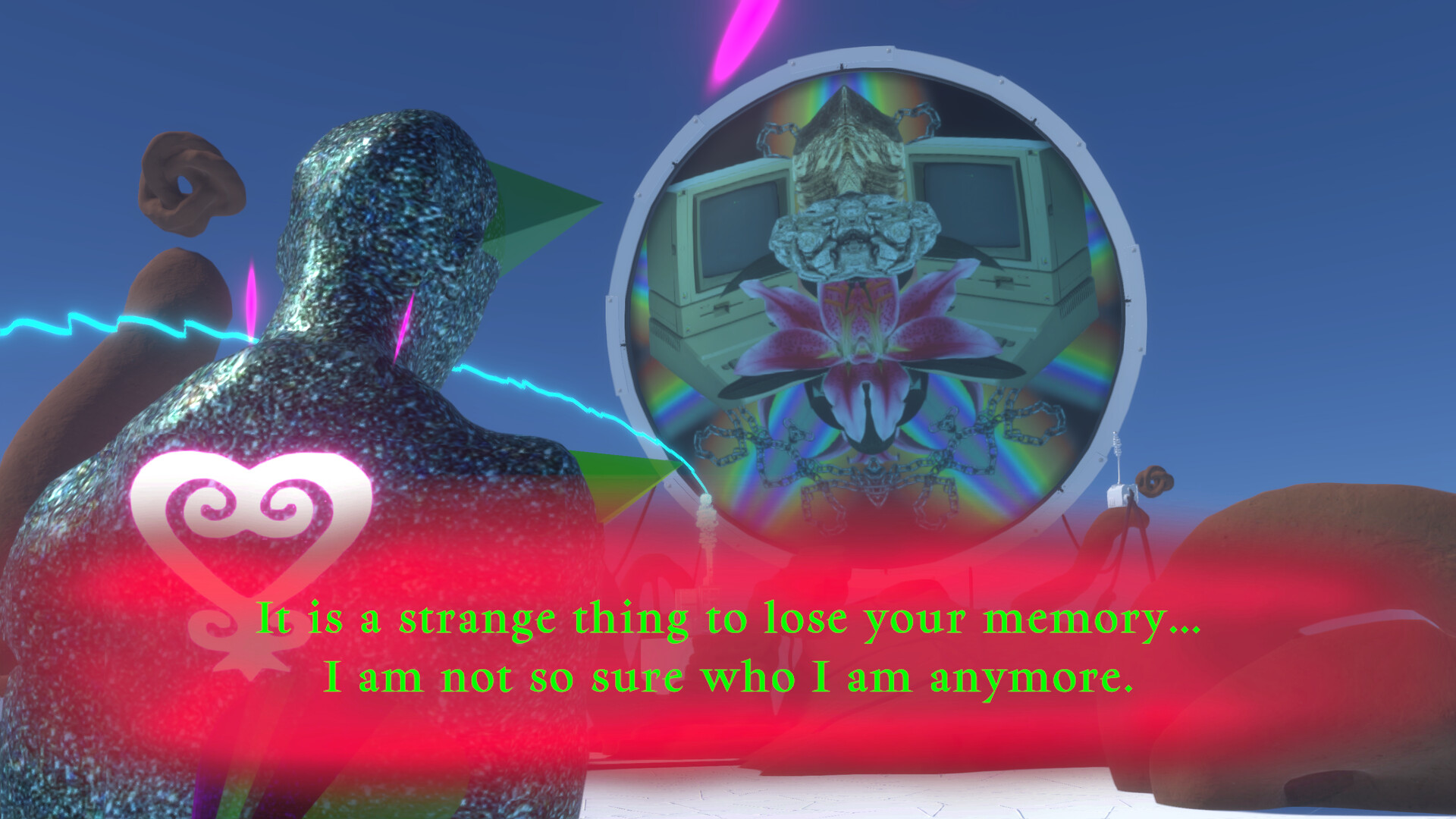
A surreal memory-loss vignette, the game's mixed-media visual style layering old computer imagery, flowers, and clay textures.Image: Reveal Game Studio via Steam