
Game review
Planetiles
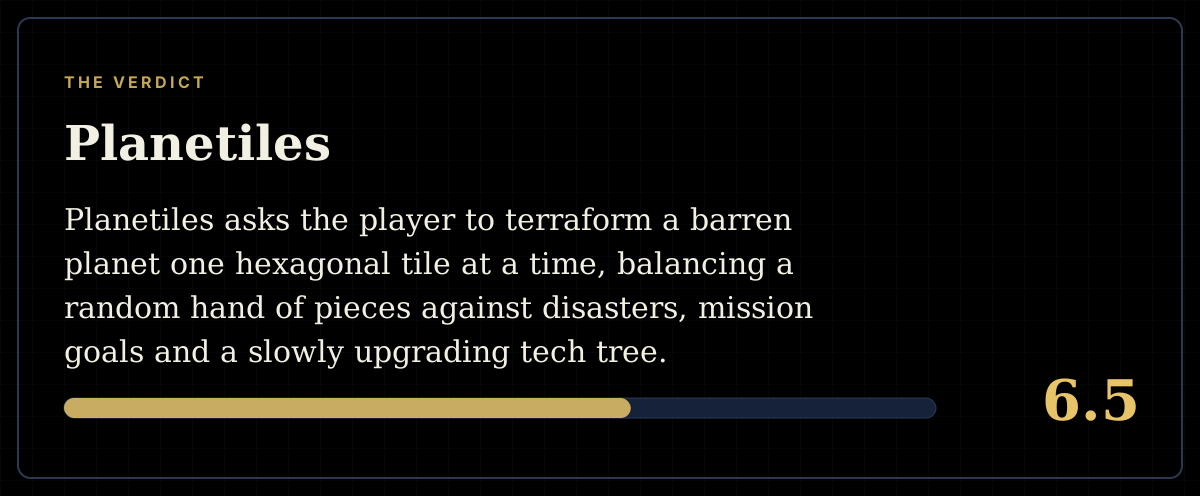
6.5 / 10
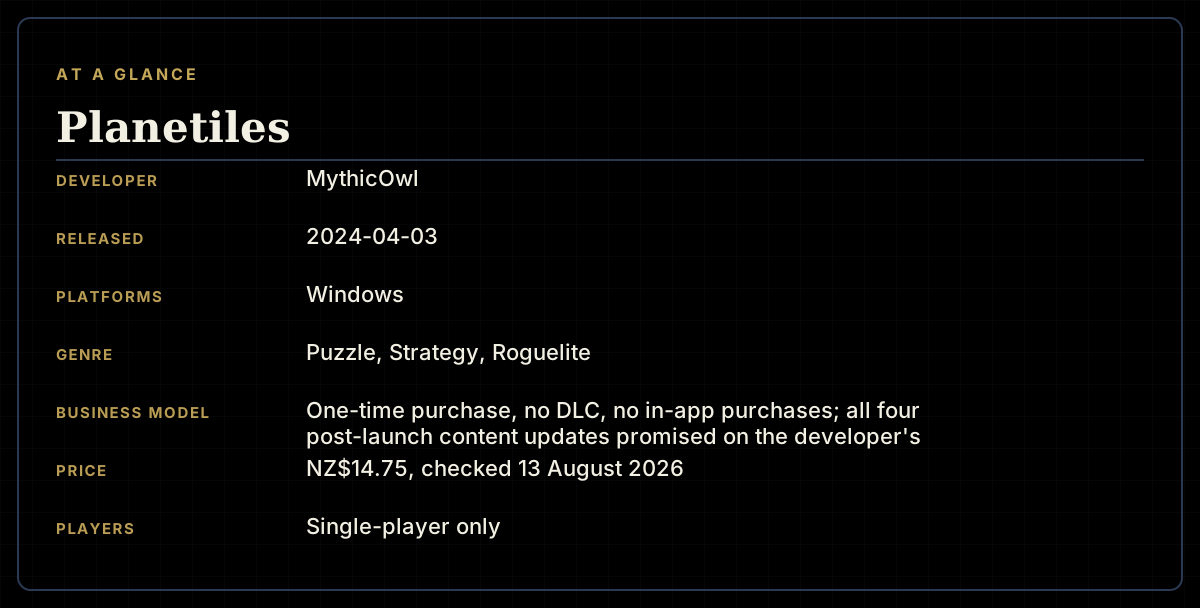
- Developer
- MythicOwl
- Publisher
- MythicOwl
- Released
- 3 April 2024
- Platforms
- Windows
- Genre
- Puzzle, Strategy, Roguelite
- Monetisation
- One-time purchase, no DLC, no in-app purchases; all four post-launch content updates promised on the developer's roadmap were delivered free
- Players
- Single-player only
The short version
Planetiles asks the player to terraform a barren planet one hexagonal tile at a time, balancing a random hand of pieces against disasters, mission goals and a slowly upgrading tech tree. Made and self-published by the small studio MythicOwl and released 3 April 2024, it drew genuine press attention — Eurogamer covered it as "a satellite's view of Dorfromantik" — and sits at Mostly Positive across the 52 English-language reviews this review reads in full. The mechanics themselves are rarely in dispute; what splits this small review base is whether the game gives players enough reason to keep placing tiles once the novelty settles.
Biggest strengths
- A genuinely well-regarded genre combination, repeatedly compared by name to Dorfromantik and Tetris by both reviewers and outside press coverage
- The developer publicly committed to a free content roadmap at launch and delivered on it in full — two content updates and a final roadmap update all shipped by September 2024, exactly as promised
- A turn-based roguelite structure with randomised tiles, missions and disasters gives runs real variety rather than a single fixed puzzle to solve, according to several detailed positive reviews
Biggest weaknesses
- Several detailed reviews describe the game as lacking a hook to sustain long-term interest — no story, modest visual presentation, and an unlock system that only motivates players who are already engaged rather than drawing new interest in
- At least one specific, checkable technical bug is reported on widescreen displays: the UI clips regardless of the system resolution setting, in one case hiding the settings button entirely, and both Xbox controller and Escape key inputs reportedly exit the game immediately rather than pausing it
- Multiple reviewers describe a real difficulty wall requiring a high level of skill to unlock further levels, with one reporting only two of the game's levels unlocked after several hours of play
Who it's for: Fans of calm, tile-based puzzle games like Dorfromantik who also want the roguelite randomness of a shifting hand and mission structure; a poor fit for players who need a strong narrative or visual hook to stay engaged with a puzzle loop.
Our recommendation: A well-built, well-supported puzzle game that fully delivered its promised free content roadmap, worth trying for genre fans even though a real share of players find the loop doesn't hold their attention past the opening hours.
6.5 / 10
Introduction
Planetiles takes the calm, satisfying act of placing hexagonal tiles — familiar to anyone who's played Dorfromantik — and adds real spatial pressure and randomness on top, turning a barren planet into a living world one piece at a time while managing disasters and mission goals along the way. Made and self-published by the small studio MythicOwl, it released 3 April 2024 and picked up genuine outside attention, including an Eurogamer feature that called it "a satellite's view of Dorfromantik." It sits at Mostly Positive across the 52 English-language reviews this review reads in full, and what's notable about this small sample is how rarely the actual mechanics are the point of contention — the split is almost entirely about whether the loop holds attention over time.
A genre combination that earns its comparisons
The Dorfromantik-and-Tetris framing recurs constantly and isn't a stretch. "Dorfromantik + Tetris = Planetiles," one reviewer writes simply. Another, with over 132 hours logged, calls it "a fun puzzler that reminded me of Dorfromantik" and wishes there were more of it. A third goes into more detail about what separates it from a pure puzzle game: "there's endless replayability because it's more of a turn-based roguelite than a pure puzzle game. The pieces you get are random, the missions you get are random, the disasters are random." That randomised structure is a deliberate design choice rather than an accident, and for the players it clicks with, it's the game's clearest strength.
A hook problem, named specifically
The most substantive criticism running through this game's negative sample isn't about broken mechanics — it's about staying power. "Seems like a perfectly well made little puzzle game, with solid rules," the top-voted negative review states, before explaining the actual complaint: "Unfortunately it kind of lacked any hook to keep me playing: there's no story, the game isn't pretty enough to enjoy just looking at, and the unlocks system would only motivate me if I cared to play in the first place." A separate reviewer describes a similar experience in blunter terms: "the gameplay is primitive, repetitive, and plainly boring... The whole thing feels like a chore." That's a genuinely different criticism from "this game is broken," and it's worth taking at face value — a game can be competently built and still fail to give a particular player a reason to return.
A related, more specific complaint concerns difficulty gating: one reviewer reports being able to unlock only two of the game's levels despite several hours invested, describing a wall that required a high level of skill to progress past rather than a gradual curve. A separate review flags the tutorial as part of the same problem — "some text boxes" rather than a hands-on introduction, dropped on the player alongside a full set of mechanics at once.
A real, specific technical bug
Distinct from the engagement debate, at least one detailed review reports a concrete display problem: on a widescreen monitor, the UI clips regardless of the system resolution setting, including hiding the settings button entirely in some cases, with both the Xbox controller's Start/Back buttons and the Escape key immediately exiting the game rather than pausing it. That's a specific, reproducible complaint rather than vague dissatisfaction, and worth knowing about for anyone playing on an ultrawide setup.
A developer who delivered what it promised
What's unambiguous in this game's favour is the developer's follow-through. MythicOwl announced a public content roadmap in early May 2024, and Steam's own community history confirms every piece of it shipped: a "Disruptive Technology" update that June, a second content update that August, and a "Final Roadmap Content Update" that September — all free, exactly as one positive reviewer specifically credited them for promising. "They said to me, they're going to be releasing Free Expansions for this game. No money, no nothing," that review reads. "Buy this game, support them, they're true developers." Steam Deck verification followed in May 2024, and the game maintains a genuinely healthy achievement completion curve for its content overall.
Final Verdict
Planetiles is a well-made, well-supported tile-placement puzzler that earns its comparisons to Dorfromantik and delivered every update it promised its players for free — a genuinely honest small release. What holds it back from a stronger score is that a real, specific share of its own audience finds the loop doesn't give them enough reason to keep returning, alongside a checkable UI bug on widescreen displays and a real difficulty wall for some players. For genre fans who enjoy calm tile-placement puzzles with a roguelite's randomness layered in, it's a solid pick; for anyone who needs a story or strong visual hook to stay engaged, it's fair to try before committing.
Pros and cons
Pros
- A genuinely well-regarded genre combination, repeatedly compared by name to Dorfromantik and Tetris by both reviewers and outside press coverage
- The developer publicly committed to a free content roadmap at launch and delivered on it in full — two content updates and a final roadmap update all shipped by September 2024, exactly as promised
- A turn-based roguelite structure with randomised tiles, missions and disasters gives runs real variety rather than a single fixed puzzle to solve, according to several detailed positive reviews
- Steam Deck Verified, with a smooth, focused core loop that several reviewers specifically praise as polished and satisfying to interact with
Cons
- Several detailed reviews describe the game as lacking a hook to sustain long-term interest — no story, modest visual presentation, and an unlock system that only motivates players who are already engaged rather than drawing new interest in
- At least one specific, checkable technical bug is reported on widescreen displays: the UI clips regardless of the system resolution setting, in one case hiding the settings button entirely, and both Xbox controller and Escape key inputs reportedly exit the game immediately rather than pausing it
- Multiple reviewers describe a real difficulty wall requiring a high level of skill to unlock further levels, with one reporting only two of the game's levels unlocked after several hours of play
- The in-game tutorial is described by more than one reviewer as text-heavy and unclear, dropping players into a full set of mechanics without adequately explaining them first
Screenshots
-
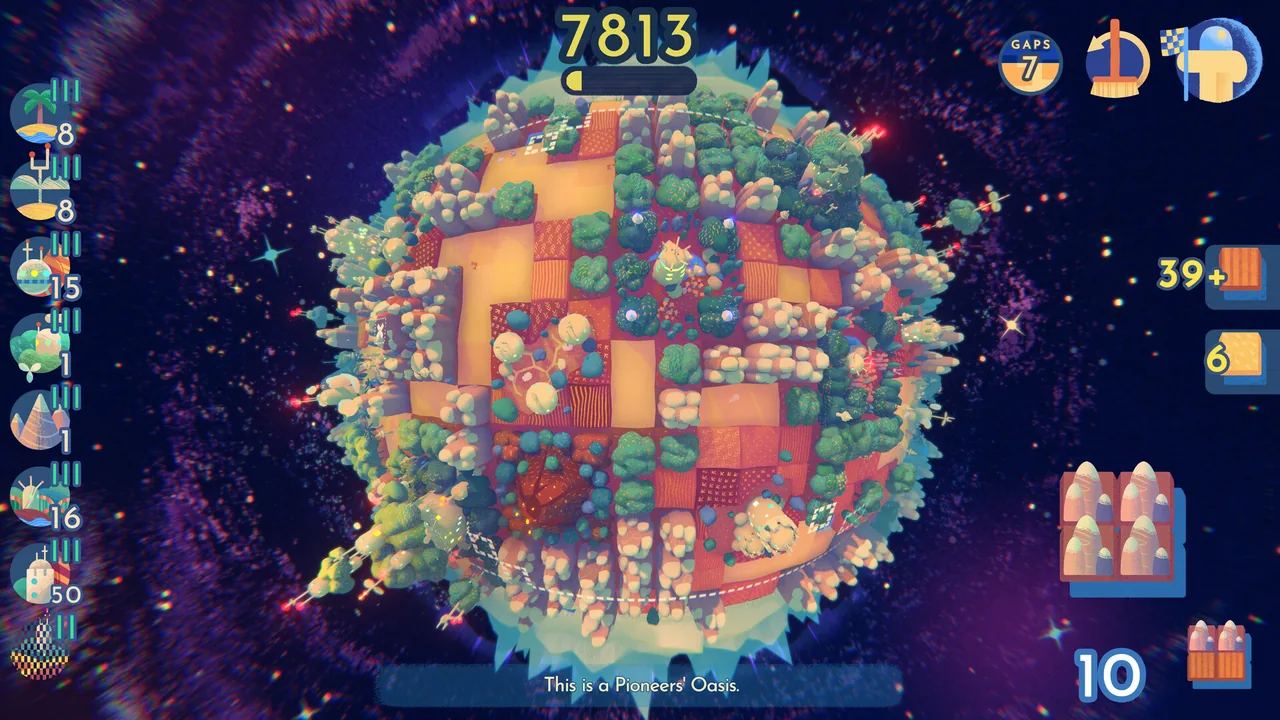
PlanetilesImage: MythicOwl via Steam -
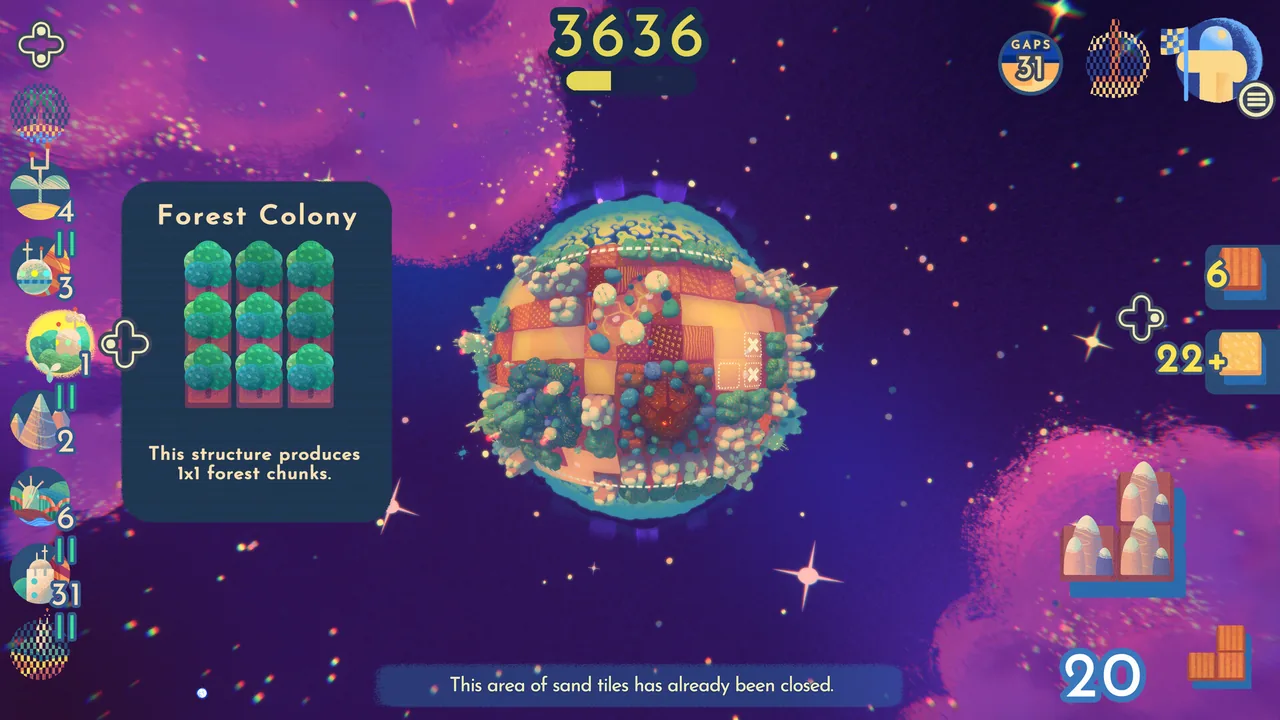
PlanetilesImage: MythicOwl via Steam -
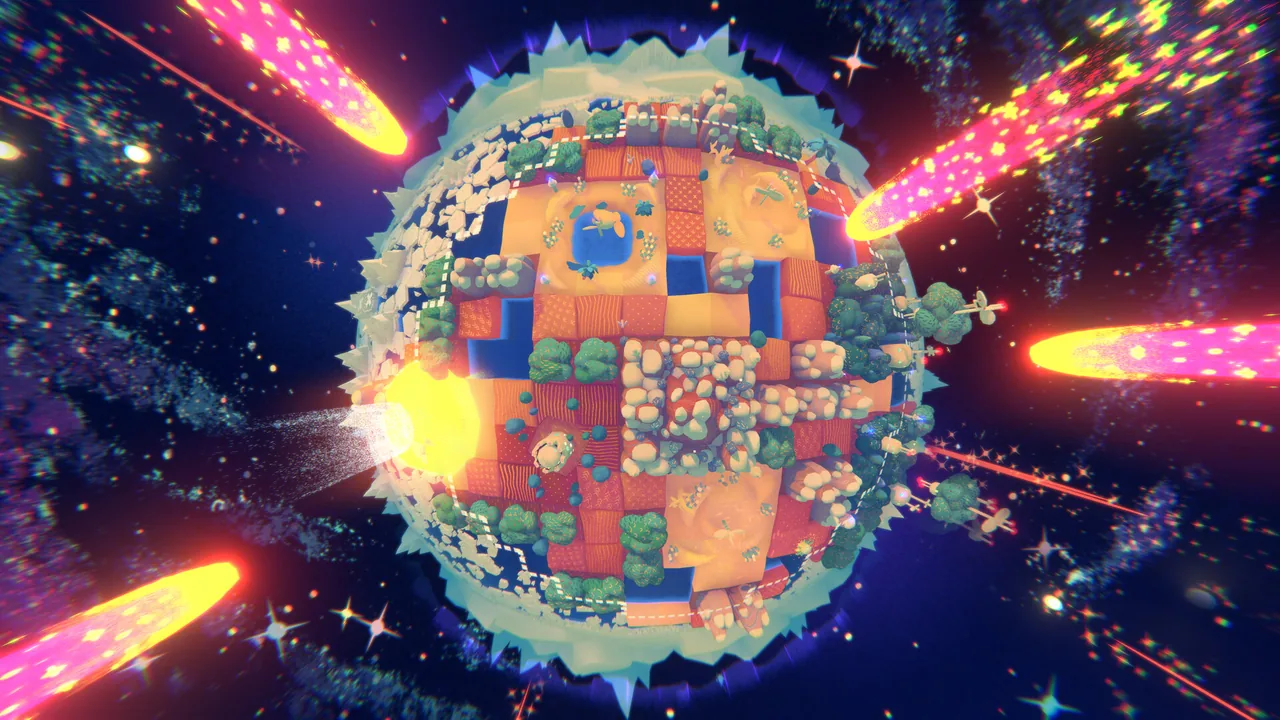
PlanetilesImage: MythicOwl via Steam -
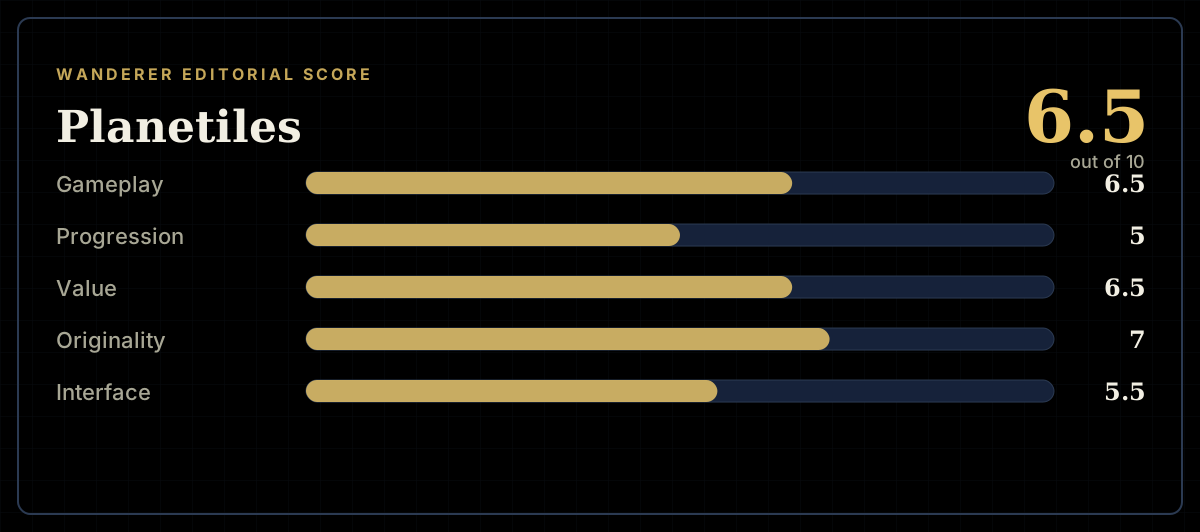
How the review scores each part of the gameWanderer Editorial -
The essentials at a glanceWanderer Editorial -
The short versionWanderer Editorial