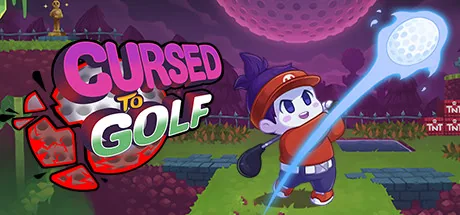
Game review
Cursed to Golf
6.5 / 10
- Developer
- Chuhai Labs
- Publisher
- Thunderful Publishing
- Released
- 18 August 2022
- Platforms
- Windows
- Genre
- Golf, Roguelite, Platformer
- Monetisation
- One-time purchase, no DLC, no in-app purchases
- Players
- Single-player only
The short version
Cursed to Golf sends a golfer struck by lightning through eighteen purgatorial holes built as precision-platforming puzzles, using cards and power-ups to bend the rules of golf just enough to make each shot a genuine decision. Developed by Chuhai Labs and published by Thunderful Publishing, it released 18 August 2022 and sits at Mostly Positive, 71.7% across 575 English-language reviews. What's unusual about this corpus is how consistently reviewers on both sides of the recommend line arrive at the identical specific diagnosis: the core golf-platformer mechanics are genuinely excellent, and the roguelite structure wrapped around them — hours-long runs, permadeath-style resets, no meaningful progression carried between attempts — is a mismatch that turns a game built to reward creative shot-making into a punishing, repetitive slog for a meaningful share of the people who tried to finish it.
Biggest strengths
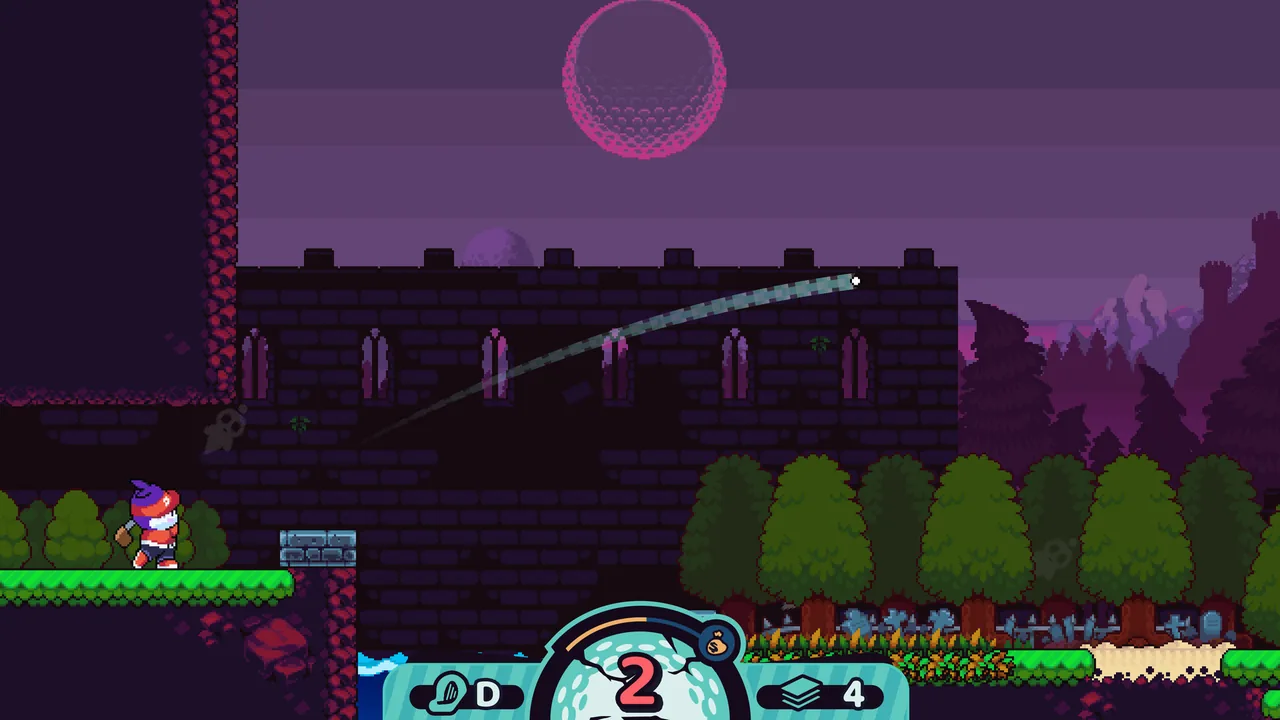
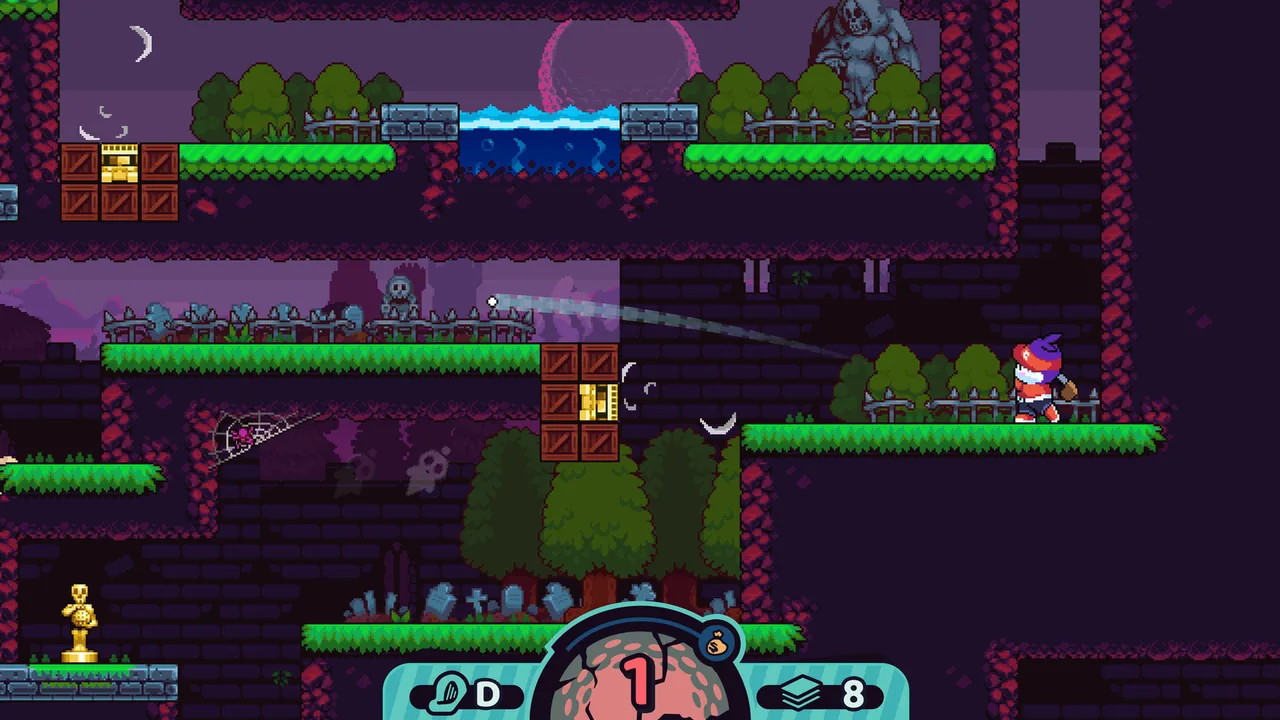
- The core mechanic of using power-up cards to bend golf's usual rules on handcrafted holes draws consistent, specific praise as a genuinely creative execution of an unusual concept
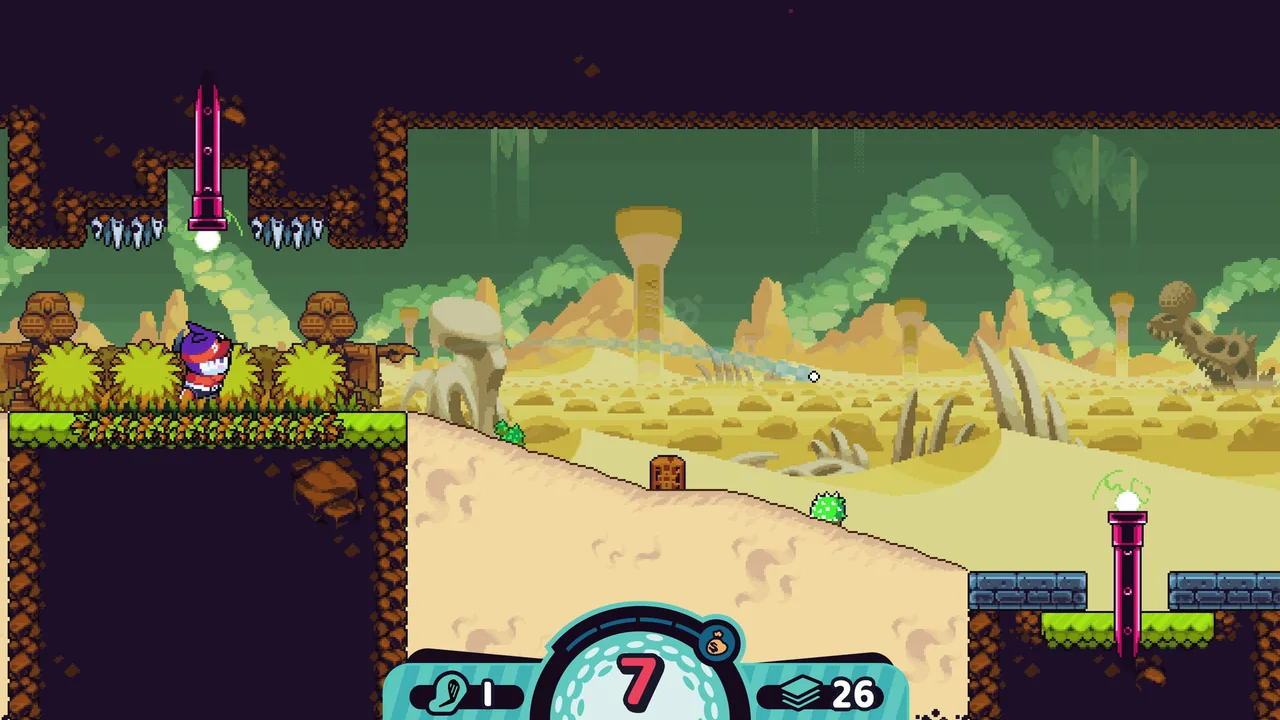
- Pixel art, animation and music earn wide praise, with reviewers repeatedly describing the presentation as polished and full of life
- Individual holes are handcrafted with real decision-making on each shot, rewarding experimentation rather than rote memorisation for players engaging with the puzzle side of the design
Biggest weaknesses
- The single most repeated criticism, made independently by reviewers who otherwise recommend the game, is that the roguelite framing is a poor fit — runs commonly take four to seven hours, with limited meaningful progression carried between attempts, which several reviewers say undercuts the genre label entirely
- Limited on-screen visibility for longer shots is a specific, repeated complaint, with reviewers describing landing spots outside the visible camera range as feeling like gambling rather than a test of skill
- The par system can create situations reviewers describe as effectively unwinnable because of a decision made several shots earlier, which several found frustrating rather than fair
Who it's for: Fans of precision-platforming and inventive genre mashups who can tolerate long, high-stakes runs; a poor fit for anyone specifically drawn in by the "roguelite" label expecting meta-progression or short, replayable sessions.
Our recommendation: A genuinely creative and well-crafted golf-platformer let down by a roguelite wrapper its own players agree doesn't fit — worth it for the core mechanics if you go in aware of what the run structure actually demands.
6.5 / 10
Introduction
Cursed to Golf sends a golfer, struck by lightning mid-swing and stranded in golf purgatory, through eighteen handcrafted holes built less like a traditional course and more like a precision-platforming puzzle, using a hand of power-up cards to curve shots, bounce off surfaces or otherwise bend golf's usual physics just enough to solve each hole's specific challenge. Developed by Chuhai Labs and published by Thunderful Publishing, it released 18 August 2022 and sits at Mostly Positive, 71.7% across the 575 English-language reviews this review reads in full. What makes this corpus worth digging into rather than simply reporting the percentage is how unusually aligned it is on a single specific diagnosis, repeated by fans and critics of the game alike.
A genuinely creative core, and reviewers say so
Start with what draws consistent praise across nearly the entire sample, including from reviewers who ultimately can't recommend the game. The central mechanic — spending power-up cards to make a shot curve, bounce, or otherwise defy ordinary golf physics — earns real, specific credit for originality. One reviewer described it precisely as a "gimmick movement precision platformer disguised as a golf game," adding, approvingly, that "it's a very good disguise." Individual holes are handcrafted rather than procedurally generated, and reviewers repeatedly single out the resulting decision-making — reading a hole, choosing which card to spend and when — as the game's genuine strength. Presentation earns its own wide praise: pixel art, animation and music draw consistent compliments, with one reviewer comparing the whole package favourably to "one of those old browser mini-golf games that's extremely flashy and polished, and hopped up on caffeine."
The complaint that shows up in the positive reviews too
Here's what separates this review's read of the corpus from a simple percentage. The dominant criticism of Cursed to Golf isn't really a negative-review phenomenon — it recurs, stated with striking consistency, inside reviews that recommend the game. A 113-vote positive review put it directly: "the game's shortcoming is that while gameplay is fun, trying to marry it with roguelike mechanics can make the game too frustrating for most players to even finish." A 45-vote positive review went further, calling it bluntly "a terrible rogue-like," and noting there's a specific, known workaround players use to sidestep the roguelite structure entirely — hardly a ringing endorsement of that half of the design. A third reviewer asked the pointed question directly: "why this needed the coat of a rogue-like without meta progression when a run easily takes 4-7 [hours]" to complete.
The specific shape of the complaint matters. This isn't reviewers objecting to difficulty in the abstract — it's a structural critique that the genre framing itself doesn't match what the game actually delivers. A traditional roguelite promises short, replayable runs with meaningful progression carried forward after each attempt, which lets failure feel like the start of the next try rather than a wasted evening. Cursed to Golf's runs commonly stretch four to seven hours, with limited meaningful carryover between attempts, which means a mistake or an unlucky draw hours into a run — described by multiple reviewers as effectively creating unwinnable situations from decisions made several shots earlier — can cost the entire session rather than a few minutes. One detailed 25-vote review, playing well after launch, summarised the consequence plainly: "zero meaningful game progression in-between runs, which combined with fairly repetitive and punishing gameplay meant the game stopped being fun fast."
The specific friction underneath the structural complaint
Beyond the roguelite mismatch, several more concrete, repeated complaints compound the frustration. Limited camera zoom on longer shots is a specific, recurring issue — reviewers describe landing a drive outside the visible range as feeling less like a test of skill and more like gambling on where the ball ends up. Quality-of-life gaps recur too: unskippable cutscenes and shot animations that have to be sat through repeatedly across a long run, no option to remap controls, and a meaningful number of reviewers reporting bugs and outright crashes, including one describing the game failing to launch nine times out of ten. None of these individually would sink a game with as strong a core mechanic as this one clearly has, but stacked on top of runs already stretching several hours, they compound the fatigue reviewers describe feeling by the back nine.
A steep drop-off that corroborates the complaint
Steam's achievement data backs up exactly what the review sample describes. The tutorial-completion achievement sits at a healthy 77.6%, but the very next milestone — defeating the first boss — drops to 20.4%, and completing the front nine holes sits at just 12.7%. That's a genuine cliff rather than a gradual taper, and it lines up precisely with reviewers' description of runs becoming punishing enough, once the roguelite structure's stakes kick in, that a large share of buyers who start the game never get past its early stretch. For contrast, the hardest completionist achievements — scoring an eagle, an ace, a hole-in-one — sit under 3%, but the more telling number here is how steep the initial drop is, not how rare the endgame is.
Final Verdict
Cursed to Golf's core idea is genuinely good, and its own review base says so with remarkable consistency — inventive shot-making, handcrafted holes, and presentation that earns real praise on its own terms. What holds this back from a stronger score is a structural decision, not a production flaw: wrapping that mechanic in a roguelite framework that demands hours-long runs with little to carry forward when a run ends, which a meaningful share of this game's own fans, including many who recommend it, describe as the thing actively working against what makes the golf itself fun. If you can treat each run as a long-form challenge rather than the quick, replayable roguelite sessions the label implies, there's a genuinely creative game underneath. Go in expecting that mismatch rather than discovering it four hours into your first attempt.
Pros and cons
Pros
- The core mechanic of using power-up cards to bend golf's usual rules on handcrafted holes draws consistent, specific praise as a genuinely creative execution of an unusual concept
- Pixel art, animation and music earn wide praise, with reviewers repeatedly describing the presentation as polished and full of life
- Individual holes are handcrafted with real decision-making on each shot, rewarding experimentation rather than rote memorisation for players engaging with the puzzle side of the design
- A clean, focused release with no DLC, in-app purchases or monetisation of any kind beyond the base price
Cons
- The single most repeated criticism, made independently by reviewers who otherwise recommend the game, is that the roguelite framing is a poor fit — runs commonly take four to seven hours, with limited meaningful progression carried between attempts, which several reviewers say undercuts the genre label entirely
- Limited on-screen visibility for longer shots is a specific, repeated complaint, with reviewers describing landing spots outside the visible camera range as feeling like gambling rather than a test of skill
- The par system can create situations reviewers describe as effectively unwinnable because of a decision made several shots earlier, which several found frustrating rather than fair
- Quality-of-life gaps recur across the sample — unskippable cutscenes and shot animations, no control remapping, and reported bugs and crashes affecting a meaningful share of the negative reviews
Screenshots
-
Cursed to GolfImage: Thunderful Publishing via Steam -
Cursed to GolfImage: Thunderful Publishing via Steam -
Cursed to GolfImage: Thunderful Publishing via Steam -
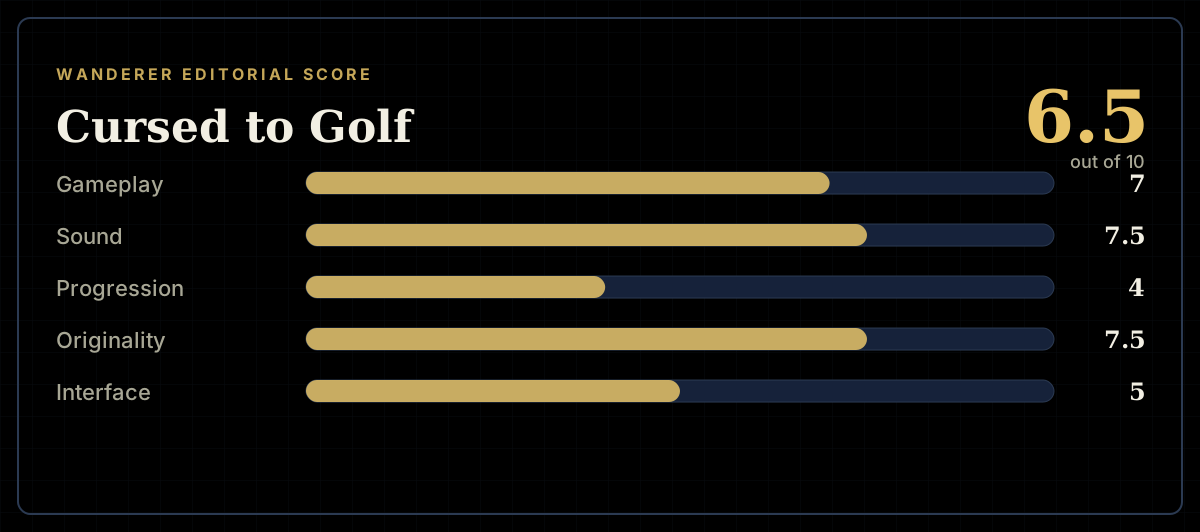
How the review scores each part of the gameWanderer Editorial -
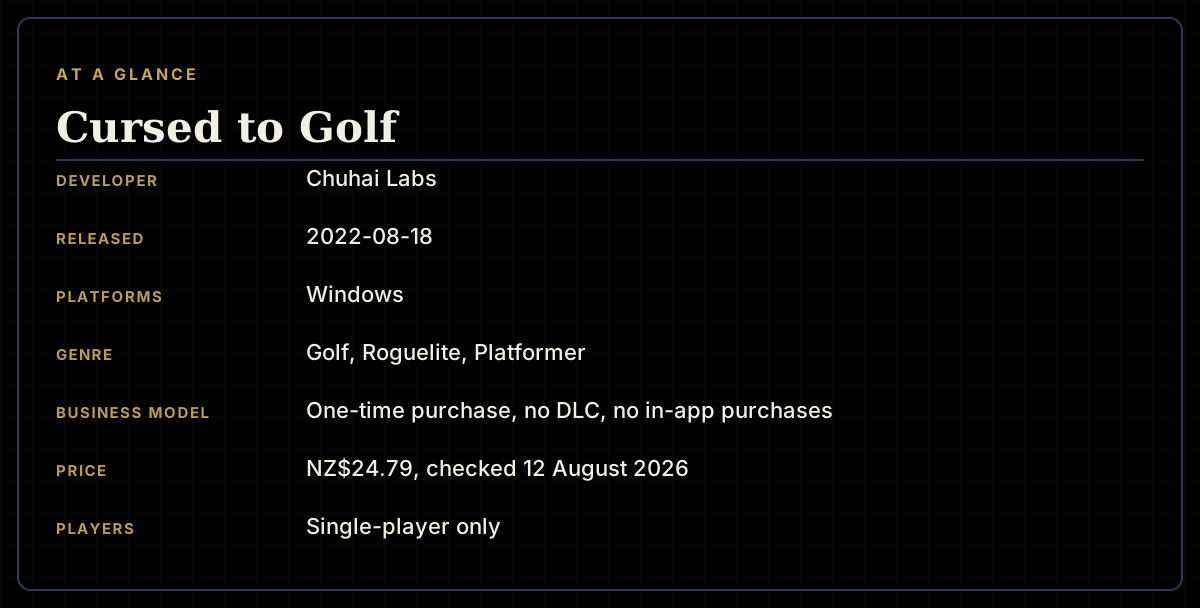
The essentials at a glanceWanderer Editorial -
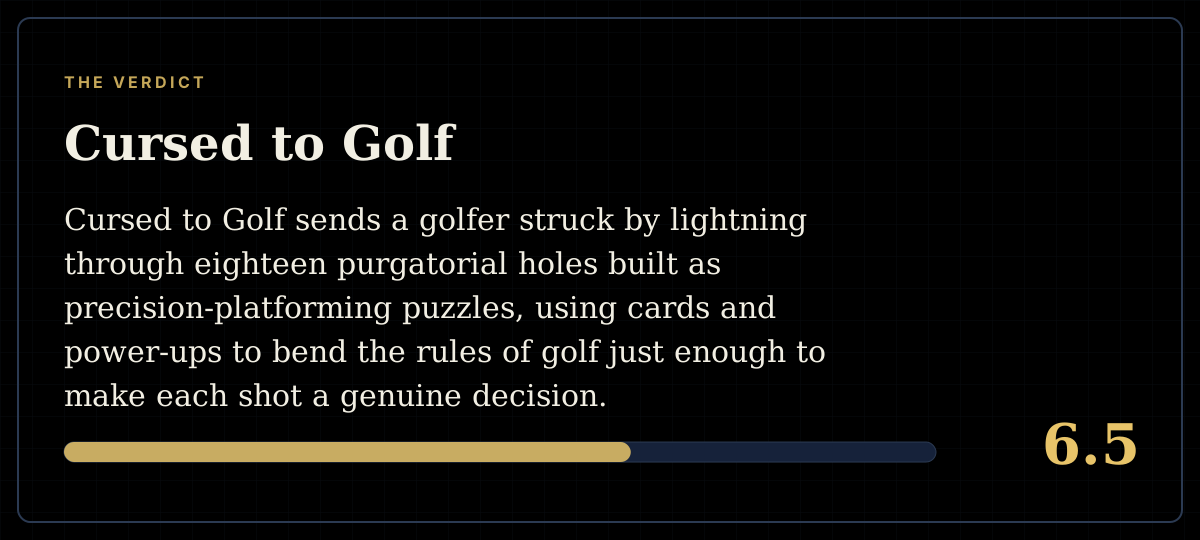
The short versionWanderer Editorial