
Game review
PARANORMASIGHT: The Seven Mysteries of Honjo
7 / 10
- Developer
- Square Enix
- Publisher
- Square Enix
- Released
- 8 March 2023
- Platforms
- Windows
- Genre
- Horror Mystery Visual Novel
- Monetisation
- One-time premium purchase; a standalone sequel released separately in 2026
- Players
- Single-player only; no online, co-op or PvP modes
The short version
PARANORMASIGHT drops a handful of ordinary people in 1980s Tokyo into possession of deadly curses, each capable of killing another curse-bearer under specific, hidden conditions, all in pursuit of an item powerful enough to raise the dead. Built by Square Enix veterans behind Trials of Mana and The World Ends With You's visual design, it earned an Overwhelmingly Positive reception and comparisons to Ace Attorney, Danganronpa and Zero Escape, with reviewers consistently praising its premise, polish and confirmed Steam Deck compatibility.
Set against that acclaim is a specific, widely repeated complaint: a meaningful share of reviewers describe the compelling curse-duel premise established in the opening hours as largely abandoned once the story shifts into its later chapters, with the supernatural cat-and-mouse tension the marketing leans on occurring, in practice, far less than expected. This isn't a minority gripe — it recurs across independent reviews with enough consistency and specificity to treat as a genuine structural pacing issue rather than a one-off disappointment.
Biggest strengths
- A genuinely gripping opening premise — ordinary people gaining deadly curses under specific, hidden conditions — that reviewers consistently praise as one of the strongest hooks in recent visual novel releases
- Confirmed Steam Deck Verified status, with reviewers specifically praising smooth handheld performance for a genre well suited to portable play
- Visible polish and craft throughout, backed by a development team including veterans of Trials of Mana and The World Ends With You, distinguishing it from typical genre entries
Biggest weaknesses
- A meaningful, recurring complaint across independent reviews describes the compelling curse-duel tension established early on as largely abandoned once the story moves past its opening chapters, with the "everyone has a curse" premise mattering mechanically far less than marketing suggests
- Several reviewers report emotional detachment from the cast despite admiring the plotting, describing character deaths and betrayals that land with less impact than the mystery construction around them deserves
- At roughly 10 to 12 hours, several reviewers feel the runtime is too short to properly develop its ensemble cast and world relative to the ambition of its opening setup
Who it's for: Visual novel and mystery-thriller fans who value premise and presentation over sustained mechanical tension, and Steam Deck players wanting a confirmed-compatible narrative game. Less suited to anyone expecting the sustained curse-battle-royale tension the marketing emphasizes throughout.
Our recommendation: A worthwhile pickup for mystery VN fans specifically, best approached with tempered expectations about how much of the curse-duel premise actually persists past the opening chapters.
7 / 10
An ordinary person in 1980s Tokyo picks up a strange stone tablet and suddenly gains the power to kill — but only under specific, hidden conditions, and only against other people who've received the same terrible gift. That's the premise PARANORMASIGHT opens with, and it's a genuinely gripping one: everyone around you might be a curse-bearer too, all competing for an item powerful enough to raise the dead, and reviewers consistently single out this setup as one of the strongest hooks in recent visual novel releases. Built by a Square Enix team including veterans of Trials of Mana and the visual mind behind The World Ends With You, it arrived with real pedigree behind it.
Polish and pedigree that show
The craft on display draws consistent praise independent of the story itself. Reviewers describe a level of visual and presentational polish uncommon in the visual novel genre, and the game earned Steam Deck Verified status within months of launch, with reviewers specifically calling out how well it runs on the platform for a genre that suits handheld play naturally. That combination of narrative ambition, veteran craft and confirmed portable support helps explain how the game reached an Overwhelmingly Positive reception broad enough to satisfy both dedicated visual novel readers and players who don't typically engage with the format, drawing comparisons to genre touchstones like Ace Attorney, Danganronpa, Zero Escape and Doki Doki Literature Club along the way.
A premise that doesn't fully sustain itself
Set against that acclaim, this review's research turned up a specific, widely repeated complaint: a meaningful share of reviewers describe the compelling curse-duel tension established in the opening chapters as largely abandoned once the story moves into its later structure. One detailed review puts it directly, describing the game as undermining itself — the setup of curse-bearers hunting each other under hidden conditions was, in that reviewer's words, "HUGELY compelling," but the mechanic that makes it work only applies at night, and once the story shifts into daytime sequences, that tension mostly disappears. Another reviewer frames the same pattern differently, describing nearly every promise made by the game's marketing and store page as underdelivered on: the battle-royale structure, the fourth-wall-breaking meta elements, and the adventure-puzzle hybrid framing are all present, but described as "gimmicks" that appear briefly rather than persisting as core systems throughout. This isn't an isolated complaint — it recurs across independent reviews with enough specificity and consistency to treat as a genuine structural pacing issue rather than one disappointed player's outlier take.
A short runtime working against its own cast
A related complaint concerns length: at roughly 10 to 12 hours, several reviewers feel the game doesn't give its ensemble cast enough room to develop given the ambition of its opening setup, describing character deaths and betrayals that land with less emotional weight than the mystery plotting around them deserves. Reviewers who otherwise admire the game's cleverness describe a real gap between how well the plot mechanics fit together and how much they actually cared about the people those mechanics happen to. It's a familiar tension in mystery fiction generally, but multiple reviewers here specifically attribute it to a runtime that doesn't match the story's cast size and ambitions.
What the patch record confirms
Checking the confirmed post-launch patch history clarifies that these aren't oversights the developer has since addressed. Two significant updates followed launch: Ver1.1 added a fast-forward function, a chromatic aberration toggle for players sensitive to the effect, and clarity improvements to specific hard-to-follow scenes, while Ver1.2 added Traditional and Simplified Chinese language support. Neither update touches story structure or pacing in any way — this appears to be a deliberate authorial choice about where the game's tension lives rather than a rough edge awaiting a fix, which is worth knowing going in rather than expecting a future patch to change the fundamental shape of the experience.
A marketing mismatch worth flagging separately
A smaller, distinct complaint concerns expectation-setting rather than execution: at least one reviewer explicitly warns prospective buyers that this isn't the "bloodthirsty horror" battle royale its advertising and screenshots might imply, but rather a comparatively restrained detective story with limited player agency over outcomes. That's a fair, practical warning independent of the pacing complaint above — someone going in expecting a Squid Game or Mirai Nikki-style constant, visceral threat is likely to be disappointed by a game that spends much more of its runtime on methodical investigation than on active curse-duel tension, even setting aside whether that tension fades further as the story progresses.
Continued franchise investment
Independent of any specific complaint, Square Enix's continued investment in this concept is worth noting as context: a standalone sequel, PARANORMASIGHT: The Mermaid's Curse, released in 2026, suggesting the original found a commercially successful enough audience to justify a follow-up despite the structural criticisms above. That doesn't resolve any specific complaint about this game, but it does suggest the format and premise found a real, sustained audience rather than being a one-off experiment the publisher walked away from.
Where it lands
PARANORMASIGHT earns its Overwhelmingly Positive reception through a genuinely gripping premise, real visual and presentational polish, and confirmed Steam Deck support that makes it an easy pickup for handheld play. The recurring complaint that its best ideas fade after a strong opening is real, well-corroborated across independent reviews, and confirmed by the patch record to be a structural choice rather than something likely to change. For mystery and horror visual novel fans who go in with realistic expectations about how much of the curse-duel premise persists past the opening hours, this remains a distinctive, worthwhile experience.
Pros and cons
Pros
- A genuinely gripping opening premise — ordinary people gaining deadly curses under specific, hidden conditions — that reviewers consistently praise as one of the strongest hooks in recent visual novel releases
- Confirmed Steam Deck Verified status, with reviewers specifically praising smooth handheld performance for a genre well suited to portable play
- Visible polish and craft throughout, backed by a development team including veterans of Trials of Mana and The World Ends With You, distinguishing it from typical genre entries
- A quality-of-life-focused patch cycle that added a fast-forward function, a chromatic aberration toggle, and expanded language support within its first year
- Clear comparisons reviewers draw to beloved genre touchstones like Ace Attorney, Danganronpa, Zero Escape and Doki Doki Literature Club position it well for fans of that specific niche
Cons
- A meaningful, recurring complaint across independent reviews describes the compelling curse-duel tension established early on as largely abandoned once the story moves past its opening chapters, with the "everyone has a curse" premise mattering mechanically far less than marketing suggests
- Several reviewers report emotional detachment from the cast despite admiring the plotting, describing character deaths and betrayals that land with less impact than the mystery construction around them deserves
- At roughly 10 to 12 hours, several reviewers feel the runtime is too short to properly develop its ensemble cast and world relative to the ambition of its opening setup
- The horror atmosphere and jump-scare presentation established early on is reported by multiple reviewers as fading substantially once the story transitions into a more conventional mystery structure
- The confirmed post-launch patch record focused on quality-of-life and language support rather than any structural story changes, meaning the pacing complaint above appears to reflect a deliberate design choice rather than something addressed or likely to be addressed later
Screenshots
-

PARANORMASIGHT: The Seven Mysteries of HonjoImage: Square Enix via Steam -

PARANORMASIGHT: The Seven Mysteries of HonjoImage: Square Enix via Steam -

PARANORMASIGHT: The Seven Mysteries of HonjoImage: Square Enix via Steam -
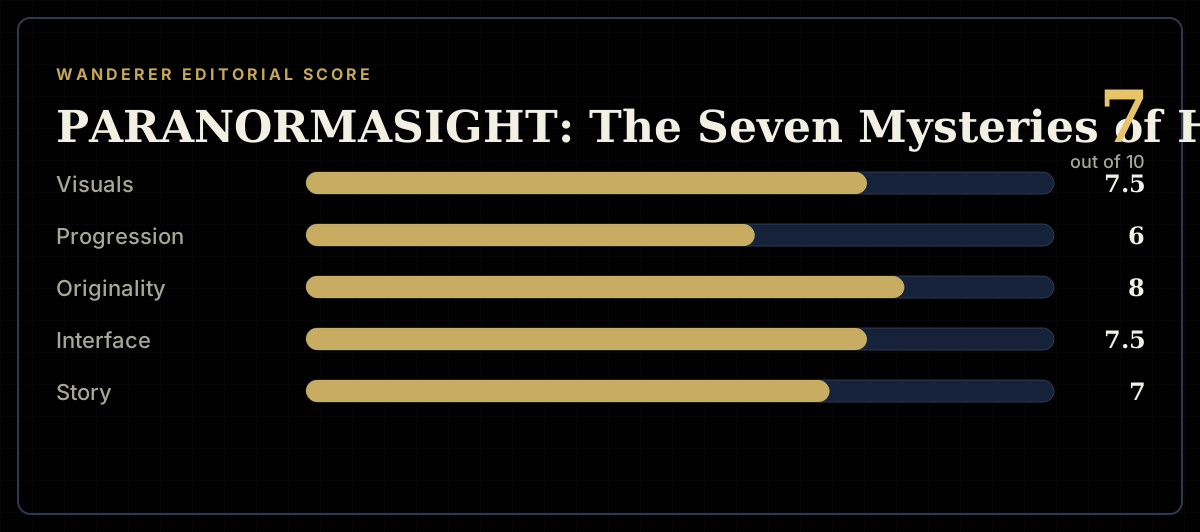
How the review scores each part of the gameWanderer Editorial -
The short versionWanderer Editorial