Game review
MOUSE: P.I. For Hire Review
6.6 / 10
- Developer
- Fumi Games
- Publisher
- PlaySide Studios
- Released
- 16 April 2026
- Platforms
- ["Windows"]
- Genre
- FPS / Boomer Shooter
- Monetisation
- Paid
- Players
- Single-player
The short version
MOUSE: P.I. For Hire is one of the best-looking and best-sounding boomer shooters in years, wrapped around combat and detective systems that never grow to match its ambition, leaving a game that's easy to admire but hard to fully recommend at full price.
Biggest strengths
- A genuinely stunning hand-drawn, rubber-hose 1930s cartoon aesthetic that carries a strong noir tone few other shooters attempt
- Troy Baker and the rest of the voice cast deliver the hard-boiled, cheese-pun-heavy dialogue with real charm and commitment
- Fast, fluid movement and satisfying moment-to-moment shooting during its best encounters, with memorable, gimmick-driven boss fights
Biggest weaknesses
- Weapon balance is badly skewed, with two or three standout guns making most of the arsenal feel optional or outright useless
- Enemy variety is thin, with most encounters boiling down to reskinned versions of a handful of enemy types across a 13-to-16-hour campaign
- The detective premise is mostly cosmetic, with an auto-solving clue board and no real investigation, puzzle-solving, or player deduction
Who it's for: Boomer shooter fans who prioritize style, story, and voice acting, and who can forgive shallow weapon variety and a long, occasionally repetitive campaign.
Our recommendation: Recommended for genre fans and lovers of the aesthetic, with the caveat that the second half of the campaign wears thin and full price is steep for what's ultimately a combat-light shooter.
6.6 / 10
A Cartoon Noir Unlike Anything Else on Steam
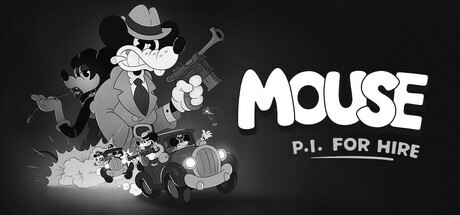
MOUSE: P.I. For Hire wears its premise proudly: take the rubber-hose, black-and-white animation style of 1930s Steamboat Willie-era cartoons, hand it to a private detective mouse named Jack Pepper, and drop him into a smoky, jazz-scored noir conspiracy full of smugglers, corrupt police, and cheese-based everything. It is, by a wide margin, the game's strongest pitch, and it delivers on it almost entirely. Every character, from Jack himself down to background mobsters, is animated with genuine hand-drawn charm, all pie-eyes and bendy limbs, while the environments around them are fully 3D and lit with a noir moodiness that makes the black-and-white palette feel deliberate rather than limiting. Developer Fumi Games clearly studied its reference material closely, and the result is a game that looks, in motion, unlike almost anything else currently on Steam.
That commitment extends to the soundtrack, an outstanding run of big-band and jazz compositions that ramp up convincingly during combat and never stop feeling appropriate to the setting, and to the voice cast, led by Troy Baker as Jack Pepper. Baker plays every one-liner and cheese pun dead straight, which is exactly the right choice for material this hammy, and the supporting cast, including a scene-stealing "Old Shrew" and a rotating gallery of noir archetypes, matches his energy. The world itself is stuffed with small, loving details: progression-blocking doors labeled "Exit Only," defeated mobsters muttering "fuggeht about it," and a Cajun bayou level that sits comfortably alongside a Tinseltown movie studio and a spinning-roulette-wheel casino arena. Few games commit this hard to a bit for this long, and for a large slice of its audience, that presentation alone is worth the price of admission.
Fast, Loud, and Increasingly Repetitive Combat
Underneath the paint, MOUSE: P.I. For Hire is a "boomer shooter" in the current, popular sense: fast circle-strafing movement, an expanding arsenal, and rooms full of enemies that need clearing before the game lets you move on. At its best, that loop works well. Movement is quick and responsive, double-jumping and gliding feel good once unlocked, and boss fights in particular are consistently praised across player reviews as clever, memorable, and mechanically distinct from one another, whether that means dodging bombs on a shifting arena floor or working around a robot's shielded weak points.
The problem is what happens between those highs. The weapon roster is large on paper, with pistols, shotguns, a tommy gun, a freezing gun, and several stranger options, but balance is badly skewed. A small handful of weapons, most often the rapid-fire "James Gun" and the crowd-melting "Devarnisher," end up doing the vast majority of the work, while several others, including the late-game chainsaw and freeze gun, are widely described as too weak or too situational to bother switching to. Enemy variety compounds the issue: beneath cosmetic reskins for gangsters, cultists, and corrupted police, there are only a handful of underlying enemy types, and by roughly the halfway point most players report having seen everything combat has to offer. Health items are also generous almost to a fault, softening the difficulty curve even on the hardest setting and reducing the tension that a more carefully balanced arsenal and encounter design could otherwise sustain.
A Detective Game in Name Only
Given the title, it's reasonable to expect at least some real detective work, and this is where MOUSE: P.I. For Hire disappoints most consistently. Clues are collected automatically during missions rather than found through observation or deduction, and returning to Jack's office simply means pinning them to a corkboard and watching the game connect them for you once you have enough. There is no puzzle to solve, no wrong conclusion to reach, and no real investigative agency at any point in the roughly fifteen-hour campaign. Optional side content leans the same way: a card-based baseball minigame is divisive among players, seen by some as a pleasant diversion and by many others as a slow, poorly balanced grind whose eventual reward, a weapon unlocked after dozens of wins, is generally considered not worth the time invested.
The tail-picking safe-cracking minigame fares a little better as a change of pace, though it carries a real sting: canceling out of it, or letting an unexplained countdown timer expire, permanently locks that safe for the rest of the playthrough, with no way to retry. Combined with an early-game design choice that didn't let players revisit finished levels to mop up missed collectibles, this made 100%-completion runs a genuine source of frustration for a significant portion of the player base at launch, since anything missed on a first pass was, for a time, gone for good.
A Rocky Launch, Patched Into Shape
MOUSE: P.I. For Hire's launch was noticeably rougher than its polished trailers suggested. Level replay, an obvious quality-of-life feature for a game built around collectibles, wasn't available at release and had to be patched in afterward, and widescreen support arrived after launch as well, with some animations still visibly cut off outside the game's original 16:9 framing. Players also reported looping or missing audio cues, achievements that occasionally unlocked for the wrong reasons, and assorted minor visual glitches on level reloads. To Fumi Games' credit, a steady stream of hotfixes and patches addressed the most visible of these issues within the game's first months, and the developer's continued responsiveness to feedback has earned it real goodwill in player reviews even from people who otherwise found the game overlong.
That length is worth flagging on its own. A campaign that stretches to thirteen or sixteen-plus hours would be a strength if the underlying combat evolved meaningfully over that span, but with a fixed small enemy roster and a small handful of dominant weapons, many players report losing steam well before the credits, and the relentless stream of cheese puns and pop-culture references, charming for the first several hours, wears thin over a runtime this long. The story itself, a sprawling conspiracy touching on smuggling, corrupt politics, and social prejudice, is ambitious and mostly well-acted, even if its threads don't all tie together as neatly as the noir framing promises.
Verdict
MOUSE: P.I. For Hire is a genuine achievement in presentation: its rubber-hose noir aesthetic, jazz-driven soundtrack, and committed voice cast make it one of the most distinctive-looking shooters to arrive on Steam this year, and its best boss fights and fastest firefights are a real thrill. But the game asks its striking visuals to carry weight that its underlying systems can't match, with lopsided weapon balance, thin enemy variety, and a detective premise that never becomes more than set dressing, all stretched across a campaign that runs noticeably longer than its ideas can sustain. It's an easy game to fall in love with for the first few hours and a harder one to stay in love with for all fifteen or more, but for players who prioritize style, voice work, and a strong sense of place over deep combat systems, there's still a very good time to be had here.
Pros and cons
Pros
- A genuinely stunning hand-drawn, rubber-hose 1930s cartoon aesthetic that carries a strong noir tone few other shooters attempt
- Troy Baker and the rest of the voice cast deliver the hard-boiled, cheese-pun-heavy dialogue with real charm and commitment
- Fast, fluid movement and satisfying moment-to-moment shooting during its best encounters, with memorable, gimmick-driven boss fights
Cons
- Weapon balance is badly skewed, with two or three standout guns making most of the arsenal feel optional or outright useless
- Enemy variety is thin, with most encounters boiling down to reskinned versions of a handful of enemy types across a 13-to-16-hour campaign
- The detective premise is mostly cosmetic, with an auto-solving clue board and no real investigation, puzzle-solving, or player deduction
Screenshots
-
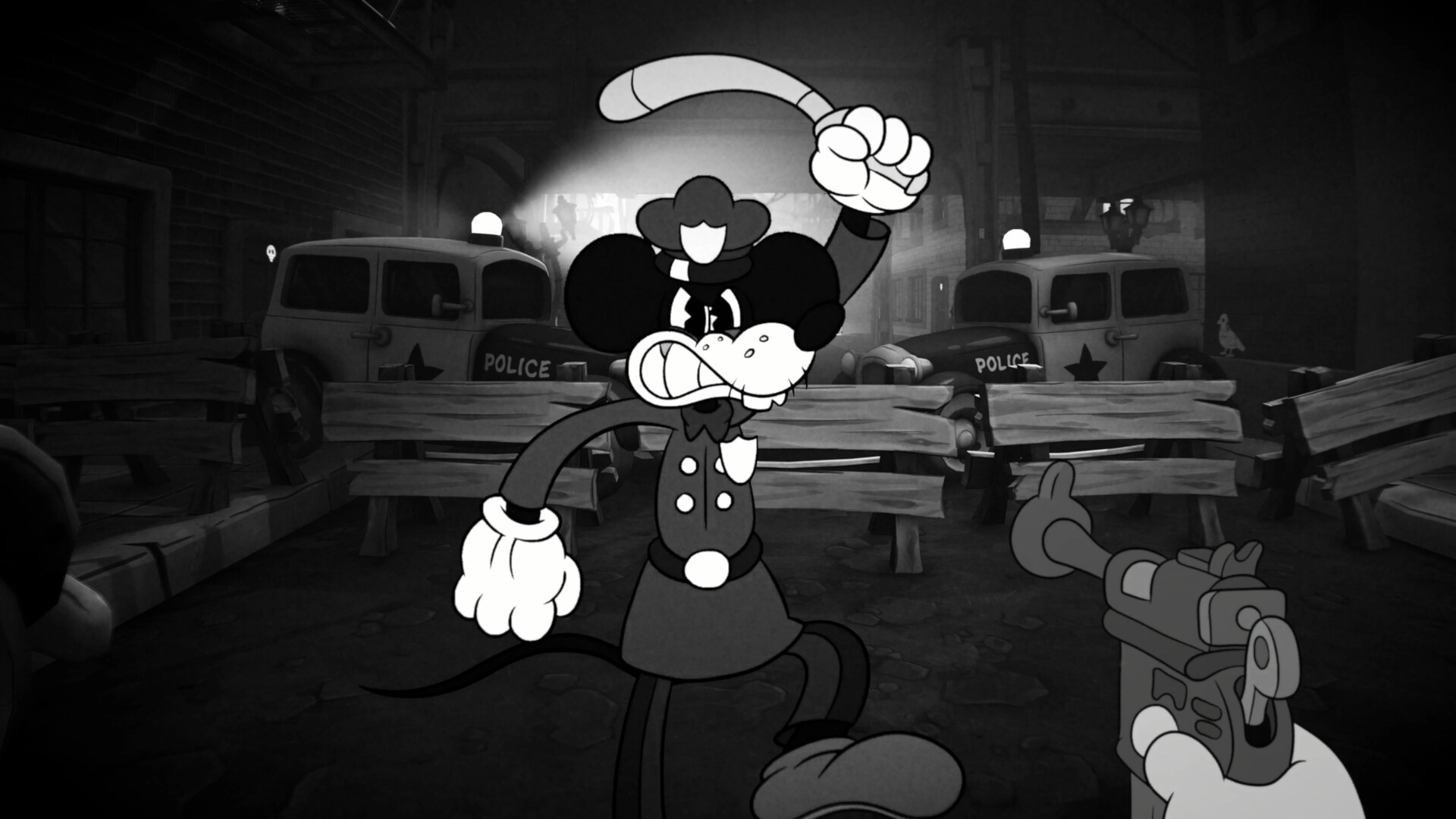
A tense standoff with a corrupt police captain in one of the game's noir-lit streetsImage: Fumi Games -
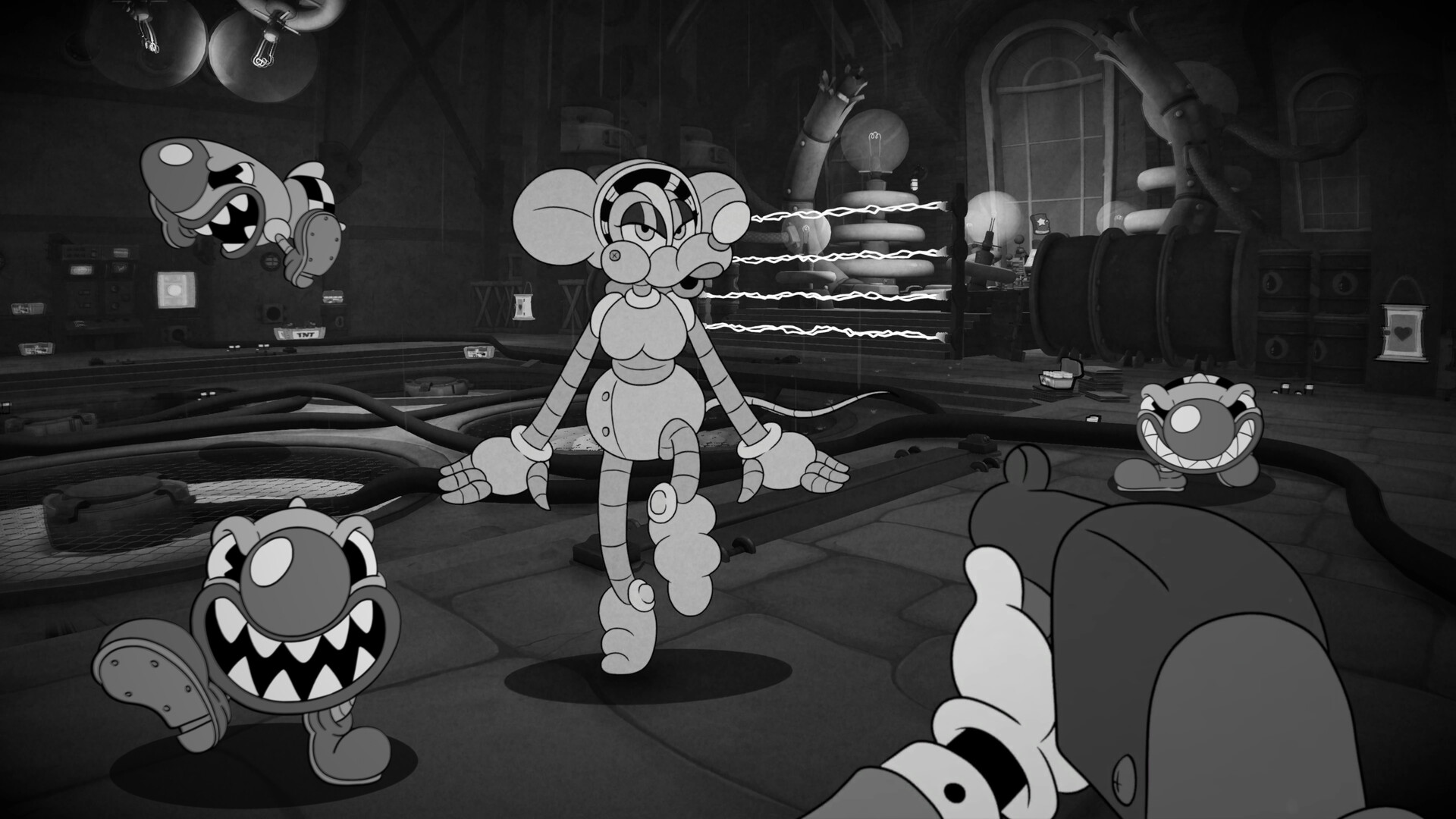
A boss fight against a robotic enemy inside a cluttered workshop levelImage: Fumi Games -

The city hub map, with chained-off buildings marking areas still to unlockImage: Fumi Games -
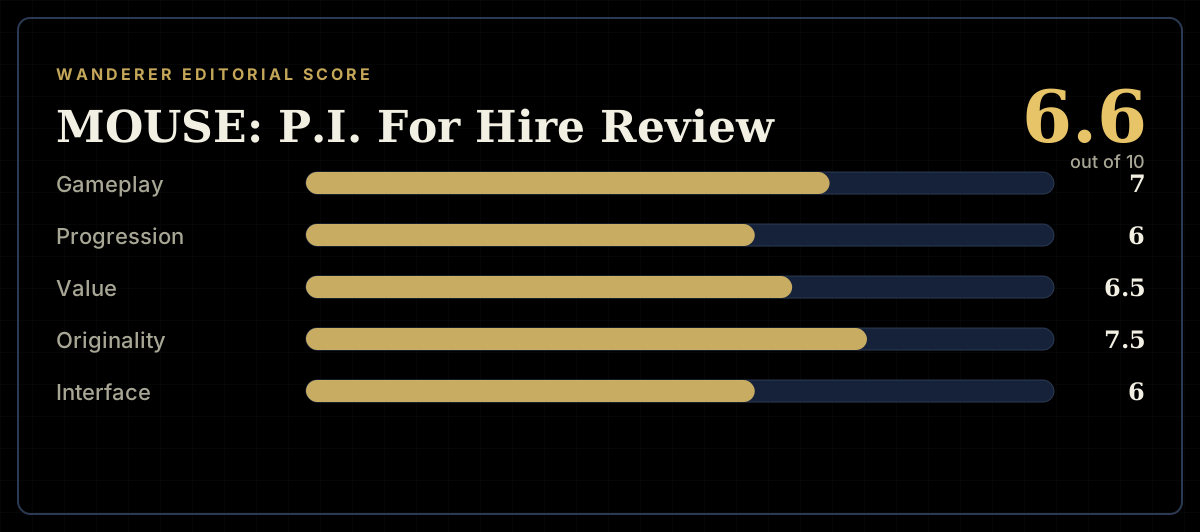
How the review scores each part of the gameWanderer Editorial -
The short versionWanderer Editorial