Game review
Missing The Point Review: A Fishing Sim That Isn't Really About Fishing
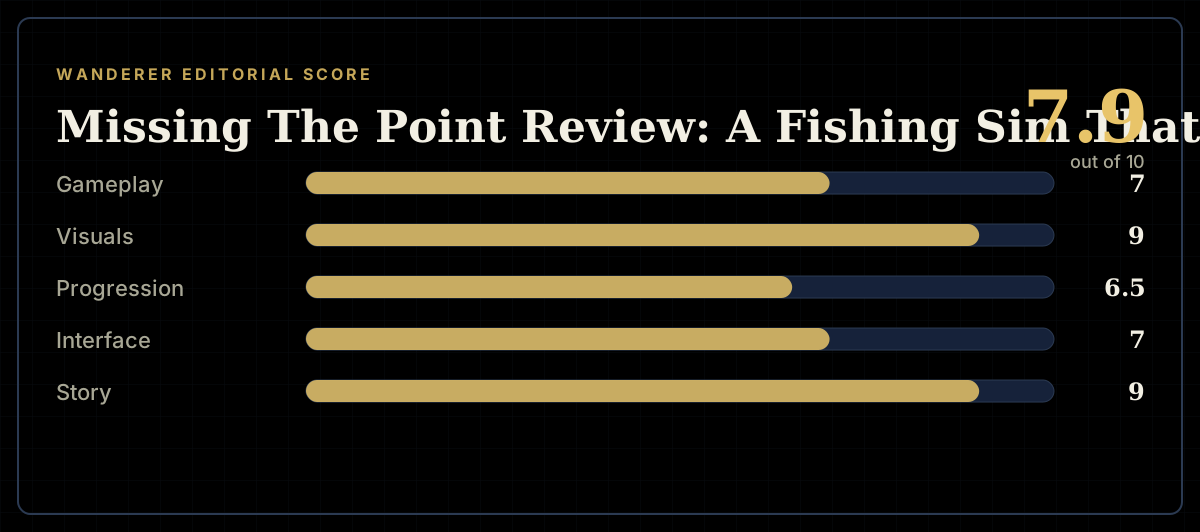
7.9 / 10
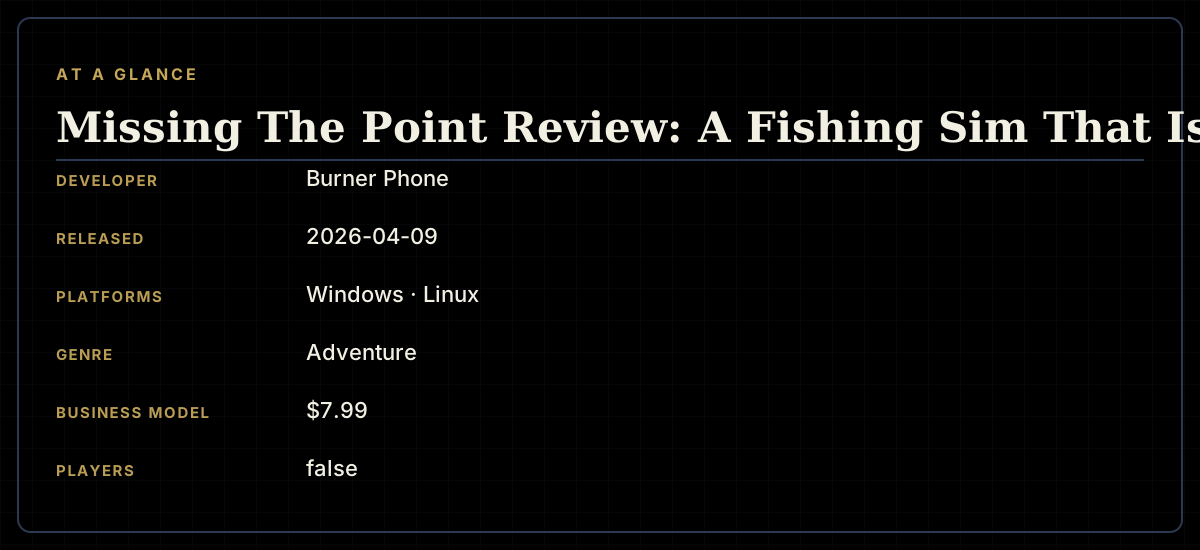
- Developer
- Burner Phone
- Publisher
- In The Keep
- Released
- 9 April 2026
- Platforms
- Windows, Linux
- Genre
- Adventure
- Monetisation
- $7.99
- Players
- false
The short version
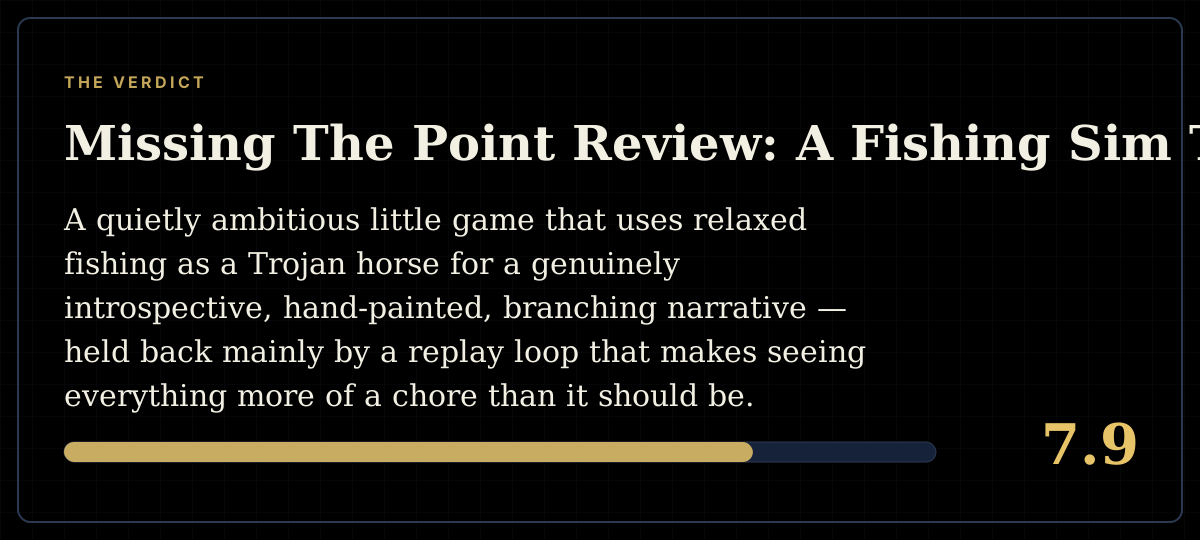
A quietly ambitious little game that uses relaxed fishing as a Trojan horse for a genuinely introspective, hand-painted, branching narrative — held back mainly by a replay loop that makes seeing everything more of a chore than it should be.
Biggest strengths
- Hand-painted art style, down to individually painted fish, that reviewers single out unanimously
- A genuinely unexpected, introspective narrative layered underneath a simple fishing loop
- Full voice acting and multiple branching endings give it real replay ambition
Biggest weaknesses
- Getting back to where you left off after an ending is slow, discouraging full exploration of the branching content
- No in-game catch tracker to see which fish you've caught and which remain
- Core fishing mechanics are simple and, by the developer's own implication, secondary to the atmosphere
Who it's for: Players who enjoyed the reflective, low-stakes storytelling of games like Wilmot's Warehouse or Kentucky Route Zero and don't mind a slow pace in exchange for real atmosphere.
Our recommendation: Recommended
7.9 / 10
Don't think too much about it
Missing The Point's own store description warns you not to overthink it: "low-stress fishing sim with... more than meets the eye. Try to relax and catch some fish." That's a wink, and reviewers universally treat it as one. Nearly every review in the sample opens the same way — expecting a simple, chill fishing game — and then spends the rest of the review carefully not spoiling what it actually turns into. "I went into this game thinking it was just going to be a simple fishing game with fun visuals," one reviewer wrote, "but I was not prepared for the moments of reflection and introspection." That's the shape of the whole reception: a game that undersells itself on purpose, and reviewers who are visibly delighted to have been fooled.
A narrator with a lot on his mind
What reviewers are protecting from spoilers is a genuinely introspective narrative that unfolds through the narrator's own internal monologue as he drifts down the river. One reviewer described it as "kind of a relaxing philosophical narrative — mainly the pondering the narrator does in his own head as he calmly fishes," fully voice acted, which several reviewers call out as an unusually generous production touch for a game at this price. Another reviewer drew a comparison to the emotional core of shows like The Magic School Bus, of all things, tying the game's "life can be as shallow or deep as you allow it to be" theme to a broader point about isolation and self-reflection — a genuinely personal reaction that speaks to how much this small game is landing with the people who finish it. Multiple reviewers explicitly say they're still not sure they fully understood everything on offer, and treat that uncertainty as part of the appeal rather than a flaw: "I'm not sure if I 'got' the point," one wrote, "but maybe that is the point."
Hand-painted, down to every fish
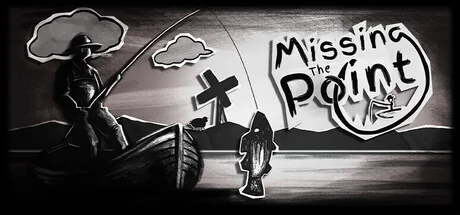
The visual presentation gets just as much specific praise as the writing. The whole world is rendered in a paint-on-canvas style, and reviewers repeatedly single out the individually painted fish as a highlight — "cool seeing all the uniquely painted fish you catch," as one put it. The aesthetic isn't just a coat of paint over generic assets; it's paired with real merchandising follow-through, with the developers selling art prints of the paintings that inspired the game and releasing a podcast episode specifically about the score, both signs of a small studio that's genuinely proud of its craft rather than treating the visuals as filler.
The fishing itself, and its real limitation
The actual fishing mechanics are, by design, simple — reviewers describe them as "simple, fast, and slightly varied enough to stay engaging," which is a polite way of saying the mechanical layer isn't the draw. One detailed review put it plainly: "Gameplay is okay compared to story and atmosphere," and noted a specific missed opportunity — you can't actually drive the boat yourself, leaving you a passenger on your own river journey. That's a fair criticism for anyone hoping the fishing loop itself would carry more weight, but it lines up with the game's own priorities: this is a narrative delivery mechanism wearing a fishing sim's clothes, and it never really pretends otherwise.
The real friction: getting back to where you were
The most substantive, specific complaint in the review sample is about replay pacing. Missing The Point is built around multiple branching endings and unlockable modes, and reviewers agree it wants to be replayed — but the trip back to where you left off after reaching an ending is reportedly long and repetitive. One reviewer, after three playthroughs reaching different endings, put it directly: "the game wants you to replay it, but then also is such a pain having to see the same thing again and take what feels like 30 minutes to get back to where I was," and specifically requested a "pick up where you just left off" option. Steam's own achievement data backs up how much this friction is suppressing full completion: while early, easy achievements like "MotorBlown" sit around 56%, achievements tied to full exploration — "PonderEverything" at 0.6%, and "CatchEverything," "CatchEveryFish," and "CatchBigFish" all sitting at a flat 0.0% — show that essentially no one has finished seeing everything the game has to offer. The developer's first patch, "v1Point1," added four new unlockable modes and UI improvements, but didn't specifically address the replay-pacing complaint, which remains an open gap worth watching for future updates.
Small studio, real follow-through
Missing The Point comes from Burner Phone with In The Keep publishing, and the pair have kept a steady drumbeat of post-launch communication rather than going quiet after release — a discount announcement, a podcast episode walking through the score, a merchandise shop selling prints of the paintings that inspired the world, and the v1Point1 content patch, all within the first few months. For a small, atmosphere-driven indie at $7.99, that level of ongoing presence is a good sign for buyers wary of one-and-done releases, even with the replay-pacing issue still unresolved.
Verdict
Missing The Point is a small, hand-painted game that earns the trust reviewers place in it: what looks like a throwaway fishing sim turns out to have real narrative ambition, genuine atmosphere, and enough craft in the writing and art to justify the "steal" and "hidden gem" language reviewers keep reaching for. The mechanical fishing layer is thin by design, and the trip back into a replay is a real, well-documented annoyance that the achievement data confirms is keeping most players from seeing everything on offer. Worth the asking price for the atmosphere and story alone — just go in patient, and don't expect to catch every fish on your first trip down the river.
Pros and cons
Pros
- Hand-painted art style, down to individually painted fish, that reviewers single out unanimously
- A genuinely unexpected, introspective narrative layered underneath a simple fishing loop
- Full voice acting and multiple branching endings give it real replay ambition
- Runs well on Steam Deck, with low battery consumption and full controller support
Cons
- Getting back to where you left off after an ending is slow, discouraging full exploration of the branching content
- No in-game catch tracker to see which fish you've caught and which remain
- Core fishing mechanics are simple and, by the developer's own implication, secondary to the atmosphere
Screenshots
-
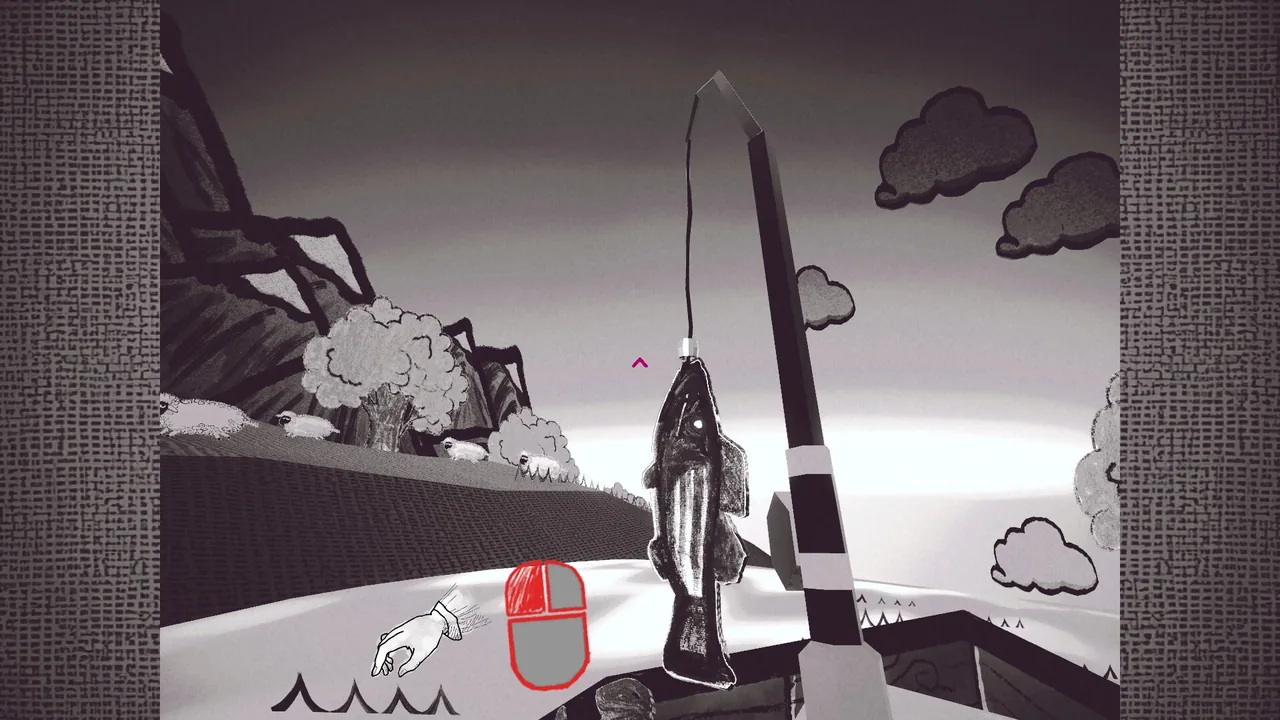
Image: In The Keep via Steam -
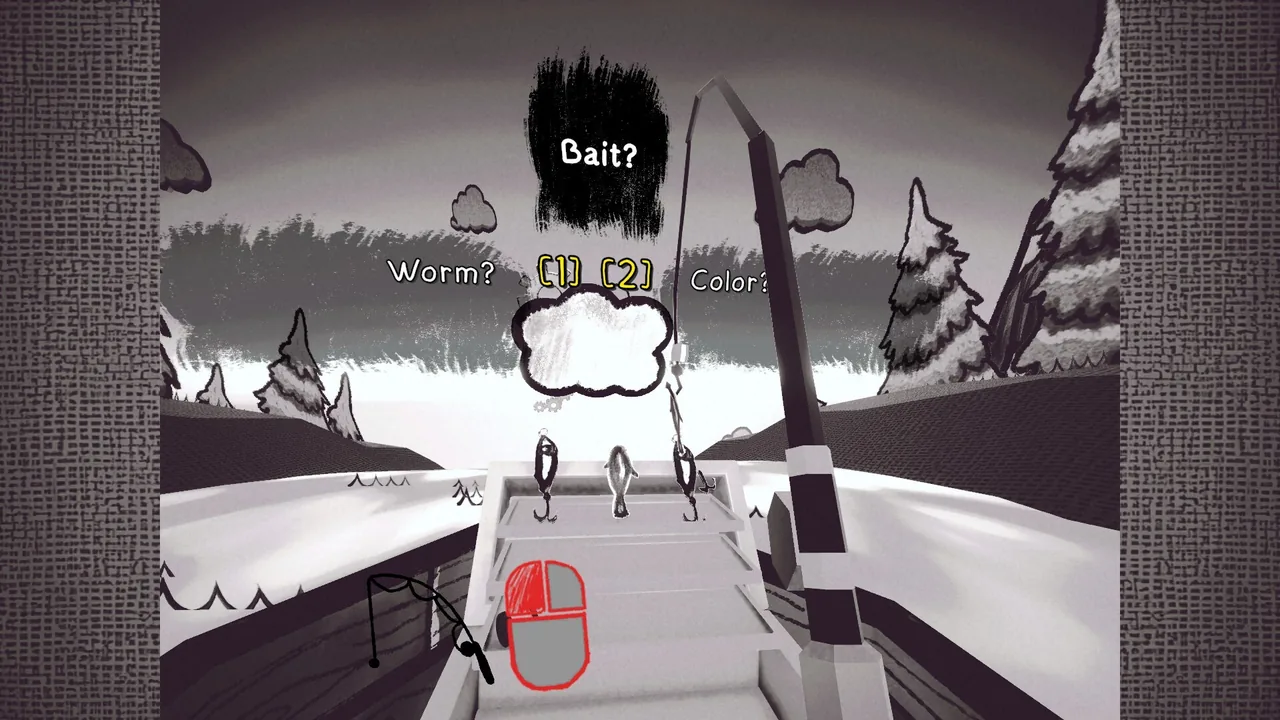
Image: In The Keep via Steam -
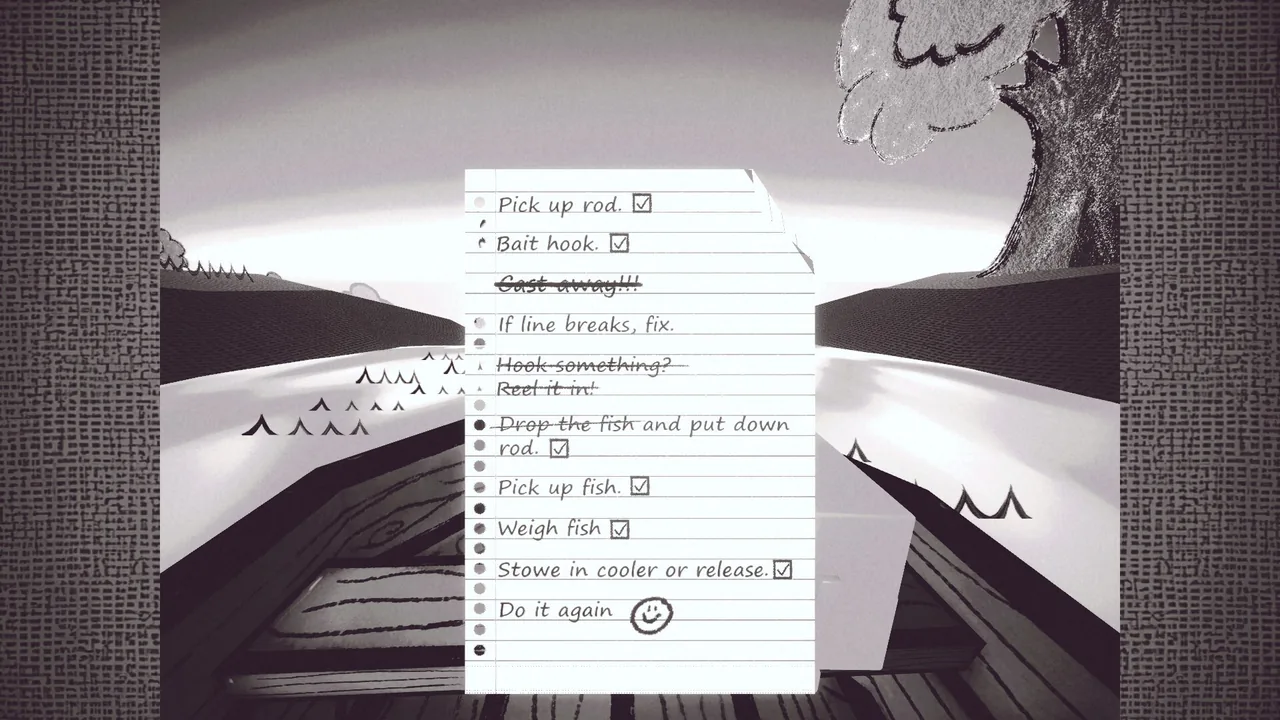
Image: In The Keep via Steam -
Wanderer Editorial -
Wanderer Editorial -
Wanderer Editorial