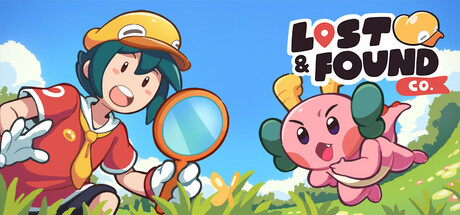
Game review
Lost and Found Co.
7 / 10
- Developer
- Bit Egg Inc.
- Publisher
- Bit Egg Inc.
- Released
- 5 March 2026
- Platforms
- Windows
- Genre
- Casual, Indie
- Monetisation
- One-time purchase, no in-game purchases listed
- Players
- Single-player
The short version
Lost and Found Co., released 5 March 2026 by Thai studio Bit Egg Inc., is a hidden-object adventure following a forgotten goddess and her duck-turned-human companion as they help characters recover lost items across richly detailed, illustrated worlds. It sits Overwhelmingly Positive with a very large sample of 2,695 reviews, and reading widely through it reveals genuine, detailed devotion from the large majority of its audience toward the art, density of detail, and heartfelt writing. Reviewers repeatedly describe the game as made with visible love and care, praising a Where's-Waldo-style exploration structure with far more interactivity than typical genre entries. Set against that widespread praise, a meaningful minority of reviewers report the game undersells itself as a pure hidden-object title, describing lengthy, frequent cutscenes and story sequences that dominate early playtime and can't be meaningfully skipped. Separately, and more seriously, multiple reviewers independently report a specific, reproducible progression-blocking bug after chapter five, in which a required NPC becomes permanently unreachable, and several state the developer's claimed fix has not resolved the issue for them months after release. A smaller number of reviewers separately raise specific content concerns, including a religious-depiction complaint and objections to certain character dynamics and stylistic choices.
Biggest strengths
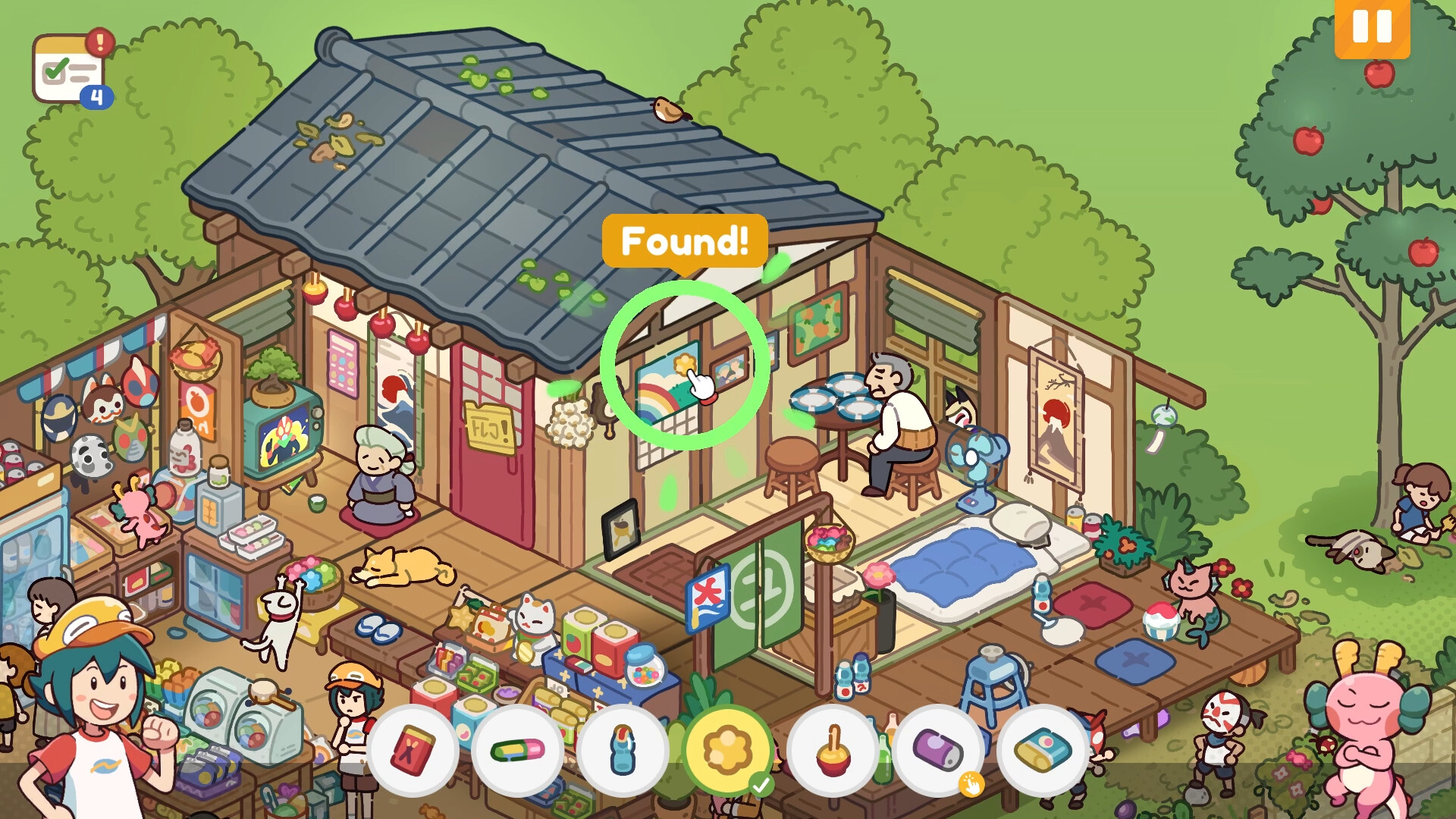
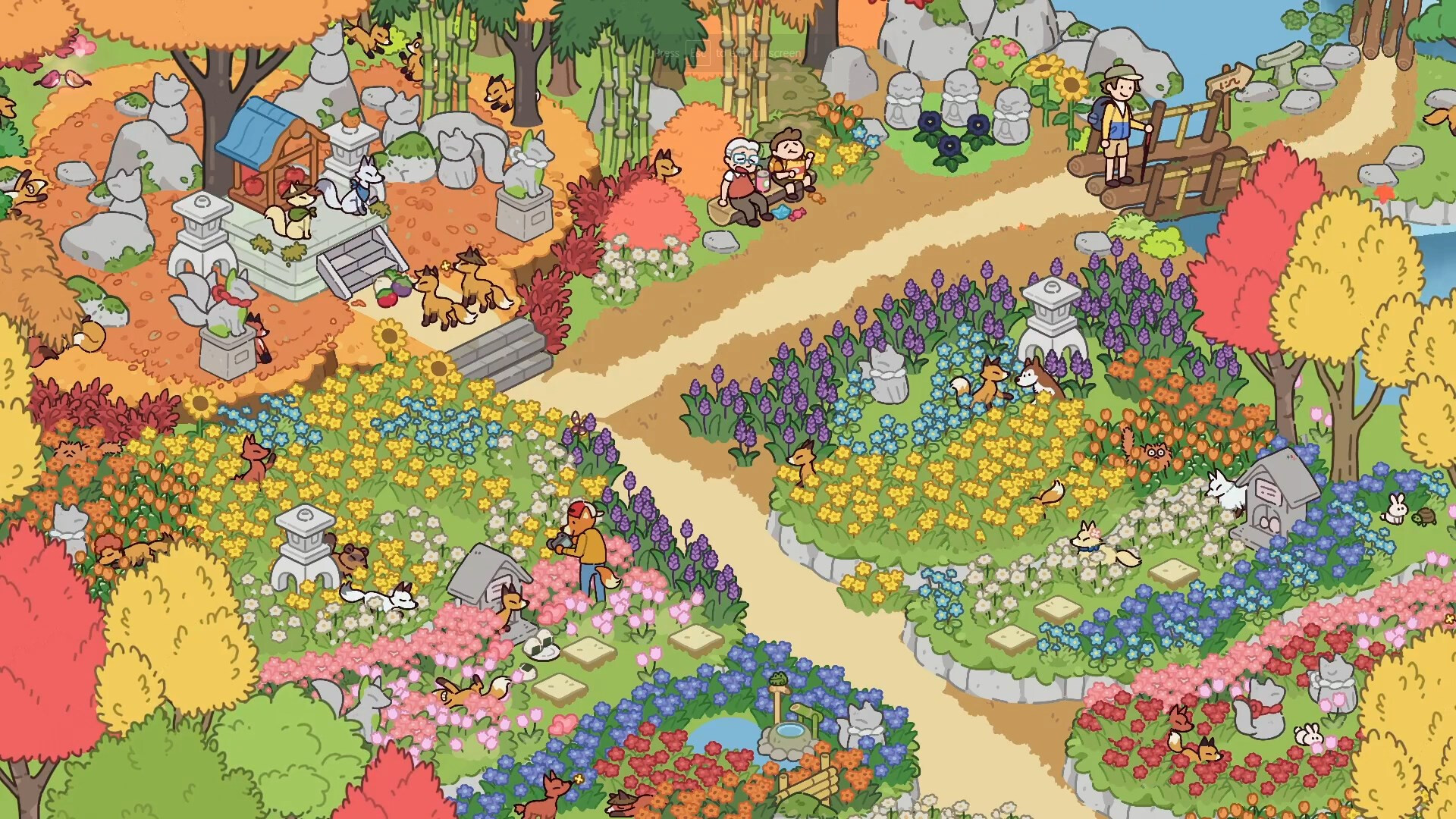
- The art style and density of detail draw extraordinarily consistent, specific praise, with reviewers repeatedly describing levels as richly illustrated and packed with interactive details, easter eggs and pop-culture references worth exploring well beyond the core hidden-object task
- The exploration structure draws specific praise for offering considerably more interactivity than typical genre entries, with multiple reviewers comparing the feel favourably to Where's Waldo or Scribblenauts-style discovery rather than a static click-to-find checklist
- The story and characters draw genuine, detailed emotional praise, with reviewers describing the writing and character work as heartfelt and clearly made with real care, several stating it's among the best hidden-object games they've played specifically because of that narrative investment
Biggest weaknesses
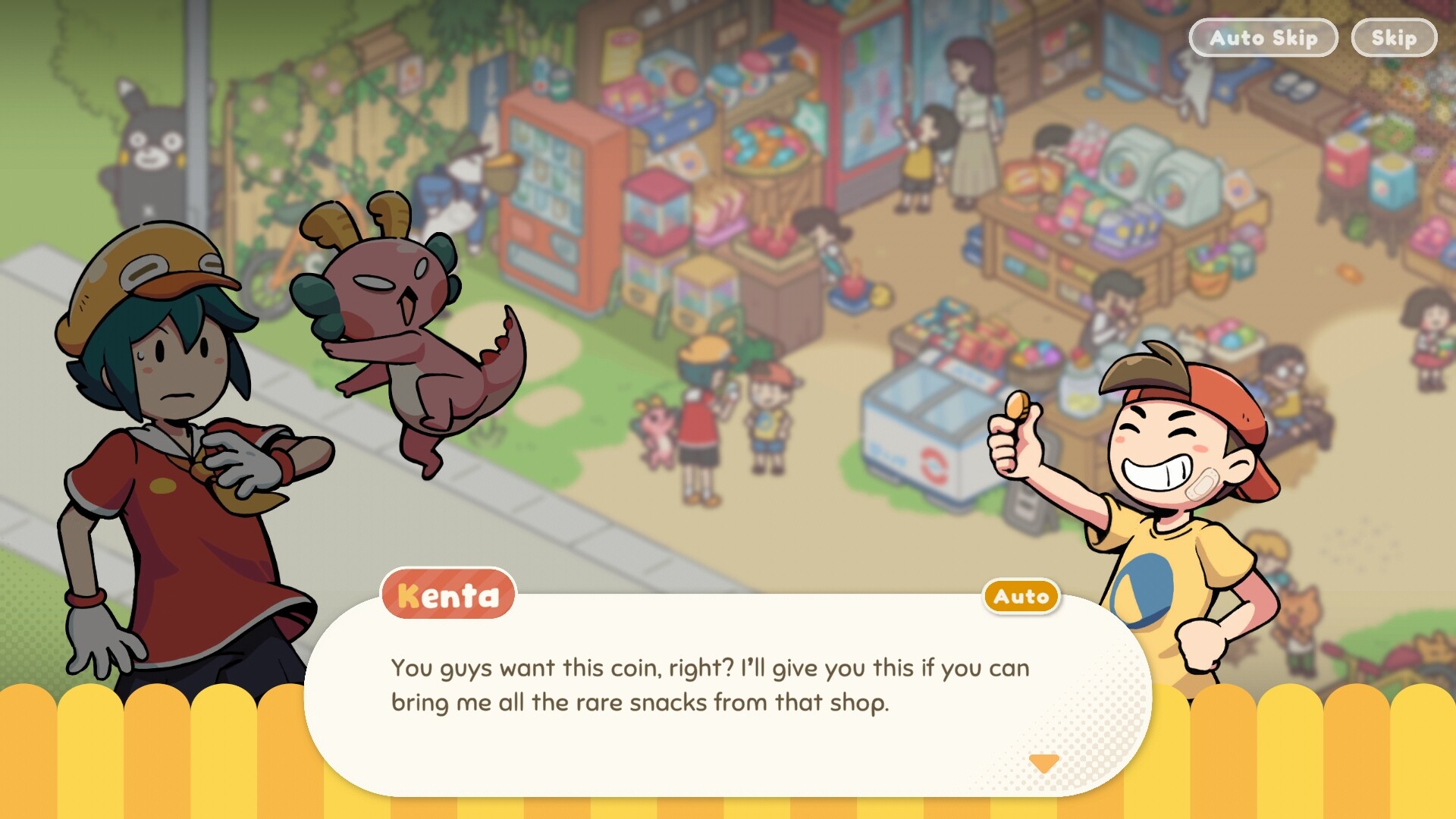
- A meaningful minority of reviewers report the game undersells itself specifically as a hidden-object title, describing lengthy, frequent cutscenes and story sequences dominating early playtime in a way that can't be meaningfully skipped, since skipping one sequence often triggers another immediately afterward
- Multiple reviewers independently report a specific, reproducible progression-blocking bug occurring after chapter five, where a required non-player character becomes permanently unreachable in the background, preventing further story progress; several state the developer's claimed fix has not resolved the issue for them even months after release
- At least one reviewer reports the game's credits sequence is unskippable and blocks the ability to pause or quit normally, requiring a forced application close to exit during that specific moment
Who it's for: Fans of richly detailed, story-driven hidden-object and point-and-click adventures who enjoy heavy narrative pacing alongside object-hunting, rather than players wanting a purely mechanical, story-light search experience.
Our recommendation: Strongly worth it for cozy-game and hidden-object fans who don't mind extensive narrative pacing, but be aware of the specific, repeatedly documented chapter-five progression bug before committing significant time, and check current patch notes for confirmation it's been resolved.
7 / 10
Introduction
Lost and Found Co., released 5 March 2026 by Thai studio Bit Egg Inc., follows a forgotten goddess named Mei Long and her duck-turned-human companion Ducky as they help a cast of characters recover lost belongings across richly illustrated, interactive worlds. It sits Overwhelmingly Positive with a very large sample of 2,695 reviews, and reading widely through it reveals genuine, detailed devotion from the large majority of players — sitting alongside a specific, well-documented technical problem and a smaller set of more contested complaints worth reporting carefully.
Genuine, widespread love for detail and craft
The clearest, most consistent theme across this sample is how much reviewers value the sheer density and care evident in the game's presentation. Reviewers repeatedly describe individual levels as richly illustrated and packed with interactive detail, easter eggs and pop-culture references worth exploring far beyond the core object-finding task. The exploration structure draws specific praise for offering considerably more interactivity than typical genre entries, with multiple reviewers comparing the experience favourably to Where's Waldo or Scribblenauts-style discovery rather than a static, checklist-driven hunt. The story and characters draw genuine emotional investment, with reviewers describing the writing as heartfelt and clearly crafted with real care — several state it's among the best hidden-object games they've played specifically because of that narrative depth.
A marketing gap: more visual novel than some expected
Set against that widespread praise, a meaningful minority of reviewers report the "hidden object" label undersells what the game actually is. Multiple reviewers describe lengthy, frequent cutscenes and story sequences dominating early playtime in a way that can't be meaningfully skipped, since skipping one sequence often simply triggers another immediately after. This isn't a complaint about story quality itself — several of the same reviewers acknowledge the writing is well done — but a specific mismatch between the genre expectations the "hidden object" framing sets and the substantially narrative-heavy pacing the game actually delivers, particularly in its opening hours.
A specific, repeatedly documented progression bug
The most serious concrete problem in this review's research concerns a specific, reproducible bug. Multiple reviewers independently report becoming stuck after completing chapter five, unable to progress because a required non-player character, Mei, becomes permanently unreachable in the background of a scene with no way to interact with her. Several reviewers report this occurs specifically when optional side content is completed out of a particular order, and multiple detailed accounts state that a fix the developer has claimed to implement has not actually resolved the issue for them, even months after release. This review treats this as a serious, well-corroborated technical problem given the consistency and specificity of independent reports describing the exact same named bug.
A smaller number of specific content concerns
This review found a smaller set of reviewers raising more specific content objections worth reporting factually rather than in detail. At least one reviewer objects to a scene depicting a religious figure in a way they find disrespectful, and separate reviewers raise concerns about certain character relationship dynamics and stylistic choices they describe as uncomfortable. This review reports these as specific, attributed positions held by a minority of reviewers within a much larger, overwhelmingly positive sample, rather than as this review's own independent assessment of the content in question.
A minor but real interface complaint
One smaller, concrete complaint concerns the game's credits sequence, which at least one reviewer reports is unskippable and blocks the ability to pause or quit normally, requiring players to force-close the application to exit during that specific moment — a small but avoidable usability gap.
Reading the "too much story" complaint against its defenders
It's worth directly addressing a specific pushback that appears within this same sample. At least one detailed reviewer directly dismisses complaints about excessive story content as coming specifically from younger players unwilling to engage with a minute of dialogue, framing the game's narrative depth as a deliberate strength rather than a flaw to be tolerated. This review finds that framing only partially convincing as a rebuttal. The reviewers objecting to pacing aren't uniformly rejecting narrative content in principle — several explicitly praise the writing quality itself while still describing the specific ratio of cutscene time to hidden-object gameplay, especially in the opening hour, as a genuine mismatch with what the genre label promised them. Both groups of reviewers are responding to the same objective fact (a large amount of early-game narrative content) but weighing it very differently based on what they came in expecting. This review treats that as a legitimate difference in taste and expectation rather than one side being simply wrong, and recommends prospective buyers specifically check whether they're drawn to the story-forward description in this review's own account, rather than assuming a "hidden object" label alone tells the whole story.
A specific request several engaged fans share
Beyond the complaints already covered, this review found a specific, recurring request from the game's most invested fans rather than its critics: multiple reviewers who completed the main story and a significant share of optional content explicitly ask for continued development and additional levels, describing genuine reluctance to leave the game's world behind once the credits (bug notwithstanding) eventually roll. This is a notably different kind of feedback than a simple "more content please" — it reflects the same depth of attachment driving this sample's broader, overwhelmingly positive reception, and suggests the game's foundational systems have real headroom for expansion if the developer chooses to build on them.
Final Verdict
Lost and Found Co. earns genuine, extensively detailed devotion from the large majority of its reviewers for its richly illustrated worlds, unusually interactive exploration, and heartfelt writing — reviewers across this sample consistently describe it as a genre standout made with real love and care. What holds this score down is a specific, seriously documented progression-blocking bug after chapter five that multiple independent reviewers report remains unresolved despite a claimed fix, alongside a genre-expectation mismatch for players expecting a lighter, more object-focused experience. Strongly worth it for cozy, story-rich hidden-object fans; confirm the chapter-five bug's current patch status before investing significant time, and go in aware some reviewers raise specific content concerns worth weighing for yourself.
Pros and cons
Pros
- The art style and density of detail draw extraordinarily consistent, specific praise, with reviewers repeatedly describing levels as richly illustrated and packed with interactive details, easter eggs and pop-culture references worth exploring well beyond the core hidden-object task
- The exploration structure draws specific praise for offering considerably more interactivity than typical genre entries, with multiple reviewers comparing the feel favourably to Where's Waldo or Scribblenauts-style discovery rather than a static click-to-find checklist
- The story and characters draw genuine, detailed emotional praise, with reviewers describing the writing and character work as heartfelt and clearly made with real care, several stating it's among the best hidden-object games they've played specifically because of that narrative investment
- Accessibility options including hint systems draw specific appreciation, with reviewers noting the ability to get help finding especially difficult objects without breaking the flow of play
Cons
- A meaningful minority of reviewers report the game undersells itself specifically as a hidden-object title, describing lengthy, frequent cutscenes and story sequences dominating early playtime in a way that can't be meaningfully skipped, since skipping one sequence often triggers another immediately afterward
- Multiple reviewers independently report a specific, reproducible progression-blocking bug occurring after chapter five, where a required non-player character becomes permanently unreachable in the background, preventing further story progress; several state the developer's claimed fix has not resolved the issue for them even months after release
- At least one reviewer reports the game's credits sequence is unskippable and blocks the ability to pause or quit normally, requiring a forced application close to exit during that specific moment
- A smaller number of reviewers separately raise specific content concerns, including a religious-depiction complaint about a scene referencing the Last Supper, and objections to certain character relationship dynamics and stylistic choices some reviewers describe as uncomfortable; this review reports these as specific, attributed reviewer concerns rather than independent editorial judgments
- At least one detailed reviewer reports poor optimisation and inconsistent performance even on reasonably powerful hardware, contrasting this against the otherwise overwhelmingly positive consensus on the game's technical execution
Screenshots
-
Lost and Found Co.Image: Bit Egg Inc. via Steam -
Lost and Found Co.Image: Bit Egg Inc. via Steam -
Lost and Found Co.Image: Bit Egg Inc. via Steam -
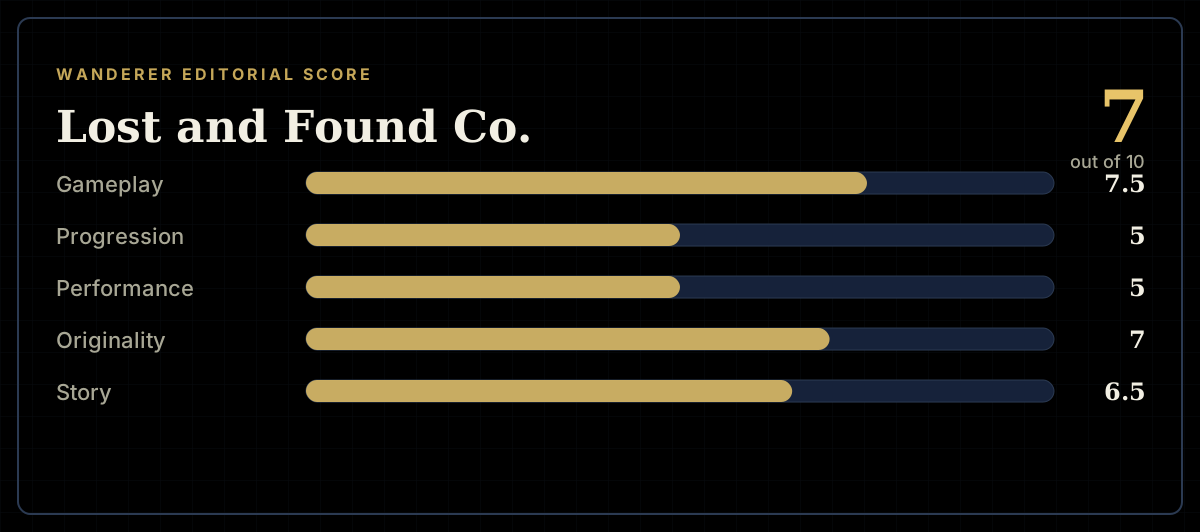
How the review scores each part of the gameWanderer Editorial -
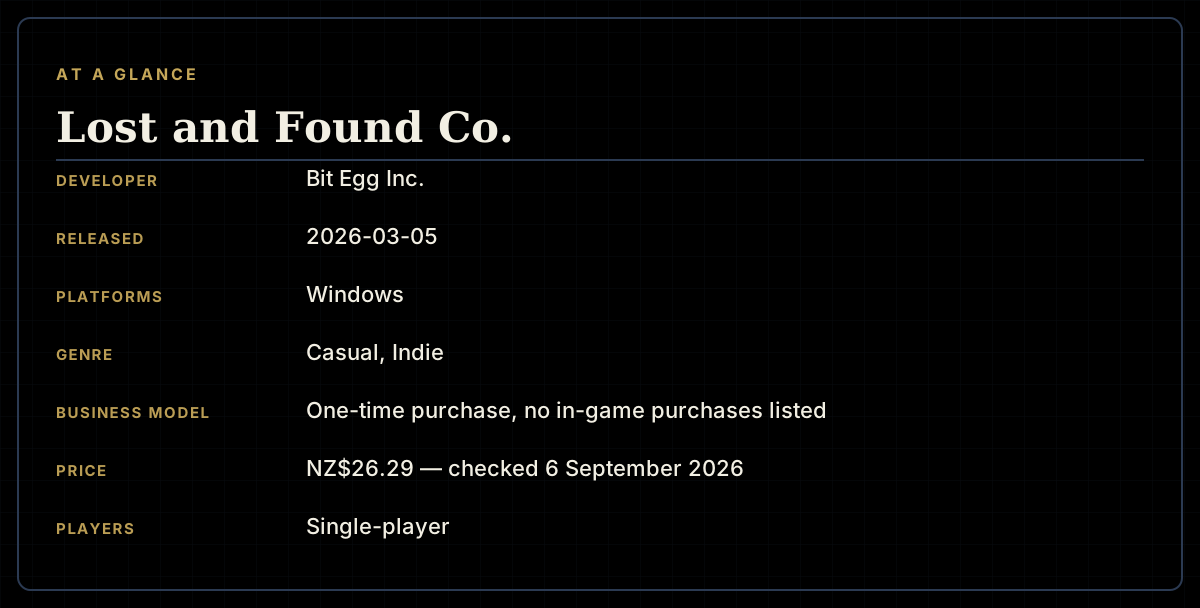
The essentials at a glanceWanderer Editorial -
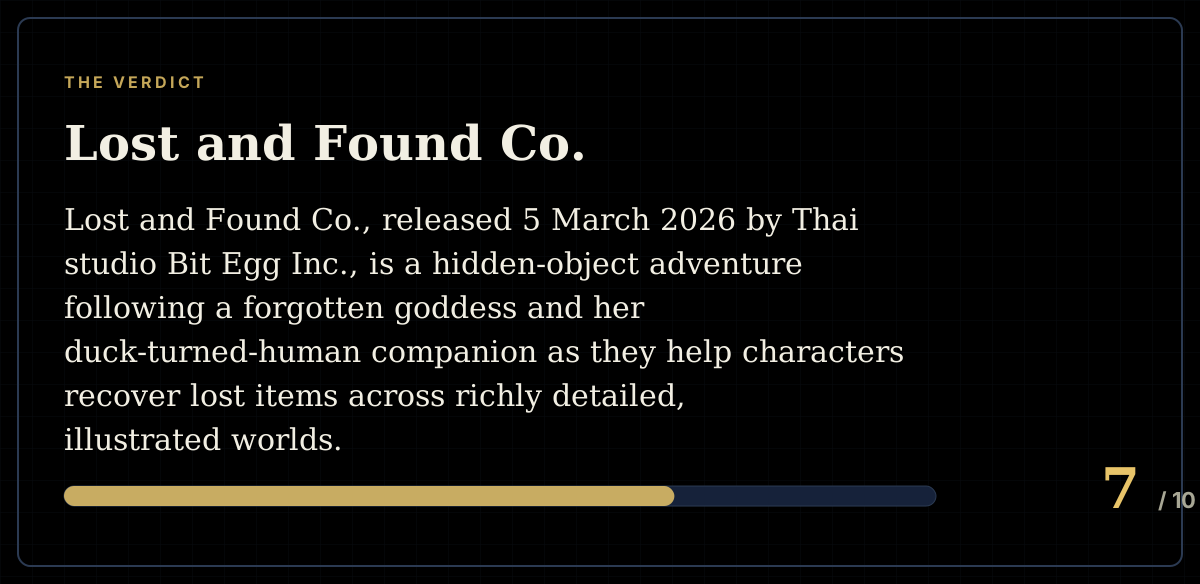
The short versionWanderer Editorial