
Game review
Loan Shark
5.4 / 10
- Developer
- Studio Ortica
- Publisher
- Studio Ortica
- Released
- 8 August 2025
- Platforms
- Windows
- Genre
- Psychological Horror / Fishing
- Monetisation
- Premium
- Players
- Single-player only
The short version
Loan Shark's premise is disarmingly simple — a literal loan shark is coming to collect, so you'd better catch enough fish to pay your debt — and the game builds real, sustained dread out of open water, silence, and scale rather than jump scares. That atmosphere carries the experience further than its mechanics do: the fishing itself is a thin, repetitive minigame, choices barely affect the outcome despite the game later patching in alternative endings, and technical issues (including a long-unresolved AMD crash bug) have soured the experience for a meaningful slice of players.
Biggest strengths
- Genuinely unsettling ocean-based horror built on scale and isolation rather than jump scares, praised by multiple reviewers as some of the best deep-water dread they've experienced
- Clever, layered wordplay around its central "loan shark" concept that rewards players who pay attention to the writing
- A low price that most reviewers describe as easily justified for the roughly one-to-five-hour experience on offer
Biggest weaknesses
- The fishing minigame itself is described by multiple reviewers as shallow and repetitive, amounting to little more than waiting and holding the mouse button
- The game originally shipped with only one real ending regardless of outcome, and reviewers say the alternative endings added afterward still feel rushed and tacked-on
- A long-unresolved crash bug affecting AMD graphics cards, alongside reports of unusually high GPU demand on high-end hardware for an indie-scale game
Who it's for: Fans of short, mood-driven horror games who value atmosphere and story over deep mechanical systems
Our recommendation: Conditional Recommend
5.4 / 10
A Debt You Pay in Fish
Loan Shark's hook is right there in the title: you owe money to a loan shark, and the only way to pay it back is to sail out on a tiny boat and catch enough fish before time runs out. It's a premise that sounds almost like a joke, and the game clearly knows it — several reviewers highlight the layered wordplay running through the writing, from the literal shark lurking beneath the boat to old idioms about debt made unsettlingly literal. But rather than playing the concept purely for laughs, Studio Ortica commits to it as a vehicle for slow-building psychological horror, and the review sample is largely in agreement that the commitment pays off, at least tonally.
Dread Built From Empty Water
The single most consistently praised element of Loan Shark is its atmosphere. Reviewers repeatedly describe the specific sensation of being suspended alone over open, bottomless ocean, with nothing around you but water, sound, and the growing suspicion that something is watching from below. One reviewer with genuine thalassophobia and megalophobia calls it one of the most effective deep-water horror games they've played, citing sound design and pacing rather than jump scares as the source of the fear; another describes the feeling more precisely as a reversal of expectations — "you're not the predator here — you're bait." This isn't a game chasing constant scares; it's one that trusts silence, scale, and isolation to do the frightening work, and for the players it clicks with, that restraint is exactly what makes it memorable.
Not every reviewer finds the horror equally effective, though. A detailed critical review argues the scares that do occur are loud, cheap jump scares rather than earned tension, and that the game reaches for an Iron Lung-style minimalism without managing Iron Lung's sense of dread — a sharper disagreement about execution than about the underlying idea.
Fishing That Doesn't Go Very Deep
Where the review sample turns more uniformly critical is the actual fishing mechanic sitting underneath all that atmosphere. Multiple reviewers describe it as barely a minigame at all: cast the line, wait for a bite, hold the mouse when tension drops, then gut the catch by dragging the cursor across it. There's little skill expression or variation to it, and several reviewers who came in expecting something closer to a fully-fledged fishing sim — comparing it unfavourably to games like Dredge — found the actual mechanical loop thin and quickly repetitive across the game's roughly one-to-two-hour main runtime. The gutting animation draws specific complaints too, with more than one reviewer noting the knife visually clipping beneath the cutting board rather than interacting cleanly with the fish.
One Ending, Then a Few More
Loan Shark's structure around player choice has also proven contentious. At launch, several reviewers report that regardless of how the debt was handled, the game funnelled players toward the same single, fairly bleak ending — one player specifically flags finishing with the money in hand on time only to have the game's countdown loop endlessly rather than resolve. The developers have since patched in alternative endings, reachable mostly by discovering optional achievements and dialogue over multiple playthroughs, and reviewers who tracked them all say seeing every ending noticeably deepens the story's impact. But the more detailed critical review in the sample argues those alternate endings still feel rushed and bolted on after the fact, rather than meaningfully changing how the core experience plays out — a view echoed more mildly by other reviewers who wanted deeper branching built in from the start rather than patched in afterward.
Technical Rough Water
Beyond design choices, Loan Shark carries some real technical baggage. The most serious complaint in the sample is a persistent crash bug affecting AMD graphics cards, with one reviewer reporting the game crashing their graphics driver entirely after catching just two or three fish, months after launch with no acknowledged fix. Separately, at least one reviewer on high-end Nvidia hardware reports the game pinning GPU usage at 100% throughout play, an unusually heavy footprint for a short, low-poly indie title. These aren't universal experiences — many reviewers report the game running smoothly — but they're serious enough, and persistent enough according to the reports here, to be a real risk factor for some players rather than a minor footnote.
A Story That Knows When to Stop
One thing several reviewers single out, almost in surprise, is how complete Loan Shark's story feels despite its short runtime. Rather than leaving players chasing an ambiguous or unresolved thread, one reviewer notes there's no lingering sense of an unfinished idea or a message that never landed — the game says what it wants to say about greed and debt and then ends, which is treated in the sample as a rarer achievement than it sounds for a short horror title. That same brevity cuts both ways, though: the critical review in the sample argues the compressed runtime leaves the mysterious one-eyed fish antagonist "barely exploited," introduced with atmosphere but never given room to become more than a vague threat.
The writing itself draws a similarly mixed reaction. Reviewers who enjoyed the game describe a strong, dark sense of humour running alongside the horror, while the more detailed critical account argues some of the dialogue's attempts at old-world flavour — invoking Neapolitan naming traditions and folk tale references — sit awkwardly next to writing that otherwise reads as fairly contemporary. Both readings agree the game is trying to say something specific with its central metaphor; they simply disagree on how well that ambition lands once the credits roll.
Worth the Bait at Six Dollars
At NZ$5.99, value is where Loan Shark earns its most consistent praise: reviewers repeatedly describe the asking price as fair, even generous, for an experience most finish in an evening and still find themselves thinking about afterward. For horror fans specifically drawn to mood and atmosphere over mechanical depth, and willing to accept a thin fishing loop and a story that offers little real branching despite its patched-in endings, Loan Shark's blend of dread, dark humour, and a genuinely novel hook makes it easy to recommend at its price. Players expecting a substantial fishing game, deep player agency, or guaranteed technical stability, particularly on AMD hardware, should weigh the more detailed critical accounts in the sample carefully before diving in.
Pros and cons
Pros
- Genuinely unsettling ocean-based horror built on scale and isolation rather than jump scares, praised by multiple reviewers as some of the best deep-water dread they've experienced
- Clever, layered wordplay around its central "loan shark" concept that rewards players who pay attention to the writing
- A low price that most reviewers describe as easily justified for the roughly one-to-five-hour experience on offer
- Distinct underwater sound design that several reviewers single out as doing most of the game's emotional heavy lifting
Cons
- The fishing minigame itself is described by multiple reviewers as shallow and repetitive, amounting to little more than waiting and holding the mouse button
- The game originally shipped with only one real ending regardless of outcome, and reviewers say the alternative endings added afterward still feel rushed and tacked-on
- A long-unresolved crash bug affecting AMD graphics cards, alongside reports of unusually high GPU demand on high-end hardware for an indie-scale game
- Fish-gutting animations are frequently described as janky, with the knife sometimes clipping through the cutting board
Screenshots
-
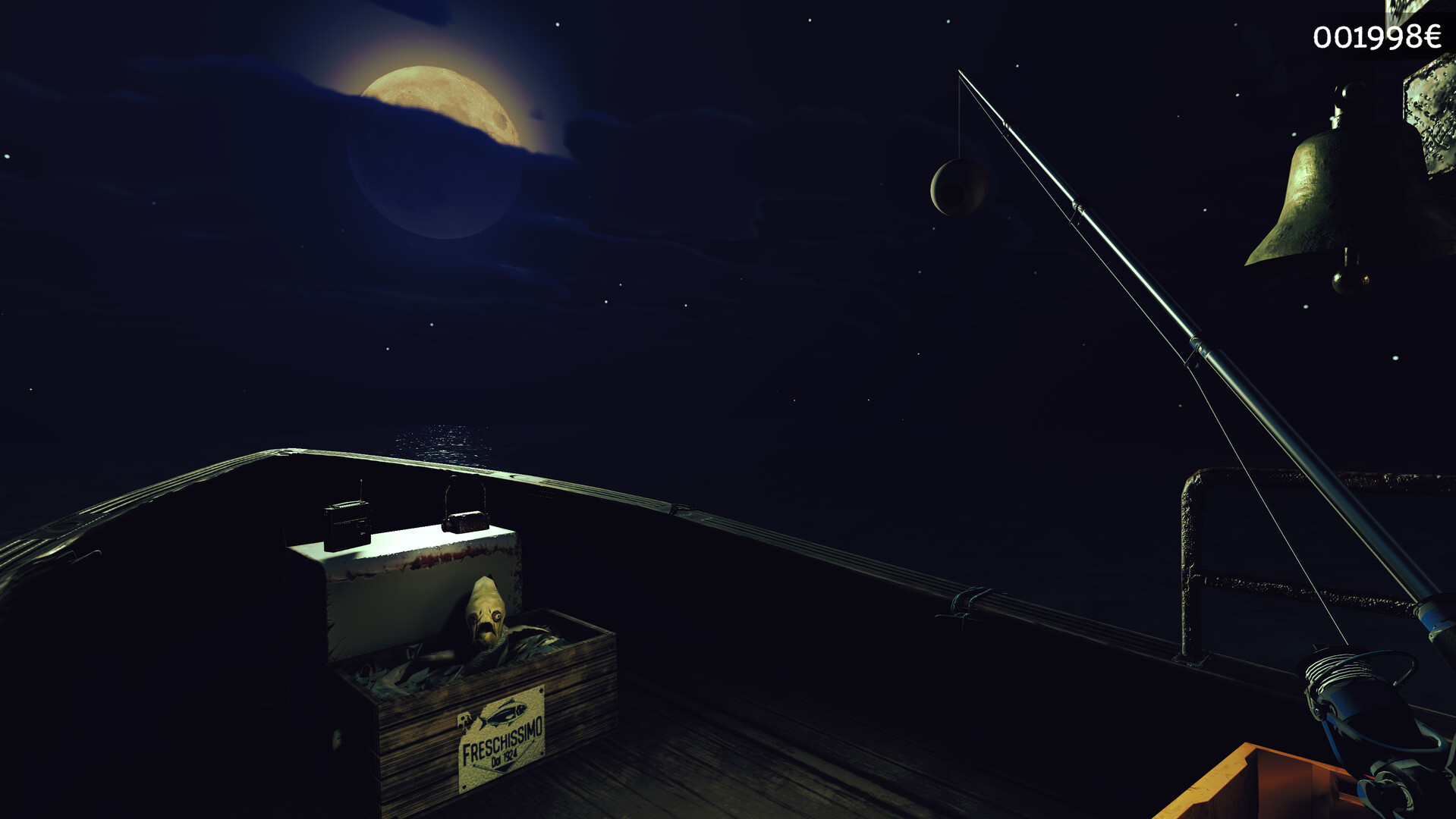
The boat deck at night, where the game's sense of isolation and open water builds most of its dreadStudio Ortica -
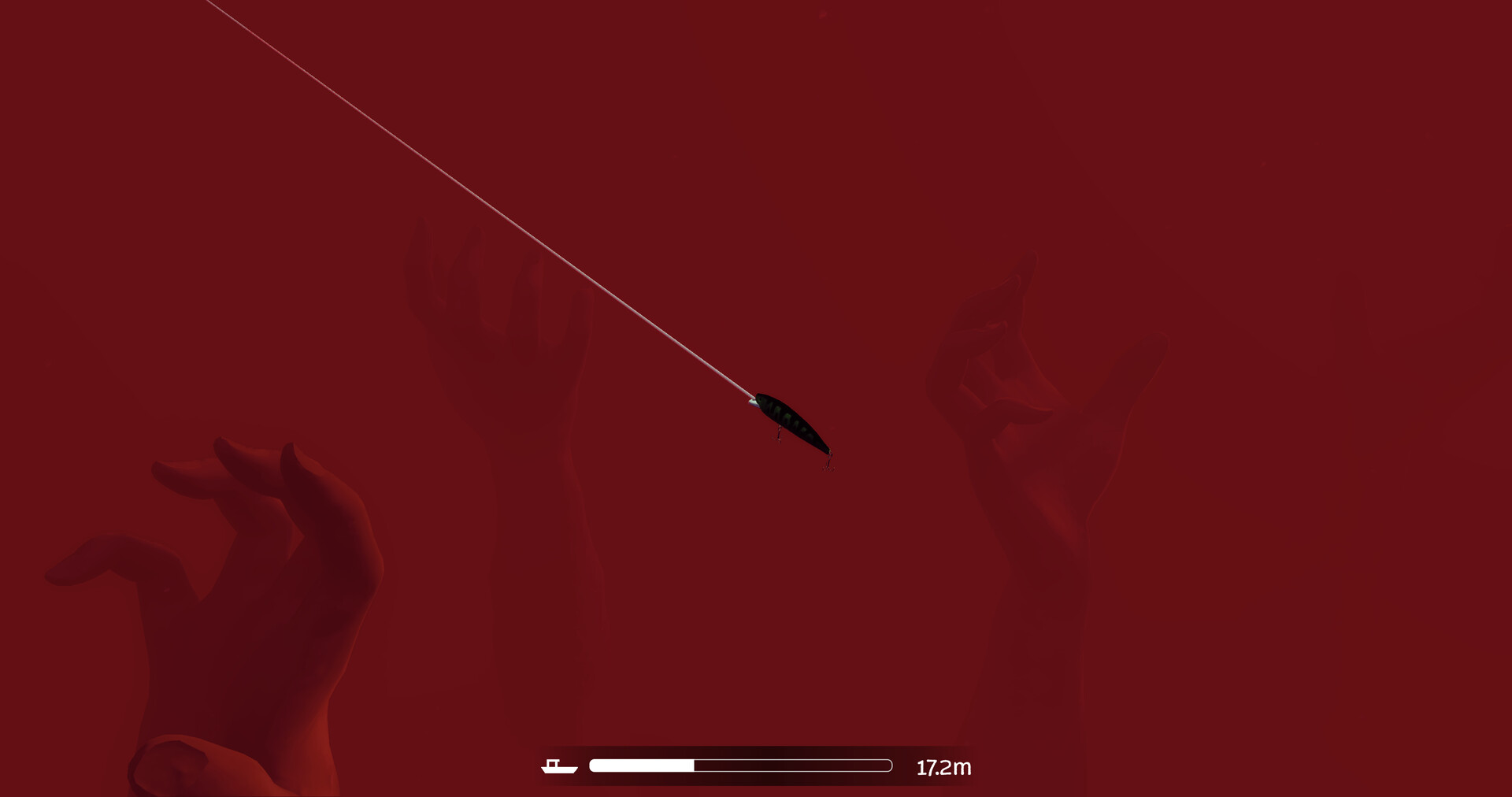
The core fishing loop — casting, waiting, and reeling in — which several reviewers found thinner than the atmosphere around itStudio Ortica -
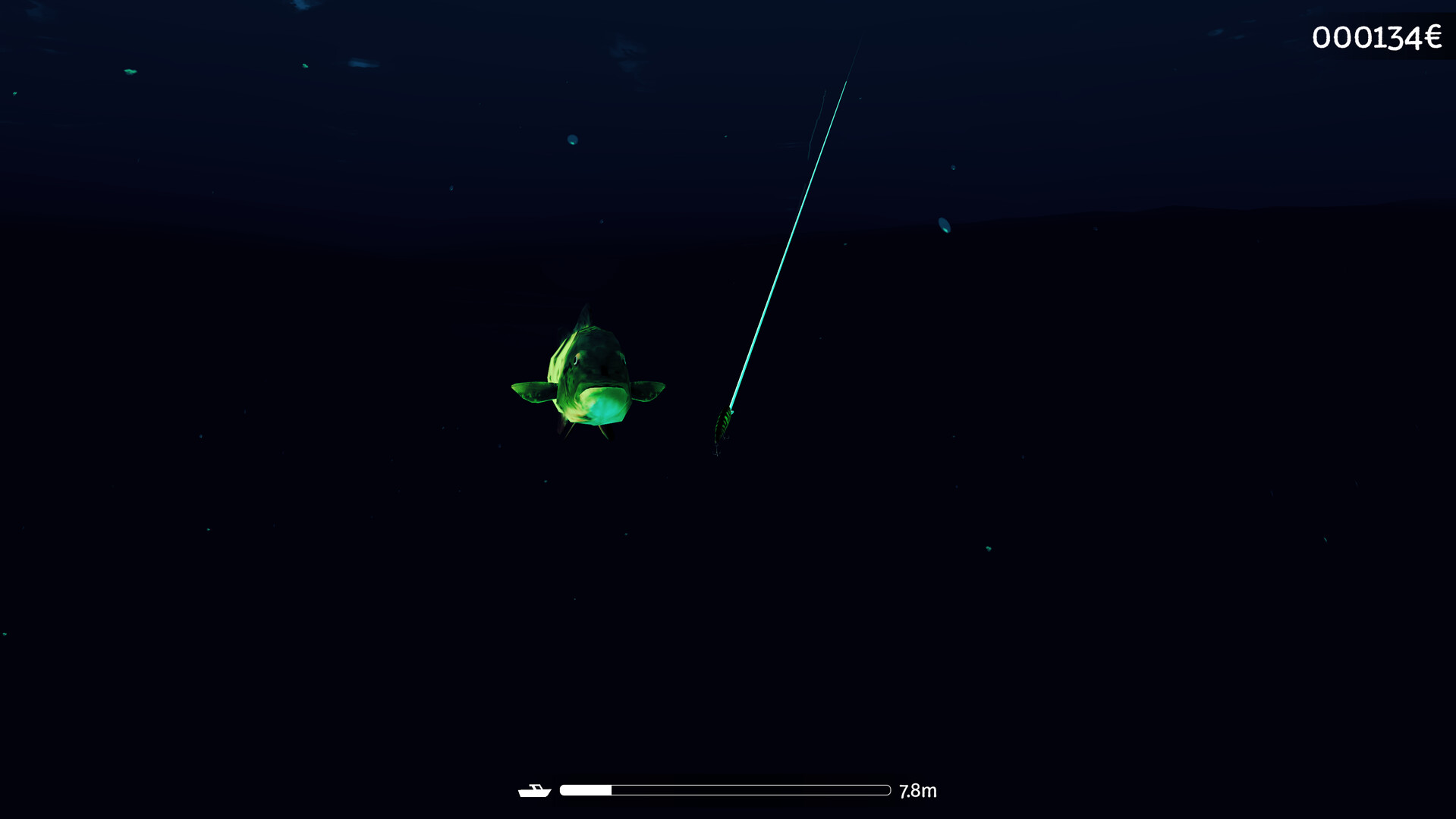
The eldritch fish that gradually takes over the story, described by one reviewer as "barely exploited" given the game's short runtimeStudio Ortica -
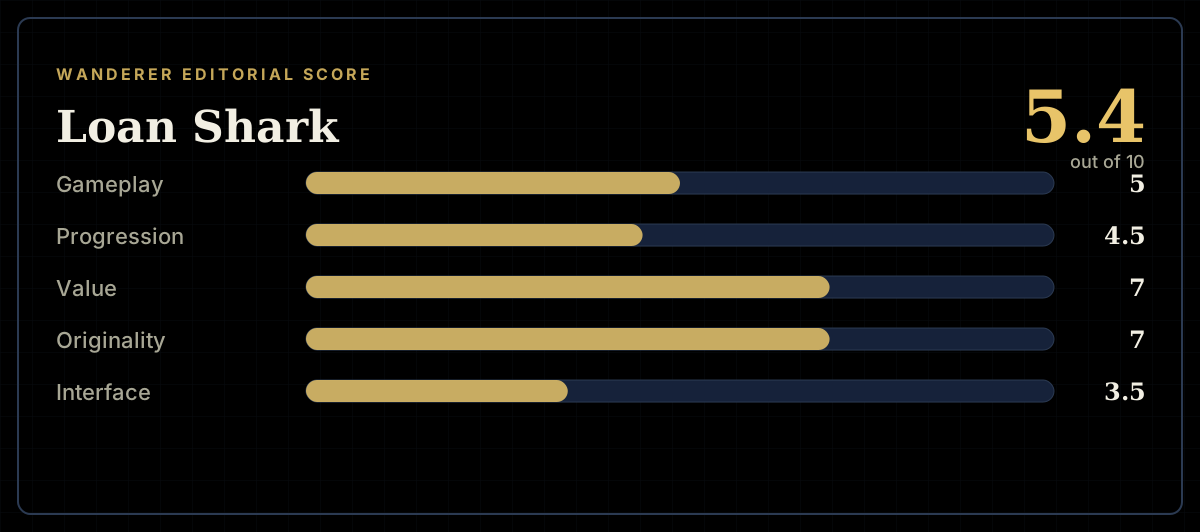
How the review scores each part of the gameWanderer Editorial -
The short versionWanderer Editorial