
Game review
Little Goody Two Shoes
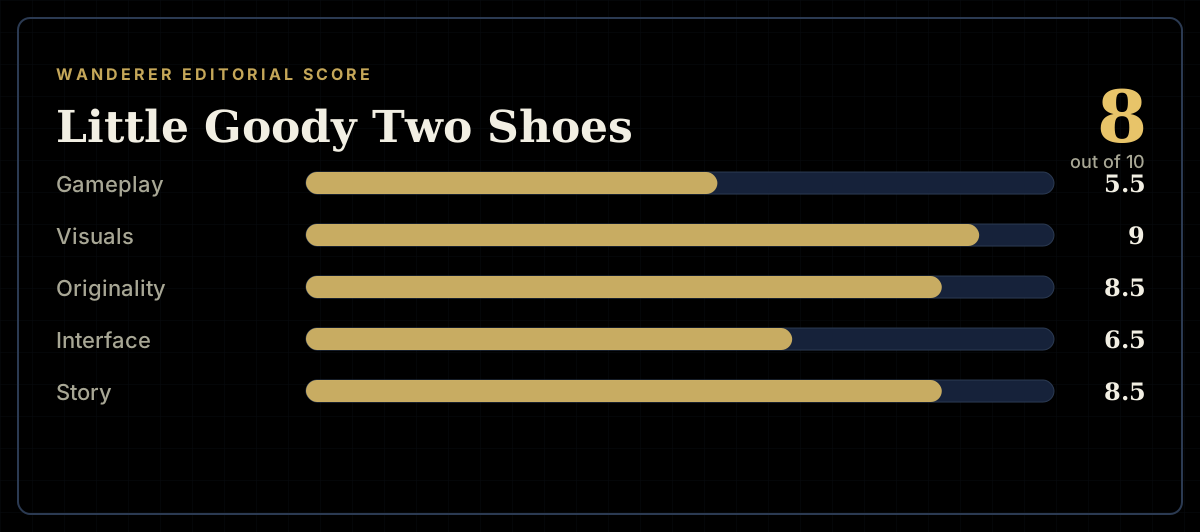
8 / 10
- Developer
- AstralShift
- Publisher
- Square Enix
- Released
- 7 November 2023
- Platforms
- Windows
- Genre
- Fantasy Horror Life-Sim RPG
- Monetisation
- One-time premium purchase; no ongoing microtransactions or DLC content
- Players
- Single-player only; no online, co-op or PvP modes
The short version
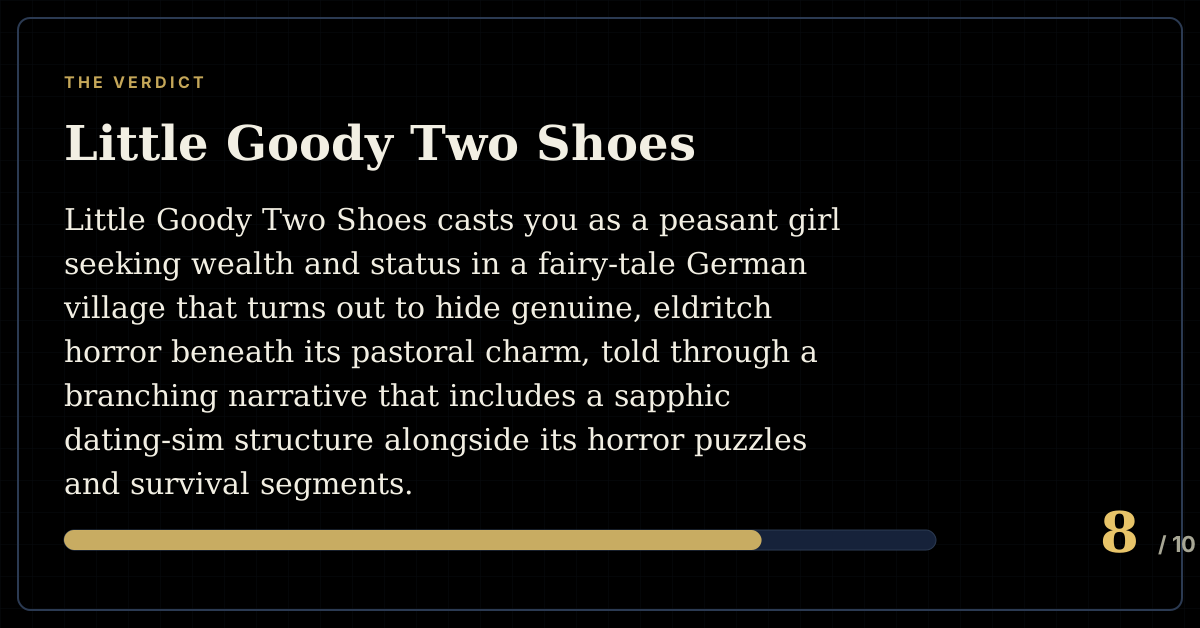
Little Goody Two Shoes casts you as a peasant girl seeking wealth and status in a fairy-tale German village that turns out to hide genuine, eldritch horror beneath its pastoral charm, told through a branching narrative that includes a sapphic dating-sim structure alongside its horror puzzles and survival segments. Reviewers overwhelmingly praise its distinctive, mixed-media art style — blending 90s anime, classic RPG pixel art, and pastel fairy-tale illustration in ways multiple reviewers describe as genuinely unlike anything else released recently — alongside a rich, choice-driven story that rewards multiple playthroughs.
That praise sits alongside a real, specific, frequently repeated complaint: the game's horror puzzle and survival segments draw consistent criticism as unforgiving, occasionally obscure, and capable of locking players into bad endings from a single missed item or dialogue choice. This review's research confirms the developer shipped a substantial post-launch update directly targeting many of those frustration points — resource scarcity, softlocks, and overwhelming HUD effects among them — though a dedicated easier difficulty or "story mode" some reviewers explicitly requested does not appear to have been added.
Biggest strengths
- A genuinely distinctive, widely praised mixed-media art style blending multiple anime and illustration traditions, drawing specific recognition including a Steam Awards nomination for Outstanding Visual Style
- A rich, branching fairy-tale horror narrative with multiple distinct endings that reviewers describe as rewarding replays rather than padding the runtime
- An unusually distinctive setting and premise — a rural German pastoral folk-horror world with a sapphic dating-sim structure woven through it — that reviewers consistently call unlike anything else currently available
Biggest weaknesses
- Horror puzzle and survival segments draw the most consistent specific criticism as unforgiving, with instant-death hazards, one-shot quick-time-event failures, and reported janky hitboxes
- Some bad endings can reportedly be triggered by missing a single item or picking one of two nearly identical dialogue options, a specific complaint several reviewers call unclear rather than fairly telegraphed
- No easier difficulty or story-mode option exists as of this review's research, despite multiple reviewers explicitly requesting one for a more narrative-focused playthrough
Who it's for: Fans of narrative-driven horror and life-sim hybrids who want a genuinely distinctive art style and story, and who are willing to tolerate real friction and trial-and-error in its puzzle and survival segments.
Our recommendation: A strong recommendation for its story, art and originality alone, though players who want a purely narrative experience without repeated game-overs should go in aware that no easier difficulty option exists.
8 / 10
Little Goody Two Shoes casts you as Elise, a peasant girl determined to escape poverty in a fairy- tale German village, only to discover that the folklore surrounding her home hides something genuinely eldritch beneath its pastoral charm. It's part horror puzzle game, part life-sim, part sapphic dating sim, wrapped in one of the most distinctive art styles reviewers say they've seen in recent memory — and its Overwhelmingly Positive reception reflects both that ambition and its real execution.
An art style reviewers call genuinely unmatched
No aspect of Little Goody Two Shoes draws more consistent, specific praise than its visual identity. Reviewers repeatedly describe the game blending several distinct artistic traditions — 90s Japanese shoujo anime, classic RPG pixel art, pastel fairy-tale illustration, and even puppetry — into a cohesive whole rather than a scattered pastiche. That achievement was recognized beyond just player reviews: the game was nominated for the Steam Awards' Outstanding Visual Style category in the same year it released, a rare formal acknowledgment for an indie title in this lane.
A branching horror fairy-tale reviewers wanted for years
The story itself draws similarly strong praise, with reviewers describing genuine investment in Elise's choices and their consequences across multiple distinct endings, several of which can be triggered by surprisingly small decisions made hours earlier. The rural German pastoral setting is specifically praised as a genuine rarity in fiction, and the sapphic dating-sim thread woven through the horror narrative draws consistent, enthusiastic reception rather than feeling bolted onto an otherwise unrelated horror game.
Unforgiving gameplay reviewers call the game's weakest link
Set against that praise, the game's puzzle and survival segments draw the most consistent specific criticism in the review base. Reviewers describe instant-death hazards, quick-time events capable of one-shotting the player on a single wrong answer, and reported janky hitboxes that make some encounters feel unfair rather than skill-based. A related, more structural complaint concerns bad endings some reviewers say can be triggered by missing a single specific item or choosing between two nearly identical dialogue options, without clear signposting of which choice matters until it's too late to undo.
A substantial patch, but not the story mode some asked for
This review's research confirms the developer responded to that criticism directly: the first major post-launch update, Version 1.1.2, shipped a lengthy, detailed list of fixes directly targeting many of the specific frustration points reviewers raised — populating areas with more recovery items, adding sanity-restoring items to offset punishing resource drains, fixing multiple softlock bugs, and explicitly lowering the intensity of the game's sanity-effect HUD visuals. That's a genuinely substantial response to specific, documented complaints. What this review's research did not find, despite several reviewers explicitly requesting it, is a dedicated easier difficulty or story-mode option that would let players focused on the narrative skip the more punishing survival-horror segments entirely.
A visual novel wearing survival-horror clothing, by some reviewers' account
A smaller but consistent minority of reviewers go further than criticizing individual gameplay moments, arguing the entire survival and puzzle layer adds friction to what they see as the game's real strengths: its story, characters, and art. These reviewers explicitly say they'd have preferred a pure visual novel presentation, since the gameplay systems rarely feel like they add strategic depth so much as an obstacle between story beats — a genuinely different critique from reviewers who simply find specific sequences too difficult, and worth distinguishing as such.
What the achievement data suggests
Global achievement percentages, though the underlying names aren't returned in a human-readable form via Steam's public endpoint, still show a notably steep spread: the most commonly-earned achievement sits at roughly 89% of the playerbase, while several sit under 10%. That's a wider gap than this lane typically sees in narrative-focused games, and it's broadly consistent with reviewer accounts of a story many players are drawn into early but a meaningful share never see through to specific later milestones, whether due to the difficulty complaints raised above or simply the natural drop-off any story-driven game sees over a full playthrough.
A soundtrack drawing its own dedicated praise
Beyond the visuals, the game's music draws specific, repeated praise independent of the broader art discussion, with several reviewers singling out individual character theme songs by name and describing an "anime opening"-style vocal track as a genuine highlight rather than a gimmick. That level of specific, named praise for individual musical pieces is less common in this lane's review sampling than general "good soundtrack" comments, suggesting the compositions themselves are doing real narrative and characterization work rather than functioning as simple background atmosphere.
A day-by-day structure that rewards close attention
Beyond the horror and romance threads, several reviewers highlight the game's underlying week-long, day-by-day structure as a genuinely well-designed piece of systems design in its own right: specific NPCs and events only become available at particular times of day or on particular days of the week, turning careful time management into its own quiet puzzle layered underneath the more overt horror sequences. Reviewers familiar with the genre note this owes a clear debt to classic dating-sim and life-sim time-management structures, executed here with enough polish that even players frustrated by the horror segments specifically credit this underlying framework as well thought-out.
Where it lands
Little Goody Two Shoes earns its Overwhelmingly Positive reception through genuine creative ambition executed with real craft: its art style, setting and branching narrative are all specifically, repeatedly praised as standing apart from anything else currently available in the genre. Its gameplay friction is real and well-documented, not an exaggeration by a vocal minority, and while the developer's substantial post-launch update addressed many specific complaints directly, the core tension between its narrative ambitions and its unforgiving survival-horror structure remains for players who'd have preferred a gentler experience. For anyone drawn to distinctive horror storytelling and willing to accept real friction along the way, this remains a strong recommendation.
Pros and cons
Pros
- A genuinely distinctive, widely praised mixed-media art style blending multiple anime and illustration traditions, drawing specific recognition including a Steam Awards nomination for Outstanding Visual Style
- A rich, branching fairy-tale horror narrative with multiple distinct endings that reviewers describe as rewarding replays rather than padding the runtime
- An unusually distinctive setting and premise — a rural German pastoral folk-horror world with a sapphic dating-sim structure woven through it — that reviewers consistently call unlike anything else currently available
- A substantial, detailed post-launch update addressing a wide range of specific launch complaints, from softlocks to resource scarcity to overwhelming sanity-effect intensity
- Strong, consistently praised music and sound design throughout, including dedicated character theme songs reviewers single out by name
Cons
- Horror puzzle and survival segments draw the most consistent specific criticism as unforgiving, with instant-death hazards, one-shot quick-time-event failures, and reported janky hitboxes
- Some bad endings can reportedly be triggered by missing a single item or picking one of two nearly identical dialogue options, a specific complaint several reviewers call unclear rather than fairly telegraphed
- No easier difficulty or story-mode option exists as of this review's research, despite multiple reviewers explicitly requesting one for a more narrative-focused playthrough
- A vocal minority of reviewers say the gameplay systems add unnecessary friction to what would work better as a pure visual novel, given the story and art are the game's clearest strengths
- Reported flashing-light and intense sanity-effect sequences may be a concern for photosensitive players, even after the post-launch patch reduced their intensity
Screenshots
-

Little Goody Two ShoesImage: Square Enix via Steam -

Little Goody Two ShoesImage: Square Enix via Steam -

Little Goody Two ShoesImage: Square Enix via Steam -
How the review scores each part of the gameWanderer Editorial -
The short versionWanderer Editorial