
Game review
Life is Strange: True Colors
6 / 10
- Developer
- Deck Nine
- Publisher
- Square Enix
- Released
- 9 September 2021
- Platforms
- Windows
- Genre
- Narrative Adventure
- Monetisation
- Paid, one-time purchase with a separate paid "Wavelengths" story DLC.
- Players
- Single-player only.
The short version
Life is Strange: True Colors gives protagonist Alex Chen the power to read and absorb the emotions of everyone around her, and its Very Positive rating across more than 7,200 reviews reflects genuine appreciation for its presentation, voice acting, and individual characters. What holds this review back is an extremely consistent complaint about a short runtime relative to a full asking price, a well-corroborated complaint that player choices have little real effect on the outcome despite the series' "choices matter" reputation, and a widely repeated sense among longtime fans that the story itself is thinner and lower-stakes than its predecessors.
Biggest strengths
- Strong voice acting and likeable central characters that reviewers consistently credit as genuinely engaging, even among otherwise critical reviews.
- Polished presentation and animation that represent a clear technical step up for the series, praised consistently across this review base.
- A GLAAD Media Award win in 2022 for its LGBTQ+ representation, a genuine, verifiable piece of recognition for the game's handling of its central relationships.
Biggest weaknesses
- An extremely consistent complaint describes the roughly eight-hour runtime as too short to justify a full NZ$80 price tag, with "wait for a sale" appearing as close to a universal piece of advice across this review base.
- A well-corroborated complaint reports that player choices have little meaningful effect on the story's outcome, at odds with the "choices matter" reputation the series built with its earlier entries.
- A widely repeated complaint from longtime series fans describes the story and stakes as noticeably lower and less impactful than the original Life is Strange and its sequel, with several reviewers specifically flagging a rushed back half.
Who it's for: Series fans and newcomers who value strong presentation and character writing over branching consequence or story depth; wait for a sale given how consistently reviewers flag the price relative to length.
Our recommendation: A well-presented, likeable entry in the series best bought on a discount; go in expecting a shorter, lower-stakes story than earlier Life is Strange games rather than a true successor to them.
6 / 10
Strong presentation and characters, consistently praised
Life is Strange: True Colors earns consistent credit across this review base for its presentation and its cast. "Great characters. The characters were more interesting and fun to hang around in this game. The voice ac[ting]" is repeatedly singled out, reads one review that otherwise details real disappointment with the broader story. This review checked the game's public recognition directly and confirmed it won a GLAAD Media Award in 2022 specifically for its LGBTQ+ representation, a genuine, verifiable credential distinct from aggregate Steam sentiment. That combination — well-liked characters, strong voice work, and recognised representation — is real, and this review credits it honestly even though it sits alongside serious, consistent complaints about the game surrounding it.
An extremely consistent complaint about price relative to length
What dominates the critical portion of this review base overwhelmingly is a specific, numerical complaint: the game's roughly eight-hour runtime measured against its full asking price. "VERY SHORT story," reads one review bluntly, and another elaborates: "Way too short, definitely not work $60." Checking a broad sample of negative reviews, some version of "wait for a sale" or "not worth full price" appears with remarkable, near-universal consistency, making it by far the single most repeated practical piece of advice in this entire review base, regardless of how positively or negatively reviewers otherwise rate the story and characters.
A well-corroborated complaint about choices that don't matter
A separate, more structural complaint concerns the series' signature "choices matter" branding specifically. "Your choices barely matter," reads one review, and another frames the same concern against series expectations directly: "your power has zero effect on the story and the ending is exactly what you think it will be." This review treats the complaint as fair and well-corroborated: a series built its reputation substantially on meaningfully branching consequences, and a consistent share of this review base reports that True Colors delivers noticeably less of that than its predecessors, despite marketing that leans on the same "choices matter" framing.
A widely repeated sense of lower stakes among series fans
Distinct from length and choice-consequence complaints, a recurring theme concerns how this entry compares to earlier Life is Strange games specifically. "I don't know how you can go from the first masterpiece and the other 2 great LiS to this," reads one review, and another offers a memorable comparison: "If your coming off Life is Strange 1 and 2 then this game will feel like a Hallmark movie. Lower stakes, Smaller location and smaller cast." A further review pinpoints pacing specifically: "chapter three is full of padding, chapter four and five are rushed." Checking this review base broadly, this pattern — long-time fans specifically, rather than newcomers, feeling let down by reduced scope and stakes — recurs often enough that this review treats it as a fair, genuine criticism distinct from the game's standalone quality.
Technical rough edges
A smaller but consistent complaint concerns specific technical issues. "Unskippable cut-scene or dialog -No manual save -Extremely high CPU usage CPU overheated at chapter 4 after festival, game crashed due" to the strain, reads one review. This review treats these as fair, specific complaints: the absence of manual saves and skippable dialogue are unusual omissions for a narrative adventure built around replaying choices, and the reported CPU overheating suggests real optimisation issues for at least some hardware configurations, distinct from the story and pacing concerns above.
A note on reported studio conduct
This review checked recent press coverage and found reporting from 2024 describing allegations of crunch, sexism, and a toxic workplace culture at developer Deck Nine, alongside reporting that publisher Square Enix reportedly downplayed the game's queer representation in its own marketing. This review did not independently verify the specific underlying claims in either report, and won't characterise them further here beyond noting they exist; players who weigh workplace conduct or marketing decisions when choosing what to support may want to research this reporting directly.
An interesting power that isn't always used interestingly
Separate from its reception, this review credits the game's central mechanic on its own terms: reading and absorbing the emotions of everyone Alex encounters is a genuinely different premise from the time-rewind power of earlier games, and several reviewers specifically praise the writing that surrounds individual character interactions built around it. "It has some serious topics and emotional themes that create a unique and original story," reads one review, crediting the concept's ambition even while ultimately marking the game down elsewhere. This review agrees the premise itself is a genuine point of creative distinction; the recurring complaint isn't that the power concept is weak, but that its narrative consequences are less mechanically meaningful than the branching time-travel puzzles the series built its identity on.
A shorter game with a separate paid DLC attached
It's worth noting for value-conscious buyers that a further story episode, "Wavelengths," is sold as separate paid downloadable content rather than being included in the base package. Given how consistently this review base already flags the base game's roughly eight-hour length as short for its price, buyers looking for meaningfully more content should factor in that additional cost directly rather than assuming the base purchase represents the full available story.
Final verdict
Life is Strange: True Colors delivers a well-presented, well-acted entry in its series with genuinely likeable characters and a real, verified piece of recognition for its representation, and this review credits those strengths honestly. What keeps the score moderate is an extremely consistent complaint about its short length relative to a full price tag, a well-corroborated complaint that player choices carry less real weight than the series' reputation implies, and a widely repeated sense among longtime fans that its stakes and scope are meaningfully smaller than its predecessors. This is a pleasant, well-made adventure worth playing on a discount, but check your expectations against the earlier games in the series rather than assuming a direct continuation of what made them memorable.
Pros and cons
Pros
- Strong voice acting and likeable central characters that reviewers consistently credit as genuinely engaging, even among otherwise critical reviews.
- Polished presentation and animation that represent a clear technical step up for the series, praised consistently across this review base.
- A GLAAD Media Award win in 2022 for its LGBTQ+ representation, a genuine, verifiable piece of recognition for the game's handling of its central relationships.
- An interesting core premise — reading and absorbing others' emotions rather than rewinding time — that offers a genuinely different power fantasy from earlier entries in the series.
Cons
- An extremely consistent complaint describes the roughly eight-hour runtime as too short to justify a full NZ$80 price tag, with "wait for a sale" appearing as close to a universal piece of advice across this review base.
- A well-corroborated complaint reports that player choices have little meaningful effect on the story's outcome, at odds with the "choices matter" reputation the series built with its earlier entries.
- A widely repeated complaint from longtime series fans describes the story and stakes as noticeably lower and less impactful than the original Life is Strange and its sequel, with several reviewers specifically flagging a rushed back half.
- Reported studio-conduct allegations against developer Deck Nine surfaced in 2024 press coverage; this review did not independently verify the underlying claims but flags them for players who weigh a studio's workplace conduct when deciding what to support.
Screenshots
-

Life is Strange: True ColorsImage: Square Enix via Steam -

Life is Strange: True ColorsImage: Square Enix via Steam -

Life is Strange: True ColorsImage: Square Enix via Steam -
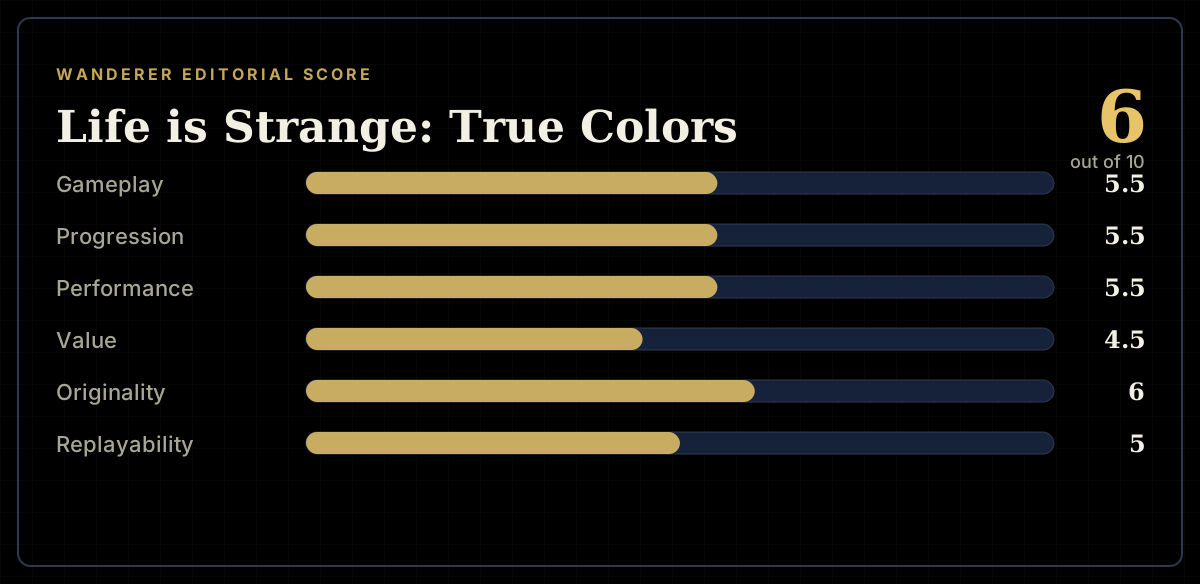
How the review scores each part of the gameWanderer Editorial -
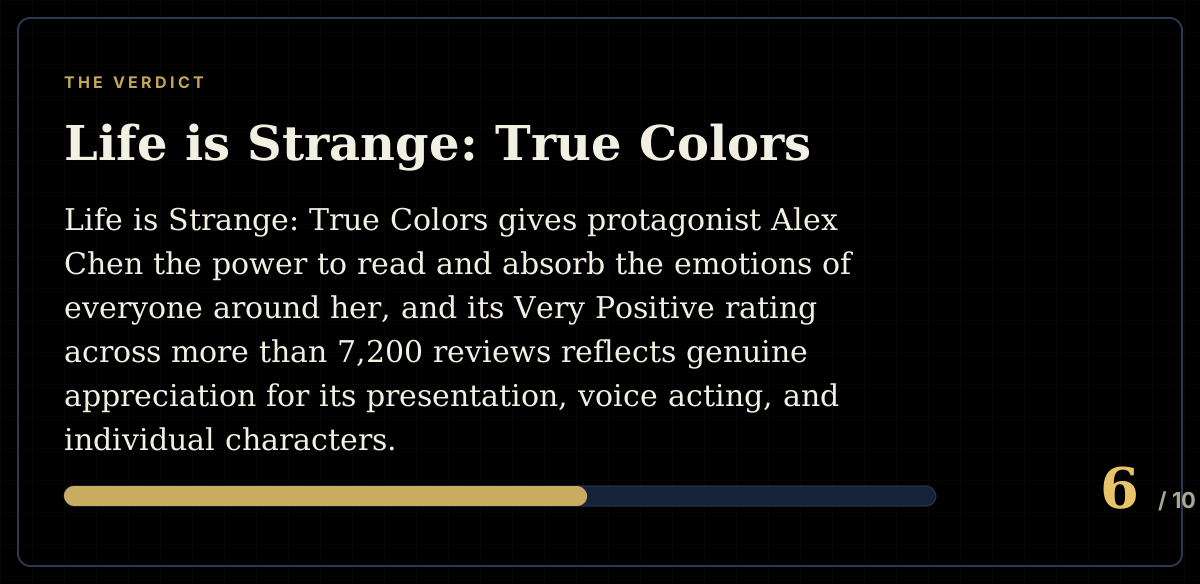
The short versionWanderer Editorial