
Game review
Kinny and the Cosmic Cauldron
7 / 10
- Developer
- Kinnymoms
- Publisher
- Rogue Duck Interactive, Lazy Otter, Gamersky Games
- Released
- 27 July 2026
- Platforms
- Windows
- Genre
- Roguelike
- Monetisation
- One-time purchase (NZ$15.18 with a 25% launch discount, NZ$20.25 standard); no in-game store, no IAP
- Players
- None for competitive play; Remote Play Together is supported for local co-viewing
The short version
Kinny and the Cosmic Cauldron takes the roguelike deckbuilder's core promise — build synergies, chase a run-ending high score — and moves it somewhere the genre hasn't really gone before: ingredients don't sit neatly in a hand, they physically fall, bounce and collide inside a cauldron, triggering chain reactions as they go. It's a genuinely novel hook, wrapped in charming hand-drawn pixel art, and 319 of its first 387 reviewers rate it positively.
The 68 who don't converge on a specific, repeated complaint: too much of a run's outcome comes down to how ingredients happen to fall rather than what you chose to build. The developer's own patch history backs up that this isn't a fringe opinion — a "HotFix & Balancing" update landed within days of launch, and hotfixes have kept coming at a rate of roughly one every other day since. A game whose core loop draws constant Peggle and Balatro comparisons is clearly onto something; whether the physics chaos serves the strategy or undermines it is the real question its own community is still arguing about.
Biggest strengths
- A genuinely original core mechanic — ingredients physically falling and colliding inside a cauldron rather than sitting in a static hand — that reviewers consistently praise as a fresh take on the deckbuilder format
- Charming, distinctive hand-drawn pixel art and a whimsical cosmic-witch premise that lands well across the review sample regardless of gameplay opinion
- A wide combination space — 20 different ingredients, cauldron expansions, and Cosmic Relics — giving genuine build variety between runs
Biggest weaknesses
- A repeated, specific complaint across multiple independent reviewers: too much of a run comes down to how ingredients happen to fall and collide rather than deliberate strategy, with one reviewer summarising it as feeling "more like gambling than meaningful play"
- The game is listed as Steam Deck Verified but has no gamepad support at all — mouse-only, with no editable or hardcoded keybinds — a real, checkable contradiction one detailed review specifically flags
- Some reviewers describe the systems as shallow once the initial novelty wears off, with one comparing it to "flash-game status" and noting limited player agency over shop purchases
Who it's for: Roguelike deckbuilder fans curious about a genuinely different spin on the format, and players who enjoy watching chaotic physics interactions as much as optimising a build.
Our recommendation: Worth trying for the novelty of its core idea and the charm of its presentation, with the understanding that build expression takes a back seat to how the cauldron's physics play out on a given run — read the RNG complaints below before deciding how much that will bother you specifically.
7 / 10
Roguelike deckbuilders have a well-worn shape by now: draft cards, build synergies between them, push a run as far as it'll go before it collapses. Kinny and the Cosmic Cauldron keeps that basic promise but throws out the static hand of cards that usually delivers it. You're a witch chef at an intergalactic restaurant, and your "deck" is a set of ingredients that physically fall into a cauldron, bounce off its walls, collide with each other, and trigger chain reactions as they settle — closer to a pachinko machine crossed with a deckbuilder than anything else currently on Steam. Nine days after launch, 319 of its first 387 reviewers rate it positively, and the ones who don't keep landing on the same specific problem.
Ingredients that don't sit still
The pitch is immediately legible from the game's own screenshots and description: drop up to 20 different ingredient types into the Cosmic Cauldron, watch them tumble and interact in increasingly chaotic ways as a run progresses, and hit target scores fast enough to earn Cauldron Expansions and Cosmic Relics that reshape how future ingredients behave. It's a genre already crowded with card-based roguelikes chasing Slay the Spire and Balatro's shadow, and reviewers consistently credit Kinny with actually finding new ground rather than iterating on the same template — the physics layer alone changes what "building a strategy" means, since positioning and timing matter alongside deck composition in a way a static hand of cards never asks for.
The presentation gets equally consistent praise. Hand-drawn 2D pixel art, an eldritch cast of alien restaurant patrons, and a tone that's simultaneously cute and faintly menacing come up approvingly across nearly every review in the sample, positive and negative alike — even reviewers frustrated with the mechanics tend to compliment how the game looks and feels to sit in front of.
The complaint that won't go away
Set against that goodwill is a specific, repeated criticism: too much of a run's success comes down to how ingredients happen to fall rather than what the player deliberately built. One reviewer states it as plainly as possible: "There's too much RNG." Another, after finishing the game, sums up the feeling as "that's it?" — praising the scale of possible combinations while noting that when you try to build toward something specific, randomness gets in the way often enough to feel discouraging. A detailed Chinese-language review goes further, arguing the game's creative packaging outpaces its actual mechanical depth, and that "luck matters more than strategy, making runs feel more like gambling than meaningful play."
This isn't a fringe reading of the game — it's corroborated by the developer's own response. Kinny shipped a patch explicitly labelled "HotFix & Balancing" on 29 July, two days after launch, and has followed it with roughly one hotfix every other day since, eight in total by 4 August. That cadence reads as a developer actively responding to exactly the tension its players are describing: a physics system chaotic enough to feel fresh, but not yet tuned finely enough that skill and strategy consistently overcome bad luck.
A real, checkable functionality gap
One complaint in the sample isn't a matter of taste at all. A detailed review states plainly that despite being Steam Deck Verified, the game has no gamepad support whatsoever — it's mouse-only, with no keybind options, editable or otherwise, to work around it. That's a genuine contradiction worth flagging directly: Steam's Deck Verification process is specifically meant to confirm a game plays well with a controller, and a mouse-only game with zero gamepad input doesn't fit that description. Players planning to pick this up specifically for Steam Deck should verify current input support before assuming Deck Verified means what it usually means.
A criticism worth reporting carefully
One detailed Chinese-language review raises a different kind of concern: that certain NPC designs include elements the reviewer considers gratuitous and unrelated to gameplay, arguing they neither enrich the world nor improve the experience and instead undercut the overall impression, closing with the view that "roguelikes shouldn't be propped up by gimmicks and shock value." This review has no independent way to verify or characterise the specific content being described, and reports the criticism as that reviewer's own stated position rather than an assessment this piece can confirm firsthand. It's included because it's a substantive, specific critique rather than a vague complaint, and readers weighing the game's tone alongside its mechanics should know it's part of the existing conversation around the game.
What a large sample makes possible here
With 387 reviews to draw on, Kinny's reception is legible enough to separate signal from noise in a way the smaller, fresher releases covered elsewhere in this review cycle can't yet support. The 82% lifetime positive rate and 92% recent English rate both point toward a game that's genuinely well liked on balance, not merely hyped in its first 48 hours. The RNG complaints, similarly, aren't isolated venting — they recur across language communities and playtimes, and the developer's own balancing patches confirm the studio sees them as real enough to act on quickly rather than dismiss.
Final verdict
Kinny and the Cosmic Cauldron earns its Very Positive standing by doing something the roguelike deckbuilder genre genuinely hasn't done before — physics-driven ingredient collisions in place of a static card hand — wrapped in presentation that lands almost universally well. The core tension holding it back from a stronger recommendation is real and openly acknowledged by the developer's own rapid balancing patches: enough randomness escapes player control that "I built toward this and it worked" and "the cauldron happened to go my way" can feel interchangeable more often than a deckbuilder fan might want.
For players drawn to chaos and physics as much as pure strategic optimisation, that trade-off is part of the appeal rather than a flaw. For players who want their build decisions to reliably determine their outcomes, this is worth trying with tempered expectations — and worth watching for further balance patches, given how actively the developer is already responding.
Players who'd rather see their strategic choices compound steadily over a persistent world, rather than get reshuffled by physics every run, may also want to look at Wanderer.
Pros and cons
Pros
- A genuinely original core mechanic — ingredients physically falling and colliding inside a cauldron rather than sitting in a static hand — that reviewers consistently praise as a fresh take on the deckbuilder format
- Charming, distinctive hand-drawn pixel art and a whimsical cosmic-witch premise that lands well across the review sample regardless of gameplay opinion
- A wide combination space — 20 different ingredients, cauldron expansions, and Cosmic Relics — giving genuine build variety between runs
- An extremely active post-launch patch cadence, with roughly one hotfix every other day since release, including an explicit balancing pass
- Steam Cloud and 52 achievements suggest real structural depth and support behind the core premise
Cons
- A repeated, specific complaint across multiple independent reviewers: too much of a run comes down to how ingredients happen to fall and collide rather than deliberate strategy, with one reviewer summarising it as feeling "more like gambling than meaningful play"
- The game is listed as Steam Deck Verified but has no gamepad support at all — mouse-only, with no editable or hardcoded keybinds — a real, checkable contradiction one detailed review specifically flags
- Some reviewers describe the systems as shallow once the initial novelty wears off, with one comparing it to "flash-game status" and noting limited player agency over shop purchases
- One detailed Chinese-language review argues certain NPC designs lean on gratuitous elements unrelated to gameplay in a way that detracts from rather than enriches the world — reported here as a specific critical viewpoint, not an assessment this review independently verifies
- The achievement completion curve is extremely steep even by roguelike standards, with several late achievements sitting under 1%, consistent with reviewers' accounts of runs undone by bad luck rather than mastery
Screenshots
-

Kinny and the Cosmic CauldronImage: Rogue Duck Interactive via Steam -

Kinny and the Cosmic CauldronImage: Rogue Duck Interactive via Steam -

Kinny and the Cosmic CauldronImage: Rogue Duck Interactive via Steam -
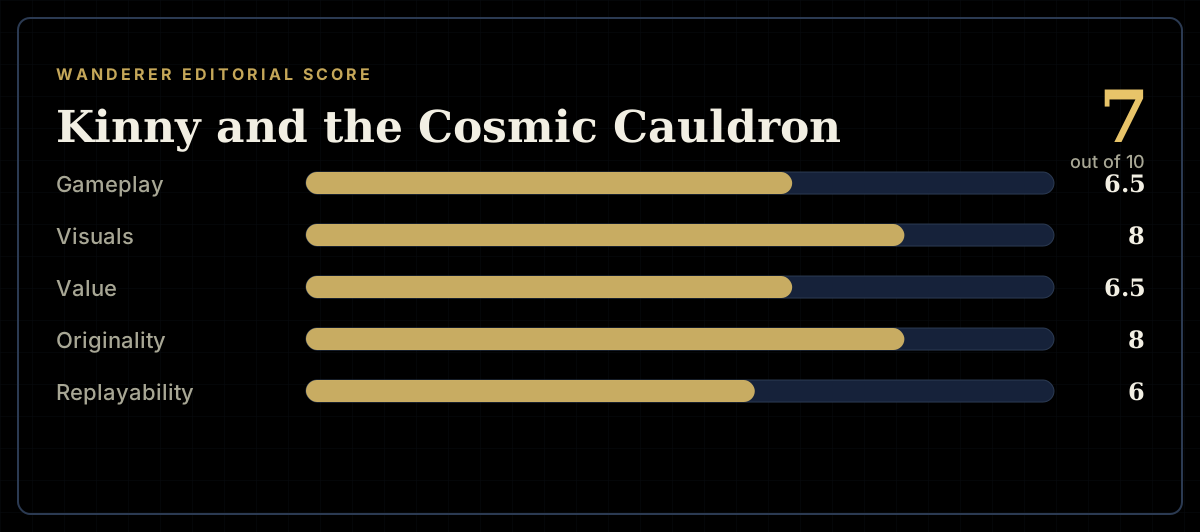
How the review scores each part of the gameWanderer Editorial -
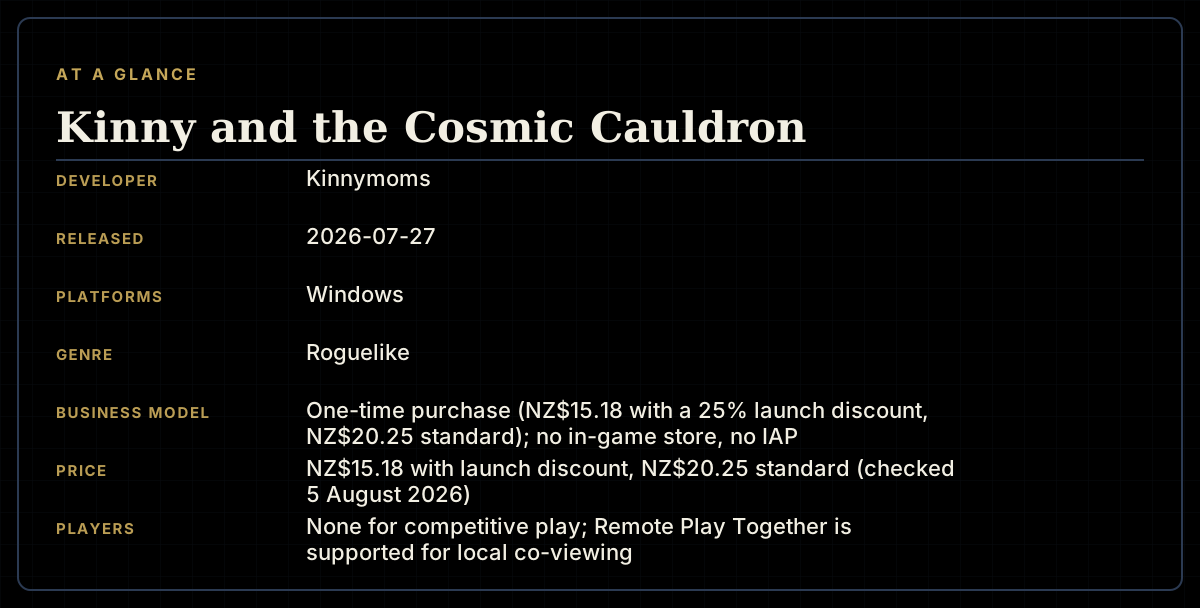
The game at a glanceWanderer Editorial -
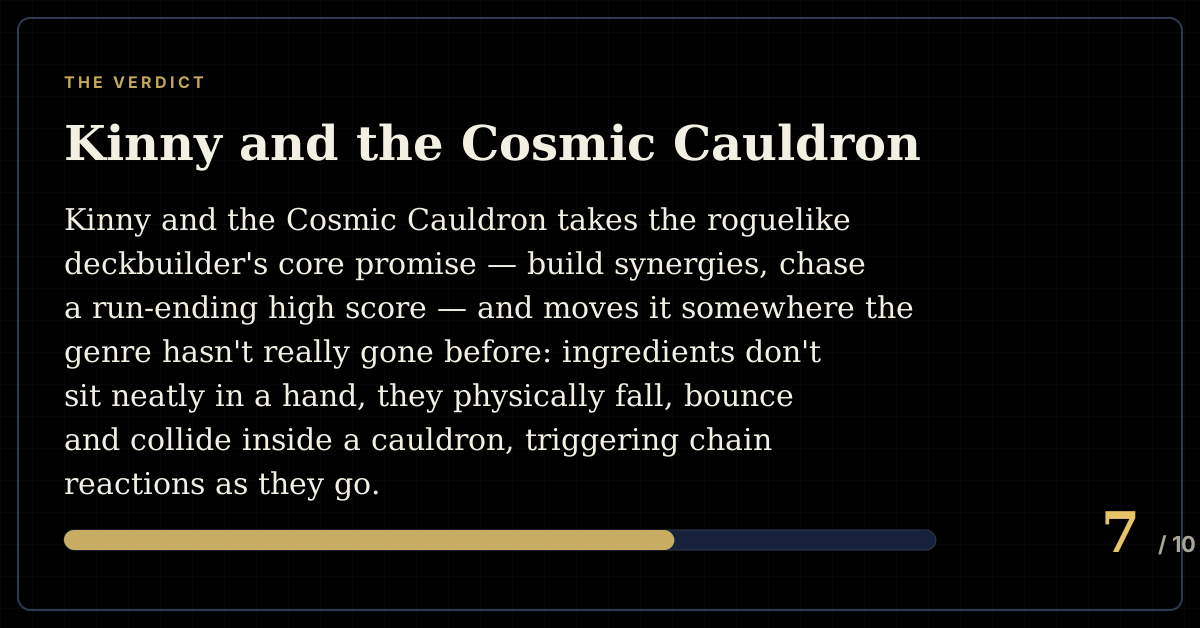
The short versionWanderer Editorial