Game review
Kingdom Rush Vengeance - Tower Defense
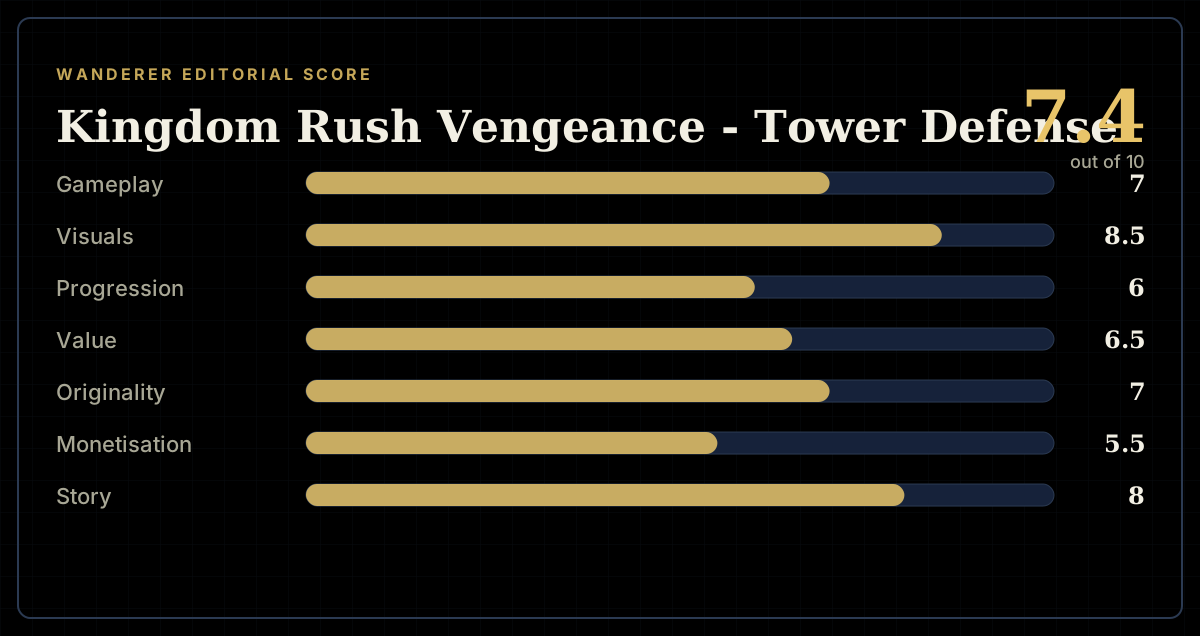
7.4 / 10
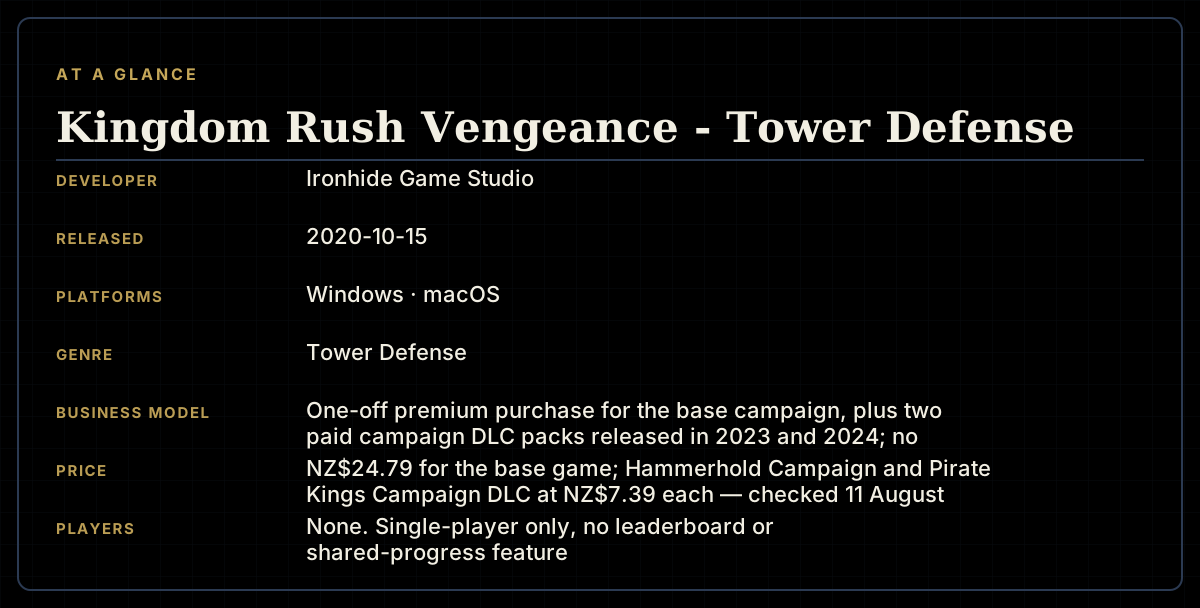
- Developer
- Ironhide Game Studio
- Publisher
- Ironhide Game Studio
- Released
- 15 October 2020
- Platforms
- Windows, macOS
- Genre
- Tower Defense
- Monetisation
- One-off premium purchase for the base campaign, plus two paid campaign DLC packs released in 2023 and 2024; no in-game store or microtransactions in the Steam version itself
- Players
- None. Single-player only, no leaderboard or shared-progress feature
The short version
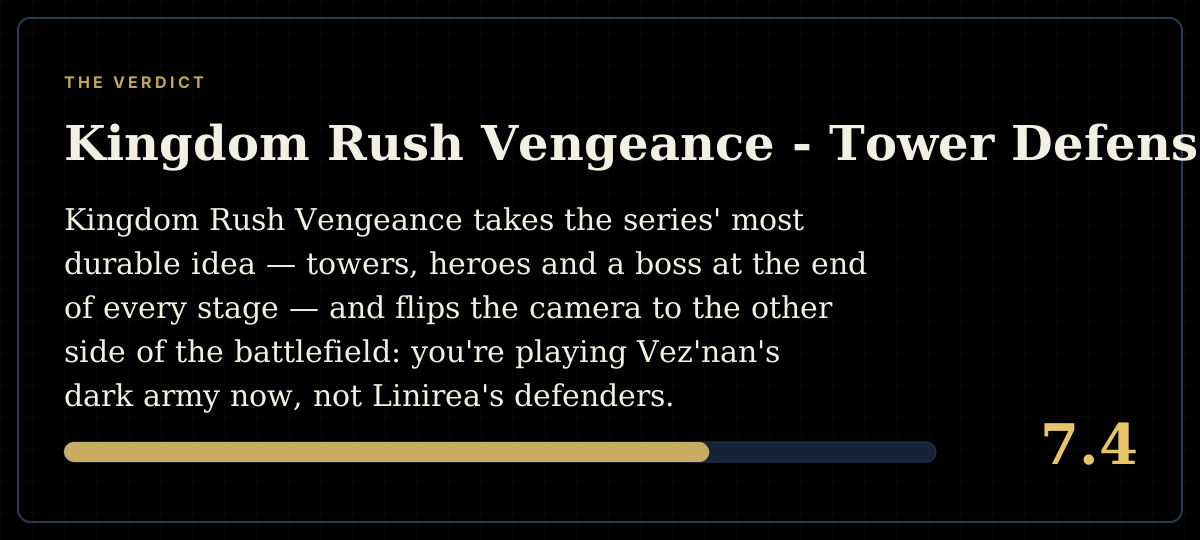
Kingdom Rush Vengeance takes the series' most durable idea — towers, heroes and a boss at the end of every stage — and flips the camera to the other side of the battlefield: you're playing Vez'nan's dark army now, not Linirea's defenders. That reframe, plus a new system for picking your tower roster before each stage, is a genuine and well-received twist on a fourteen-year-old formula. What keeps this from matching its predecessors is specific and repeated across years of reviews rather than scattered: fewer buildable plots and more split lanes narrow tactical choice compared to earlier entries, a handful of heroes and towers are strong enough to trivialise whole stages, and two campaign DLC packs sold in 2023 and 2024 reopened the "pay again" complaint that has dogged Ironhide's more recent releases. None of that has dented the reception much — 93.9% positive across nearly 9,800 all-time Steam reviews — but the "weakest Kingdom Rush" label shows up often enough, from players who otherwise clearly love the series, to take seriously.
Biggest strengths
- Playing as Vez'nan's dark army against the Kingdom is a real narrative twist for the series, not a reskin, and it's the specific thing reviewers praise most consistently
- The pre-stage tower loadout lets you pick your arsenal from a wider roster before each level, adding a build-planning layer earlier entries didn't have
- The series' best production values yet — animation, bosses and presentation draw praise even from reviewers who dislike the mechanical changes
Biggest weaknesses
- A loud, specific and recurring complaint across years of reviews: fewer buildable tower plots and more split, multi-path lanes narrow tactical choice compared to earlier Kingdom Rush games
- Two campaign DLC packs — Hammerhold and Pirate Kings — released in 2023 and 2024, years after the 2020 base launch, reopened the "pay again for more Kingdom Rush" complaint that also dogged Ironhide's own Kingdom Rush 5
- Balance complaints are specific rather than vague: several heroes, dragon-type ones especially, are reported strong enough to clear whole stages with minimal input, and a reworked star-to-skill-point system removes an incentive earlier games used to reward mastery
Who it's for: Existing Kingdom Rush fans curious about playing the villain's side, and tower defense players who want the series' sharpest production values yet; less essential for players chasing the tightest tactical puzzle the series has offered, who are better served by the earlier entries.
Our recommendation: A strong tower defense game on its own terms and comfortably Very Positive rated, but go in aware it's the entry longtime fans rate lowest, and budget for the two campaign DLC packs if you want the fuller story.
7.4 / 10
Kingdom Rush's whole template rests on one idea: you defend the Kingdom. Towers, heroes and a boss at the end of every stage, all in service of Linirea holding the line against whatever's marching down the lane this time. Kingdom Rush Vengeance, the fourth mainline entry from Ironhide Game Studio, breaks that premise on purpose. Vez'nan — the game's very first villain back in 2011, and a recurring presence across every sequel since — has decided enough is enough, and this time you command his dark army against the Kingdom instead of for it. It's a small structural flip with a real effect on how the game feels to play, and it's the thing nearly every review, positive or not, singles out as this entry's strongest idea. Wanderer previously reviewed the original Kingdom Rush, the 2011 game this whole series still gets measured against; where that entry earned an 8.5 for a template that was right from day one, Vengeance is a harder case — a genuinely inventive spin on the formula that a large, specific and consistent slice of the series' own fanbase rates as its weakest installment.
Leading the dark army
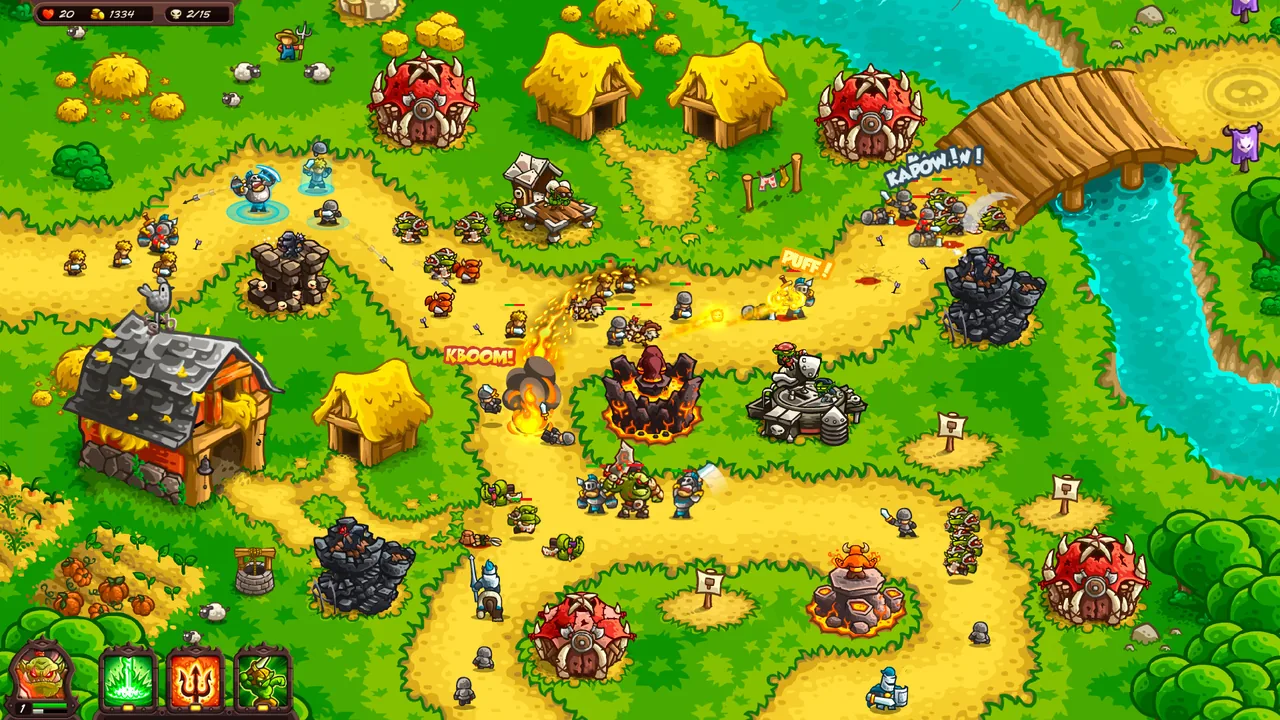
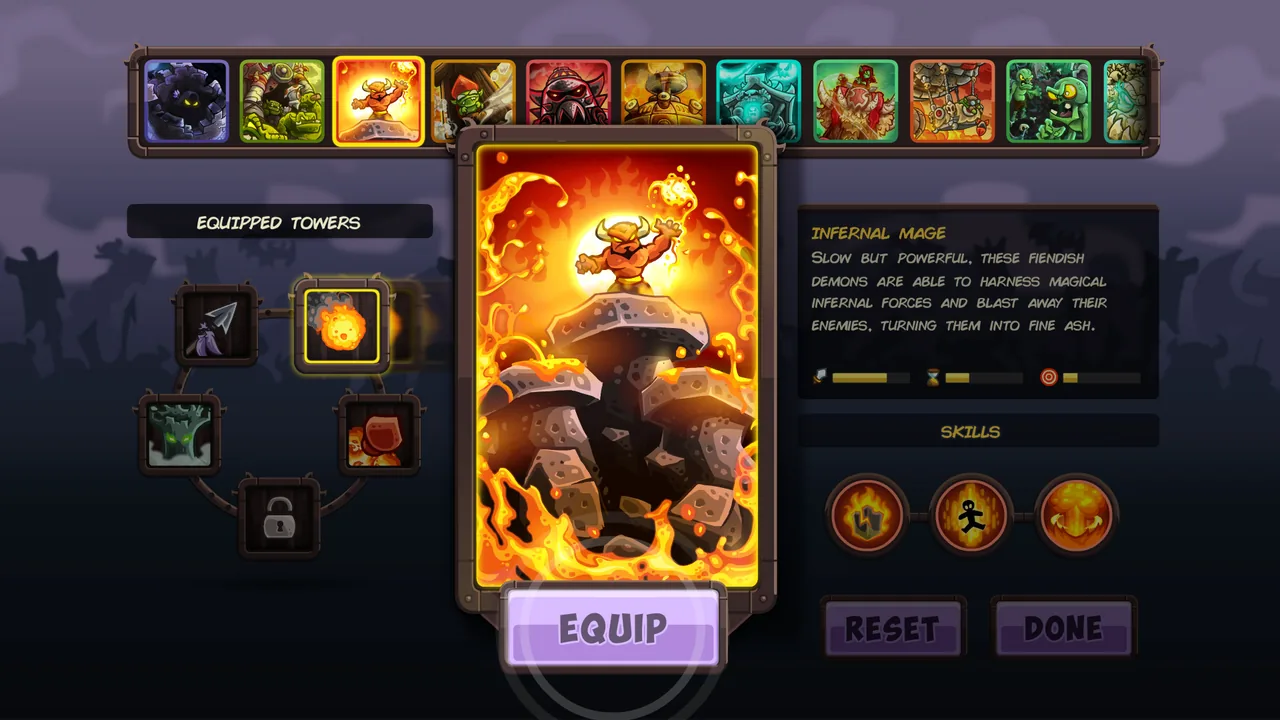
Orcs, goblins, demons, dark knights and zombies replace the archers-and-knights roster of earlier games, and the 31 stages spread across seven realms are framed as a conquest rather than a defense — you're pushing into the Kingdom's territory, not holding a line against an invasion. Fifteen heroes and twenty towers ship in the base purchase with no further purchase required to unlock any of them, a point Ironhide's own store page repeats twice for emphasis, and the roster leans hard into playing the villain's toolkit rather than reusing hero archetypes from earlier entries with new paint. The new pre-stage loadout screen is the other headline change: rather than having every tower type available on every map the way earlier entries did, you choose a subset of your unlocked towers before a stage begins, then build within that selection. Reviewers describe it as adding a genuine planning layer the earlier games didn't ask for — one reviewer called the combination of loadout choice and the villain framing enough to call this "the essence of tower defense, the fourth one" — and it's the mechanic most credited for keeping the fourth entry from feeling like a reskin of the third.
What changed, and why fans are split
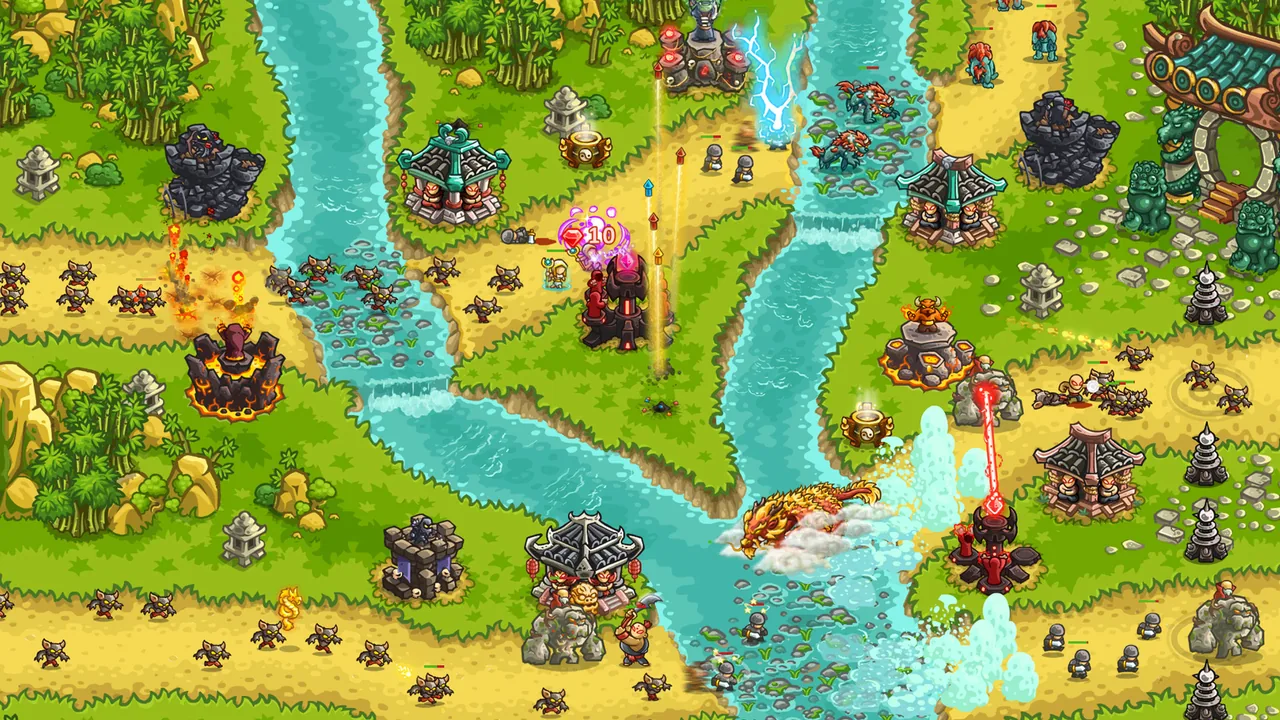
The most heavily upvoted review in the entire sample — 249 votes on a negative review, by a wide margin the most-endorsed opinion on the Steam page — makes a specific mechanical argument: Vengeance gives you noticeably fewer buildable tower plots per stage than earlier entries, and because many choke points only fit two towers rather than three or four, you're forced to sacrifice coverage between area, magic and single-target damage rather than layering all three the way earlier games allowed. The same review, and several others independently, add that stages are now more often split across multiple paths rather than one lane multiple towers could cover at once, which compounds the plot shortage rather than offsetting it. A separate reviewer with 648 minutes logged put the practical effect plainly: strict limits on towers, heroes and buildable spots turn the late game "more like a puzzle and less like a game," where a wrong build isn't obvious until you're halfway through a stage's waves. This isn't a fringe reading — it's the single most repeated structural complaint across the review sample, and it comes specifically from players who say they've played and finished the earlier Kingdom Rush games.
Balance, progression and the difficulty question
A second thread runs through the negative reviews and a fair number of the positive ones too: Vengeance is reported as easier and less carefully balanced than its predecessors, with specific culprits rather than a vague "too easy" complaint. Several reviewers single out dragon-type heroes as strong enough to plant at the start of a lane and clear the stage with minimal further input, including on the Heroic and Iron challenge difficulties that are meant to test mastery. One reviewer with the game's full 78-star completion and every Heroic and Iron challenge cleared wrote that, having gone back to replay the original for comparison, Vengeance "is fine, but it's not really as challenging" — a notable verdict from someone who'd finished both games at their hardest settings. A separate, specific complaint concerns the progression system itself: earlier games gave skill points scaled to how many stars you earned on a stage, rewarding mastery; Vengeance grants the full three skill points regardless of star count, which several long-time players read as removing an incentive the series used to have. None of this stops most players from clearing the campaign — Steam's global achievement data shows entry-level achievements sitting at 78–93% completion — but the harder Heroic and Iron achievements for the toughest stages sit far lower, several in the 6–9% range, a spread that at least confirms real difficulty exists at the top even if the middle of the campaign reads as softer than before.
The DLC question
Vengeance launched on Steam in October 2020 as a single NZ$24.79 purchase with all towers and heroes included, and stayed that way for three years. Then in December 2023 came the Hammerhold Campaign, and in September 2024 the Pirate Kings Campaign, each an additional story chapter sold separately for NZ$7.39. The complaints this produced are pointed rather than diffuse: one reviewer who'd bought every Ironhide release on Steam, Android and Apple called the base game's original "everything included" model broken by the DLC and asked bluntly where the season pass was; another compared it directly to Ironhide's own Kingdom Rush 5, noting that game had already drawn the same "pay again" criticism and that Vengeance was now repeating it years after its own launch. It's worth separating two things reviewers sometimes blur: every tower and hero in the base campaign is included at purchase, exactly as advertised, and the Steam version carries none of the mobile release's microtransactions. The DLC packs add extra story content on top of a complete base game rather than gating core systems behind a paywall. That's a real distinction, but it hasn't stopped the complaint from recurring, because the pattern — ship complete, then sell additional campaigns years later — is now something this specific developer has done twice.
Where it still delivers
Set the structural complaints aside and the fundamentals reviewers credit the series with are still present and, by most accounts, sharper than ever. Animation and boss presentation draw praise even from reviewers filing negative overall reviews, and the six boss encounters across seven realms keep the series' habit of changing the rules mid-fight rather than just scaling numbers up. The franchise's built-in strengths — no pay-to-win pressure on the Steam version, thirteen years of iteration behind the underlying engine, an active modding scene (the player-made Revengence Mod, cited approvingly by multiple reviewers as addressing several of the balance complaints directly) — are all doing real work here. And for as loud as the "weakest entry" chorus gets in the review text, it rarely translates into a thumbs-down: 93.9% positive across close to 9,800 all-time Steam reviews is a Very Positive score by any measure, and a fair number of the specific complaints above come from reviews that recommend the game anyway. One franchise veteran with over 11,800 minutes logged summed up the gap between critique and verdict neatly: "my only complaint with this game is that there is not more of it."
Final verdict
Kingdom Rush Vengeance earns its reception the way the rest of the series has — a tight core loop, real production polish, and here, a villain's-eye premise that genuinely justifies a fourth mainline entry rather than just extending the first three. What keeps it from the top of the scale is that the complaints aren't vague nostalgia for an earlier game; they're specific, mechanical, and repeated by players who clearly know this series well: fewer buildable plots and split lanes that narrow tactical choice, hero and tower balance loose enough that several stages can be cleared on autopilot, a progression change that removes a mastery incentive, and two campaign DLC packs that reopened a "pay again" complaint the developer has now drawn twice. None of that is severe enough to argue with a 93.9% positive score built over six years — but it's consistent enough, from fans rather than newcomers, to explain why long-time players rank this fourth entry below the three that came before it.
Pros and cons
Pros
- Playing as Vez'nan's dark army against the Kingdom is a real narrative twist for the series, not a reskin, and it's the specific thing reviewers praise most consistently
- The pre-stage tower loadout lets you pick your arsenal from a wider roster before each level, adding a build-planning layer earlier entries didn't have
- The series' best production values yet — animation, bosses and presentation draw praise even from reviewers who dislike the mechanical changes
- All 20 towers and 15 heroes ship in the base purchase with no microtransactions on Steam, following the earlier games' model rather than the mobile version's
- Still comfortably Very Positive — 93.9% positive across close to 9,800 all-time Steam reviews
Cons
- A loud, specific and recurring complaint across years of reviews: fewer buildable tower plots and more split, multi-path lanes narrow tactical choice compared to earlier Kingdom Rush games
- Two campaign DLC packs — Hammerhold and Pirate Kings — released in 2023 and 2024, years after the 2020 base launch, reopened the "pay again for more Kingdom Rush" complaint that also dogged Ironhide's own Kingdom Rush 5
- Balance complaints are specific rather than vague: several heroes, dragon-type ones especially, are reported strong enough to clear whole stages with minimal input, and a reworked star-to-skill-point system removes an incentive earlier games used to reward mastery
- No speed-up or fast-forward control, the same complaint that has followed the series since the 2011 original and still isn't addressed here
- A recurring "boss destroys your towers" mechanic, present since Kingdom Rush: Frontiers, draws consistent frustration from veteran players who read it as anti-player rather than challenging
Screenshots
-
Kingdom Rush Vengeance - Tower DefenseImage: Ironhide Game Studio via Steam -
Kingdom Rush Vengeance - Tower DefenseImage: Ironhide Game Studio via Steam -
Kingdom Rush Vengeance - Tower DefenseImage: Ironhide Game Studio via Steam -
How the review scores each part of the gameWanderer Editorial -
The essentials at a glanceWanderer Editorial -
The short versionWanderer Editorial