Game review
Lord Clicker
6 / 10
- Developer
- Bakemono Studio
- Publisher
- Bakemono Studio
- Released
- 4 March 2024
- Platforms
- Windows
- Genre
- Clicker, Tower Defense, Strategy
- Monetisation
- One-time purchase, no DLC, no in-app purchases
- Players
- Single-player only
The short version
Lord Clicker fuses two familiar genres in one small package: click to earn gold, then spend it either growing a populace that produces wealth passively or hiring defenders to survive the next wave. Made by Bakemono Studio and released 4 March 2024 for NZ$4.49, it has one of the smallest review histories this library has ever covered — nine reviews total, across every language, all of which this review reads in full. What's there is mostly warm, with one detailed, credible complaint about how physically demanding the clicking itself becomes.
Biggest strengths
- A genuinely distinctive combination for the genre — tower defense and idle-style clicking rarely appear together, and the small sample of reviews that exists responds to that novelty specifically ("cheap and cheerful and a little different")
- Cheap at NZ$4.49, with no reviewer in this small sample raising the price as an issue
- Steam's own achievement structure shows real tiered depth for a small release — three difficulty ranks (Prince, King, Emperor), each with its own challenge achievements for winning without using specific unit types, suggesting more design thought went into replayable difficulty than the review count alone would suggest
Biggest weaknesses
- The most detailed critical review in the sample argues the game has "zero quality of life and progression," specifically warning that without an autoclicker, sustained play risks repetitive strain — a fair and specific complaint about the genre's oldest problem
- One reviewer reports the game using an unusually high share of their GPU relative to its visual simplicity, without alleging anything beyond curiosity about the cause
- The developer has posted no announced updates since launch, so any of the issues raised above should be assumed to still apply to the current build
Who it's for: Fans of short, cheap strategy-clicker hybrids who don't mind a game with barely any public track record; a poor fit for anyone who finds repetitive clicking uncomfortable, since at least one detailed review specifically warns about it.
Our recommendation: A distinctive, fairly priced idea executed competently for its tiny scale, worth a look for genre fans willing to accept a game with almost no public reception to judge it by.
6 / 10
Introduction
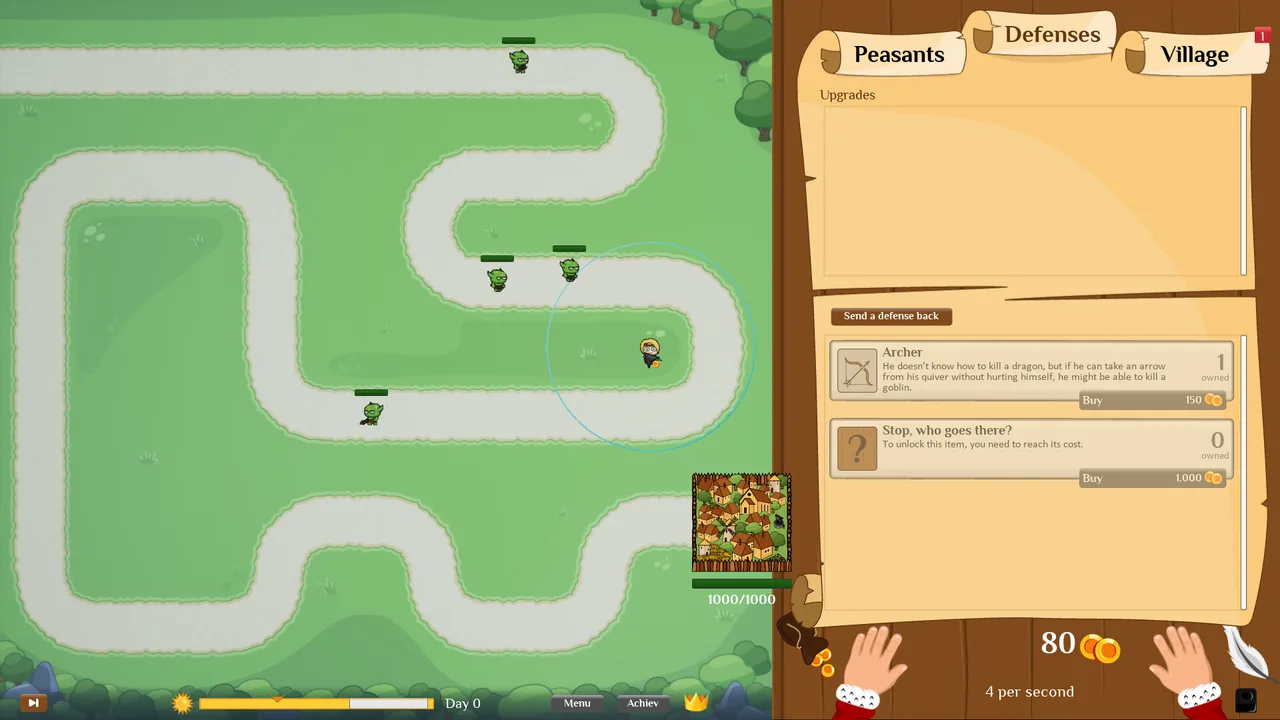
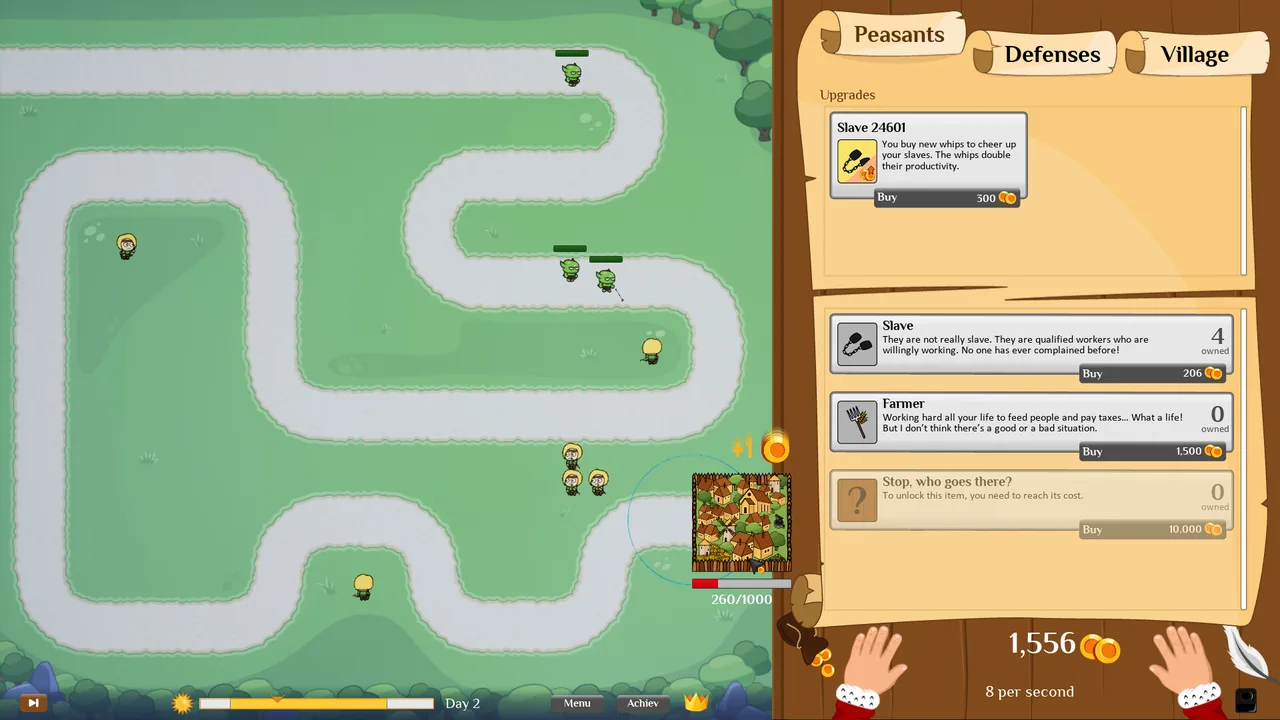
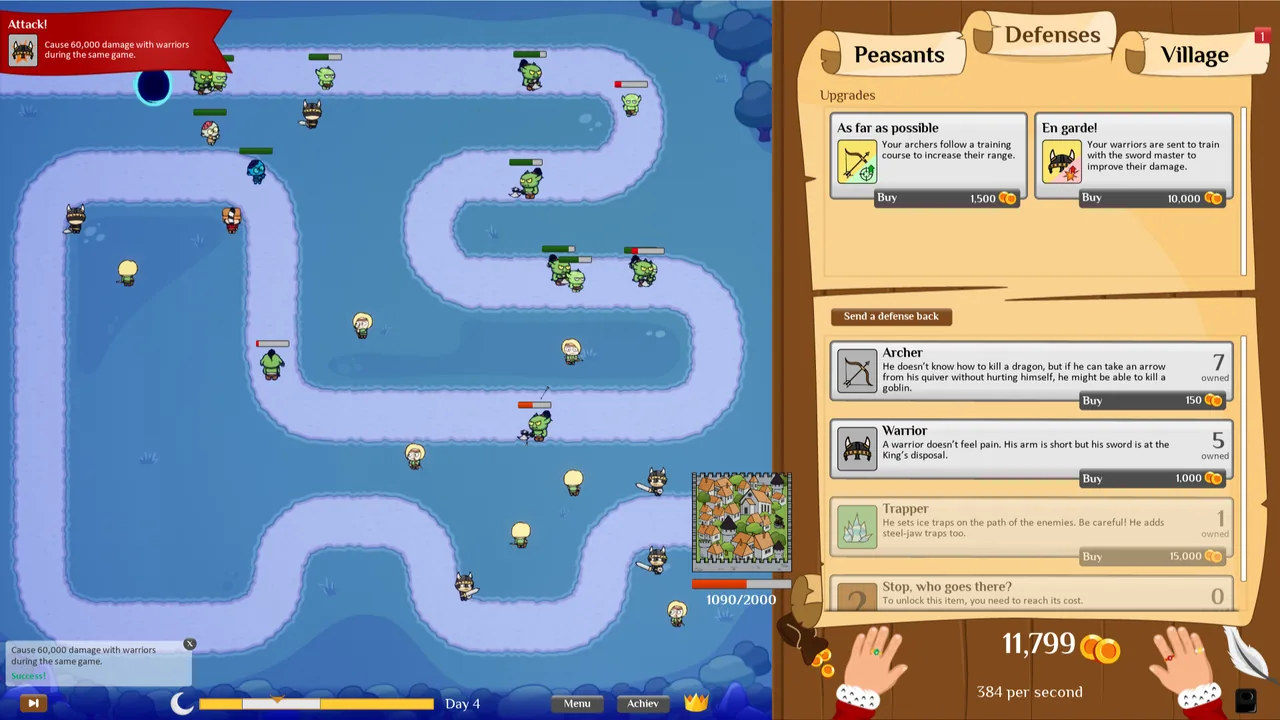
Lord Clicker sits in an unusual corner of the idle-adjacent genre: click to earn gold coins, then choose whether to spend them growing a passive-income populace or hiring soldiers to defend a village against incoming waves. Made by Bakemono Studio and released 4 March 2024 for NZ$4.49, it carries one of the smallest public track records this library has covered — nine reviews in total, across every language Steam has recorded, every one of which this review reads in full rather than sampling. That's a genuine limitation worth stating plainly rather than papering over: any conclusion drawn from nine reviews is provisional, not representative of a broad audience the way a thousand-review corpus would be.
An unusual combination that lands, for a small audience
What exists in the sample is mostly positive and specific about what makes the game distinctive. "Tower defence with clicker mechanism for cash. Not bad. Cheap and cheerful and a little different," one reviewer writes. A Danish-language review reports no bugs beyond a small translation slip — the defeat screen's click counter displaying in French even when the game is set to English — and calls the difficulty genuinely challenging without being unfair. A French reviewer with over twelve hours logged calls it "a great, dynamic game full of references." The community's own vote-weighted Steam tags back up the genre-blend framing: Tower Defense (314 votes) and Incremental (320) sit close together near the top, alongside Strategy (330) and Idler (287) — genuinely read by the small community that's engaged with it as belonging to both genres at once, even though one reviewer specifically argues "it's not an idle game, but a tower defence where you can click."
Steam's achievement data suggests more structural depth went into the design than a nine-review history would imply on its own. Three escalating difficulty tiers — Prince, King and Emperor — each carry their own full set of milestones, including a run of "Without" achievements for winning without using specific unit types (archer towers, wizards, trappers, assassins), a self-imposed-constraint design pattern usually reserved for games with room to reward mastery. Completion rates taper cleanly from 86.9% for an early Prince-tier milestone down to 1.1% for the hardest Emperor-tier win — evidence of a real, if small, population pushing meaningfully into the harder content rather than bouncing off early.
A fair complaint about the clicking itself
The sample's single most detailed critical review raises a specific, credible concern rather than a vague one: "Zero quality of life and progression. Unless you want RSI or use an autoclicker it is unplayable." That's worth taking seriously rather than dismissing as one disgruntled voice — it names a concrete risk (repetitive strain) rather than a subjective complaint about difficulty or content, and it points at exactly the kind of design trap a pure clicker mechanic can fall into when it isn't paired with the automation options an idle game usually earns over time. A separate reviewer reports unusually heavy GPU usage for a visually simple game, explicitly declining to allege anything sinister about the cause — worth mentioning as an observed, unexplained data point rather than a finding this review can settle.
Final Verdict
Lord Clicker is a small, cheap, genuinely distinctive idea, and the little evidence available suggests it delivers on that idea competently for the audience that's found it. It also has almost no public track record to lean on, no announced post-launch support, and one specific, credible warning from its own community about how physically demanding sustained clicking can get without more automation to lean on. For NZ$4.49 and a curiosity about the genre mashup, it's a reasonable, low-stakes pick — just go in aware that this review, like the game's own store page, is working from a genuinely small sample.
Pros and cons
Pros
- A genuinely distinctive combination for the genre — tower defense and idle-style clicking rarely appear together, and the small sample of reviews that exists responds to that novelty specifically ("cheap and cheerful and a little different")
- Cheap at NZ$4.49, with no reviewer in this small sample raising the price as an issue
- Steam's own achievement structure shows real tiered depth for a small release — three difficulty ranks (Prince, King, Emperor), each with its own challenge achievements for winning without using specific unit types, suggesting more design thought went into replayable difficulty than the review count alone would suggest
- No reported bugs of consequence in this review's full read of the corpus, beyond one reviewer noting a stray French string appearing on the English defeat screen
Cons
- The most detailed critical review in the sample argues the game has "zero quality of life and progression," specifically warning that without an autoclicker, sustained play risks repetitive strain — a fair and specific complaint about the genre's oldest problem
- One reviewer reports the game using an unusually high share of their GPU relative to its visual simplicity, without alleging anything beyond curiosity about the cause
- The developer has posted no announced updates since launch, so any of the issues raised above should be assumed to still apply to the current build
- With only nine reviews in total, any conclusion about broader reception has to be read as provisional rather than representative
Screenshots
-
Lord ClickerImage: Bakemono Studio via Steam -
Lord ClickerImage: Bakemono Studio via Steam -
Lord ClickerImage: Bakemono Studio via Steam -
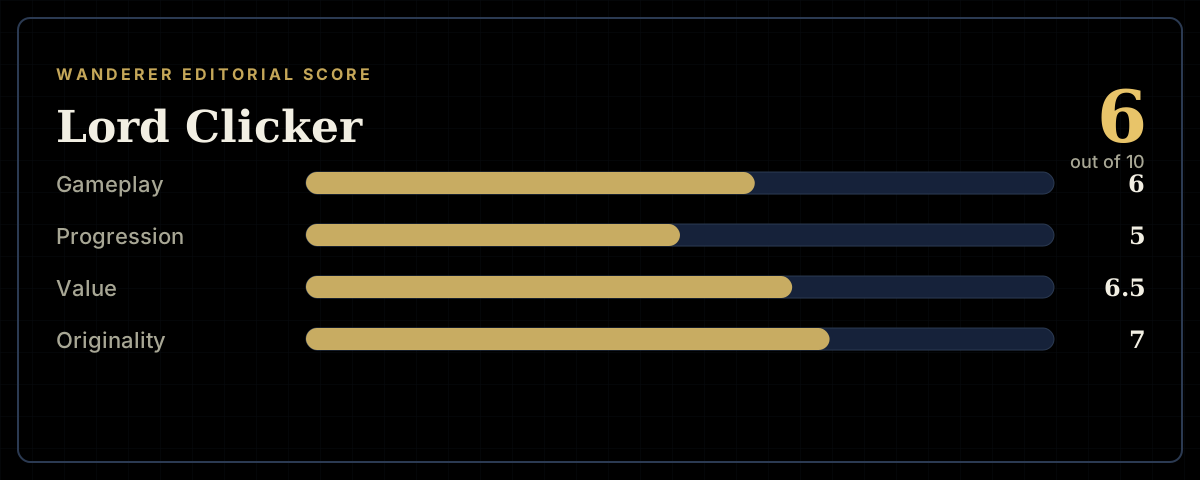
How the review scores each part of the gameWanderer Editorial -
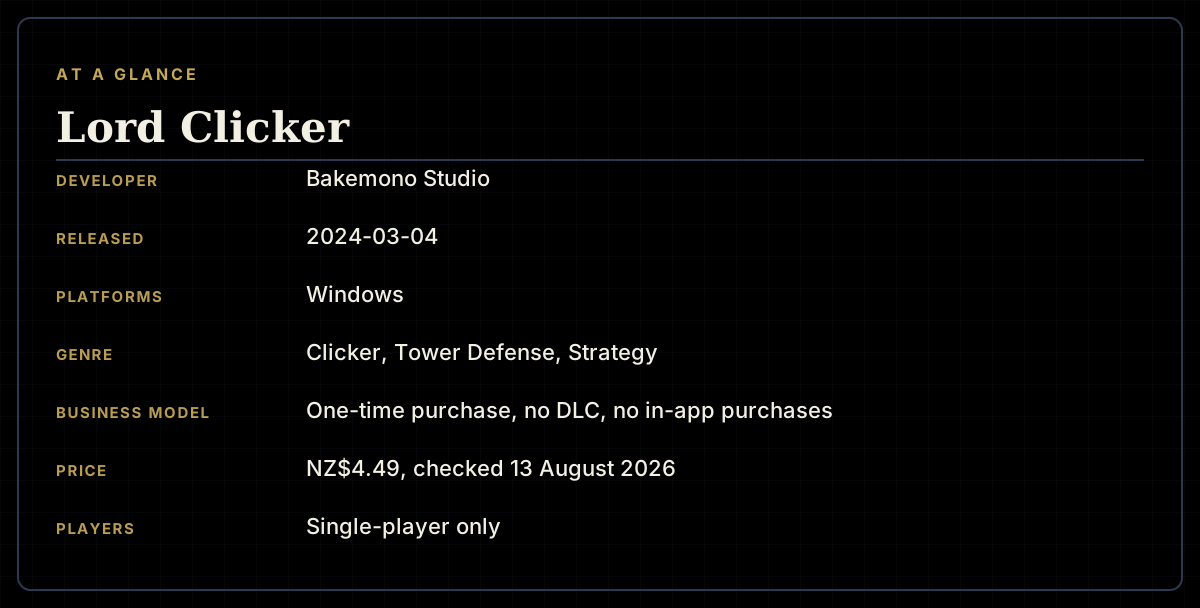
The essentials at a glanceWanderer Editorial -
The short versionWanderer Editorial