Game review
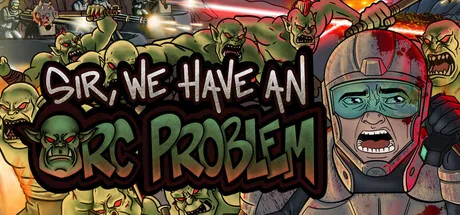
Sir, We Have an Orc Problem
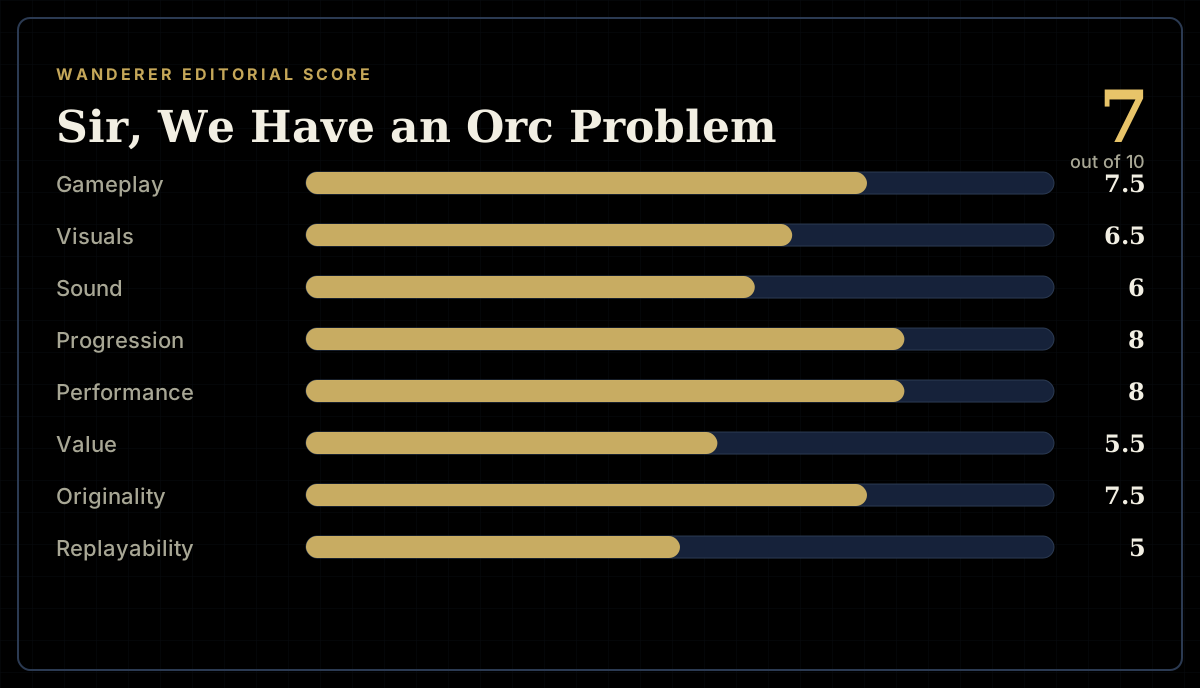
7 / 10
- Developer
- Mumpitz Games
- Publisher
- Mumpitz Games
- Released
- 28 July 2026
- Platforms
- Windows, Linux
- Genre
- Tower Defense, Incremental
- Monetisation
- Premium, one-off purchase — no in-game purchases
- Players
- Single-player
The short version
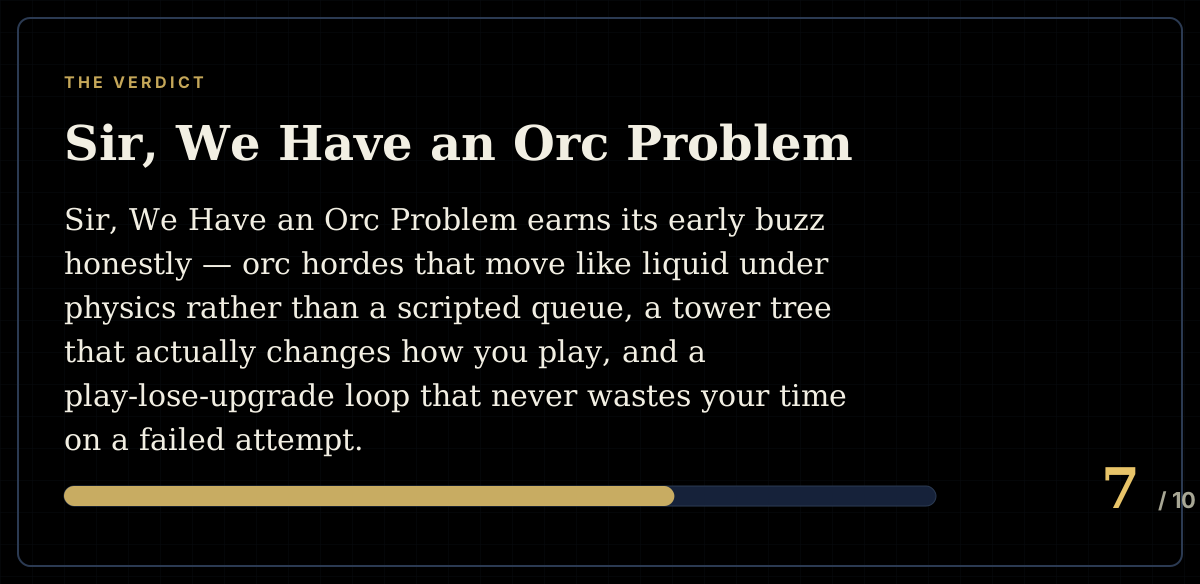
Sir, We Have an Orc Problem earns its early buzz honestly — orc hordes that move like liquid under physics rather than a scripted queue, a tower tree that actually changes how you play, and a play-lose-upgrade loop that never wastes your time on a failed attempt.
It also runs out of game well before most players are done wanting more of it, and its own Steam reviews are unusually candid about that trade.
Biggest strengths
- Orc waves behave like a physically simulated mass rather than a queue of individual sprites, and steering that flow with explosions is more interesting than plugging chokepoints
- Tower unlocks meaningfully change how a level is approached rather than just scaling bigger numbers onto the same strategy
- Runs cleanly even on modest hardware despite pushing huge unit counts across the screen at once
Biggest weaknesses
- Twelve levels and roughly five to ten hours to fully unlock everything, and a large share of the game's own reviewers call that thin for the asking price
- No endless mode, new game plus or level editor, so there is nothing left to do once the upgrade tree is maxed out
- The soundtrack loops on a cycle short enough that multiple players flagged it within their first sitting
Who it's for: Incremental and "number go up" fans who also want to place towers rather than just watch a screen, and anyone who misses the short, punchy flash tower defense games of a decade ago.
Our recommendation: A confident buy for one focused weekend of play, not a game to expect months of life from. Worth it at its current discounted price; think harder at full price if content volume matters more to you than concept to you.
7 / 10
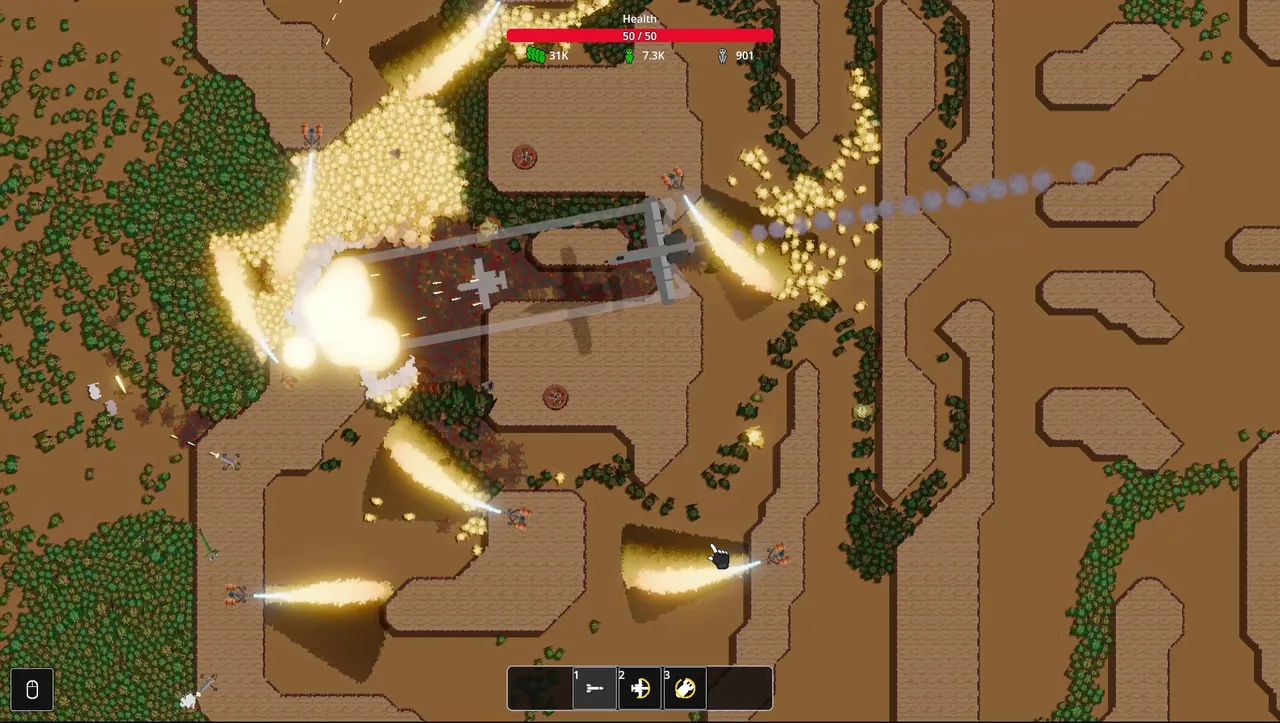
Most tower defense games treat their enemies as a counting problem — spawn the wave, route it past the towers, subtract health when something slips through. Sir, We Have an Orc Problem treats its orcs as a fluid. Tens of thousands of them pour across a level in a single mass that bends, pools and surges around whatever you've built, and steering that mass with a well-placed explosion is a more interesting problem than lining towers along a fixed path ever was. That one idea, executed properly, is enough to carry a short game a long way. Whether it's enough to carry a full asking price is the argument this review is actually here to have.
A loop built to fail fast and forgive it
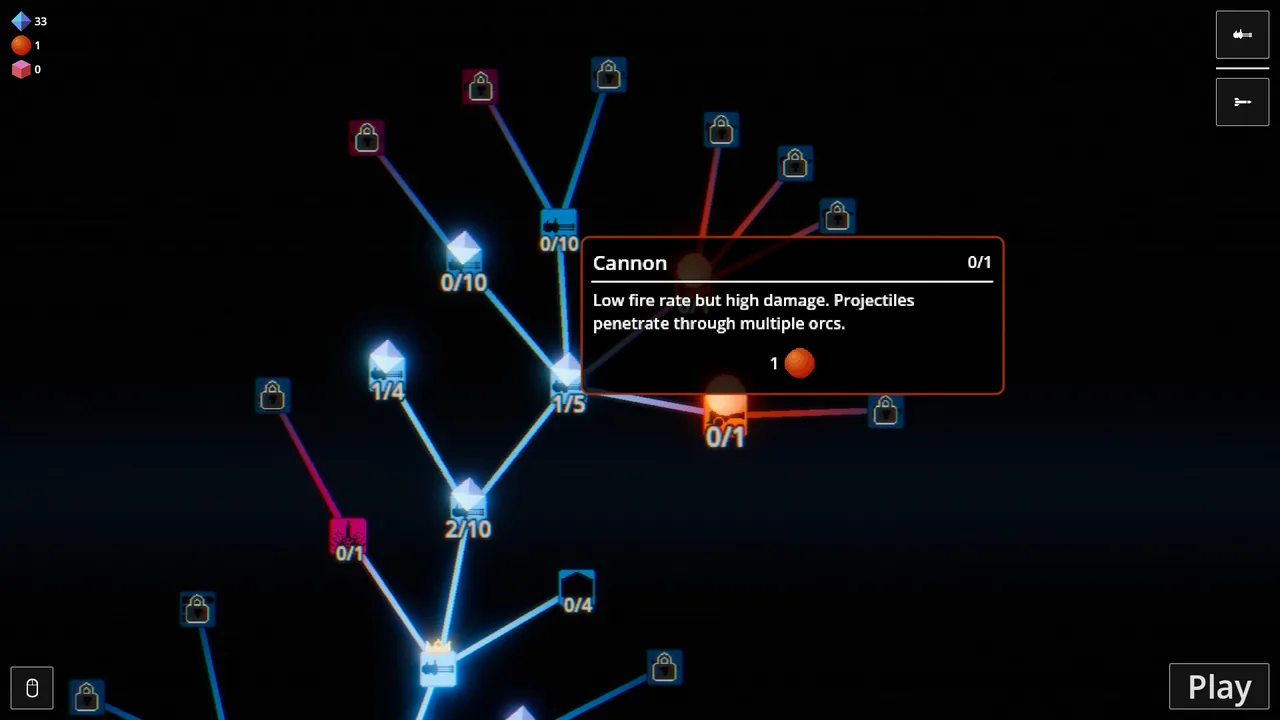
The structural hook is the incremental layer sitting underneath the tower defense. Every run, won or lost, hands you resources that carry over into a permanent upgrade tree — so a level you get crushed on at the two-minute mark still buys you something for the next attempt. That design choice matters more than it sounds like it should. Tower defense games live or die on how they treat failure, and a lot of them make losing feel like time evaporating. Here, losing is just the input side of the next attempt. Play, lose, upgrade, play again with a slightly sharper set of tools — the loop is tight enough that a bad run rarely produces the urge to quit rather than retry.
The trade-off is one several of the game's own buyers have already flagged: the early levels exist partly to fund the tools needed to beat the early levels. A stage you can't clear on your first go isn't necessarily a stage you're playing wrong — it might just be a stage you haven't farmed enough currency to beat yet, and grinding a level you've already seen a handful of times to afford the next unlock is a different kind of fun than the exploratory kind the pitch promises. It's a legitimate incremental-game mechanic, but it sits oddly next to a genre that usually asks you to solve a puzzle, not repeat one.
Towers that change the plan, not just the numbers
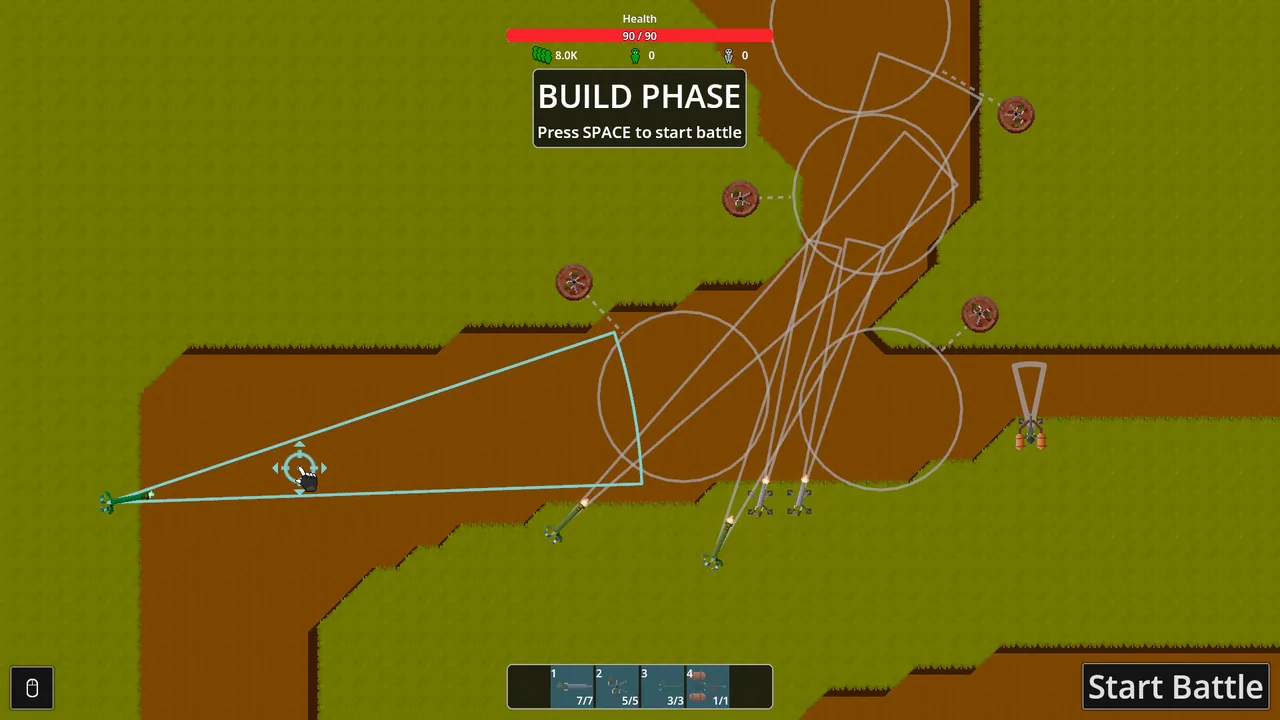
Seven turret types unlock across the campaign, and the meaningful thing about them isn't the count — it's that picking one over another changes your actual approach to a level rather than just raising a damage number. Line of sight matters, so a turret tucked behind terrain isn't automatically a good turret; positioning has to account for both range and what the orc flow looks like once you've reshaped it with your last placement. Early on it's easy to miss why a given tower matters, since its role only becomes obvious once you've bought a couple of upgrades and watched what it actually does at scale. That's a reasonable onboarding cost for a game this short, but it does mean the first hour undersells what the toolkit is capable of.
Active abilities — strafing runs, orbital lasers, an actual nuke — sit on top of the tower layer as emergency options rather than a second progression track worth building around. They're well-judged for what they are: a way to survive a moment that's gotten away from you, not a replacement for good tower placement. Losing the ability to spam them (several players note the airstrike went from a cooldown in the demo to a limited resource in the finished game) pushes the difficulty back onto the towers, which is the right instinct even if it reads as a downgrade to anyone who tried the demo first.
Difficulty that spikes rather than climbs
The campaign's pacing is uneven in a specific and telling way. The middle stretch settles into a comfortable rhythm of new towers, new upgrades and levels that ask you to apply them, and then the back half — several players single out the fifth zone specifically — turns sharply harder without much warning. That's not automatically a flaw; a short game benefits from a real test near the end rather than a victory lap. But combined with a final level that several reviewers describe as a fairly plain arena rather than a set-piece send-off, the difficulty curve ends up feeling more like it ran out of design time than that it was building deliberately toward a climax.
The content problem, stated plainly
This is the conversation actually happening in the game's own review section, and it's worth taking at face value rather than hedging around. Twelve levels. Most players who chase full completion land somewhere between five and ten hours. Steam's own audience — an audience that is, at 88% positive, clearly enjoying the game while they're in it — repeatedly asks for the same things once they're done: more maps, an endless mode, a level editor, workshop support, anything that turns a maxed-out upgrade tree back into a reason to open the game. None of that exists at launch. What you get instead is a tightly scoped, well-tuned few hours and then a clean stop.
That's not automatically a bad deal. Plenty of good games are short on purpose. The friction here is specifically about price versus hours — at roughly NZ$13 to NZ$15 for a five-to-ten-hour experience with no reason to return once the achievements are done, a meaningful number of buyers land on "fun, but I paid more than this was worth" rather than outright regret. That split shows up directly in the review data: the negative minority isn't disputing that the game works, they're disputing whether the length matches the price tag.
Presentation, performance and the parts nobody's arguing about
Visually, this isn't a game selling itself on production values — the art is functional rather than distinctive, and the humour in the title and premise ("greet them with even more bullets, bombs and lasers") is mostly front-loaded into the concept rather than sustained through dialogue or writing, since there isn't much of either. What it does have going for it is a soundtrack loop short enough that multiple players noticed it inside their first session, which is the kind of small, fixable irritant that stands out precisely because everything else runs so cleanly. Performance is the genuine bright spot: simulating tens of thousands of moving units without the frame rate falling over is a real technical achievement, and reports of it running smoothly even on modest laptops suggest the physics-driven horde is more efficiently built than its scale would suggest.
The one interface gap worth flagging for anyone considering a purchase: there's no way to speed up combat. In a game built around replaying levels to fund upgrades, that omission turns efficient farming into a patience test rather than a skill test — exactly the kind of friction an incremental game, of all genres, should have caught in testing.
Final verdict
Sir, We Have an Orc Problem is a well-made idea without quite enough game wrapped around it. The orc-as-fluid simulation is genuinely clever, the tower choices genuinely matter, and the play-lose-upgrade loop is tuned well enough that failure never feels like a wasted trip. None of that is in serious dispute, including among the players marking it negative. What's in dispute is whether five to ten hours with nothing built to extend it is worth the current asking price, and that's a fair question for a launch-week concept this strong to be facing.
Seven out of ten reflects a genuinely good short game rather than a great long one. If the studio adds even one of the things its own players are already asking for — an endless mode, a second map pack, a level editor — this becomes a much easier recommendation at full price. Right now, buy it for a focused weekend, not for a season.
Players who'd rather their number-go-up itch come with a world to walk around in between sessions, instead of a level select screen, might find that longer-form itch better scratched by Wanderer.
Reviewed at launch, 30 July 2026 — check the store listing for current pricing.
Pros and cons
Pros
- Orc waves behave like a physically simulated mass rather than a queue of individual sprites, and steering that flow with explosions is more interesting than plugging chokepoints
- Tower unlocks meaningfully change how a level is approached rather than just scaling bigger numbers onto the same strategy
- Runs cleanly even on modest hardware despite pushing huge unit counts across the screen at once
- The play-lose-upgrade cycle is short enough that a failed run never feels like wasted time
- Active abilities like strafing runs, orbital lasers and a literal nuke work as panic buttons without making the tower layer optional
- The pre-launch demo represented most of the finished game honestly, so early buyers largely knew what they were paying for
Cons
- Twelve levels and roughly five to ten hours to fully unlock everything, and a large share of the game's own reviewers call that thin for the asking price
- No endless mode, new game plus or level editor, so there is nothing left to do once the upgrade tree is maxed out
- The soundtrack loops on a cycle short enough that multiple players flagged it within their first sitting
- Enemy variety barely changes across the campaign, so late stages test tower efficiency rather than posing new tactical problems
- No option to speed up combat, which turns re-running early levels for currency into a genuinely slow chore
- A handful of abilities and tower behaviours reportedly shipped weaker than they were in the demo, an odd note for a launch build
Screenshots
-
Sir, We Have an Orc ProblemImage: Mumpitz Games via Steam -
Sir, We Have an Orc ProblemImage: Mumpitz Games via Steam -
Sir, We Have an Orc ProblemImage: Mumpitz Games via Steam -
How the review scores each part of the gameWanderer Editorial -
The short versionWanderer Editorial