Game review
Jenny the Witch
6.3 / 10
- Developer
- Catbird Soft
- Publisher
- Catbird Soft
- Released
- 22 July 2026
- Platforms
- ["Windows"]
- Genre
- Action
- Monetisation
- Paid
- Players
- Single-player
The short version
Jenny the Witch pairs a striking, gritty aesthetic and a genuinely interesting resource-driven combat system with platforming stiff and unforgiving enough to sour long stretches of an otherwise sharp, short action game.
Biggest strengths
- A striking, grimy cyberpunk aesthetic with celshaded low-poly visuals and widely praised voice acting
- A resource-driven combat system that ties melee, dashing, and shields together in ways many reviewers found genuinely interesting once mastered
- Strong replay value for its price via New Game Plus, an arena mode, collectibles, and unlockable run modifiers, backed by active post-launch patching
Biggest weaknesses
- Platforming is widely criticized as stiff and unforgiving, with no coyote time and an unreliable dash that several reviewers call the game's biggest weak point
- Ranged attacks are safe and effectively unlimited, which pushes many players toward a repetitive keep-away playstyle instead of the game's more interesting melee options
- Larger enemies resist stun, and several hyper attacks and upgrades are widely described as underwhelming or situational
Who it's for: Fans of PS2-era character action games and spectacle fighters who can tolerate rough-edged platforming for a strong aesthetic and combat ideas.
Our recommendation: A confident, inexpensive recommendation for stylish short-form action fans, but go in expecting the platforming to be the game's weakest link and consider mouse and keyboard for tighter control.
6.3 / 10
A Mercenary, a Witch's Broom, and a Missing Crew
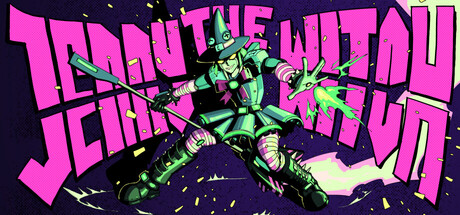
Jenny the Witch, developed and published by Catbird Soft, casts players as Genevieve "Jenny" Marconi, a mercenary in a power suit hired to find a missing construction crew in the flooded, abandoned tunnels beneath a near-future New York City. It's a standalone story set in the same universe as the studio's Steel Carnelian, and reviewers who've followed that earlier title describe Jenny as a more fully realized version of ideas it first tried. The pitch is a spectacle-fighter hybrid: Jenny's mech suit fires ranged shots and boosts, while a broom-shaped melee weapon handles up-close combat, with sections of platforming through the underground threaded between fights. Of the 73 English-language Steam reviews, 65 recommend it, landing at Very Positive.
The thing reviewers reach for first, almost without exception, is style. The grimy, celshaded low-poly visuals get repeated comparisons to sixth-generation consoles rendered with a modern sensibility, and the voice acting for Jenny specifically draws consistent, enthusiastic praise. Combined with an industrial, atmospheric soundtrack and a script that leans into a lighthearted-but-ratcheting cyberpunk tone, the presentation is treated across the review set as the game's clearest, least-contested strength.
Combat With Real Ideas, and Real Friction
The combat system asks players to juggle several tied-together resources: melee attacks and dashes draw from the same pool, which is recharged by landing ranged shots, while a separate meter powers flashy hyper attacks. Several reviewers describe this interplay as genuinely compelling once it clicks, forcing more deliberate play than a typical button-mashing brawler and rewarding players who master canceling attack animations into each other. One reviewer who logged over 40 hours came to consider the combat "sick as hell" after an initial rocky start.
But an equally large share of the review set describes the same system working against itself. Because ranged shots are free, largely unlimited, and necessary to refill both dash and melee resources, the path of least resistance in most fights is to circle-strafe and shoot rather than engage with the flashier melee toolkit, several reviewers explicitly compare it to playing Serious Sam instead of the spectacle fighter the game is billed as. Larger enemies resisting stun compounds the problem, since melee strings that stagger smaller foes accomplish little against the toughest threats, and multiple reviewers single out specific hyper attacks and charge moves as underwhelming for their cost. The result is a combat system reviewers broadly agree has real depth, but one that doesn't always steer players toward using it.
The Platforming Problem
If there's a single point of near-consensus in the negative reviews, and a frequent asterisk in the positive ones, it's the platforming. Sections between fights ask for precise jumps and dashes, but reviewers repeatedly flag an absence of coyote time, inconsistent air control, and a dash that covers either too little or too much distance for the gaps it's meant to clear. Specific set pieces, fan-powered gaps over bottomless pits and sequences requiring quick 180-degree turns, come up again and again as sources of frustration, with more than one reviewer saying platforming deaths outnumbered combat deaths by a wide margin. A handful of reviewers actively enjoy the platforming as a change of pace from combat, and the game's generous checkpointing softens the sting of failure, but the more common framing is that these sections are the weak link dragging down an otherwise well-regarded package, with mouse and keyboard consistently recommended over controller for tighter response.
A Short, Replayable Package Backed by Support
Most reviewers finish a first playthrough in two to five hours depending on difficulty, and treat that length as fair for a roughly twelve-dollar asking price rather than a shortfall. Post-game content, New Game Plus, an endless arena mode, hidden collectible plushies that unlock run modifiers, gives the game real legs for players who enjoyed the core loop, and several reviewers specifically credit Catbird Soft for active post-launch support, patching bugs, easing New Game Plus difficulty scaling, and adding modifiers in response to player feedback. That responsiveness shows up as a recurring point of goodwill even among reviewers otherwise frustrated with the platforming. A handful of reviewers who received review codes or credits disclose that upfront, and their accounts line up closely with the wider paying audience rather than skewing noticeably more favorable, which is worth noting given how small the overall review pool is. The consistent throughline across nearly all of them, gifted copy or not, is that the game's short runtime is treated as a feature rather than padding, with several explicitly comparing it favorably to pricier, longer character-action games that overstay their welcome.
Technical performance is generally solid. A small number of reviewers report stuttery camera movement, occasional enemy pathing bugs that can block progress until a room reload, and input lag on jumping and shooting that a few say compounds the platforming's existing stiffness. One reviewer who hit a progress-blocking bug reported the developers investigated and fixed the specific issue within days, which reviewers repeatedly cite as evidence of a small but attentive team.
Verdict
Jenny the Witch is a confidently styled, short action game with a combat system that rewards the players willing to dig past its safest, least interesting option, wrapped in presentation reviewers consistently call a highlight. Its platforming is the clear drag on the experience, stiff and unforgiving enough to overshadow the game's strengths for a meaningful slice of its audience, but for players who can look past that, or who simply enjoy the change of pace it offers, there's a sharp, inexpensive spectacle fighter underneath.
Pros and cons
Pros
- A striking, grimy cyberpunk aesthetic with celshaded low-poly visuals and widely praised voice acting
- A resource-driven combat system that ties melee, dashing, and shields together in ways many reviewers found genuinely interesting once mastered
- Strong replay value for its price via New Game Plus, an arena mode, collectibles, and unlockable run modifiers, backed by active post-launch patching
Cons
- Platforming is widely criticized as stiff and unforgiving, with no coyote time and an unreliable dash that several reviewers call the game's biggest weak point
- Ranged attacks are safe and effectively unlimited, which pushes many players toward a repetitive keep-away playstyle instead of the game's more interesting melee options
- Larger enemies resist stun, and several hyper attacks and upgrades are widely described as underwhelming or situational
Screenshots
-
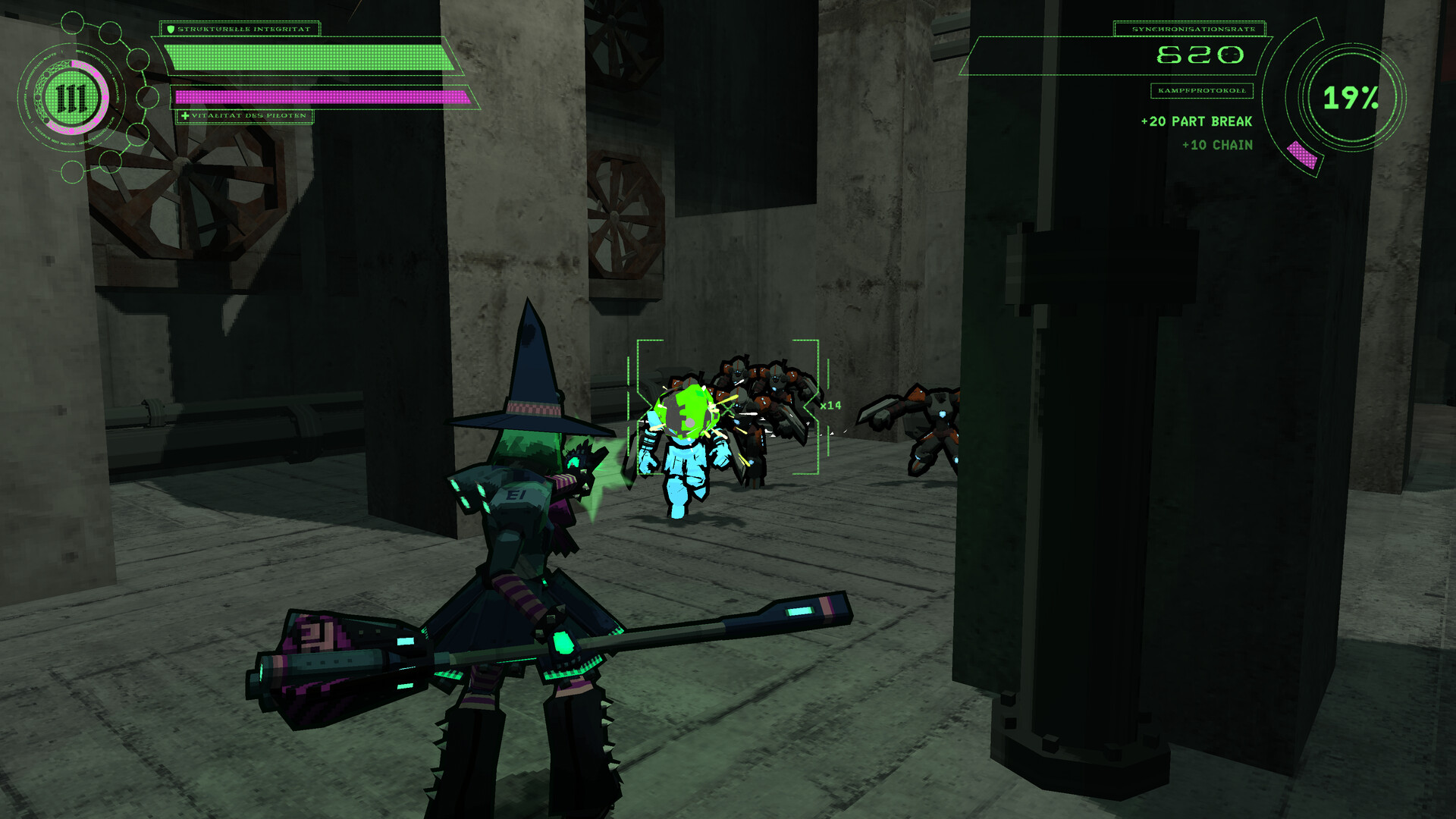
The HUD tracks a chain counter and shield resource shared between dashing and melee, central to the game's resource-driven combatCatbird Soft -
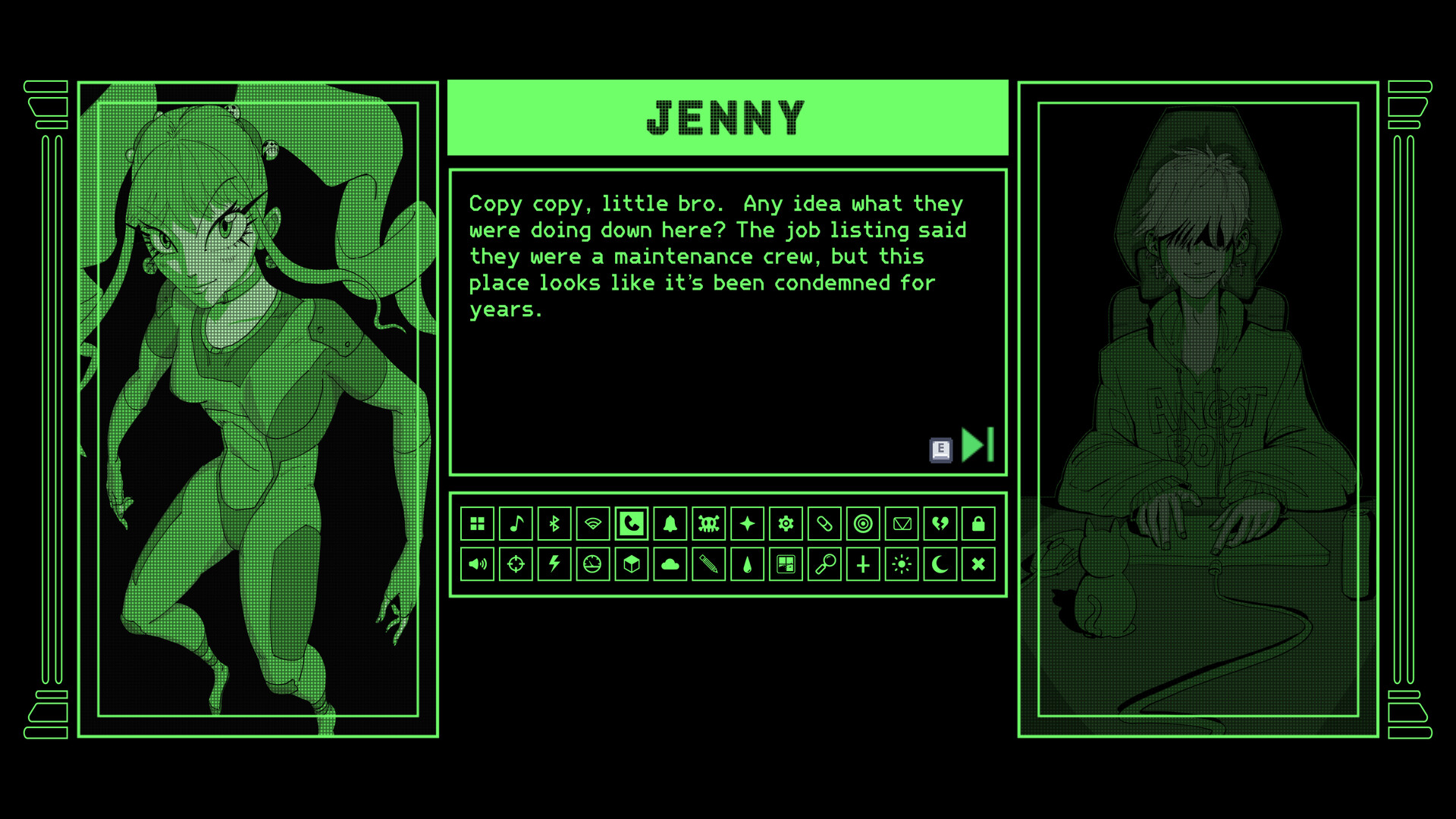
Story beats unfold between combat and platforming sections in a stylised terminal-screen presentationCatbird Soft -
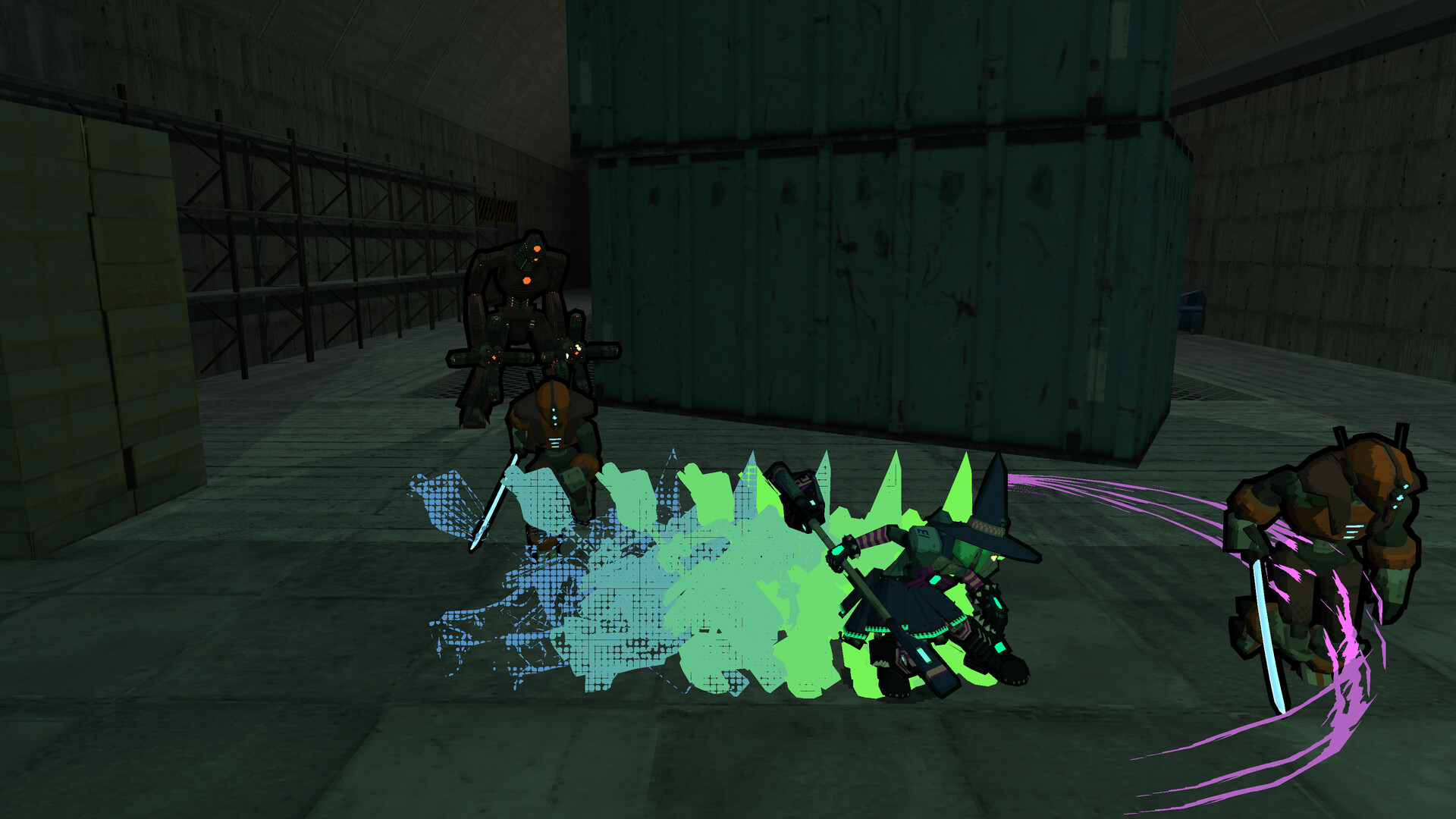
Jenny the WitchCatbird Soft -
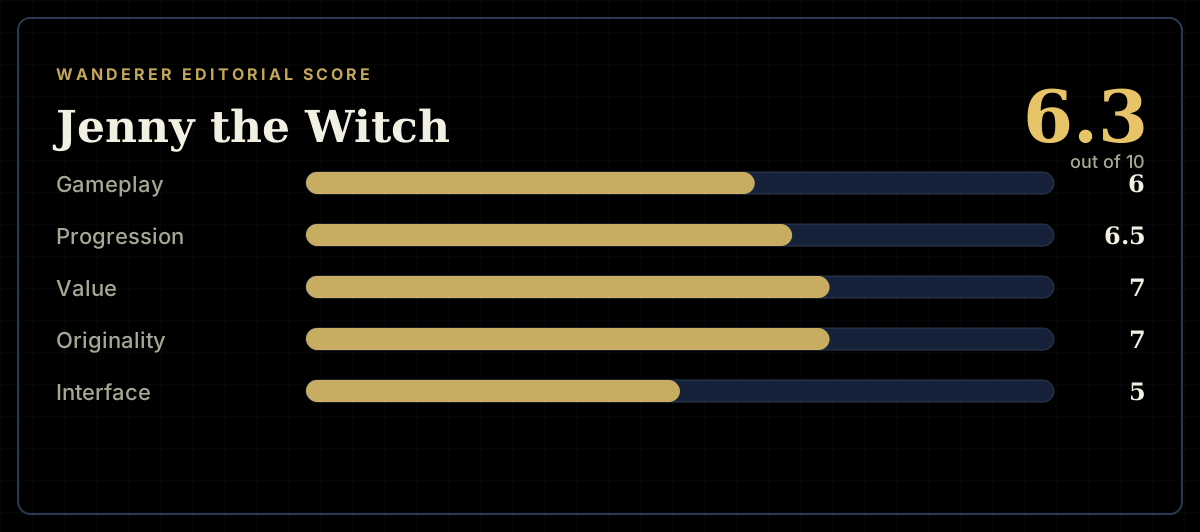
How the review scores each part of the gameWanderer Editorial -
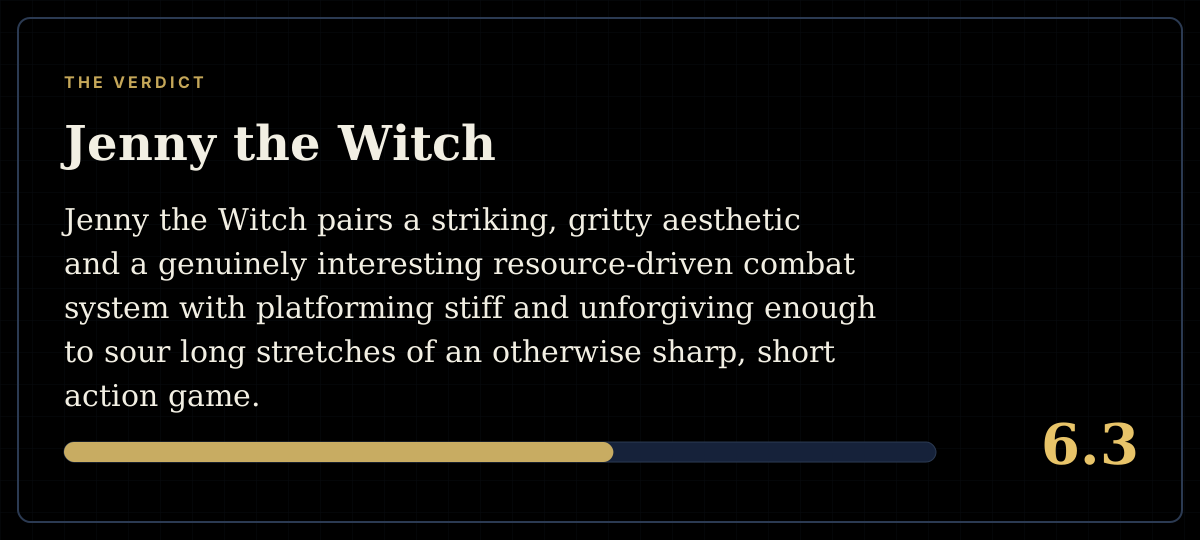
The short versionWanderer Editorial