
Game review
Ariana and the Elder Codex
5.4 / 10
- Developer
- Idea Factory, Compile Heart, HYDE, Inc.
- Publisher
- Idea Factory International, Inc.
- Released
- 29 April 2026
- Platforms
- [Windows]
- Genre
- Action
- Monetisation
- Paid
- Players
- Single-player only
The short version
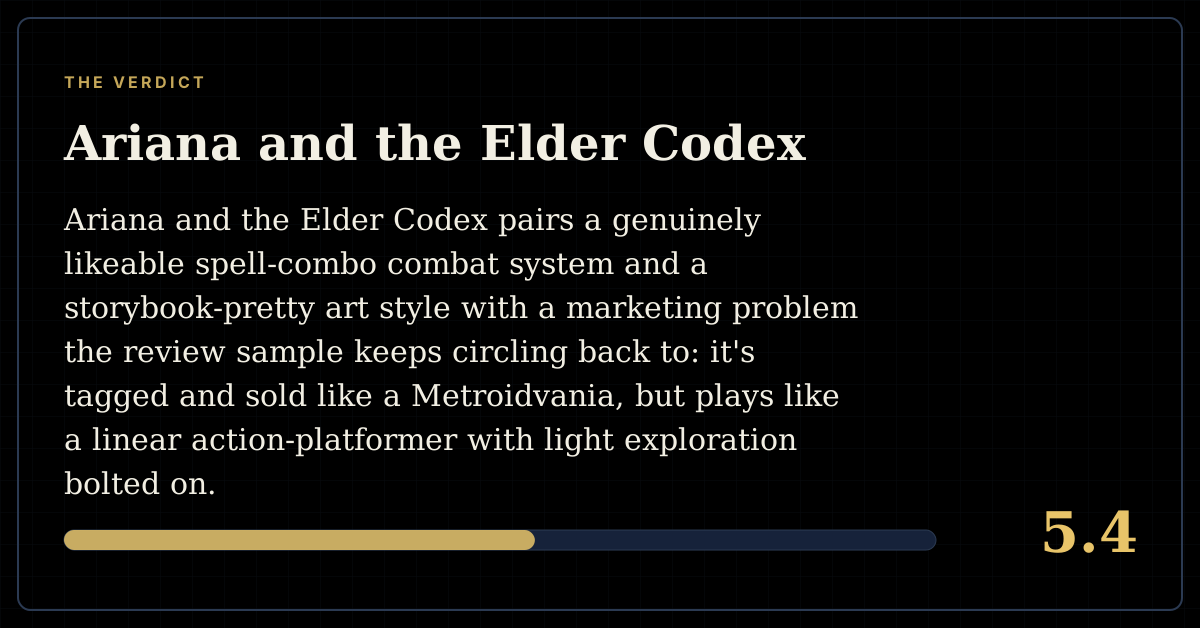
Ariana and the Elder Codex pairs a genuinely likeable spell-combo combat system and a storybook-pretty art style with a marketing problem the review sample keeps circling back to: it's tagged and sold like a Metroidvania, but plays like a linear action-platformer with light exploration bolted on. Reviewers who came in expecting sprawling interconnected maps came away disappointed; those who took it for what it actually is — a tidy, spell-flinging platformer with a tragic storybook framing — tended to have a good time, at least until the price tag and a handful of PC-specific technical issues soured the deal.
Biggest strengths
- Elemental spell-combo combat that multiple reviewers compared favourably to Ender Lilies and Magnolia
- Consistently praised art direction and character design, with English and Japanese voice options
- Seven distinct book-world settings that keep the presentation varied across a single playthrough
Biggest weaknesses
- Marketed and tagged as a Metroidvania despite a mostly linear structure with little genuine exploration, a mismatch several reviewers called out directly
- Repetitive, frequently reused enemy encounters that wear thin over a full playthrough
- Reported PC-specific issues including broken Steam Input glyph mapping and a cloud-save bug that can lock players out when switching Windows usernames across machines
Who it's for: Fans of anime-styled action-platformers and Ender Lilies-adjacent combat who can look past the misleading Metroidvania label and a premium asking price.
Our recommendation: Worth a look on sale for the combat and presentation, but the full asking price is a much harder sell given how many reviewers flagged it as overpriced for a fairly linear, several-hour experience.
5.4 / 10
A Librarian's Journey Into Seven Corrupted Storybooks
Ariana and the Elder Codex casts players as a royal librarian who can step inside magical texts known as the Seven Hero Codices, each one a self-contained world built around a different element and a different tragedy. Someone has tampered with the books, magic is draining out of the wider world as a result, and Ariana's job is to enter each Codex, repair the corruption inside, and untangle what happened along the way. Reviewers consistently describe the structure as seven mostly-independent chapters, each with its own scenery, cast, and story beat, which keeps the presentation varied even when the underlying gameplay loop stays fairly constant from book to book.
The story itself draws mixed but generally warm reactions. One reviewer called the plot "somewhat predictable" while still enjoying every second of the ride; another described each Codex as covering "a pretty solid story each," with the throughline eventually tying back into the disappearance of Ariana's own parents. Character writing gets frequent praise — Ariana herself was singled out repeatedly for having "personality," with several reviewers highlighting fun, occasionally fourth-wall-breaking NPC interactions. A single reviewer, reacting to an early-access-style patch note, complained that some of the writing "is either written by AI or a 5-year old" — a strong claim, but an isolated one not echoed elsewhere in the sample, so it's worth noting as one unverified opinion rather than a broader consensus.
Spell-Combo Combat That Mostly Delivers, Dressed as a Metroidvania It Isn't
The combat is where the review sample is most consistently positive. Ariana fights using a cooldown-based spell system rather than a mana bar, letting players mix melee strikes with elemental magic to chain combos and trigger "elemental burst explosions" that multiple reviewers called the highlight of the whole game. One comparison that comes up more than once is Ender Lilies and Magnolia, both for the floating-companion presentation and for how slow-casting spells reward patience and setup rather than button-mashing. Reviewers who stuck with harder difficulty settings tended to enjoy the system most; several explicitly warned that Normal difficulty is "very easy" and recommended Hard for anyone with genre experience.
Where the sample turns sharply critical is the game's marketing and store tagging. Multiple reviewers arrived expecting a Metroidvania — sprawling, interconnected maps, backtracking, a sense of getting lost — and instead found a structure one reviewer bluntly summarised as "not exactly a Metroidvania, more of an action-platformer." Another was more pointed still: "It should not be tagged metroidvania; it is a linear action platformer so know what to expect." This isn't a fringe complaint; it recurs across reviews written months apart, suggesting the store page's genre framing is setting up a chunk of buyers for a different experience than the one they receive. Layered on top of that structural gripe is a recurring note about enemy variety, with more than one reviewer describing combat encounters as repetitive once the game's early impressions wear off, thanks to reused enemy types recurring across the seven books.
Beautiful Art, Rough Edges: Technical Issues on PC
Presentation is close to a unanimous strength across the sample. Character design, background art, and the "storybook" framing of each Codex draw consistent praise, and the option to switch between English and Japanese voice acting gets called out favourably more than once. Music reviews are gentler — "middle of the road," in one reviewer's words, functional background material rather than anything especially memorable, with a couple of reviewers noting it gets repetitive over a longer run.
The PC version specifically drew a cluster of technical complaints that any prospective buyer should weigh. One detailed report flagged broken Steam Input support, where controller button prompts don't match the actual bindings on-screen, alongside a controller-menu implementation that doesn't properly invoke Steam's own input overlay. A separate reviewer described a cloud-save bug that can hard-lock the save menu when the game is played across two PCs with different Windows usernames — a problem specifically relevant to anyone moving a save between a desktop and a Steam Deck, since Proton assigns a generic username on the Deck that won't match a different PC's account name. A further review flagged broken double-jump behaviour and other movement inconsistencies as an ongoing frustration. None of these issues appear to be universal — many reviewers reported smooth, responsive controls and no performance problems at all — but they show up often enough, and specifically enough, to be worth flagging rather than dismissing as one-off reports.
A Premium Price Tag That Draws Real Pushback
Value is the most consistently negative thread running through the review sample, and it's tangled up with both the length of the game and its NZ$43.59 asking price. Several reviewers explicitly framed their recommendation around a discount: "I would recommend it if it were cheaper, but in no way does it offer nearly enough quality and quantity to be worth this price," wrote one, echoing a broader sentiment that a five-to-ten-hour, fairly linear action game doesn't clear the bar this price point implies. One especially pointed comparison singled out a cheaper competing Metroidvania by name, arguing Ariana "offers nothing more than other great MVs like Mio" while costing roughly twice as much. That said, plenty of reviewers who bought at full price still walked away satisfied, particularly those chasing achievements or drawn in by the spell-combo systems enough to spend twenty-plus hours with the game — but the price-to-length complaint is frequent enough, and specific enough, that it shapes the overall picture of value more than any single technical bug does.
Verdict
Ariana and the Elder Codex is a handsome, well-voiced action-platformer with a spell-combo system reviewers genuinely enjoyed experimenting with, undercut by a store listing that oversells its structure as a Metroidvania and a price tag that a meaningful share of buyers felt didn't match what's on offer. Its seven storybook chapters look great and its combat rewards patience, but reused enemies, a handful of PC-specific bugs, and a fairly linear path through the game mean it's best approached with expectations set correctly — and, per a large chunk of the sample, ideally on a discount rather than at launch price.
Pros and cons
Pros
- Elemental spell-combo combat that multiple reviewers compared favourably to Ender Lilies and Magnolia
- Consistently praised art direction and character design, with English and Japanese voice options
- Seven distinct book-world settings that keep the presentation varied across a single playthrough
- Adjustable difficulty that genre veterans specifically recommended cranking up, since normal plays very easy
Cons
- Marketed and tagged as a Metroidvania despite a mostly linear structure with little genuine exploration, a mismatch several reviewers called out directly
- Repetitive, frequently reused enemy encounters that wear thin over a full playthrough
- Reported PC-specific issues including broken Steam Input glyph mapping and a cloud-save bug that can lock players out when switching Windows usernames across machines
- A NZ$43.59 asking price that a large share of the review sample felt didn't match the length and depth on offer
Screenshots
-
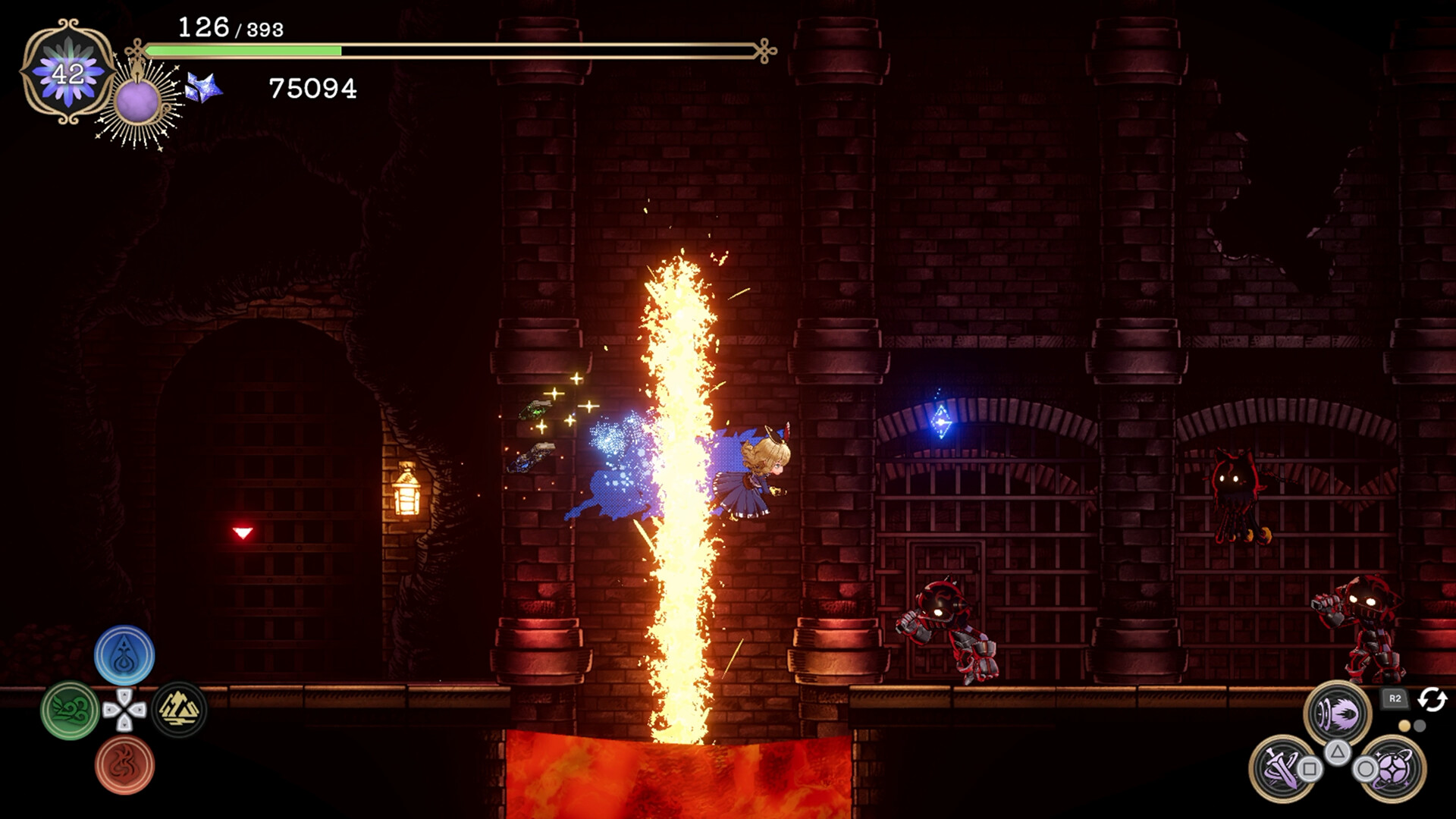
The cooldown-based elemental spell system reviewers compared favourably to Ender Lilies and MagnoliaIdea Factory International, Inc. -
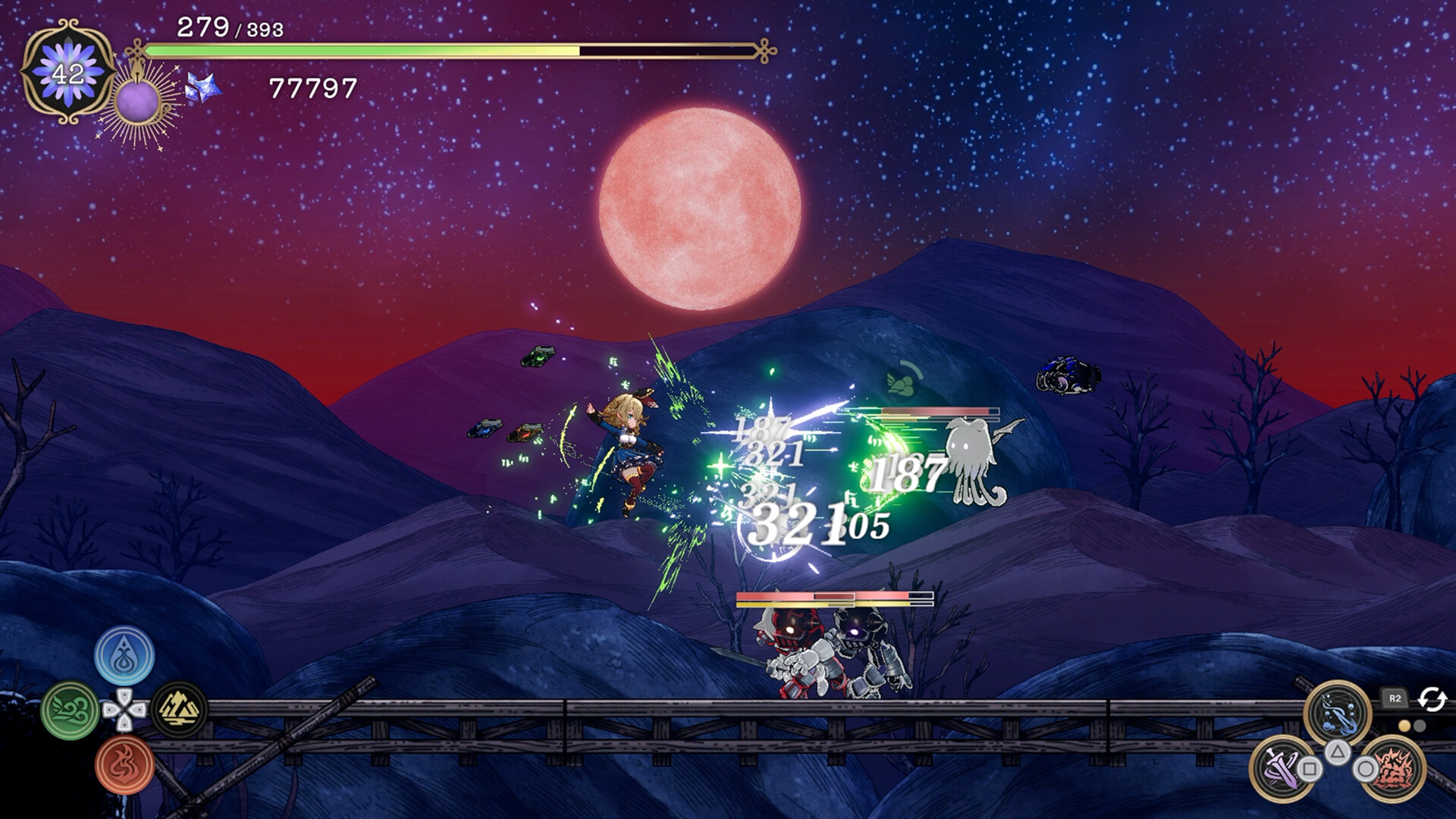
One of the seven Codex worlds, each with its own distinct setting and elemental themeIdea Factory International, Inc. -
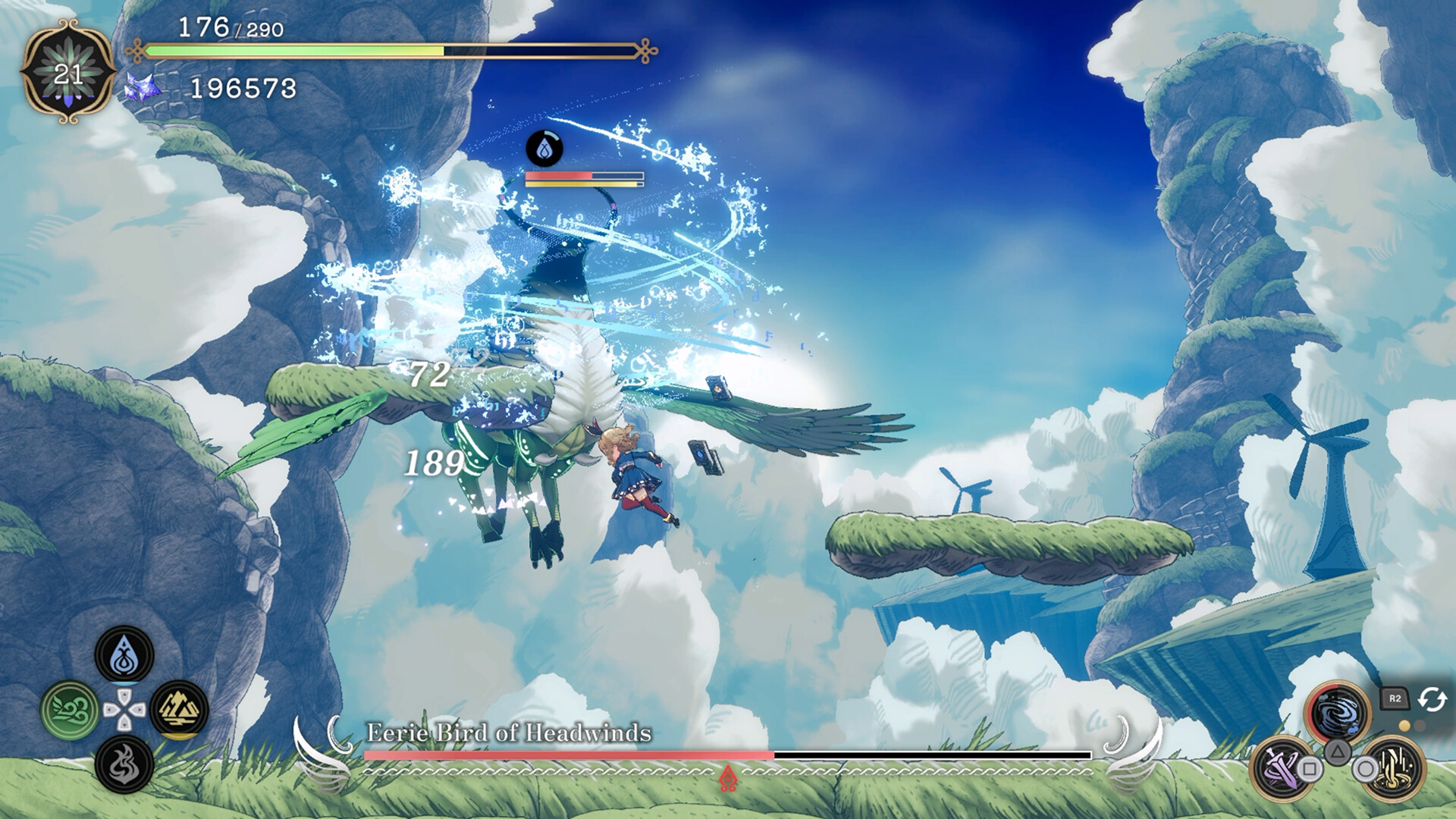
A boss encounter in the sky-island Codex, part of the varied scenery reviewers praised across chaptersIdea Factory International, Inc. -
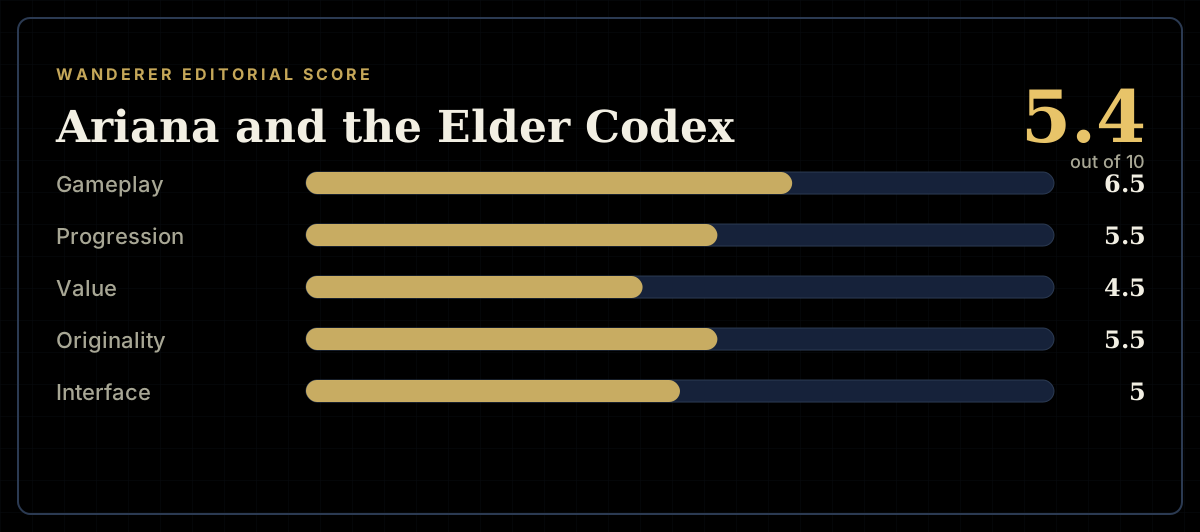
How the review scores each part of the gameWanderer Editorial -
The short versionWanderer Editorial