
Game review
Incremental Epic Hero 2
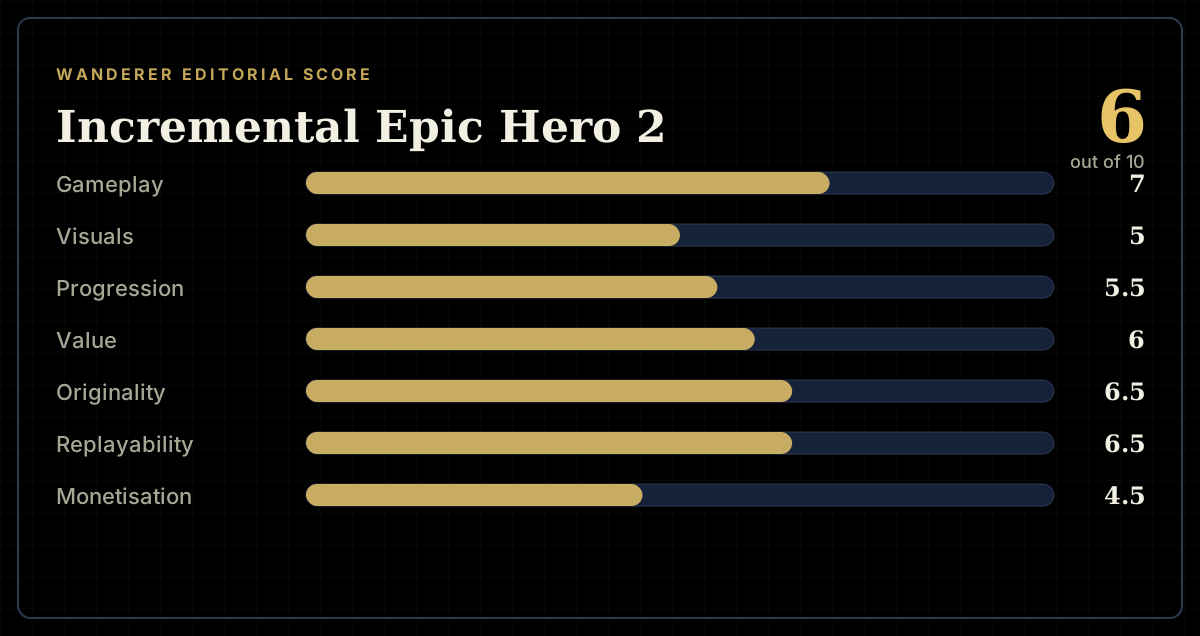
6 / 10
- Developer
- Hapiwaku
- Publisher
- Idle System, Inc.
- Released
- 2 January 2025
- Platforms
- Windows, macOS, Browser
- Genre
- Idle RPG
- Monetisation
- Free to play. No priced Steam DLC sells power directly, but four optional packs (NZ$4.49–NZ$12.39 each) sell permanent account boosts — extra quest slots, faster Nitro time-acceleration, a cross-hero skill slot and extra inventory space — plus a currency ("Epic Coin") that also buys the bulk of the game's quality-of-life unlocks in-client.
- Players
- Single-player; a developer-run Discord is the only social layer
The short version
Incremental Epic Hero 2 has one of the more genuinely interlocking class-and-skill systems in the idle genre — six heroes, shared skill slots, monster capture and a prestige ladder that actually changes how you play rather than just resetting a number. It also ships as a "full release" with achievement-locked content still missing, and its quality-of-life systems sit behind a coin store that a large share of its own Steam reviewers describe as excessive.
Biggest strengths
- Six heroes with distinct classes and a shared global skill slot create real team-building decisions instead of one obvious best setup
- Monster capture, alchemy brewing and equipment enchanting give the mid-game several parallel systems to invest in rather than one grind
- Rebirth and world Ascension are structured as genuine strategic resets, not just a number that multiplies faster afterward
Biggest weaknesses
- The Epic Coin store sells enough quality-of-life unlocks that multiple long-time reviewers describe the total cost as running into the hundreds or thousands of dollars
- Steam's own "full release" carries achievements tied to Ascension tiers and guild buildings that reviewers report are still not implemented over a year later
- The interface throws every system at the player within the first sessions with little sequencing, and several reviewers call it overwhelming or a UI nightmare
Who it's for: Idle-RPG players who like reading patch notes and min-maxing skill loadouts, and who don't mind a UI that asks a lot of them before it explains why.
Our recommendation: Worth trying for free, especially in-browser with no install required. Go in expecting a genre veteran's depth and a genre veteran's monetisation habits in equal measure, and don't expect the "full release" label to mean everything is finished.
6 / 10
Most idle RPGs pick one axis to go deep on — heroes, gear, prestige tiers — and lean on repetition everywhere else. Incremental Epic Hero 2 tries to go deep on all of them at once: six heroes with distinct classes, a skill system that lets you borrow one skill from any hero and slot it onto another, monster capture, alchemy, enchanting, town building and a two-layer prestige structure stacked on top. It's an unusually ambitious design for a game made largely by one Japanese developer working under the studio name Hapiwaku, and for long stretches that ambition pays off. It's also a design that has generated a very specific, very consistent strain of Steam complaint: quality of life sold piece by piece through a coin store steep enough that "how much would it cost to buy out the convenience shop" has become its own recurring review topic.
That tension — real systemic depth against real monetisation friction — is the whole story of this game, and it's why a title with genuinely inventive mechanics sits at a Mostly Positive 72% rather than comfortably in the "excellent" tier most idle fans would expect from its class and skill design alone.
Where it came from
Incremental Epic Hero 2 isn't a first attempt. Hapiwaku's original Incremental Epic Hero launched free on Steam in February 2021 after starting life as a Kongregate and Armor Games browser title, and the sequel followed the same path: a free browser release before its Steam Early Access build arrived, then roughly two and a half years of Early Access iteration before Steam listed a full release on 2 January 2025. The developer's own store description frames the years in between as feedback-driven — a genuinely community-shaped build rather than a fixed vision shipped once and abandoned. That history is visible in the game itself: systems layered on systems, several of which clearly arrived later than others and were bolted into a UI that was never substantially reworked to accommodate them.
It's also, notably, still available for free in a browser right now on Kongregate, Armor Games and CrazyGames alongside the Steam client — a genuinely rare thing for a game this systemically dense, and worth knowing before deciding whether a download is even necessary to try it.
Six heroes, one skill pool
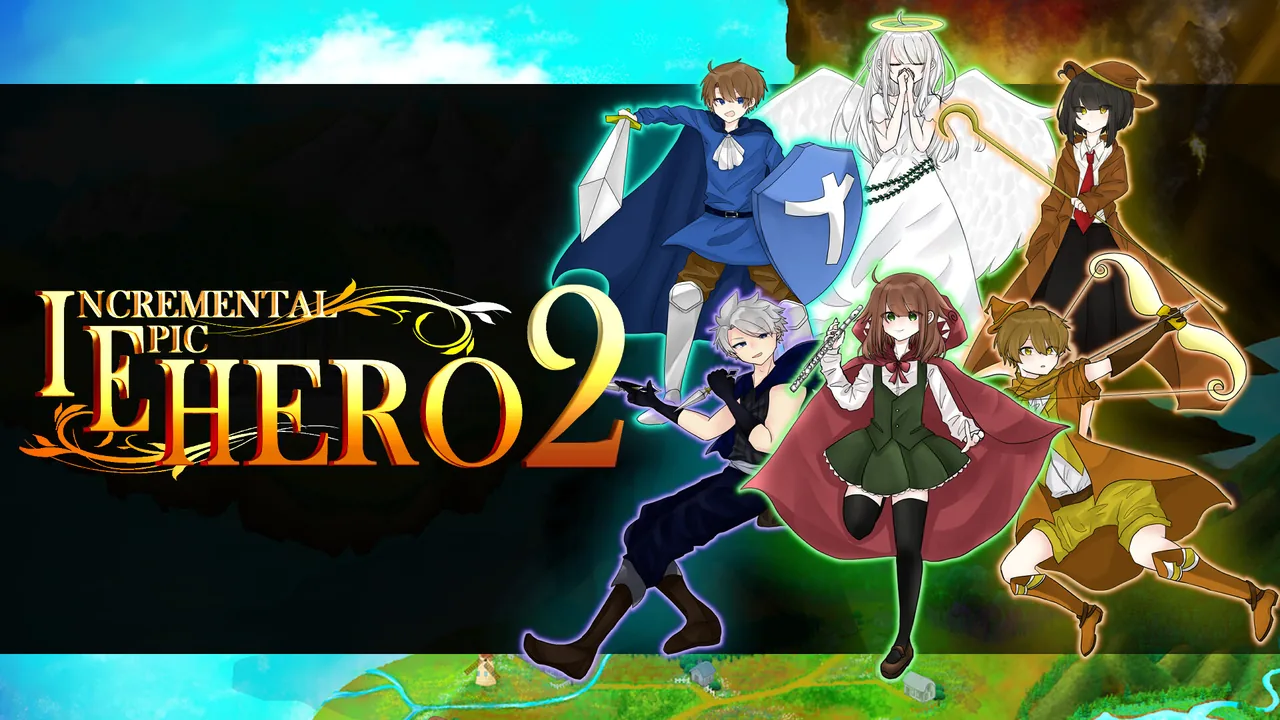
The core loop starts recognisably: heroes auto-battle through zones, gold and drops accumulate, gear gets upgraded, repeat. What sets the hero system apart is how heroes relate to each other. Each of the six carries its own class and skill kit, but a shared "Global Skill Slot" lets any hero borrow and equip a skill that technically belongs to someone else — a mage can carry a warrior's taunt, an archer can carry a healer's cleanse. That single mechanic turns team-building from "pick six heroes" into "pick six heroes and then decide who's actually using whose kit," and it's the single best idea in the game. It rewards exactly the kind of theorycrafting idle-RPG players show up for, and unlike some genre peers, it doesn't force one specific loadout as the only viable path forward — several current player reviews specifically praise how open-ended the build space stays once the basics click.
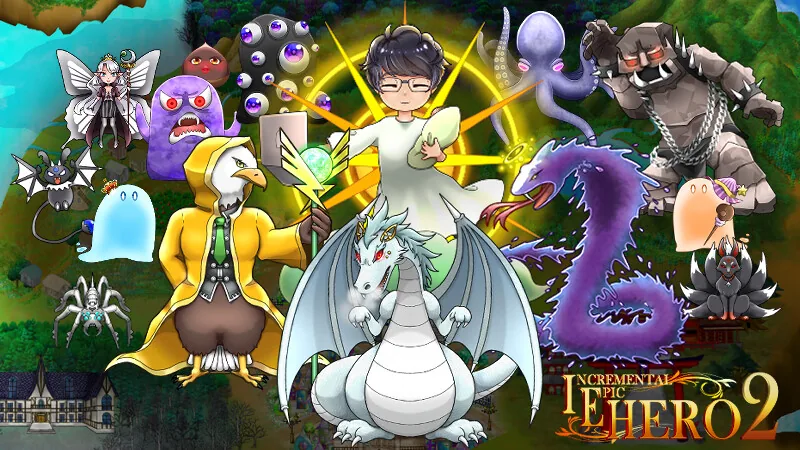
Layered around that core are monster capture (over a hundred creatures, each levelable into a combat asset), alchemy for potion crafting, and an enchanting system for grinding out gear upgrades through consumable scrolls. None of these are throwaway side-systems; they're each a real resource sink with their own progression curve, which is both the game's biggest strength and the root of its biggest complaint. Several reviewers describe needing to track three or more separate systems per hero, times six heroes, before automation options start meaningfully reducing the workload — and one review put it bluntly: the early game plays less like an idle RPG and more like an active management sim that happens to keep running while you're not looking. That's not automatically a flaw for a genre that increasingly rewards spreadsheet thinking, but it is a real mismatch with what "idle" implies to a player expecting to check in occasionally rather than juggle eight simultaneous decisions per session.
Rebirth, Ascension, and the reset that actually costs something
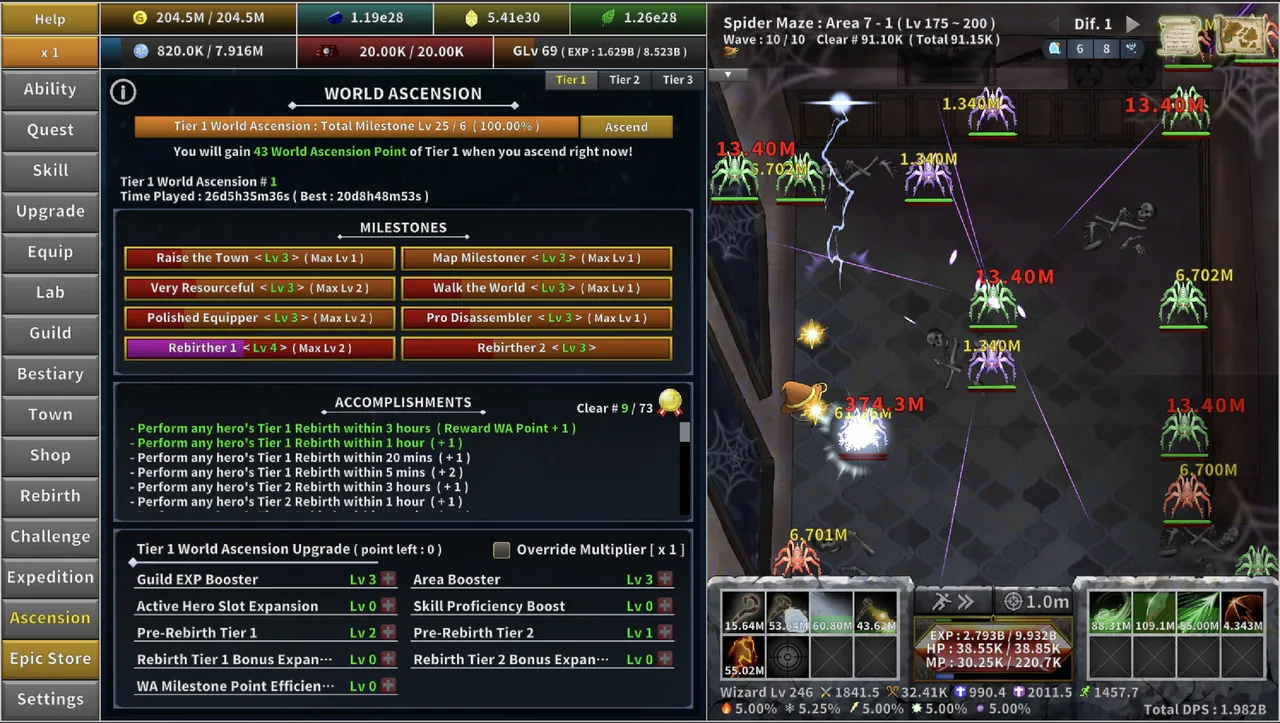
Prestige in Incremental Epic Hero 2 comes in two tiers. Rebirth resets an individual hero for permanent power boosts in the genre-standard way. World Ascension is the bigger, rarer reset, and it's where opinion splits hardest. Ascension is designed to unlock deeper content and stronger long-term multipliers, which is exactly what a prestige layer should do — but multiple reviewers describe it stripping away quality-of-life unlocks that had been earned over dozens of hours, replacing them with only minor permanent boosts and a genuine return to square one on the day-to-day convenience front. One long-playtime review frames the arc precisely: a strong, engaging first twenty-or-so hours, followed by "hundreds and hundreds of hours" spent re-earning conveniences the player had already unlocked once. That's a much harsher prestige tax than most of the genre asks for, where resets typically preserve at least the comfort systems even as they zero out raw progress.
Compounding this, Steam's own "full release" status doesn't match what several long-tenured players report finding in the game right now: Ascension's later tiers, guild-building effects and a handful of achievements tied to unimplemented content are described as still missing over a year after the January 2025 full-release date. A release label is supposed to mean the roadmap caught up with the marketing; several reviewers argue directly that it hasn't, and that's a fair critique to raise against a store page that no longer says "Early Access" anywhere.
What the coin store actually sells
This is the part of the review that needs precision, because "pay-to-win" is thrown around loosely in idle-genre discourse and Incremental Epic Hero 2 doesn't fit that label cleanly.
The four Steam DLC packs are transparent about their contents. The Starter Pack (NZ$4.49) grants one extra accepted-quest slot, a 25% multiplicative gold bonus, 5,000 Nitro and five Portal Orbs. The Premium Nitro Pack (NZ$12.39) raises the cap on Nitro-boosted game speed from 2x to 3x and lets the player fine-tune that speed directly, alongside the same gold bonus, more Portal Orbs and 5,500 Epic Coin. The Global Skill Slot Pack (NZ$12.39) grants one additional cross-hero skill slot — a direct expansion of the game's best mechanic — plus the same gold bonus and currency. A fourth pack, the Inventory Slot Expansion Pack (NZ$12.39), adds fifty equipment slots and ten each of enchant and utility slots, again bundled with the same gold bonus and coin grant. None of these sell a stat stick or a piece of gear directly, and none of them are required to see any of the game's content — they're accelerants and capacity, the same category the genre generally treats as acceptable convenience spend.
The sharper edge is the in-client Epic Coin shop, which is where most of the negative Steam feedback actually points. It sells the bulk of the game's quality-of-life unlocks piece by piece — extra pet slots, UI conveniences, automation toggles — and several reviewers with genuinely large playtime totals (hundreds to well over a thousand hours logged) describe the total cost of buying out that shop's meaningful items as running into the hundreds of dollars at minimum, with a few citing figures in the thousands. One reviewer who reports spending over €110 across 500-plus hours frames it as a warning rather than an endorsement. Others push back the other way, arguing that regular play and daily objectives generate enough Epic Coin to eventually buy everything for free, just slowly — a claim consistent with the game's free-to-play framing, but one that asks a genuine patience tax in exchange for skipping the wallet.
Both things can be true at once, and the review has to hold them together: nothing in Incremental Epic Hero 2 is locked behind a paywall in the sense of gear or victory sold outright, but a meaningful slice of what makes idle games comfortable to play — automation, pet slots, inventory room — is treated as a purchasable convenience rather than a design baseline, and the store asking for it shows up constantly enough that a real portion of the Steam audience calls it out as the game's defining flaw rather than a minor annoyance.
Interface and presentation
Visually, Incremental Epic Hero 2 is plain. Menus are dense grids of icons and numbers with little visual hierarchy, the battle window is a small fixed panel rather than a showcase, and more than one player review compares the presentation unfavourably to better-funded idle RPGs on the same storefront. That's a fair criticism, though it's also somewhat beside the point for a genre whose strongest titles have rarely won on art direction. More relevant is usability: several reviews single out the lack of a hotkey for switching between heroes and the general difficulty of finding where a given system lives the first time you need it. None of this makes the game unplayable — plenty of reviewers with tens of thousands of hours logged clearly worked past it — but the learning curve is real, and it front-loads confusion at exactly the point a new player is deciding whether to keep going.
Verdict
Incremental Epic Hero 2 earns real credit for ambition most idle RPGs don't attempt: six heroes with genuinely interacting classes, a global skill slot that turns team-building into an actual puzzle, and a monster-capture and alchemy layer that gives the mid-game more to chase than a single upgrade currency. When the systems click, this is a genuinely deep, replayable game that rewards the kind of theorycrafting idle-RPG veterans show up for.
It settles at a 6 rather than higher because two problems sit squarely in the way of recommending it broadly. First, quality of life — the exact category that makes idle games comfortable to leave running — is treated as a purchasable extra rather than a baseline, and a meaningful share of the game's own long-term players describe that shop as excessive rather than merely present. Second, a "full release" label that several reviewers with over a year of post-launch playtime say still doesn't match the content actually in the game undercuts trust in exactly the way a storefront status shouldn't. Neither issue erases the strength of the underlying design, but both are the difference between a genre standout and a game that asks new players to take a lot on faith before deciding whether the coin store is a footnote or a wall.
Try it free, ideally in a browser first with nothing to install, and treat the first Ascension as the real decision point — that's roughly where the game reveals whether its pacing and its shop are asking more of you than you're willing to give.
Players who'd rather their long-term hero progression kept moving without a store constantly asking for a top-up may find Wanderer a gentler version of the same idle itch.
Pricing and monetisation checked 30 July 2026.
Pros and cons
Pros
- Six heroes with distinct classes and a shared global skill slot create real team-building decisions instead of one obvious best setup
- Monster capture, alchemy brewing and equipment enchanting give the mid-game several parallel systems to invest in rather than one grind
- Rebirth and world Ascension are structured as genuine strategic resets, not just a number that multiplies faster afterward
- Runs free in-browser on Kongregate, Armor Games and CrazyGames with no download, alongside the Steam version
- No priced Steam DLC sells raw combat power directly — the packs sell speed, slots and convenience rather than stats
Cons
- The Epic Coin store sells enough quality-of-life unlocks that multiple long-time reviewers describe the total cost as running into the hundreds or thousands of dollars
- Steam's own "full release" carries achievements tied to Ascension tiers and guild buildings that reviewers report are still not implemented over a year later
- The interface throws every system at the player within the first sessions with little sequencing, and several reviewers call it overwhelming or a UI nightmare
- World Ascension strips previously earned quality-of-life unlocks and resets progress with only minor permanent boosts to show for it
- Visual presentation is functional at best — flat menu panels and a battle window several players compare unfavourably to genre peers with real production budgets
Screenshots
-
Incremental Epic Hero 2Image: Idle System, Inc. via Steam -
Incremental Epic Hero 2Image: Idle System, Inc. via Steam -
Incremental Epic Hero 2Image: Idle System, Inc. via Steam -
How the review scores each part of the gameWanderer Editorial -
The short versionWanderer Editorial