Game review
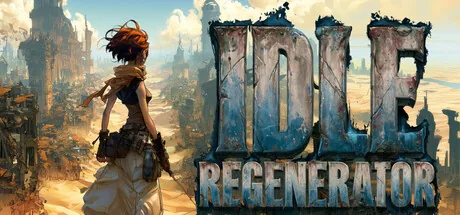
Idle Regenerator
7 / 10
- Developer
- Gestalt Gaming LLC
- Publisher
- Gestalt Gaming LLC
- Released
- 2 July 2026
- Platforms
- Windows, macOS
- Genre
- Idle RPG
- Monetisation
- Paid, one-time purchase. No premium currency and nothing sold for real money beyond the base game; the store page states plainly there are no premium skins or quality-of-life perks gated behind real-money spending. Cosmetic and functional gacha exists for skins and titles, but it draws only from currencies earned by playing.
- Players
- Single-player, with a global leaderboard for comparing progress against other players
The short version
Idle Regenerator is one of the most systems-dense idle RPGs to launch this year — five distinct game modes, 125+ powers with their own proc rates and scaling, a full equipment forge, a sidekick roster and a prestige-and-constellation layer that genuinely rewards planning a reset rather than just clicking through one.
A month after its full release, that depth is still sitting inside a launch that hasn't fully settled. Recurring reports describe UI elements breaking at non-default display scaling, a bug that can trap a character in a repeated-death loop, and an opening hour that throws automation unlocks and an immediate prestige option at new players with too little explanation.
Biggest strengths
- 125+ powers with distinct proc rates and scaling create a genuine build-crafting layer instead of a single obvious upgrade path
- Five separate modes — Adventure, World Dungeon, Heaven Spire, System Labyrinth and Rebuilding — each run their own economy rather than reskinning the same numbers
- The automation tab lets you hand-pick what runs itself and what still needs a manual decision, like power choices at level milestones
Biggest weaknesses
- Recurring reports describe a bug that traps the character in a repeated-death loop for hours, with at least one player refunding over it
- Interface elements reportedly break above 100% display scaling, while text becomes hard to read at the default scale
- The opening hour dumps automation unlocks, several unfamiliar systems and an immediate prestige option on new players with limited guidance, and multiple reviews describe it as overwhelming rather than approachable
Who it's for: Idle-RPG regulars who want a genre entry with real build variety and are willing to tolerate a rough first session while a young Early-Access-feeling launch finishes settling.
Our recommendation: Worth the price for players who already know they like build-crafting idle RPGs and can push through a confusing first hour. Newcomers to the genre, or anyone who wants a polished experience on day one, should give the developer a few more patch cycles first.
7 / 10
Most idle RPGs pick one hook and lean on it for the whole game — a prestige curve, a build tree, a gacha pull. Idle Regenerator picks five and runs them all at once. Adventure, the World Dungeon, the Heaven Spire, the System Labyrinth and a late-game Rebuilding mode each carry their own economy and their own reason to exist, stacked on top of a 125-power build system and a full equipment forge. It's an unusually ambitious opening bid for a solo-developer idle RPG, and for players who stick with it, the ambition mostly pays off.
The problem is that a month after its 2 July full release, the game around that ambition is still rough at the edges — a confusing first hour, interface bugs that show up in player accounts repeatedly, and at least one reported bug serious enough that a player refunded rather than push through it. Idle Regenerator earns its price with genuine depth. It hasn't yet earned the benefit of the doubt on polish.
What you're actually building
Your hero fights automatically from the first minute, and the game is entirely about the decisions layered on top of that automation. Powers arrive at level milestones — 125 of them across the full game, each with its own proc rate and scaling curve — and you choose which ones define a run, then push one to Signature status and unlock Mastery bonuses that carry the flavour of that choice permanently forward. Archetypes chosen at the start of a run add a bonus power and a starting identity on top of that, so two players who've unlocked the same content can still be playing meaningfully different builds.
That build layer is the game's clearest strength, and it's the one recurring theme across positive player accounts: the sense that a run is something you shaped rather than something that happened to you. One detailed player review describes the appeal directly — trying combinations, comparing a detailed stat breakdown window, and optimising toward a leaderboard rather than just watching numbers climb. That's a higher bar than most idle RPGs clear, and Idle Regenerator clears it convincingly at the power-selection layer.
Equipment forging sits alongside the powers rather than replacing them. Gear drops or gets crafted across five slots and pushes through Artifact and Divine tiers via the Forge and a Cultivation system, and primary stats — Strength, Vitality, Agility, Dexterity — flow into a proper derived stat sheet covering hit rating, evasion, crit, block, pierce and elemental damage. It's a fuller character sheet than most games in this genre bother building, and it gives the forging loop somewhere real to point.
Five modes, five economies
Where a lot of idle RPGs pad their runtime with a second currency and a reskinned menu, Idle Regenerator commits to genuinely separate systems. The Heaven Spire layers on a Dao system — three affinities chosen before each ascent, each with its own passive stats, ability tree and elemental strengths, building toward named Spirit Beast bosses with their own counter-strategies. The World Dungeon runs a parallel Guild layer: recruit and level Crawlers, send them on auto-delves for Renown and resources, and manage Guild upgrades and crisis events largely hands-off. Sidekicks, pets and a Jobs system add a third recruitment loop that assigns companions to passive roles or equips them for a direct combat edge.
It's a lot of surface area, and the Automation tab is what keeps it from collapsing into a chore. Rather than an all-or-nothing autopilot, it lets you decide what runs itself and what still needs your hand — leaving power selection manual while dungeon rotations, Guild quests or Crawler delves tick along unattended is exactly the kind of control this genre usually gets wrong. Player accounts consistently praise this granularity, and it's a genuinely well-considered piece of design.
The 21 Cultivation Manuals and the Constellation board built around prestige are the glue holding all of this together across resets — passive bonuses and cross-run compounding that make each reset feel like it's building toward something rather than starting over. Several long-time players describe exactly that arc: an initial prestige loop that feels slow, followed by a point where the accumulated bonuses make each subsequent cycle noticeably faster than the last. That's the textbook idle-RPG prestige curve done properly, and it's a big part of why player accounts with genuinely large logged playtimes keep coming back.
A rocky first hour, and some real bugs
Ambition this size has a cost, and it shows up hardest at the start. New players are pushed through an immediate prestige option, several unfamiliar systems and automation unlocks within minutes, with limited in-game explanation of why any of it matters yet. More than one review describes genuine confusion during that opening stretch — tabs becoming irrelevant the moment automation unlocks, a first prestige that happens almost by accident, and no clear signal about which of the five modes deserves attention first. A written guide reportedly helps once players find it, but that's a workaround for an onboarding problem rather than a fix for one.
More concerning are the bug reports that go beyond rough onboarding. One recent review describes a bug that repeatedly killed their character for hours before they gave up and moved on; another points to interface elements breaking above 100% display scaling, with text becoming hard to read at the default scale as the alternative. A reported issue in System Labyrinth mode can silently replace a chosen power with another if combat continues while a selection window is open — a real cost for a system built around deliberate build choices. None of these appear to be universal — plenty of accounts log dozens or hundreds of hours without mentioning them — but they show up often enough, and specifically enough, to read as real launch-week rough edges rather than isolated bad luck.
What consistently offsets this in player feedback is the developer's visible presence. Multiple reviews, independent of each other, single out how quickly bug reports get acknowledged and patched, and how actively the developer engages on the Steam forums and a recently created Discord. For a solo or small-team release carrying this much systemic ambition, that responsiveness is doing real work toward earning patience from its players.
Monetisation and value
Idle Regenerator is a one-time NZ$15.75 purchase with no premium currency and no purchasable quality-of-life or cosmetic advantage — the store page states this directly, and nothing in the purchase flow contradicts it. Gacha exists for cosmetic and functional skins and titles, but it draws only from currencies earned through play, which is a meaningfully different transaction from a real-money gacha pull. That's a genuinely fair structure for a paid idle RPG, and it removes the monetisation anxiety that shadows most free-to-play entries in this genre.
The harder question is whether the depth on offer is worth the asking price today, bugs included. Set against the free-to-play idle RPGs already crowding this genre, Idle Regenerator's proposition is straightforward: pay once, get a complete, unlimited game with no offline-time paywall and no energy system rationing your sessions. Compared with a game like Idle Iktah, which sells the very offline hours an idle game is built around, that's a structurally more honest deal. It's a fair trade for players confident they'll sink real hours into the genre. It's a harder sell for anyone hoping for a frictionless first evening, given how many current reviews describe exactly the opposite.
Verdict
Idle Regenerator backs up its scope with genuine mechanical depth — a build system with real choices behind it, five modes that don't collapse into each other, and a prestige loop that rewards the planning this genre is supposed to be about. That's more ambition, honestly executed, than most paid idle RPGs attempt.
It settles at 7 out of 10 because the launch hasn't caught up to the ambition yet. An overwhelming opening hour, UI scaling bugs, and at least one reported bug serious enough to drive a refund are real costs, not nitpicks, and they land hardest on exactly the new players a paid game most needs to win over quickly. The fair, no-pay-to-win monetisation and an unusually responsive developer both count for a lot, and they're the reason to expect this score to climb rather than fall over the coming months. Buy it now if you already know you like this genre and don't mind a few rough patches; anyone still deciding whether idle RPGs are for them should wait for the interface bugs to get patched out first.
Players who like the idea of a persistent RPG that keeps moving while they're away, without a one-time price tag or a prestige reset wiping the map, might also want to look at Wanderer.
Pros and cons
Pros
- 125+ powers with distinct proc rates and scaling create a genuine build-crafting layer instead of a single obvious upgrade path
- Five separate modes — Adventure, World Dungeon, Heaven Spire, System Labyrinth and Rebuilding — each run their own economy rather than reskinning the same numbers
- The automation tab lets you hand-pick what runs itself and what still needs a manual decision, like power choices at level milestones
- Offline progress reads as generous rather than punishing in player accounts, which is not the genre's default setting
- Multiple players single out how quickly the developer responds to bug reports and balance feedback on the Steam forums and Discord
Cons
- Recurring reports describe a bug that traps the character in a repeated-death loop for hours, with at least one player refunding over it
- Interface elements reportedly break above 100% display scaling, while text becomes hard to read at the default scale
- The opening hour dumps automation unlocks, several unfamiliar systems and an immediate prestige option on new players with limited guidance, and multiple reviews describe it as overwhelming rather than approachable
- A reported UI issue in System Labyrinth mode can silently swap out a chosen power for another mid-run, costing a deliberate pick
- No player-set prestige target (something like "reset at X points") exists yet, so chasing a specific milestone means watching the run rather than setting a goal and walking away
Screenshots
-
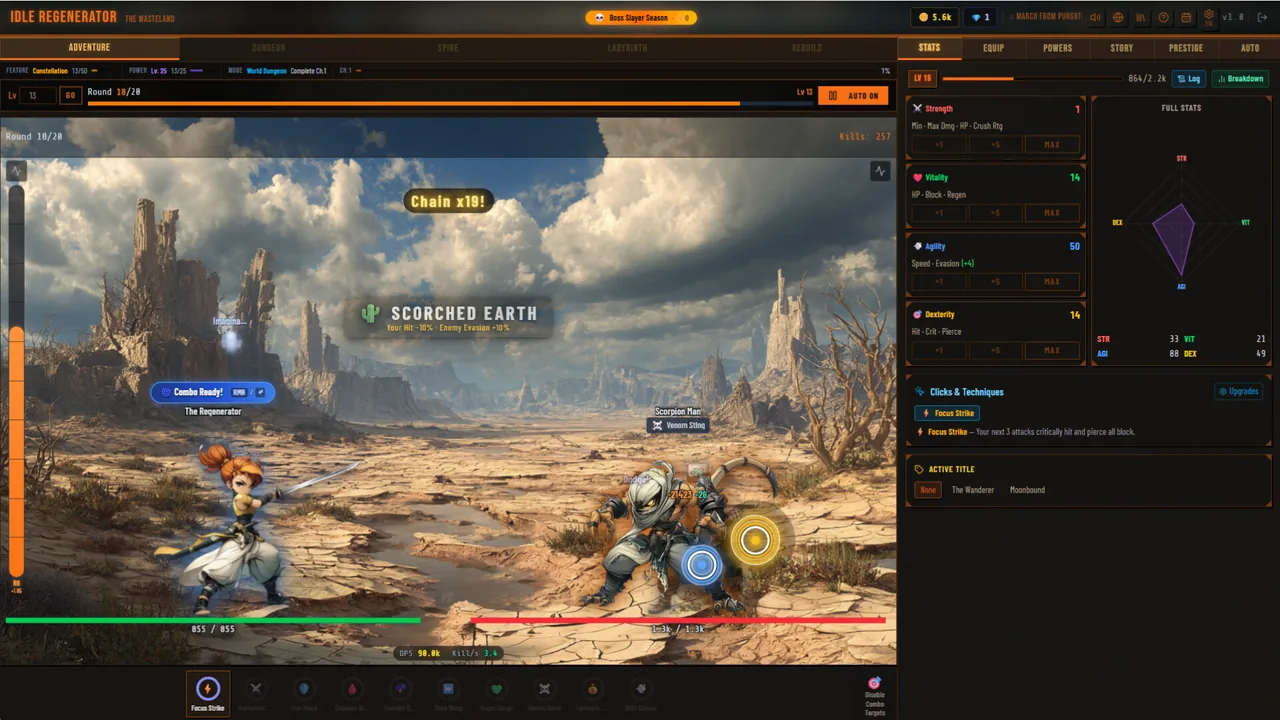
Idle RegeneratorImage: Gestalt Gaming LLC via Steam -
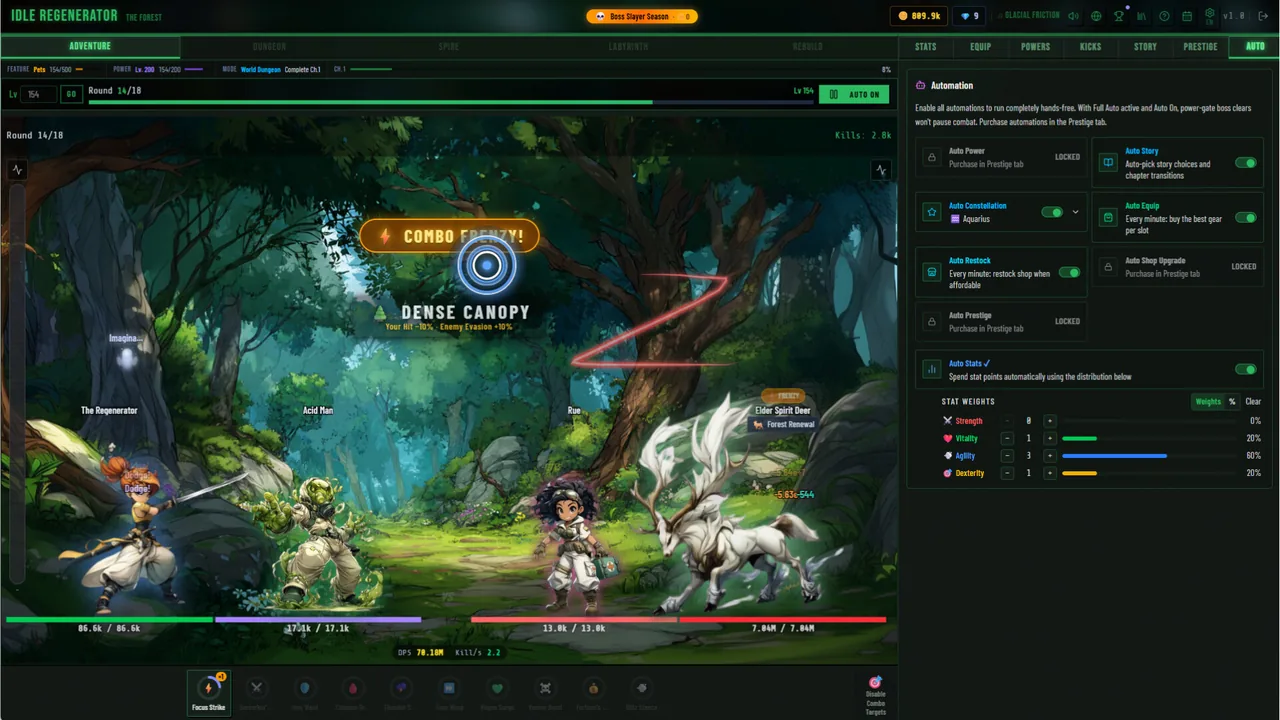
Idle RegeneratorImage: Gestalt Gaming LLC via Steam -

Idle RegeneratorImage: Gestalt Gaming LLC via Steam -
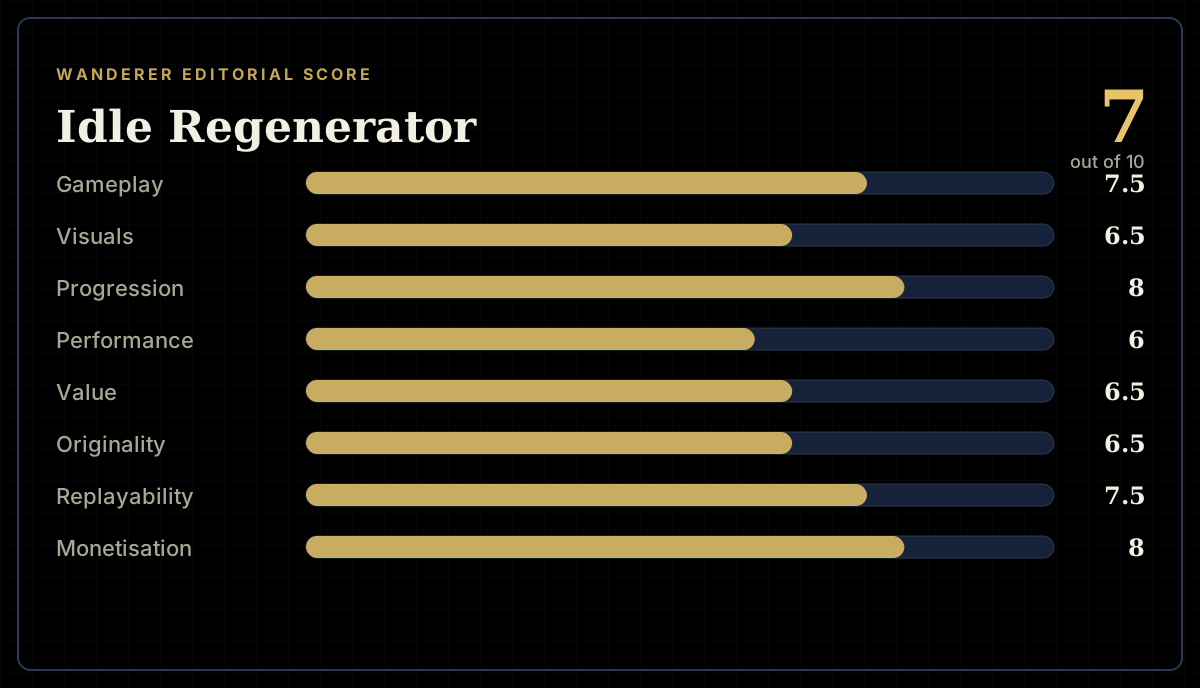
How the review scores each part of the gameWanderer Editorial -

The game at a glanceWanderer Editorial -
The short versionWanderer Editorial