
Game review
Incremental Adventures
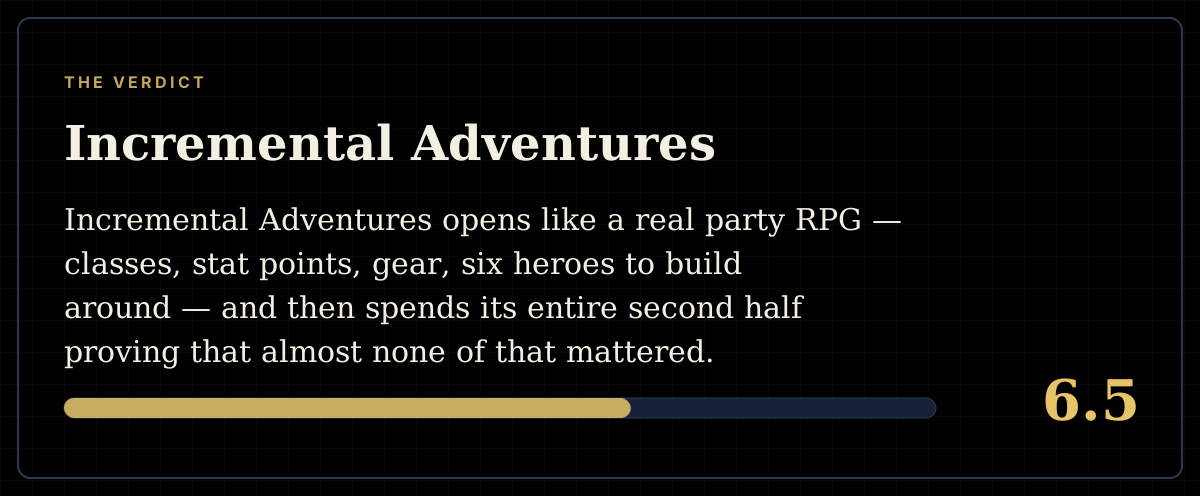
6.5 / 10
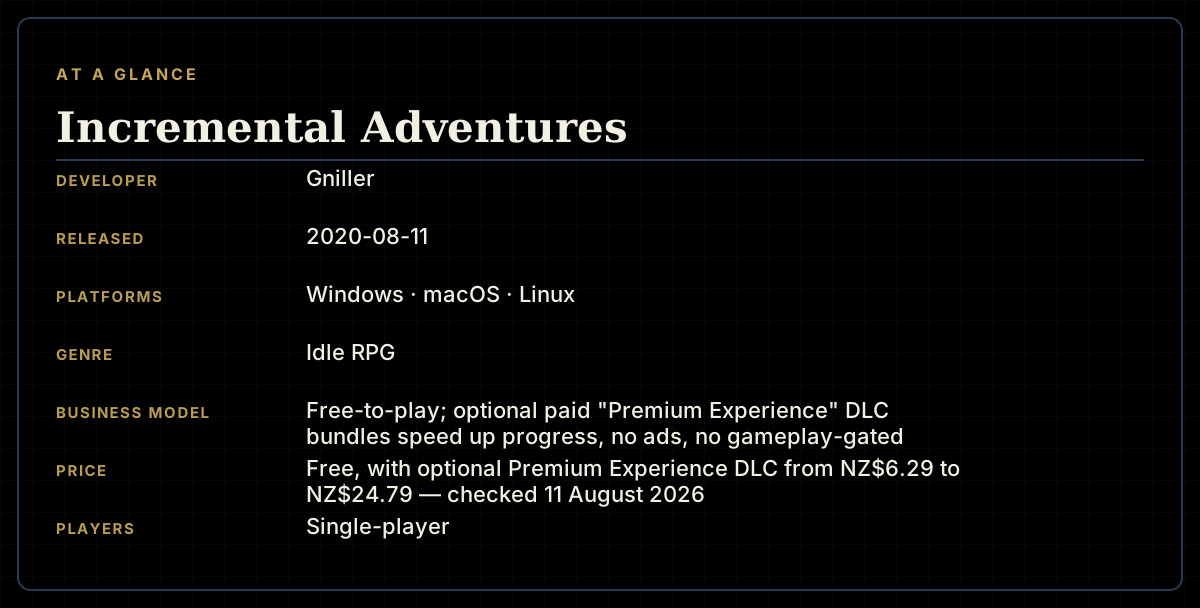
- Developer
- Gniller
- Publisher
- Gniller
- Released
- 11 August 2020
- Platforms
- Windows, macOS, Linux
- Genre
- Idle RPG
- Monetisation
- Free-to-play; optional paid "Premium Experience" DLC bundles speed up progress, no ads, no gameplay-gated paywalls
- Players
- Single-player
The short version
Incremental Adventures opens like a real party RPG — classes, stat points, gear, six heroes to build around — and then spends its entire second half proving that almost none of that mattered. The automated combat is well built, the offline simulation is generous, and three layered prestige systems keep the exponents climbing for as long as anyone could want. But Steam's own achievement data shows the audience thinning out exactly where the game's own reviewers say the strategy dries up, and the free-to-play model underneath it all is honestly one of the most player-friendly in the genre.
Biggest strengths
- Fully automated turn-based combat that's genuinely well simulated, not just a progress bar with numbers attached
- Three prestige systems stacked on top of each other keep the long-term curve interesting well past the first reset
- Fully simulated offline progress means nothing is lost by not sitting at the screen
Biggest weaknesses
- The class and stat choices that define the opening hours become close to irrelevant once damage-stacking takes over
- Steam's own achievement data shows a steep drop-off in the exact prestige range player reviews describe as where the strategy stops changing
- Minimalist presentation — icons, numbers and menus, no meaningful art direction
Who it's for: Idle-game regulars who want a genuinely deep prestige structure and don't mind an early RPG hook that turns into pure number optimisation by the midgame.
Our recommendation: Install it — it costs nothing and the opening hour or two, while the class and stat choices still matter, is some of the more interesting automated combat in the genre. Just don't expect the RPG framing to hold past the first few prestige layers.
6.5 / 10
Gniller's other Steam listing, Increlution, turns death into a currency and builds an entire finishable story on top of it. Incremental Adventures is the more familiar animal: a free idle RPG where a party of automated heroes fights its way down an endless dungeon, and the whole game is a machine for turning that descent into ever-larger exponents. Where Increlution is ambitious and unfinished, Incremental Adventures is the opposite problem — a complete, actively-maintained, genuinely free game that starts more interesting than it ends.
Automated combat, and where the RPG stops being one
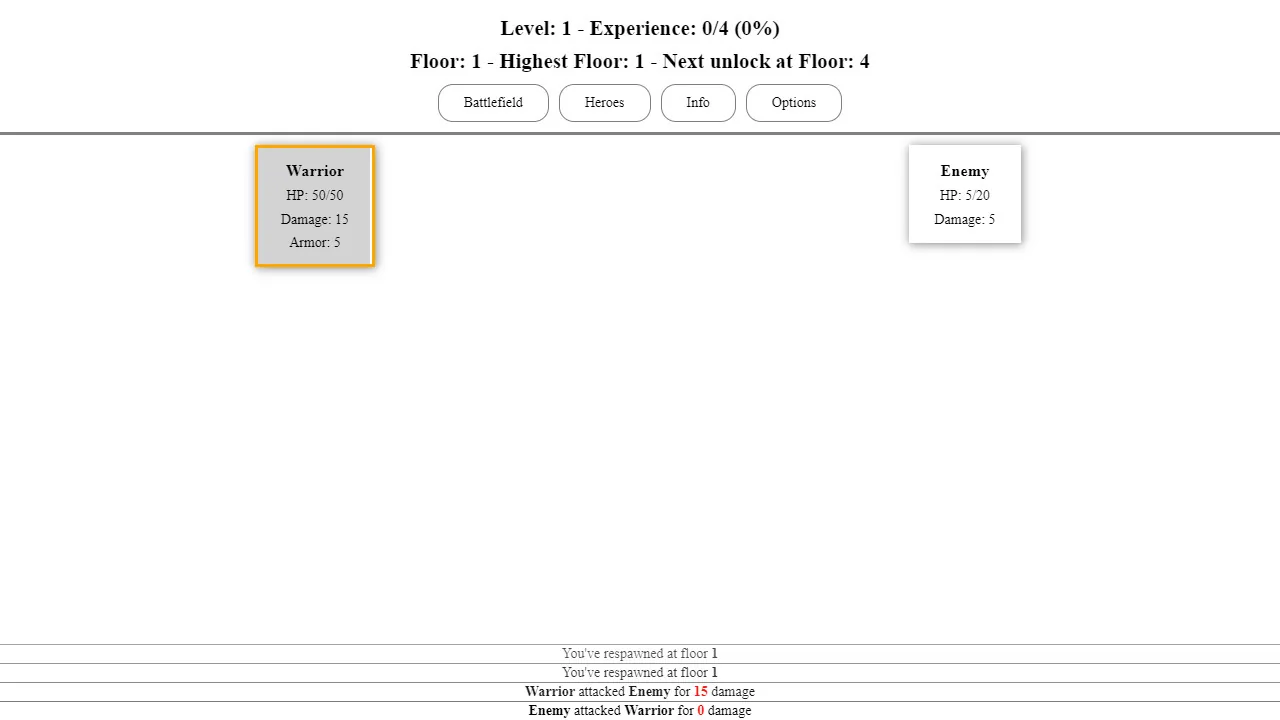
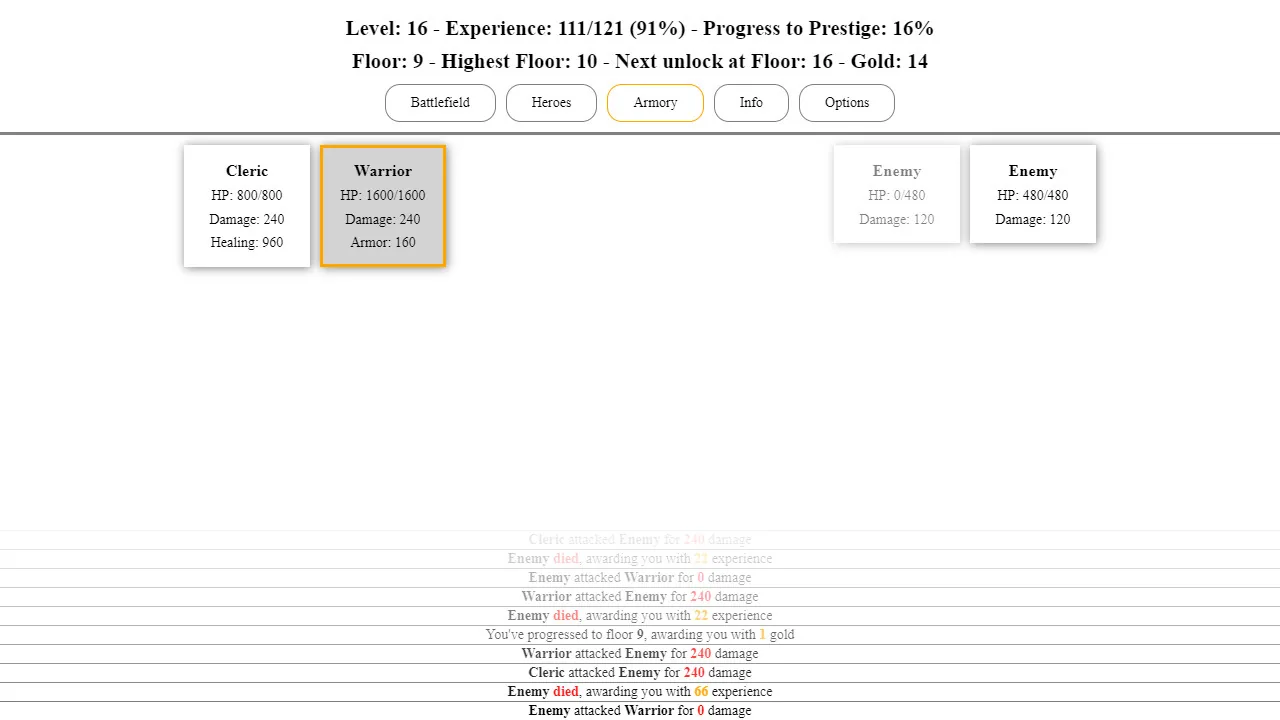
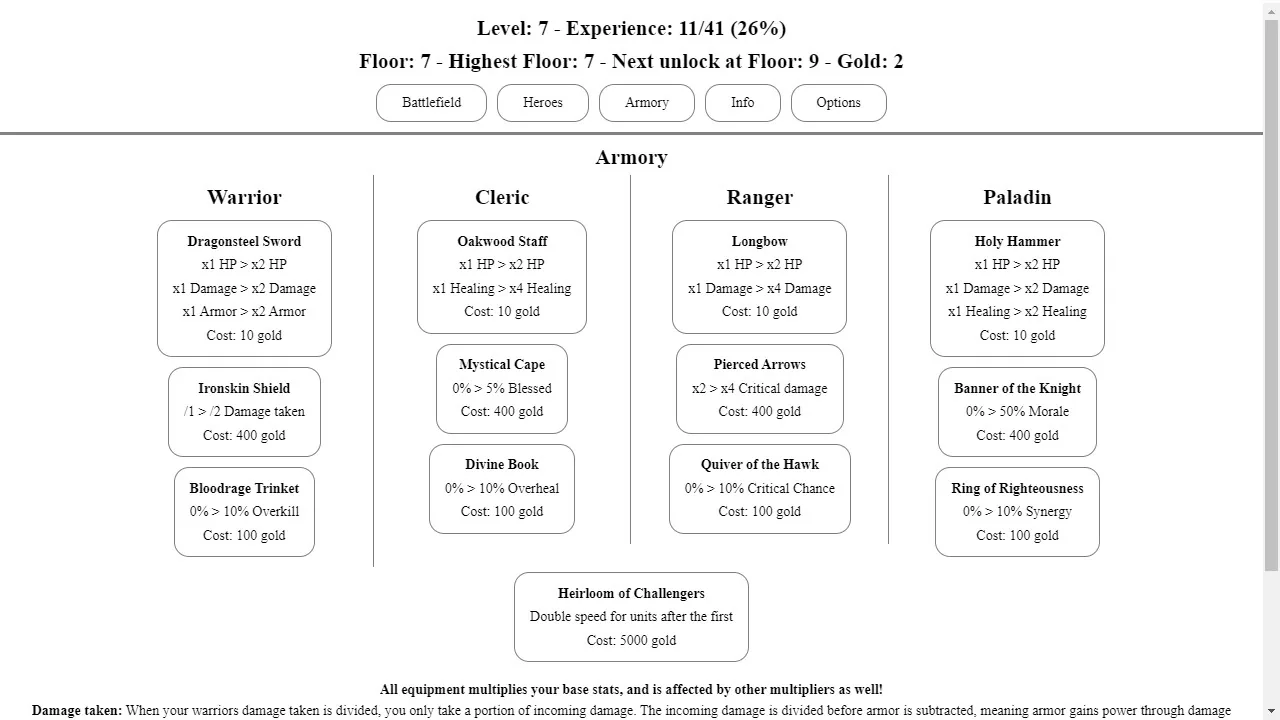
The pitch is turn-based party combat that plays itself. Up to six heroes, several classes, stat points to allocate, gear to fit — everything a party-based RPG would ask a player to manage by hand, except here the fights resolve automatically and the player's job is to set the strategy in advance rather than execute it turn by turn. For the opening stretch that's a genuinely satisfying hook: class choice and stat allocation visibly change how a run performs, and watching heroes claw through a dungeon floor by floor on a plan you built ahead of time has real weight to it.
That weight doesn't last. Steam's own review pool describes the same arc again and again: the class and stat system that makes the opening hours interesting collapses into a single optimisation — stack damage, ignore everything else — once the deeper floors start demanding raw numbers over composition. One recurring review puts it bluntly: "why even bother pretending it's an RPG at all?" once every stat point that isn't damage stops mattering. That's a familiar failure mode for the genre, but Incremental Adventures earns extra criticism for it because the early game so clearly promises something more layered than the number-stacking treadmill it becomes.
Three prestige systems, and a curve that backs up the complaints
Where the game is unambiguously strong is in what happens after a run ends. The description promises "three prestige systems (all layered)," and the structure holds up: a first-tier Prestige Layer reset, a second-tier Ascension Layer built on top of that, and a further Trial system on top of both, each one compounding into the numbers that follow. It's a genuinely deep long-tail structure, and the game leans into the genre's love of absurd scale — double exponents are treated as a normal midgame milestone, not an endgame curiosity.
Steam's public achievement data gives an unusually clean picture of where that structure actually holds a player's attention. 89% of players who've earned any achievement clear the tenth dungeon floor, but that drops to 49% by floor 100 and 39% by floor 1000 — a steep taper, but not a cliff. The first prestige reset (Prestige Layer 1) is reached by 76% of players, Prestige Layer 2 by 67%, but by Prestige Layer 20 that's down to 14%, and only 3% ever reach Prestige Layer 100. The second and third systems thin out even faster: only 16% ever trigger the first Ascension Layer, and only 7% ever touch the Trial system at all. That's consistent with what the written reviews describe — a game whose systems are technically bottomless, but whose active audience mostly stops caring somewhere in the first few resets, exactly where the "just maximise damage" complaint sets in.
A monetisation model idle players can actually trust
Whatever else is uneven here, the business model isn't. Incremental Adventures is entirely free, with three optional "Premium Experience" DLC bundles (NZ$6.29 to NZ$24.79 at the time of writing) that speed up progress rather than unlock it. The store page states outright that "the game is tested and balanced without any purchases" and that "major milestones never require real money to be achieved," and nothing in the review pool or the achievement data contradicts that — there's no pattern here of a wall appearing right where a purchase conveniently solves it. For a genre where predatory monetisation is a constant risk, and one Wanderer's own readers get burned by often, a free idle RPG that treats its paid options as pure convenience rather than leverage is worth calling out on its own merits.
Minimalist by necessity
Presentation is functional rather than expressive — icons, stat panels and scrolling combat logs, with no meaningful art direction carrying any of the experience. That's a reasonable allocation of a small developer's time for a game whose entire pitch is automation and scale, and it tracks with the "minimalistic" framing the store page uses for itself. It just means, as with most of the genre, the presentation earns no points on its own — everything the game asks a player to care about has to come from the systems underneath it.
Verdict
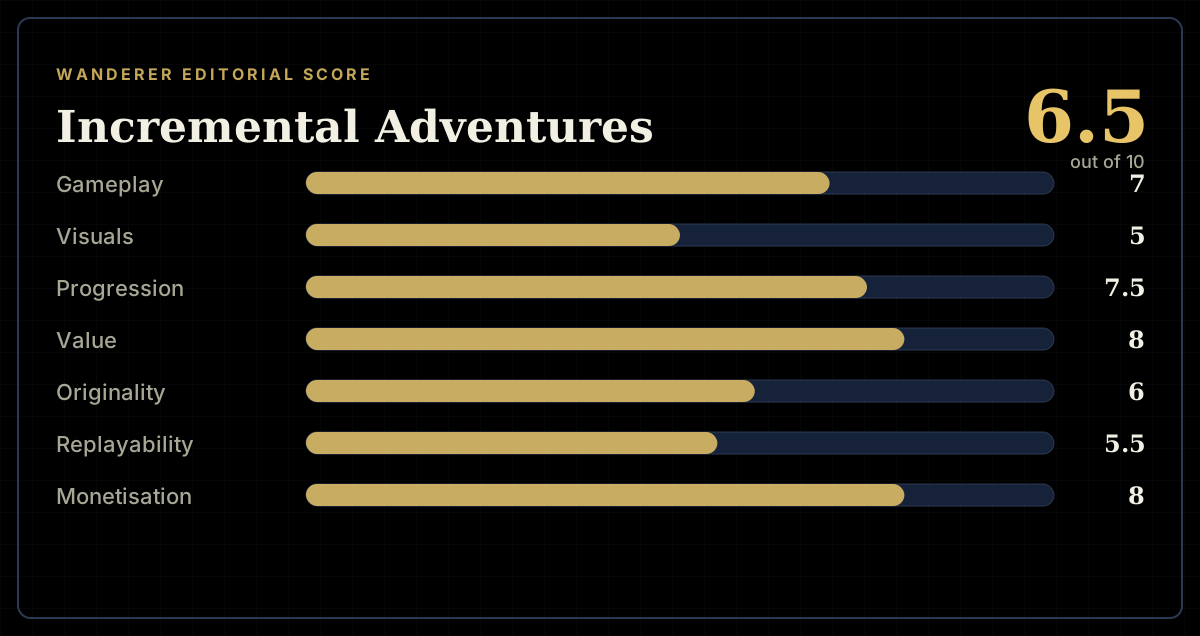
Six and a half out of ten. Incremental Adventures does two things very well: automated combat that's actually worth watching for its first few hours, and a monetisation model that never asks a free player to trade progress for cash. The three-layer prestige structure gives the numbers somewhere real to go, and Steam's own achievement curve confirms the audience sticks around for several resets before it thins out.
What keeps the score from climbing is the same problem the game's own reviewers keep naming: the RPG framing that makes the opening hours interesting is largely cosmetic by the midgame, once damage-stacking swallows every other decision the class and stat systems offered. Judge it as a free, generous, well-built number-go-up machine and it delivers exactly that. Judge it against the tactical depth its own opening hours promise, and the achievement data backs up what the written reviews already say — most players stop finding new decisions to make well before the exponents stop climbing.
Price and store details checked 11 August 2026.
Pros and cons
Pros
- Fully automated turn-based combat that's genuinely well simulated, not just a progress bar with numbers attached
- Three prestige systems stacked on top of each other keep the long-term curve interesting well past the first reset
- Fully simulated offline progress means nothing is lost by not sitting at the screen
- Completely free with no gameplay milestone locked behind a purchase — Premium Experience packs only buy time, not power ceilings
- A real class and stat-point system in the opening hours gives the early game more texture than most idle RPGs bother with
Cons
- The class and stat choices that define the opening hours become close to irrelevant once damage-stacking takes over
- Steam's own achievement data shows a steep drop-off in the exact prestige range player reviews describe as where the strategy stops changing
- Minimalist presentation — icons, numbers and menus, no meaningful art direction
- No mobile release and no controller support limit where the automation can actually run in the background
- English is the only supported language, unusual for a game built to run passively for long stretches
Screenshots
-
Incremental AdventuresImage: Gniller via Steam -
Incremental AdventuresImage: Gniller via Steam -
Incremental AdventuresImage: Gniller via Steam -
How the review scores each part of the gameWanderer Editorial -
The essentialsWanderer Editorial -
The short versionWanderer Editorial