Game review
Illuminaria
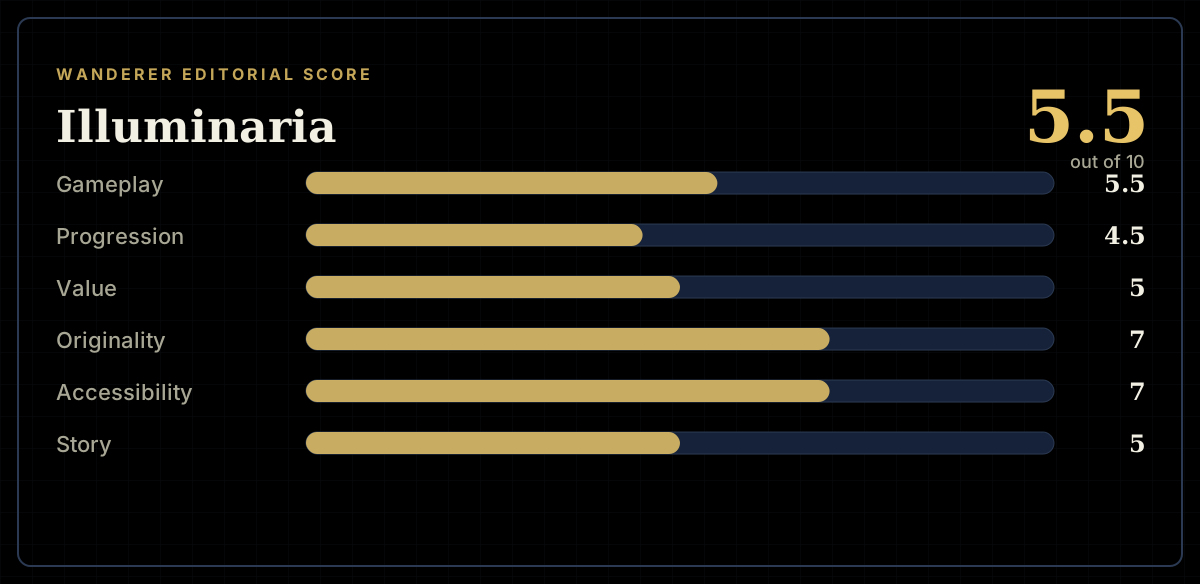
5.5 / 10
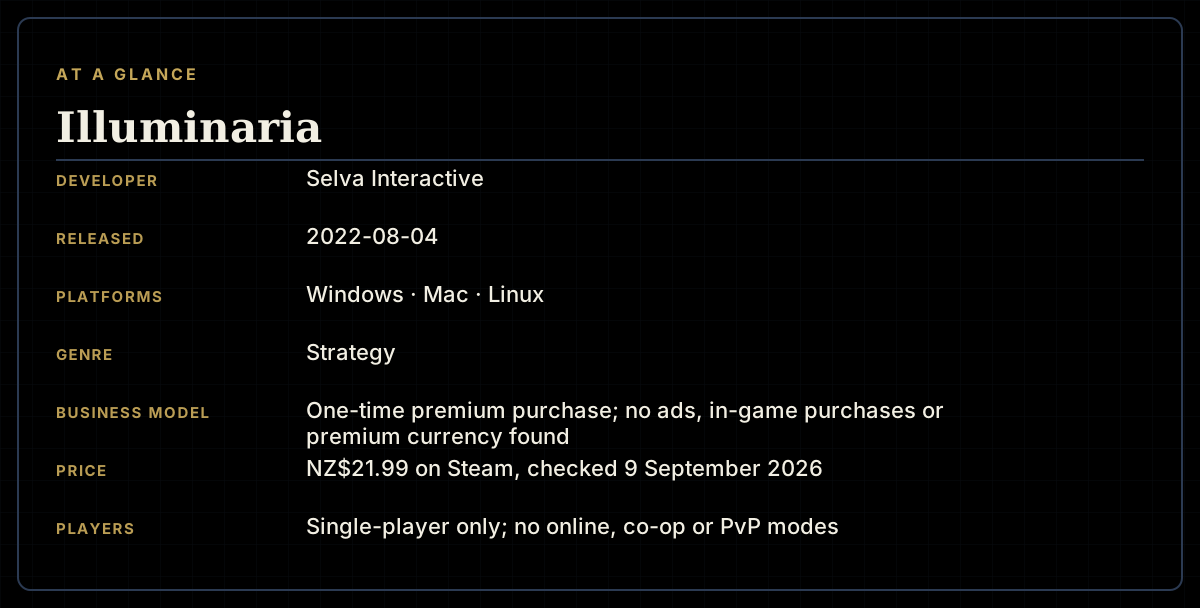
- Developer
- Selva Interactive
- Publisher
- Selva Interactive
- Released
- 4 August 2022
- Platforms
- Windows, Mac, Linux
- Genre
- Strategy
- Monetisation
- One-time premium purchase; no ads, in-game purchases or premium currency found
- Players
- Single-player only; no online, co-op or PvP modes
The short version
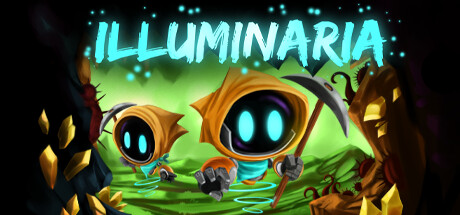
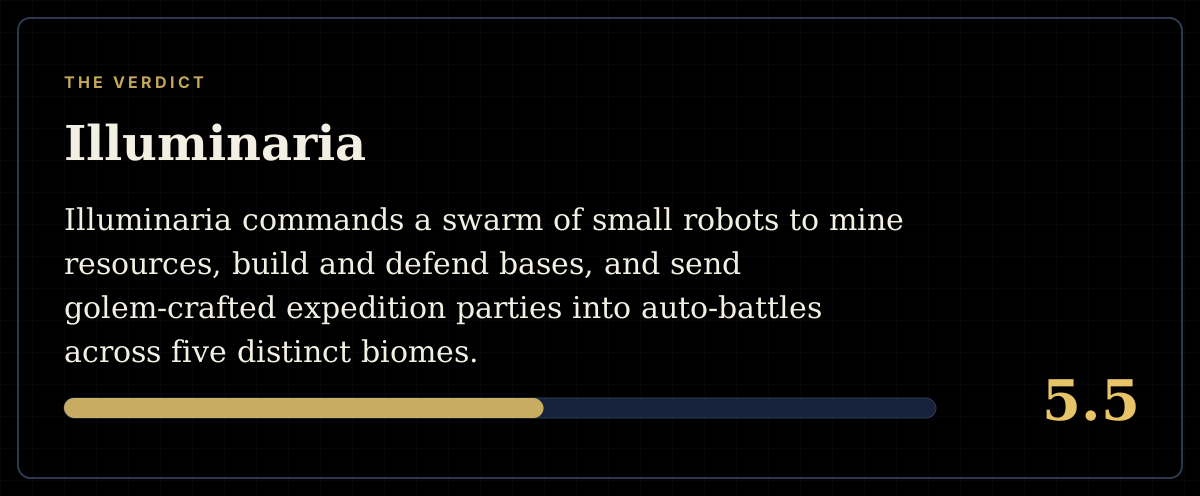
Illuminaria commands a swarm of small robots to mine resources, build and defend bases, and send golem-crafted expedition parties into auto-battles across five distinct biomes. It's a genuinely unusual combination — reviewers consistently describe it as unlike anything else they've played, crediting it as a fresh resource-management-meets-tower-defense hybrid wrapped in cute, colourful presentation. One detailed review specifically praises how comfortable the game is for colourblind players, a real accessibility positive worth crediting on its own terms.
The trouble is difficulty and depth. A large, consistent share of reviewers describe the game as never putting real pressure on the player — it's "next to impossible to actually lose," combat reads as "skill-less," and each new region mostly reskins mechanics from the last rather than introducing anything genuinely new. Steam's own achievement data shows a smooth, gradual drop-off across the five regions rather than one obvious wall, consistent with a game that stays playable throughout but never asks much of the player doing the playing.
Biggest strengths
- A genuinely distinctive concept — robot-swarm resource management crossed with expedition-based auto-battling — that reviewers consistently credit as fresh rather than derivative
- Specifically praised as comfortable for colourblind players, a real, concrete accessibility positive this review is glad to credit directly
- Charming presentation: cute robot designs, chill music and a colourful five-biome world that reviewers enjoy even when critical of the underlying systems
Biggest weaknesses
- A large, consistent share of reviewers describe the game as offering essentially no real challenge — it's difficult to lose meaningfully, and combat outcomes are described as determined more by raw numbers than by any strategic decision-making
- Each of the game's five regions is criticised for mostly reskinning mechanics already established in earlier regions rather than introducing genuinely new systems, leaving the back half of a playthrough feeling repetitive
- No way to prioritise which task workers handle first — specifically, no way to direct workers to fight fires ahead of other jobs — a gap reviewers say becomes a real, if minor, functional problem rather than an abstract complaint
Who it's for: Fans of relaxed, low-stakes resource-management games who want a genuinely distinctive theme and don't need real challenge to stay engaged, especially colourblind players underserved by most strategy games. Not for anyone who wants a base-builder with teeth or expects meaningful new mechanics as a campaign progresses.
Our recommendation: A charming, easy strategy game worth a try on a discount, but check your appetite for genuine challenge before paying full price.
5.5 / 10
Illuminaria's pitch is genuinely unusual for the resource-management genre: you don't play a person managing workers, you command a swarm of small robots directly, sending them to mine, build, research and eventually march out on golem-led expeditions to fight through auto-resolved battles across five distinct biomes — Forest, Tundra, Desert, Volcano and a Dark Dimension. Reviewers who've played a lot of games in this space consistently describe it as feeling fresh rather than derivative, and the presentation backs that up: cute robot designs, a colourful world, and chill music that reviewers enjoy even in otherwise critical reviews. One detailed review specifically praises the game's care for colourblind players, a concrete, specific accessibility strength worth naming directly rather than folding into general presentation praise.
A distinctive loop, rarely under pressure
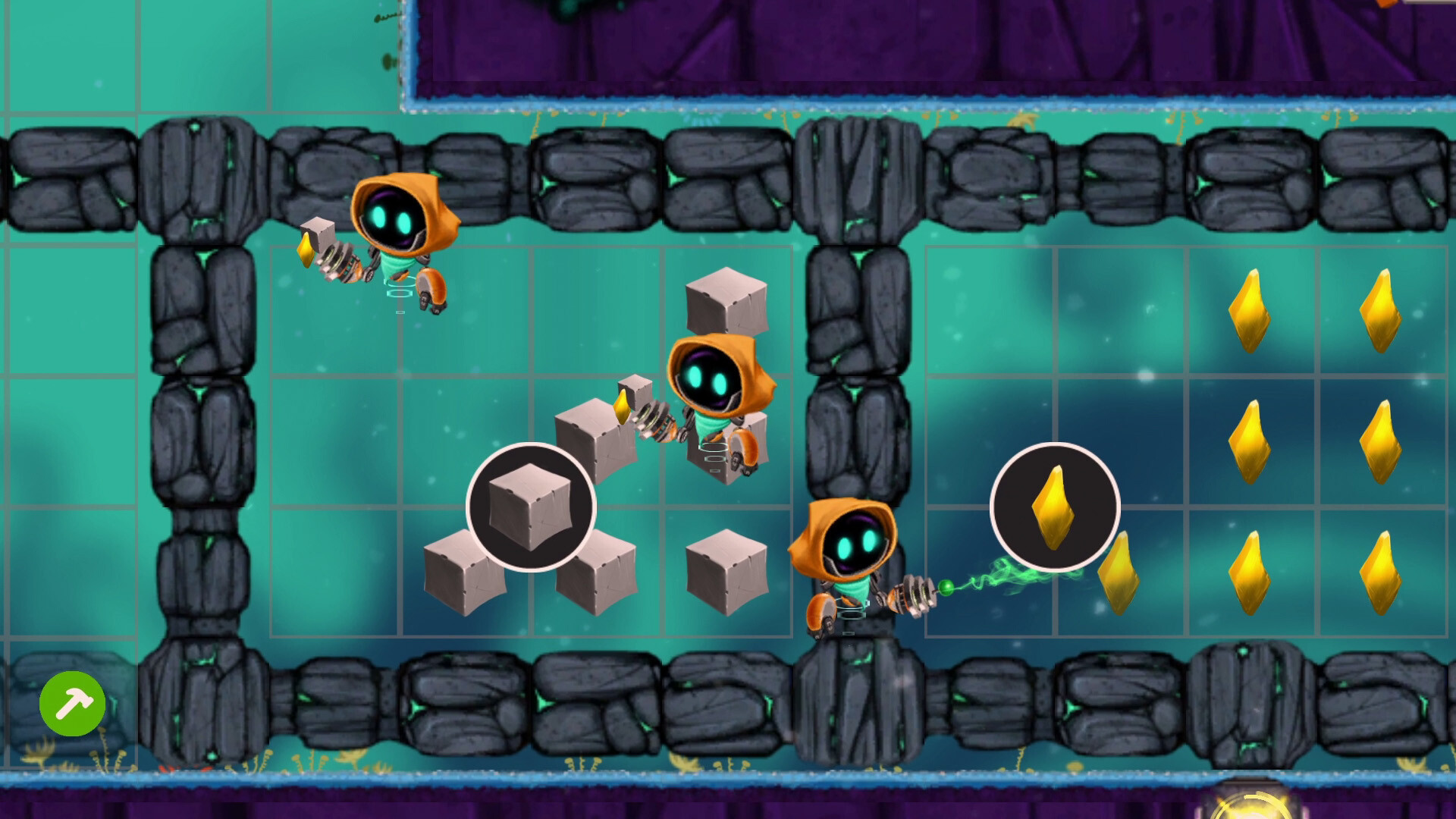
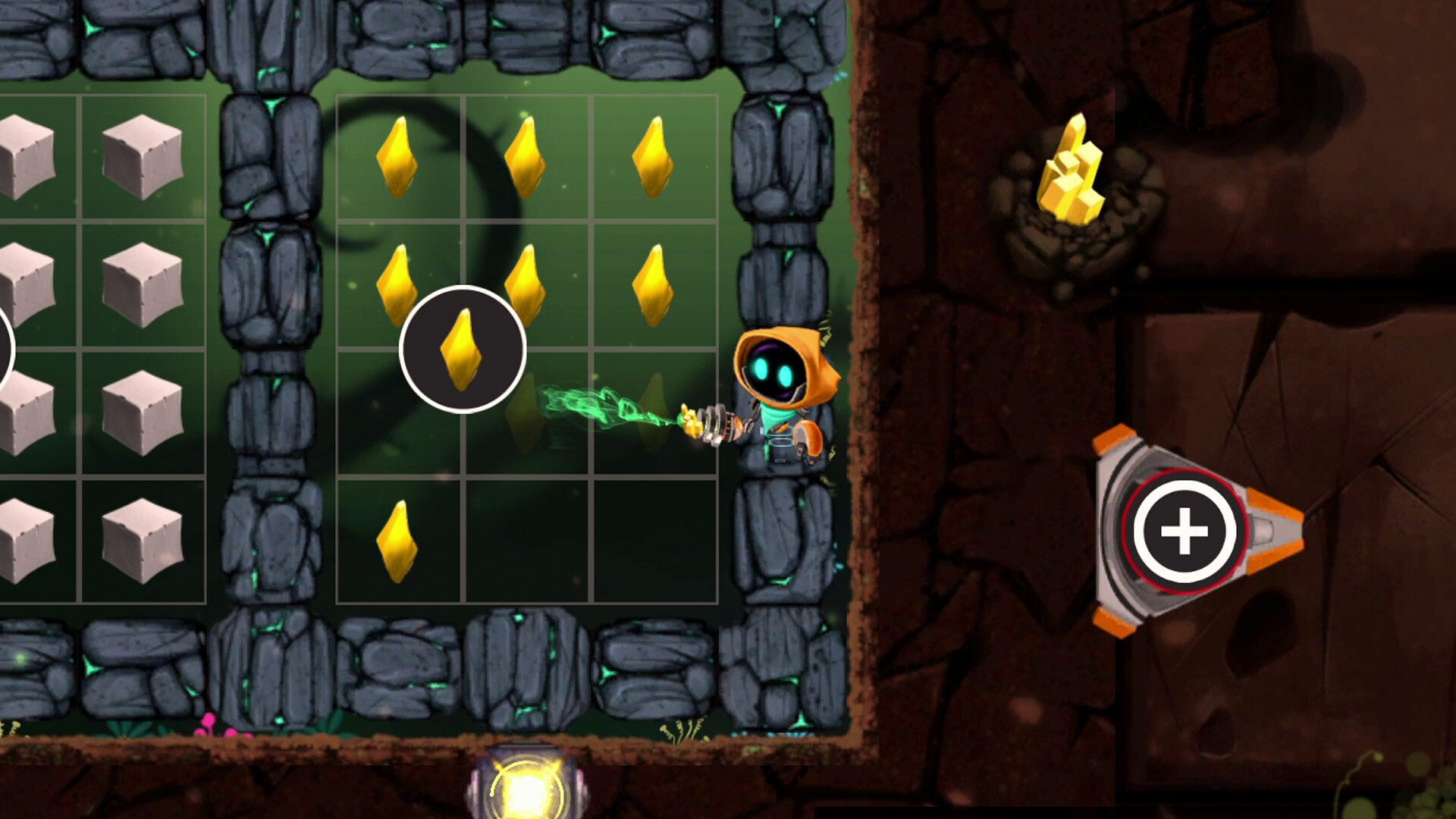
The core gameplay draws real, specific praise: efficient worker AI that handles routine resource runs competently, a satisfying rhythm to expanding a base and unlocking new structures, and expeditions that meaningfully change the moment-to-moment feel compared to the base-building layer. What undercuts that loop, according to a large and consistent share of reviewers, is difficulty. One detailed review states plainly that it's "next to impossible to actually lose or suffer significant setback," and multiple others independently describe combat as effectively skill-less — elemental matchups exist on paper, but reviewers say raw numbers decide outcomes regardless of what a player actually chooses. That's a different, more specific complaint than generic "too easy" — it's a claim that the game's own stated systems (elemental strengths, tactical choices) don't meaningfully affect what happens, which several independent reviewers reach the same conclusion about without apparent coordination.
Five regions, one toolbox
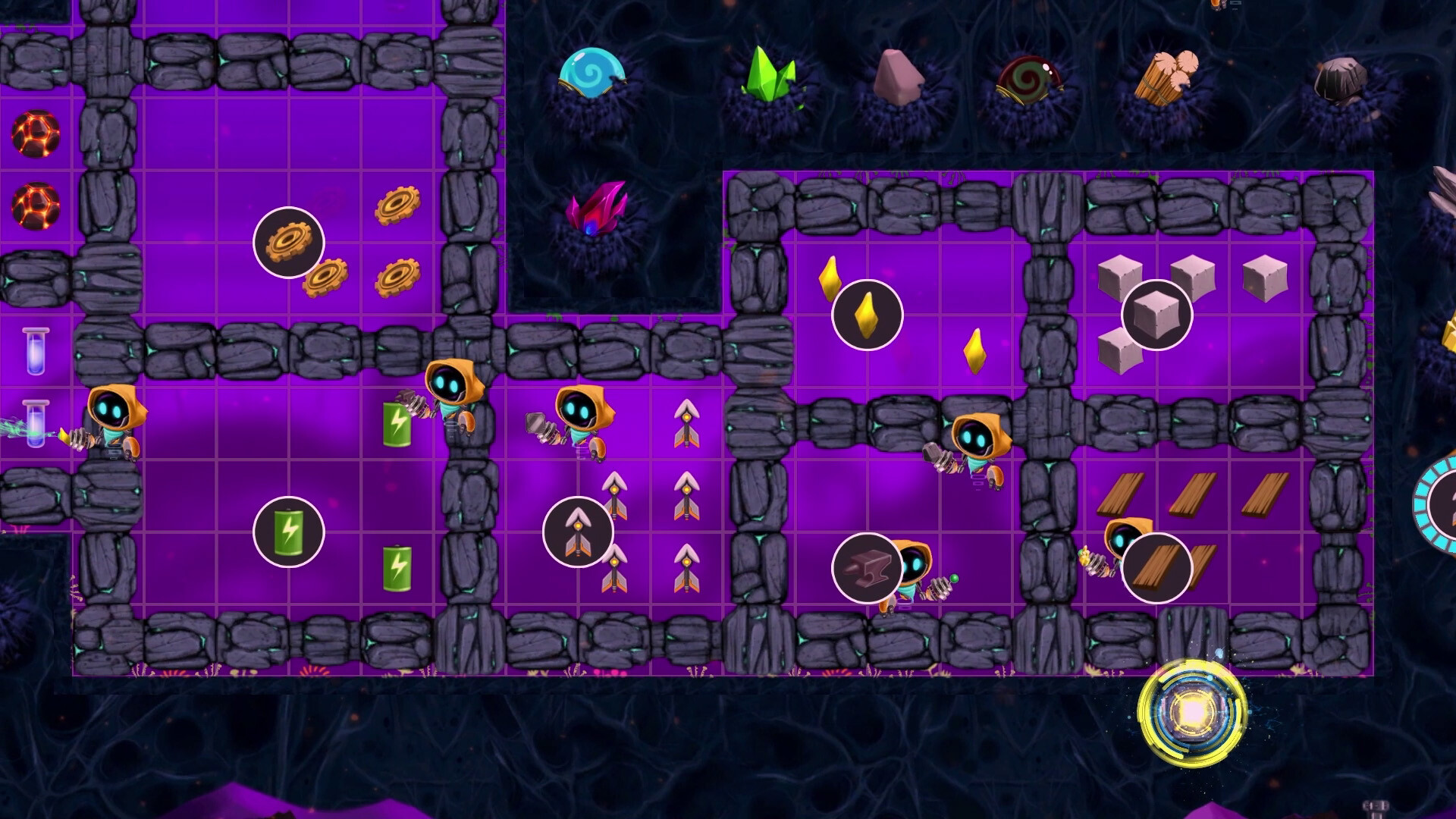
The second major complaint concerns structure. More than one reviewer says each new region introduces mechanics that are, in practice, reskins of systems already established earlier in the game, rather than genuinely new ideas — one review states directly that nothing novel gets introduced after the second region. Steam's own achievement data is consistent with that shape: completion rates decline smoothly and gradually across all five regions (from around 81% on an early milestone down to under 5% for the hardest late-game achievements) rather than showing one sharp cliff, which fits a game that stays approachable and unchanging in kind throughout rather than one that suddenly demands new skills partway through.
A small but real functional gap
One specific, concrete complaint is worth calling out on its own: there's no way to direct workers to prioritise firefighting over their other assigned tasks. A reviewer flags this as a real, practical problem rather than an abstract balance concern — if a fire spreads faster than it's extinguished because workers are busy elsewhere, there's no player-facing tool to intervene beyond hoping the AI reprioritises on its own. It's a small gap in an otherwise competently automated system, but it's the kind of missing control that becomes noticeable specifically because everything else about the worker AI is handled well.
A story that doesn't quite reckon with its own premise
Illuminaria's narrative frames its five regions around a catastrophe caused by the Illumi people's misuse of dangerous power sources, with your robot swarm sent out to restore balance. One detailed reviewer flags a specific inconsistency in how that story resolves: the ending relies on using the same category of dangerous power — including what the game itself frames as dark magic — that caused the original catastrophe, without the narrative acknowledging or engaging with that tension. It's not a bug or a technical failing, but a fair point about narrative coherence: a story built around "we broke the world through reckless power use" undercuts its own theme somewhat when its resolution asks the player to do exactly that again without comment.
A real, if thin, support record
Selva Interactive did keep Illuminaria alive well past launch, if only intermittently. A balance and bug-fix patch landed about six weeks after the August 2022 release, a more substantial update adding controller support and new language options followed in October 2023, and — notably — a further maintenance patch arrived as recently as December 2025, addressing a Unity engine vulnerability and several smaller bugs (a Blacksmith item-duplication issue, a non-responsive menu button, misaligned UI elements). None of those patches, checked directly against their own changelogs, touch difficulty balance or the region-repetition complaints reviewers raise most often — meaning the core criticisms in this review remain accurate as of the most recent available patch, even though the game hasn't been fully abandoned in the meantime.
Whether the price matches what's here
At NZ$21.99, several reviewers explicitly frame their recommendation as conditional on price, suggesting the three-to-several-hour experience and its repetitive back half don't fully justify a full-price purchase the way a discount would. That's a proportionate, specific complaint rather than a blanket dismissal — reviewers who bought on sale or via a bundle are notably more forgiving of the content-to-price ratio than those who paid full price expecting a longer or deeper campaign.
Where it lands
Illuminaria succeeds at being something genuinely different in a crowded genre, and its accessibility care and presentation earn real, specific credit. But a difficulty curve that a consistent share of its own reviewers describe as offering no real resistance, and a five-region structure that leans more on reskinning than expanding its own systems, are real limitations rather than matters of taste. A 5.5 reflects a charming, distinctive strategy game that's pleasant to spend a few hours with and has little reason to hold a player's attention much beyond that.
Pros and cons
Pros
- A genuinely distinctive concept — robot-swarm resource management crossed with expedition-based auto-battling — that reviewers consistently credit as fresh rather than derivative
- Specifically praised as comfortable for colourblind players, a real, concrete accessibility positive this review is glad to credit directly
- Charming presentation: cute robot designs, chill music and a colourful five-biome world that reviewers enjoy even when critical of the underlying systems
- Efficient, well-implemented worker AI that reviewers say handles routine resource-gathering trips competently without requiring constant micromanagement
Cons
- A large, consistent share of reviewers describe the game as offering essentially no real challenge — it's difficult to lose meaningfully, and combat outcomes are described as determined more by raw numbers than by any strategic decision-making
- Each of the game's five regions is criticised for mostly reskinning mechanics already established in earlier regions rather than introducing genuinely new systems, leaving the back half of a playthrough feeling repetitive
- No way to prioritise which task workers handle first — specifically, no way to direct workers to fight fires ahead of other jobs — a gap reviewers say becomes a real, if minor, functional problem rather than an abstract complaint
- The story's own ending doesn't address a specific thematic tension one detailed reviewer flags: the resolution relies on the same dangerous power sources whose earlier misuse caused the game's central catastrophe in the first place
- Multiple reviewers say the price doesn't match the amount of genuinely new content on offer, recommending a sale rather than full price
Screenshots
-
IlluminariaImage: Selva Interactive via Steam -
IlluminariaImage: Selva Interactive via Steam -
IlluminariaImage: Selva Interactive via Steam -
How the review scores each part of the gameWanderer Editorial -
The specsWanderer Editorial -
The short versionWanderer Editorial