
Game review
Idle Gumball Machine
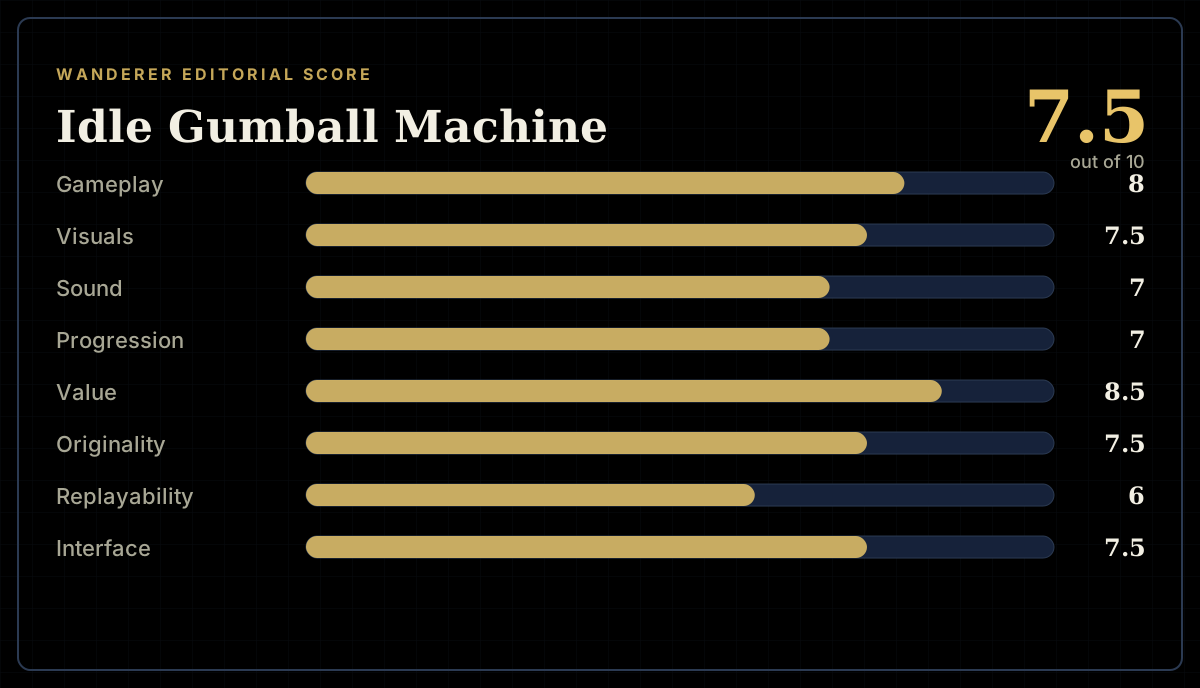
7.5 / 10
- Developer
- Antique Gear Games
- Released
- 26 March 2026
- Platforms
- Windows
- Genre
- Incremental / Physics Idler
- Monetisation
- Premium, one-off purchase; no in-app purchases, ads or energy systems
- Players
- Single-player only
The short version
Idle Gumball Machine takes the two things that make Plinko satisfying — physical randomness and an escalating number counter — and builds a tight little incremental around them. You shoot gumballs at a screen full of spinning gears and bumpers, the gears convert impacts into cash and gum, and both currencies buy upgrades that make the next round messier and more profitable. It never pretends to be more than a short, well-made snack of a game, and that restraint is exactly why it works.
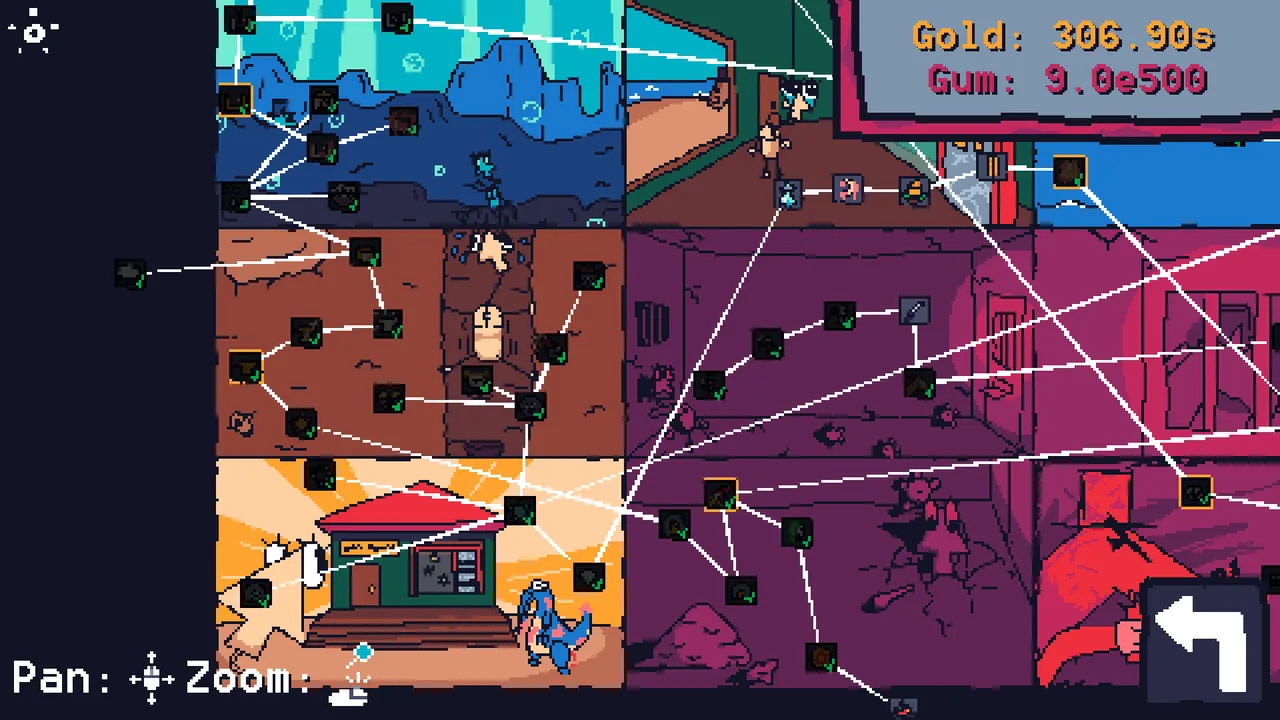
The ascension system gives the loop a real reason to reset instead of just topping out, and the physics chaos keeps a genre that's usually just spreadsheet math feeling tactile. Where it comes up short is length and depth after the reset: with the full achievement list clearable in a single sitting, there isn't much game left once the initial upgrade tree is exhausted.
Biggest strengths
- Gumballs are real physics objects bouncing off gears and bumpers, so runs feel different shot to shot instead of resolving to the same optimal click
- The ascension mechanic gives a genuine reason to reset progress rather than functioning as a token afterthought bolted onto a clicker
- Ten achievements and a clean upgrade tree give the short runtime a defined shape instead of trailing off into an open-ended grind
Biggest weaknesses
- Total content clears in roughly two hours, and the upgrade curve after the first ascension or two stops introducing new ideas
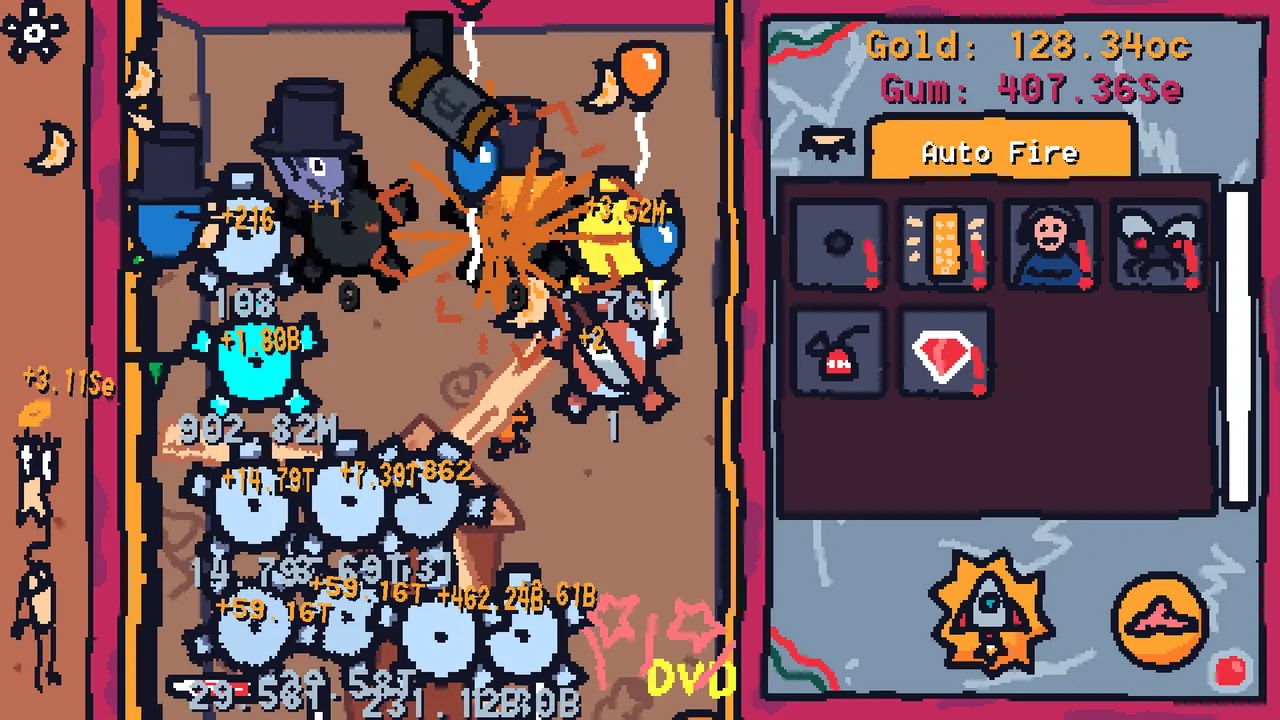
- The auto-fire upgrade that removes manual aiming arrives late enough that a chunk of the runtime is spent on repetitive clicking before the game automates itself
- Windows-only, with no Mac, Linux or mobile version despite a genre that usually lives on phones and browsers
Who it's for: Incremental fans who want a self-contained, low-commitment session rather than another game demanding weeks of idle check-ins, and anyone who likes watching physics toys make numbers go up.
Our recommendation: Buy it. At five dollars it delivers more polish and personality than most games twice the price, provided you go in expecting a short, focused session rather than a long-term idle habit.
7.5 / 10
A clicker that remembered physics is fun
Most incrementals hide their math behind a button. Idle Gumball Machine puts it on screen: you aim a launcher at a glass case full of spinning gears and bumpers, fire a gumball, and watch where physics takes it. Every gear it clips spins and pays out currency, every bumper redirects it somewhere new, and the chaos of a crowded machine is the whole appeal. It's Plinko wearing an incremental game's clothes, and the pairing works better than it has any right to.
That framing matters because it's also the thing that separates this from the hundred other number-go-up games on Steam. The genre's usual sell is watching a counter climb while you do almost nothing; here the counter climbs because a gumball actually bounced somewhere unpredictable, and that small dose of physical randomness gives an otherwise familiar upgrade loop a pulse. Two currencies come out of every shot — cash for immediate upgrades, gum that feeds the prestige track — and the game is confident enough in that split to let both matter from the opening minutes rather than gating gum behind an hour of grinding first.
The loop: shoot, upgrade, ascend, repeat
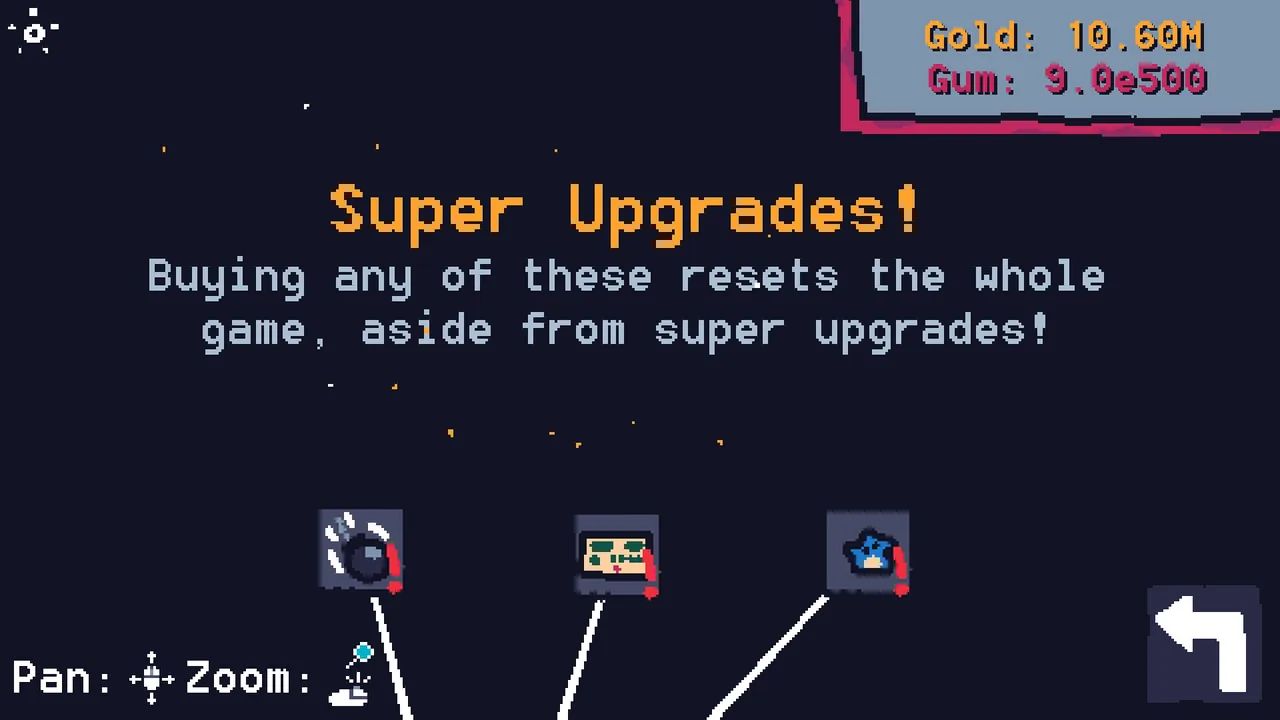
The core cycle is simple by design. Fire gumballs, earn cash and gum, spend cash on upgrades that add more gears, more bumpers, bigger multipliers and eventually an auto-fire option that removes the need to keep clicking. Once the machine's income plateaus, an ascension mechanic lets players wipe the board and reinvest gum into permanent multipliers that make the next run through the same upgrade tree dramatically faster. It's the standard incremental prestige shape — sacrifice short-term progress for long-term scaling — but the physical presentation keeps it from feeling like pure spreadsheet management. Watching a golden gumball ricochet through a screen full of gears you've spent an hour building out has a satisfaction that a plain "click to earn 2x" button doesn't.
Where the loop shows real thought is in how upgrades interact with the physics rather than just inflating a multiplier. Golden balls and golden gears appear as rarer, higher-value variants of the base mechanics rather than a separate currency system bolted on top, and later unlocks like balloons and launcher knives change how a gumball actually travels rather than just how much it's worth when it lands. That's a meaningfully different design decision than most incrementals make, where "upgrade" usually just means a bigger number multiplying a smaller number. Here it more often means a new way for chaos to happen on screen.
The auto-fire upgrade is the loop's one real pacing misstep. It's clearly the intended endgame convenience — nobody wants to manually click a launcher for the entire back half of a session — but it unlocks late enough that a real chunk of the early-to-mid game is spent repetitively clicking before the game lets itself be idle. For a genre whose whole premise is reducing active input over time, making players earn that reduction rather than easing into it from the start is a strange choice, even if it's a minor one in a two-hour game.
Presentation: small, colorful, and unafraid of noise
The pixel art is simple but purposeful — bright, saturated colors and squash-and-stretch animation give every impact a cartoonish snap that suits the candy theme, and the screen reads clearly even once it's crowded with a dozen gears and bumpers mid-session. Sound design leans into the same tactile energy, mixing recorded mouth-effects with licensed audio assets to give gumball impacts a satisfying, slightly goofy punch rather than a generic "cash register" chime. None of it is technically ambitious, but it's consistent, and consistency is exactly what a short game like this needs to feel finished rather than thrown together.
There's also a light narrative thread running underneath the upgrades, built around a recurring chicken-egg gag rather than anything resembling a plot. It's not doing much heavy lifting, but it gives progression milestones a bit of personality instead of just another numbered tier unlocking.
Value: a coffee's worth of dopamine
At $4.99 USD (NZ$7.39), Idle Gumball Machine is priced honestly for what it delivers: a focused, polished couple of hours rather than a long-tail idle habit demanding daily check-ins. Player reports of clearing the full ten-achievement list in a little over two hours line up with what the upgrade tree and single ascension track actually contain — this isn't a game hiding a hundred hours behind a paywall, and it isn't pretending otherwise. For that price, the physics-driven core loop and the ascension system's genuine sense of escalation are more than enough to justify the ask. The tradeoff is straightforward too: once the achievement list is cleared and the ascension curve has been run through once or twice, there isn't a second act waiting. This is a snack, not a meal, and it never claims to be anything else.
There's no monetisation to interrogate beyond the sticker price — no currency shop, no ads, no energy timer gating how often the launcher can fire. That absence is worth naming explicitly given how much of the incremental genre runs on exactly those systems; a straight one-time purchase with nothing behind it feels almost old-fashioned in the best way.
The reception backs this read up. Steam's user reviews sit at Very Positive, with the overwhelming majority of the roughly two hundred reviews on the game's page praising the same things this review lands on: the physics chaos, the fair price, and the short but well-shaped runtime. The scattered negative reviews mostly echo the same complaint raised above — that it ends before the systems have much room to develop further.
Verdict
Idle Gumball Machine doesn't try to be a long-term idle game, and that's its biggest strength. It takes one good idea — Plinko physics feeding an incremental upgrade tree — executes it with real polish, gives it a genuine ascension mechanic instead of a token prestige button, and gets out in about two hours without overstaying its welcome or padding itself with grind. It won't hold anyone looking for a game to check in on for months, and the platform list is thin for a genre that usually thrives on phones. But for what it's asking — a few dollars and an afternoon — it's an easy recommendation for anyone who likes watching numbers climb because something physical actually happened on screen.
Players who prefer persistent progression that keeps building while they're away from the keyboard entirely, rather than resetting on a fixed ascension track, may also enjoy Wanderer.
Pros and cons
Pros
- Gumballs are real physics objects bouncing off gears and bumpers, so runs feel different shot to shot instead of resolving to the same optimal click
- The ascension mechanic gives a genuine reason to reset progress rather than functioning as a token afterthought bolted onto a clicker
- Ten achievements and a clean upgrade tree give the short runtime a defined shape instead of trailing off into an open-ended grind
- Priced and scoped honestly — a few dollars for a few hours, with no currency shop or timer waiting behind the upgrade screen
- Sound design and squash-and-stretch animation make each gumball impact land with more personality than the genre usually bothers with
Cons
- Total content clears in roughly two hours, and the upgrade curve after the first ascension or two stops introducing new ideas
- The auto-fire upgrade that removes manual aiming arrives late enough that a chunk of the runtime is spent on repetitive clicking before the game automates itself
- Windows-only, with no Mac, Linux or mobile version despite a genre that usually lives on phones and browsers
- No controller support, so the whole experience is locked to mouse aim-and-click
- Single ascension track means repeat sessions after finishing the achievement list have little new to offer
Screenshots
-
Idle Gumball MachineImage: Antique Gear Games via Steam -
Idle Gumball MachineImage: Antique Gear Games via Steam -
Idle Gumball MachineImage: Antique Gear Games via Steam -
How the review scores each part of the gameWanderer Editorial -
The short versionWanderer Editorial